

Re: Southern Shikoku: Between Land and Sea, the Blue Waters of Miyakojima, and Ending in the Megacity T
It’s time to head back toward Uwajima. Leaving Cape Koumo is pleasant because this time we’re taking the other side of the peninsula on a downhill ride. We keep an eye out for wild monkeys. We pass through seaside villages where life flows gently. It’s an unfiltered face of the world that gives the feeling of being at the edge of it.
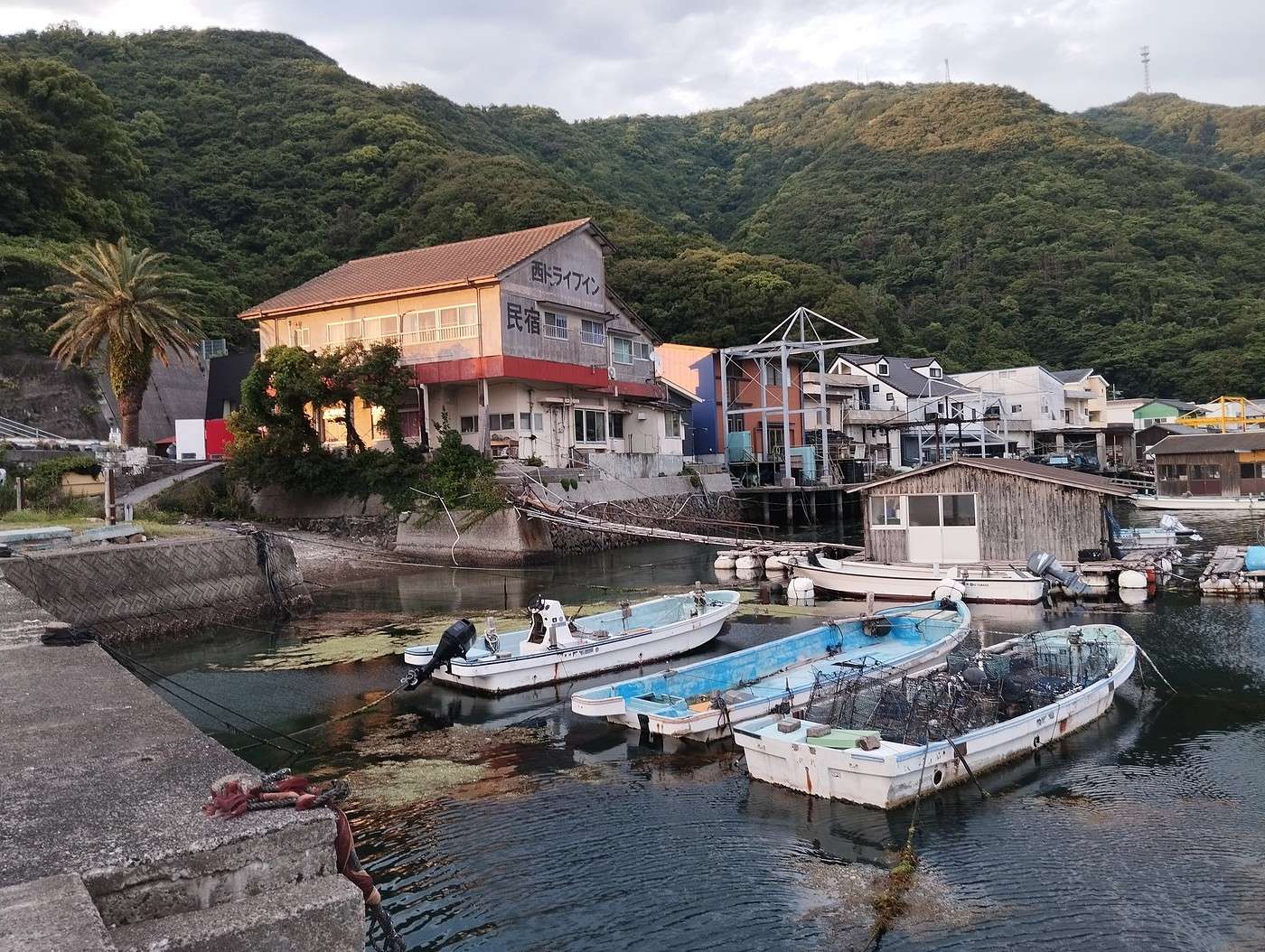
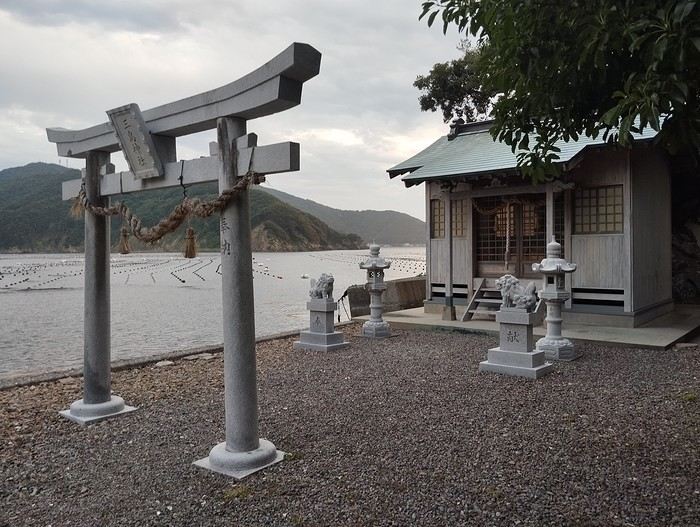
The need for a break leads us to stop in a parking lot at the end of a village. And by chance, we discover a lovely spot—the small but very cute Mishima Shrine in the village of Tsushimacho Harigi. Unlike the usual wooden shrines, this one is all white. It sits by the sea next to this port village. We can’t resist a little stroll to the harbor. The water is once again absolutely transparent, filled with colorful fish. The boats and buildings connected to the sea by bridges offer a truly picturesque photo of Japan. Eagles soar above the village. It’s so peaceful.
We’re lucky enough to meet a man who strikes up a conversation—surprised to see foreigners here and wondering what we’re doing. It turns out he’s a pearl farmer in this bay. He works with his wife, mother-in-law, and two other people. We learn that it takes a year to produce a beige pearl and two years for a shiny one, which is therefore more valuable. He doesn’t work in January or February because it’s too cold. Another man from the village, out walking his 8-year-old Shiba Inu, joins the conversation. He introduces us to his dog and explains who we are. The four of us chat. They ask about our travels in Japan and realize we know the geography of Japan “better” than they do since they rarely travel. The pearl farmer, however, has been abroad. For his honeymoon, he went to Cancun, Mexico, and he’s also visited the United States—Los Angeles and Las Vegas. As for the man with the dog, we share knowledge of Miyako Island in Okinawa Prefecture.
We talked for a while before parting ways. We enjoy the sunset reflecting on the water, offering a magnificently romantic view.
After this mid-journey interlude, we finally drive the last hour to our hotel—the cheapest of the trip. It’s an excellent surprise. For less than 50 euros, and based on the photos we’d seen, we had some apprehensions, but it’s much better than expected in terms of value for money. First, we have a reserved parking spot right in front of the hotel. And it’s serious business—a white-and-orange striped post with our name on it marks our spot. Every time we park, an employee rushes out to remove it so we don’t have to get out of the car, guides us into the space, and puts the post back when we leave. What incredible service!
The room isn’t luxurious, of course, but it’s not as small as we’d imagined. Plus, there are unlimited drinks available 24/7, fresh fruit juice for a snack, free bath salts, and all the usual amenities (razors, cotton swabs, etc.) at our disposal.
We arrived late, so after checking into our room, we quickly set off in search of a restaurant. As mentioned earlier, given the time, we need to hurry. Plus, we’re in a small town, so it’s quieter.
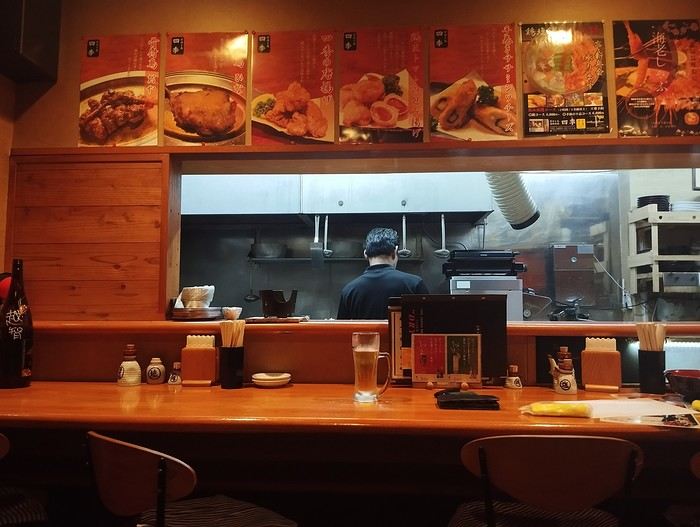
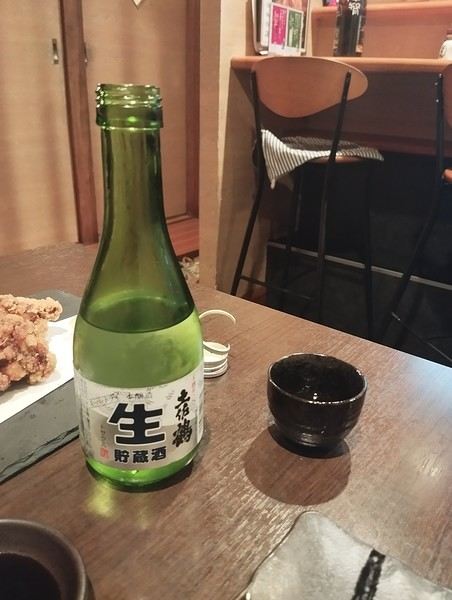
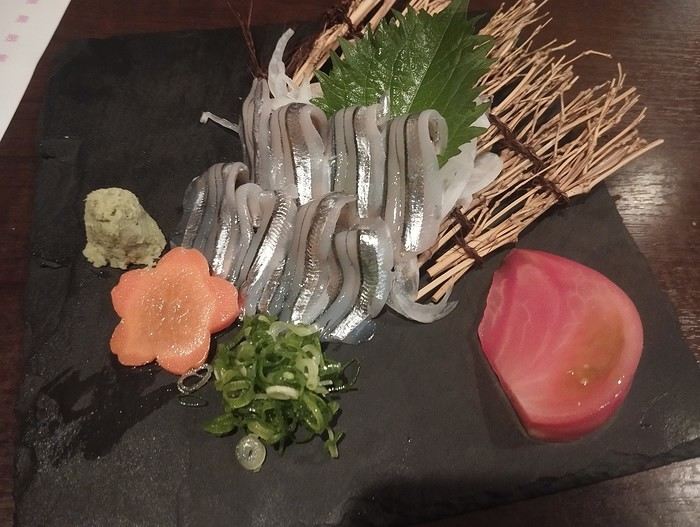
We’re in front of a restaurant but can’t quite tell what kind of place it is. We ask a young man passing by, not expecting it would lead to another lovely encounter. We ask him for a restaurant that’s still open at this hour and, more importantly, a good one. As always, he thinks seriously before giving us a name. With no internet, he eventually decides to take us there himself—it’s much simpler. We walk for about 10 minutes. He takes us to what he considers the best izakaya. Along the way, we chat a little. He’s 18 and a student. The izakaya is near a canal, tucked away in little-known streets, on the second floor of a building. He comes up with us to introduce us and explain our arrival. We’re on the restaurant’s landing, the door slightly ajar, and the young man explains that we’re French and looking for a good, open restaurant, which is why he brought us here—because, in his opinion, it’s the best izakaya. The staff is surprised to see French people and touched that the young man thought of their restaurant. They give us a very warm welcome because we’re their first French customers. As for the young man, to thank him for bringing us to their restaurant, the owner invites him to eat for free. He’s seated at the counter while we’re given a table for four. It’s tiny—just two tables, two private rooms, and a bar. The atmosphere is family-like and very laid-back. You can really feel the love. We receive a fabulous welcome. The owner, Yuki, comes to explain the dishes, offers us a bottle of sake, chats with us, and tells his regulars that we’re his “best friends.” In short, the evening unfolds in a joyful atmosphere, and the food is great. The team jokes around, and we laugh with them. The izakaya’s specialty is chicken. We try, for example, a cherry tomato wrapped in fried chicken skin. We also eat sashimi of a fish called Kibinago, which we discovered and particularly enjoyed on our last trip. The young student eats heartily (omurice, ramen, karaage).
When the restaurant quiets down, Yuka-san, the owner’s wife, comes to talk to us. We chat with her for at least an hour in Japanese, sometimes using a voice translator. She and her husband have rented the restaurant. They’ve been married for 20 years but never had a honeymoon because they’ve been too busy. Her dream is to go to France, but it’s expensive and requires time off.
She’s been to Korea, Hawaii, Tokyo, and Osaka because their 21-year-old son lives in the latter city.
Yuka is so cheerful. She seems to have the innocence and joy of an 8-year-old, and it’s refreshing. She’s thrilled to welcome French tourists. They’ve maybe had Americans three or four times. She gives us some sightseeing tips.
 The night is well underway, and it’s time for us to head back to sleep after such a great day.
We talked for a while before parting ways. We enjoy the sunset reflecting on the water, offering a magnificently romantic view.
After this mid-journey interlude, we finally drive the last hour to our hotel—the cheapest of the trip. It’s an excellent surprise. For less than 50 euros, and based on the photos we’d seen, we had some apprehensions, but it’s much better than expected in terms of value for money. First, we have a reserved parking spot right in front of the hotel. And it’s serious business—a white-and-orange striped post with our name on it marks our spot. Every time we park, an employee rushes out to remove it so we don’t have to get out of the car, guides us into the space, and puts the post back when we leave. What incredible service!
The room isn’t luxurious, of course, but it’s not as small as we’d imagined. Plus, there are unlimited drinks available 24/7, fresh fruit juice for a snack, free bath salts, and all the usual amenities (razors, cotton swabs, etc.) at our disposal.
We arrived late, so after checking into our room, we quickly set off in search of a restaurant. As mentioned earlier, given the time, we need to hurry. Plus, we’re in a small town, so it’s quieter.
We’re in front of a restaurant but can’t quite tell what kind of place it is. We ask a young man passing by, not expecting it would lead to another lovely encounter. We ask him for a restaurant that’s still open at this hour and, more importantly, a good one. As always, he thinks seriously before giving us a name. With no internet, he eventually decides to take us there himself—it’s much simpler. We walk for about 10 minutes. He takes us to what he considers the best izakaya. Along the way, we chat a little. He’s 18 and a student. The izakaya is near a canal, tucked away in little-known streets, on the second floor of a building. He comes up with us to introduce us and explain our arrival. We’re on the restaurant’s landing, the door slightly ajar, and the young man explains that we’re French and looking for a good, open restaurant, which is why he brought us here—because, in his opinion, it’s the best izakaya. The staff is surprised to see French people and touched that the young man thought of their restaurant. They give us a very warm welcome because we’re their first French customers. As for the young man, to thank him for bringing us to their restaurant, the owner invites him to eat for free. He’s seated at the counter while we’re given a table for four. It’s tiny—just two tables, two private rooms, and a bar. The atmosphere is family-like and very laid-back. You can really feel the love. We receive a fabulous welcome. The owner, Yuki, comes to explain the dishes, offers us a bottle of sake, chats with us, and tells his regulars that we’re his “best friends.” In short, the evening unfolds in a joyful atmosphere, and the food is great. The team jokes around, and we laugh with them. The izakaya’s specialty is chicken. We try, for example, a cherry tomato wrapped in fried chicken skin. We also eat sashimi of a fish called Kibinago, which we discovered and particularly enjoyed on our last trip. The young student eats heartily (omurice, ramen, karaage).
When the restaurant quiets down, Yuka-san, the owner’s wife, comes to talk to us. We chat with her for at least an hour in Japanese, sometimes using a voice translator. She and her husband have rented the restaurant. They’ve been married for 20 years but never had a honeymoon because they’ve been too busy. Her dream is to go to France, but it’s expensive and requires time off.
She’s been to Korea, Hawaii, Tokyo, and Osaka because their 21-year-old son lives in the latter city.
Yuka is so cheerful. She seems to have the innocence and joy of an 8-year-old, and it’s refreshing. She’s thrilled to welcome French tourists. They’ve maybe had Americans three or four times. She gives us some sightseeing tips.