

Day 10, Thursday, August 6: Hermigua/El Corralete, Las Hayas, Valle Gran Rey, boat trip along the west coast of La Gomera, Valle Gran Rey (Playa de Las Vueltas), Las Hayas, Garajonay Natural Park (El Bailadero trail, Hermigua/El Corralete)
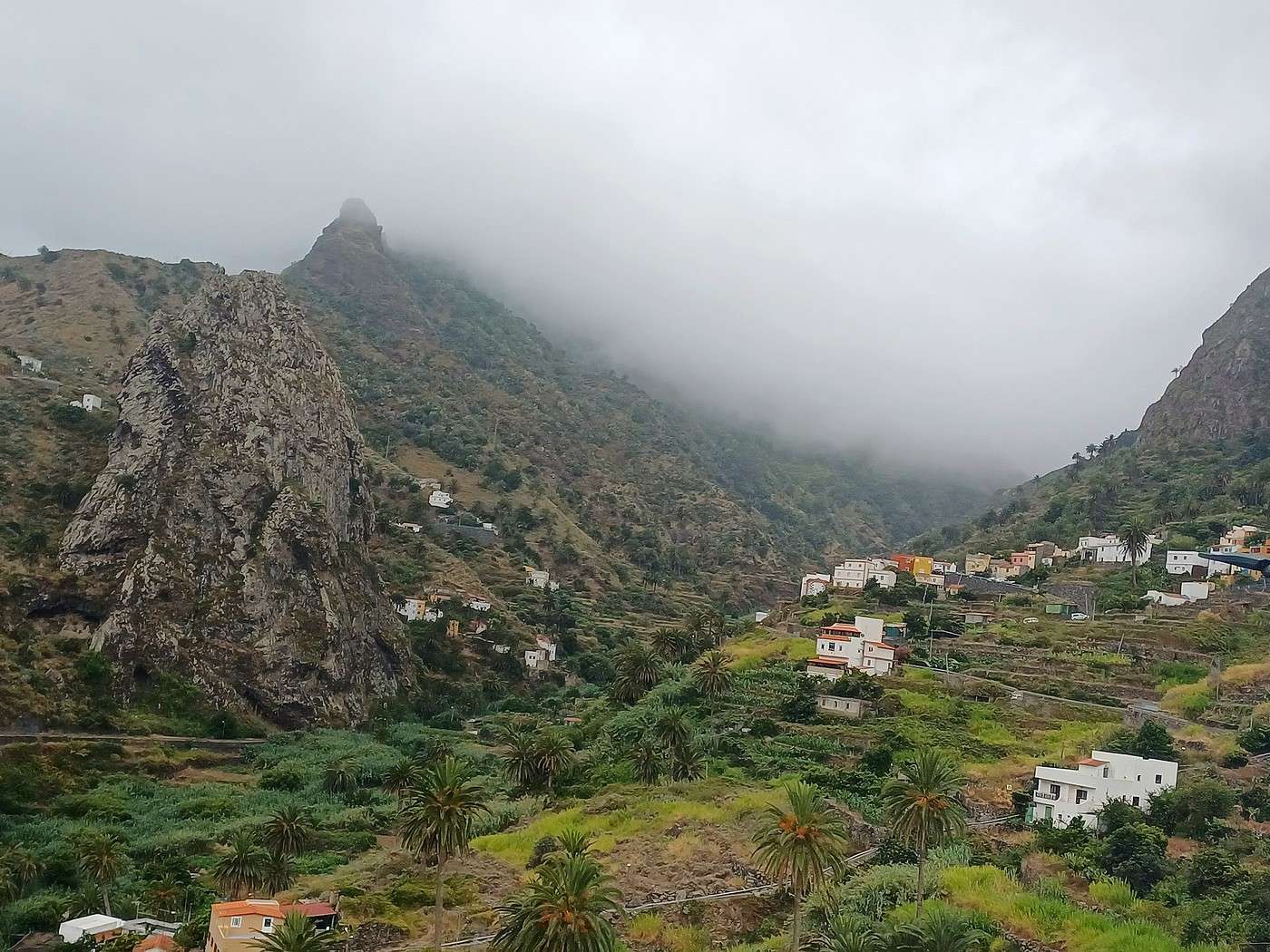
This morning, we wake up earlier because we’re heading back on time to our first place of stay, Valle Gran Rey, since we’ve booked a whale-watching boat trip. It’s cooler and more humid, and the view from the window—misty mountains above the sea and lush green fields—is still breathtaking.
Once again, it’s Magali’s gofio pancakes that give us the energy to retrace our route back to Valle Gran Rey via the Garajonay Park forest. The village of Las Hayas has become our usual stop for a quick five-minute break when the kids start feeling queasy from the winding road. Just enough time to stretch our legs at the edge of the forest and admire the secluded houses nestled in nature.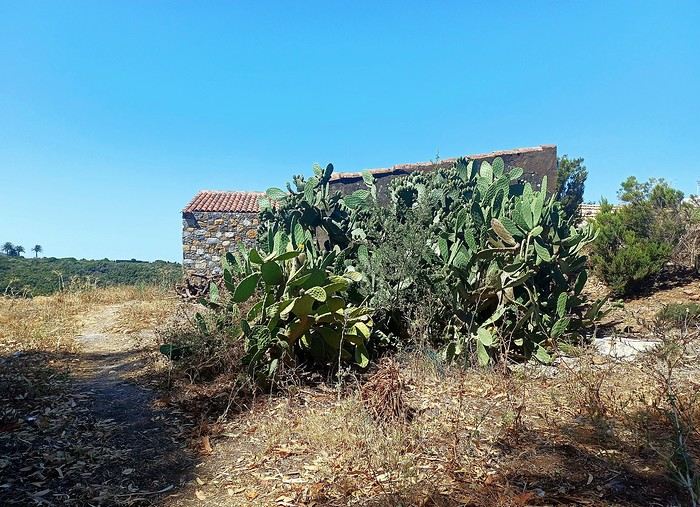
After about an hour and 45 kilometers, we’re once again facing the stunning landscape of the Valley of the Great King, which never fails to enchant us. From the GM-1, we spot Buena Vista, our old house perched on the heights of La Calera. First, we stop by Cicar at the port of Valle Gran Rey because a warning light came on in our trusty Opel Corsa. Phew, it was just the oil level... We then park by the beach to have lunch at Mango, the first restaurant we tried in La Gomera, right across from our favorite beach in La Calera. Magali and I share a delicious mixed salad with local fruits, along with a plate of fried goat cheese, another local specialty. This beachside restaurant is always a safe bet. Afterward, we head back to the port where we’re meeting the Oceano Whale Watching team. Magali stops by a pharmacy to buy seasickness pills because she knows herself well...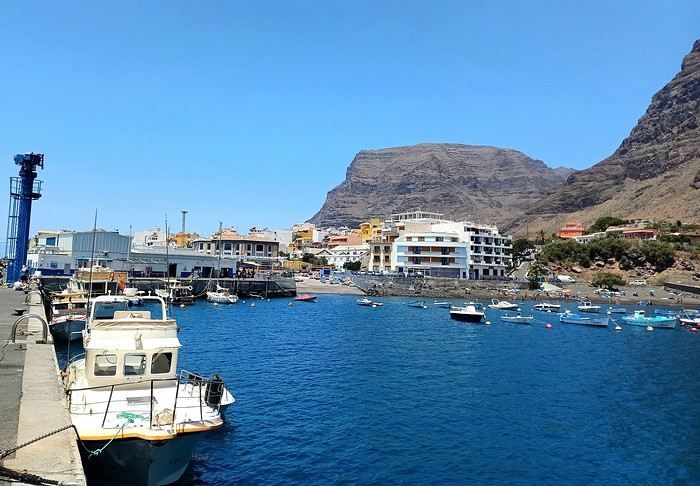
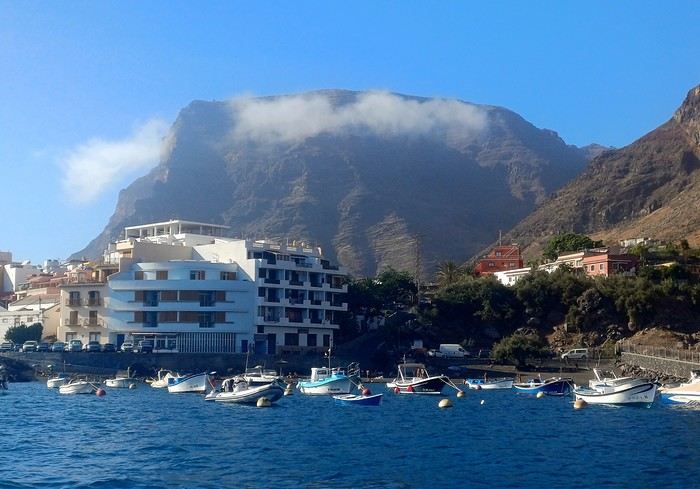
We enter the small port where a colorful religious festival seems to be preparing.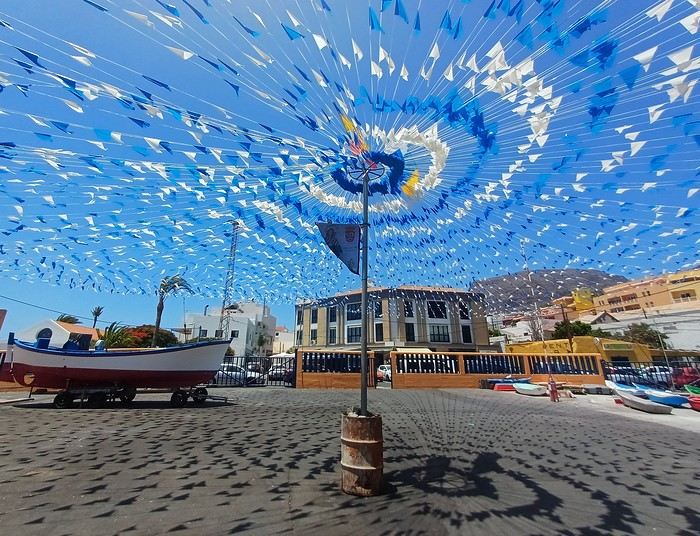 We look for our boat along the quay. Oceano Whale Watching is a German-run agency and the most reputable in La Gomera, especially due to its ecological commitment and protection of cetaceans. After finally finding the boat, we’re greeted by the Spanish captain and our German guide, who helps us make the slightly acrobatic descent down the ladder from the quay. It’s a very small boat limited to ten people: just us, a German family, and a German couple. Once the safety instructions are given and the guide reminds us that sightings of marine animals—especially whales, which everyone hopes to see—are never guaranteed, our boat leaves the port and heads out to sea.
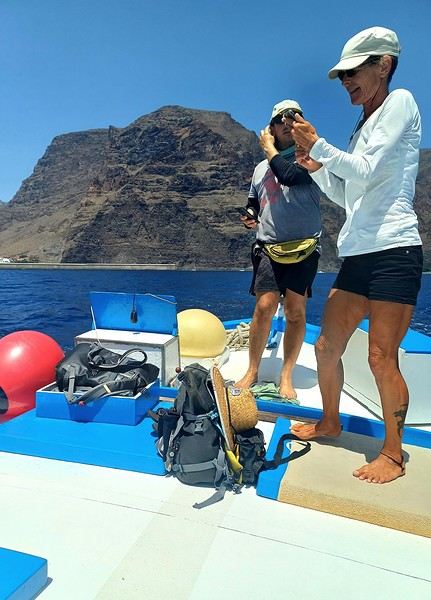
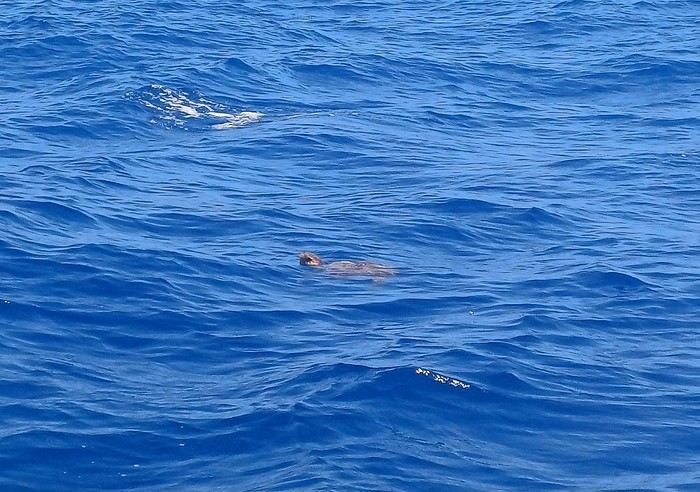
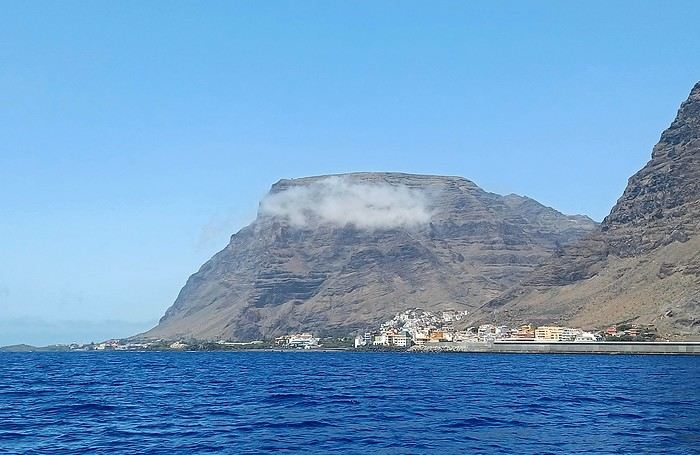 The energetic guide moves back and forth to give us explanations or returns to the captain to search for the best spots with her binoculars. Whenever she spots a floating plastic bag, she jumps onto the small deck with a net to remove the intruder from the Big Blue. Théo, wearing his life jacket, starts getting sleepy. We tuck him in at the end of the bench by the edge of the boat, and the guide covers him with a shawl to protect him from the sun. He falls asleep right away... Soon, one of the German tourists spots something near the railing. It’s a pair of sea turtles! The captain cuts the engine and approaches slowly. The turtles swim at the surface for a minute before diving back under the waves. This is promising! Except the waves are rocking us pretty hard, and Magali, despite the pill, starts sweating bullets and feeling sick. Forbidden from using the toilet—otherwise, the guide assures her she’d be stuck there for 3 hours—she has to vomit overboard and lies down on one side of the bench, with Théo on the other.
She doesn’t even have the energy to turn her head when we come across another turtle, even more visible, swimming proudly with its little head above water.
But from then on... it’s a bust. We sail along the Gomeran coast toward the south while moving a bit farther offshore, but we don’t find anything except the inevitable Cory’s shearwaters floating offshore like ducks in a pond. However, the guide teaches us more about these birds, which live only at sea and come ashore only to breed and lay their eggs on rocky coasts. That’s why their eerie cries can be heard when night falls. Far from being frightening, they’re actually victims—clumsy on land, they become easy prey for stray cats and dogs. They seemed more numerous and noisy during the full moon, even though they apparently only leave the sea on moonless nights. If the full moon excites them even more than usual, I noticed that in Valle Gran Rey, the Teguerguenche and Adivino mountains block the moon for much of the night. And in Hermigua, we don’t hear any shearwaters.
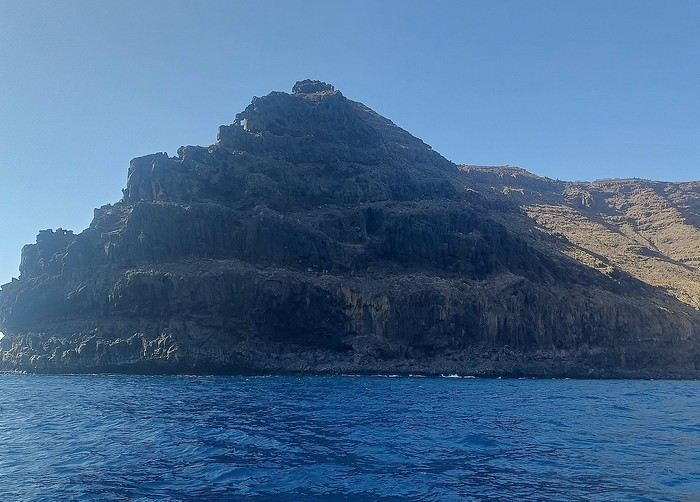
We also spot some amusing flying fish. At first glance, I thought they were big dragonflies! As we reach the south of La Gomera, near Santiago, we see the hazy outline of Teide before turning back. It seems our guide and captain have given up hope of spotting anything else... Still, we sail along the coast to admire beautiful volcanic formations, sea caves, a few secluded beaches, and the island’s peaks, like the impressive Fortaleza de Chipude at 1,243 meters, especially striking from the ocean.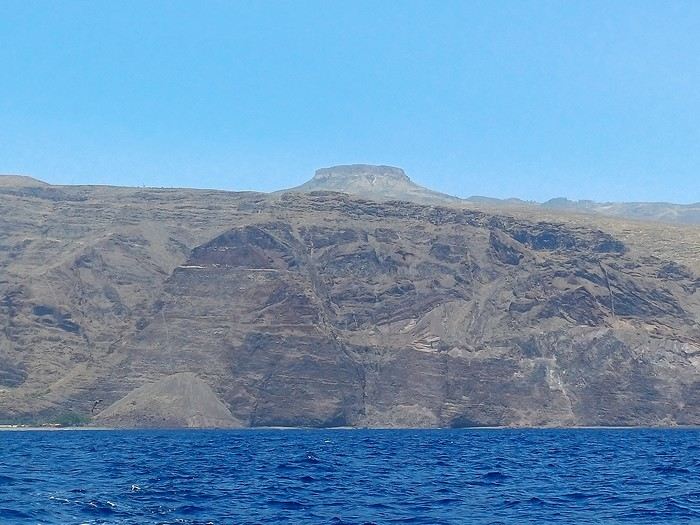
 But everyone understands it’s over, even though the guide keeps moving around, miming to call the whales to her. As we retreat, the wind carries away Théo’s cap, which had woken up in the meantime, into the vast ocean: he starts crying, inconsolable. We turn back, and thanks to her experience, the guide manages to spot the blue cap in the blue water in less than a minute and scoops it up with the net—I never would’ve thought that possible. Without a doubt, the highlight of the trip!
In the end, we return to the small port almost empty-handed.
The guide apologizes that we didn’t see any whales or dolphins. As a sign of Oceano Whale Watching’s commitment, she hands out small flyers to sign a petition against whale hunting. We disembark, thanking them because even if we didn’t see much, they made the trip enjoyable... if not essential, especially given the rather high price. It was nice, but still a bit disappointing. That’s how it goes—you can’t order whales to come to you...
This morning, we wake up earlier because we’re heading back on time to our first place of stay, Valle Gran Rey, since we’ve booked a whale-watching boat trip. It’s cooler and more humid, and the view from the window—misty mountains above the sea and lush green fields—is still breathtaking.
Once again, it’s Magali’s gofio pancakes that give us the energy to retrace our route back to Valle Gran Rey via the Garajonay Park forest. The village of Las Hayas has become our usual stop for a quick five-minute break when the kids start feeling queasy from the winding road. Just enough time to stretch our legs at the edge of the forest and admire the secluded houses nestled in nature.
After about an hour and 45 kilometers, we’re once again facing the stunning landscape of the Valley of the Great King, which never fails to enchant us. From the GM-1, we spot Buena Vista, our old house perched on the heights of La Calera. First, we stop by Cicar at the port of Valle Gran Rey because a warning light came on in our trusty Opel Corsa. Phew, it was just the oil level... We then park by the beach to have lunch at Mango, the first restaurant we tried in La Gomera, right across from our favorite beach in La Calera. Magali and I share a delicious mixed salad with local fruits, along with a plate of fried goat cheese, another local specialty. This beachside restaurant is always a safe bet. Afterward, we head back to the port where we’re meeting the Oceano Whale Watching team. Magali stops by a pharmacy to buy seasickness pills because she knows herself well...
We enter the small port where a colorful religious festival seems to be preparing.
We look for our boat along the quay. Oceano Whale Watching is a German-run agency and the most reputable in La Gomera, especially due to its ecological commitment and protection of cetaceans. After finally finding the boat, we’re greeted by the Spanish captain and our German guide, who helps us make the slightly acrobatic descent down the ladder from the quay. It’s a very small boat limited to ten people: just us, a German family, and a German couple. Once the safety instructions are given and the guide reminds us that sightings of marine animals—especially whales, which everyone hopes to see—are never guaranteed, our boat leaves the port and heads out to sea.
But from then on... it’s a bust. We sail along the Gomeran coast toward the south while moving a bit farther offshore, but we don’t find anything except the inevitable Cory’s shearwaters floating offshore like ducks in a pond. However, the guide teaches us more about these birds, which live only at sea and come ashore only to breed and lay their eggs on rocky coasts. That’s why their eerie cries can be heard when night falls. Far from being frightening, they’re actually victims—clumsy on land, they become easy prey for stray cats and dogs. They seemed more numerous and noisy during the full moon, even though they apparently only leave the sea on moonless nights. If the full moon excites them even more than usual, I noticed that in Valle Gran Rey, the Teguerguenche and Adivino mountains block the moon for much of the night. And in Hermigua, we don’t hear any shearwaters.
We also spot some amusing flying fish. At first glance, I thought they were big dragonflies! As we reach the south of La Gomera, near Santiago, we see the hazy outline of Teide before turning back. It seems our guide and captain have given up hope of spotting anything else... Still, we sail along the coast to admire beautiful volcanic formations, sea caves, a few secluded beaches, and the island’s peaks, like the impressive Fortaleza de Chipude at 1,243 meters, especially striking from the ocean.
The guide apologizes that we didn’t see any whales or dolphins. As a sign of Oceano Whale Watching’s commitment, she hands out small flyers to sign a petition against whale hunting. We disembark, thanking them because even if we didn’t see much, they made the trip enjoyable... if not essential, especially given the rather high price. It was nice, but still a bit disappointing. That’s how it goes—you can’t order whales to come to you...