
Skip to content
Northern Chile, Andean impressions.Chapter 16 of 35
Northern Chile, Andean impressions.Travelogue by Attila · 35 chapters

Chapter 16 · Dec 23, 2024

Northern Chile, Andean impressions

Attila · 2 min read · 7 photos
Re: Northern Chile, Andean impressions
How many more kilometers to the Salar?

About ten!


We’ll turn right and should start seeing the lagoon soon. Should we have a picnic now or when we arrive?
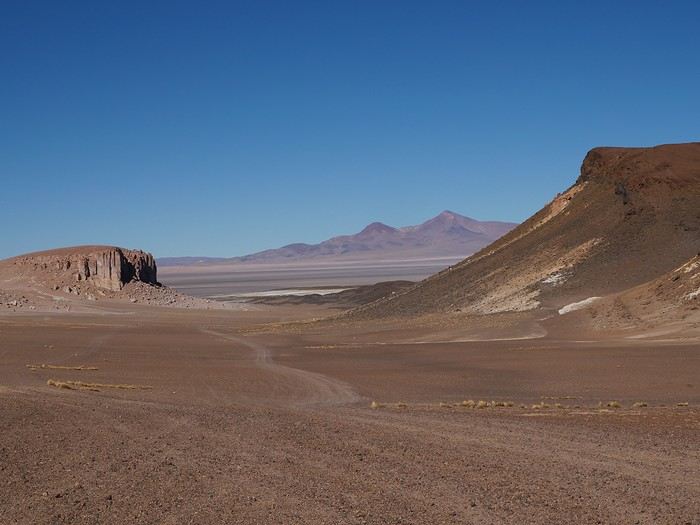
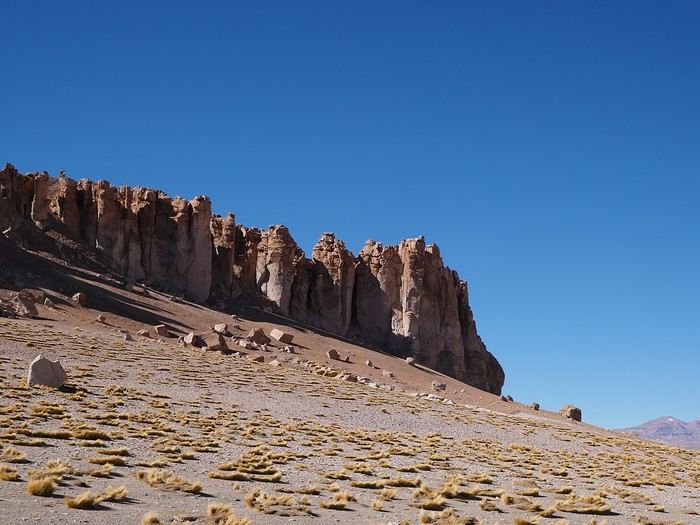
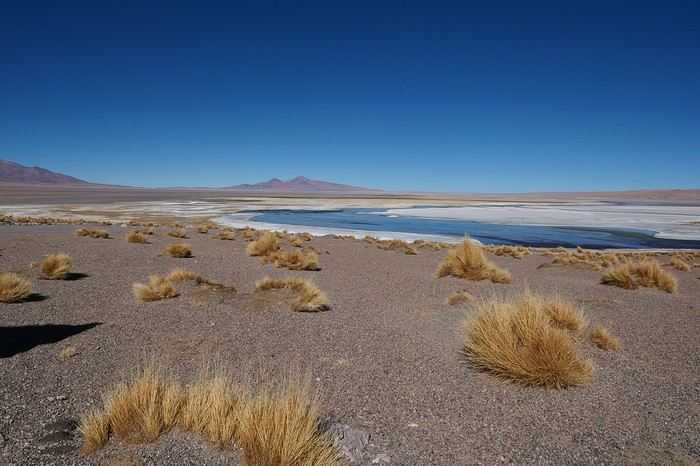
A few sandwiches later, we reach our destination—the Salar de Tara stretches out before us.
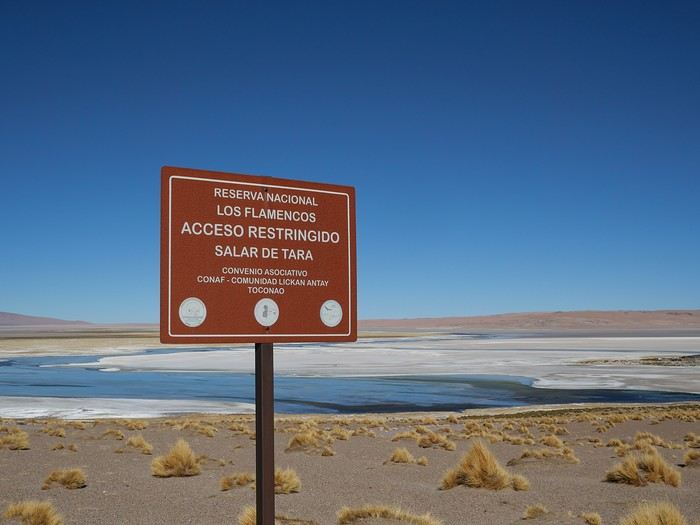


To protect the flora and fauna in this extremely fragile area, Chilean authorities have banned close access to the lagoon.

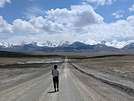
The 4x4 track, the landscapes we crossed, and the view of the distant lagoon are all really great, and we don’t regret our trip at all.


However, my companion starts feeling unwell. Soroche has struck.

We don’t linger and cover the kilometers of dirt roads much faster than on the way there.
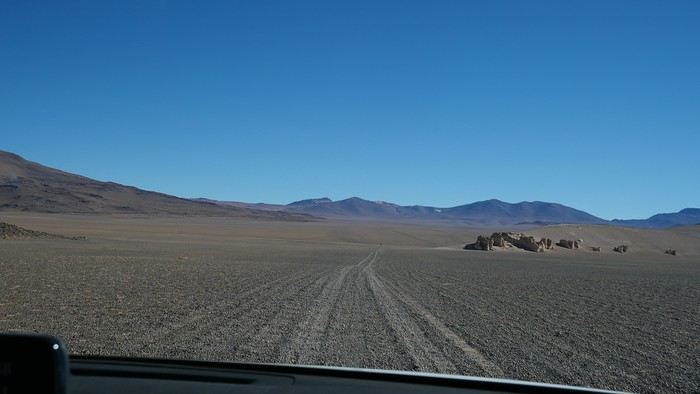


The dune is now in front of us.

We wonder if we’ll manage to get over it...

From above, it looked like just a small dune, but from below, it’s a whole different story!

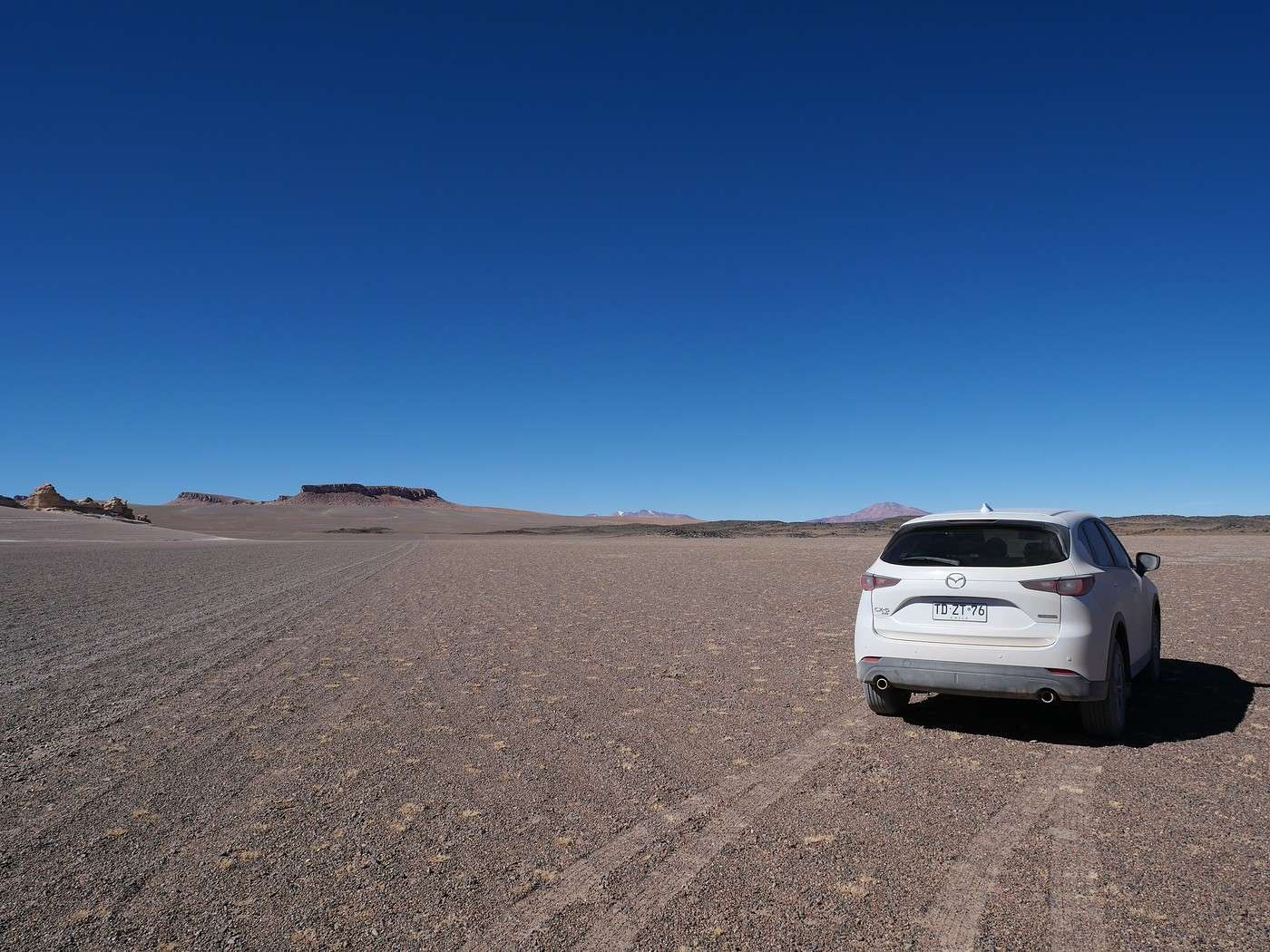
We approach it at an angle, sensing that our pseudo 4x4 doesn’t have enough power for a head-on attack.

Come on, Titine, one last push.

The Mazda seems about to stall, so we make a turn to give it a bit of breathing room.

The top is getting closer—we’re going to make it!

Yessssssss!

Phew...

My companion’s headaches are now really intense; he feels like he’s struggling to breathe.

We hurry back toward the valley.

We still have to cover 70 kilometers to drop below 4,000 meters and another 10 to get below 3,000.

We stop to take deep breaths of air richer in oxygen.
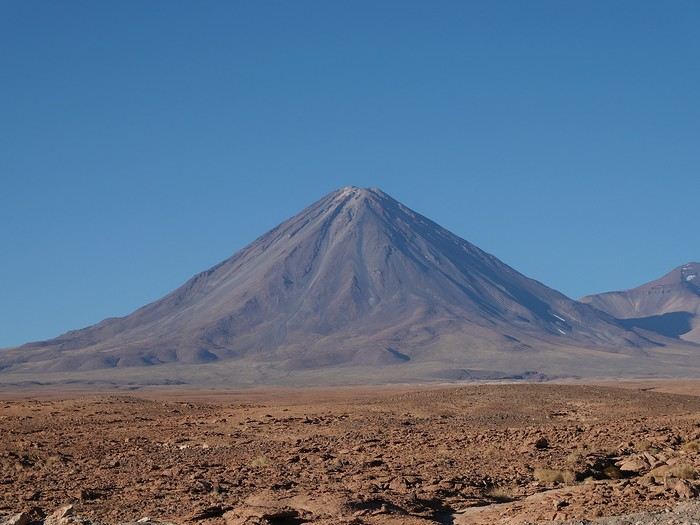


It’ll take a few more hours for the effects of the altitude to wear off.

We stayed too long on the high plateaus (today’s maximum: 4,826 m).

Tomorrow, we’ll try to be more reasonable.
15 replies to this chapter

See all
TicapiGlobetrotter3,002 posts· 2 years ago
Plus, it can happen even if you’ve never been prone to it before... nothing’s that simple


True, we’ll see how it goes in Peru. Personally, I’ve always handled altitude well, but you never know. I think good acclimatization is important, but it’s not always possible. You got sick at Colca Canyon, which isn’t that high. Ideally, you shouldn’t have continued to Lake Titicaca. But it’s not easy to change your itinerary last minute.

Fatigue, not drinking enough, or an iron deficiency can also play a role.
Rouquine38Globetrotter3,878 posts· 2 years ago
Yes, there are so many factors to consider that it’s hard to know if you’ll get sick or not. I hope it continues to go well for you! My husband was in great shape even at 5,000 m, while I was a total wreck 😅
AttilaOPGlobetrotter3,541 posts· 2 years ago
5,000 meters—wow, that’s really high!

Some people start feeling altitude sickness as low as 2,500 meters. 🤪

According to this site, here are the risk factors:

History of altitude sickness

Living at sea level or very low altitude (under 900 meters)

Ascending too high too quickly

Excessive exertion

Sleeping at too high an altitude

La Rinconada is supposedly the highest settlement in the world at 5,300 meters. It’s a Peruvian mining town. Calling it a "town" is a bit of a stretch...
Thierry6789Veteran1,040 posts· 2 years ago
Apparently, you need to sleep above 3,500m to find out if you get altitude sickness or not. Plus, it can hit even if you’ve never had it before...


From my personal experience, 3,500 meters really is a kind of tipping point. Acute mountain sickness (AMS) usually starts to kick in around that height.

That said, sometimes when you step off the plane in Calama—which isn’t even that high at 2,400 meters—just like in San Pedro de Atacama (SPA), people can already feel some altitude-related discomfort.

What’s more, even locals from small Andean villages can get AMS after spending a few days by the coast and then returning home.

Avoiding sudden movements is super important.

Local remedies usually work well too. Coca tea, known for its vasodilator effects, does the trick. There’s also another less-known plant, chachacoma (Senecio graveolens), that’s really helpful.

In Chile, they don’t use the term "soroche"—altitude sickness is called "puna," and they’ve even turned it into a verb: "apunarse."

See you next time! !
WhisketteRegular78 posts· 2 years ago
Hi Agnès. I’m devouring your trip report with gusto after a little week at my son’s place in Gloucestershire. I’m loving it, but I’m really surprised. Eight years ago, apart from the Moon Valley, I never had to pay an entrance fee—and I visited quite a few lagoons (Tébinchique, Miniques, Miscanti, etc.). In fact, I was often alone at these sites, not a soul around. Things seem to have changed a lot—the tourist hunt is on. Anyway, I’m loving it! More!!! Whis.
Thierry6789Veteran1,040 posts· 2 years ago
Eight years ago, apart from the Moon Valley, I never had to pay an entrance fee, and yet I visited quite a few lagoons (Tébinchique, Miniques, Miscanti, etc.).


Yes, now even the smallest entrance is paid.

However, I think that 8 years ago, the lagoons were already paid too. You probably arrived outside of opening hours, very early in the morning.

I perfectly remember that at the Tatio Geysers, they started charging an entrance fee on the day of the opening match of the 1998 World Cup, which took place in France, over 25 years ago! I think I even kept the inaugural ticket as a souvenir. 🙂

In theory, the money from entrance fees is redirected to local indigenous communities so they can improve the existing infrastructure...
AttilaOPGlobetrotter3,541 posts· 2 years ago
Hey Gigi,

I guess you were there way off-season to see almost nobody. 😮

I went to SPA in the early 2000s, and there were already quite a few tourists for the sunset at Valle de la Luna and at El Tatio.

I don’t remember if it was paid entry because, since I hadn’t rented a car at the time, I booked all my excursions through agencies—everything was included.

Between the staff and the facilities, I get that it’s not free. But it should be simpler!

Why not a pass that gives access to everything, with a price based on the number of days?

That would benefit everyone in the region, not just those lucky enough to be born in a 3-star spot...

The rates vary depending on where you’re from: one for the Atacameños, one for other Chileans, and one for foreigners.
WhisketteRegular78 posts· 2 years ago
Hi Agnès. I was there in June 2018. But it's true that apart from the Moon Valley or El Tatio, which are very touristy, I was often alone far away. I should also say that I love quiet places and avoid crowded spots (Salt River, Rainbow Valley—what peaceful spots!). Even on the Jama Pass road, it was very quiet. Luck? And San Pedro de Atacama was still busy in the evening, Caracoles Street was quite full. Anyway, ready for the next part! :)
SbeckerVeteran1,145 posts· 2 years ago
Hi Agnès,

I’ve traveled through these parts many times, and looking at your travel journal brings back so many wonderful memories. Saying I enjoy reading your story and seeing your photos is a bit of an understatement… thanks! 🙂.
AttilaOPGlobetrotter3,541 posts· 2 years ago
Hi Samuel,

So glad to reminisce about those great memories! 😉
MaratiGlobetrotter2,153 posts· 2 years ago
She can’t, she’s still stuck on a chairlift, and she doesn’t have her laptop with her to keep working on her travel journal... 😏
AttilaOPGlobetrotter3,541 posts· 2 years ago
I'm back!

The travel journal will resume soon.😛