
Re: From Southern Shikoku, between land and sea, to the blue waters of Miyakojima and finally the megalopolis T
After my long rant, I’ll keep it short for today’s story. Also because the day was more relaxed. We stayed up late last night, so this morning, we’re taking our time to recover. It’s nice to slow down a bit during a road trip. As a result, just one activity today—but not just any. We discover the grand and splendid Nanrakuen Garden. It’s the largest garden on Shikoku.
Garden entry fees in Japan are usually affordable, but this one is an absolute steal. 160 yen per adult, which is about 1 euro. That’s the first pleasant surprise.
Right after the entrance (and exit), there are several stalls selling local food, like a mini market. There’s also the garden’s shop with lots of local products. You can grab an ice cream and relax near the bay windows, which offer a clear view of part of the garden.
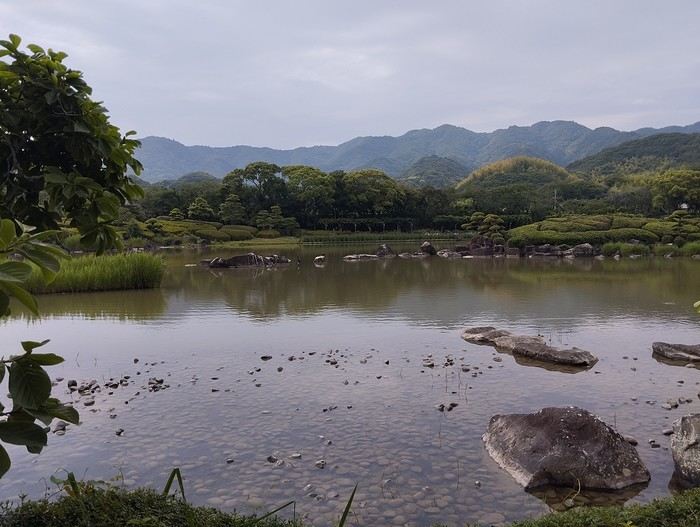
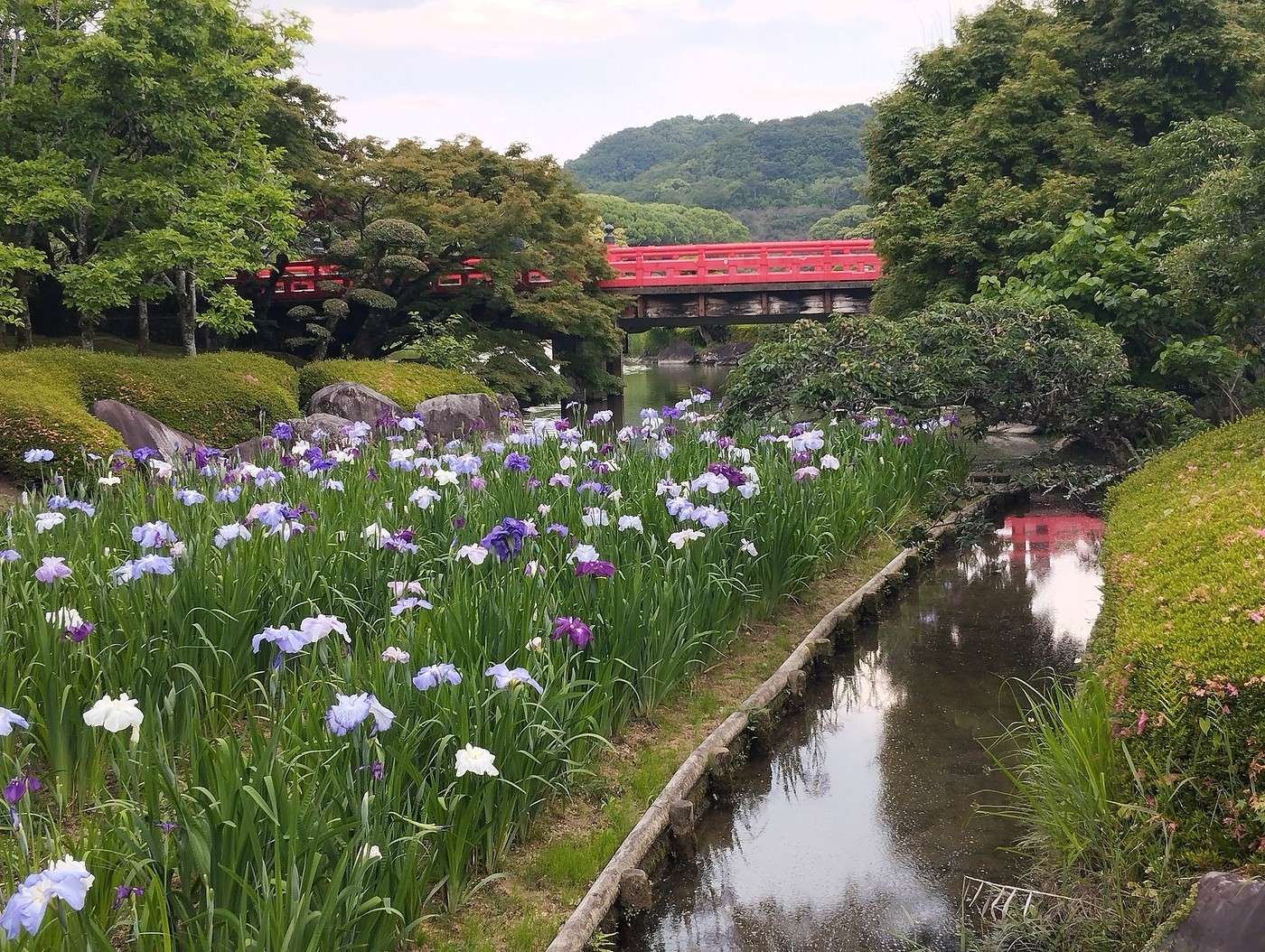
After a quick look around, we start our floral stroll. There are a few Japanese tourists. The place is peaceful and full of different spots: two ponds, flower-lined paths, lots of irises this season, a waterfall area in the forest, and several red bridges. Each of these spots can be seen from different angles, offering a new perspective depending on where you stand. There are plenty of places to sit and escape the heat. You can also go boating. For this activity, there’s no supervision—just a few boats at the dock. You drop what I think is 100 or 200 yen into an honesty box and row away. You can also buy duck food the same way if you’d like.
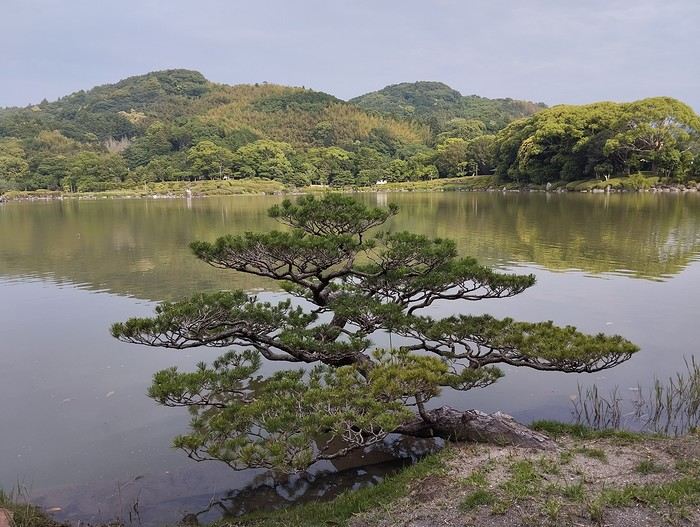
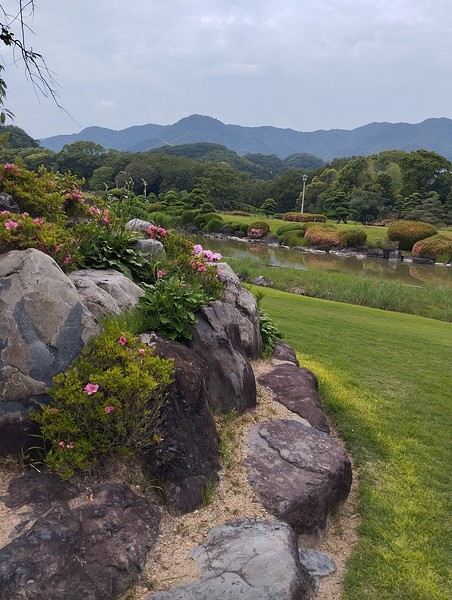
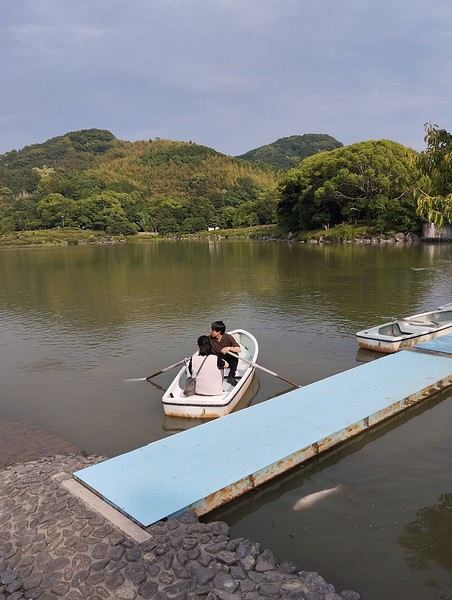
--Strolling here is an invitation to contemplation.
--Strolling here is an ode to Japanese gardens, and I’m surprised it isn’t more widely promoted as a tourist attraction. It’s one of the most beautiful Japanese gardens I’ve seen so far.
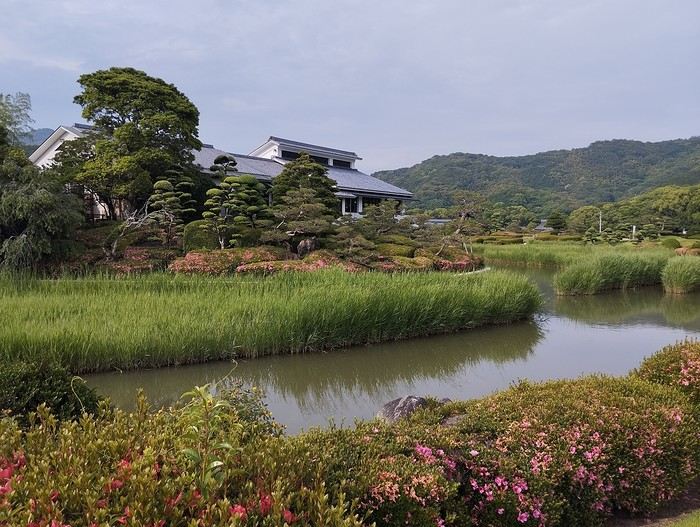
Tonight, there’s an illumination event planned in the garden, but it doesn’t start until 7 PM. The entry fee isn’t increased for the event. If we’d known, we would’ve come later to see it by day and night. Still, the daytime visit was enchanting. We spent several hours there.
We got back in the car and headed to a café by the sea. We drove through coastal villages where daily life seemed to unfold peacefully—like the group of grandmas sitting by the road chatting, fishermen of all ages waiting for a bite, or joggers going about their usual run.
We also noticed lots of people walking dogs, especially Labradors. I point this out because dogs are generally rare in Japan, and when you do see them, they’re usually small. But here in Shikoku, there are way more dogs, and they tend to be larger breeds. Maybe—rightly or wrongly—I associate this with the natural environment and the sense of space, which makes it easier to own a dog. I don’t know for sure, but the observation stands.
After driving along the coast for a while, the GPS said we’d arrived, but there was nothing—just the sea, a young man fishing, and a narrow road. I got out of the car to ask the guy. He didn’t know but saw a sign in kanji down the road and made a cross sign to indicate it was closed today. I took a photo of the sign to translate later at the hotel with Wi-Fi. We found out it was an exceptional closure.
We turned around and headed back to the hotel. In the parking lot, as usual, we got a kick out of the staff welcoming us like stars—removing that little post with our name when we arrived and putting it back when we left. We’d spotted an izakaya we wanted to try. Though it wasn’t far, we decided to drive. We parked, but nothing indicated it was the restaurant’s parking. A young woman greeted us at the restaurant and made it clear it wasn’t the right one. She struggled to explain where their parking was, and we couldn’t find it after getting back in the car. We didn’t want to risk getting blocked in again, like we had on two other trips. So, we went back to drop off the car at the hotel and walked to the izakaya—it wasn’t too far.
At the restaurant, we were seated in a traditional private room on the floor. At waist height, it seemed high, and my partner misjudged the distance between his backside and the floor, nearly knocking over the partition separating us from another private room. His fall and the loud noise startled the people in the next room. The noise of the fall plus their reaction drew all eyes to us for a solid five minutes. Luckily, the partition wasn’t broken—just moved. A server fixed it, and life in the restaurant went back to normal.
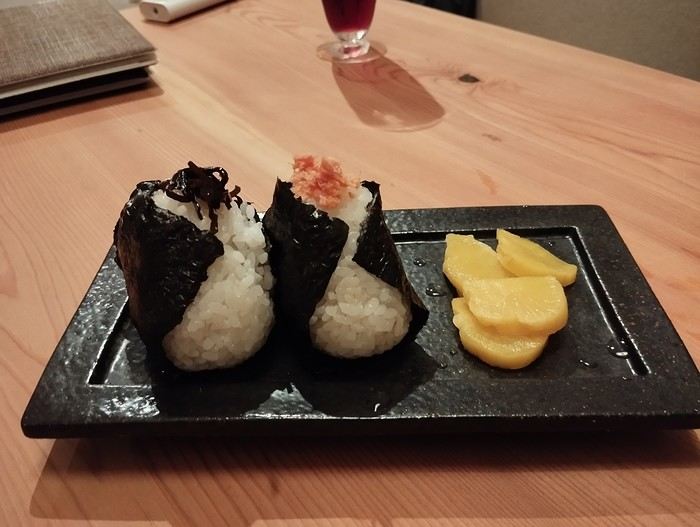
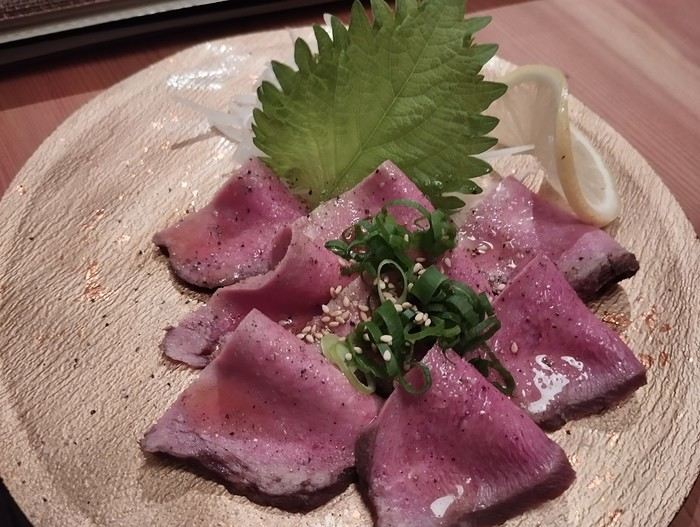
Here too, there was no photo menu. The staff, who only spoke Japanese, seemed uncomfortable serving foreigners. They were hesitant but gave it a shot. Despite the communication challenges, we managed to order enough to fill our stomachs. On the menu: karaage (fried chicken), beef tongue, egg, onigiri, beef skewers, and gyoza. It was good.
The izakaya was packed, and the conversations were lively.