

Re: Tuscany: Arezzo Province and the Sienese Area
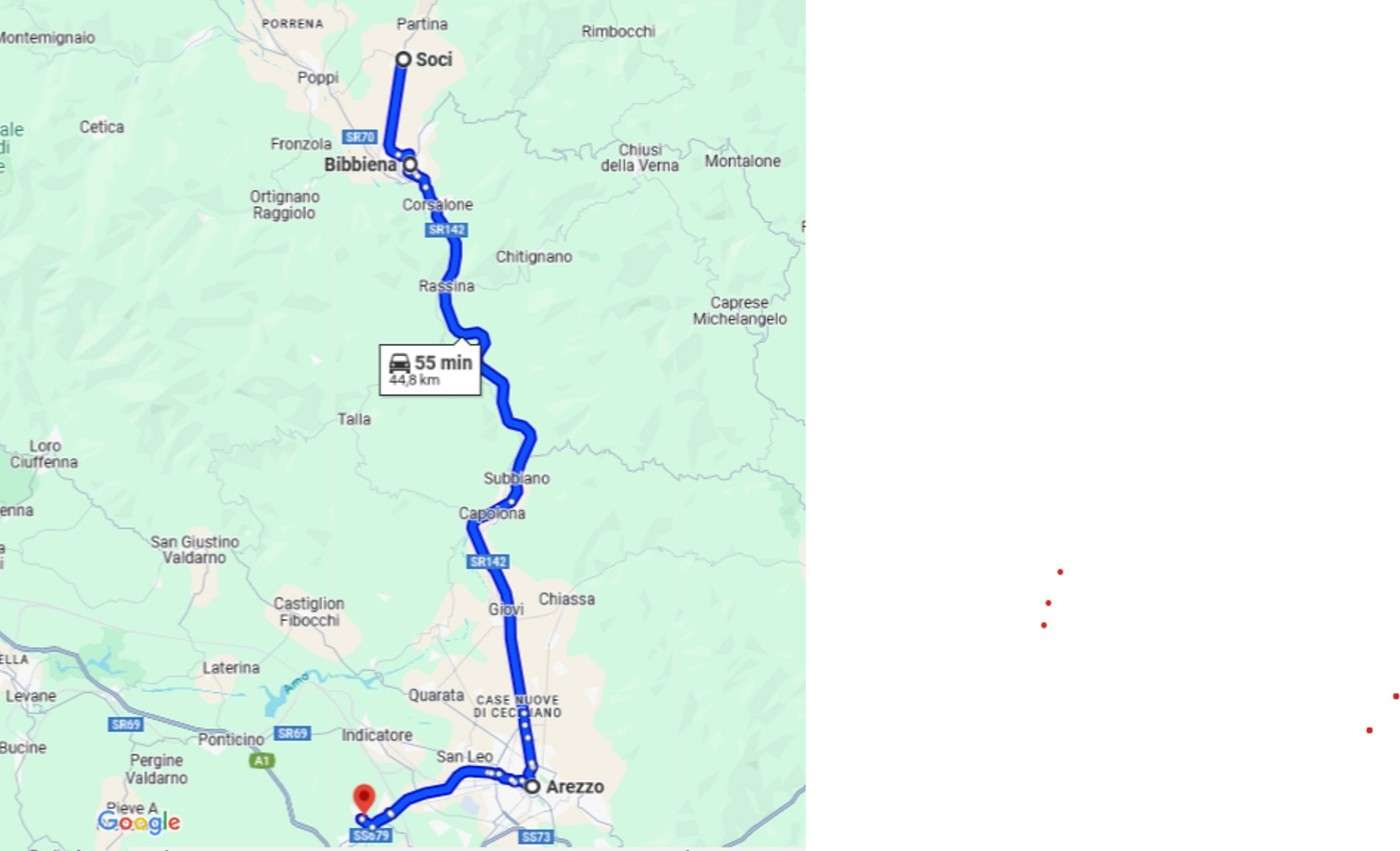
I’m changing campsites to stay near Arezzo, 8 km to the west, next to the village of Ruscello. Since there’s less than 50 km between the two campsites, I’ll have the afternoon to start exploring Arezzo. During this part of the trip, I’ll visit Arezzo and the surrounding areas: the Valdichiana, a bit of the Valdarno, and a return to the Valtiberina.
The red dot is Ruscello. Maps for the excursions around Arezzo will come later.
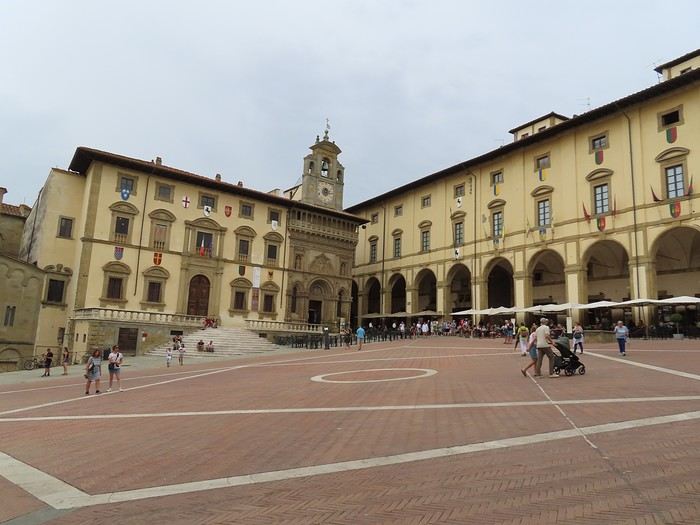
Arezzo is built on the side of a hill; a good first approach is to leisurely climb the hillside up to the main square (very well-known): Piazza Grande. It’s quadrangular and sloped (since it’s on the hillside); here it is with the "Logge Vasari" on the right (Arezzo is Vasari’s hometown) and the Palazzo della Fraternità dei Laici on the left.
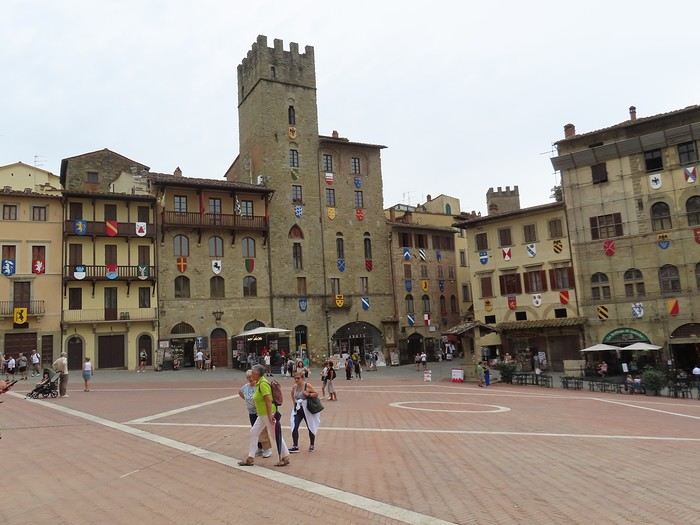
Once you cross it, here’s the view from above along the same diagonal (at ground level).
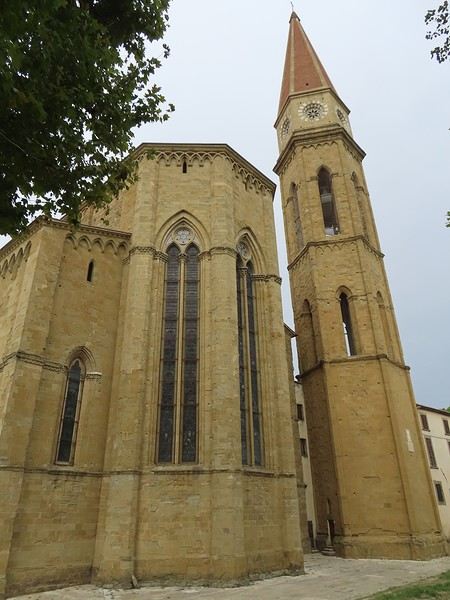
I’ll have a chance to return on a sunnier day. When you climb to the top of the hill, you arrive next to the Duomo (Cattedrale di San Donato; Saint Donatus Cathedral). It’s a Gothic cathedral whose construction took a long time, finishing in the 20th century in the... Neo-Gothic style. Here’s an example with the chevet (end of the 13th century) and the bell tower (mid-19th century, with the upper part completed in the 20th century). The locals in Arezzo nickname it "Il Matitone" (the big pencil) because of its distinctive shape.
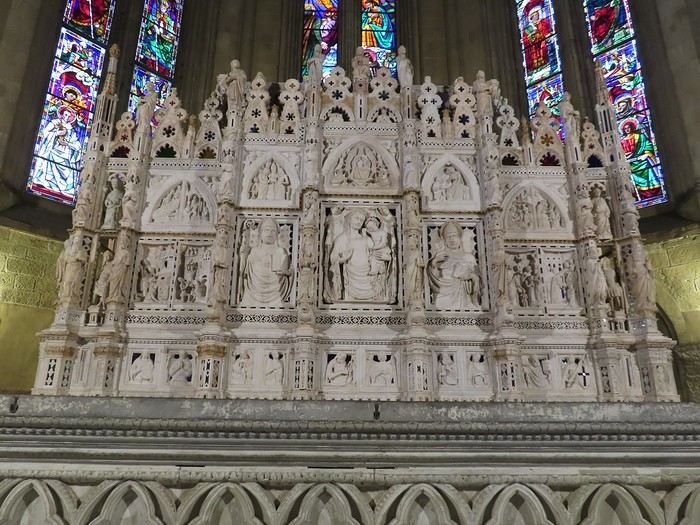
The interior contains many works of art; among them, I chose the Ark of Saint Donatus (Arca di San Donato), placed behind the high altar, entirely in white marble, sculpted throughout the Trecento by several artists. This monument holds the body of San Donato. Here’s the front with its profusion of scenes and pinnacles. In the background, you can glimpse the stained-glass windows of the cathedral’s chevet, a major work of Italian Renaissance stained glass (Guillaume de Marcillat, around 1525).
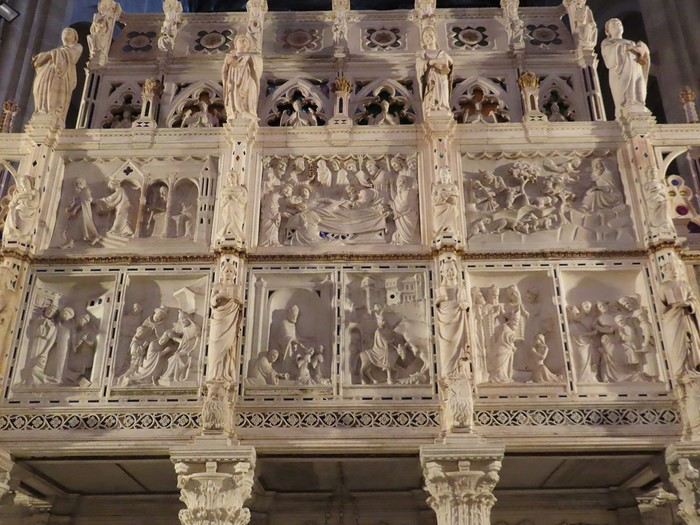
The back, mounted on Corinthian columns, depicts scenes from the life of San Donato.
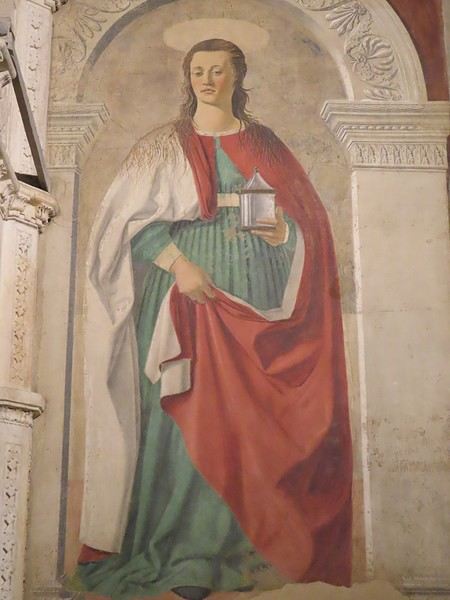
Piero della Francesca painted a Mary Magdalene (around 1460); he must have slipped away to create this fresco, which is the only trace of him in Arezzo outside of the Church of San Francesco (see tomorrow’s post).
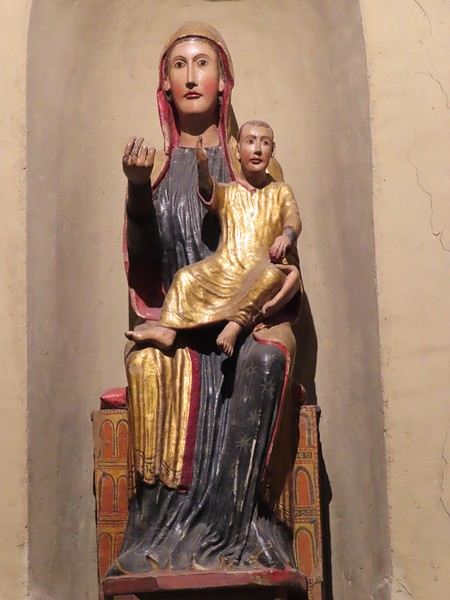
Finally, this statue (unknown 13th-century artist) comes from the old cathedral that was located outside the city walls.
More from the day in the next message.
Arezzo is built on the side of a hill; a good first approach is to leisurely climb the hillside up to the main square (very well-known): Piazza Grande. It’s quadrangular and sloped (since it’s on the hillside); here it is with the "Logge Vasari" on the right (Arezzo is Vasari’s hometown) and the Palazzo della Fraternità dei Laici on the left.
Once you cross it, here’s the view from above along the same diagonal (at ground level).
I’ll have a chance to return on a sunnier day. When you climb to the top of the hill, you arrive next to the Duomo (Cattedrale di San Donato; Saint Donatus Cathedral). It’s a Gothic cathedral whose construction took a long time, finishing in the 20th century in the... Neo-Gothic style. Here’s an example with the chevet (end of the 13th century) and the bell tower (mid-19th century, with the upper part completed in the 20th century). The locals in Arezzo nickname it "Il Matitone" (the big pencil) because of its distinctive shape.
The interior contains many works of art; among them, I chose the Ark of Saint Donatus (Arca di San Donato), placed behind the high altar, entirely in white marble, sculpted throughout the Trecento by several artists. This monument holds the body of San Donato. Here’s the front with its profusion of scenes and pinnacles. In the background, you can glimpse the stained-glass windows of the cathedral’s chevet, a major work of Italian Renaissance stained glass (Guillaume de Marcillat, around 1525).
The back, mounted on Corinthian columns, depicts scenes from the life of San Donato.
Piero della Francesca painted a Mary Magdalene (around 1460); he must have slipped away to create this fresco, which is the only trace of him in Arezzo outside of the Church of San Francesco (see tomorrow’s post).
Finally, this statue (unknown 13th-century artist) comes from the old cathedral that was located outside the city walls.
More from the day in the next message.