

Re: From Southern Shikoku, between land and sea, to the blue waters of Miyakojima and finally the megalopolis T
After a little break, I’m continuing my travel journal. Thanks for your patience!
Like many other mornings, this one was no exception—we headed to the mecca: the 7-Eleven konbini to grab breakfast. We’ve become fans of the fresh, affordable smoothies, not to mention the must-have fried chicken. Though I do sometimes cheat and go for a curry pan (warm bread stuffed with curry), which has a spicy, bold flavor I really enjoy.
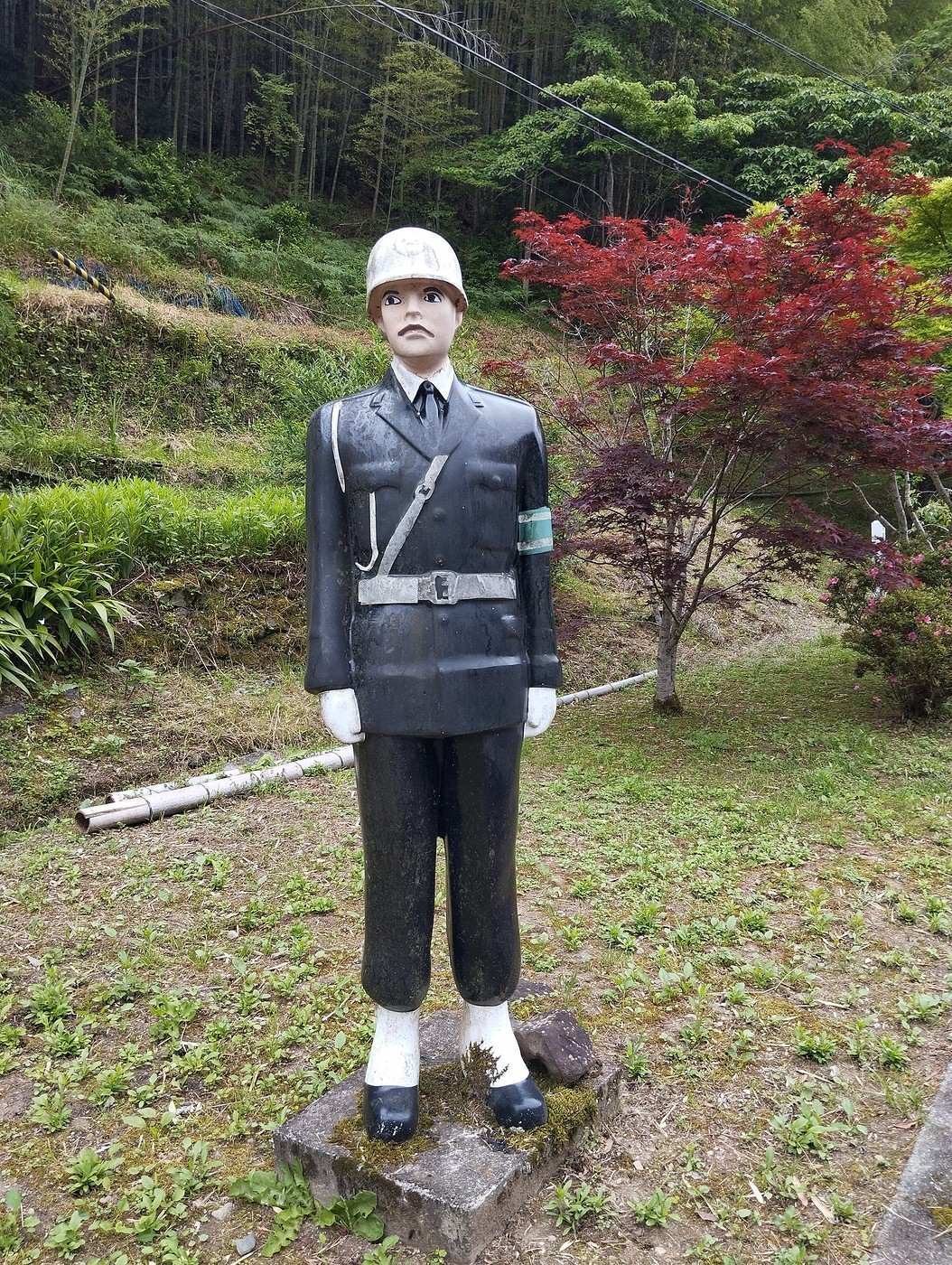
We then set off on our road-trip pilgrimage. We wanted to stop by Ayukaeri Falls, but it seems Shikoku’s waterfalls are trickier to find than we thought. We ended up driving in circles, feeling a bit frustrated. Having internet at that moment (and others) would’ve probably helped. So, a little defeated, we got back on the road. As we drove through the peaceful Japanese countryside—alternating between mountain landscapes, rice fields, and villages of all sizes—something familiar caught our eye for just a second. We knew we hadn’t imagined it when we spotted it again a little further down the road. It was Mamoru-kun, the iconic police officer from Miyakojima (Okinawa). A cop who’s always smiling, stands strong against typhoons, and never takes a day off—all to warn island residents about road dangers. Apparently, Shikoku cloned Mamoru-kun, and seeing him here in unfamiliar territory made us smile. What an adventurer!
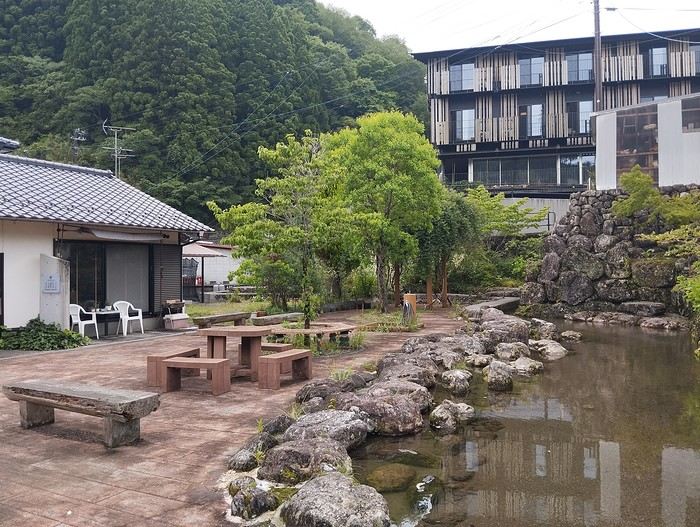
So, where were we headed today? Well, we were returning to Kochi Prefecture for a few hours. The destination was chosen for its architectural appeal: the small mountain town of Yusuhara, in the northwest part of Kochi. This town is special because it inspired the style (local materials, blending into the environment, and creating a homely feel) of the famous Japanese architect Kengo Kuma when he visited a friend in 1992. That’s why this tiny town of barely 3,000 people has six buildings designed by him. We started by visiting the stunning and impressive library. From the outside, the building has real style and invites you in without being intimidating.
You have to take off your shoes to explore it—socks only! The visit begins in the café area, with a few round tables where you can snack and read. As I moved further in, I caught a glimpse of the main space. It felt both calm and lively. Kids were moving around, there was background noise from a TV in the lounge area, and the first bookshelves came into view. The children’s section is sunken, with all-wood shelves and a cozy nook for playing and reading. And unbelievably, there’s even a nursery where moms can warm up milk or take care of their babies. In this space, a man was drawing characters from books. He struck up a conversation with us, and after a little chat, I left him to continue exploring this incredibly soothing and warm library.
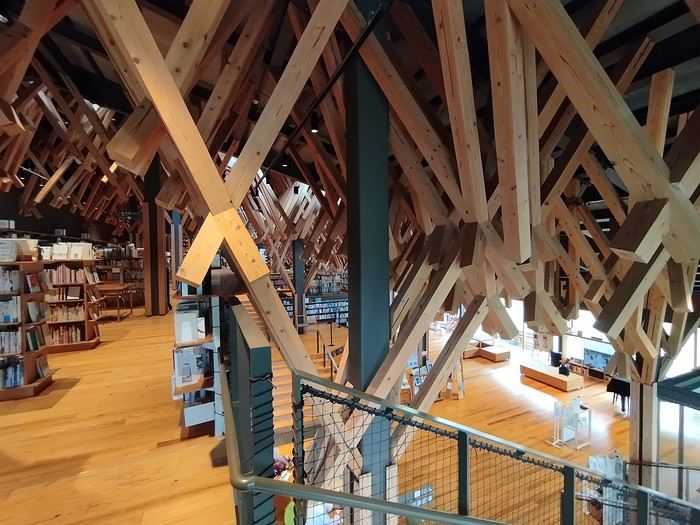
When you’re in the main area, you notice the soft light filtering in through all the glass walls that define the building. There’s also a grand piano, and the space feels open and tall, thanks to the wooden "stalactites" and the various staircases leading to other areas—the adult and teen sections, as well as several cozy, cocooning rooms. Teens also have their own corners on the ground floor for climbing or just hanging out with friends.
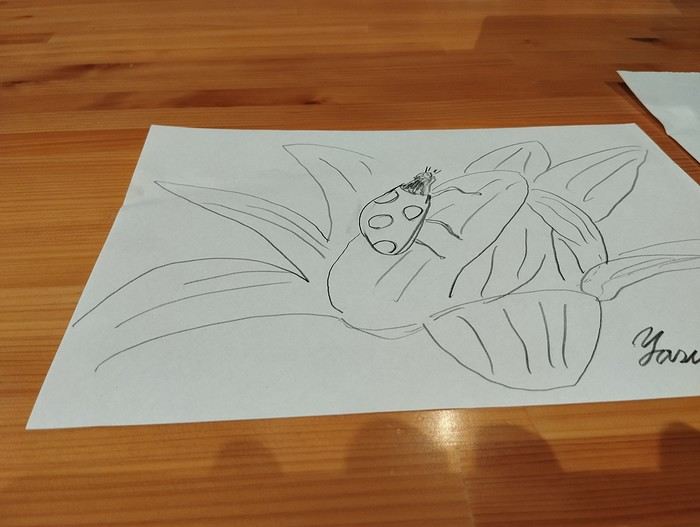
The place is absolutely gorgeous, and the trip was totally worth it. Plus, I left with another gift! The young artist I’d chatted with earlier ran after me in the library to give me two of his drawings—characters from books.
Books, manga, magazines...
I could’ve happily settled in for the afternoon, reading on the grand staircase, the lounge sofa, or in one of the private rooms. But the rest of Yusuhara was waiting, and this little immersion had already been so enjoyable. A place like this just makes you want to read more.
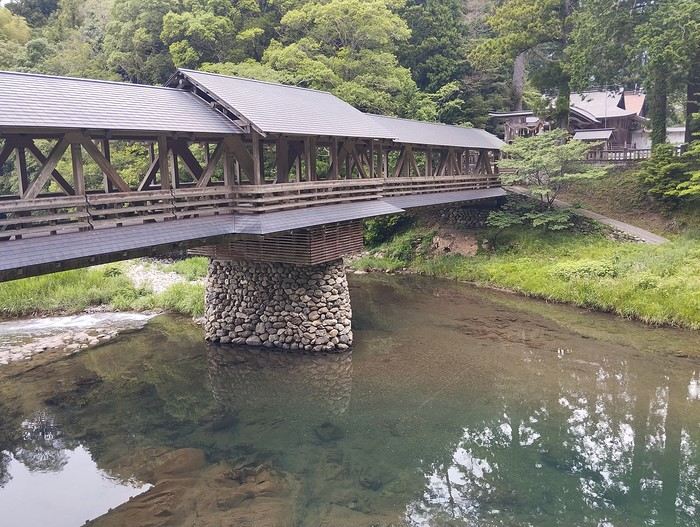
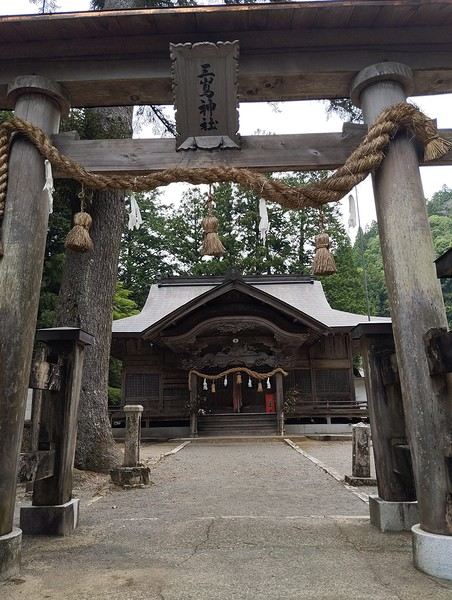
We continued on to Mishima Shrine, which is accessible via the Miyuki Bridge spanning the town’s river. At the end of the bridge, the shrine unfolds in the heart of a forest, home to a 400-year-old fir tree.
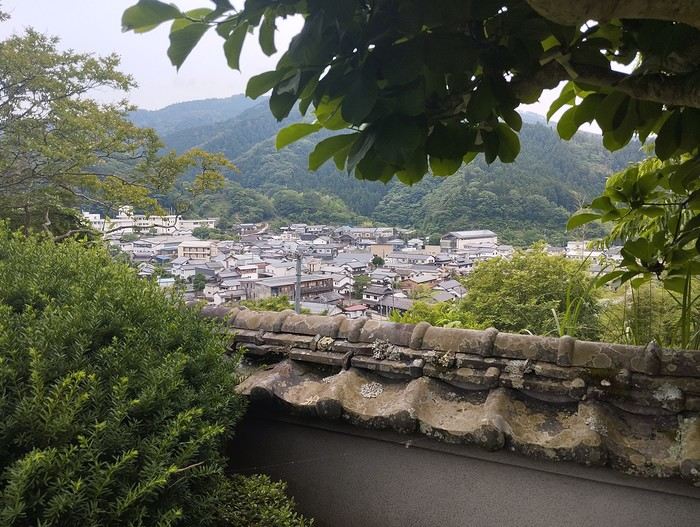
 Next, we took what was called the Dappan Road, a path regularly used by Ryoma Sakamoto and his group of samurai (key figures in the overthrow of the Tokugawa shogunate). This route leads to the samurai tombs and a traditional house, all while offering a panoramic view of the town.
Like many other mornings, this one was no exception—we headed to the mecca: the 7-Eleven konbini to grab breakfast. We’ve become fans of the fresh, affordable smoothies, not to mention the must-have fried chicken. Though I do sometimes cheat and go for a curry pan (warm bread stuffed with curry), which has a spicy, bold flavor I really enjoy.
We then set off on our road-trip pilgrimage. We wanted to stop by Ayukaeri Falls, but it seems Shikoku’s waterfalls are trickier to find than we thought. We ended up driving in circles, feeling a bit frustrated. Having internet at that moment (and others) would’ve probably helped. So, a little defeated, we got back on the road. As we drove through the peaceful Japanese countryside—alternating between mountain landscapes, rice fields, and villages of all sizes—something familiar caught our eye for just a second. We knew we hadn’t imagined it when we spotted it again a little further down the road. It was Mamoru-kun, the iconic police officer from Miyakojima (Okinawa). A cop who’s always smiling, stands strong against typhoons, and never takes a day off—all to warn island residents about road dangers. Apparently, Shikoku cloned Mamoru-kun, and seeing him here in unfamiliar territory made us smile. What an adventurer!
So, where were we headed today? Well, we were returning to Kochi Prefecture for a few hours. The destination was chosen for its architectural appeal: the small mountain town of Yusuhara, in the northwest part of Kochi. This town is special because it inspired the style (local materials, blending into the environment, and creating a homely feel) of the famous Japanese architect Kengo Kuma when he visited a friend in 1992. That’s why this tiny town of barely 3,000 people has six buildings designed by him. We started by visiting the stunning and impressive library. From the outside, the building has real style and invites you in without being intimidating.
You have to take off your shoes to explore it—socks only! The visit begins in the café area, with a few round tables where you can snack and read. As I moved further in, I caught a glimpse of the main space. It felt both calm and lively. Kids were moving around, there was background noise from a TV in the lounge area, and the first bookshelves came into view. The children’s section is sunken, with all-wood shelves and a cozy nook for playing and reading. And unbelievably, there’s even a nursery where moms can warm up milk or take care of their babies. In this space, a man was drawing characters from books. He struck up a conversation with us, and after a little chat, I left him to continue exploring this incredibly soothing and warm library.
When you’re in the main area, you notice the soft light filtering in through all the glass walls that define the building. There’s also a grand piano, and the space feels open and tall, thanks to the wooden "stalactites" and the various staircases leading to other areas—the adult and teen sections, as well as several cozy, cocooning rooms. Teens also have their own corners on the ground floor for climbing or just hanging out with friends.
The place is absolutely gorgeous, and the trip was totally worth it. Plus, I left with another gift! The young artist I’d chatted with earlier ran after me in the library to give me two of his drawings—characters from books.
Books, manga, magazines...
I could’ve happily settled in for the afternoon, reading on the grand staircase, the lounge sofa, or in one of the private rooms. But the rest of Yusuhara was waiting, and this little immersion had already been so enjoyable. A place like this just makes you want to read more.
We continued on to Mishima Shrine, which is accessible via the Miyuki Bridge spanning the town’s river. At the end of the bridge, the shrine unfolds in the heart of a forest, home to a 400-year-old fir tree.