

Re: 16 days in La Gomera (Canary Islands) with the family
ralete
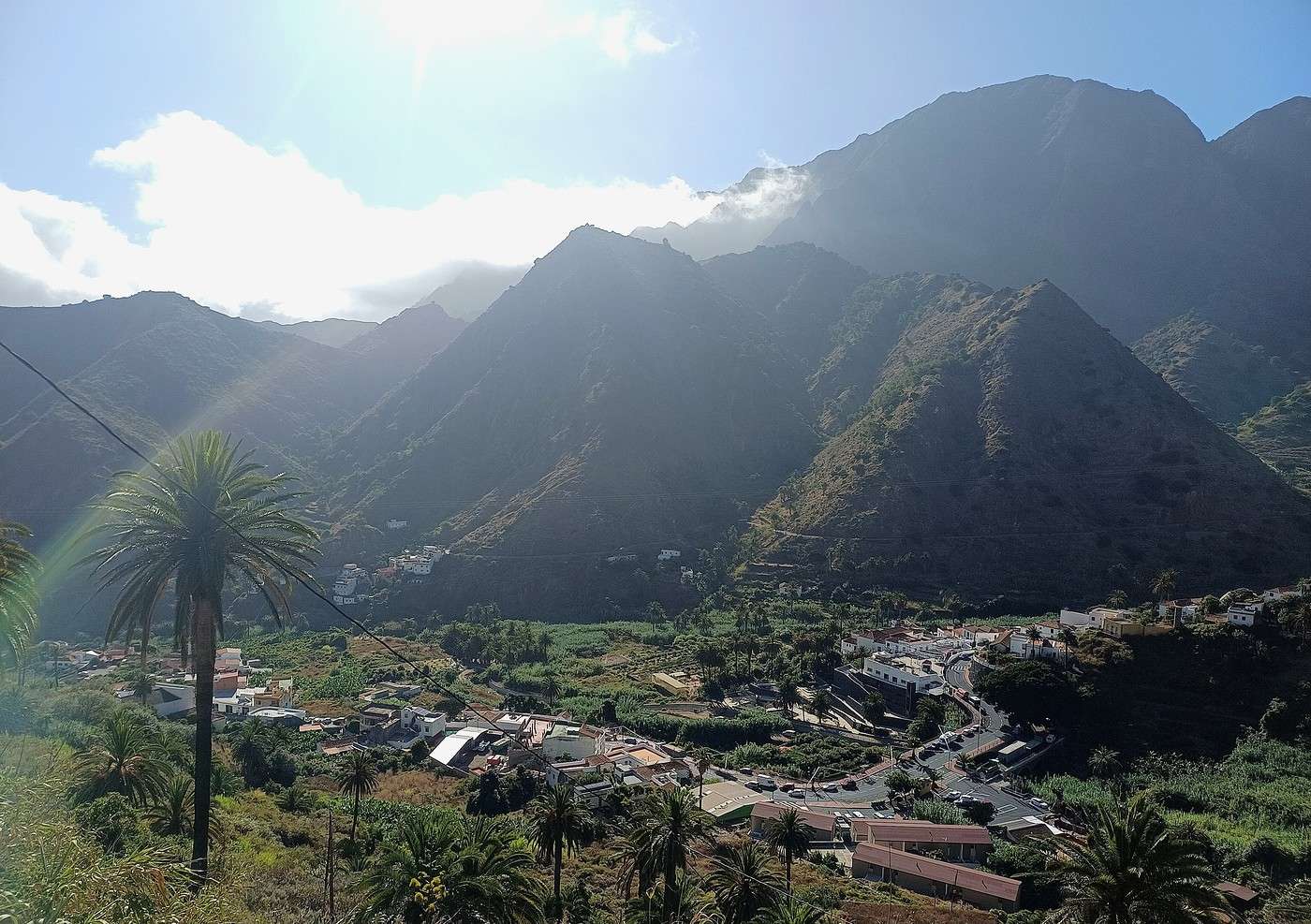
A new day dawns over the mountains facing us, and each morning brings its own unique atmosphere and color. Today, a radiant sun pierces the light mist for a truly stunning spectacle. For this morning, we planned to visit the La Gomera Ethnographic Park-Museum, located on the main road in Hermigua, across from the village square where the festival takes place every evening. We had noticed there was an ethnographic museum a little further down in Hermigua, but when we passed by on other days, it seemed to be permanently closed. It’s likely that the idea behind this park-museum—apparently more lively, immersive, and interactive—was to create a more attractive way to discover Gomeran culture than two small rooms filled with poorly labeled everyday objects behind glass cases. The park-museum is also paired with Los Telares restaurant, which offers authentic Canarian cuisine in a gourmet version. That said, it doesn’t really tempt us since it’s expensive, and we’ve already had our fill of delicious and affordable traditional Gomeran food so far.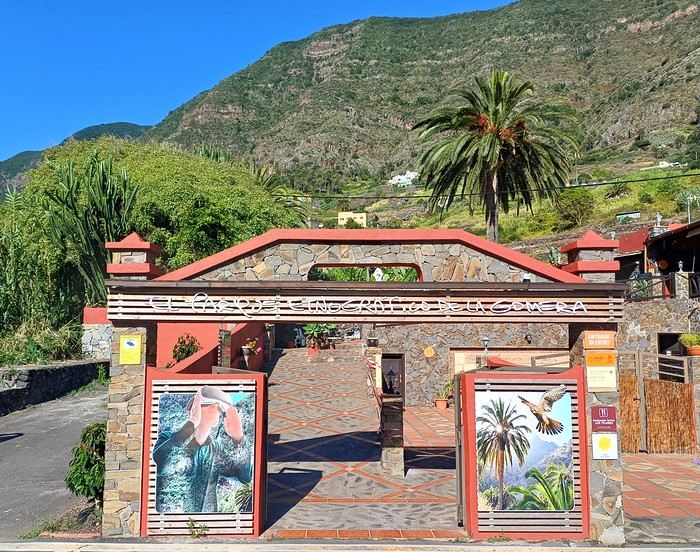
We climb the steps next to the restaurant, where the museum’s shop is located—the entrance is through there. The place has just opened, and a young woman welcomes us to explain how the visit works. It’s a self-guided audio tour through the large garden of an old farm that’s now ecological. It’s actually one of the terraces we’ve seen from our Casa Yaya up above. We’ve already walked through many plantations since we arrived, but it’s really informative to put a name or a story to the trees and plants we see all over La Gomera. Many of the fruit trees that populate the island—banana trees, mango trees, and avocado trees—aren’t native; they were brought back from the Americas starting in the 16th century, since the Canary Islands were a key stopover for ships traveling to and from Europe. The iconic palm tree, however, is endemic to the island and has always played an important role in the culture of the aboriginal Guanches.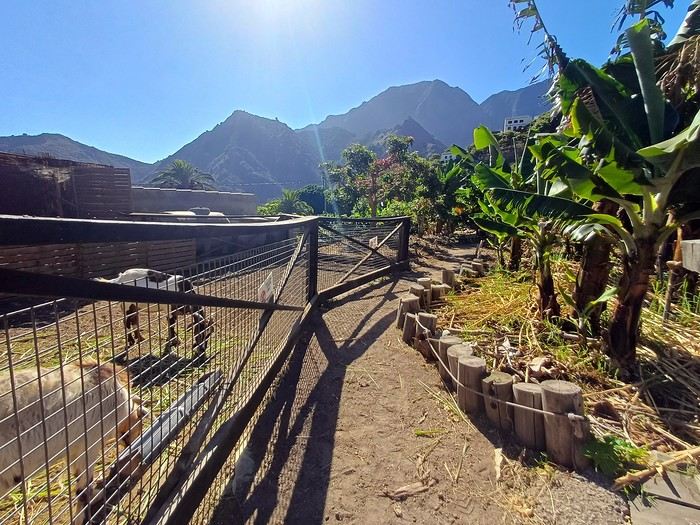 The tour then moves on to a livestock enclosure with goats and chickens, followed by a small house displaying ethnographic objects—perhaps those from the old museum—like the famous wooden bowl with a handle used to serve the island’s beloved potaje de berros everywhere. We learn that this bowl isn’t of colonial origin; in fact, it’s been around for ages, as it was already used by the Guanches and later adopted by the Spanish. Like many other artifacts on display, it reflects the deep cultural blending between indigenous and Castilian traditions that gives Canarian—and especially Gomeran—culture its uniqueness. One of the highlights of the visit is the old gofio mill, the island’s last water-powered mill, still in operation. It helps explain the system of draining water sources from the mountains to the valleys, and most importantly, how the ubiquitous and delicious gofio is made. Various grains and legumes are roasted before the heavy stone mill, powered by hydraulic flow, grinds them into this tasty flour with a slightly caramelized, toasted flavor. The visit ends with a virtual reality flyover of Hermigua’s small bay using a drone footage headset. The cliffside descents at high speed are a hit with the kids, while they gave us even more dizziness than La Gomera’s winding roads...
At the shop, the steep prices of traditional items like the soup bowl we’d grown fond of (80 € each) finally convince us to save our money! We do splurge on a few decorative postcards, one of the few affordable things, featuring symbolic images of La Gomera in the style of old colonial posters. Meanwhile, the kids leave with a whistle that lets them effortlessly imitate the silbo, La Gomera’s whistled language. Though the visit isn’t free like at other cultural sites on the island, the price (12 € for four—probably 3.50 € per person and 1.50 € for the little one) is low, and the experience was as enjoyable as it was educational.
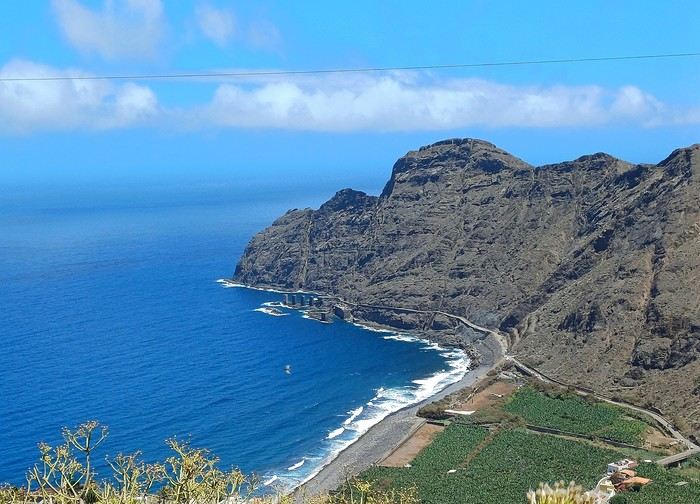
In the afternoon, after a laundry break, lunch, and some rest, we hit the road again for the village of Agulo, just 4 kilometers from Hermigua, described as "the jewel of La Gomera" or even "the most beautiful village in Spain." First, we drive toward the Abrante viewpoint, reputed to be the most impressive on the island. From our small road through the hamlets, we take a side road that offers a breathtaking view of Hermigua Bay, the dock, and the island of Tenerife in the mist—one of the scenes we saw in virtual reality at the museum, but thankfully at a slower pace this time.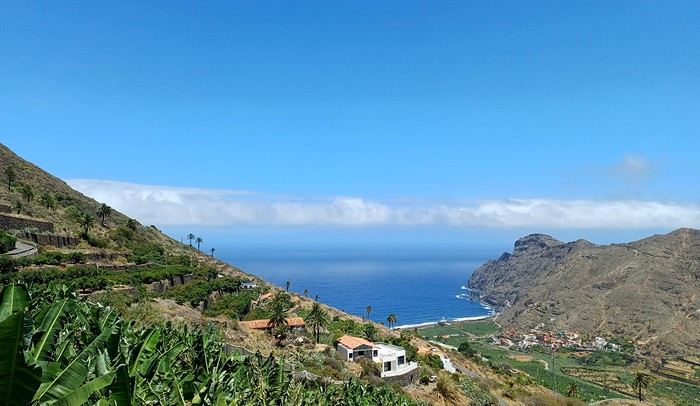
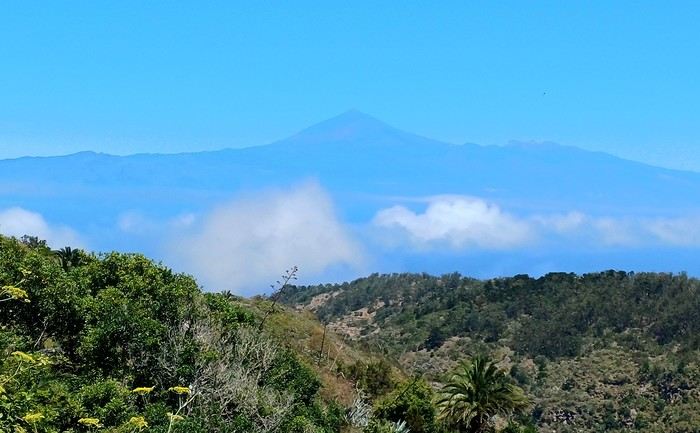
 Contrary to what we thought, this small mountain road only serves hamlets and doesn’t give us a shortcut to the viewpoint. So we head back down to Hermigua, pass through the village of Agulo, and take a steep road up. Even before turning onto the small road to the viewpoint, Mount Teide appears right in front of us, as if it were part of La Gomera!
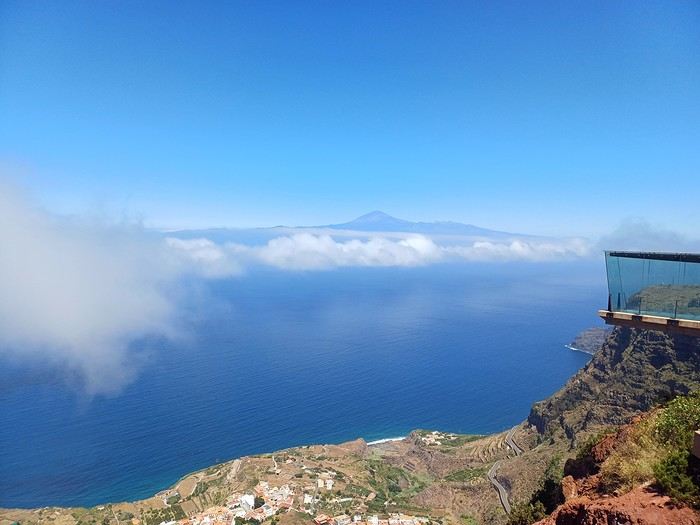
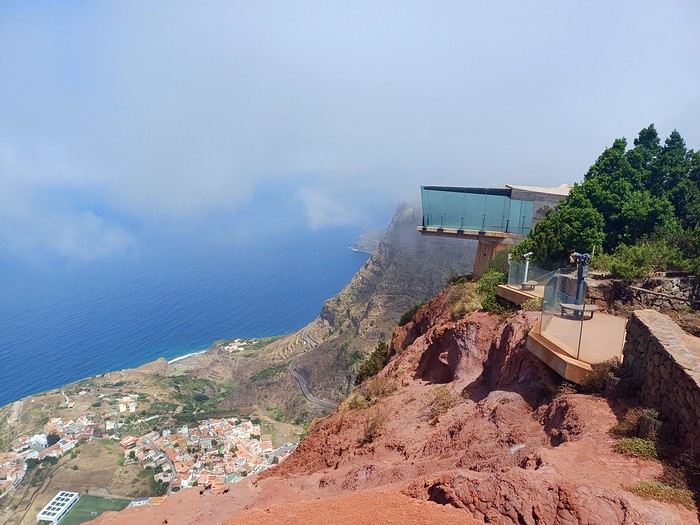
Further on, we park at the Abrante viewpoint, which is very different from the other viewpoints on the island. This one isn’t just a lookout point—it’s a sleek, 7-meter-long glass cabin, entirely transparent and suspended in mid-air, over 600 meters high and 400 meters straight down: not for the faint-hearted or those afraid of heights—look straight ahead!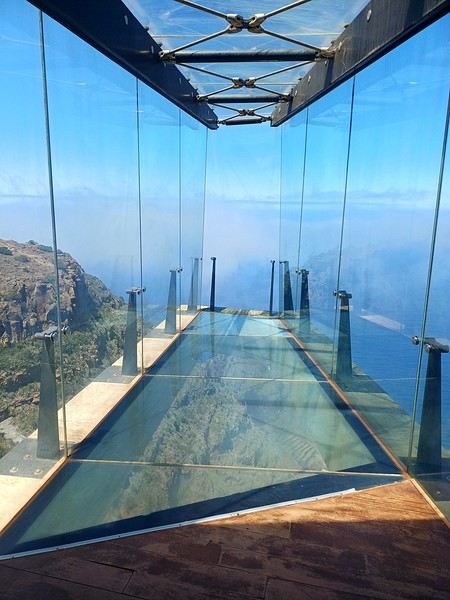 I admit it took me a few minutes and some focus before I could take my first steps into the cabin, where the void beneath the thick glass floor must make more than a few people panic. The kids, on the other hand, couldn’t care less and run back and forth as if they were walking down the street.
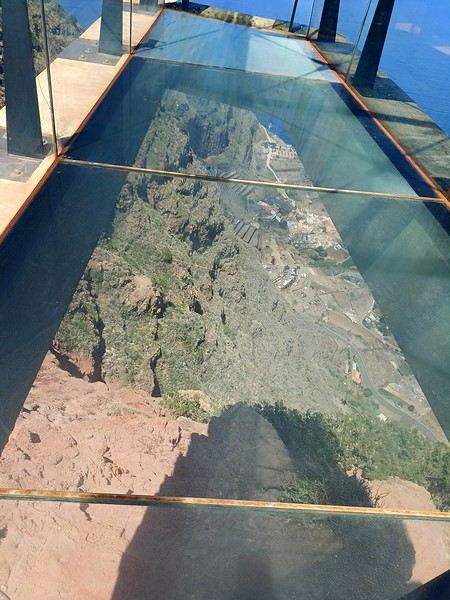 Agulo beneath our feet, the terraced fields balancing on steep mountainsides, the valley, Tenerife, and the ocean stretching as far as the eye can see—this is the most beautiful panorama in La Gomera.
A new day dawns over the mountains facing us, and each morning brings its own unique atmosphere and color. Today, a radiant sun pierces the light mist for a truly stunning spectacle. For this morning, we planned to visit the La Gomera Ethnographic Park-Museum, located on the main road in Hermigua, across from the village square where the festival takes place every evening. We had noticed there was an ethnographic museum a little further down in Hermigua, but when we passed by on other days, it seemed to be permanently closed. It’s likely that the idea behind this park-museum—apparently more lively, immersive, and interactive—was to create a more attractive way to discover Gomeran culture than two small rooms filled with poorly labeled everyday objects behind glass cases. The park-museum is also paired with Los Telares restaurant, which offers authentic Canarian cuisine in a gourmet version. That said, it doesn’t really tempt us since it’s expensive, and we’ve already had our fill of delicious and affordable traditional Gomeran food so far.
We climb the steps next to the restaurant, where the museum’s shop is located—the entrance is through there. The place has just opened, and a young woman welcomes us to explain how the visit works. It’s a self-guided audio tour through the large garden of an old farm that’s now ecological. It’s actually one of the terraces we’ve seen from our Casa Yaya up above. We’ve already walked through many plantations since we arrived, but it’s really informative to put a name or a story to the trees and plants we see all over La Gomera. Many of the fruit trees that populate the island—banana trees, mango trees, and avocado trees—aren’t native; they were brought back from the Americas starting in the 16th century, since the Canary Islands were a key stopover for ships traveling to and from Europe. The iconic palm tree, however, is endemic to the island and has always played an important role in the culture of the aboriginal Guanches.
The tour then moves on to a livestock enclosure with goats and chickens, followed by a small house displaying ethnographic objects—perhaps those from the old museum—like the famous wooden bowl with a handle used to serve the island’s beloved potaje de berros everywhere. We learn that this bowl isn’t of colonial origin; in fact, it’s been around for ages, as it was already used by the Guanches and later adopted by the Spanish. Like many other artifacts on display, it reflects the deep cultural blending between indigenous and Castilian traditions that gives Canarian—and especially Gomeran—culture its uniqueness. One of the highlights of the visit is the old gofio mill, the island’s last water-powered mill, still in operation. It helps explain the system of draining water sources from the mountains to the valleys, and most importantly, how the ubiquitous and delicious gofio is made. Various grains and legumes are roasted before the heavy stone mill, powered by hydraulic flow, grinds them into this tasty flour with a slightly caramelized, toasted flavor. The visit ends with a virtual reality flyover of Hermigua’s small bay using a drone footage headset. The cliffside descents at high speed are a hit with the kids, while they gave us even more dizziness than La Gomera’s winding roads...At the shop, the steep prices of traditional items like the soup bowl we’d grown fond of (80 € each) finally convince us to save our money! We do splurge on a few decorative postcards, one of the few affordable things, featuring symbolic images of La Gomera in the style of old colonial posters. Meanwhile, the kids leave with a whistle that lets them effortlessly imitate the silbo, La Gomera’s whistled language. Though the visit isn’t free like at other cultural sites on the island, the price (12 € for four—probably 3.50 € per person and 1.50 € for the little one) is low, and the experience was as enjoyable as it was educational.
In the afternoon, after a laundry break, lunch, and some rest, we hit the road again for the village of Agulo, just 4 kilometers from Hermigua, described as "the jewel of La Gomera" or even "the most beautiful village in Spain." First, we drive toward the Abrante viewpoint, reputed to be the most impressive on the island. From our small road through the hamlets, we take a side road that offers a breathtaking view of Hermigua Bay, the dock, and the island of Tenerife in the mist—one of the scenes we saw in virtual reality at the museum, but thankfully at a slower pace this time.
Further on, we park at the Abrante viewpoint, which is very different from the other viewpoints on the island. This one isn’t just a lookout point—it’s a sleek, 7-meter-long glass cabin, entirely transparent and suspended in mid-air, over 600 meters high and 400 meters straight down: not for the faint-hearted or those afraid of heights—look straight ahead!
I admit it took me a few minutes and some focus before I could take my first steps into the cabin, where the void beneath the thick glass floor must make more than a few people panic. The kids, on the other hand, couldn’t care less and run back and forth as if they were walking down the street.
Agulo beneath our feet, the terraced fields balancing on steep mountainsides, the valley, Tenerife, and the ocean stretching as far as the eye can see—this is the most beautiful panorama in La Gomera.