

Re: Autumn road trip from Puglia to Naples via Basilicata...
Feeling fresh and fit?
We’re continuing our visit on our own... but first, let me slip in a photo for Sissi: after touring la casa-grotta, we didn’t quite see eye to eye on what life was like for the Sassi residents, and I wondered if we’d even visited the same place...
In the house I saw—which apparently belonged to a miller—here’s an unpublished photo: next to the main room (with the bed and a small wardrobe), the only space used by the family and children, there’s a second, fairly large room housing the millstone. You can clearly see the tracks from the donkey that tirelessly walked in circles all day to power the mechanism; at night, it slept right there...
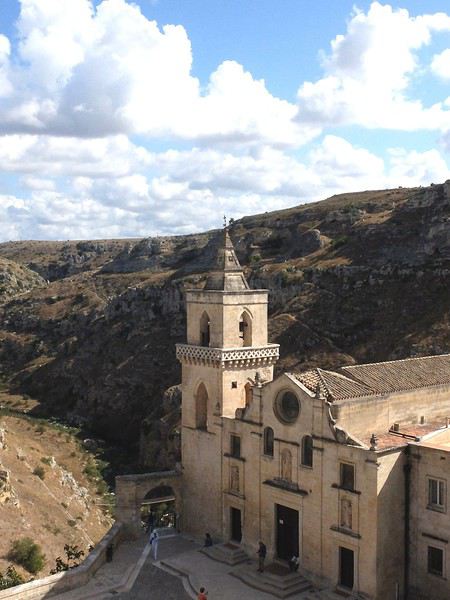
Time for something lighter: after a morning of climbing, visits, and fascinating explanations, we need a break—and, most importantly, a drink. So, the two of us leave Sasso Caveoso (no shops or bars there) and head back to Barisano. A few sunny photos:
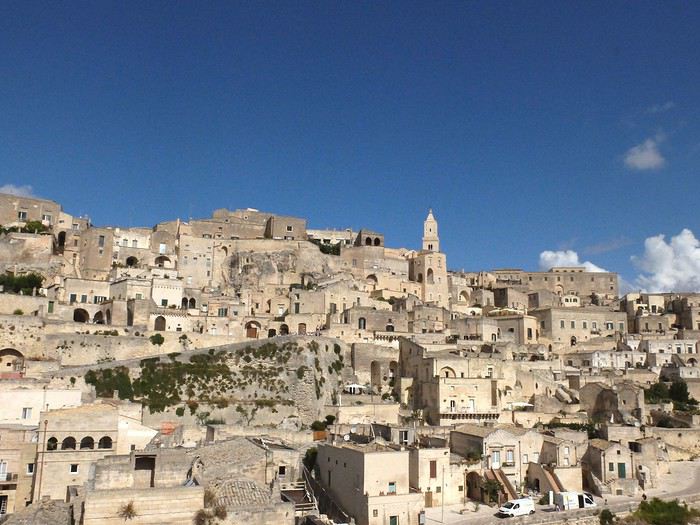
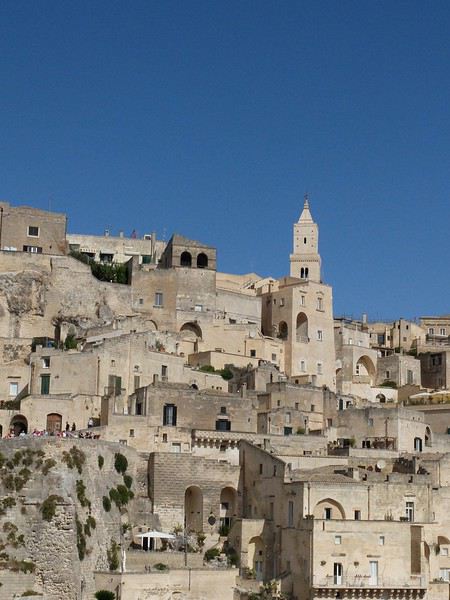 We’re happy to return to the little snack bar where we had aperitivo last night! It’s a bar with a terrace, tucked in a street near a busy thoroughfare, Via Ridola, and it’s right across from l’église du Purgatoire. You can’t miss it... I’ll have Prosecco, my husband a beer, then panini to order!
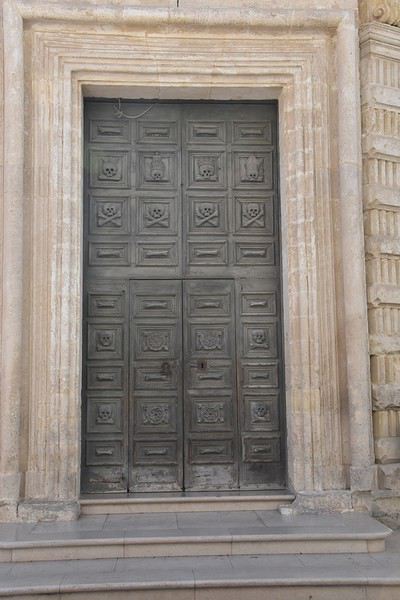
We’ll have plenty of time during our meal to admire the church’s facade: bones and skulls of high-ranking officials, clergy, and ordinary people—all equal in death. Its decoration was completed in the late 18th century.
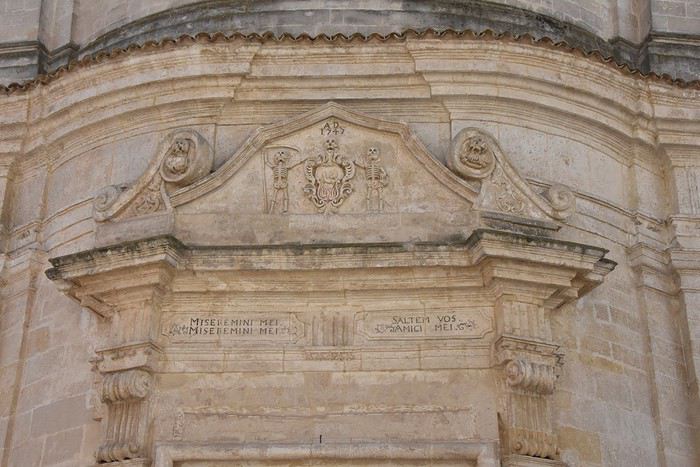
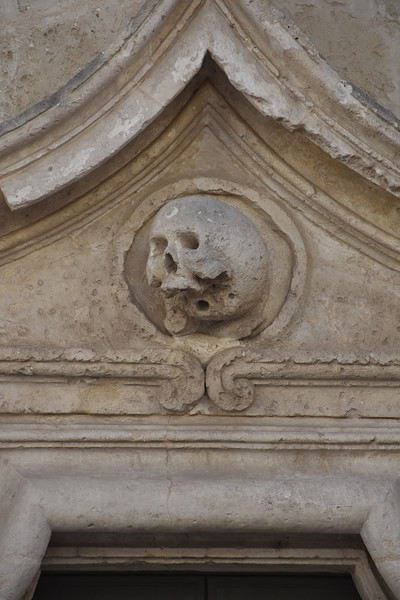 Check out the door details too...
After 45 minutes of rest (yes, we’re fearless...), we’ve set our agenda for the next few hours: passing by the Church of Santa Chiara, near an old hospital, we’ll visit the Museo Nazionale Domenico Ridola, a 19th-century doctor passionate about archaeology who took part in digs and donated his collection to the city. The prehistoric sections confirm what I’ve read and what Marjorie, our guide, told us.
Next, we’ll get to our main plan: heading to Palazzo Lanfranchi, whose ground floor is dedicated to Carlo Levi. A fitting summary: Carlo Levi was a 20th-century humanist.
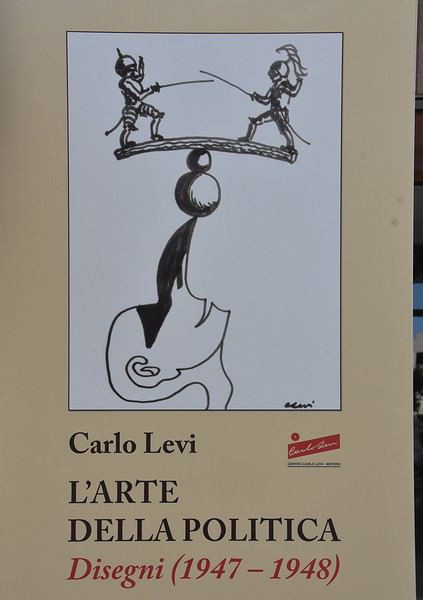
C. Levi was born in Turin in 1902. He was a doctor, painter, writer... and politician. His ideas led to his arrest by the regime in 1935, and he was sentenced to confinement in the rural village of Aliano, 40 km from Matera. At the villagers’ request—who lived in extreme poverty and were decimated by malaria—and despite being banned from practicing medicine or writing, he briefly resumed his role as a doctor there. His stay inspired his novel, which I mentioned yesterday, Christ Stopped at Eboli (published in 1945), about the harsh lives of Basilicata’s rural inhabitants and its haunting landscapes. He also found inspiration for a massive fresco, commissioned for the 1961 Turin exhibition, now displayed in this palace. Freed in 1936, rearrested later, he spent the war in prison before resuming his political work. His role from 1952 onward, and later as a Senator from 1963, was crucial for Matera and its people...
More to come soon... Have a great day!
Time for something lighter: after a morning of climbing, visits, and fascinating explanations, we need a break—and, most importantly, a drink. So, the two of us leave Sasso Caveoso (no shops or bars there) and head back to Barisano. A few sunny photos:
After 45 minutes of rest (yes, we’re fearless...), we’ve set our agenda for the next few hours: passing by the Church of Santa Chiara, near an old hospital, we’ll visit the Museo Nazionale Domenico Ridola, a 19th-century doctor passionate about archaeology who took part in digs and donated his collection to the city. The prehistoric sections confirm what I’ve read and what Marjorie, our guide, told us.
Next, we’ll get to our main plan: heading to Palazzo Lanfranchi, whose ground floor is dedicated to Carlo Levi. A fitting summary: Carlo Levi was a 20th-century humanist.
C. Levi was born in Turin in 1902. He was a doctor, painter, writer... and politician. His ideas led to his arrest by the regime in 1935, and he was sentenced to confinement in the rural village of Aliano, 40 km from Matera. At the villagers’ request—who lived in extreme poverty and were decimated by malaria—and despite being banned from practicing medicine or writing, he briefly resumed his role as a doctor there. His stay inspired his novel, which I mentioned yesterday, Christ Stopped at Eboli (published in 1945), about the harsh lives of Basilicata’s rural inhabitants and its haunting landscapes. He also found inspiration for a massive fresco, commissioned for the 1961 Turin exhibition, now displayed in this palace. Freed in 1936, rearrested later, he spent the war in prison before resuming his political work. His role from 1952 onward, and later as a Senator from 1963, was crucial for Matera and its people...
More to come soon... Have a great day!