



We went to bed super late again, so waking up was tough this morning, but the schedule’s pretty light. Like we’ve been doing a lot lately, we head straight for our meal: a bowl of veggie noodle soup, some baos, and fried dough sticks. 21 yuan—it’s crazy how little that costs.
I love the street as soon as we step out of the maze of our alleys:
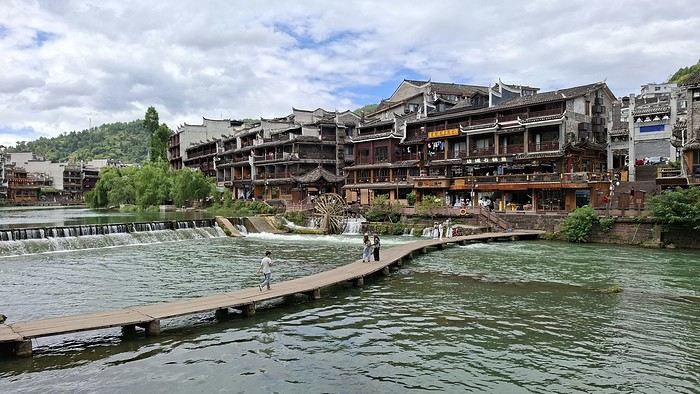
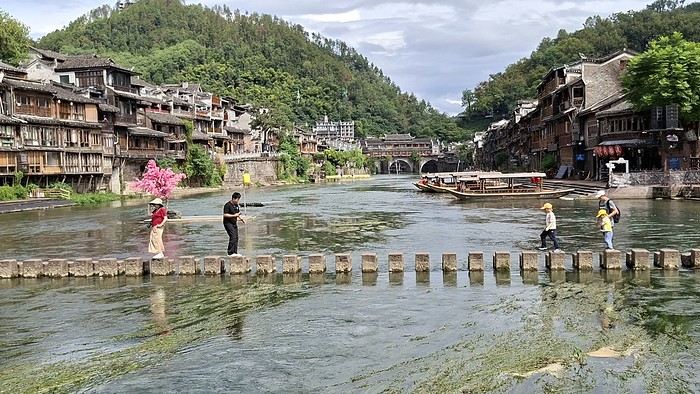
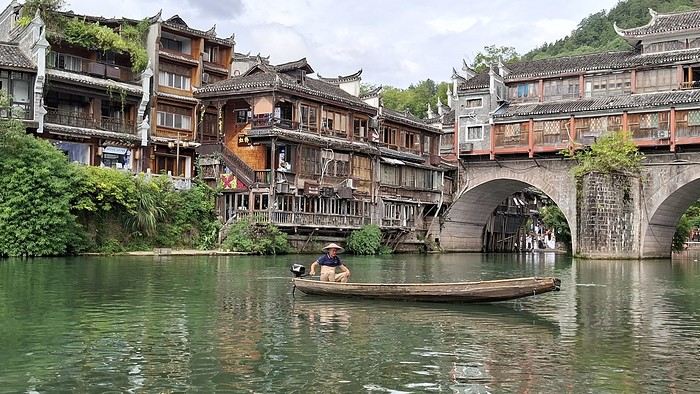
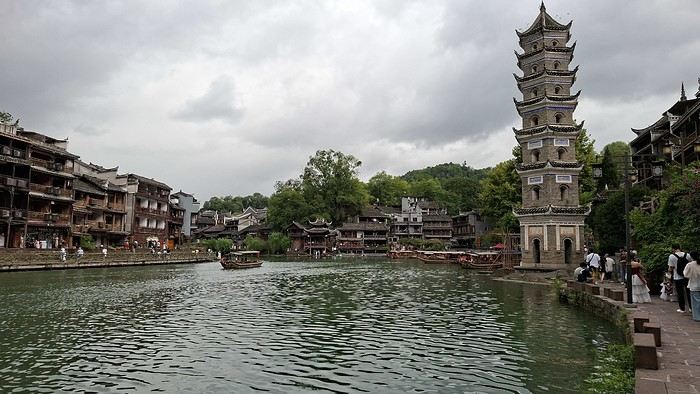
We head toward Hongqiao Bridge (qiao means bridge) at the end of the street and start wandering up and down the old pedestrian town. It’s so nice. There are hardly any people, it’s really peaceful. Plus, it’s cool out—just a pleasant 30°C with a little breeze that feels great. This part of the city was built in 1704 and gives us a sense of what villages looked like before modernization kicked in. It’s exactly what I wanted to find in China. The wooden houses on stilts, the cobblestone alleys, the ramparts, the series of bridges (mostly pedestrian), or just a line of carved rocks to cross the river, the boats... I love this place!
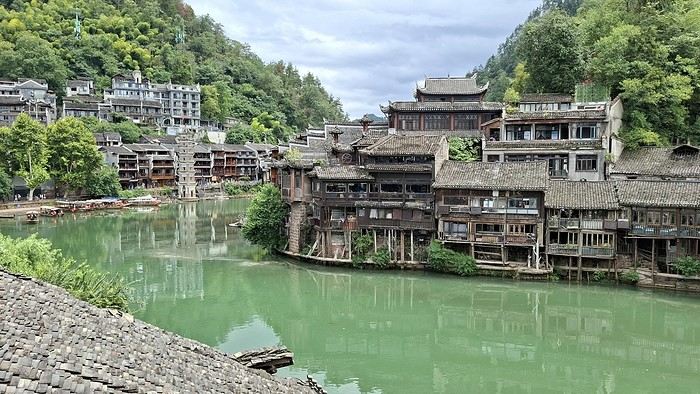
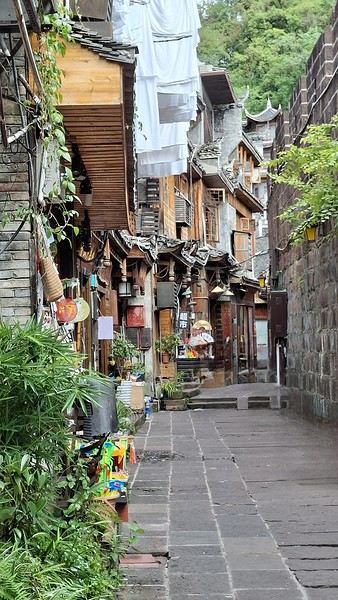
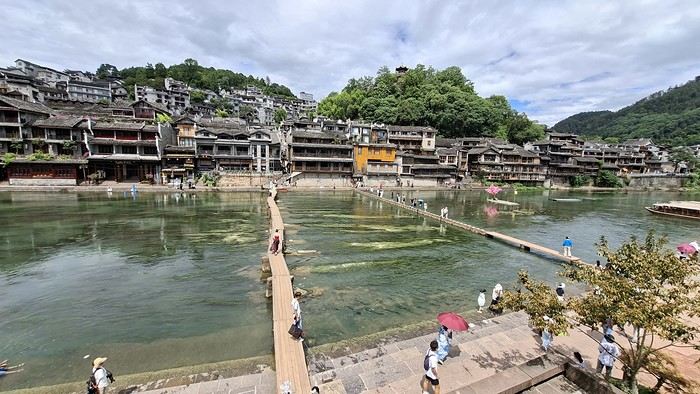
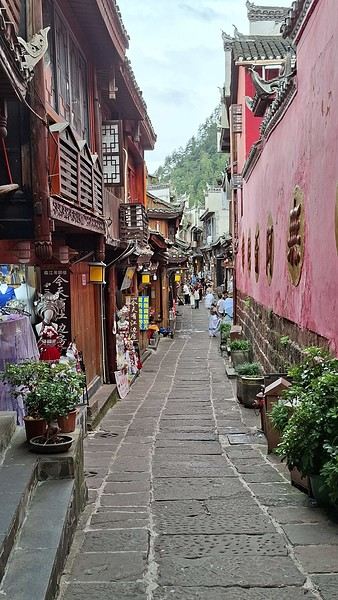 I thought entering Fenghuang’s old town was paid, but nope. Some sites cost money, but I’m not sure which ones except for the elevator that takes you to a viewpoint. After wandering all the streets and alleys, we head down to the riverbank and cross over using stones, wooden planks, or the Xueqiao Bridge.
I love the street as soon as we step out of the maze of our alleys:
We head toward Hongqiao Bridge (qiao means bridge) at the end of the street and start wandering up and down the old pedestrian town. It’s so nice. There are hardly any people, it’s really peaceful. Plus, it’s cool out—just a pleasant 30°C with a little breeze that feels great. This part of the city was built in 1704 and gives us a sense of what villages looked like before modernization kicked in. It’s exactly what I wanted to find in China. The wooden houses on stilts, the cobblestone alleys, the ramparts, the series of bridges (mostly pedestrian), or just a line of carved rocks to cross the river, the boats... I love this place!