

Re: Tuscany: Arezzo Province and the Sienese Area
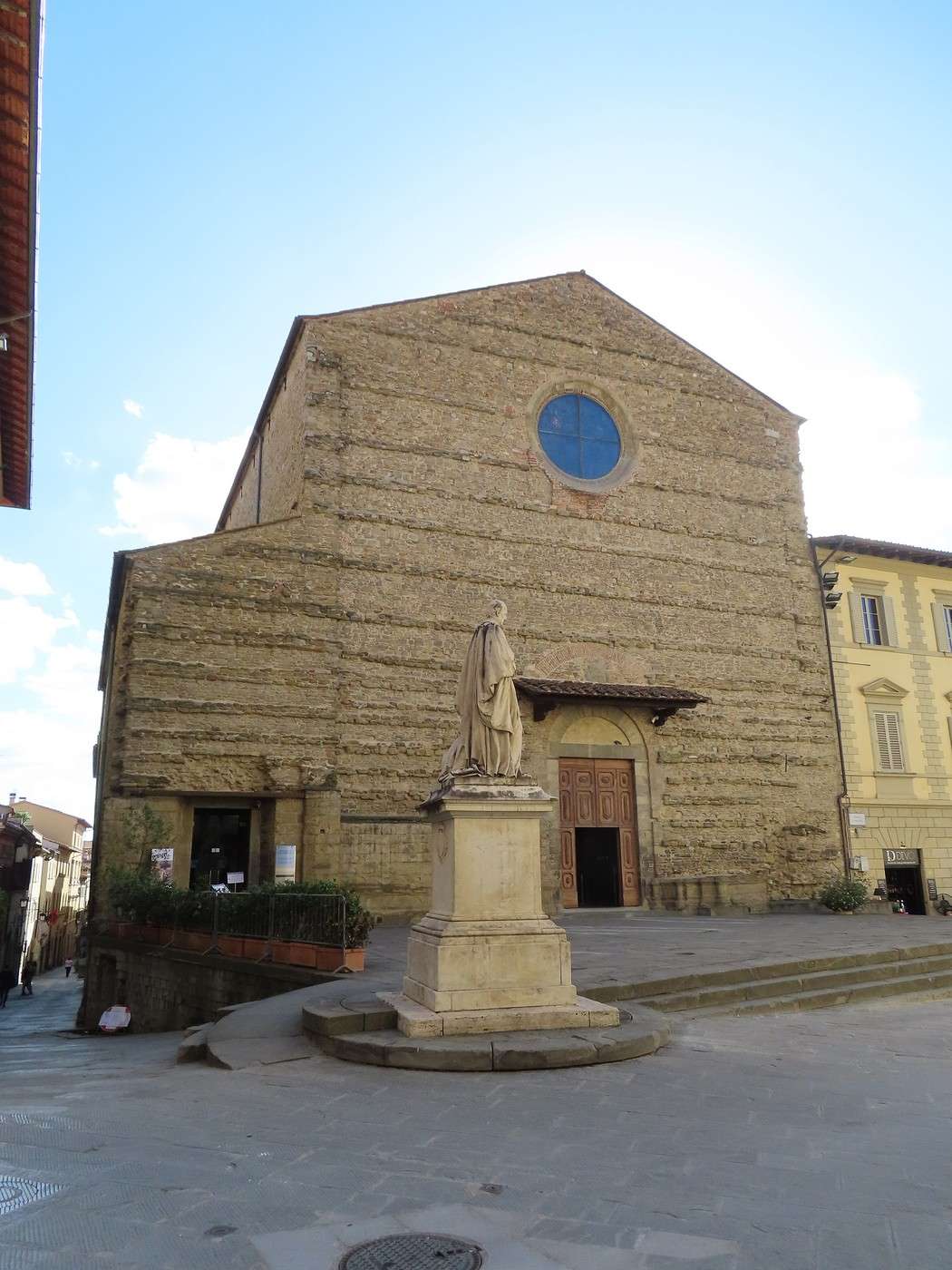
A few meters further down, I’m standing in front of the Basilica of San Francesco. This church, the most famous in Arezzo, is also a national museum and houses an exceptional work: the frescoes by Piero della Francesca in the "Cappella Bacci." This chapel is named after the wealthy family who commissioned the frescoes.
The chapel’s vaults were painted by Bicci di Lorenzo, who passed away shortly after. That’s when Piero della Francesca was called in. He created a pictorial cycle illustrating the "Legend of the True Cross," the story of the cross on which Jesus was crucified. Piero della Francesca didn’t arrange the scenes in chronological order; instead, he used the chapel’s symmetry to place them. For example, there are two large battle scenes, positioned symmetrically along the chapel’s axis. I’ve picked 5 frescoes and will stick to chronological order.
Adoration of the Sacred Wood and the meeting between the Queen of Sheba and King Solomon.
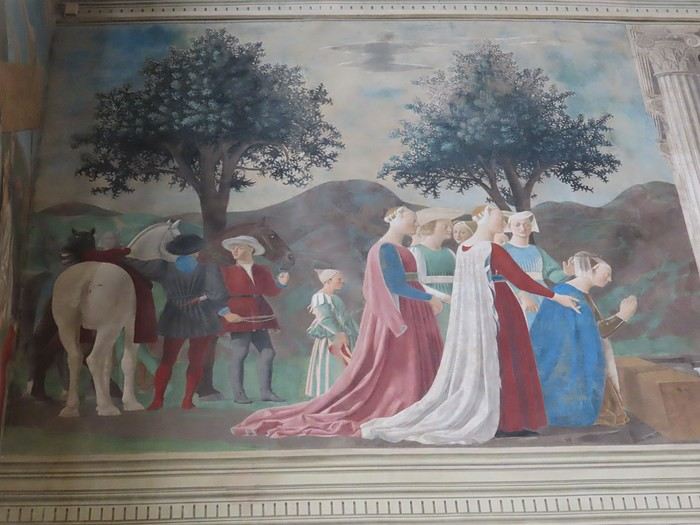
The Queen of Sheba arrives at a wooden bridge and kneels, sensing the prophecy tied to this wood.
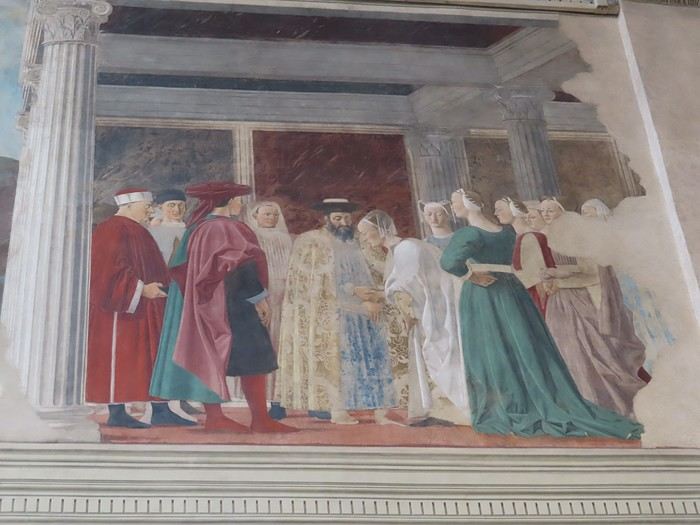
The Queen of Sheba meets Solomon and shares the prophecy with him; all the figures in the scene are richly dressed in Quattrocento fashion.
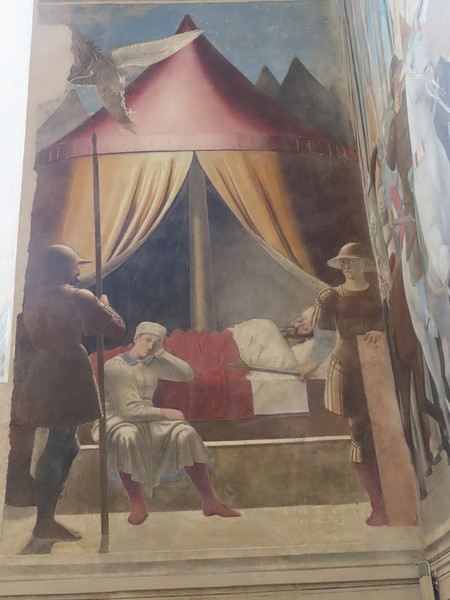
The Dream of Constantine.
On the eve of the battle against Maxentius, Constantine has a dream and hears a voice telling him to fight under the protection of the Cross. A night scene that made history in the art world.
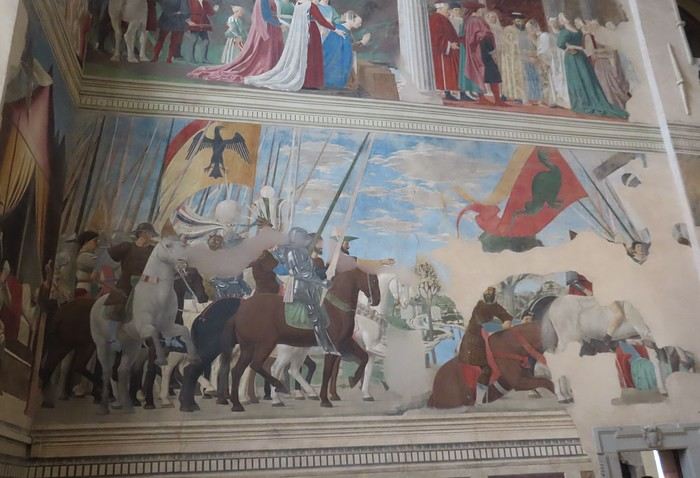
Constantine’s Victory over Maxentius at the Battle of the Milvian Bridge.
On the right (damaged fresco), Maxentius is already fleeing. On the left, Constantine’s army looks more like they’re parading than fighting—a spiritual victory without bloodshed?
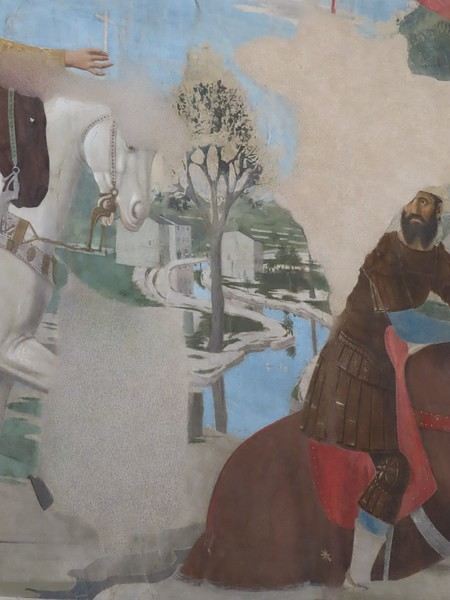
Between the two armies, the Tiber River, where the battle takes place, is depicted in detail (houses, trees, reflections, ducks). The background landscape (with more relief) led some experts to suggest that Piero replaced the Roman countryside (the actual location) with Tuscany: the upper Tiber Valley where he was born. It’s not entirely convincing when you look at the fresco.
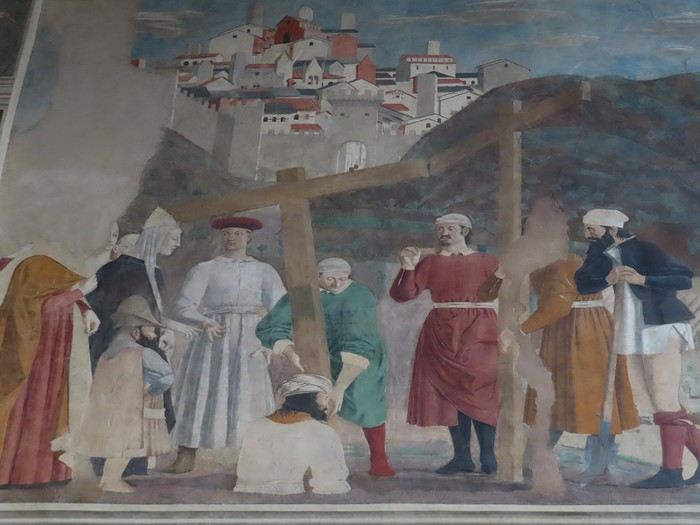
Discovery of the True Cross
I photographed the left half of the fresco, then the right half; the two halves depict different scenes (same principle as the first fresco I chose, Queen of Sheba and Solomon). Three crosses are unearthed in a field (I only see two); they’re presented to Helena, Constantine’s mother. The setting is the countryside with Jerusalem’s walls in the distance, but the landscape is Tuscan, and the hilltop town is Arezzo. The figure to the right of Helena and her court dwarf, dressed in white and facing the viewer, is believed to be Piero della Francesca (a self-portrait within the pictorial ensemble).
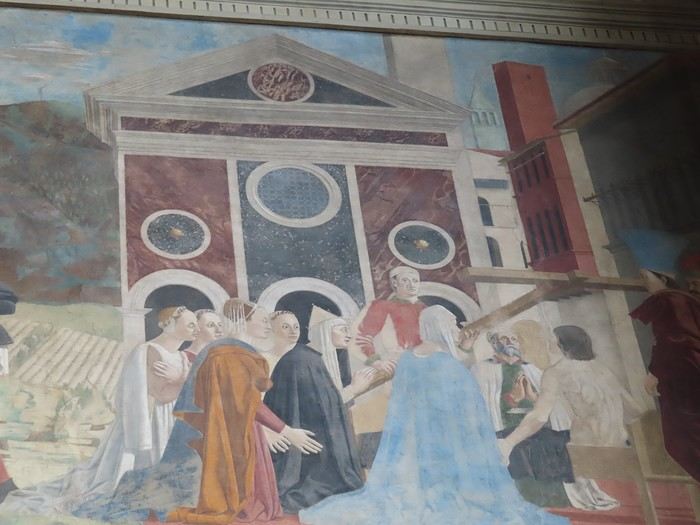
A dead man rises from his coffin, a miracle that identifies the True Cross. Now we’re in a city (architectural construction); the figures are dressed in Quattrocento fashion, as in the other scenes.
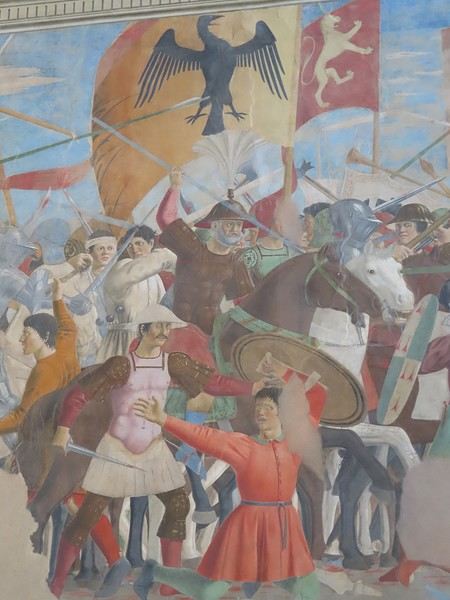
Battle Between Heraclius and Khosrow.
I’ve focused on part of this large fresco, where Christian cavalry intervene decisively in the battle.
This series of frescoes is world-renowned as an absolute masterpiece of Renaissance painting.
In the late afternoon, I cycled a stretch of the "sentiero della bonifica," which runs alongside the Valdichiana’s main drainage canal (from Chiani to I Ponti).
The chapel’s vaults were painted by Bicci di Lorenzo, who passed away shortly after. That’s when Piero della Francesca was called in. He created a pictorial cycle illustrating the "Legend of the True Cross," the story of the cross on which Jesus was crucified. Piero della Francesca didn’t arrange the scenes in chronological order; instead, he used the chapel’s symmetry to place them. For example, there are two large battle scenes, positioned symmetrically along the chapel’s axis. I’ve picked 5 frescoes and will stick to chronological order.
Adoration of the Sacred Wood and the meeting between the Queen of Sheba and King Solomon.
The Queen of Sheba arrives at a wooden bridge and kneels, sensing the prophecy tied to this wood.
The Queen of Sheba meets Solomon and shares the prophecy with him; all the figures in the scene are richly dressed in Quattrocento fashion.
The Dream of Constantine.
On the eve of the battle against Maxentius, Constantine has a dream and hears a voice telling him to fight under the protection of the Cross. A night scene that made history in the art world.
Constantine’s Victory over Maxentius at the Battle of the Milvian Bridge.
On the right (damaged fresco), Maxentius is already fleeing. On the left, Constantine’s army looks more like they’re parading than fighting—a spiritual victory without bloodshed?
Between the two armies, the Tiber River, where the battle takes place, is depicted in detail (houses, trees, reflections, ducks). The background landscape (with more relief) led some experts to suggest that Piero replaced the Roman countryside (the actual location) with Tuscany: the upper Tiber Valley where he was born. It’s not entirely convincing when you look at the fresco.
Discovery of the True Cross
I photographed the left half of the fresco, then the right half; the two halves depict different scenes (same principle as the first fresco I chose, Queen of Sheba and Solomon). Three crosses are unearthed in a field (I only see two); they’re presented to Helena, Constantine’s mother. The setting is the countryside with Jerusalem’s walls in the distance, but the landscape is Tuscan, and the hilltop town is Arezzo. The figure to the right of Helena and her court dwarf, dressed in white and facing the viewer, is believed to be Piero della Francesca (a self-portrait within the pictorial ensemble).
A dead man rises from his coffin, a miracle that identifies the True Cross. Now we’re in a city (architectural construction); the figures are dressed in Quattrocento fashion, as in the other scenes.
Battle Between Heraclius and Khosrow.
I’ve focused on part of this large fresco, where Christian cavalry intervene decisively in the battle.
This series of frescoes is world-renowned as an absolute masterpiece of Renaissance painting.
In the late afternoon, I cycled a stretch of the "sentiero della bonifica," which runs alongside the Valdichiana’s main drainage canal (from Chiani to I Ponti).