
Re: Autumn journey from Puglia to Naples via Basilicata...
Here’s the sea again, and we’ve switched coasts: we chose this spot as the perfect relaxing interlude, based on those enchanting photos we found online.
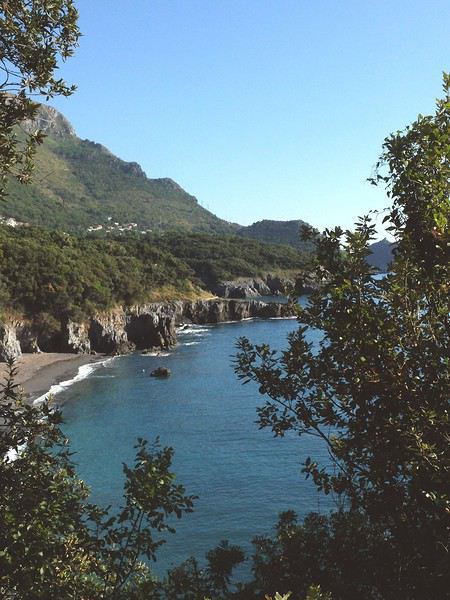
A quick geographical description, inspired by Wikipedia or its equivalent: Maratea hugs the Tyrrhenian Sea and occupies a stunning location; its coastline is a patchwork of small bays, beaches, and rocks, while the mountains of the hinterland, covered in pine forests, plunge straight into the sea: the views are breathtaking.
Take my word for it—it’s even better in real life! A picture’s worth a thousand words:
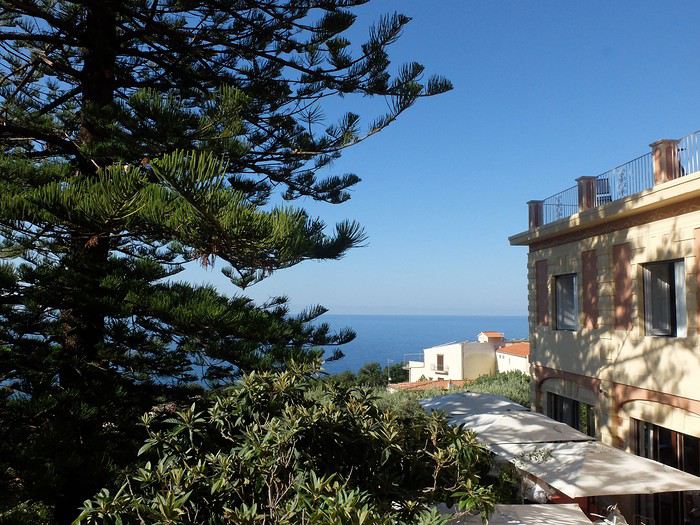
I’ll spare you the historical details: countless churches, isolated villages, and high-altitude trails. If we’d stayed longer—and if we hadn’t been so exhausted from the steep walks in Puglia’s villages and then nearly finished off by Matera’s stairs—you’d have gotten the full rundown! We slept and ate each evening at an idyllic hotel where we were pampered. It was the very end of the season, around September 27th, and most Italians were back at work... Too many people would’ve been unpleasant, but too few felt a little... gloomy. There was a bit of a crowd one weekend evening, though. View from the terrace:
And from our room:
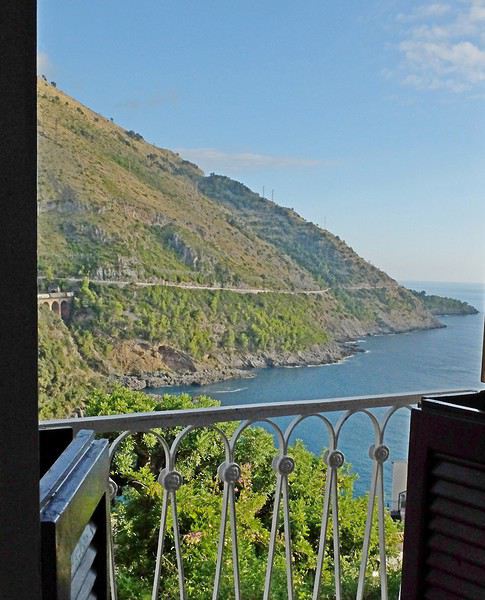
Still, I can’t even imagine our disappointment if the sun hadn’t been out! The town of Maratea isn’t really a town at all—it’s a collection of hamlets scattered over 30 km, with no seaside strip of shops or restaurants. It’s made up of many small settlements, some closer to the water than others; a few have charming little ports like Marina and Porto, while others sit higher up, like Acquafredda, where we stayed. Important heads-up: the Saturday morning market means the road is closed! A 20 km detour is mandatory...
Our only daily dilemma was picking the beach to spend a few hours at—based on sand vs. pebbles, whether there was a bar, and... how easy it was to get there! Let me explain: along the Gulf of Policastro, where we were, there’s only one road, and it’s dizzying and packed—one side the sea, the other the mountain. The coast has over twenty beaches, and access usually involves a sharp turn and a steep descent... The first route the GPS suggested was often a rocky, uphill trail that our car couldn’t handle, and after all the blind U-turns, my husband—exhausted—asked me to keep it simple!
I’d recommend our first pick: ‘o Macaro beach, a mix of sand and gravel, for its (relatively) easy access, its stunning setting between two rocky cliffs, its umbrellas (12 € for two, with two sunbeds), and its bar—you’ve got to go!
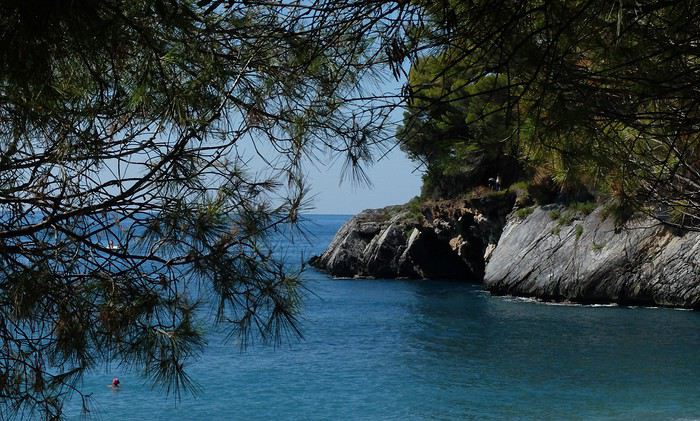
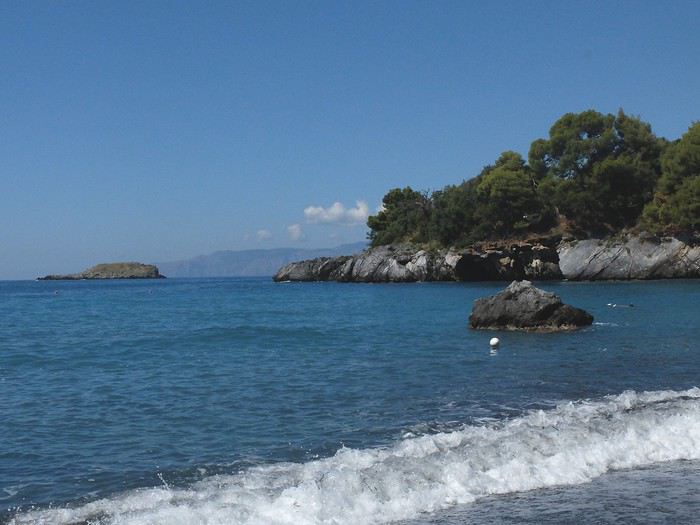 Its parking lot (5 € for the day) is worth the trip, nestled in a forest of umbrella pines!
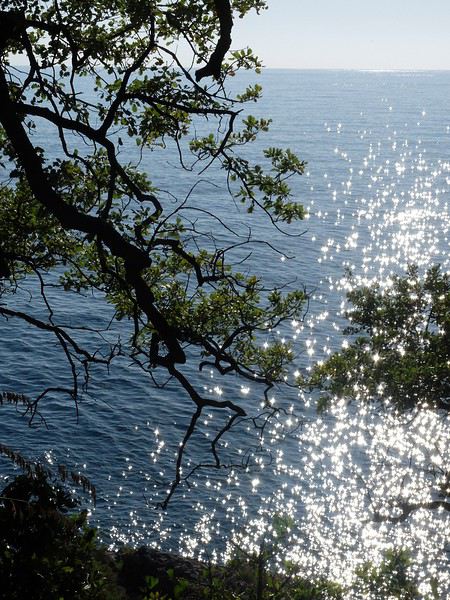
This beach is below Acquafredda, under the towering Christ the Redeemer statue that overlooks the coast. In the evening, you can wrap up your day with a fantastic seafood meal at Osteria 1999 in Porto, right by the little harbor, of course!!!
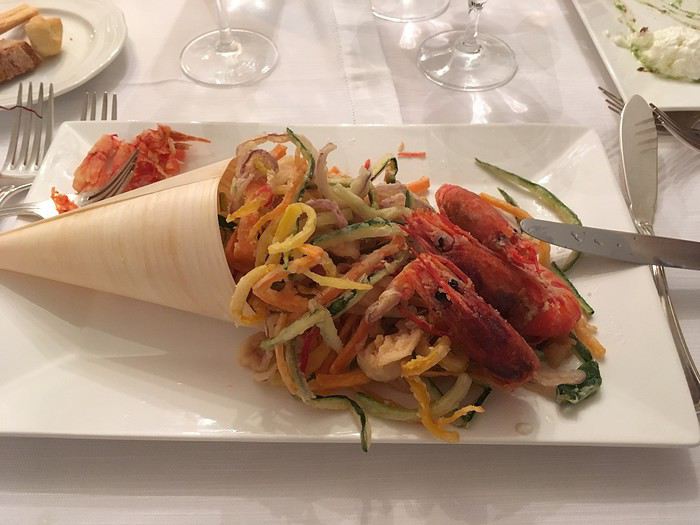
These were the three days of ‘Luxury, calm, and pleasure’ on our trip... Tomorrow, if you’re still with me, the final chapter in Campania...
Take my word for it—it’s even better in real life! A picture’s worth a thousand words:
I’ll spare you the historical details: countless churches, isolated villages, and high-altitude trails. If we’d stayed longer—and if we hadn’t been so exhausted from the steep walks in Puglia’s villages and then nearly finished off by Matera’s stairs—you’d have gotten the full rundown! We slept and ate each evening at an idyllic hotel where we were pampered. It was the very end of the season, around September 27th, and most Italians were back at work... Too many people would’ve been unpleasant, but too few felt a little... gloomy. There was a bit of a crowd one weekend evening, though. View from the terrace:
And from our room:
Still, I can’t even imagine our disappointment if the sun hadn’t been out! The town of Maratea isn’t really a town at all—it’s a collection of hamlets scattered over 30 km, with no seaside strip of shops or restaurants. It’s made up of many small settlements, some closer to the water than others; a few have charming little ports like Marina and Porto, while others sit higher up, like Acquafredda, where we stayed. Important heads-up: the Saturday morning market means the road is closed! A 20 km detour is mandatory...
Our only daily dilemma was picking the beach to spend a few hours at—based on sand vs. pebbles, whether there was a bar, and... how easy it was to get there! Let me explain: along the Gulf of Policastro, where we were, there’s only one road, and it’s dizzying and packed—one side the sea, the other the mountain. The coast has over twenty beaches, and access usually involves a sharp turn and a steep descent... The first route the GPS suggested was often a rocky, uphill trail that our car couldn’t handle, and after all the blind U-turns, my husband—exhausted—asked me to keep it simple!
I’d recommend our first pick: ‘o Macaro beach, a mix of sand and gravel, for its (relatively) easy access, its stunning setting between two rocky cliffs, its umbrellas (12 € for two, with two sunbeds), and its bar—you’ve got to go!
This beach is below Acquafredda, under the towering Christ the Redeemer statue that overlooks the coast. In the evening, you can wrap up your day with a fantastic seafood meal at Osteria 1999 in Porto, right by the little harbor, of course!!!
These were the three days of ‘Luxury, calm, and pleasure’ on our trip... Tomorrow, if you’re still with me, the final chapter in Campania...