
Day 12, Saturday, August 8: Hermigua/El Corralete, Vallehermoso, Chorros de Epina, Garajonay Natural Park, Hermigua/El Corralete
After a restless night in Hermigua, waking up was definitely a bit tough. I eventually managed to fall asleep, lulled by the music, which wasn’t the case for Magali—she barely got any sleep and assured me the festivities wrapped up around 5 AM with the sound of car horns, as vehicles seemed to struggle to leave the area. Despite that, it’s a beautiful day, and there’s still some of my famous banana gofio flan left to get us going. Today, we planned to visit Vallehermoso in the neighboring valley, a place we hadn’t explored yet and that’s reputed to be one of La Gomera’s "must-see" spots. Apparently, there’s a rather special "natural" pool that caught our attention.
Even though it’s the neighboring valley, it still takes half an hour of winding roads to cover 20 kilometers. That said, it’s shorter than most of the trips we’ve been making. The Opel Corsa cruises along to the rhythm of "La Gomera Es" by the Gomeran orchestra Wamampy—a song I discovered while searching for typical island music at the start of the trip and linked in the beginning of this travel journal. It’s become our travel anthem, and there’s not a single drive where we don’t play it at least two or three times.
Once again, it’s at a mirador that the Beautiful Valley reveals itself. It shares similarities with the other valleys we’ve seen so far but has its own uniqueness. We expected something green and humid like its neighbor Hermigua, but no—it’s drier and rockier, a bit like Alojera. What gives Vallehermoso its green, mountainous reputation isn’t the village itself but the fact that its municipality stretches far into the hinterland, and curiously, the main part of Garajonay Park is included.
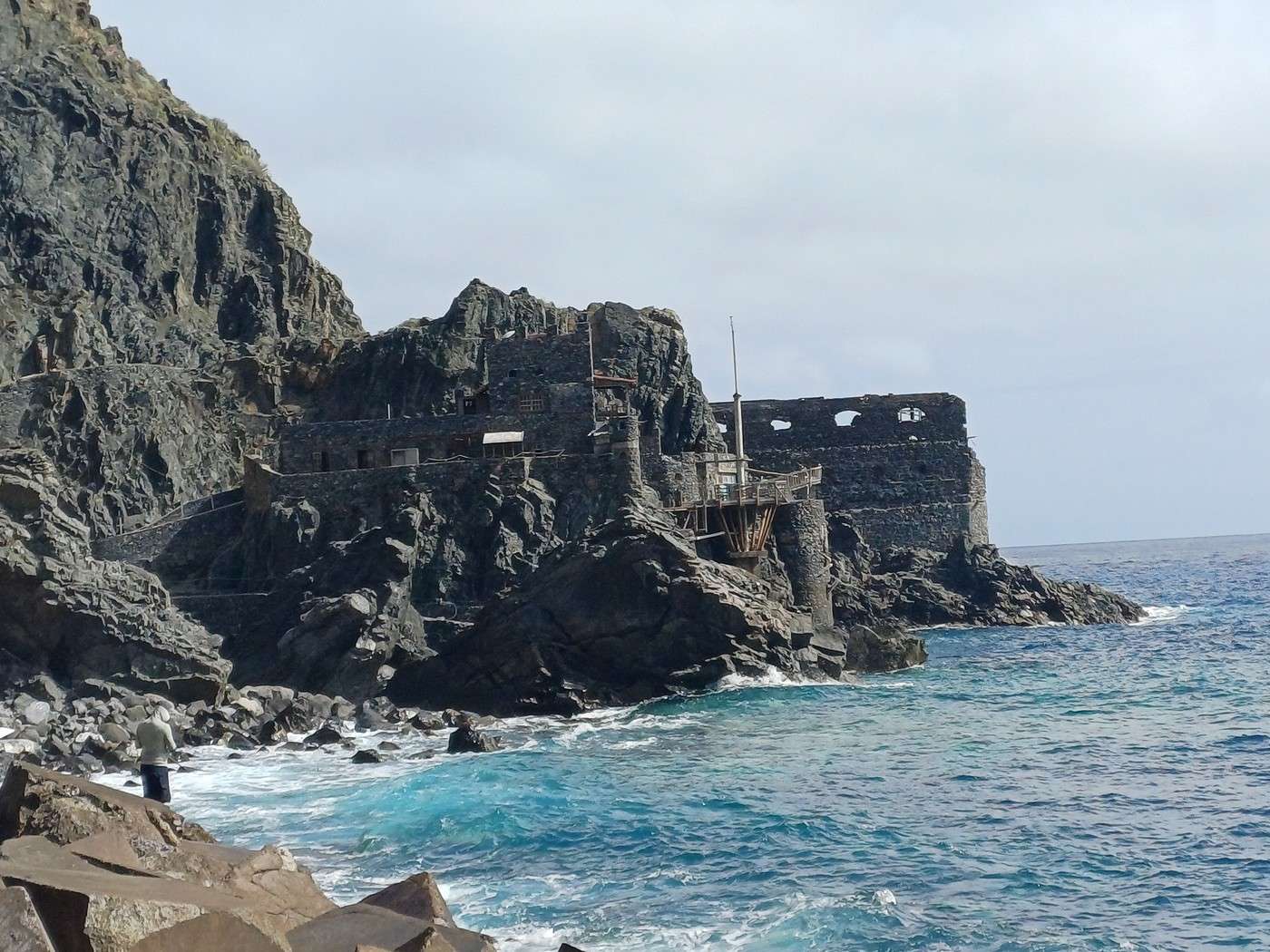
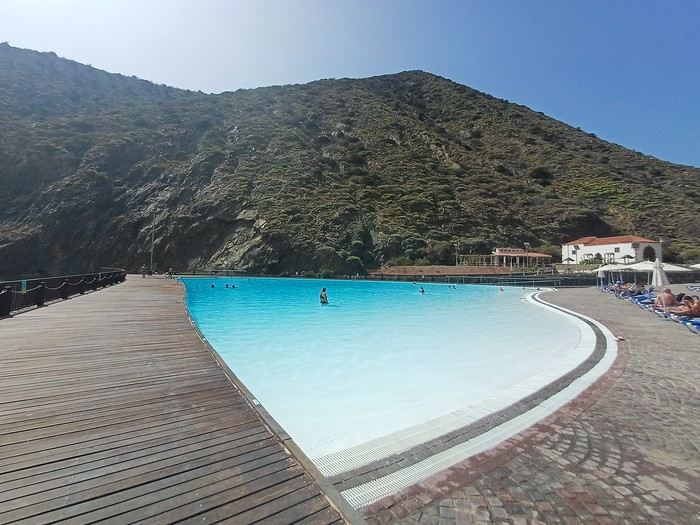
Once we arrive at the bottom, we don’t linger in the town since we want to take advantage of the swim while it’s not too late. We head toward the Vallehermoso beach, 3 kilometers down the road, and arrive at a seafront with a pebble beach surrounded by cliffs, an old pier, and powerful waves that don’t exactly invite a dip. Facing the ocean is the Vallehermoso maritime park, that surprising pool that looks like a vacation club, built by the sea to give it the feel of a sanitized natural pool. Visually, it’s quite striking and definitely tempting. We came a bit on a whim since we didn’t even think to check if it was closed or what the opening hours were. Luckily, a small group of Spanish tourists is waiting at the entrance where three little food trucks are parked—a sign it’ll probably open soon. We got lucky: we arrived at 10:45 AM, and opening time is listed as 11 AM. And great news—but not surprising after 11 days in La Gomera—the entry is free. I take the opportunity to snap a few photos near the remains of the Vallehermoso pier.
When I get back, the group at the entrance has quadrupled! The Spanish tourists are chatting about their experiences on the different Canary Islands while a lifeguard comes to open up. All the families rush to grab the free lounge chairs, and within seconds, there’s not a single one left. We’ve got ours! It’s not that the pool can hold that many people—maybe thirty at most—but the spots are limited. The place is surprisingly new, clean, and well-equipped for a free entry: there’s even a building with changing rooms, showers, and restrooms, and lifeguards who spend more time making sure no one brings in food or drinks (consumption is only allowed outside). Of course, the highlight is the pool itself—a lovely basin with a small paddling area, both filled with chlorinated seawater (a first for me!). It’s really pleasant for swimming while watching the ocean just below. It’s like a resort pool made public, giving off the vibe of a natural pool—minus the waves, of course. Perfect for both kids and adults, we spend a good hour swimming before heading out to eat. We’d barely started gathering our things when a Spanish family rushed over to ask if we were leaving—our lounge chairs were already claimed! All in all, a fun discovery, and we don’t regret it.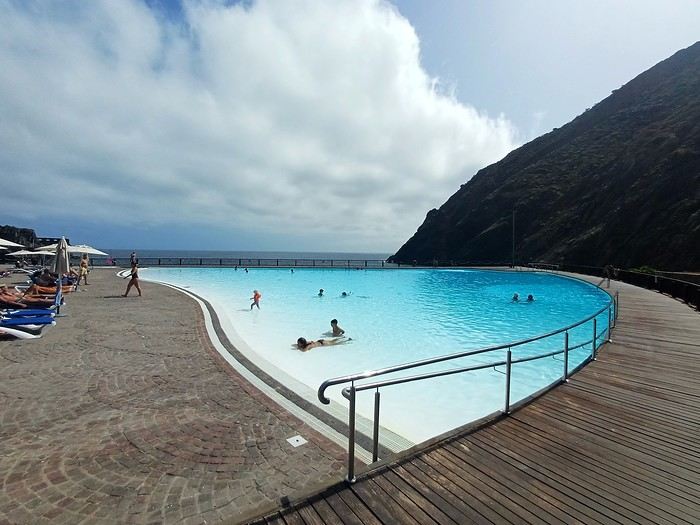
 Back in the small center of Vallehermoso, it’s tough to find parking. Though it’s not overrun with crowds, the place still attracts quite a few visitors. We choose Tasca El Carraca, another traditional Canarian restaurant with a rustic vibe that we love. The kids play it safe with spaghetti, while our ropa vieja, a local stew of meat and chickpeas, is good… but way too salty. It’s true that Gomeros—and Spaniards in general—tend to salt their dishes generously, but this was almost inedible! Even the dessert was just okay. A miss, a bad day, or maybe we just didn’t make the right choices. Too bad.
It’s scorching hot here, so we decide to visit the Vallehermoso botanical garden, halfway between the village and the ocean. A great idea since, once again, it’s free. This garden, located in the valley bed—as is often the case for cultivable spaces in La Gomera—might be one of the few wooded spots around. It offers a walk through exotic trees, some with unusual shapes, from around the world and the Canary Islands, including a few species we’ve encountered often on our journey.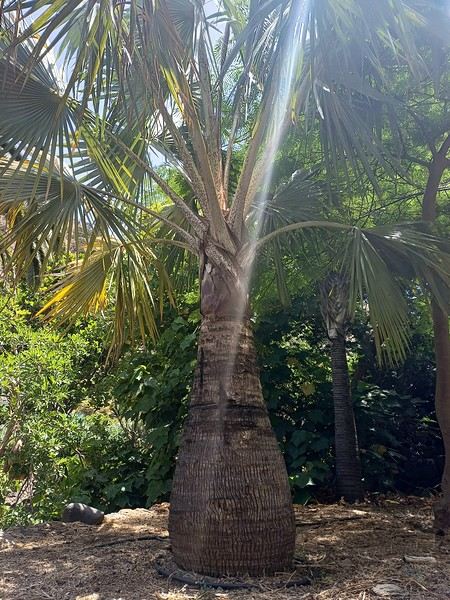
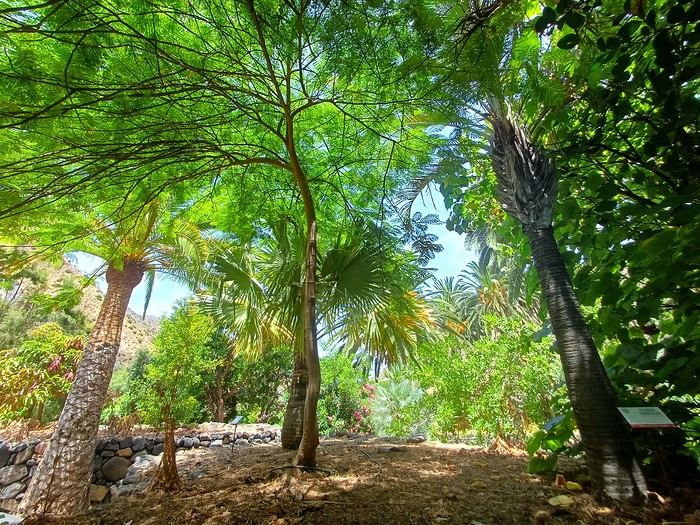
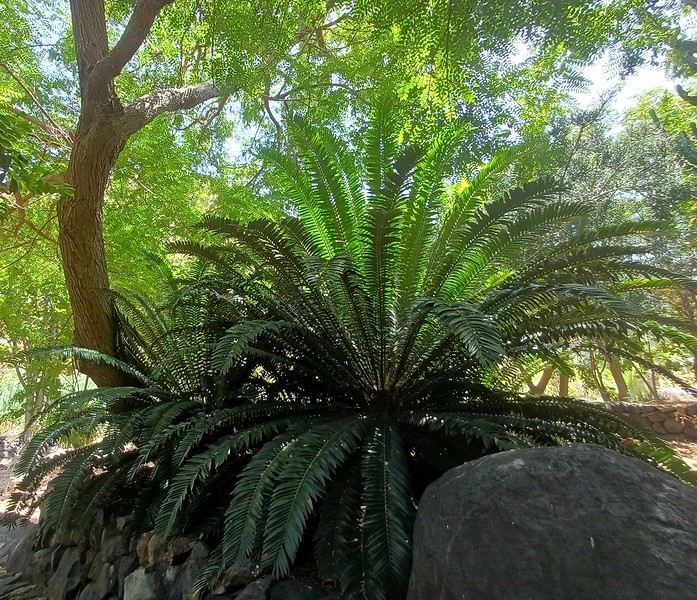 A perfect post-meal stroll—pleasant, educational, and shady!
So, what’s the verdict on Vallehermoso? Nice, but nothing more. We’ve already seen so many beautiful things in La Gomera that this valley seemed less spectacular than others. Still, the pool and botanical garden were enjoyable stops.
It’s still early, and we have time for one more little outing. On the road between Vallehermoso and Alojera, at the edge of Garajonay Park, are the Chorros de Epina. A ten-minute walk into the forest from the road leads to a spring with reputedly medicinal water flowing from a fountain divided into seven small wooden spouts.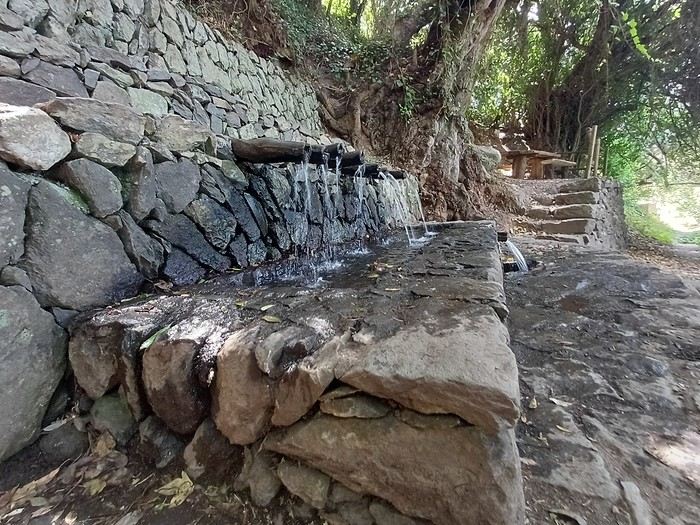 Legend has it that men should drink from the even-numbered spouts and women from the odd ones to find love and marry within the year. It’s totally useless for us, but we play along like the few other visitors there. The water is pure and refreshing, which isn’t unpleasant. Of course, nothing’s ever clear with these legends—the oldest one mentions only four spouts, another says the seventh is reserved for witches, and the parking sign says the opposite of the fountain sign about who should drink from even or odd spouts. So, you never really know if you’re leaving blessed or cursed! Either way, it was a nice, easy walk.
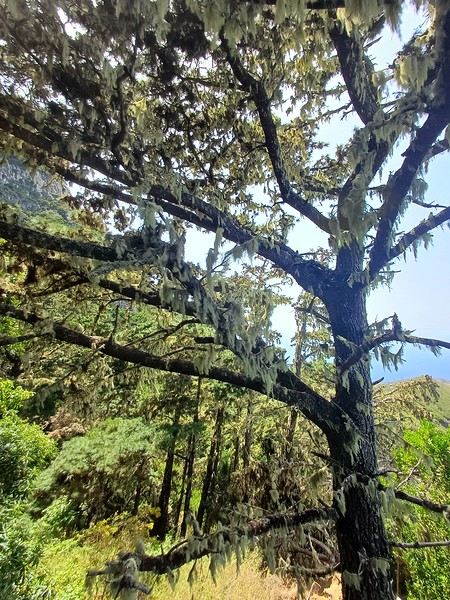
On the way back to Hermigua, we make a quick stop at a viewpoint to admire the expanse of Garajonay’s laurel forest canopy.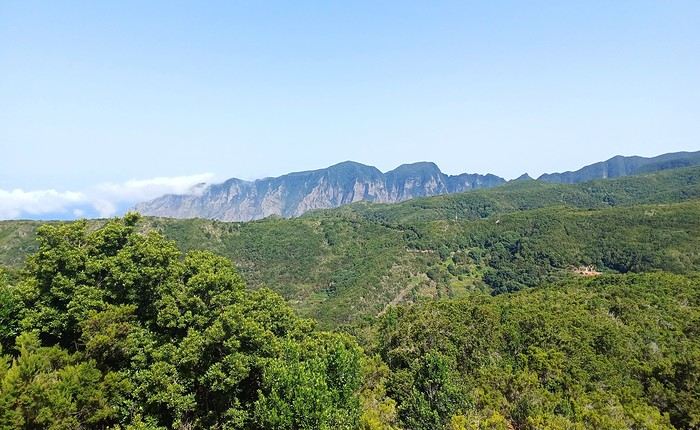
Back in Hermigua, we pop into the Spar for some shopping. At Casa Yaya, I improvise a vegetarian Indian masala with whatever’s on hand. The Indian flavor isn’t quite there, but it’s still tasty. It’s Saturday night, and after the religious ceremony, the pagan festivities are at their peak of frenzy, noise, and madness. The atmosphere has been building all week, reaching its climax tonight. The orchestra and villagers seem to be letting loose all their frustrations of the year down in the square. Saint Dominic is probably watching all this with a worried eye… This time, I’m the one pulling an all-nighter, just like Magali the night before, listening to the car horns of people trying to leave the party. It was fun the first few days, but we’re hoping this is the last night!
After a restless night in Hermigua, waking up was definitely a bit tough. I eventually managed to fall asleep, lulled by the music, which wasn’t the case for Magali—she barely got any sleep and assured me the festivities wrapped up around 5 AM with the sound of car horns, as vehicles seemed to struggle to leave the area. Despite that, it’s a beautiful day, and there’s still some of my famous banana gofio flan left to get us going. Today, we planned to visit Vallehermoso in the neighboring valley, a place we hadn’t explored yet and that’s reputed to be one of La Gomera’s "must-see" spots. Apparently, there’s a rather special "natural" pool that caught our attention.
Even though it’s the neighboring valley, it still takes half an hour of winding roads to cover 20 kilometers. That said, it’s shorter than most of the trips we’ve been making. The Opel Corsa cruises along to the rhythm of "La Gomera Es" by the Gomeran orchestra Wamampy—a song I discovered while searching for typical island music at the start of the trip and linked in the beginning of this travel journal. It’s become our travel anthem, and there’s not a single drive where we don’t play it at least two or three times.
Once again, it’s at a mirador that the Beautiful Valley reveals itself. It shares similarities with the other valleys we’ve seen so far but has its own uniqueness. We expected something green and humid like its neighbor Hermigua, but no—it’s drier and rockier, a bit like Alojera. What gives Vallehermoso its green, mountainous reputation isn’t the village itself but the fact that its municipality stretches far into the hinterland, and curiously, the main part of Garajonay Park is included.
Once we arrive at the bottom, we don’t linger in the town since we want to take advantage of the swim while it’s not too late. We head toward the Vallehermoso beach, 3 kilometers down the road, and arrive at a seafront with a pebble beach surrounded by cliffs, an old pier, and powerful waves that don’t exactly invite a dip. Facing the ocean is the Vallehermoso maritime park, that surprising pool that looks like a vacation club, built by the sea to give it the feel of a sanitized natural pool. Visually, it’s quite striking and definitely tempting. We came a bit on a whim since we didn’t even think to check if it was closed or what the opening hours were. Luckily, a small group of Spanish tourists is waiting at the entrance where three little food trucks are parked—a sign it’ll probably open soon. We got lucky: we arrived at 10:45 AM, and opening time is listed as 11 AM. And great news—but not surprising after 11 days in La Gomera—the entry is free. I take the opportunity to snap a few photos near the remains of the Vallehermoso pier.
When I get back, the group at the entrance has quadrupled! The Spanish tourists are chatting about their experiences on the different Canary Islands while a lifeguard comes to open up. All the families rush to grab the free lounge chairs, and within seconds, there’s not a single one left. We’ve got ours! It’s not that the pool can hold that many people—maybe thirty at most—but the spots are limited. The place is surprisingly new, clean, and well-equipped for a free entry: there’s even a building with changing rooms, showers, and restrooms, and lifeguards who spend more time making sure no one brings in food or drinks (consumption is only allowed outside). Of course, the highlight is the pool itself—a lovely basin with a small paddling area, both filled with chlorinated seawater (a first for me!). It’s really pleasant for swimming while watching the ocean just below. It’s like a resort pool made public, giving off the vibe of a natural pool—minus the waves, of course. Perfect for both kids and adults, we spend a good hour swimming before heading out to eat. We’d barely started gathering our things when a Spanish family rushed over to ask if we were leaving—our lounge chairs were already claimed! All in all, a fun discovery, and we don’t regret it.
It’s scorching hot here, so we decide to visit the Vallehermoso botanical garden, halfway between the village and the ocean. A great idea since, once again, it’s free. This garden, located in the valley bed—as is often the case for cultivable spaces in La Gomera—might be one of the few wooded spots around. It offers a walk through exotic trees, some with unusual shapes, from around the world and the Canary Islands, including a few species we’ve encountered often on our journey.
So, what’s the verdict on Vallehermoso? Nice, but nothing more. We’ve already seen so many beautiful things in La Gomera that this valley seemed less spectacular than others. Still, the pool and botanical garden were enjoyable stops.
It’s still early, and we have time for one more little outing. On the road between Vallehermoso and Alojera, at the edge of Garajonay Park, are the Chorros de Epina. A ten-minute walk into the forest from the road leads to a spring with reputedly medicinal water flowing from a fountain divided into seven small wooden spouts.
Legend has it that men should drink from the even-numbered spouts and women from the odd ones to find love and marry within the year. It’s totally useless for us, but we play along like the few other visitors there. The water is pure and refreshing, which isn’t unpleasant. Of course, nothing’s ever clear with these legends—the oldest one mentions only four spouts, another says the seventh is reserved for witches, and the parking sign says the opposite of the fountain sign about who should drink from even or odd spouts. So, you never really know if you’re leaving blessed or cursed! Either way, it was a nice, easy walk.
On the way back to Hermigua, we make a quick stop at a viewpoint to admire the expanse of Garajonay’s laurel forest canopy.
Back in Hermigua, we pop into the Spar for some shopping. At Casa Yaya, I improvise a vegetarian Indian masala with whatever’s on hand. The Indian flavor isn’t quite there, but it’s still tasty. It’s Saturday night, and after the religious ceremony, the pagan festivities are at their peak of frenzy, noise, and madness. The atmosphere has been building all week, reaching its climax tonight. The orchestra and villagers seem to be letting loose all their frustrations of the year down in the square. Saint Dominic is probably watching all this with a worried eye… This time, I’m the one pulling an all-nighter, just like Magali the night before, listening to the car horns of people trying to leave the party. It was fun the first few days, but we’re hoping this is the last night!