

Re: Tuscany: Arezzo province and the area around Siena
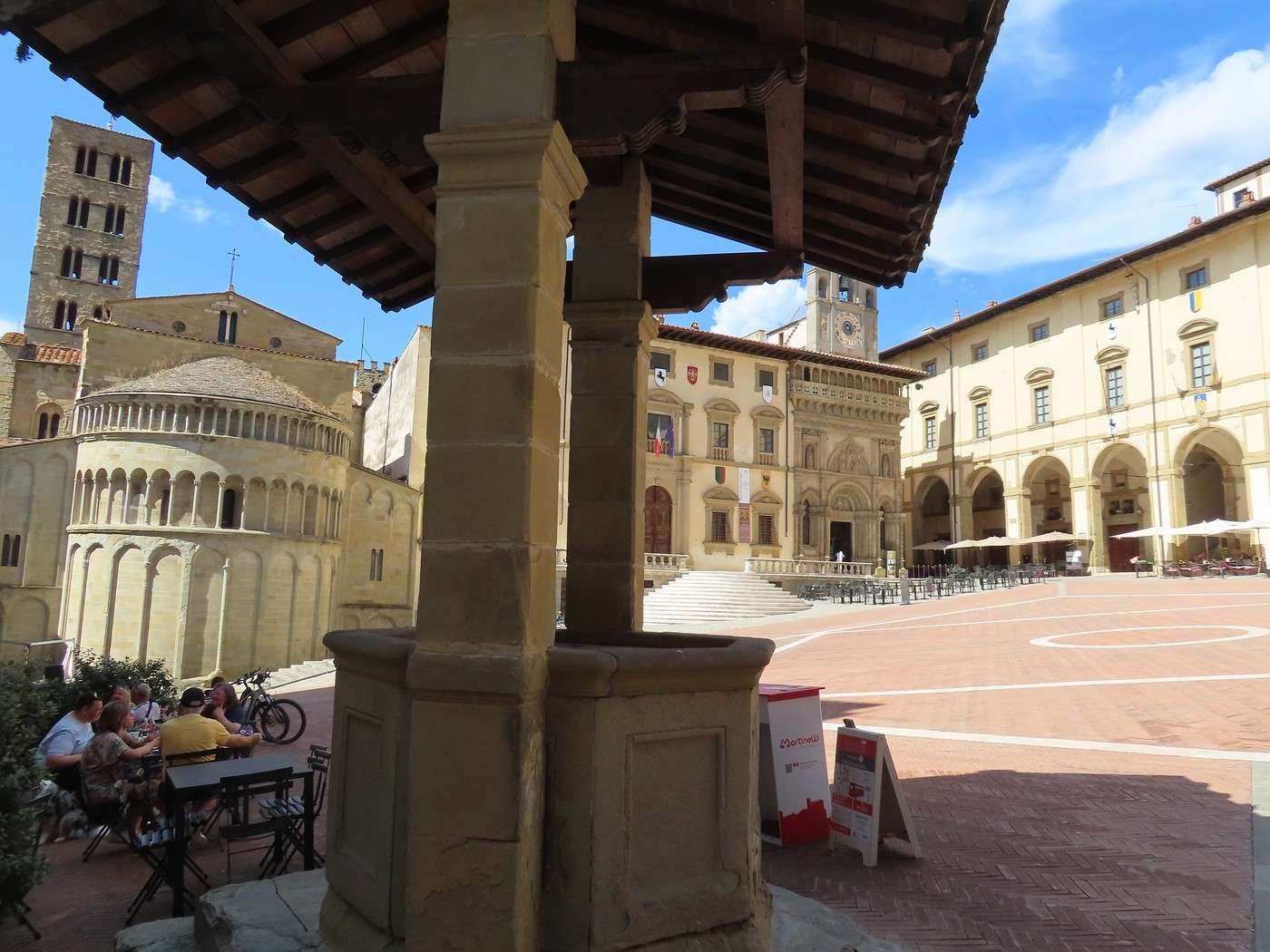
Here are the "Logge" and the Santa Maria church in the same photo; between them is the Palazzo della Fraternità dei Laici, which I’m going to visit.
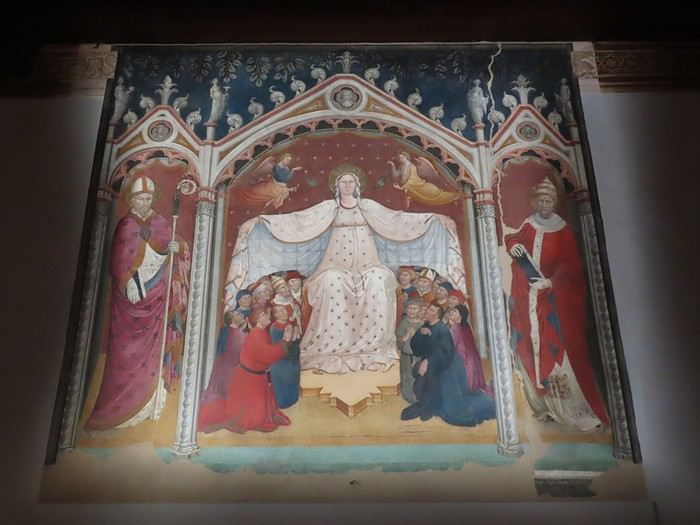
The visit starts in the palace’s audience hall, where the fresco of the "Madonna della Misericordia" (1448) is located. The painter, Parri di Spinello, is the same artist behind the painting on the same subject in the museum. Since the commission was paid for by the Fraternità (we know the amount), the people under the Virgin’s cloak (there’s quite a crowd) are Aretine benefactors and/or members (of the Fraternità). Many of them, according to the provided details, have been identified.
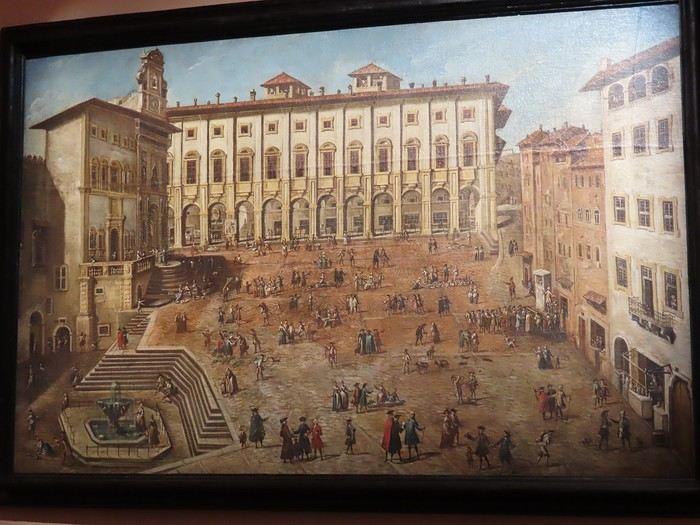
Some of the paintings on display are historical testimonies, like this view of Piazza Grande, signed by Cristoforo di Donato Conti. It dates back to the Settecento, a century when "vedute" were all the rage. The square hasn’t changed much since then.
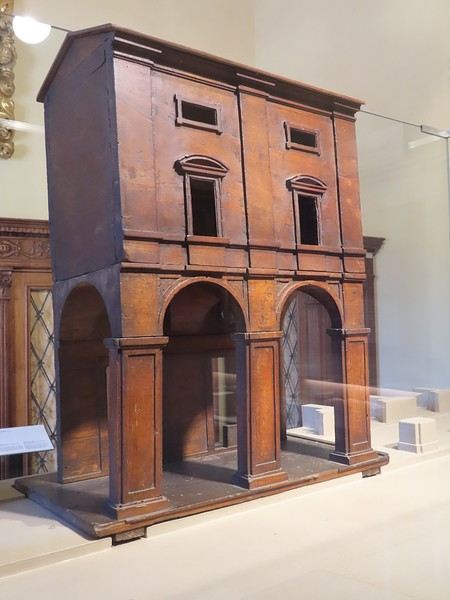
I’m looking at this model as another historical record—the oldest architect’s model I’ve ever seen. Vasari had it made in 1572, the year he was commissioned for the project. The model, limited to two arches, may have been used to convince the city officials of the project’s modular nature. After Vasari’s death (1574), construction continued on this principle (completed in 1595), with the ground-floor shops being sold in modules as work progressed.
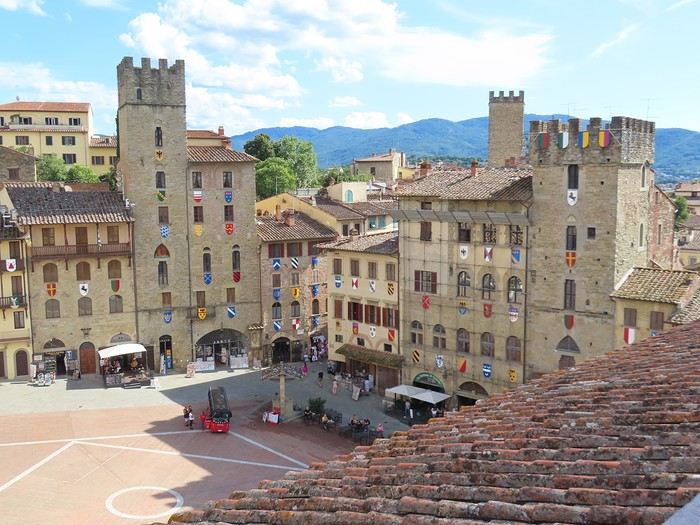
The view from the panoramic terrace is a sweeping one over Piazza Grande and a circular one over the city of Arezzo.
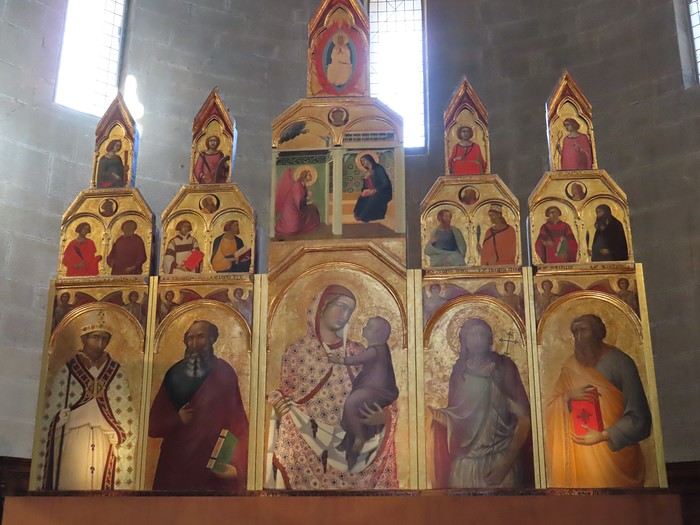
The parish church "Santa Maria della Pieve" is located very close to the square (access via Corso Italia). It houses the large polyptych by Pietro Lorenzetti (1320), known as the Tarlati Polyptych, as it was commissioned by the Bishop of Arezzo. The painter wasn’t from Arezzo but from Siena. The Virgin’s cloak is very unusual, as the painter depicted parts of it as fur (but what kind of fur?).
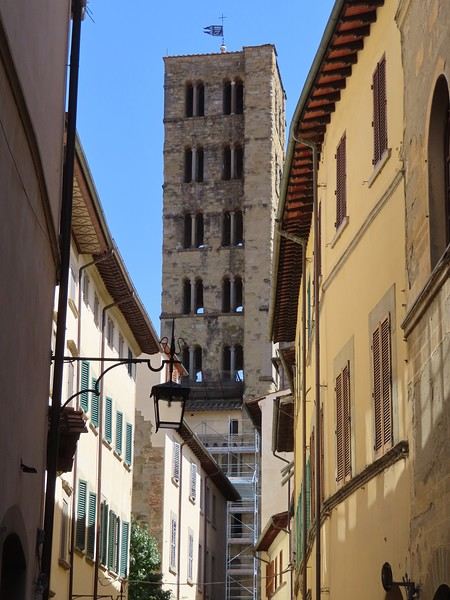
I end the day with this church and its bell tower. A symbol of Arezzo, it’s called the "bell tower of a hundred holes" because of its twin windows on all four sides. Photo taken on Via Bicchieraia (facade under renovation; the bell tower is also clearly visible from the panoramic terrace, as mentioned above).
The visit starts in the palace’s audience hall, where the fresco of the "Madonna della Misericordia" (1448) is located. The painter, Parri di Spinello, is the same artist behind the painting on the same subject in the museum. Since the commission was paid for by the Fraternità (we know the amount), the people under the Virgin’s cloak (there’s quite a crowd) are Aretine benefactors and/or members (of the Fraternità). Many of them, according to the provided details, have been identified.
Some of the paintings on display are historical testimonies, like this view of Piazza Grande, signed by Cristoforo di Donato Conti. It dates back to the Settecento, a century when "vedute" were all the rage. The square hasn’t changed much since then.
I’m looking at this model as another historical record—the oldest architect’s model I’ve ever seen. Vasari had it made in 1572, the year he was commissioned for the project. The model, limited to two arches, may have been used to convince the city officials of the project’s modular nature. After Vasari’s death (1574), construction continued on this principle (completed in 1595), with the ground-floor shops being sold in modules as work progressed.
The view from the panoramic terrace is a sweeping one over Piazza Grande and a circular one over the city of Arezzo.
The parish church "Santa Maria della Pieve" is located very close to the square (access via Corso Italia). It houses the large polyptych by Pietro Lorenzetti (1320), known as the Tarlati Polyptych, as it was commissioned by the Bishop of Arezzo. The painter wasn’t from Arezzo but from Siena. The Virgin’s cloak is very unusual, as the painter depicted parts of it as fur (but what kind of fur?).
I end the day with this church and its bell tower. A symbol of Arezzo, it’s called the "bell tower of a hundred holes" because of its twin windows on all four sides. Photo taken on Via Bicchieraia (facade under renovation; the bell tower is also clearly visible from the panoramic terrace, as mentioned above).