

Re: Autumn road trip from Puglia to Naples via Basilicata...
If you're reading this, thanks for sticking around! We're leaving Basilicata for Campania, destination: Paestum, which will be the last stop on our journey before heading back...
From Maratea, we head back up to Sapri via the winding road you know (hello, Campania!) and from there, we make our way to Agropoli. To our surprise, we're no longer following the coast but taking a highway, and we arrive in Paestum by midday.
Why the rush? Well, in Paestum, besides the famous Greek temples, there's a wonderful museum we want to revisit... but of course, it's closed on Mondays. Tomorrow, we'll find something else to do on our last day before returning!
A cultural stop: absolutely! But this is an exceptional site that combines history and the beauty of a natural landscape!
We let ourselves be guided to a parking lot—owners take advantage of the influx of travelers to rent out their land at a premium! The site is now enclosed by a walled perimeter, and you enter through two gates: to the south, the Gate of Justice, where we are now.
On Sunday, we won’t be alone—all the walkers are out with kids, strollers, and... dogs, along the Via Magna Grecia, which leads north to the Porta Aurea. The landscape is typical, arid and scorched by the sun, with a few umbrella pines providing some shade.
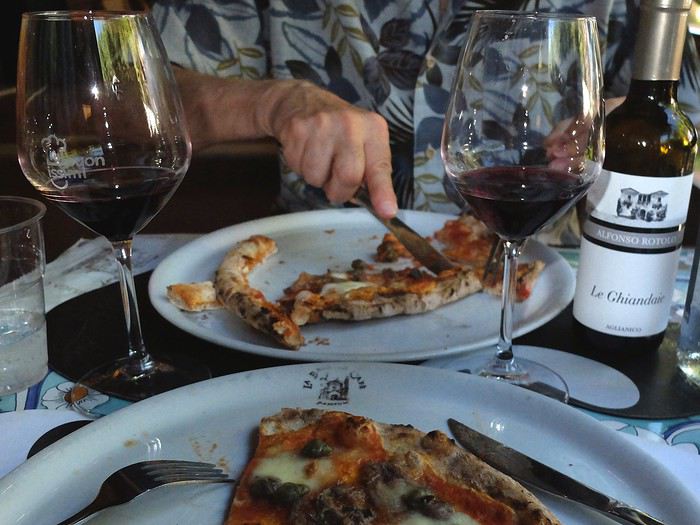
The further we go, the more souvenir shops and bars pop up. We quickly agree: first, we’ll grab something to eat, and then—off to explore the site! Near Naples, the choice was obvious...
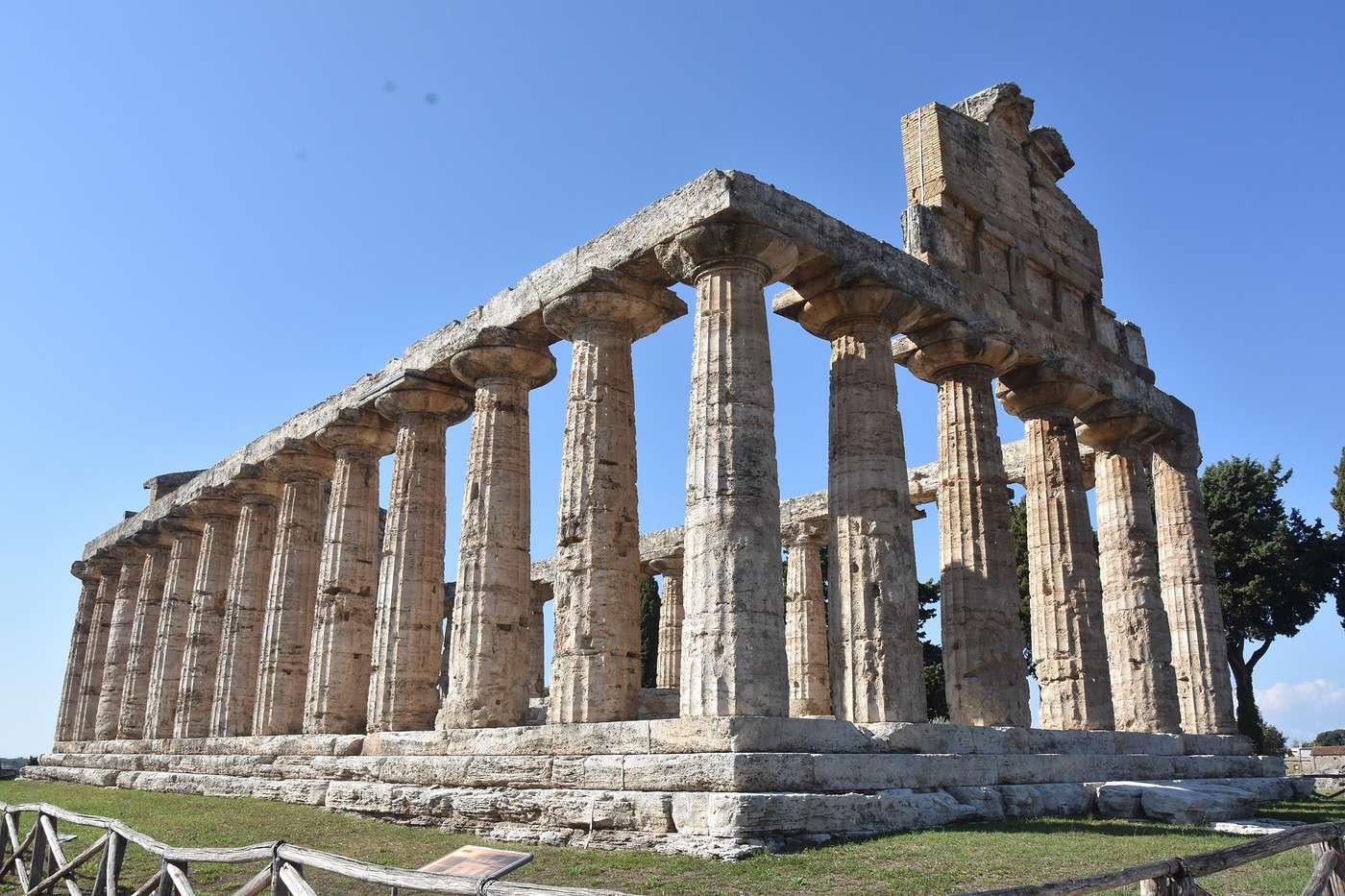
Let’s enter the archaeological site: first, note that these temples are the best-preserved Greek temples known, and all three are in the Doric style—the most classic and simple. Just look at the column sculptures and capitals! The names they’ve been given date back to the 18th century and don’t match reality at all... To keep it simple, I’ve arranged the photos in chronological order, which doesn’t match the order of the visit.
First, the oldest: the Temple of Hera, also called the Basilica, dating back to around 550 B.C. Next to the other two, it gives off a certain heaviness due to its dimensions and the thickness of its columns. The pediments, called metopes, are missing—some are on display in the museum.
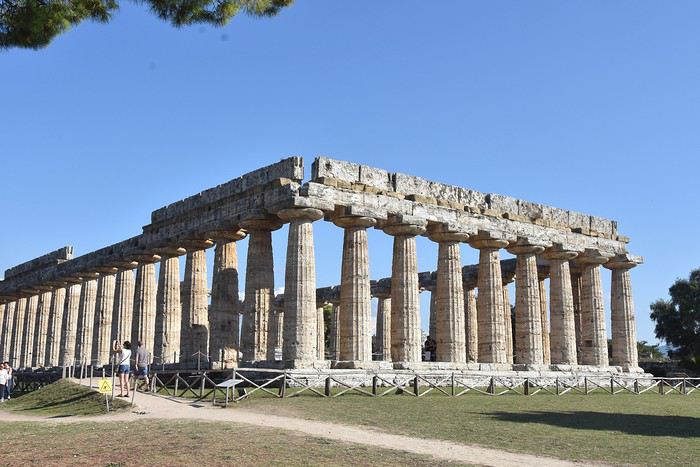
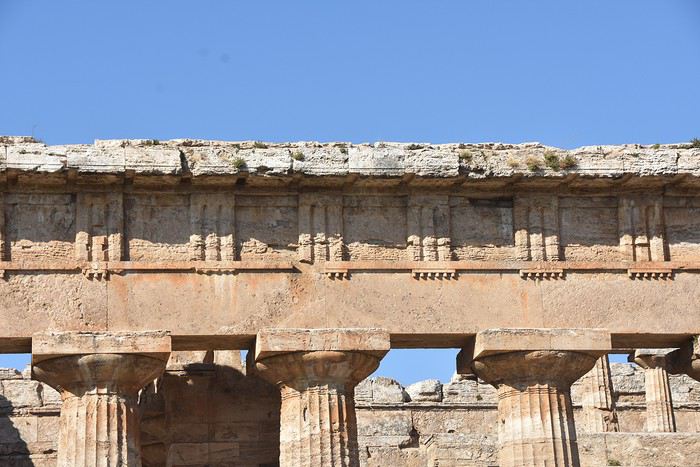
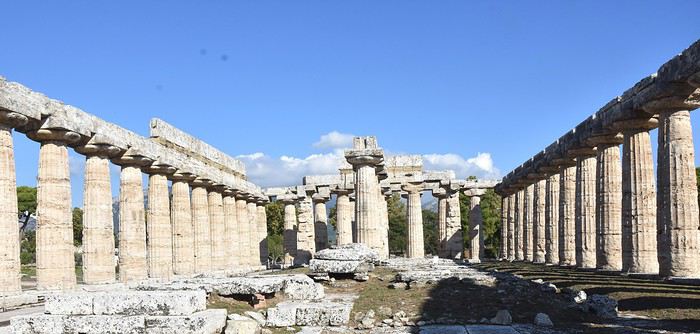 Next, see the Temple of Athena, also called the Temple of Ceres: its architecture is more harmonious, and it dates back to 500 B.C.
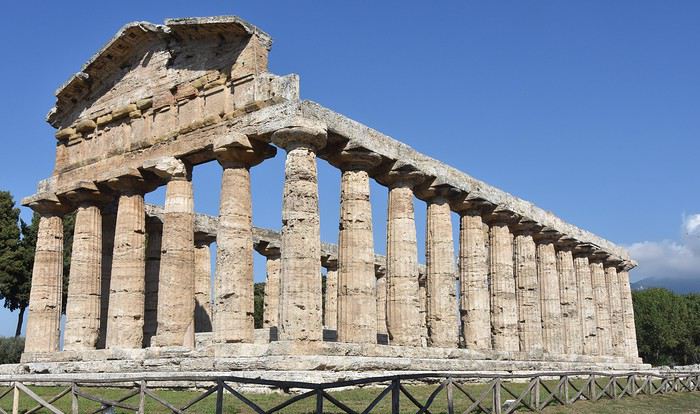
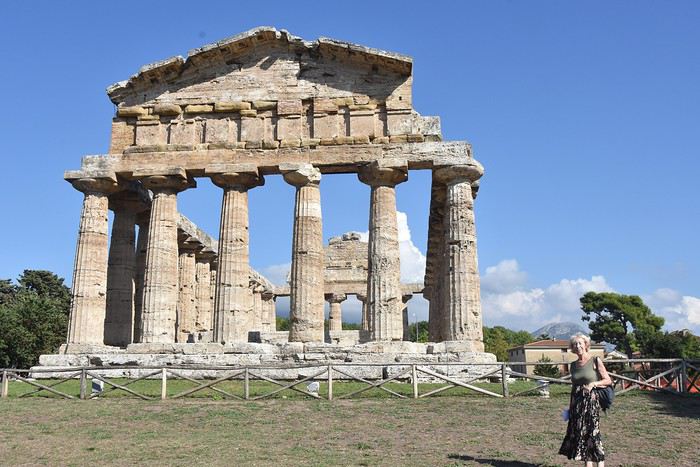 Finally, we reach the Temple of Neptune, the best-preserved of them all!
It was built around 450 B.C.
Its proportions follow the Golden Ratio, like the Parthenon in Athens, and it exudes perfect harmony and power. At sunset, the effect is stunning, enhanced by the beautiful golden light...
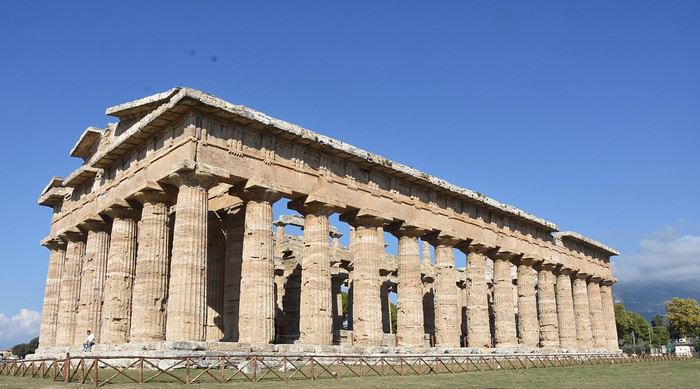
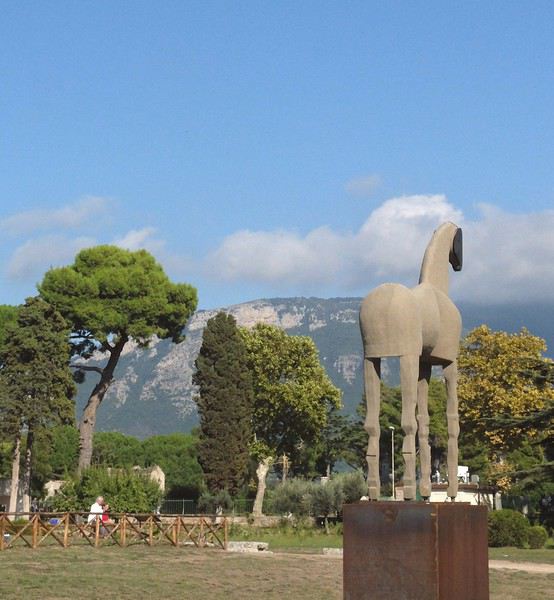
A note from the math enthusiast in me: the Golden Ratio is a remarkable number, especially for architects. Using it gives a building an obvious balance. For those unfamiliar, the length of the building equals the width multiplied by 1.62... (the approximate value of the famous Golden Ratio!). Between the temples, a modern sculpture stands out beautifully against the backdrop!
I’ll skip the other remains of the ancient city, and we head straight to the museum—some lovely surprises await us there!
From Maratea, we head back up to Sapri via the winding road you know (hello, Campania!) and from there, we make our way to Agropoli. To our surprise, we're no longer following the coast but taking a highway, and we arrive in Paestum by midday.
Why the rush? Well, in Paestum, besides the famous Greek temples, there's a wonderful museum we want to revisit... but of course, it's closed on Mondays. Tomorrow, we'll find something else to do on our last day before returning!
A cultural stop: absolutely! But this is an exceptional site that combines history and the beauty of a natural landscape!
We let ourselves be guided to a parking lot—owners take advantage of the influx of travelers to rent out their land at a premium! The site is now enclosed by a walled perimeter, and you enter through two gates: to the south, the Gate of Justice, where we are now.
On Sunday, we won’t be alone—all the walkers are out with kids, strollers, and... dogs, along the Via Magna Grecia, which leads north to the Porta Aurea. The landscape is typical, arid and scorched by the sun, with a few umbrella pines providing some shade.
The further we go, the more souvenir shops and bars pop up. We quickly agree: first, we’ll grab something to eat, and then—off to explore the site! Near Naples, the choice was obvious...
Let’s enter the archaeological site: first, note that these temples are the best-preserved Greek temples known, and all three are in the Doric style—the most classic and simple. Just look at the column sculptures and capitals! The names they’ve been given date back to the 18th century and don’t match reality at all... To keep it simple, I’ve arranged the photos in chronological order, which doesn’t match the order of the visit.
First, the oldest: the Temple of Hera, also called the Basilica, dating back to around 550 B.C. Next to the other two, it gives off a certain heaviness due to its dimensions and the thickness of its columns. The pediments, called metopes, are missing—some are on display in the museum.
A note from the math enthusiast in me: the Golden Ratio is a remarkable number, especially for architects. Using it gives a building an obvious balance. For those unfamiliar, the length of the building equals the width multiplied by 1.62... (the approximate value of the famous Golden Ratio!). Between the temples, a modern sculpture stands out beautifully against the backdrop!
I’ll skip the other remains of the ancient city, and we head straight to the museum—some lovely surprises await us there!