

Re: Tuscany: Province of Arezzo and the Sienna area
This morning in Arezzo, there’s a very busy market in the streets at the foot of the hill; you have to weave between the stalls to reach the archaeological museum (Museo Gaio Cilnio Mecenate in Italian). This Roman, originally from Arezzo and advisor to Emperor Augustus—named Gaius Cilnius Maecenas in Latin—is the origin of the words "patron" and "patronage" through his actions.
The museum is next to the Roman amphitheater, with its arena clearly visible, though nothing remains above ground.
The collections are divided between the Etruscan era (the Etruscans were very present in what is now Tuscany, especially to the east and south) and the Roman era. Taking photos in archaeology is always tricky (display cases, reflections).
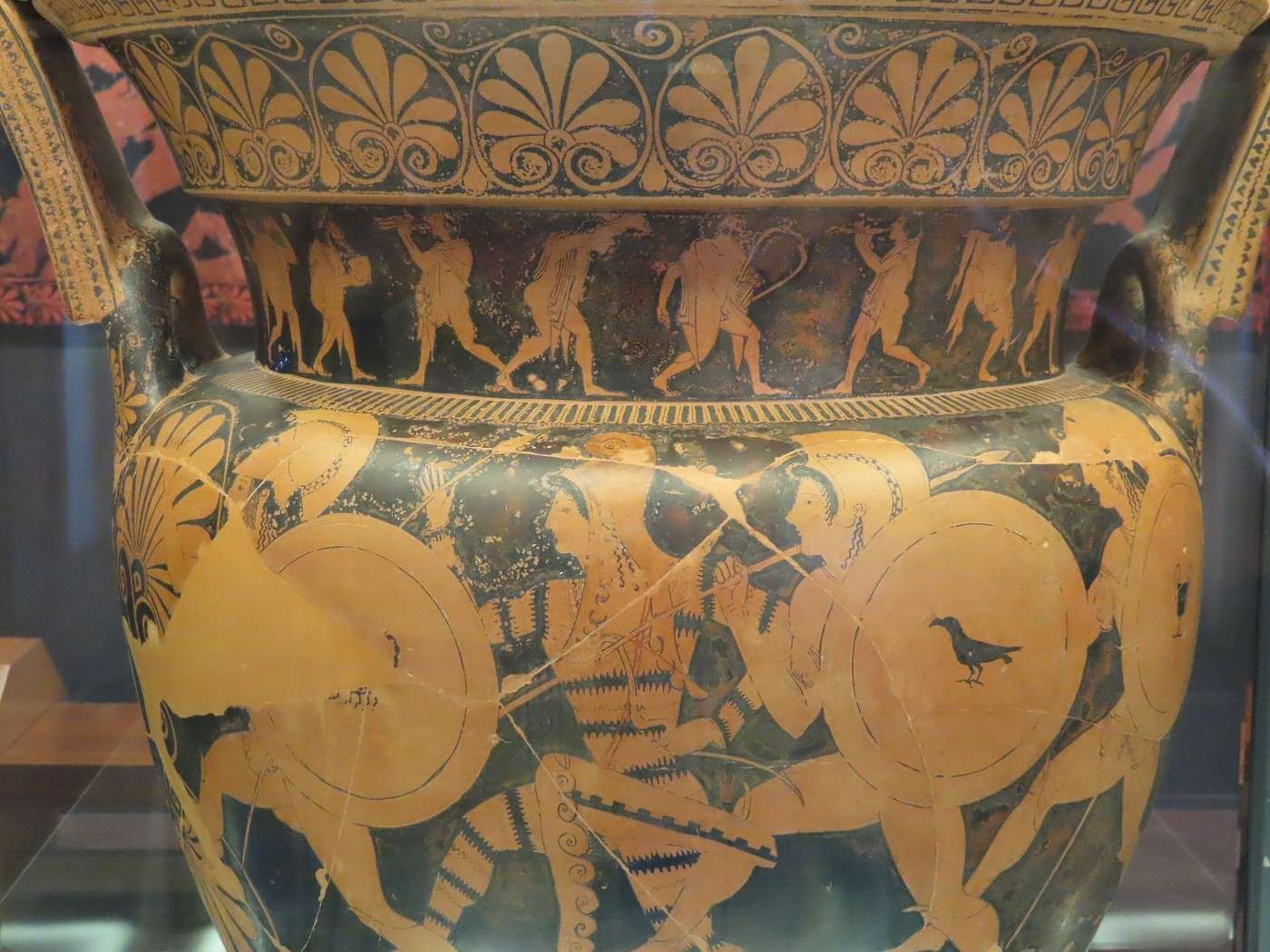
During the Etruscan era, the finest ceramic pieces were imported from Greece. Here’s the Euphronios krater (Attic origin, around 510 BC) depicting a battle between Hercules and the Amazons.
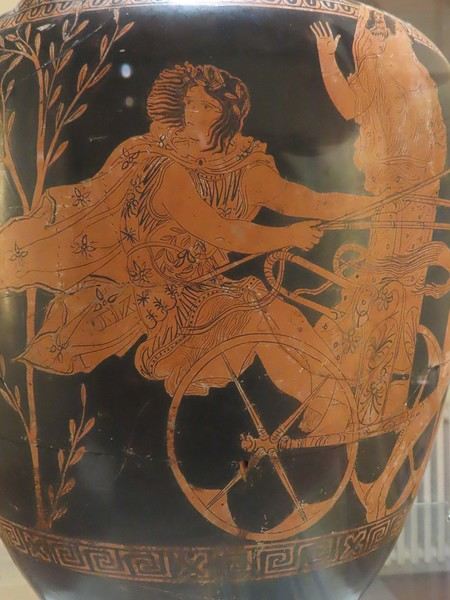
A red-figure amphora, also of Attic origin (dated around 415 BC), is decorated with "Pelops and Hippodamia on a quadriga." Here are the figures on the chariot.
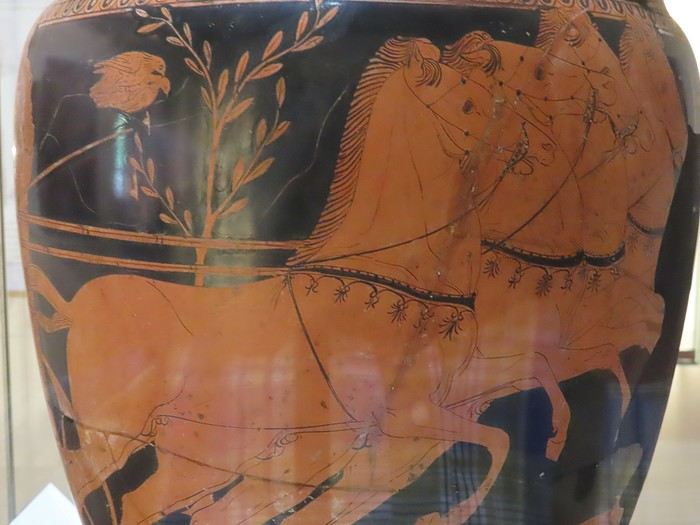
And now, the four horses.
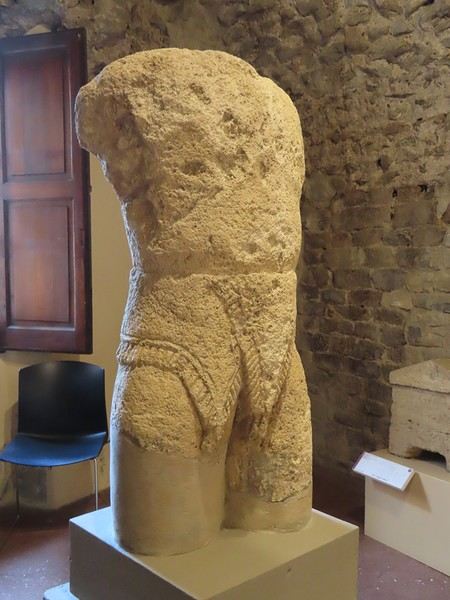
Still from the Etruscan era (around 600 BC), the torso from Marciano (a village in the Valdichiana) is sculpted from pietra fetida, a soft limestone often used by the Etruscans for funerary monuments.
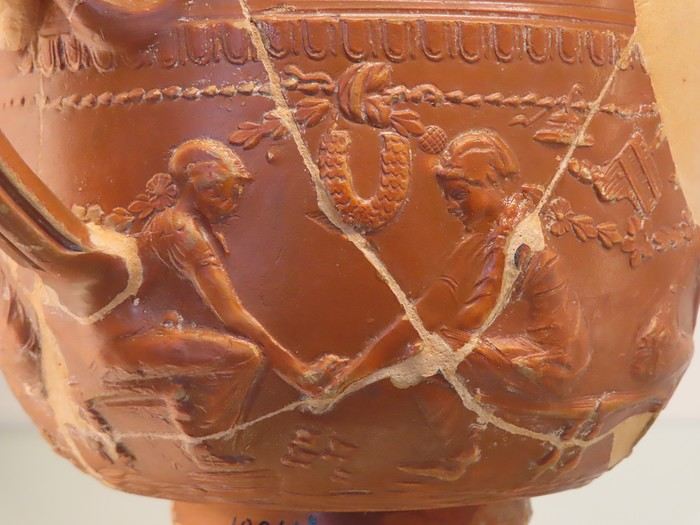
Moving on to the Roman period and Arezzo’s splendor: from the 1st century AD, for over 100 years, Arezzo was the largest production center of terra sigillata (a fine red-glazed tableware) in the empire. Here’s an example of a two-handled cup featuring knucklebones players.
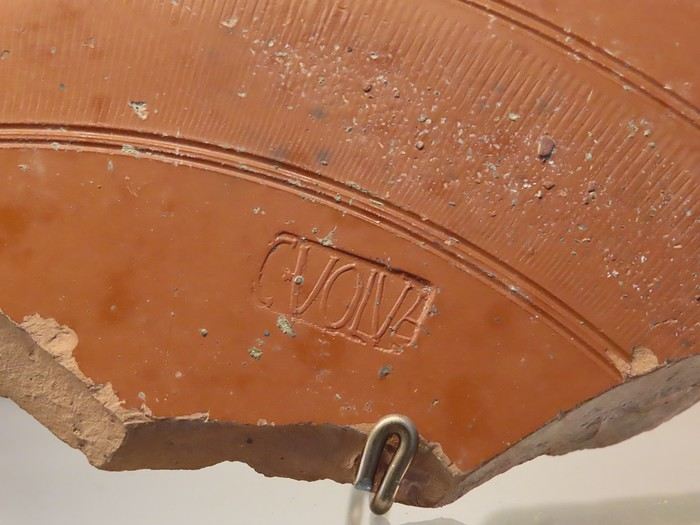
This was mass-produced in workshops that signed their work (over a hundred workshops). Example with the signature of C. Volusenus (1st or 2nd century AD).
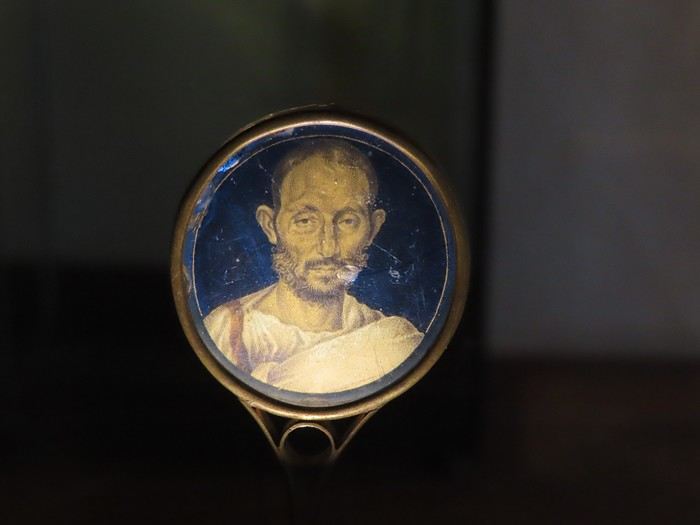
The Arezzo medallion is a curiosity made using chrysography (engraving and painting on gold leaf between two glass plates—don’t ask me for more details!). It dates from the imperial era, 3rd or 4th century AD. There are only about ten such medallions in the world produced with this technique.
More from the day in the next post.
The collections are divided between the Etruscan era (the Etruscans were very present in what is now Tuscany, especially to the east and south) and the Roman era. Taking photos in archaeology is always tricky (display cases, reflections).
During the Etruscan era, the finest ceramic pieces were imported from Greece. Here’s the Euphronios krater (Attic origin, around 510 BC) depicting a battle between Hercules and the Amazons.
A red-figure amphora, also of Attic origin (dated around 415 BC), is decorated with "Pelops and Hippodamia on a quadriga." Here are the figures on the chariot.
And now, the four horses.
Still from the Etruscan era (around 600 BC), the torso from Marciano (a village in the Valdichiana) is sculpted from pietra fetida, a soft limestone often used by the Etruscans for funerary monuments.
Moving on to the Roman period and Arezzo’s splendor: from the 1st century AD, for over 100 years, Arezzo was the largest production center of terra sigillata (a fine red-glazed tableware) in the empire. Here’s an example of a two-handled cup featuring knucklebones players.
This was mass-produced in workshops that signed their work (over a hundred workshops). Example with the signature of C. Volusenus (1st or 2nd century AD).
The Arezzo medallion is a curiosity made using chrysography (engraving and painting on gold leaf between two glass plates—don’t ask me for more details!). It dates from the imperial era, 3rd or 4th century AD. There are only about ten such medallions in the world produced with this technique.
More from the day in the next post.