


Re: Autumn road trip from Puglia to Naples via Basilicata...
Hi there!!!
We crossed the road and headed toward the Museum...
Early afternoon, we were strolling in the sun and admiring the temples from the outside: I really wanted to highlight the geographical aspect of Paestum.
Now’s the perfect time to share a bit of its history: Paestum is a Greek colony, founded in the 7th century BCE. It was one of the most important centers of Magna Graecia—the regions under the economic and cultural influence of Ancient Greece!
The city thrived until around 450 BCE before declining: the surrounding area became marshy, and the stagnant water led to malaria.
So, what’s so remarkable about this Museum that we had to come back? Well, it’s a fascinating place: it has rooms dedicated to prehistory, and on the first floor, you can see the famous metopes (decorative panels with sculpted reliefs) depicting mythological scenes from various sites in Magna Graecia. They date back to the mid-6th century BCE. You’ll also find some metopes from the temple known as 'the Basilica,' which are more recent than the previous ones. They once decorated its pediment. Here’s one:
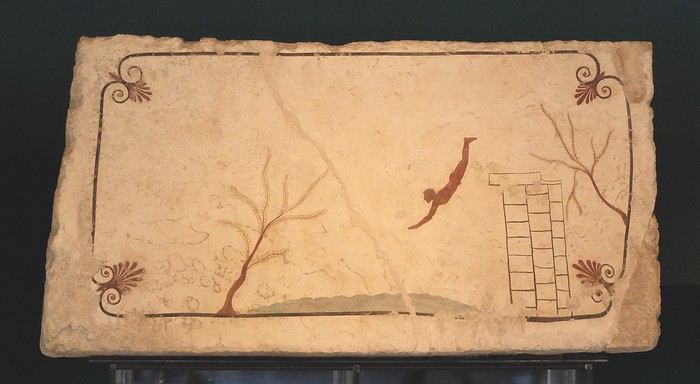
Now, let’s talk about the Museum’s treasure: until 1968, painting was the only Greek art form we had no surviving examples of. That year, the Tomb of the Diver was discovered in Paestum, dating back to the 5th century BCE.... Its paintings, preserved from air and light, are nearly intact and are the only remaining examples of Ancient Greek pictorial art! The painted walls of the tomb are, without a doubt, the highlight of the Museum and are reason enough for our return! Instead of describing them, I’ll show you—the lid that gave the tomb its name:
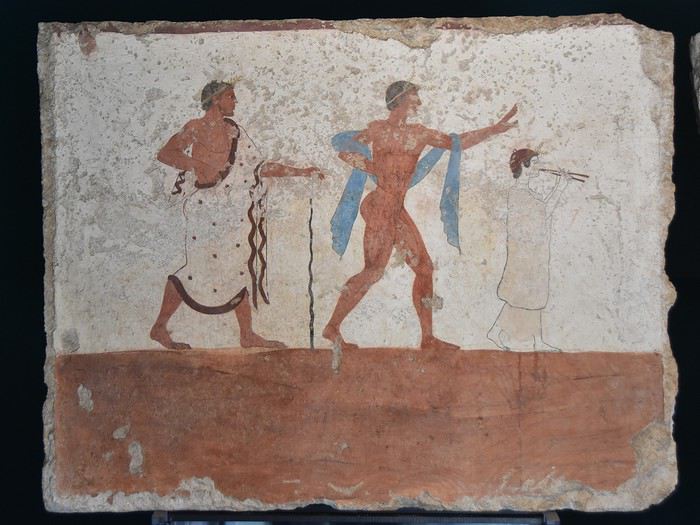 And the walls: check out the banquet scenes!
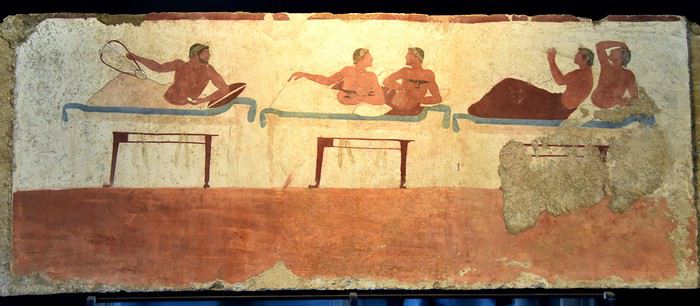
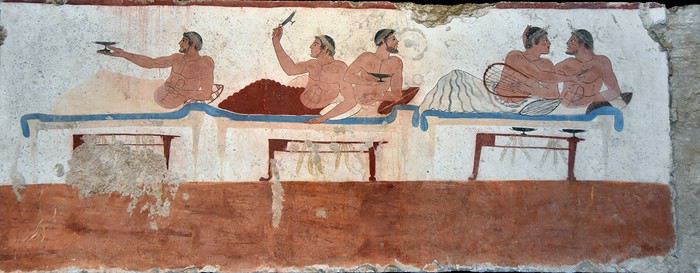 Following further excavations, other tombs also revealed their paintings, dating from a century later.
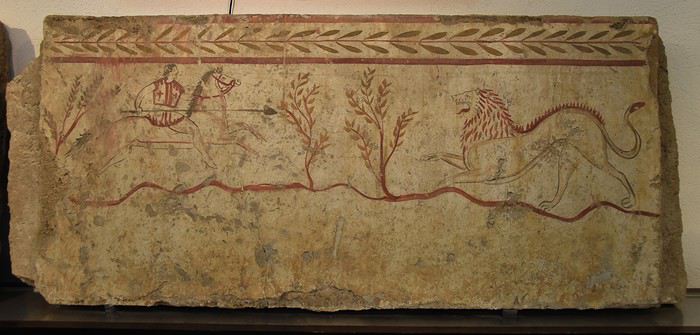
Some of them seemed quite influenced by Egyptian art: chariot races, hunting scenes, battles, and more.
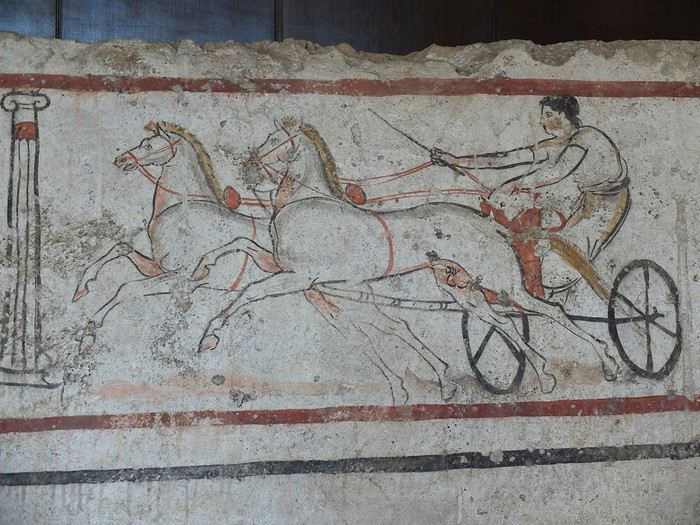
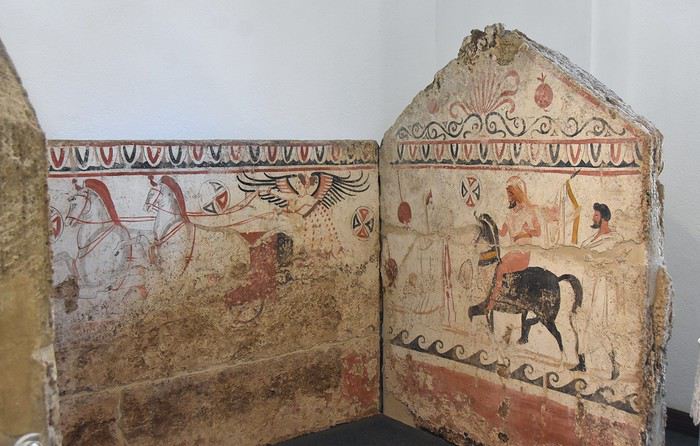 Six o’clock in the evening: time to head back to the parking lot, find our carriage... and try to locate our hotel amid the unbelievable—and inexplicable—chaos of cars!
So, what’s so remarkable about this Museum that we had to come back? Well, it’s a fascinating place: it has rooms dedicated to prehistory, and on the first floor, you can see the famous metopes (decorative panels with sculpted reliefs) depicting mythological scenes from various sites in Magna Graecia. They date back to the mid-6th century BCE. You’ll also find some metopes from the temple known as 'the Basilica,' which are more recent than the previous ones. They once decorated its pediment. Here’s one:
Now, let’s talk about the Museum’s treasure: until 1968, painting was the only Greek art form we had no surviving examples of. That year, the Tomb of the Diver was discovered in Paestum, dating back to the 5th century BCE.... Its paintings, preserved from air and light, are nearly intact and are the only remaining examples of Ancient Greek pictorial art! The painted walls of the tomb are, without a doubt, the highlight of the Museum and are reason enough for our return! Instead of describing them, I’ll show you—the lid that gave the tomb its name:
Some of them seemed quite influenced by Egyptian art: chariot races, hunting scenes, battles, and more.