

Re: Tuscany: Arezzo Province and the Sienese Area
I’ll be spending the day in Cortona. Since there’s so much to see there (at my visiting pace), the day will be pretty packed—early start, late return. The weather is still cool, but the wind has died down and the sun is out, so it feels much better.
Cortona’s site is exceptional. The town sits on a hillside, but the plain at its foot is 400 meters above sea level, and the Girifalco fortress at the top is at 650 meters. So it’s not just a small hill—it’s a remarkable vantage point over the region, used and fortified since Etruscan times (likely one of the most important Etruscan centers).
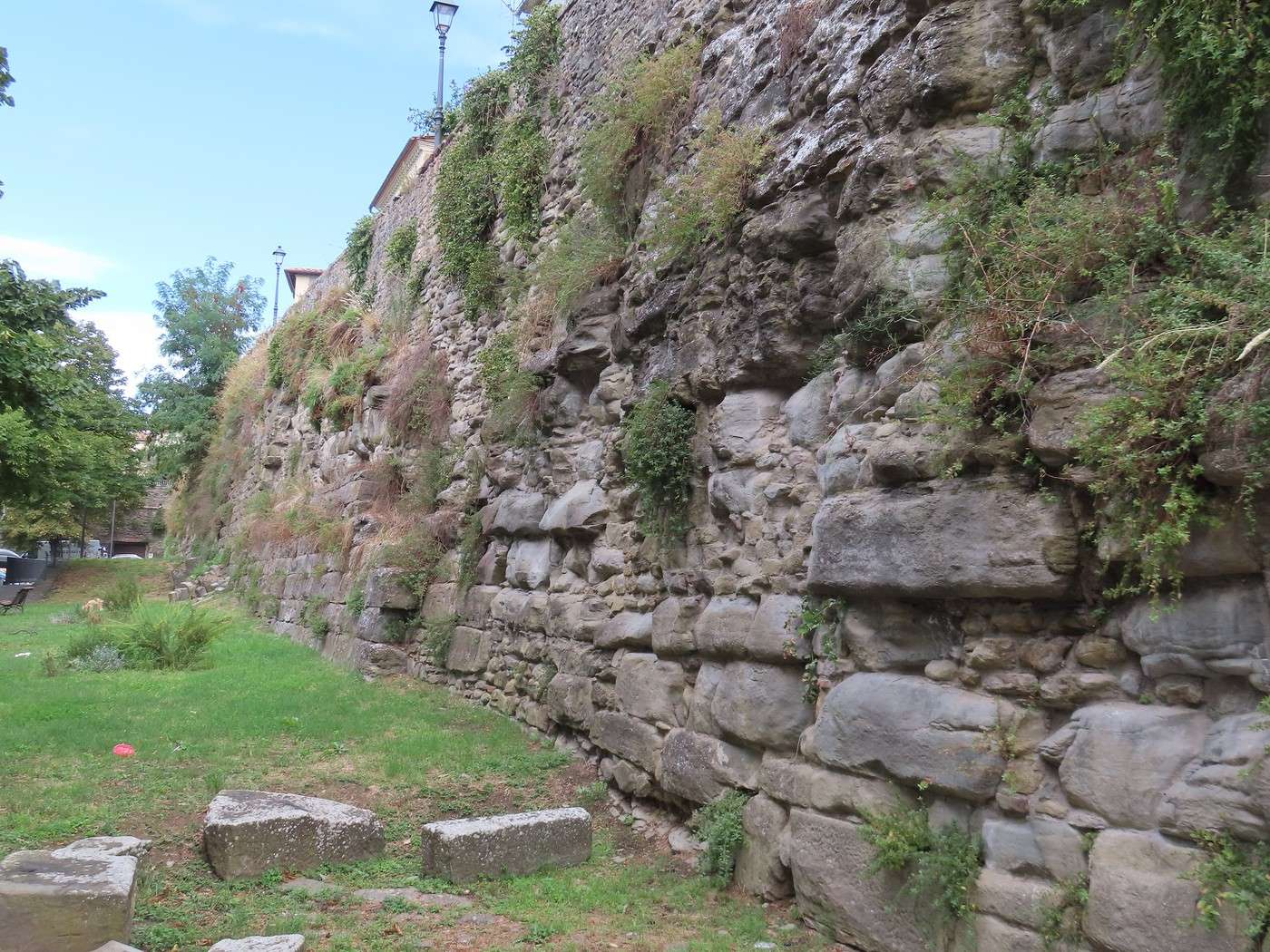
I manage to park near the Etruscan wall (5th century BC), which stretches about 4 km and runs all the way to the top of the hill. It surrounds the historic town and is really impressive when you think about how old it is.
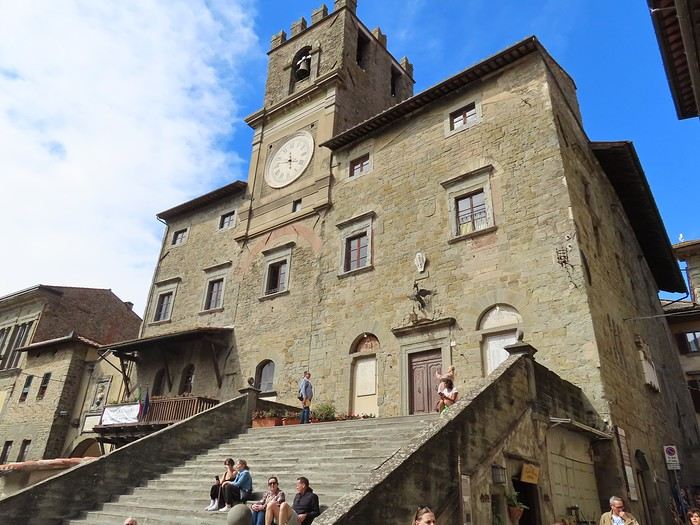
In Cortona, there are two types of streets: the first follow the contour lines, and the second connect them, running steeply uphill. I enter the town through the "Porta Bifora," a gate in the wall, and climb a steep street up to Piazza della Repubblica, the central square. The "Palazzo Comunale" dominates the square: a clock tower and a grand Renaissance staircase built on medieval foundations.
Nearby, "Piazza Signorelli" is the town’s second square. This morning, both squares host a market that draws a big crowd—locals and tourists alike. It’s the only place on this trip where I’ve seen so many foreign visitors. I continue to "Piazza Duomo" (a viewpoint over the Valdichiana), where the diocesan museum sits across from the cathedral. It’s relatively small but features some major works.
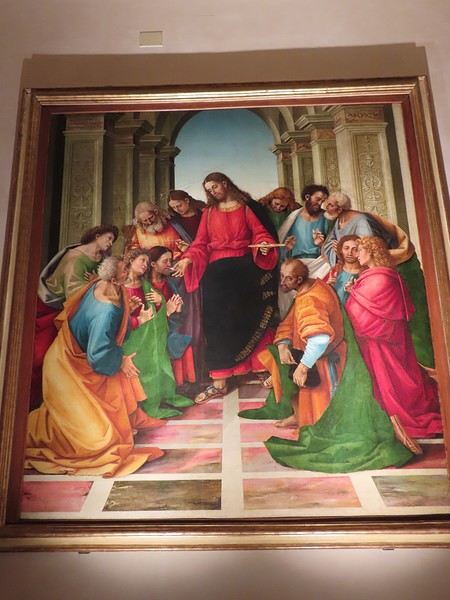
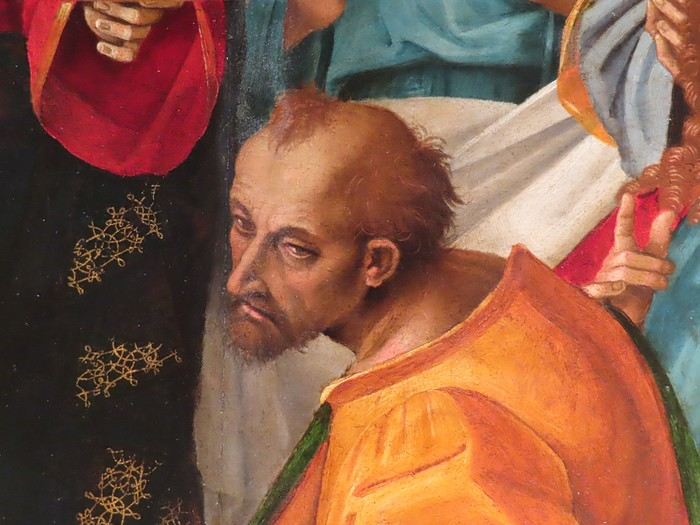
Luca Signorelli (1450–1524), born and died in Cortona, is the town’s pride. He’s one of the great painters of the Italian Renaissance. Communion of the Apostles (1512) includes a close-up of Judas.
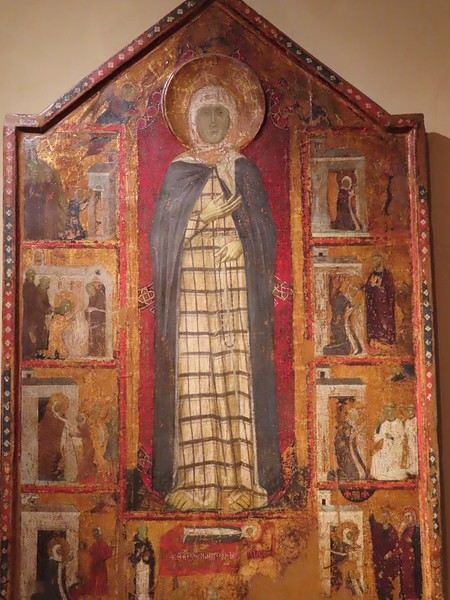
 Another painting depicts Santa Margherita da Cortona, who died in 1297, and scenes from her life. The artist is anonymous but believed to be Sienese, from the Trecento. The saint wears a halo long before her canonization in the 18th century—proof that popular devotion moved much faster than the official Church...
This museum also has a second Annunciation painted by Beato Angelico (see San Giovanni Valdarno, Day 17, for the first one).
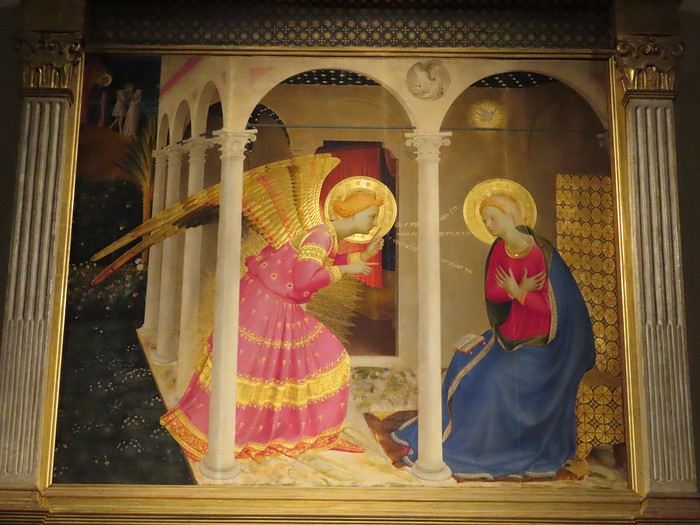
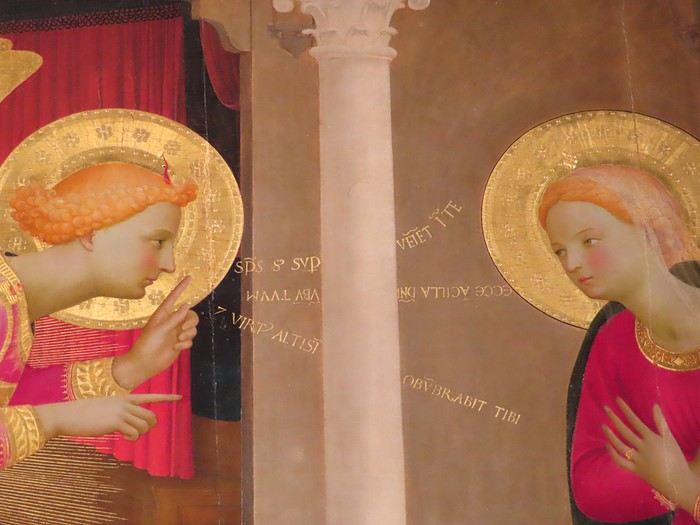 I prefer this one because of these differences:
- The architecture where the scene takes place
- The angel’s wings
- The angel is static in the first one; here, he’s (almost) still in motion
- The angel’s hands emphasize his words in this version.
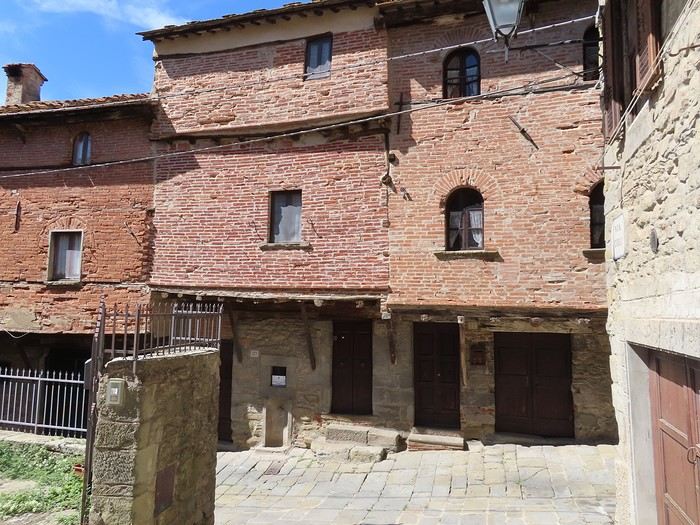
Along the wall below the museum, "Via Janelli" is lined with medieval houses (I don’t have any documents dating them). I notice that they’re built in brick from the first floor up, while the "palazzi" are made of stone throughout.
More from the day in the next post.
In Cortona, there are two types of streets: the first follow the contour lines, and the second connect them, running steeply uphill. I enter the town through the "Porta Bifora," a gate in the wall, and climb a steep street up to Piazza della Repubblica, the central square. The "Palazzo Comunale" dominates the square: a clock tower and a grand Renaissance staircase built on medieval foundations.
Nearby, "Piazza Signorelli" is the town’s second square. This morning, both squares host a market that draws a big crowd—locals and tourists alike. It’s the only place on this trip where I’ve seen so many foreign visitors. I continue to "Piazza Duomo" (a viewpoint over the Valdichiana), where the diocesan museum sits across from the cathedral. It’s relatively small but features some major works.
Luca Signorelli (1450–1524), born and died in Cortona, is the town’s pride. He’s one of the great painters of the Italian Renaissance. Communion of the Apostles (1512) includes a close-up of Judas.
This museum also has a second Annunciation painted by Beato Angelico (see San Giovanni Valdarno, Day 17, for the first one).
Along the wall below the museum, "Via Janelli" is lined with medieval houses (I don’t have any documents dating them). I notice that they’re built in brick from the first floor up, while the "palazzi" are made of stone throughout.
More from the day in the next post.