

Re: Tuscany: Arezzo province and the area around Siena
In the afternoon, I visit the MAEC (Museum of the Etruscan Academy and the City of Cortona), where I’m particularly drawn to the Etruscan section.
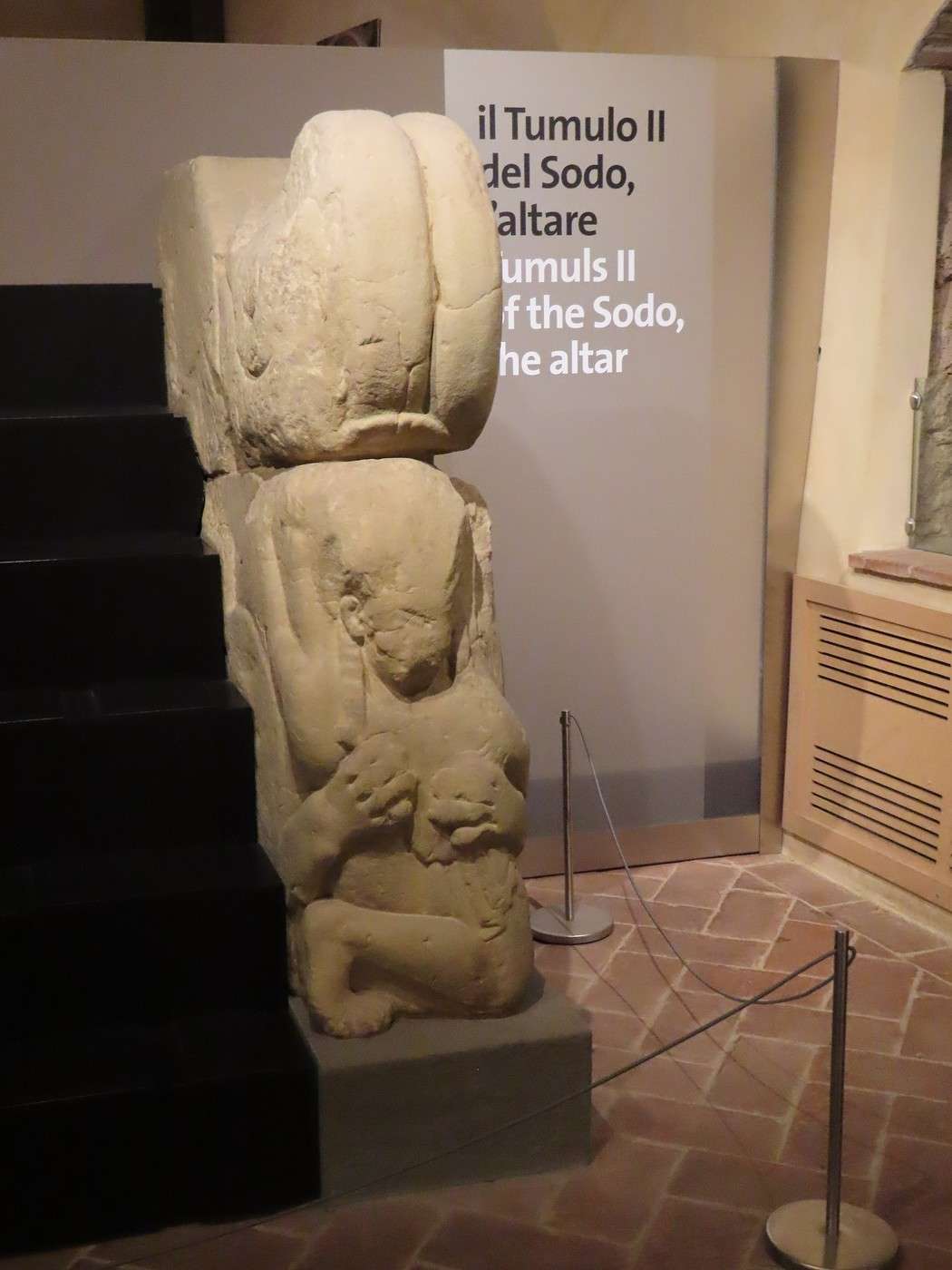
This statue comes from the Sodo tumulus, an Etruscan burial mound at the foot of Cortona’s hill; it was part of the entrance to a podium-altar.
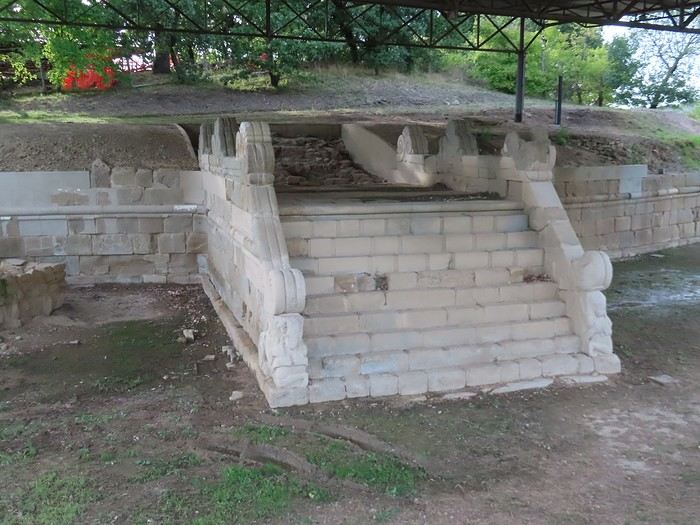
To better understand what this statue represents, I’ll describe what I saw later in the day when I visited the tumulus site at Sodo. You accessed the tumulus via a stone staircase, where the sculpture was part of the side ramps; at the top of the stairs was the podium-altar. This staircase has been reconstructed using some original blocks, but not the statues (originals are in the museum, reproductions at the tumulus).
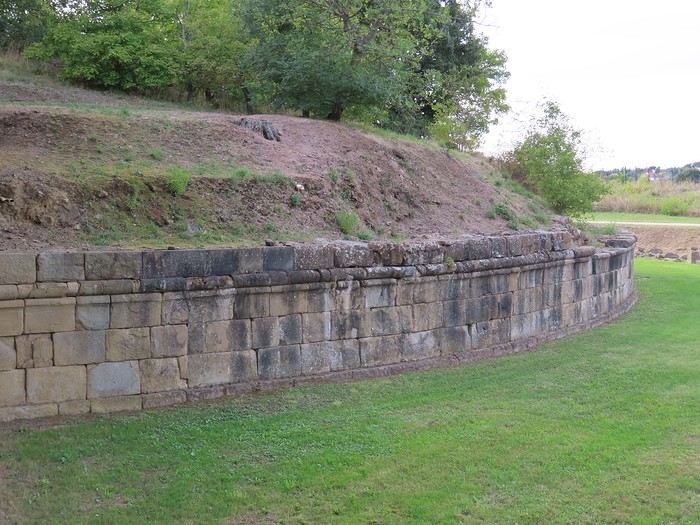
Around much of the tumulus’s circumference, the retaining wall is original (6th–5th century BCE); the tumulus contains two tombs from that period.
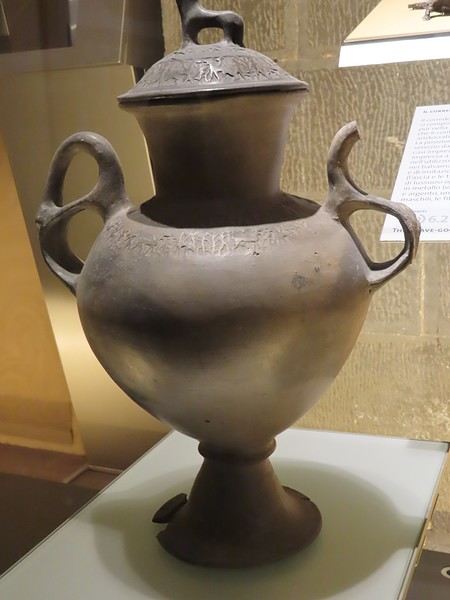
Back at the MAEC, which displays many Etruscan artifacts, here’s an amphora made of "bucchero" (late 7th, early 6th century BCE)—a black, shiny, monochrome ceramic.
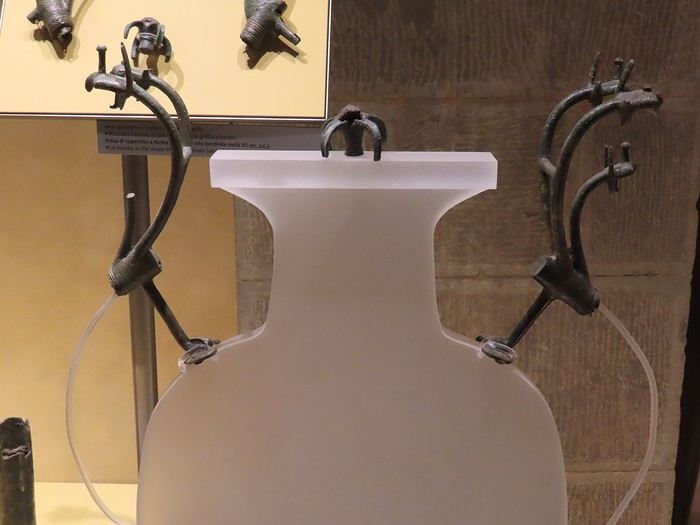
The funerary amphorae are decorated with small bronze pieces, like these dragon heads.
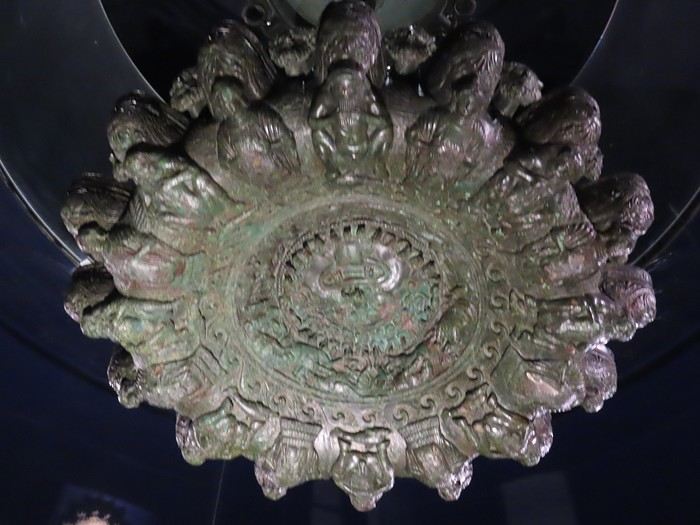
I end the visit with an impressive piece: a large bronze candelabrum. The photo doesn’t do justice to its size or the extreme complexity of the work—it’s definitely very heavy (16 burners, numerous figures). Archaeologists believe it may have been used to illuminate a place of worship.
Afterward, I take a walk around town in search of viewpoints, which are bound to exist given Cortona’s hilltop position. "Via Santa Margherita" runs along the city walls, and the view opens up when I reach the start of the Via Crucis. I’m on the southern slope of the hill, with Lake Trasimeno (Lago Trasimeno) in the distance, in Umbria.
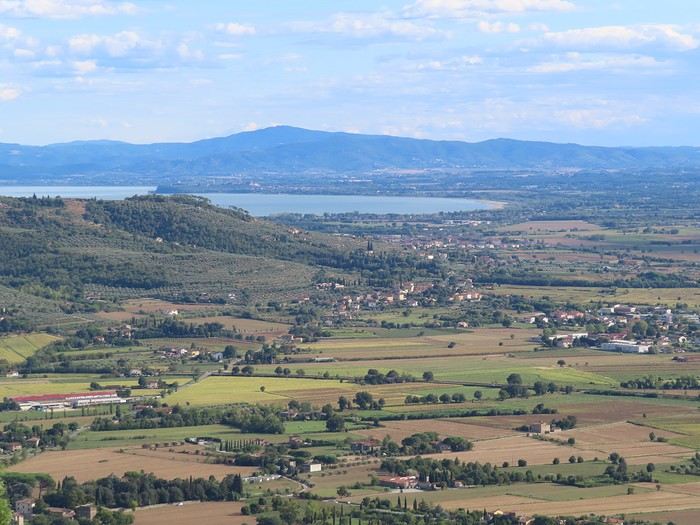
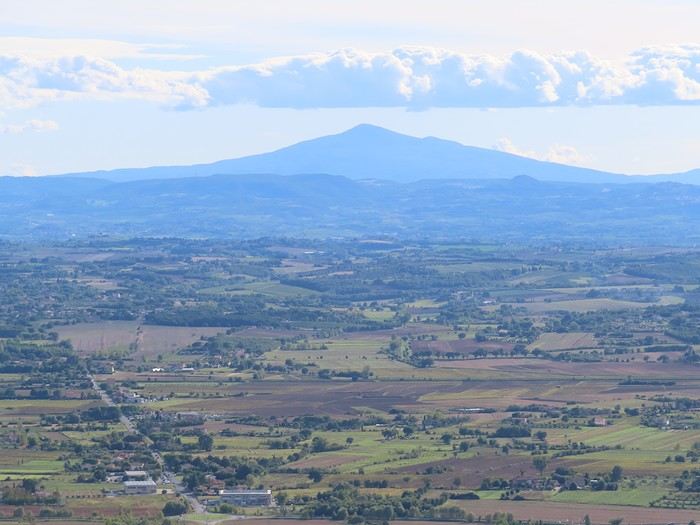
Further south, in Tuscany, is Monte Amiata with its volcanic shape—still 1,700 meters high. In the foreground, the Valdichiana.
To better understand what this statue represents, I’ll describe what I saw later in the day when I visited the tumulus site at Sodo. You accessed the tumulus via a stone staircase, where the sculpture was part of the side ramps; at the top of the stairs was the podium-altar. This staircase has been reconstructed using some original blocks, but not the statues (originals are in the museum, reproductions at the tumulus).
Around much of the tumulus’s circumference, the retaining wall is original (6th–5th century BCE); the tumulus contains two tombs from that period.
Back at the MAEC, which displays many Etruscan artifacts, here’s an amphora made of "bucchero" (late 7th, early 6th century BCE)—a black, shiny, monochrome ceramic.
The funerary amphorae are decorated with small bronze pieces, like these dragon heads.
I end the visit with an impressive piece: a large bronze candelabrum. The photo doesn’t do justice to its size or the extreme complexity of the work—it’s definitely very heavy (16 burners, numerous figures). Archaeologists believe it may have been used to illuminate a place of worship.
Afterward, I take a walk around town in search of viewpoints, which are bound to exist given Cortona’s hilltop position. "Via Santa Margherita" runs along the city walls, and the view opens up when I reach the start of the Via Crucis. I’m on the southern slope of the hill, with Lake Trasimeno (Lago Trasimeno) in the distance, in Umbria.
Further south, in Tuscany, is Monte Amiata with its volcanic shape—still 1,700 meters high. In the foreground, the Valdichiana.