


Re: Iceland, a week in April on the island of ice and fire
After the practical considerations, it's time for the trip. As usual, I won’t describe the journey day by day (it’s on the blog if you’re interested) but instead share our favorite moments.
The Snæfellsnes Peninsula We started where I’d wanted to end our week’s circuit, but I had to adapt based on accommodation availability. Outside of summer months, it’s recommended to go as far as possible at the beginning and return closer to the airport at the end. We did the exact opposite!
The Snæfellsnes Peninsula is a concentrated version of Iceland, with landscapes that’ll make your jaw drop. Black sand beaches, mountains, glaciers, waterfalls, basalt cliffs, lakes, lava, rough seas, charming churches... It’s simple—before we even reached Kirkjufellsfoss, which was supposed to be the first stop of the day, we were already an hour behind schedule! So we decided to toss the plan out the car door and make more stops, cutting into our lunch break—a quickly scarfed hot dog on a small beach in the north of the peninsula.
Luck was on our side with not-too-cold temperatures (just above freezing but no wind), a few clouds in the morning giving way to bright sunshine, hardly any crowds, landscapes still dusted with snow (it snowed last week), and clear roads.
At Kirkjufellsfoss, instead of parking in the paid lot near the waterfall, we opted for a parking spot at the exit of Grundarfjörður. It’s free, and the pedestrian path to Kirkjufellsfoss is lovely—you pass by several small waterfalls and a lake reflecting Kirkjufell mountain.
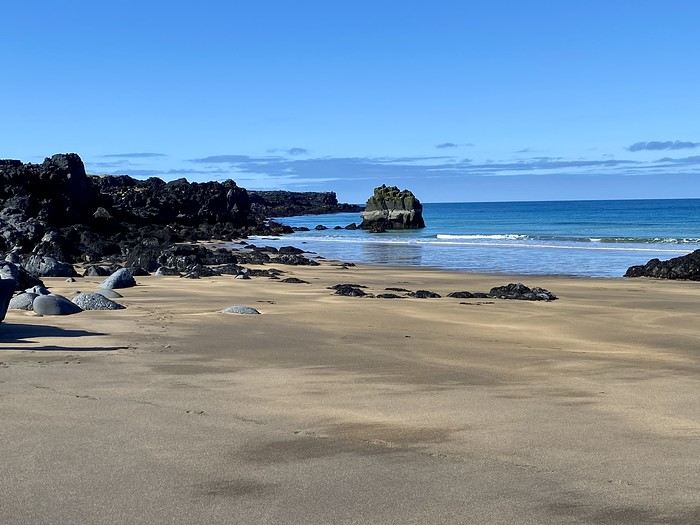
After lunch, we took a break at one of Iceland’s rare blond sand beaches: Skarðsvík Beach. This little cove, surrounded by cliffs, bravely withstands the sea’s assaults, which was relatively calm today. It has real character and charm.
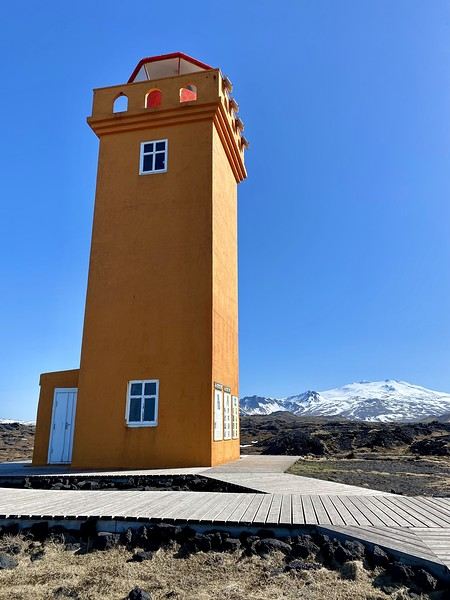
From there, a bumpy but passable track leads to two lighthouses. Short on time, we had to choose: to the right, the small Öndverðarnesviti lighthouse, or to the left, the Svörtuloft lighthouse. We picked the latter—it’s striking with its vibrant colors against the Snæfellsjökull glacier. We couldn’t take our eyes off this glacier all day as the road loops around it.
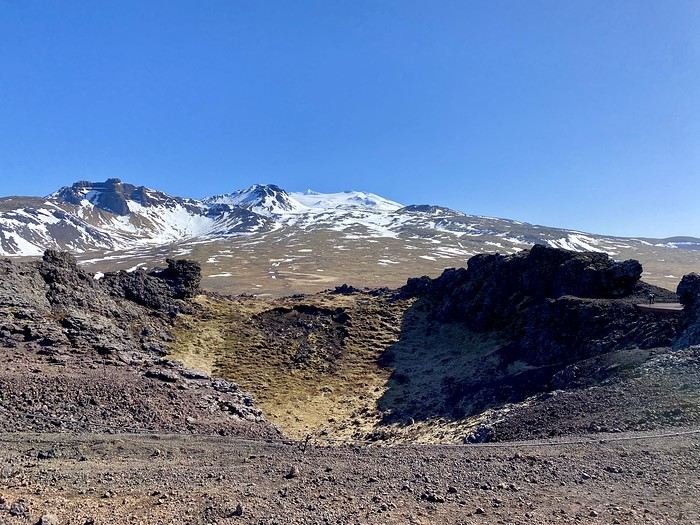
Our next stop was climbing to the top of the Saxhóll crater. The view is nice, but we’ve seen more impressive craters—Lanzarote, for example.
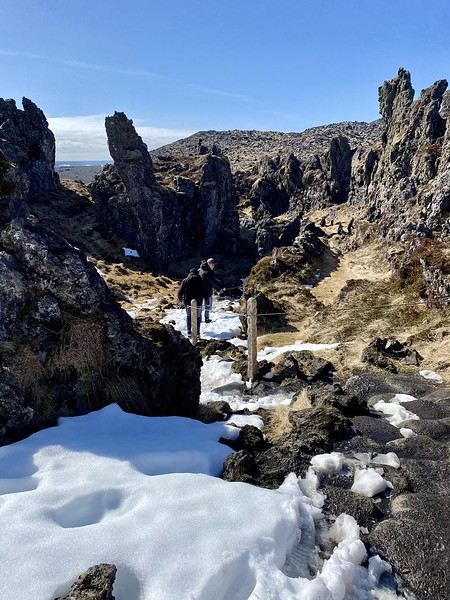
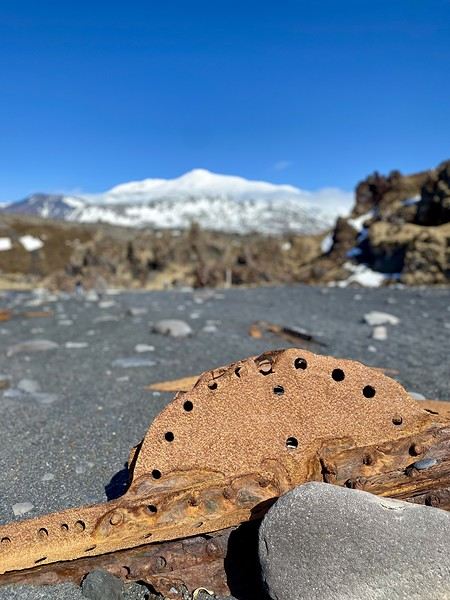
Then we headed to the black sand beach Djúpalónssandur. There was still quite a bit of snow on the path, making some sections slippery, but we liked it—it spiced up the walk, and we even had a snowball fight! The beach is vast, so you can spend a good amount of time exploring from one end to the other. Some remnants of the British trawler Epine, which wrecked in 1948, are still visible. The sea isn’t always this calm—14 sailors lost their lives on that ship. From the beach, the view of the Snæfellsjökull glacier, free of clouds (apparently a rare sight), is breathtaking.
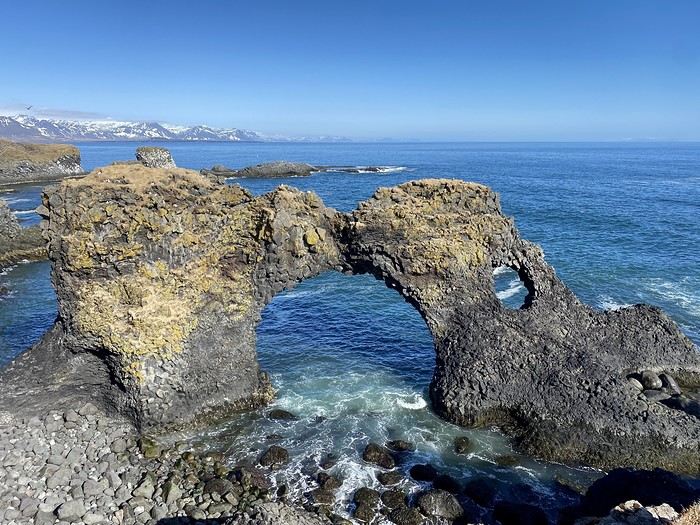
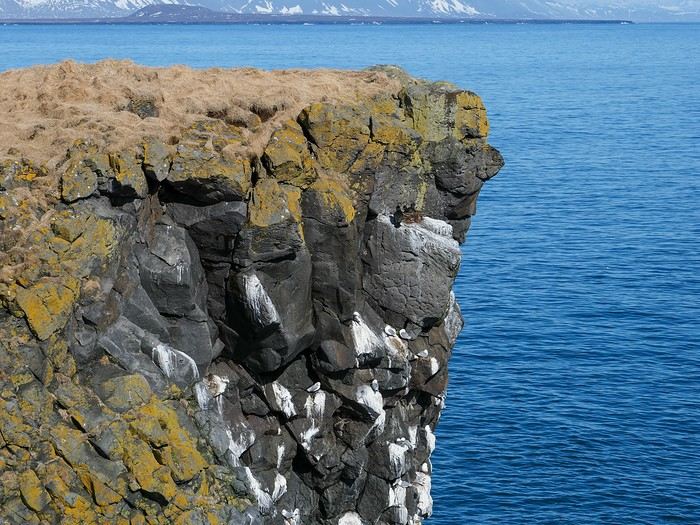
 Next, we reached Hellnar and Arnarstapi. The basalt cliffs are teeming with birds—it stinks! But it’s beautiful!
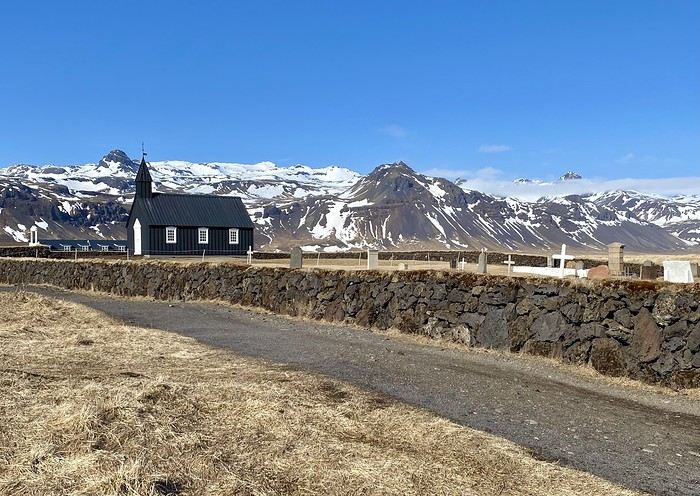
 In Búðir, we stopped for the church, probably the most photographed and photogenic in Iceland. The mountains behind it are still dotted with patches of snow—it’s absolutely stunning. Take the time to explore the surrounding trails and step back to fully appreciate the scenery.
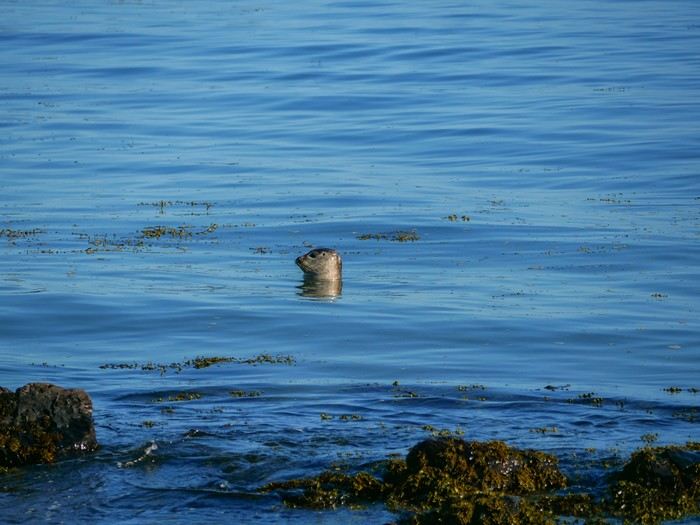
To finish, we stopped at Ytri Tunga to try and spot the seal colony that lives there. It’s bath time (and mostly fishing time)! The seals were in the water, only their heads peeking out.
We returned to the Fossatun Country Hotel after grocery shopping in Borgarnes. The selection wasn’t huge—pasta carbs for dinner it is! Last night, we ate at the Fossatun restaurant, which has a great view of the river. The lamb stew was delicious.
The Snæfellsnes Peninsula We started where I’d wanted to end our week’s circuit, but I had to adapt based on accommodation availability. Outside of summer months, it’s recommended to go as far as possible at the beginning and return closer to the airport at the end. We did the exact opposite!
The Snæfellsnes Peninsula is a concentrated version of Iceland, with landscapes that’ll make your jaw drop. Black sand beaches, mountains, glaciers, waterfalls, basalt cliffs, lakes, lava, rough seas, charming churches... It’s simple—before we even reached Kirkjufellsfoss, which was supposed to be the first stop of the day, we were already an hour behind schedule! So we decided to toss the plan out the car door and make more stops, cutting into our lunch break—a quickly scarfed hot dog on a small beach in the north of the peninsula.
Luck was on our side with not-too-cold temperatures (just above freezing but no wind), a few clouds in the morning giving way to bright sunshine, hardly any crowds, landscapes still dusted with snow (it snowed last week), and clear roads.
At Kirkjufellsfoss, instead of parking in the paid lot near the waterfall, we opted for a parking spot at the exit of Grundarfjörður. It’s free, and the pedestrian path to Kirkjufellsfoss is lovely—you pass by several small waterfalls and a lake reflecting Kirkjufell mountain.
After lunch, we took a break at one of Iceland’s rare blond sand beaches: Skarðsvík Beach. This little cove, surrounded by cliffs, bravely withstands the sea’s assaults, which was relatively calm today. It has real character and charm.
From there, a bumpy but passable track leads to two lighthouses. Short on time, we had to choose: to the right, the small Öndverðarnesviti lighthouse, or to the left, the Svörtuloft lighthouse. We picked the latter—it’s striking with its vibrant colors against the Snæfellsjökull glacier. We couldn’t take our eyes off this glacier all day as the road loops around it.
Our next stop was climbing to the top of the Saxhóll crater. The view is nice, but we’ve seen more impressive craters—Lanzarote, for example.
Then we headed to the black sand beach Djúpalónssandur. There was still quite a bit of snow on the path, making some sections slippery, but we liked it—it spiced up the walk, and we even had a snowball fight! The beach is vast, so you can spend a good amount of time exploring from one end to the other. Some remnants of the British trawler Epine, which wrecked in 1948, are still visible. The sea isn’t always this calm—14 sailors lost their lives on that ship. From the beach, the view of the Snæfellsjökull glacier, free of clouds (apparently a rare sight), is breathtaking.
To finish, we stopped at Ytri Tunga to try and spot the seal colony that lives there. It’s bath time (and mostly fishing time)! The seals were in the water, only their heads peeking out.
We returned to the Fossatun Country Hotel after grocery shopping in Borgarnes. The selection wasn’t huge—pasta carbs for dinner it is! Last night, we ate at the Fossatun restaurant, which has a great view of the river. The lamb stew was delicious.