


Re: Nisyros: the most beautiful island in Greece?
To be continued...
When I arrive at the volcano, it’s already quite late. As a result, the site’s entrance ticket booth is closed, and there’s only one car left in the parking lot: the manager’s of the little snack bar just past the booth. He’s playing music with an instrument I’ve never seen before, and when I show up, he greets me with a big smile, like a dog. I don’t understand why—maybe I’m bothering him? I don’t linger in his place and head straight for the crater, which draws me in like a magnet. As soon as I start descending, a sign warns visitors that the site is dangerous and that you explore it at your own risk.
The sulfur smells, so characteristic of volcanoes, become stronger as I go down. At the bottom, the stone path leads to a first, relatively small crater: Mikros Stefanos (Little Stefanos). Vegetation covers the ground, so it’s not particularly impressive.
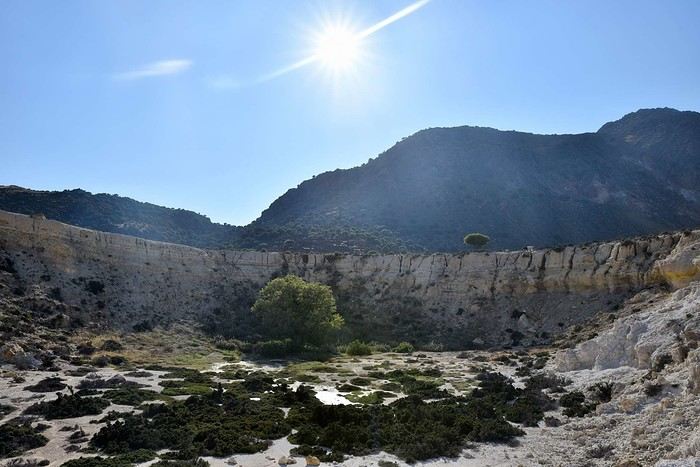 The Andreas crater (or Mikros Stefanos)
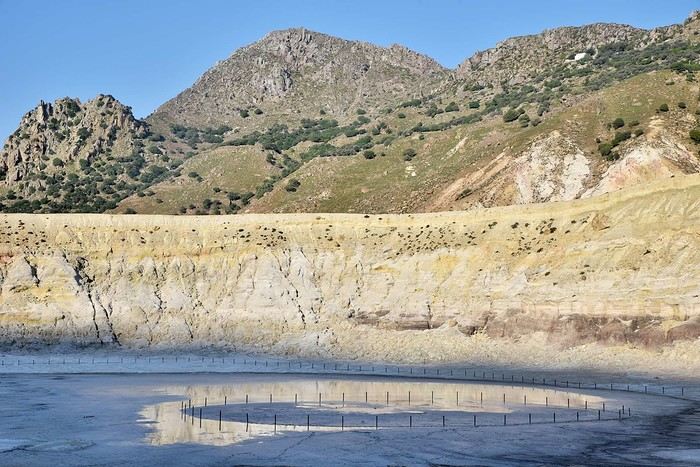
I continue on my way and finally reach the main crater: Megalos Stefanos (Big Stefanos). Its walls are yellowed by sulfur and even red in places due to the oxidation of certain rocks.
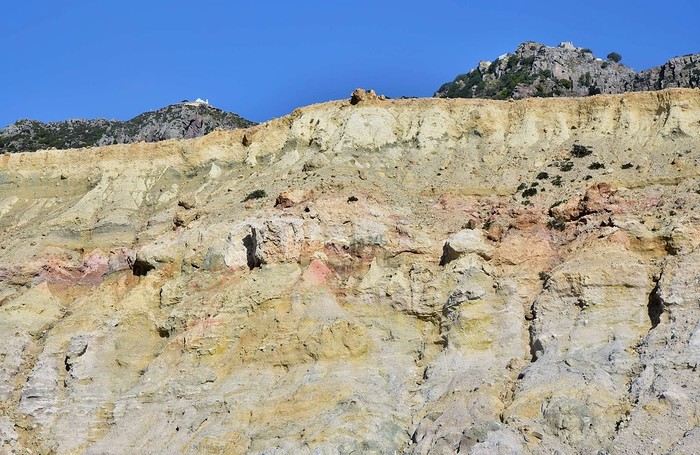
Fumaroles rise up everywhere from deep within the Earth.
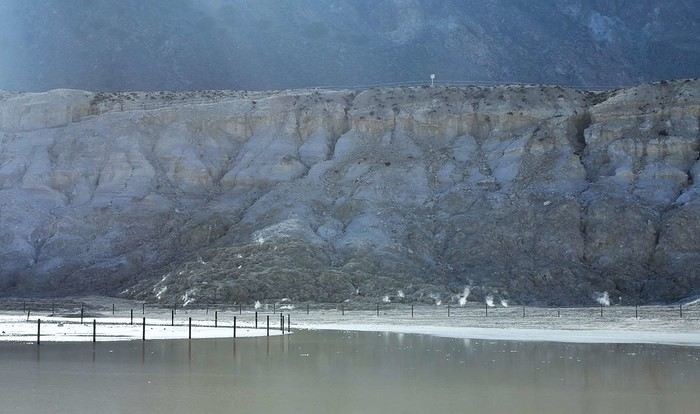
The closer I get to the center of the crater, the more my feet sink into a kind of mud.
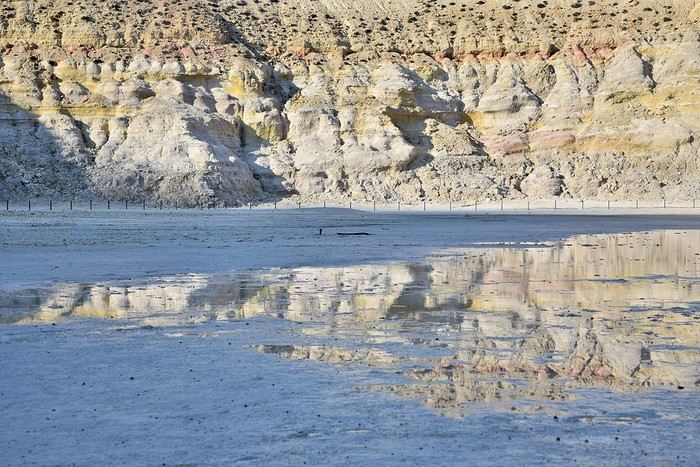
Until I reach an area marked off by stakes and off-limits because it’s dangerous. There, on the ground, boiling water bubbles in a multitude of small, steaming natural pots.
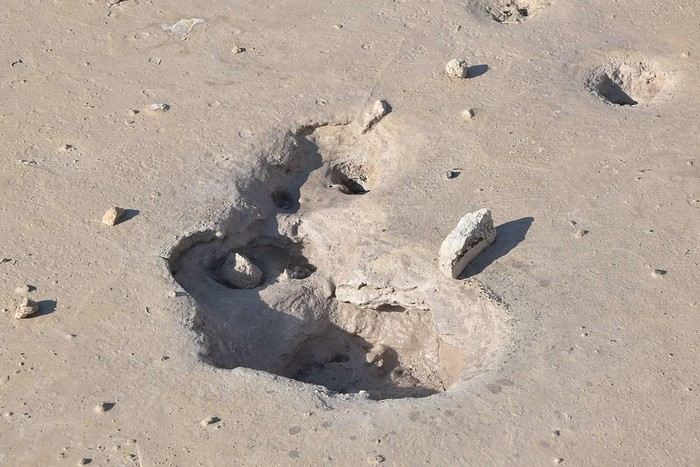
This crater, while not exceptional, clearly shows the power of nature. And to make it perfect, I’m completely alone at the bottom of this volcano. I’m incredibly lucky to experience this moment without a single tourist around. It’s magical—one of the most memorable moments of my entire trip.
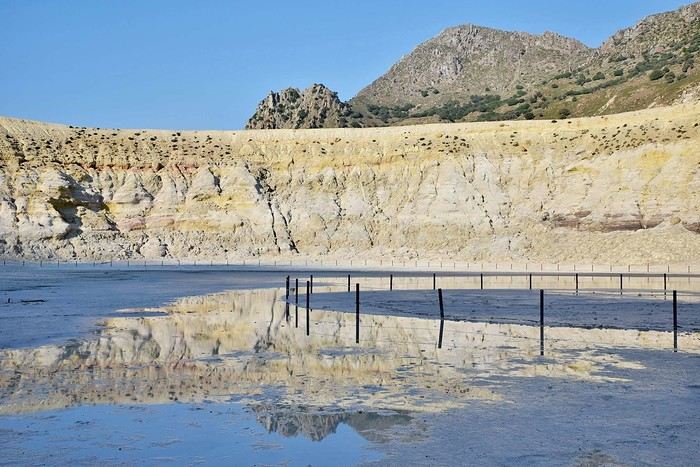
But the place starts to darken, swallowed by the shadow of the caldera as the sun sets behind it.
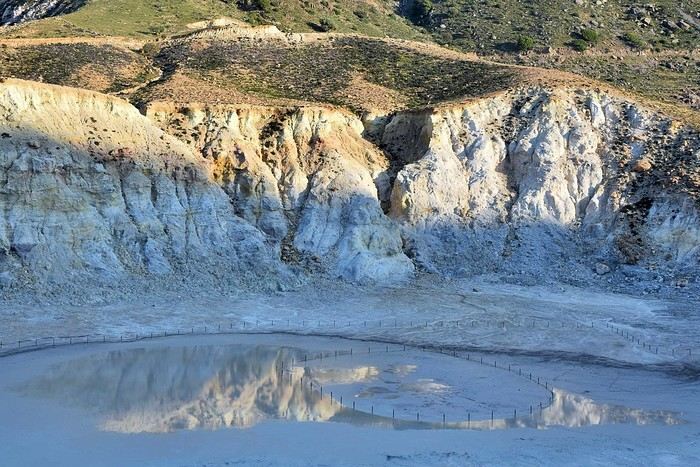
I have to leave this unforgettable spot because I need time to find a bivouac spot and set up my tent.
After retrieving my trusty bike at the top of the volcano and riding a few hundred meters, I quickly find what I’m looking for: a bivouac spot right above the crater. Once the tent is set up, I grab a bite while admiring the caldera walls, which turn red in the sunset.
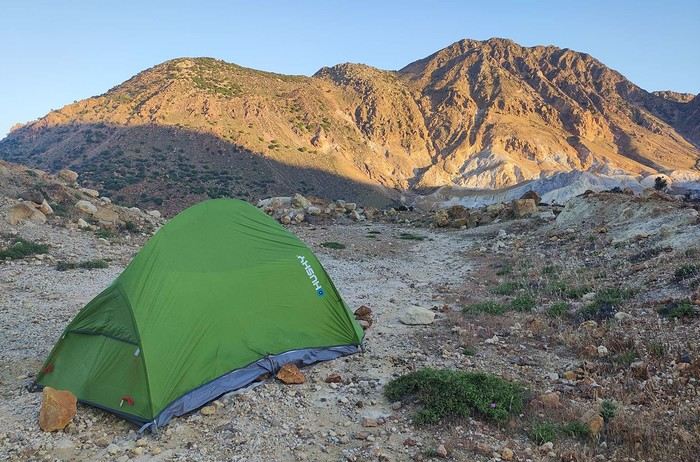
At my feet lies Megalos Stefanos, the vast crater I just came from, and in the background, two of the site’s four other craters are visible. The view is stunning, but as night falls, the volcanic landscape disappears until tomorrow. I’m not dreaming—at least, not yet: I’m truly going to have the incredible chance to sleep in this exceptional place.
The caldera is uninhabited, and I’m all alone within its four-kilometer diameter. A privilege. Yet, as soon as I close my eyes, I hear little footsteps in the gravel near the tent. It’s unlikely to be a human—it’s probably just some animal passing by, maybe a cow or a goat. Time to sleep. Tomorrow, I’ll continue exploring this volcanic site that’s completely won me over.
When I arrive at the volcano, it’s already quite late. As a result, the site’s entrance ticket booth is closed, and there’s only one car left in the parking lot: the manager’s of the little snack bar just past the booth. He’s playing music with an instrument I’ve never seen before, and when I show up, he greets me with a big smile, like a dog. I don’t understand why—maybe I’m bothering him? I don’t linger in his place and head straight for the crater, which draws me in like a magnet. As soon as I start descending, a sign warns visitors that the site is dangerous and that you explore it at your own risk.
The sulfur smells, so characteristic of volcanoes, become stronger as I go down. At the bottom, the stone path leads to a first, relatively small crater: Mikros Stefanos (Little Stefanos). Vegetation covers the ground, so it’s not particularly impressive.
The Andreas crater (or Mikros Stefanos)I continue on my way and finally reach the main crater: Megalos Stefanos (Big Stefanos). Its walls are yellowed by sulfur and even red in places due to the oxidation of certain rocks.
Fumaroles rise up everywhere from deep within the Earth.
The closer I get to the center of the crater, the more my feet sink into a kind of mud.
Until I reach an area marked off by stakes and off-limits because it’s dangerous. There, on the ground, boiling water bubbles in a multitude of small, steaming natural pots.
This crater, while not exceptional, clearly shows the power of nature. And to make it perfect, I’m completely alone at the bottom of this volcano. I’m incredibly lucky to experience this moment without a single tourist around. It’s magical—one of the most memorable moments of my entire trip.
But the place starts to darken, swallowed by the shadow of the caldera as the sun sets behind it.
I have to leave this unforgettable spot because I need time to find a bivouac spot and set up my tent.
After retrieving my trusty bike at the top of the volcano and riding a few hundred meters, I quickly find what I’m looking for: a bivouac spot right above the crater. Once the tent is set up, I grab a bite while admiring the caldera walls, which turn red in the sunset.
At my feet lies Megalos Stefanos, the vast crater I just came from, and in the background, two of the site’s four other craters are visible. The view is stunning, but as night falls, the volcanic landscape disappears until tomorrow. I’m not dreaming—at least, not yet: I’m truly going to have the incredible chance to sleep in this exceptional place.
The caldera is uninhabited, and I’m all alone within its four-kilometer diameter. A privilege. Yet, as soon as I close my eyes, I hear little footsteps in the gravel near the tent. It’s unlikely to be a human—it’s probably just some animal passing by, maybe a cow or a goat. Time to sleep. Tomorrow, I’ll continue exploring this volcanic site that’s completely won me over.