

Re: 16 days with the family in La Gomera (Canary Islands)
Day 2, Wednesday, July 29: Valle Gran Rey/La Calera: Charco del Conde, La Calera beach, El Guro, Arure waterfall trails
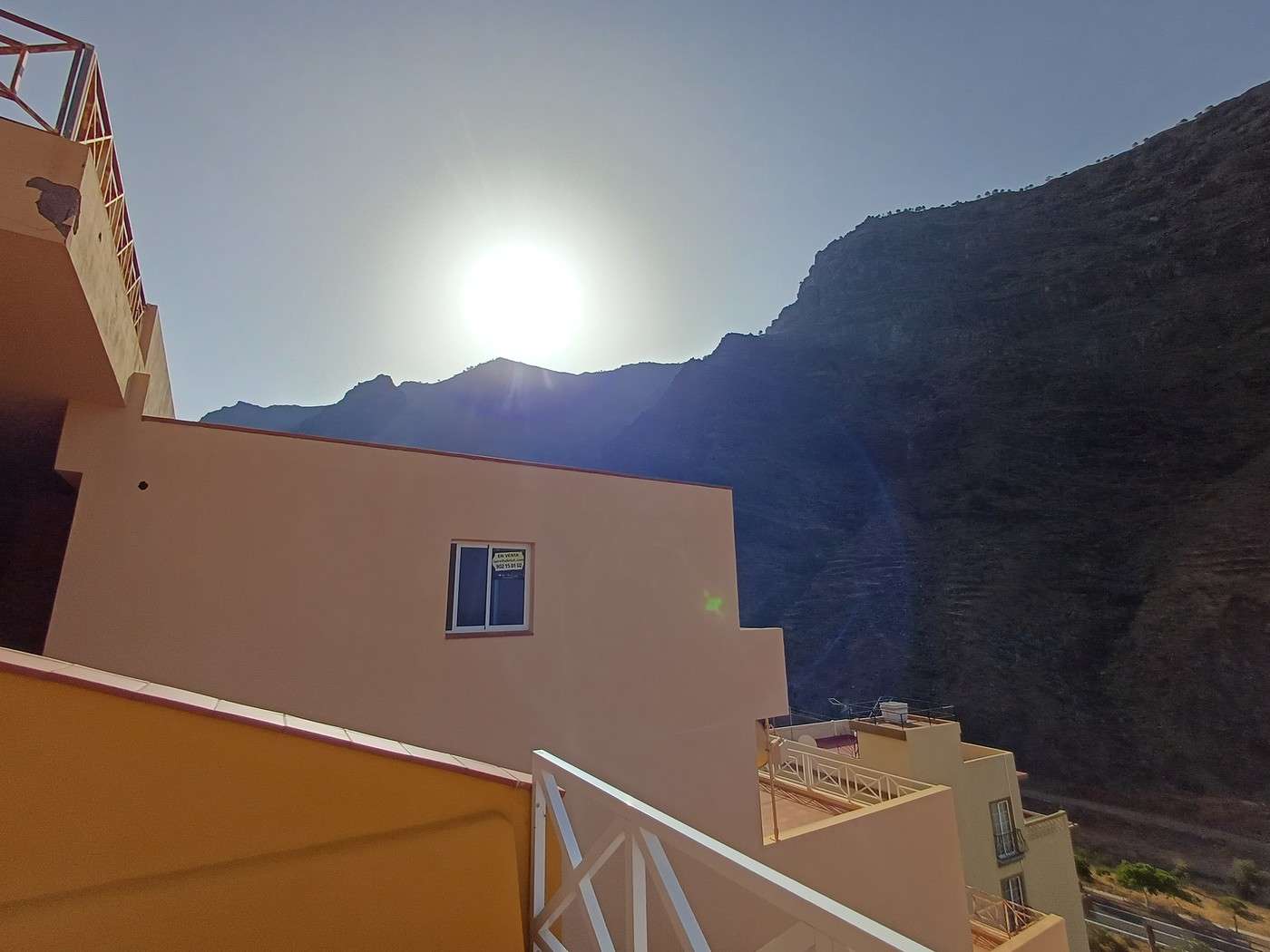
After a good night’s recovery, the gentle morning sun invites us to have breakfast on the terrace. From the balcony of the rooms above the terrace, I’m still staring at that mountain, just as intriguing in broad daylight. Its wall is so steep that the sun doesn’t fully rise above it until around 10 a.m.
With its large, rounded plateau at the top and its sides ending in frozen lava tentacles, its giant octopus look reminds me of a Lovecraftian deity. Yes, that’s it—a Cthulhu made of volcanic rock! To start this trip off right, we walk down to La Calera toward one of Valle Gran Rey’s beaches. We’re not sure which one to choose, so we take a somewhat random route. We have to go through the village anyway, and after passing the main street above the terraced fields, the grocery store from yesterday, and the main road into the valley, we get a little lost in its charming alleys.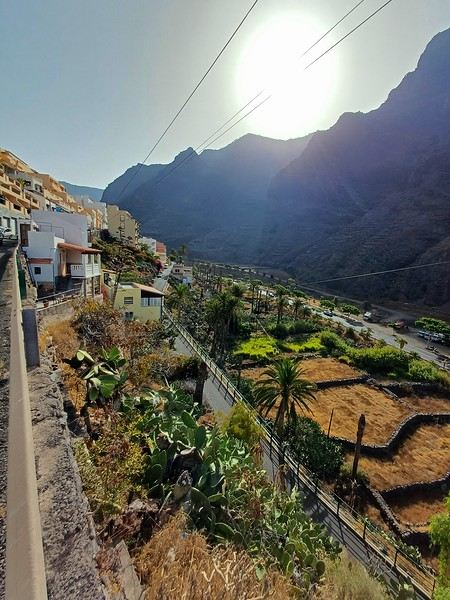
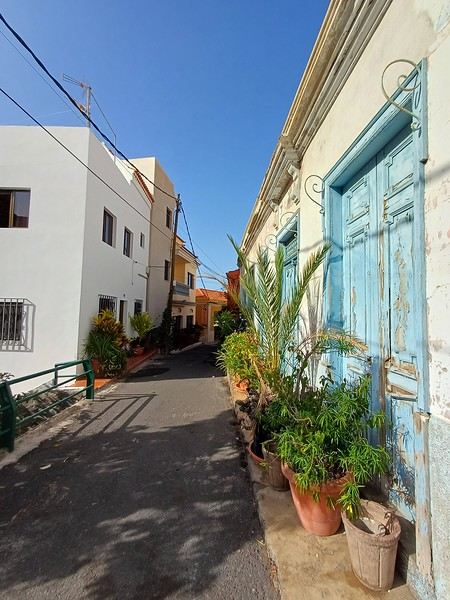
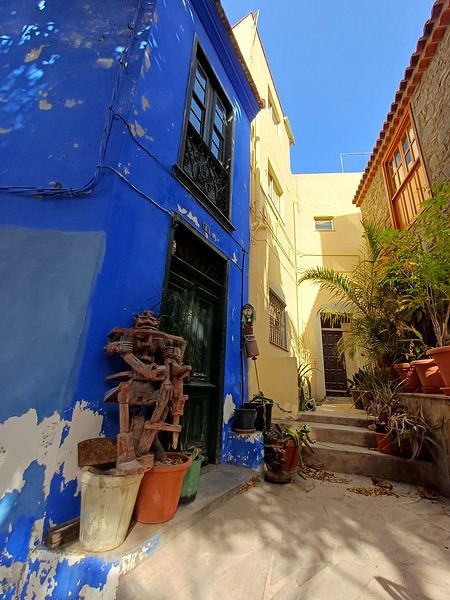
Though we still barely see anyone (Canary Islanders tend to be late risers), the village feels very much alive with its school, small government offices, language classes, colorful houses—some a bit run-down—with exotic gardens or nestled in the rock, and sometimes decorated with strange contemporary creations.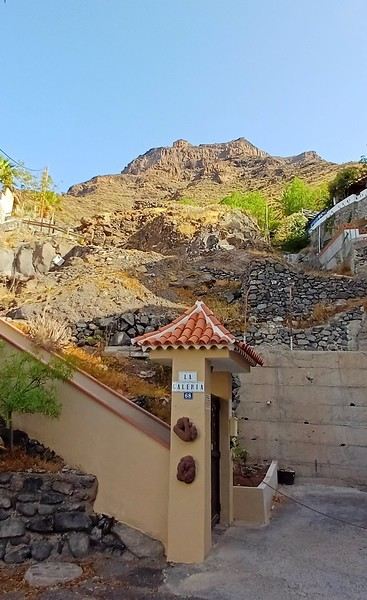
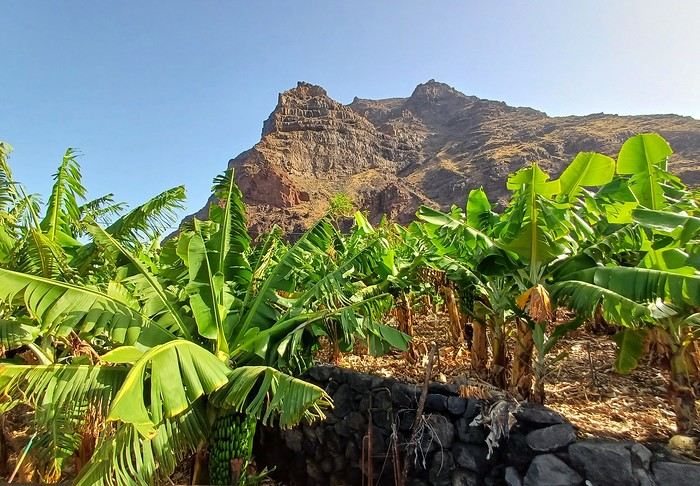
 The lower part of La Calera, near the main road, is a bit livelier, like this bar where the village men (and sometimes women) are already smoking and enjoying Dorada beer with bocadillos to soak it all up, carefree in this mild, peaceful climate. La pura vida! There are a few vacation homes here and there, but the village remains mostly authentic. Large banana plantations, mango fields, and other fruit trees stretch out as you leave the village center, right near the seafront.
The Canary Islands are known for their charcos (literally “puddles”), called “natural pools”—basins formed by rocks that trap water at high tide and are more or less protected from currents. La Gomera isn’t the best for natural pools, but it does have a few, including the charco del Conde, which is apparently nearby. We’re curious to see what it’s like, even though we’ve heard some are dangerous and have been closed by authorities. First, we walk along La Calera beach and its narrow strip of black sand, then a small seaside path shaded by palm trees that feels a bit like Cuba (where I’ve never been—it’s just a cliché), where the only hotel area in the resort is located, quite discreet, along with a few boat excursion agencies that aren’t open yet or are permanently closed. All the signs are in Spanish and German. At the end of the path, on a small patch of black sand with a few umbrellas, we finally spot the charco del Conde. It’s a small stagnant pool separated from the ocean by a thin strip of rocks. Doesn’t look too dangerous… Oh, there are very few people, but they’re all French. We quickly go dip our feet in. The bottom is rocky, and the water doesn’t go past my knees. It’s fun for Théo with his armbands, and the setting is unique, but after 10 minutes, we’ve seen it all. I wonder if these natural pools aren’t a bit overrated… Maybe we should find a real beach? There’s one right next to the charco, made of pebbles and rocks where big waves crash. No one’s there, and a sign advises against swimming… So we head back toward La Calera beach, which looked great. On the way, we stop for a moment in front of that intriguing statue of a muscular man in a small loincloth facing the ocean, which we’d seen earlier. The site La Gomera Travel, our bible throughout the trip, tells us it’s Hautacuperche (“Blessed by the Gods” in Guanche Berber), the emblematic hero of the Guanches who led the Gomeros’ revolt in 1488 against the Spanish colonists after Governor Hernán Peraza the Younger betrayed the peace and coexistence treaties signed by his more tolerant father. This beautiful 4-meter bronze statue depicts the warrior holding a spear in his left hand, symbolizing armed rebellion, and in his right hand, the broken gánigo, signifying the rupture of the Pact of Colactation with the Spaniards, as it was the clay vessel in which Hernán Peraza the Elder and the Guanche chief shared milk as a sign of brotherhood. Hautacuperche faces the sea with his back to the Valley of the Great King, a name given in reference to the king and spiritual leader of the four Guanche tribes, Hupalupo… hence the name Valle Gran Rey. It seems the Gomerans base much of their distinct identity on this heroic figure, which is also a source of pride for their fellow Canary Islanders. We’ll learn more about this fascinating history later…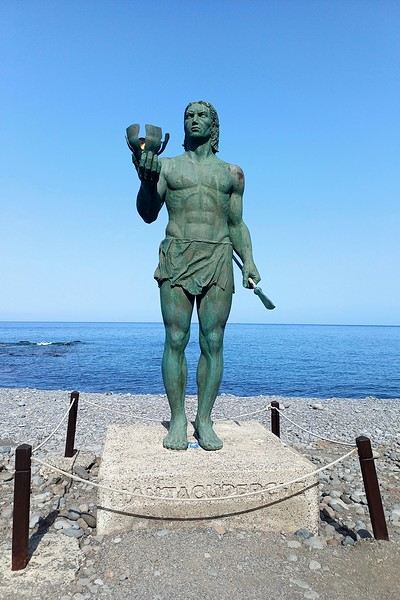
Near the statue begins the beautiful, narrow stretch of black sand at La Calera beach, where there are still very few people at 11 a.m., mostly German retirees who are very “mens sana in corpore sano” and into yoga. The time difference with the Spaniards gives us an advantage throughout our trip: living three hours earlier sometimes makes us feel like we’ve almost privatized the island! The lifeguards have just arrived and put up the green flag. This family-friendly beach is the main one in Valle Gran Rey. It’s very pleasant—the water is perfect for swimming, calm thanks to the cove that shelters it, allowing you to swim far out while still letting gentle waves lap at the shore, and the temperature is ideal (around 23°C, give or take). The kids already love it, and so do we. Nearby, there’s a small urbanized area with a few restaurants, shops, and vacation homes. This is it—our beach, and we won’t find a better one in all of La Gomera. By noon, the Spaniards start arriving gradually with their umbrellas and sunbeds, but it’s not exactly packed. It becomes a place of social distinction and coexistence through women’s attire: the German women often in semi-naturist postures and the Spanish women in string monokinis—a single outfit, two mindsets in harmony!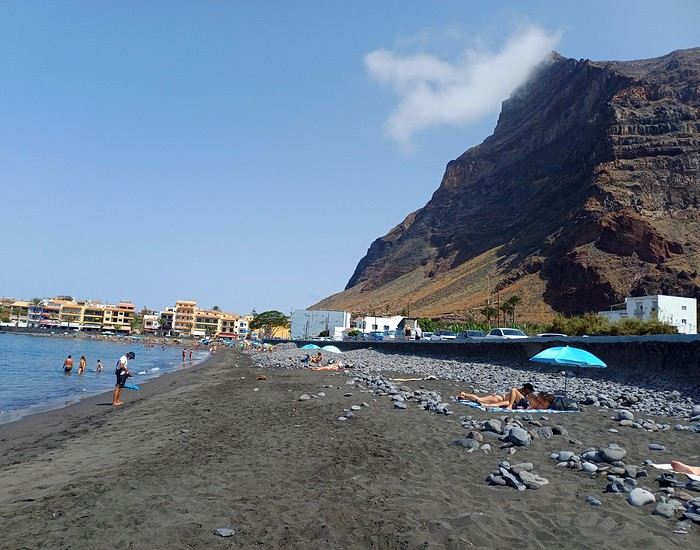
We rinse our feet and swimsuits at the beach’s only tap and head back up to the perched village, through a landscape of abundant banana plantations (which make you want to snatch a few fruits from those well-stocked bunches) and steep slopes where our little village of La Calera clings.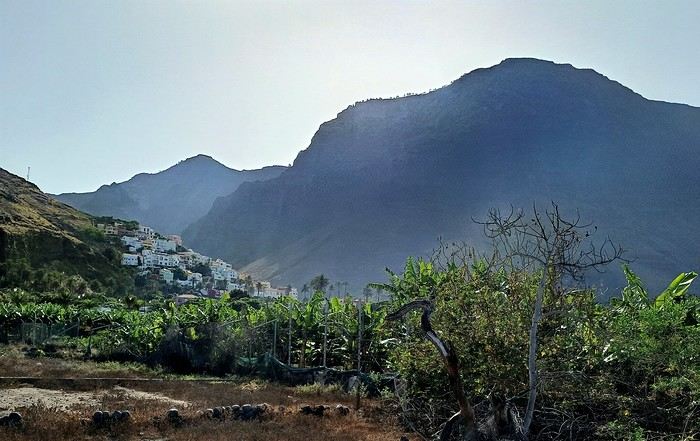
Kelyandre got ahead of us, and we see him 50 meters ahead carrying bags next to an elderly woman. We catch up, and she explains in Spanish that she didn’t understand why this child hadn’t responded to her requests and had just handed him her shopping bags! Now she realizes we’re French, thanks us warmly, and even gives us some sightseeing tips before heading off on a cute path through fruit plantations. The Gomerans are extremely kind and welcoming—that’s a fact.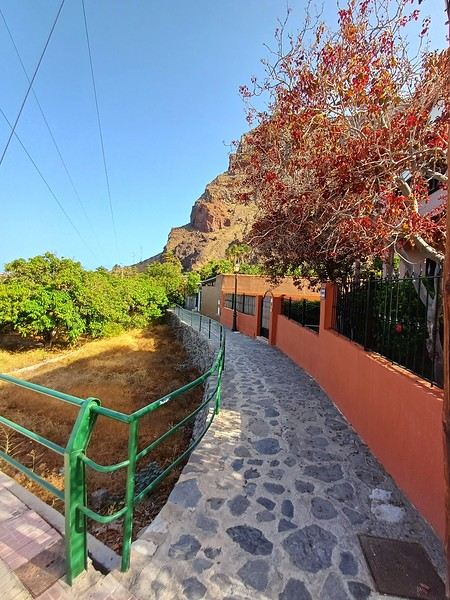
Our Belgian friend is still glued to the entrance of El Chorro grocery store, greeting us with a beer in hand alongside the village regulars. We notice that in La Gomera’s villages, there are always a few locals who are a bit marginal, often with disabilities, but always friendly. It’s not a judgment—just an observation. The island is isolated and sparsely populated…
We just stop for a quick shower and head back down by car to La Calera beach, where we’ve spotted a highly rated restaurant, Mango, offering Canarian cuisine and a few exotic specialties. It’s on a small square by the sea where tourists and a few hippie drifters selling shell necklaces and handmade crafts mingle. Magali is delighted with her mixed mango salad, and Kelyandre with his grilled chicken escalope. I’m a bit less thrilled with my shrimp curry rice (very good, actually, but I was expecting something like paella), and we share the gargantuan plate of fried squid and fries, way too much for Théo. The prices are a bit cheaper than in France, especially since the portions are bigger and the restaurant by the beach is charming. Like most Canarian restaurants, the waitress brings us the famous pan y mojo right away—bread with those two slightly spicy green and red sauces, almost always served automatically (you can refuse), and usually charged 1.5 or 2 €. The bill comes to 65 € for four: meals, drinks, and coffees. A great spot, for sure.
After an essential siesta, we continue our cultural exploration with a visit to the Spar. It’s the most widespread and cheapest supermarket chain in La Gomera. There are two in Valle Gran Rey, and since the one by La Calera beach is closed for inventory, we go to the one by Las Vueltas beach, on the other side of the resort, which seems a bit more upscale, though we still see some worn-out hippie drifters digging through the trash. The prices at Spar are still gentler than at the grocery store, and there’s a lot more choice. We stock up on local products: sweet potatoes, papaya, and those small bananas that look like they were plucked straight from the plantation across the way. And of course, a bag of gofio, that roasted grain flour used for just about everything in the Canary Islands. A French guy with a slightly spaced-out, hallucinatory look and clearly misaligned chakras but very friendly jumps on us, explaining in a mix of French and Spanish—like someone searching for words in their native language after a long stay abroad—that we’d be better off buying them at the organic gardens near the bus estación. Thanks, man, that’s cooool!
After a good night’s recovery, the gentle morning sun invites us to have breakfast on the terrace. From the balcony of the rooms above the terrace, I’m still staring at that mountain, just as intriguing in broad daylight. Its wall is so steep that the sun doesn’t fully rise above it until around 10 a.m.
With its large, rounded plateau at the top and its sides ending in frozen lava tentacles, its giant octopus look reminds me of a Lovecraftian deity. Yes, that’s it—a Cthulhu made of volcanic rock! To start this trip off right, we walk down to La Calera toward one of Valle Gran Rey’s beaches. We’re not sure which one to choose, so we take a somewhat random route. We have to go through the village anyway, and after passing the main street above the terraced fields, the grocery store from yesterday, and the main road into the valley, we get a little lost in its charming alleys.
Though we still barely see anyone (Canary Islanders tend to be late risers), the village feels very much alive with its school, small government offices, language classes, colorful houses—some a bit run-down—with exotic gardens or nestled in the rock, and sometimes decorated with strange contemporary creations.
The Canary Islands are known for their charcos (literally “puddles”), called “natural pools”—basins formed by rocks that trap water at high tide and are more or less protected from currents. La Gomera isn’t the best for natural pools, but it does have a few, including the charco del Conde, which is apparently nearby. We’re curious to see what it’s like, even though we’ve heard some are dangerous and have been closed by authorities. First, we walk along La Calera beach and its narrow strip of black sand, then a small seaside path shaded by palm trees that feels a bit like Cuba (where I’ve never been—it’s just a cliché), where the only hotel area in the resort is located, quite discreet, along with a few boat excursion agencies that aren’t open yet or are permanently closed. All the signs are in Spanish and German. At the end of the path, on a small patch of black sand with a few umbrellas, we finally spot the charco del Conde. It’s a small stagnant pool separated from the ocean by a thin strip of rocks. Doesn’t look too dangerous… Oh, there are very few people, but they’re all French. We quickly go dip our feet in. The bottom is rocky, and the water doesn’t go past my knees. It’s fun for Théo with his armbands, and the setting is unique, but after 10 minutes, we’ve seen it all. I wonder if these natural pools aren’t a bit overrated… Maybe we should find a real beach? There’s one right next to the charco, made of pebbles and rocks where big waves crash. No one’s there, and a sign advises against swimming… So we head back toward La Calera beach, which looked great. On the way, we stop for a moment in front of that intriguing statue of a muscular man in a small loincloth facing the ocean, which we’d seen earlier. The site La Gomera Travel, our bible throughout the trip, tells us it’s Hautacuperche (“Blessed by the Gods” in Guanche Berber), the emblematic hero of the Guanches who led the Gomeros’ revolt in 1488 against the Spanish colonists after Governor Hernán Peraza the Younger betrayed the peace and coexistence treaties signed by his more tolerant father. This beautiful 4-meter bronze statue depicts the warrior holding a spear in his left hand, symbolizing armed rebellion, and in his right hand, the broken gánigo, signifying the rupture of the Pact of Colactation with the Spaniards, as it was the clay vessel in which Hernán Peraza the Elder and the Guanche chief shared milk as a sign of brotherhood. Hautacuperche faces the sea with his back to the Valley of the Great King, a name given in reference to the king and spiritual leader of the four Guanche tribes, Hupalupo… hence the name Valle Gran Rey. It seems the Gomerans base much of their distinct identity on this heroic figure, which is also a source of pride for their fellow Canary Islanders. We’ll learn more about this fascinating history later…
Near the statue begins the beautiful, narrow stretch of black sand at La Calera beach, where there are still very few people at 11 a.m., mostly German retirees who are very “mens sana in corpore sano” and into yoga. The time difference with the Spaniards gives us an advantage throughout our trip: living three hours earlier sometimes makes us feel like we’ve almost privatized the island! The lifeguards have just arrived and put up the green flag. This family-friendly beach is the main one in Valle Gran Rey. It’s very pleasant—the water is perfect for swimming, calm thanks to the cove that shelters it, allowing you to swim far out while still letting gentle waves lap at the shore, and the temperature is ideal (around 23°C, give or take). The kids already love it, and so do we. Nearby, there’s a small urbanized area with a few restaurants, shops, and vacation homes. This is it—our beach, and we won’t find a better one in all of La Gomera. By noon, the Spaniards start arriving gradually with their umbrellas and sunbeds, but it’s not exactly packed. It becomes a place of social distinction and coexistence through women’s attire: the German women often in semi-naturist postures and the Spanish women in string monokinis—a single outfit, two mindsets in harmony!
We rinse our feet and swimsuits at the beach’s only tap and head back up to the perched village, through a landscape of abundant banana plantations (which make you want to snatch a few fruits from those well-stocked bunches) and steep slopes where our little village of La Calera clings.
Kelyandre got ahead of us, and we see him 50 meters ahead carrying bags next to an elderly woman. We catch up, and she explains in Spanish that she didn’t understand why this child hadn’t responded to her requests and had just handed him her shopping bags! Now she realizes we’re French, thanks us warmly, and even gives us some sightseeing tips before heading off on a cute path through fruit plantations. The Gomerans are extremely kind and welcoming—that’s a fact.
Our Belgian friend is still glued to the entrance of El Chorro grocery store, greeting us with a beer in hand alongside the village regulars. We notice that in La Gomera’s villages, there are always a few locals who are a bit marginal, often with disabilities, but always friendly. It’s not a judgment—just an observation. The island is isolated and sparsely populated…
We just stop for a quick shower and head back down by car to La Calera beach, where we’ve spotted a highly rated restaurant, Mango, offering Canarian cuisine and a few exotic specialties. It’s on a small square by the sea where tourists and a few hippie drifters selling shell necklaces and handmade crafts mingle. Magali is delighted with her mixed mango salad, and Kelyandre with his grilled chicken escalope. I’m a bit less thrilled with my shrimp curry rice (very good, actually, but I was expecting something like paella), and we share the gargantuan plate of fried squid and fries, way too much for Théo. The prices are a bit cheaper than in France, especially since the portions are bigger and the restaurant by the beach is charming. Like most Canarian restaurants, the waitress brings us the famous pan y mojo right away—bread with those two slightly spicy green and red sauces, almost always served automatically (you can refuse), and usually charged 1.5 or 2 €. The bill comes to 65 € for four: meals, drinks, and coffees. A great spot, for sure.
After an essential siesta, we continue our cultural exploration with a visit to the Spar. It’s the most widespread and cheapest supermarket chain in La Gomera. There are two in Valle Gran Rey, and since the one by La Calera beach is closed for inventory, we go to the one by Las Vueltas beach, on the other side of the resort, which seems a bit more upscale, though we still see some worn-out hippie drifters digging through the trash. The prices at Spar are still gentler than at the grocery store, and there’s a lot more choice. We stock up on local products: sweet potatoes, papaya, and those small bananas that look like they were plucked straight from the plantation across the way. And of course, a bag of gofio, that roasted grain flour used for just about everything in the Canary Islands. A French guy with a slightly spaced-out, hallucinatory look and clearly misaligned chakras but very friendly jumps on us, explaining in a mix of French and Spanish—like someone searching for words in their native language after a long stay abroad—that we’d be better off buying them at the organic gardens near the bus estación. Thanks, man, that’s cooool!