

Re: Tuscany: Arezzo province and the area around Siena
I’m spending the day in Colle di Val d'Elsa (see yesterday’s map), with a visit planned in the morning and mountain biking along the "Via Francigena" in the afternoon—all under mediocre and quite chilly weather (a sweatshirt was necessary). The San Pietro complex occupies the premises of the former eponymous monastery in the upper town; it recently opened, and the presentation is meticulous.
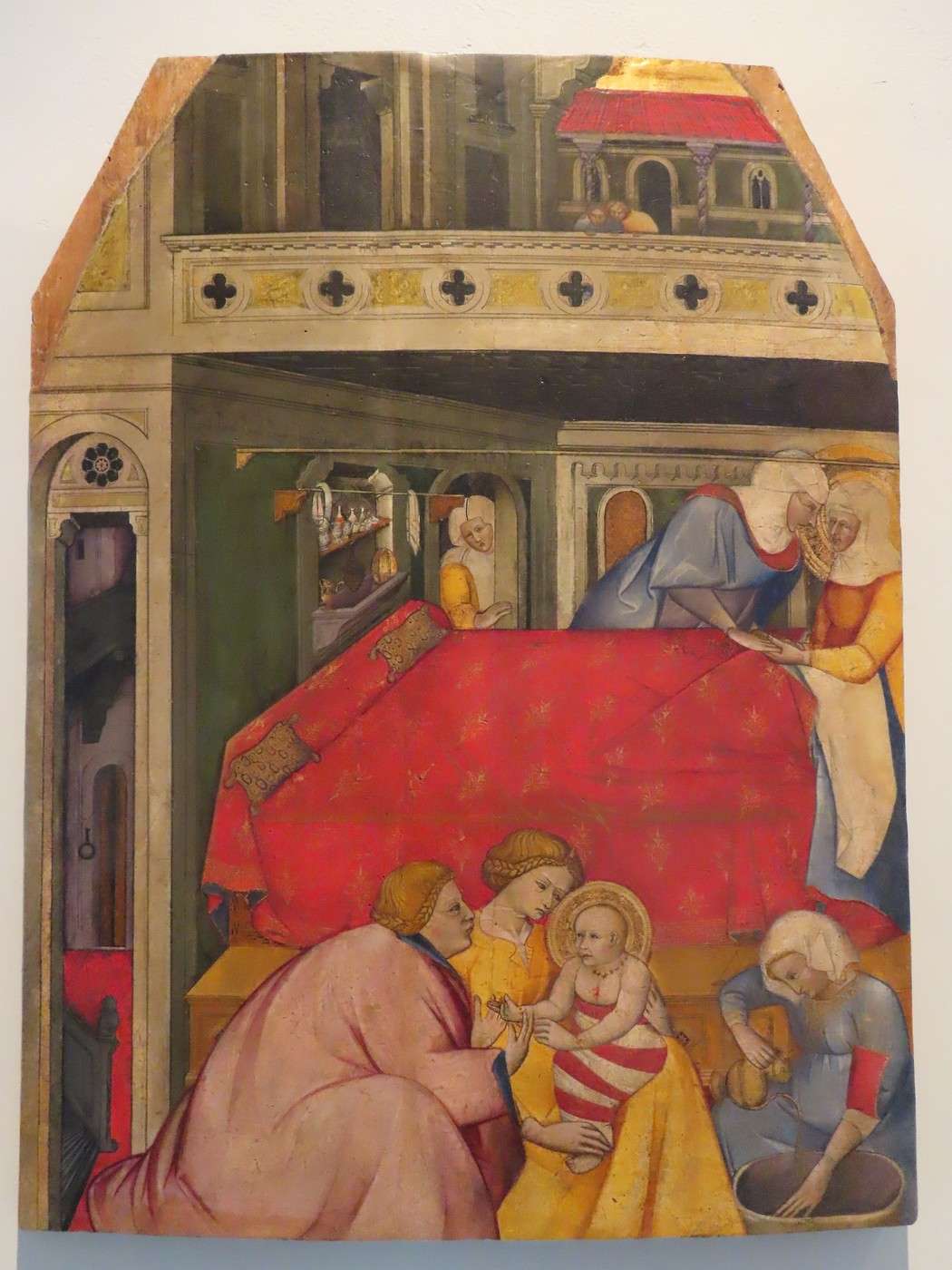
Here’s a painting titled "Birth of the Virgin" (late Trecento); if you look at it as a testimony, Cennino Cennini painted a Tuscan interior from that era.
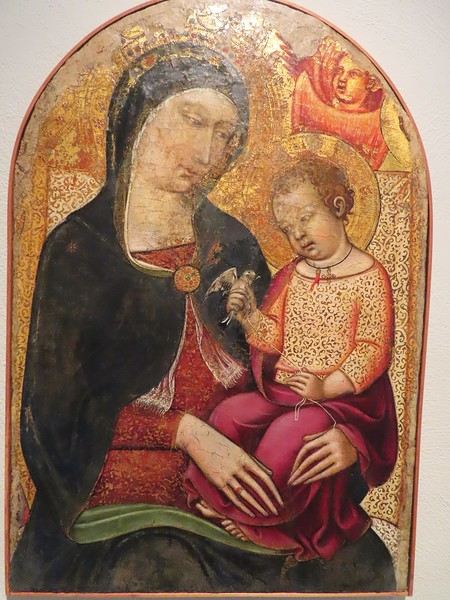
From the same period (second half of the Trecento), a Sienese painter, Luca di Tommé, painted numerous Madonnas, including this one, which comes from the church of Pernina, a rural church lost in the Montagnola on the municipality of Sovicille (see the day after tomorrow). He wasn’t an innovator but a painter inspired by Duccio di Buoninsegna, who lived 70 years before him.
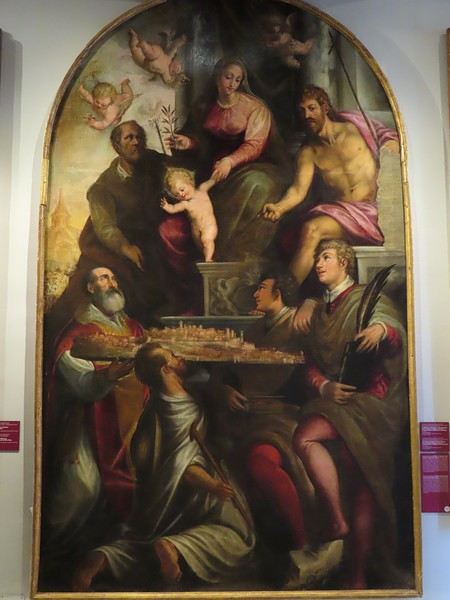
Two centuries later (1581, Simone Ferri da Poggibonsi), this painting has almost purely utilitarian value, featuring a model of the city on a tray. The patrons hoped that by offering it to an ecclesiastical dignitary, Colle would become the seat of a bishopric.
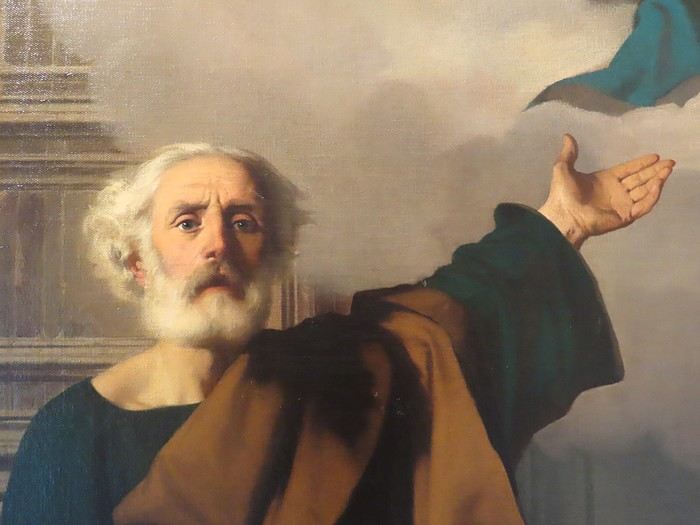
A leap of a few centuries brings us to Antonio Puccinelli, who, in 1859, painted a man with stunning realism. But who is this man? It’s Saint Peter... and I’ve cropped a detail from an Assumption with 2 Saints.
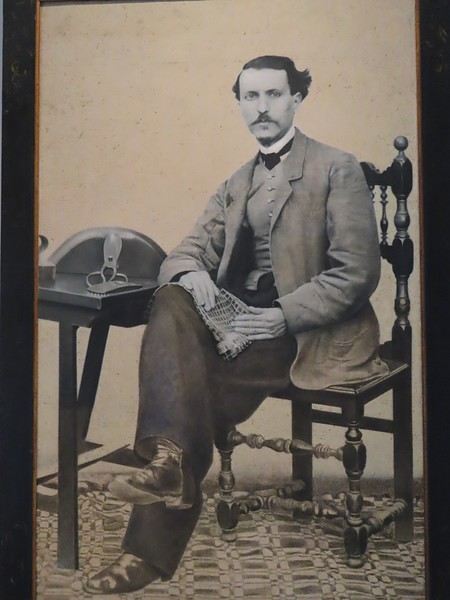
There’s no doubt this artist was interested in photography. But he wasn’t a photographer—he was a painter: Adamo Lucherini. I photographed an oil on canvas exhibited in 1915: "portrait of my father." Amazing!
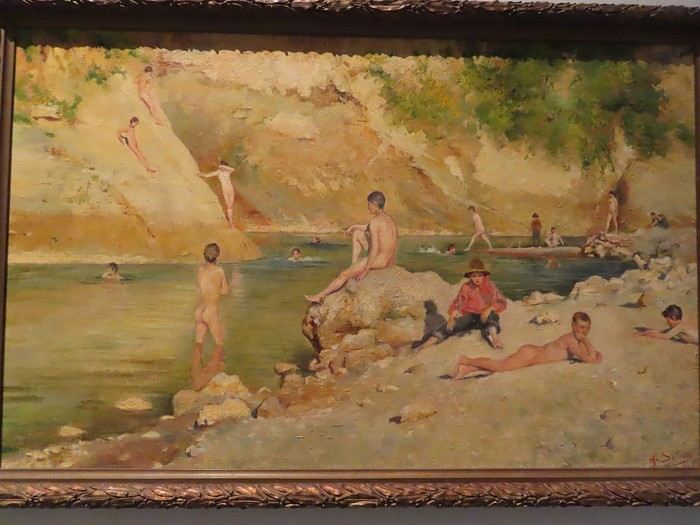
To wrap up the visit, let’s return to the riverside in what is now the river park. Antonio Salvetti (who was a painter, architect, and mayor of Colle) painted in 1895 "the niche, summer on the banks of the Elsa"; I recognized a place I passed through, with a much sunnier atmosphere in the painting than during yesterday’s walk.
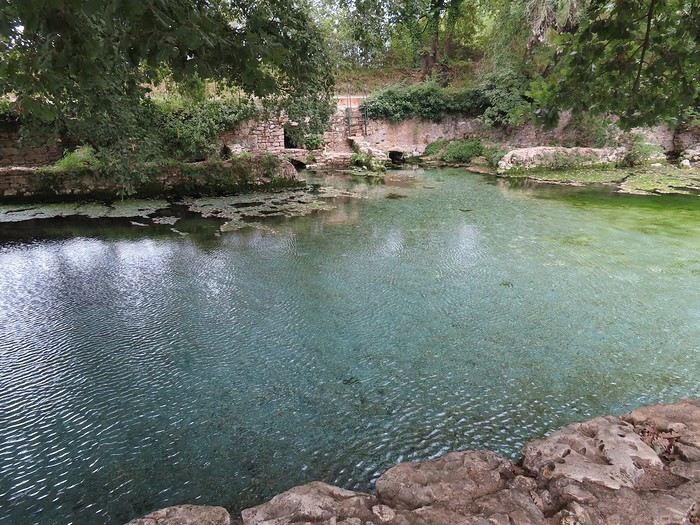
In the afternoon, shortly after leaving by mountain bike from the "frazione" of Gracciano, I arrive at the place called "Le Caldane," a spring feeding the Elsa that has been known since antiquity. It was developed into thermal baths during the Etruscan, Roman, and medieval periods; a few parts of the pools remain, which are masonry (probably a reconstruction, I think).
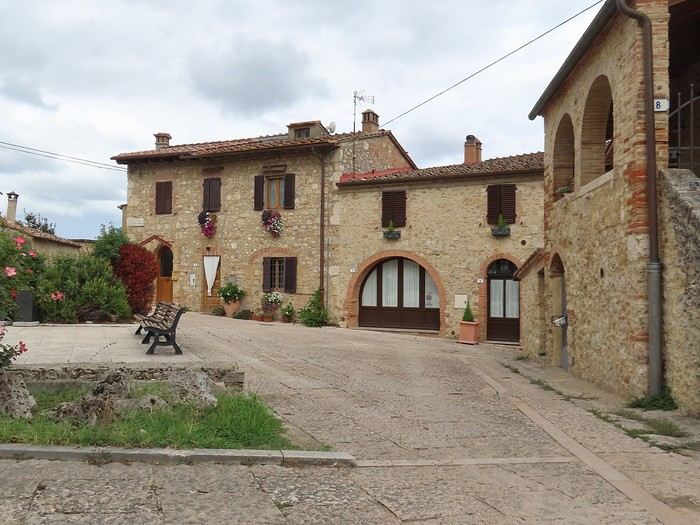
The trail crosses the countryside and arrives in the village of Strove on a well-restored square, set back from the road.
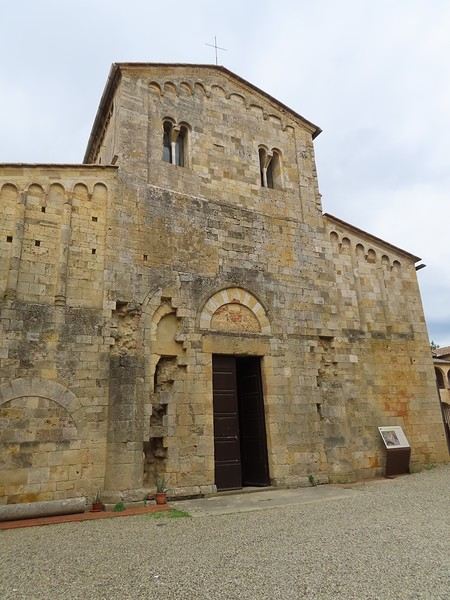
We don’t follow this road for long; a network of paths and, finally, a very small road lead to Badia a Isola, a former abbey built on a height that once gave the impression of being on an island. It’s a Romanesque construction from the 12th century, with an entire village surrounding the abbey.
The last part of the trail leads to Monteriggioni, to the hamlet at the foot of the hill crowned by the famous walls. I return to Colle di Val d'Elsa by road.
From the same period (second half of the Trecento), a Sienese painter, Luca di Tommé, painted numerous Madonnas, including this one, which comes from the church of Pernina, a rural church lost in the Montagnola on the municipality of Sovicille (see the day after tomorrow). He wasn’t an innovator but a painter inspired by Duccio di Buoninsegna, who lived 70 years before him.
Two centuries later (1581, Simone Ferri da Poggibonsi), this painting has almost purely utilitarian value, featuring a model of the city on a tray. The patrons hoped that by offering it to an ecclesiastical dignitary, Colle would become the seat of a bishopric.
A leap of a few centuries brings us to Antonio Puccinelli, who, in 1859, painted a man with stunning realism. But who is this man? It’s Saint Peter... and I’ve cropped a detail from an Assumption with 2 Saints.
There’s no doubt this artist was interested in photography. But he wasn’t a photographer—he was a painter: Adamo Lucherini. I photographed an oil on canvas exhibited in 1915: "portrait of my father." Amazing!
To wrap up the visit, let’s return to the riverside in what is now the river park. Antonio Salvetti (who was a painter, architect, and mayor of Colle) painted in 1895 "the niche, summer on the banks of the Elsa"; I recognized a place I passed through, with a much sunnier atmosphere in the painting than during yesterday’s walk.
In the afternoon, shortly after leaving by mountain bike from the "frazione" of Gracciano, I arrive at the place called "Le Caldane," a spring feeding the Elsa that has been known since antiquity. It was developed into thermal baths during the Etruscan, Roman, and medieval periods; a few parts of the pools remain, which are masonry (probably a reconstruction, I think).
The trail crosses the countryside and arrives in the village of Strove on a well-restored square, set back from the road.
We don’t follow this road for long; a network of paths and, finally, a very small road lead to Badia a Isola, a former abbey built on a height that once gave the impression of being on an island. It’s a Romanesque construction from the 12th century, with an entire village surrounding the abbey.
The last part of the trail leads to Monteriggioni, to the hamlet at the foot of the hill crowned by the famous walls. I return to Colle di Val d'Elsa by road.