

Re: Tuscany: Arezzo Province and the Sienna Area
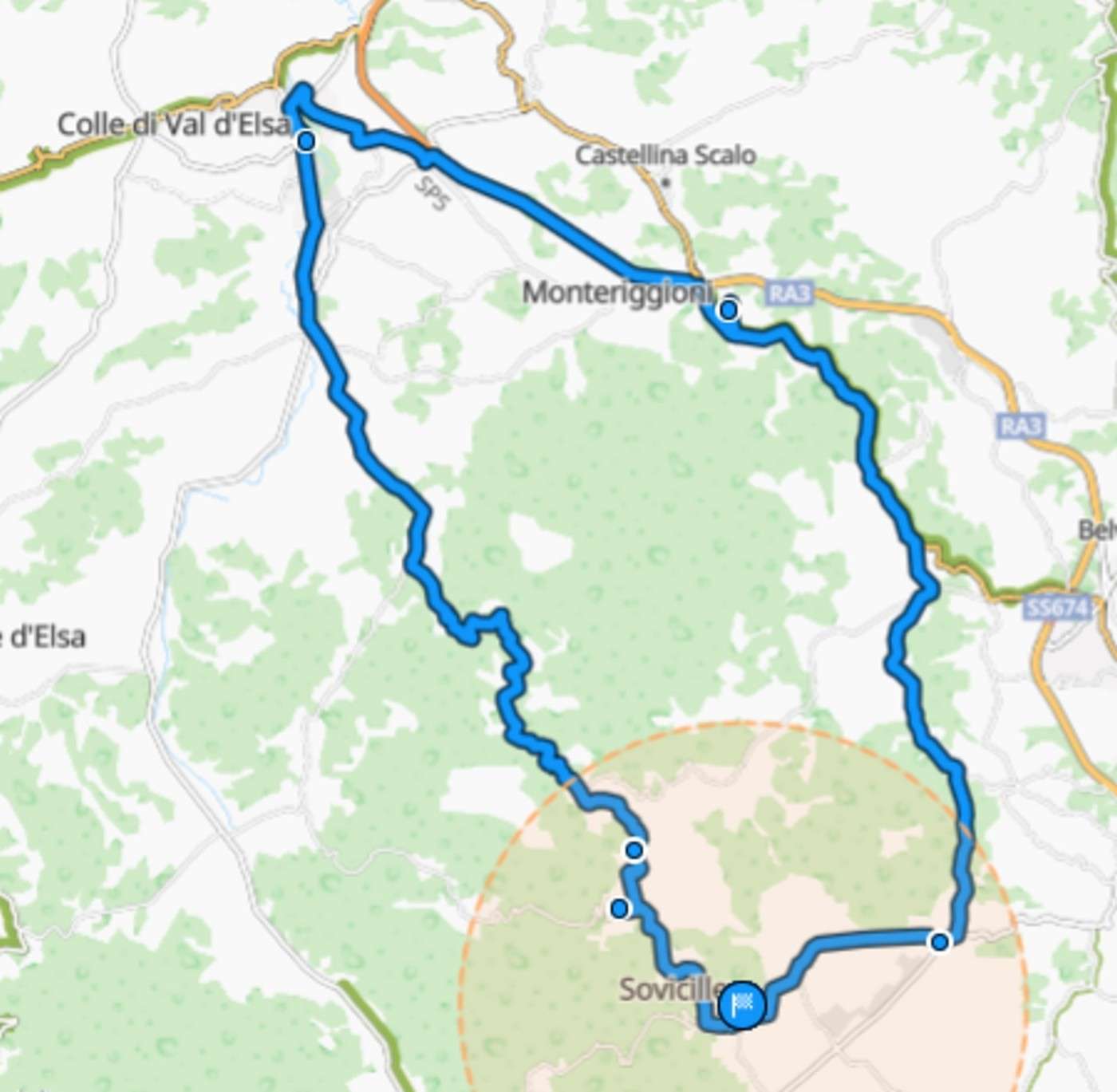
I’m heading back to Colle di Val d'Elsa one last time, but this time I take tiny roads—some of them unpaved—that wind through the Montagnola.
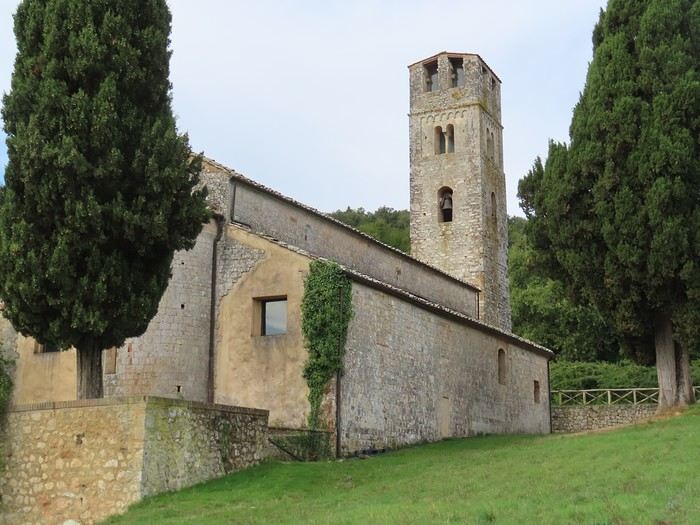
Rural churches are scattered across villages (like Ancaiano) and even out in the countryside, like the Church of Pernina (San Giovanni Battista Church, mentioned in 1078, Romanesque). There was probably a hamlet here back then. One of the paintings I saw the day before yesterday came from this church (Luca di Tommè’s Madonna and Child).
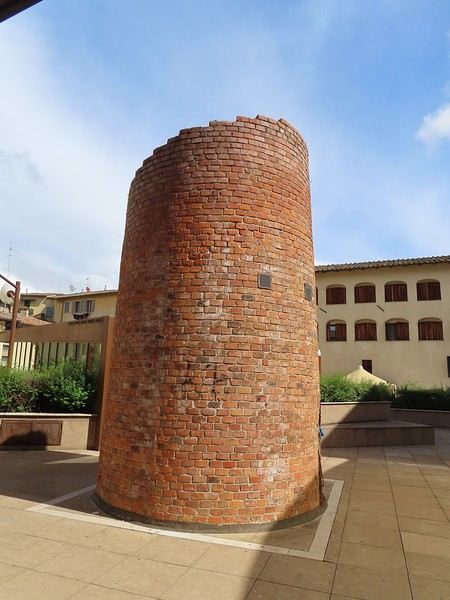
I’m checking out what makes Colle so prosperous today: crystal (95% of Italy’s production, 15% of the world’s). The region originally produced glass, and in the 19th and 20th centuries, Colle was a major glassmaking hub. The brand-new Crystal Museum is on an old production site, where a furnace and its chimney have been preserved and integrated into the surrounding area (lower town).
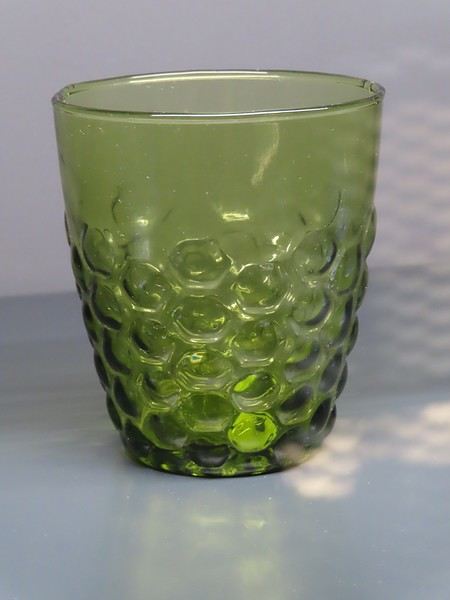
From the Trecento onward, glass was produced in the Valdelsa, especially in Gambassi Terme (about 30 km from Colle). This town "invented" a glass model that’s stood the test of time: the Gambassi. Here’s a modern reproduction of it (based on the info provided, you can still buy this glass today).
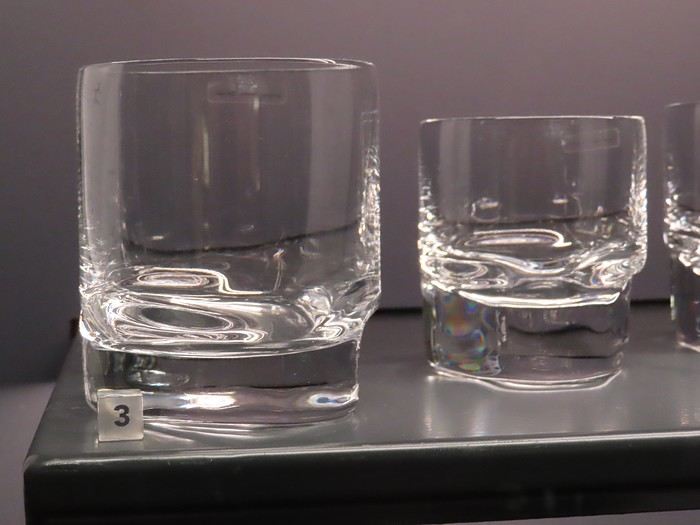
After strict crystal standards were adopted (in the 1950s or 1960s, if I remember correctly—so take that with a grain of salt), manufacturers took a major turn. They brought in "designers," and the models produced changed completely. Here’s the "Pitagora" glass, designed by Marco Zanusso (1969)—a triangle-circle combo, with a transition from base to container.
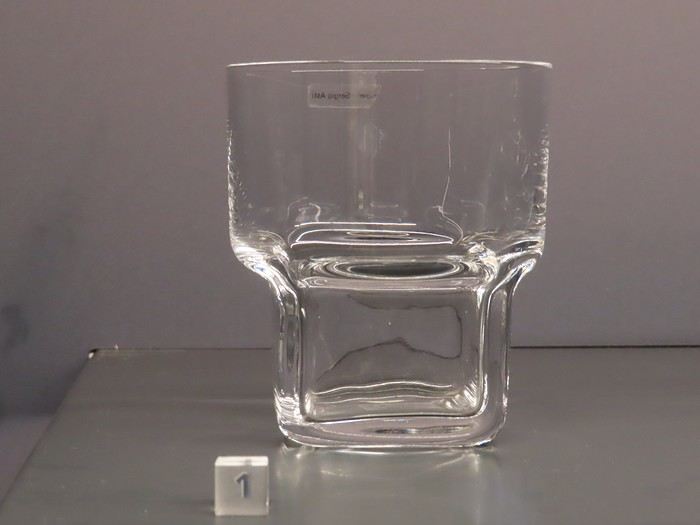
In the same vein, here’s the "Mapan" glass, designed by Sergio Asti (1970)—a square-circle combo, with the same base-to-container transition. Though it came after the previous one, this glass was more successful: it’s part of the MOMA’s permanent collection in New York.
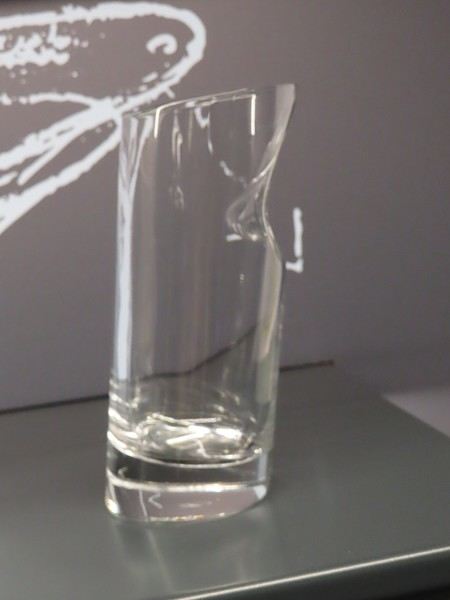
A few more years later… 1986. Angelo Mangiarotti created "Ice Stopper" (sorry for the poor photo quality). This glass is a sloped cylinder (but not too sloped—it still needs to stay upright). It’s not quite a perfect cylinder, though, because it has an inner protrusion (an outer indentation) with a smooth shape. Its purpose? To keep ice cubes from reaching the drinker’s lips. Now that’s peak futility.
That’s all for the Crystal Museum (you can tour some of the factories—I didn’t).
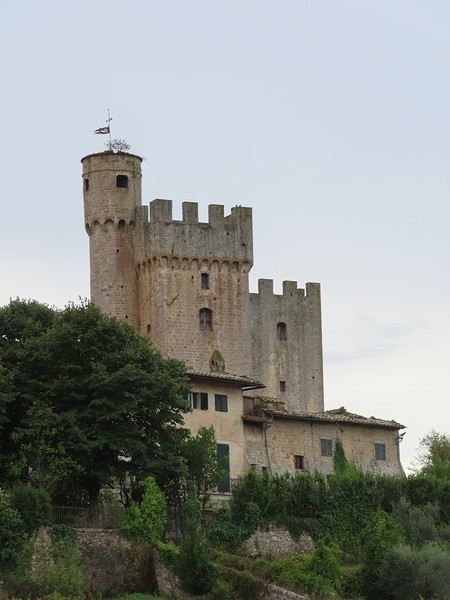
The afternoon was spent in the countryside between Monteriggioni and Siena, with scattered showers. The "Via Francigena" winds along the foothills of the Montagnola, roughly at the border between farmland and wooded areas (so parts are in the forest, others at the edge). I remember one stretch (about 800 meters) where the wheels were completely caked in sticky mud, making it nearly impossible to move. That was a result of yesterday’s rain and last night’s downpour. Castello della Chiocciola, a private castle along the "Via Francigena."
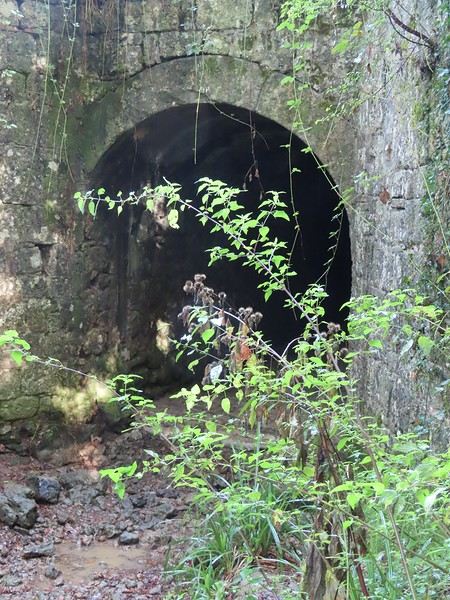
The last part of the route skirts the "Pian del Lago" area, a former lake drained in the 18th century to create farmland. A monument commemorates the project, which required major work—including the construction of a drainage tunnel. Here’s the entrance (the tunnel goes under a hill to reach a valley where the water could flow out).
I linked up with yesterday’s route just past the structures (monument, tunnel) in the "Pian del Lago" area.
Rural churches are scattered across villages (like Ancaiano) and even out in the countryside, like the Church of Pernina (San Giovanni Battista Church, mentioned in 1078, Romanesque). There was probably a hamlet here back then. One of the paintings I saw the day before yesterday came from this church (Luca di Tommè’s Madonna and Child).
I’m checking out what makes Colle so prosperous today: crystal (95% of Italy’s production, 15% of the world’s). The region originally produced glass, and in the 19th and 20th centuries, Colle was a major glassmaking hub. The brand-new Crystal Museum is on an old production site, where a furnace and its chimney have been preserved and integrated into the surrounding area (lower town).
From the Trecento onward, glass was produced in the Valdelsa, especially in Gambassi Terme (about 30 km from Colle). This town "invented" a glass model that’s stood the test of time: the Gambassi. Here’s a modern reproduction of it (based on the info provided, you can still buy this glass today).
After strict crystal standards were adopted (in the 1950s or 1960s, if I remember correctly—so take that with a grain of salt), manufacturers took a major turn. They brought in "designers," and the models produced changed completely. Here’s the "Pitagora" glass, designed by Marco Zanusso (1969)—a triangle-circle combo, with a transition from base to container.
In the same vein, here’s the "Mapan" glass, designed by Sergio Asti (1970)—a square-circle combo, with the same base-to-container transition. Though it came after the previous one, this glass was more successful: it’s part of the MOMA’s permanent collection in New York.
A few more years later… 1986. Angelo Mangiarotti created "Ice Stopper" (sorry for the poor photo quality). This glass is a sloped cylinder (but not too sloped—it still needs to stay upright). It’s not quite a perfect cylinder, though, because it has an inner protrusion (an outer indentation) with a smooth shape. Its purpose? To keep ice cubes from reaching the drinker’s lips. Now that’s peak futility.
That’s all for the Crystal Museum (you can tour some of the factories—I didn’t).
The afternoon was spent in the countryside between Monteriggioni and Siena, with scattered showers. The "Via Francigena" winds along the foothills of the Montagnola, roughly at the border between farmland and wooded areas (so parts are in the forest, others at the edge). I remember one stretch (about 800 meters) where the wheels were completely caked in sticky mud, making it nearly impossible to move. That was a result of yesterday’s rain and last night’s downpour. Castello della Chiocciola, a private castle along the "Via Francigena."
The last part of the route skirts the "Pian del Lago" area, a former lake drained in the 18th century to create farmland. A monument commemorates the project, which required major work—including the construction of a drainage tunnel. Here’s the entrance (the tunnel goes under a hill to reach a valley where the water could flow out).
I linked up with yesterday’s route just past the structures (monument, tunnel) in the "Pian del Lago" area.