
Re: Tuscany: Arezzo province and the area around Siena
This day starts under bright sunshine, which will last to make it one of the most beautiful days of the trip.
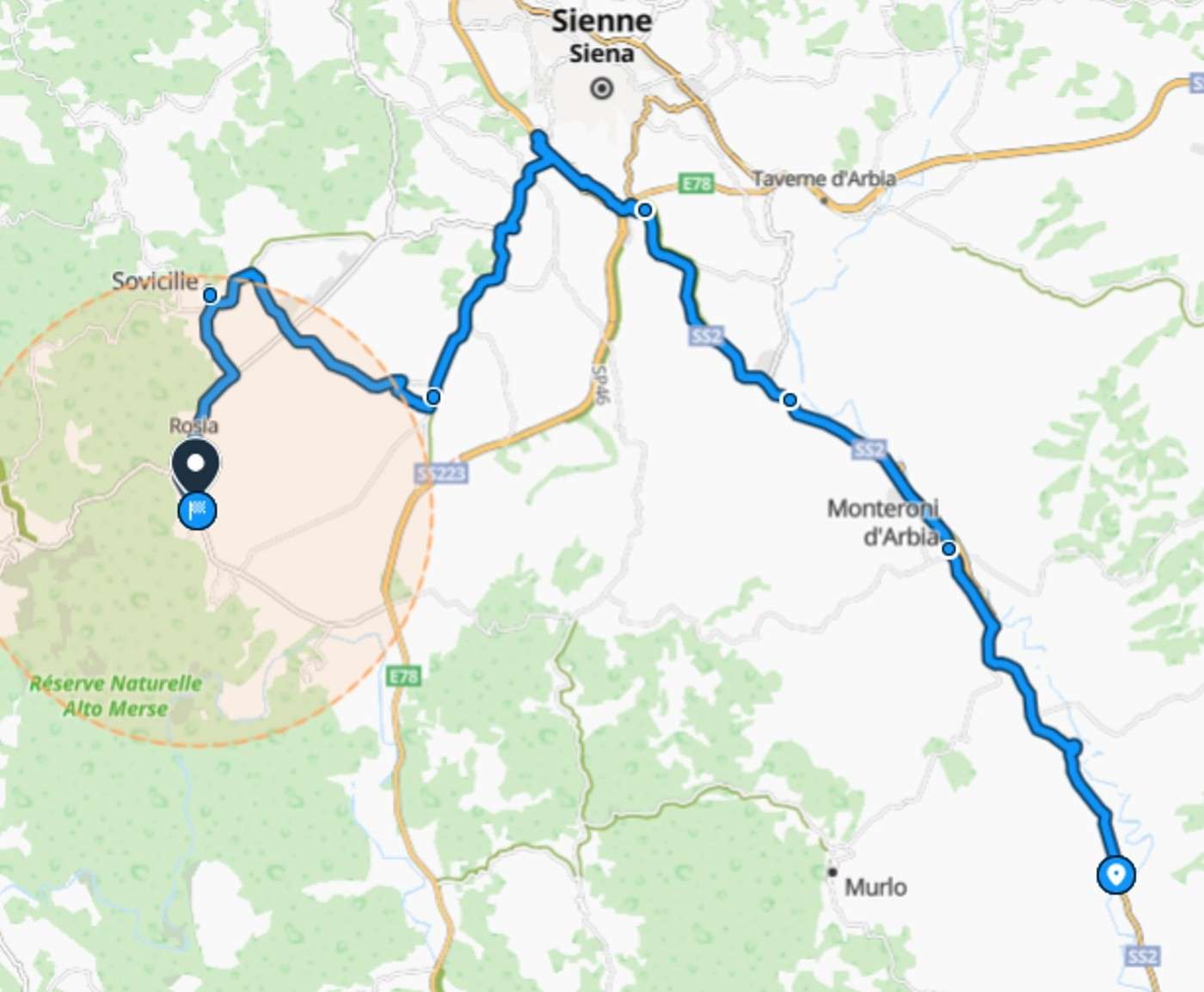
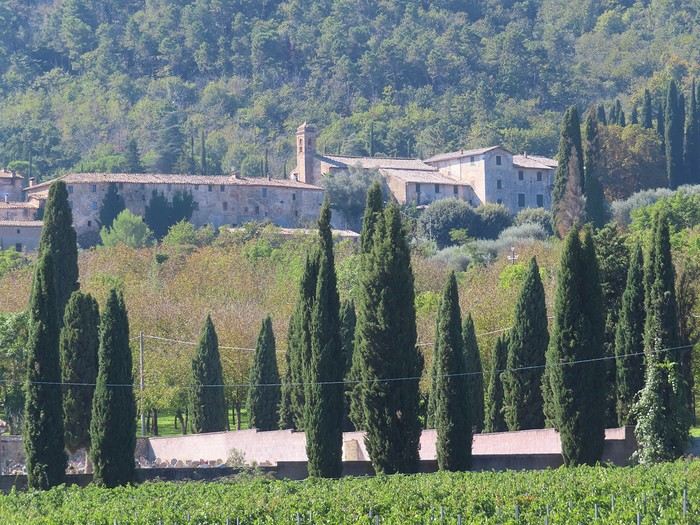
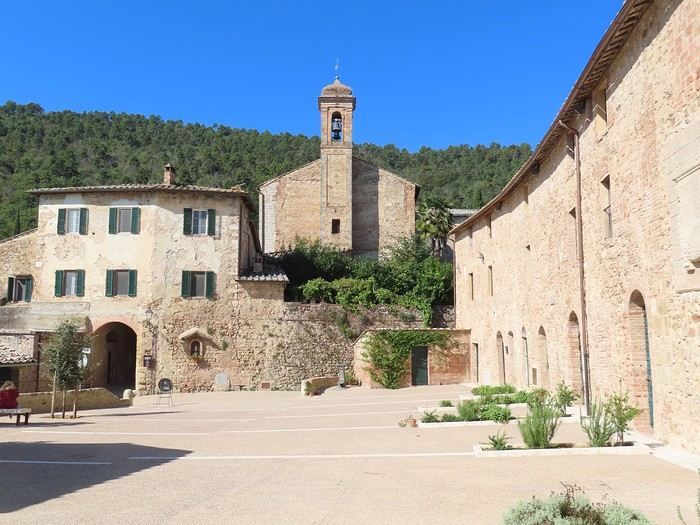
I head toward Torri, a "frazione" of Sovicille where the former Torri Abbey is located, and you can visit its cloister (it’s the point below Rosia on the map). The village sits high on the slope of the Montagnola. It retains a medieval feel with walls that serve as an enclosure, an access gate, and narrow streets. On the right side of the photo, you can see the church of Santa Mustiola, and further to the right, buildings adjoining the abbey’s cloister.
After passing through the access gate, I’m on Piazza Grande. This lovely square is in the civil part of the hamlet; to reach the religious part (the former abbey), you have to go under the arch visible at the back of the square and walk along the church’s full length to the cloister entrance.
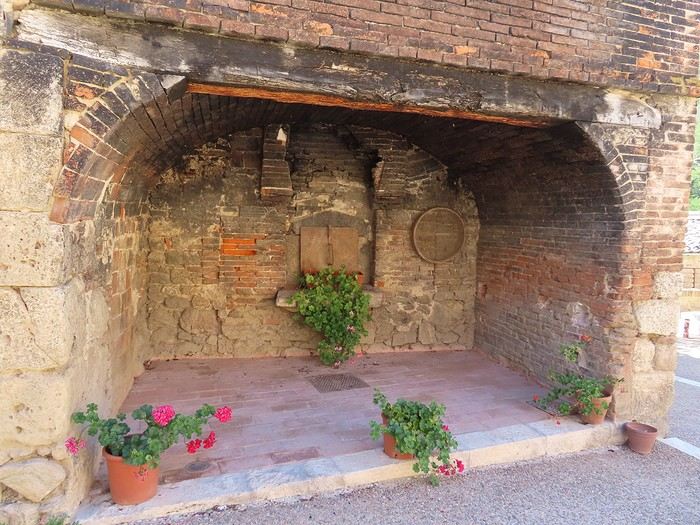
On one side of the square, you can see the communal oven, quite rare and perfectly preserved.
The abbey’s cloister rises over three levels, built with different materials (stone, brick, wood) at different times (late 12th century, 14th century, 15th century). The photos go from general views to details.
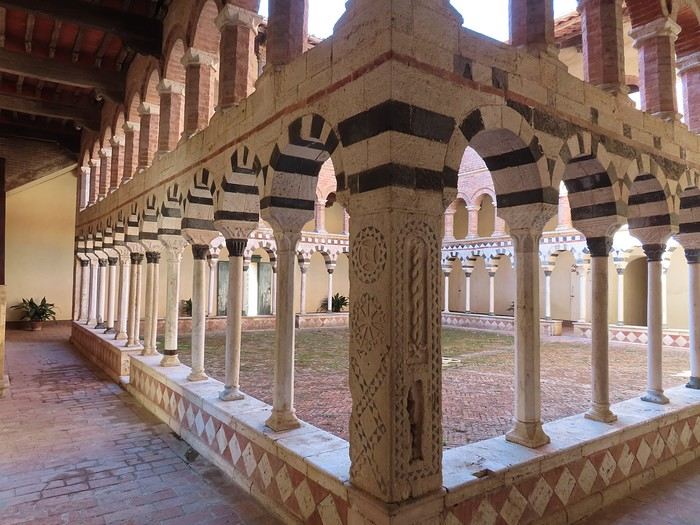
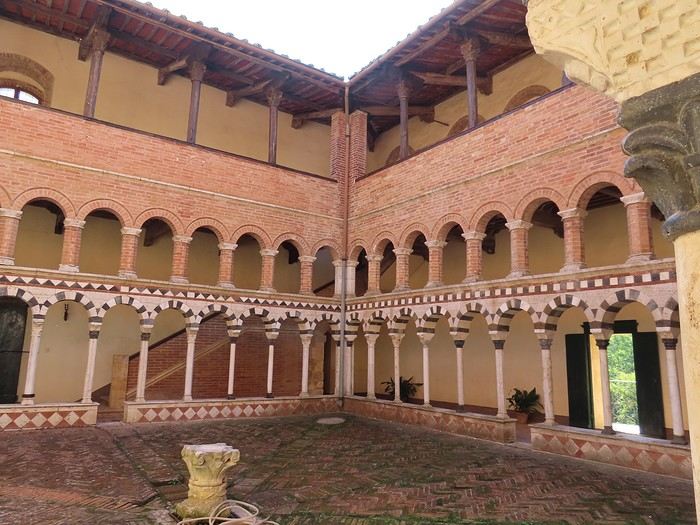 The cloister’s lower level is Romanesque; the effect created by the bichromy is spectacular. The columns are circular or hexagonal, smooth or sculpted.
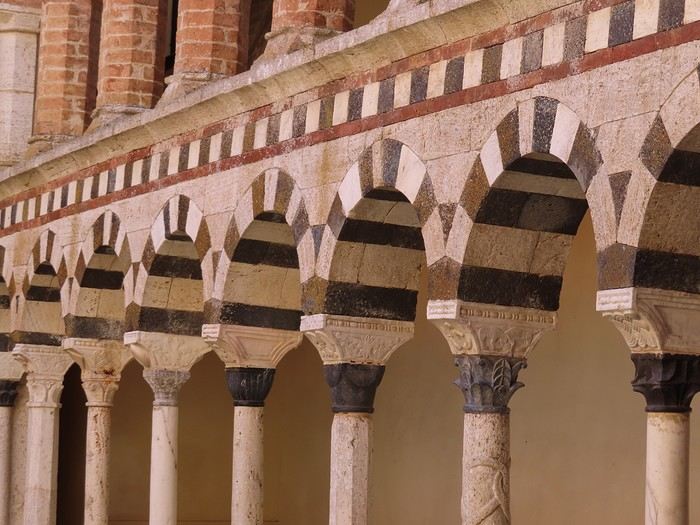
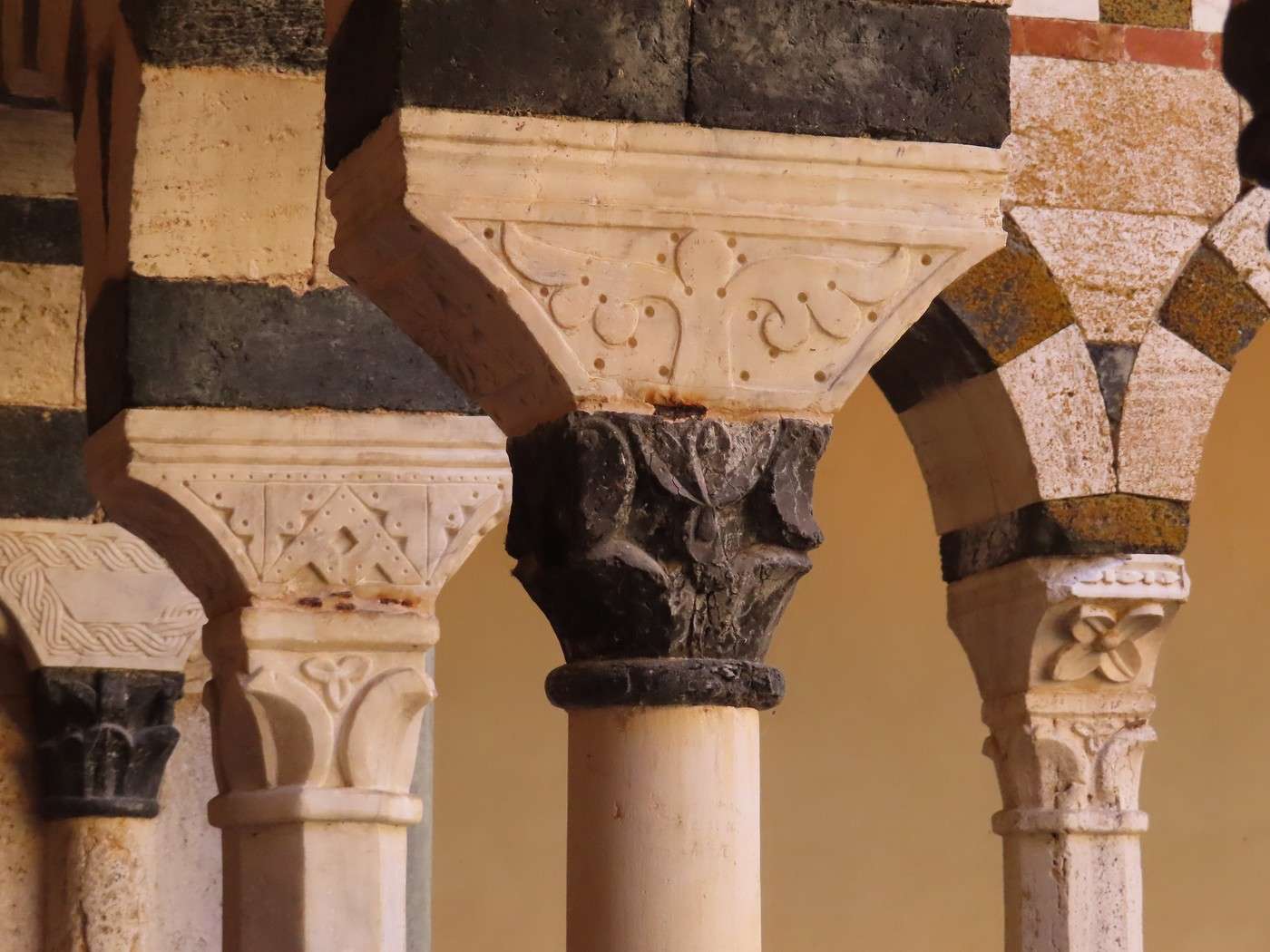
View of the column-capital-pulvino-arch base stack. I use the term "pulvino" to describe this inverted pyramid-shaped element placed above the capital. It serves both a structural role in supporting the arch’s base and a decorative one. I found the term in Italian documentation but haven’t found a valid translation for this architectural element, nor do I know its name in French.

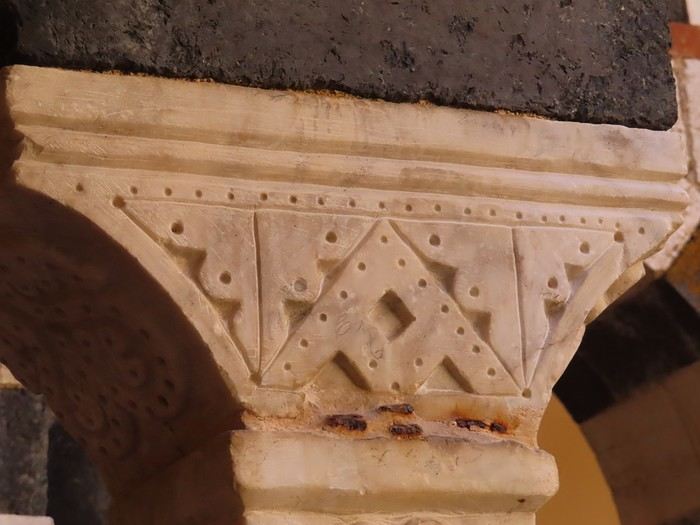
These "pulvini," all unique, are mainly decorated with geometric patterns. The characteristics of the cloister’s lower level date its construction to the late 12th century, around the same time as the church’s consecration (1189).
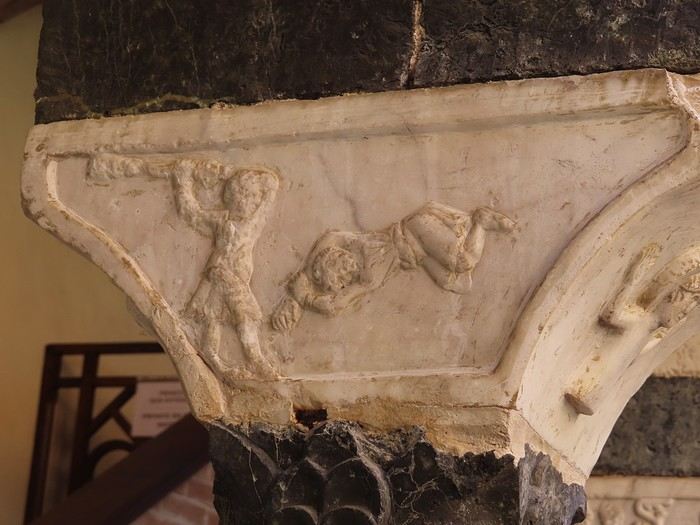
Biblical scenes are another, less common decoration on the "pulvini"; here’s Cain murdering Abel.
The church isn’t open for visits (at least not today). The abbey buildings adjoining the cloister once housed a winery (when?), as huge barrels and fermentation vats remain. This cloister is a hidden gem (reopened during summer 2024 with limited hours after a restoration period).
More from the day in the next post.
I head toward Torri, a "frazione" of Sovicille where the former Torri Abbey is located, and you can visit its cloister (it’s the point below Rosia on the map). The village sits high on the slope of the Montagnola. It retains a medieval feel with walls that serve as an enclosure, an access gate, and narrow streets. On the right side of the photo, you can see the church of Santa Mustiola, and further to the right, buildings adjoining the abbey’s cloister.
After passing through the access gate, I’m on Piazza Grande. This lovely square is in the civil part of the hamlet; to reach the religious part (the former abbey), you have to go under the arch visible at the back of the square and walk along the church’s full length to the cloister entrance.
On one side of the square, you can see the communal oven, quite rare and perfectly preserved.
The abbey’s cloister rises over three levels, built with different materials (stone, brick, wood) at different times (late 12th century, 14th century, 15th century). The photos go from general views to details.
View of the column-capital-pulvino-arch base stack. I use the term "pulvino" to describe this inverted pyramid-shaped element placed above the capital. It serves both a structural role in supporting the arch’s base and a decorative one. I found the term in Italian documentation but haven’t found a valid translation for this architectural element, nor do I know its name in French.
These "pulvini," all unique, are mainly decorated with geometric patterns. The characteristics of the cloister’s lower level date its construction to the late 12th century, around the same time as the church’s consecration (1189).
Biblical scenes are another, less common decoration on the "pulvini"; here’s Cain murdering Abel.
The church isn’t open for visits (at least not today). The abbey buildings adjoining the cloister once housed a winery (when?), as huge barrels and fermentation vats remain. This cloister is a hidden gem (reopened during summer 2024 with limited hours after a restoration period).
More from the day in the next post.