

Re: The Southwest USA Road Trip Part II
Dallas – Sunday morning: a rendezvous with History at the Sixth Floor Museum
Back at the hotel after my little photographic escapade through the deserted streets of Dallas, I stop by our tiny bathroom.
Tiny is actually a particularly fitting term! You’d think American architects, who are usually so used to thinking big, would sometimes decide to skimp on the square footage dedicated to personal hygiene!
Anyway!
Once our morning preparations are done, we head downstairs for our usual breakfast.
The room is pretty empty, actually. And on second thought, it’s easy to see why!
Given the price charged and the quality of what’s offered, it’s no surprise that guests aren’t exactly lining up.
In fact, this is something we noticed in pretty much every hotel we stayed at during our American road trip.
An American breakfast, when it’s not included in the room rate, can quickly turn into a small financial operation where the value for money is frankly disappointing! But we’re not here to critique the U.S. hotel industry this morning. We have a date with History!
At exactly ten o’clock, we’ve booked our entry to the Sixth Floor Museum at Dealey Plaza.
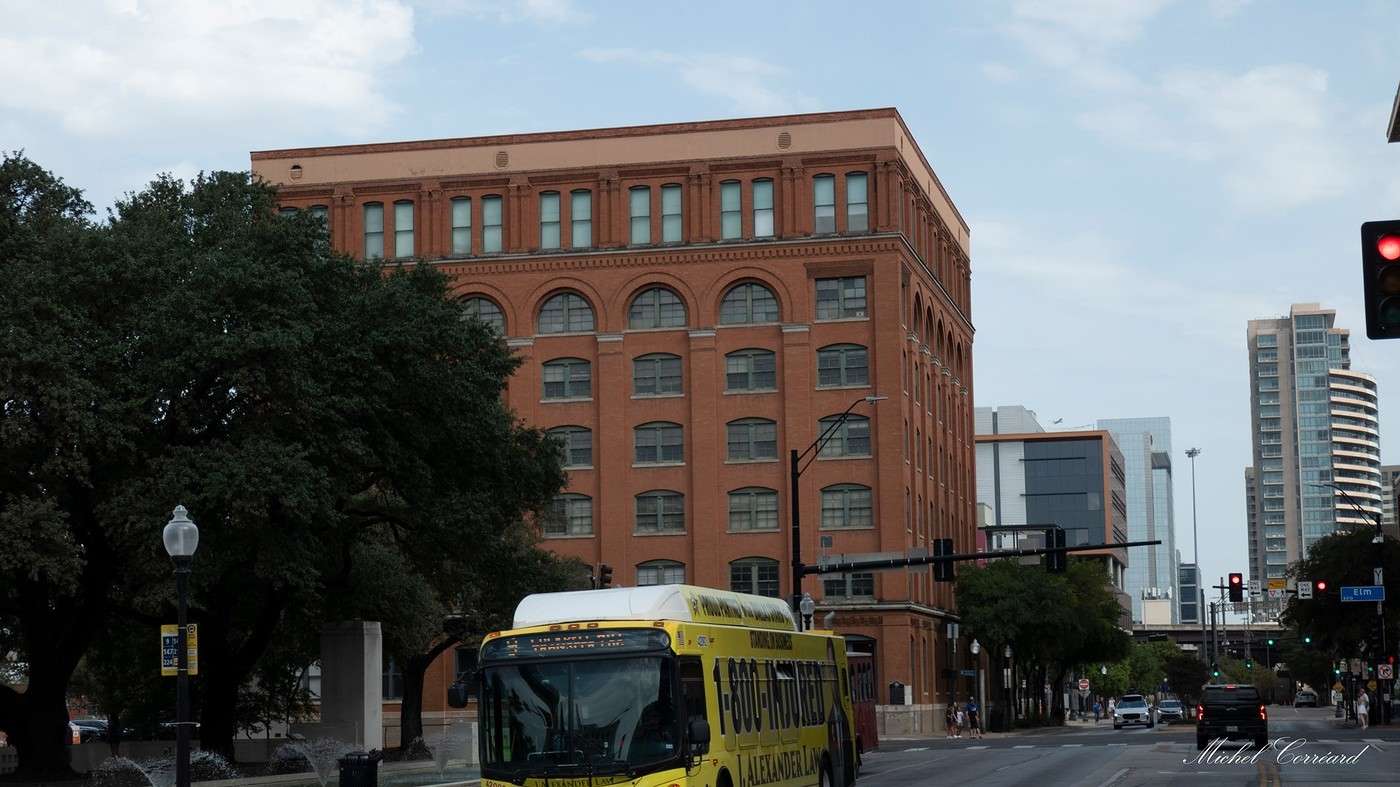
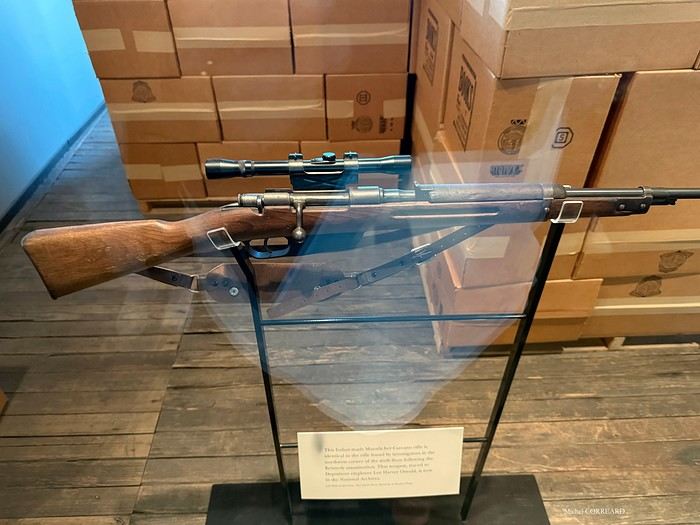
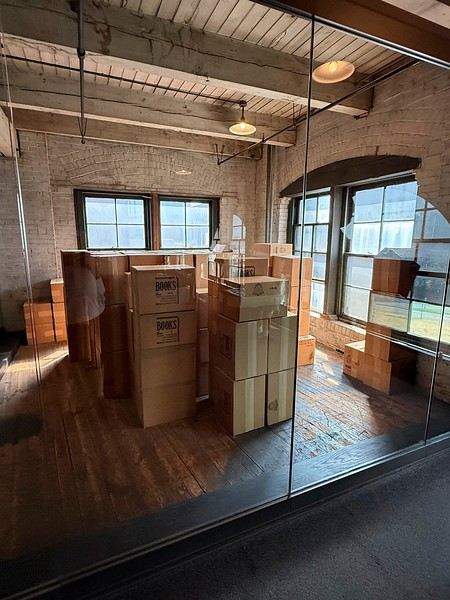
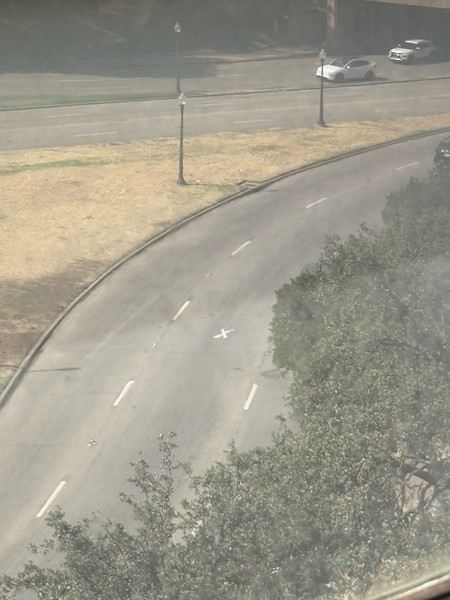
You’ve probably guessed that this is the museum dedicated to the assassination of President John Fitzgerald Kennedy, that fateful November 22, 1963, which would forever mark U.S. history. The museum is located in the former Texas School Book Depository, the building from which, according to the official investigation, Lee Harvey Oswald allegedly fired at the presidential motorcade.
Needless to say, this isn’t just any museum.
First surprise at the entrance: cameras and camcorders are banned, but phones are allowed! Go figure!
My Nikon would be a threat to the peace of the place, but a phone capable of taking high-definition photos and videos is no problem?
The mysteries of American regulations!
That said, I end up taking very few pictures. Not for lack of interest—quite the opposite. But probably out of respect for this place, what it represents, and that tragic day whose images circled the globe.
There are places where you feel more of a need to look, understand, and reflect than to snap photos.
And this is one of them.
On this Sunday morning, the museum is packed with visitors. Clearly, we’re not the only ones wanting to revisit this painful chapter of American history.
We take our time.
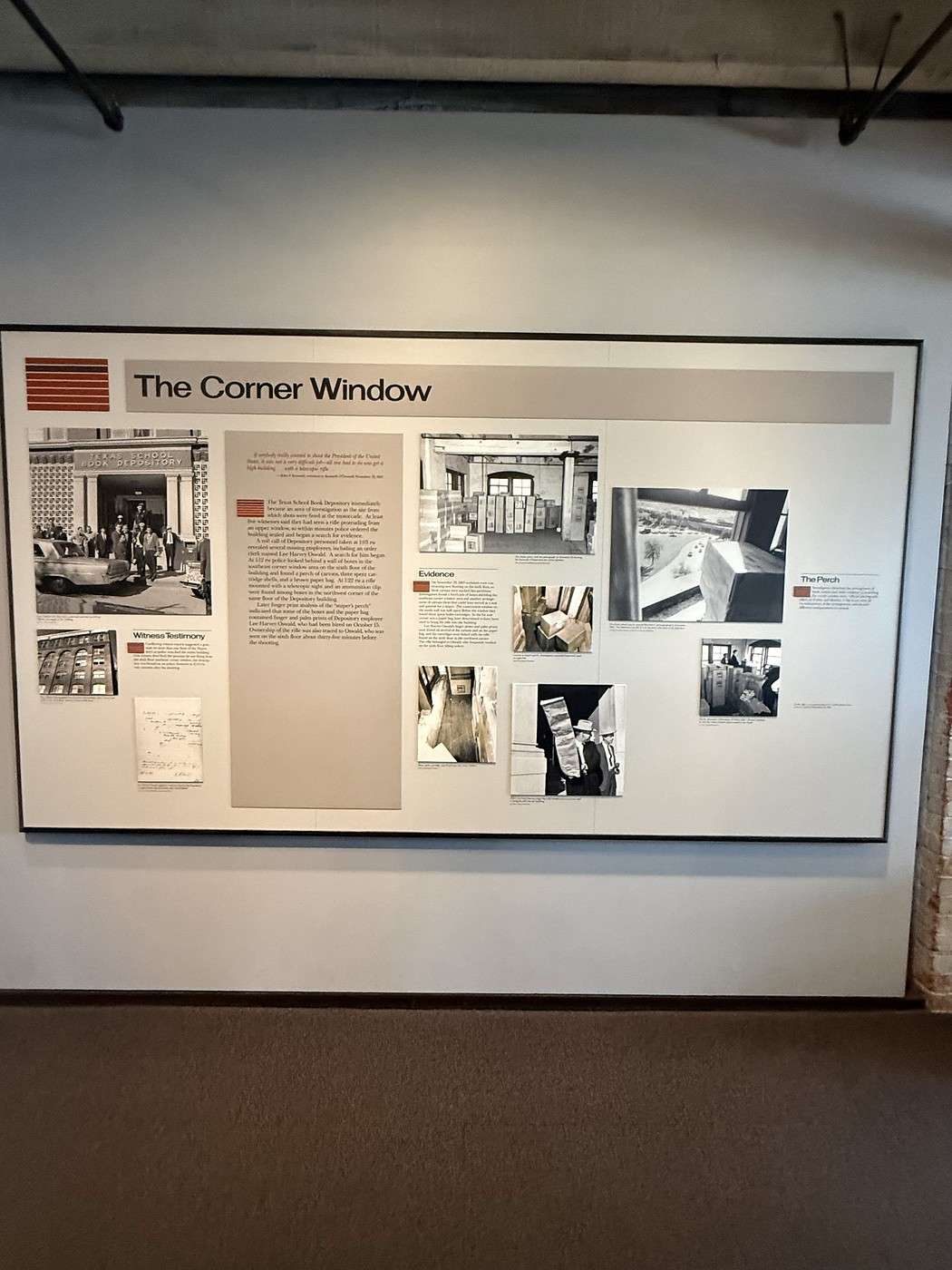
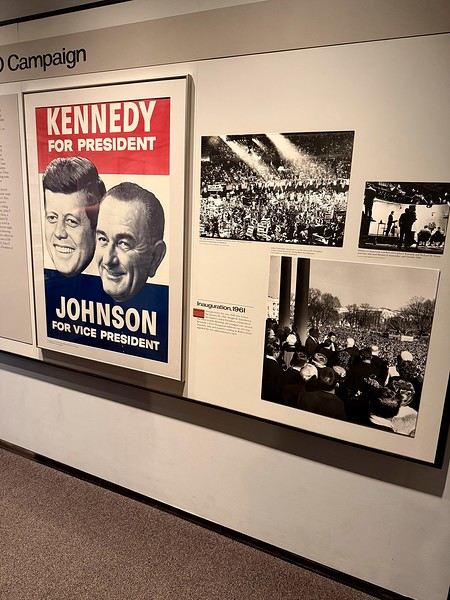
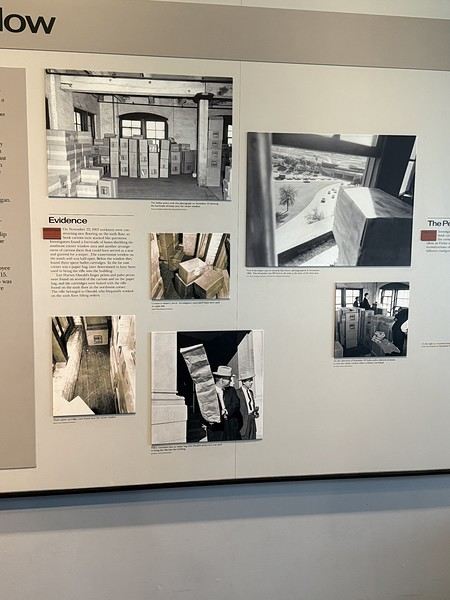
The sixth floor, the heart of the exhibit, recounts the events, the political and social context of the time, the president’s visit to Texas, and, of course, the circumstances of the assassination.
Photographs, documents, testimonies, archival footage...
All of it immerses us in that early 1960s America.
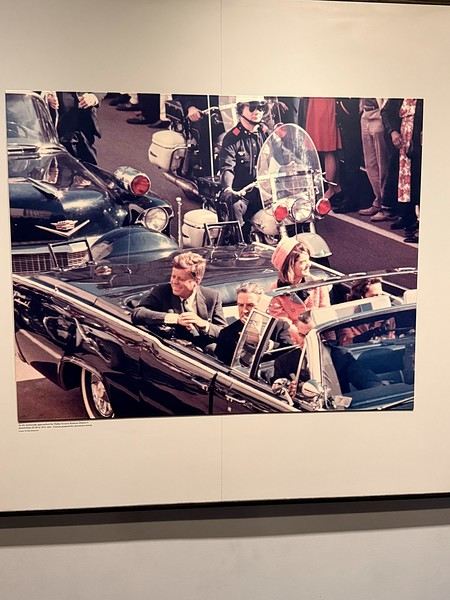
An America looking toward the future but that would brutally lose its president in a matter of seconds on a Dallas street.
And then there’s that unsettling closeness to the very scene of the tragedy.
We’re not just looking at photographs hanging on museum walls. We’re in the building that played a central role in the story of this assassination. And that changes everything.
We continue our visit on the upper floor, where an exhibit focuses on the press and how the events were reported to the public.
The American press! Quite the topic!
Here, freedom of the press enjoys particularly strong constitutional protection, guaranteed by the famous First Amendment.
An institution in itself, with its strengths, occasional excesses, but also its fundamental role in American democratic life.
And when it comes to Kennedy’s assassination, it’s impossible not to think about the enormous role played by journalists, photographers, and TV networks in broadcasting this tragedy.
The images from Dallas have crossed decades. Some have become iconic.
And more than sixty years later, they continue to provoke questions, fascination, and sometimes division. We spend a long time in this museum, barely noticing the hours passing.
I could, of course, expand here on my thoughts about the circumstances of the assassination, the investigations, the testimonies, the gray areas, and the countless controversies still surrounding that day.
But that would open a chapter far broader than our simple tourist visit. And I fully intend to come back to it! Because I, too, have my own take on that tragic November 22, 1963. But all in good time.
For now, we’re in Dallas, at the heart of Dealey Plaza, and this visit will undoubtedly be one of the most memorable moments of our time in the city.
Some places you visit out of curiosity. Others you leave with more questions than when you arrived. For me, the Sixth Floor Museum falls into that second category.

Back at the hotel after my little photographic escapade through the deserted streets of Dallas, I stop by our tiny bathroom.
Tiny is actually a particularly fitting term! You’d think American architects, who are usually so used to thinking big, would sometimes decide to skimp on the square footage dedicated to personal hygiene!
Anyway!
Once our morning preparations are done, we head downstairs for our usual breakfast.
The room is pretty empty, actually. And on second thought, it’s easy to see why!
Given the price charged and the quality of what’s offered, it’s no surprise that guests aren’t exactly lining up.
In fact, this is something we noticed in pretty much every hotel we stayed at during our American road trip.
An American breakfast, when it’s not included in the room rate, can quickly turn into a small financial operation where the value for money is frankly disappointing! But we’re not here to critique the U.S. hotel industry this morning. We have a date with History!
At exactly ten o’clock, we’ve booked our entry to the Sixth Floor Museum at Dealey Plaza.
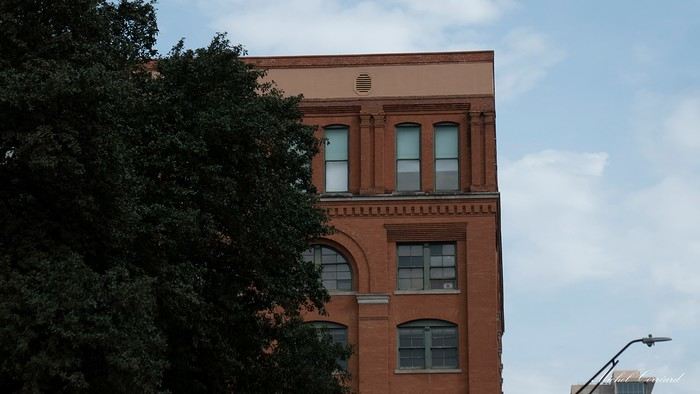
You’ve probably guessed that this is the museum dedicated to the assassination of President John Fitzgerald Kennedy, that fateful November 22, 1963, which would forever mark U.S. history. The museum is located in the former Texas School Book Depository, the building from which, according to the official investigation, Lee Harvey Oswald allegedly fired at the presidential motorcade.
Needless to say, this isn’t just any museum.
First surprise at the entrance: cameras and camcorders are banned, but phones are allowed! Go figure!
My Nikon would be a threat to the peace of the place, but a phone capable of taking high-definition photos and videos is no problem?
The mysteries of American regulations!
That said, I end up taking very few pictures. Not for lack of interest—quite the opposite. But probably out of respect for this place, what it represents, and that tragic day whose images circled the globe.
There are places where you feel more of a need to look, understand, and reflect than to snap photos.
And this is one of them.
On this Sunday morning, the museum is packed with visitors. Clearly, we’re not the only ones wanting to revisit this painful chapter of American history.
We take our time.
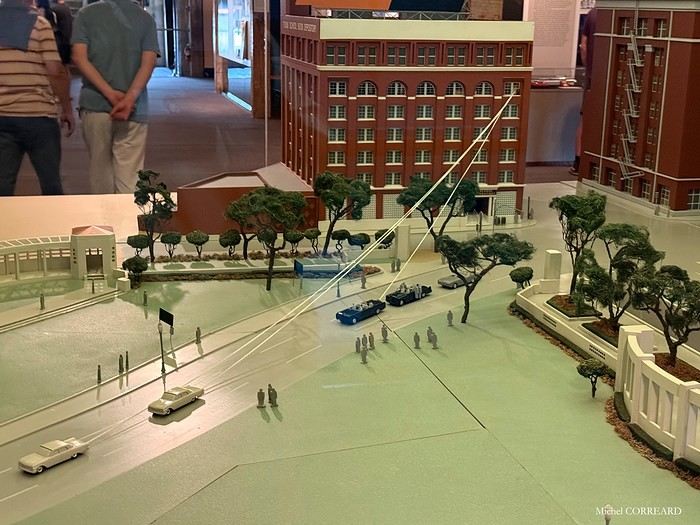
The sixth floor, the heart of the exhibit, recounts the events, the political and social context of the time, the president’s visit to Texas, and, of course, the circumstances of the assassination.
Photographs, documents, testimonies, archival footage...
All of it immerses us in that early 1960s America.
An America looking toward the future but that would brutally lose its president in a matter of seconds on a Dallas street.
And then there’s that unsettling closeness to the very scene of the tragedy.
We’re not just looking at photographs hanging on museum walls. We’re in the building that played a central role in the story of this assassination. And that changes everything.
We continue our visit on the upper floor, where an exhibit focuses on the press and how the events were reported to the public.
The American press! Quite the topic!
Here, freedom of the press enjoys particularly strong constitutional protection, guaranteed by the famous First Amendment.
An institution in itself, with its strengths, occasional excesses, but also its fundamental role in American democratic life.
And when it comes to Kennedy’s assassination, it’s impossible not to think about the enormous role played by journalists, photographers, and TV networks in broadcasting this tragedy.
The images from Dallas have crossed decades. Some have become iconic.
And more than sixty years later, they continue to provoke questions, fascination, and sometimes division. We spend a long time in this museum, barely noticing the hours passing.
I could, of course, expand here on my thoughts about the circumstances of the assassination, the investigations, the testimonies, the gray areas, and the countless controversies still surrounding that day.
But that would open a chapter far broader than our simple tourist visit. And I fully intend to come back to it! Because I, too, have my own take on that tragic November 22, 1963. But all in good time.
For now, we’re in Dallas, at the heart of Dealey Plaza, and this visit will undoubtedly be one of the most memorable moments of our time in the city.
Some places you visit out of curiosity. Others you leave with more questions than when you arrived. For me, the Sixth Floor Museum falls into that second category.