



Re: Mexico: The Magic of the Yucatan
I was snapping photos of this croc up close, as I was saying...
With a few curious dragonflies as a bonus!
Needless to say, unlike most cenotes open to the public in the Yucatan, you can’t swim in the one at Peten Mac! However, this spot, where we didn’t encounter a single tourist during the forty minutes we spent there, is a treat for nature lovers.
We leave the Peten Mac cenote for the Chikila cenote, located just a few hundred meters away.
The Chikila Cenote
Before visiting these two neighboring cenotes (Chikila and Peten Mac), we were clearly told that we could only swim in Chikila because of the two crocodiles living in Peten Mac.
So, as soon as we arrive at Chikila, our two sons put on their swimsuits and get ready to jump into the water to cool off at last, since the atmosphere is stifling with very high temperatures and humidity.
Just as they’re about to dive in, Victor, our oldest son, says this surreal sentence: "We’re all agreed, that kind of crocodile at the bottom—it’s fake, right?"
We weren’t suspicious at all because young kids had just been swimming there, women were washing their laundry with their feet in the water, and the locals had assured us before we came that crocodiles didn’t enter this cenote and that we could swim there without worry.
But the creature clearly starts moving at the bottom of the water: the fake crocodile is real!
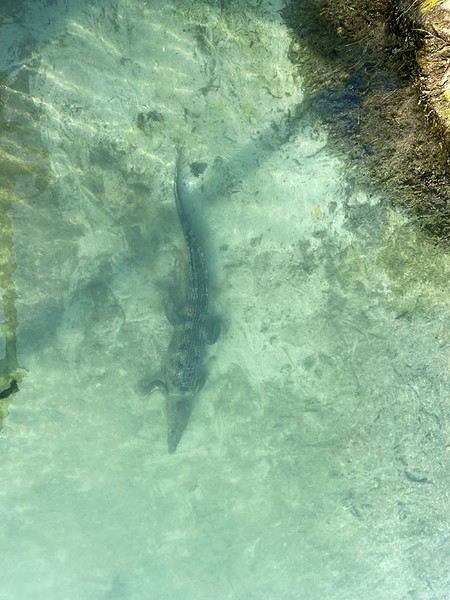
We’re stunned! We immediately inform the women, who don’t seem particularly surprised and continue washing their laundry as if nothing happened.
The kids who had just gotten out of the water come back to admire the beast, though they don’t dip so much as a toe in this time!
After asking around, it turns out this cenote is connected to the nearby sea by a network of submerged tunnels (like most cenotes, in fact), and even though it’s rare, sometimes a crocodile slips in!
This one isn’t very big, and the locals assure us that the few crocodiles that end up in this cenote have never attacked any swimmers. But we still feel a huge retrospective fright, imagining what could have happened if our sons had dived right next to it.
Once the shock passes, the four of us laugh together about what will, much to our dismay, become a great travel anecdote.
Ria Lagartos, Biosphere Reserve
The main attraction of Rio Lagartos is its biosphere reserve, classified as such by UNESCO. It’s actually called Ria Lagartos, which means "estuary of the lizards" (understand: estuary of the crocodiles!), not to be confused with the town of Rio Lagartos (located just opposite), the "river of the lizards."
The reserve is best visited by boat, ideally early in the morning, because that’s when the animals are just waking up: still half-asleep, they’re easier to observe.
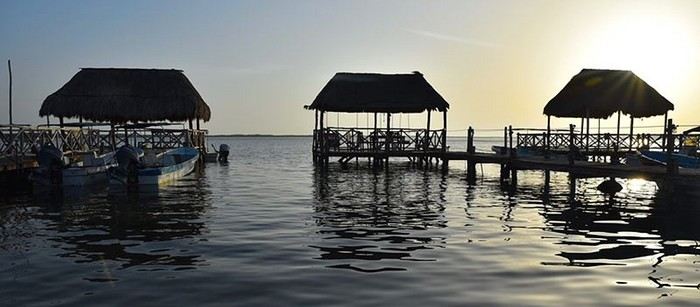
Within minutes, we reach the mangrove on the opposite shore, then navigate through the winding canals.
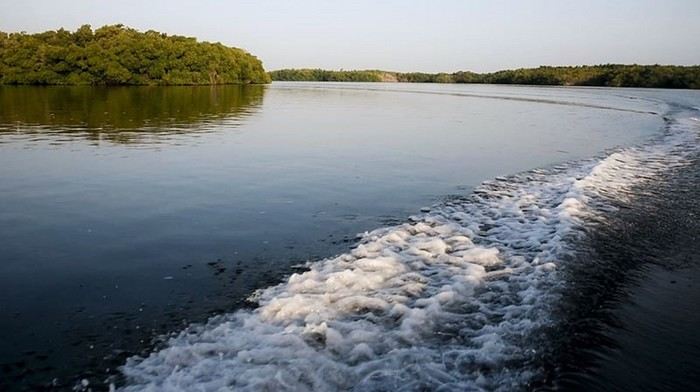
Ria Lagartos is a critically important area for the conservation of many endangered species. Some animals considered critically endangered, like sea turtles, are protected here.
The atmosphere is one of tranquility and calm, perfectly matching such a natural site.
This protected area allows you to observe many birds everywhere. It also serves as a stopover for a number of migratory birds.
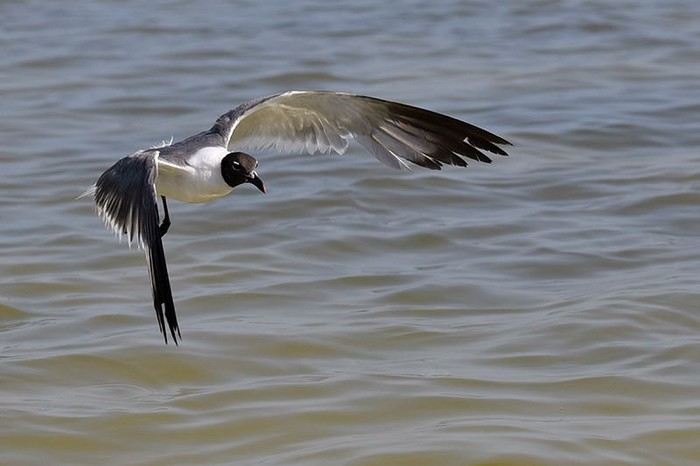
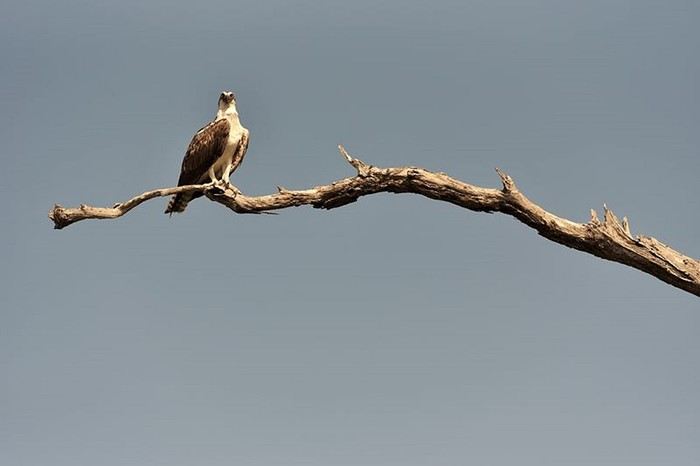
Among all the birds living in the area, we’re lucky enough to spot an osprey. It’s a beautiful raptor with a wingspan of over 1.5 meters, feeding almost exclusively on fish.
The pressure of its talons is so strong that sometimes, when the fish it catches turns out to be too heavy, it may not be able to release its grip and ends up drowning!
Our guide José explains that a few years ago, part of the mangrove didn’t survive the passage of El Niño (or more precisely, the spread of its global consequences, since El Niño is localized in the Pacific Ocean), a climate phenomenon that causes a significant rise in water temperature.
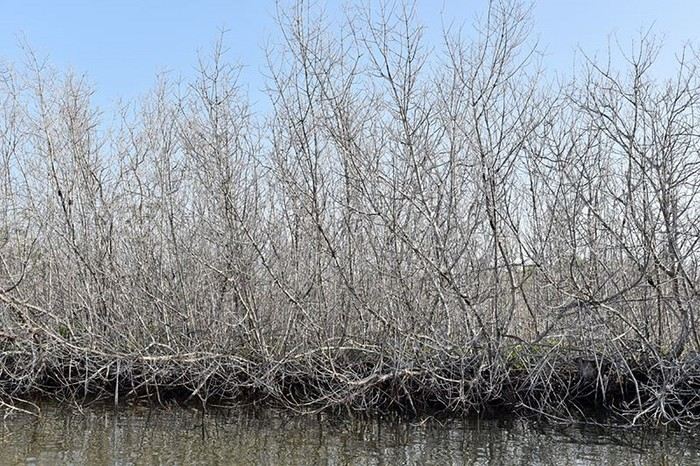
The affected area isn’t very large, but it’s in this seemingly lifeless spot that we spot a crocodile.
Despite showing off its impressive teeth, it generally doesn’t attack humans since it feeds exclusively on fish, birds, and small mammals.
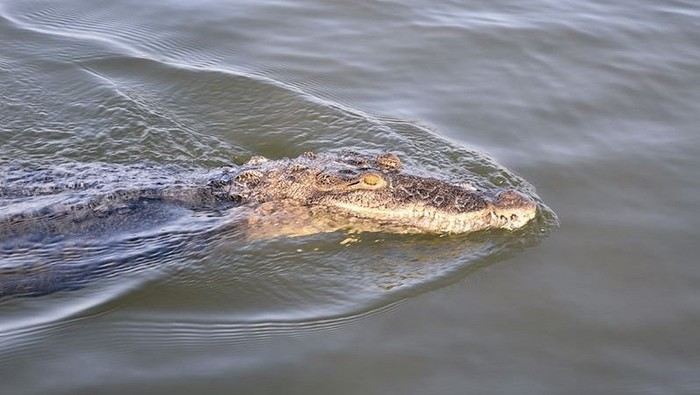
Note that if you want to maximize your chances of spotting a crocodile, you should leave from Rio Lagartos as early as possible, meaning no later than 7:00–7:30 AM. Because as soon as it starts getting hot, these large reptiles tend to hide in the mangrove.
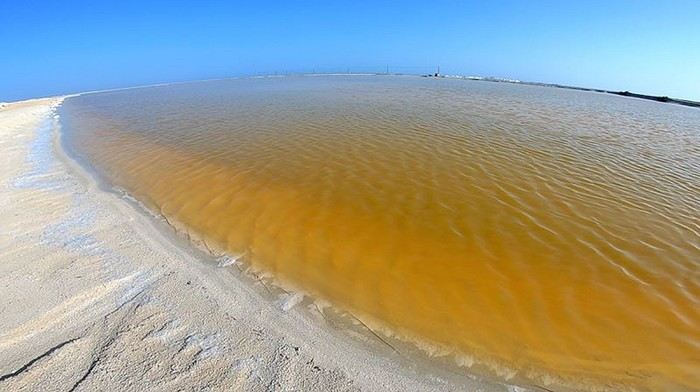
The boat tour continues with a walk through a salt marsh where the water displays surprising colors.
Then we arrive in the territory of the pink flamingos. Here, there are two options: either the guide respects the regulations, which prohibit getting too close to these graceful birds to avoid scaring them, or they blatantly ignore the rules to satisfy their clients, hoping for a tip at the end.
Our guide José, very professional, will conscientiously stay at a distance. Hence the slightly distant photos illustrating this post.
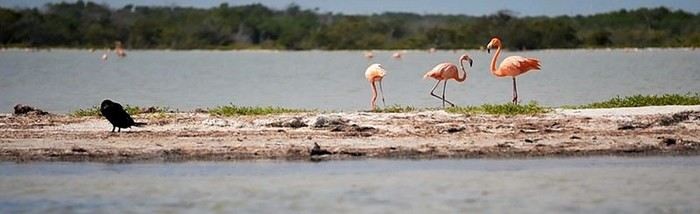
José explains that a few years ago, there were many more flamingos here than today. Boats would approach them very closely and often at high speed, forcing them to fly in front of tourists’ cameras. The tourists were, of course, delighted with their photos, taken at the expense of the frightened flamingos.
And as expected, what had to happen happened: the flamingos left to live elsewhere, far from humans, to have peace. So today, there are far fewer of them in this part of the reserve accessible to tourists, though in the end, we still spot a few dozen.
Note that during these boat tours, if you wish, you can make a stop in the middle of the estuary to cover your body in mud, then rinse off in the water half an hour later. We didn’t do it, but it’s supposedly great for the skin.
The tour ends with the observation of the pink flamingos. Next stop: Las Coloradas...
With a few curious dragonflies as a bonus!
Needless to say, unlike most cenotes open to the public in the Yucatan, you can’t swim in the one at Peten Mac! However, this spot, where we didn’t encounter a single tourist during the forty minutes we spent there, is a treat for nature lovers.
We leave the Peten Mac cenote for the Chikila cenote, located just a few hundred meters away.
The Chikila Cenote
Before visiting these two neighboring cenotes (Chikila and Peten Mac), we were clearly told that we could only swim in Chikila because of the two crocodiles living in Peten Mac.
So, as soon as we arrive at Chikila, our two sons put on their swimsuits and get ready to jump into the water to cool off at last, since the atmosphere is stifling with very high temperatures and humidity.
Just as they’re about to dive in, Victor, our oldest son, says this surreal sentence: "We’re all agreed, that kind of crocodile at the bottom—it’s fake, right?"
We weren’t suspicious at all because young kids had just been swimming there, women were washing their laundry with their feet in the water, and the locals had assured us before we came that crocodiles didn’t enter this cenote and that we could swim there without worry.
But the creature clearly starts moving at the bottom of the water: the fake crocodile is real!
We’re stunned! We immediately inform the women, who don’t seem particularly surprised and continue washing their laundry as if nothing happened.
The kids who had just gotten out of the water come back to admire the beast, though they don’t dip so much as a toe in this time!
After asking around, it turns out this cenote is connected to the nearby sea by a network of submerged tunnels (like most cenotes, in fact), and even though it’s rare, sometimes a crocodile slips in!
This one isn’t very big, and the locals assure us that the few crocodiles that end up in this cenote have never attacked any swimmers. But we still feel a huge retrospective fright, imagining what could have happened if our sons had dived right next to it.
Once the shock passes, the four of us laugh together about what will, much to our dismay, become a great travel anecdote.
Ria Lagartos, Biosphere Reserve
The main attraction of Rio Lagartos is its biosphere reserve, classified as such by UNESCO. It’s actually called Ria Lagartos, which means "estuary of the lizards" (understand: estuary of the crocodiles!), not to be confused with the town of Rio Lagartos (located just opposite), the "river of the lizards."
The reserve is best visited by boat, ideally early in the morning, because that’s when the animals are just waking up: still half-asleep, they’re easier to observe.
Within minutes, we reach the mangrove on the opposite shore, then navigate through the winding canals.
Ria Lagartos is a critically important area for the conservation of many endangered species. Some animals considered critically endangered, like sea turtles, are protected here.
The atmosphere is one of tranquility and calm, perfectly matching such a natural site.
This protected area allows you to observe many birds everywhere. It also serves as a stopover for a number of migratory birds.
Among all the birds living in the area, we’re lucky enough to spot an osprey. It’s a beautiful raptor with a wingspan of over 1.5 meters, feeding almost exclusively on fish.
The pressure of its talons is so strong that sometimes, when the fish it catches turns out to be too heavy, it may not be able to release its grip and ends up drowning!
Our guide José explains that a few years ago, part of the mangrove didn’t survive the passage of El Niño (or more precisely, the spread of its global consequences, since El Niño is localized in the Pacific Ocean), a climate phenomenon that causes a significant rise in water temperature.
The affected area isn’t very large, but it’s in this seemingly lifeless spot that we spot a crocodile.
Despite showing off its impressive teeth, it generally doesn’t attack humans since it feeds exclusively on fish, birds, and small mammals.
Note that if you want to maximize your chances of spotting a crocodile, you should leave from Rio Lagartos as early as possible, meaning no later than 7:00–7:30 AM. Because as soon as it starts getting hot, these large reptiles tend to hide in the mangrove.
The boat tour continues with a walk through a salt marsh where the water displays surprising colors.
Then we arrive in the territory of the pink flamingos. Here, there are two options: either the guide respects the regulations, which prohibit getting too close to these graceful birds to avoid scaring them, or they blatantly ignore the rules to satisfy their clients, hoping for a tip at the end.
Our guide José, very professional, will conscientiously stay at a distance. Hence the slightly distant photos illustrating this post.
José explains that a few years ago, there were many more flamingos here than today. Boats would approach them very closely and often at high speed, forcing them to fly in front of tourists’ cameras. The tourists were, of course, delighted with their photos, taken at the expense of the frightened flamingos.
And as expected, what had to happen happened: the flamingos left to live elsewhere, far from humans, to have peace. So today, there are far fewer of them in this part of the reserve accessible to tourists, though in the end, we still spot a few dozen.
Note that during these boat tours, if you wish, you can make a stop in the middle of the estuary to cover your body in mud, then rinse off in the water half an hour later. We didn’t do it, but it’s supposedly great for the skin.
The tour ends with the observation of the pink flamingos. Next stop: Las Coloradas...