

We’re a little relieved to leave that crowd behind, but absolutely stunned when we realize there must now be three times as many people at the entrance as there were two hours ago...
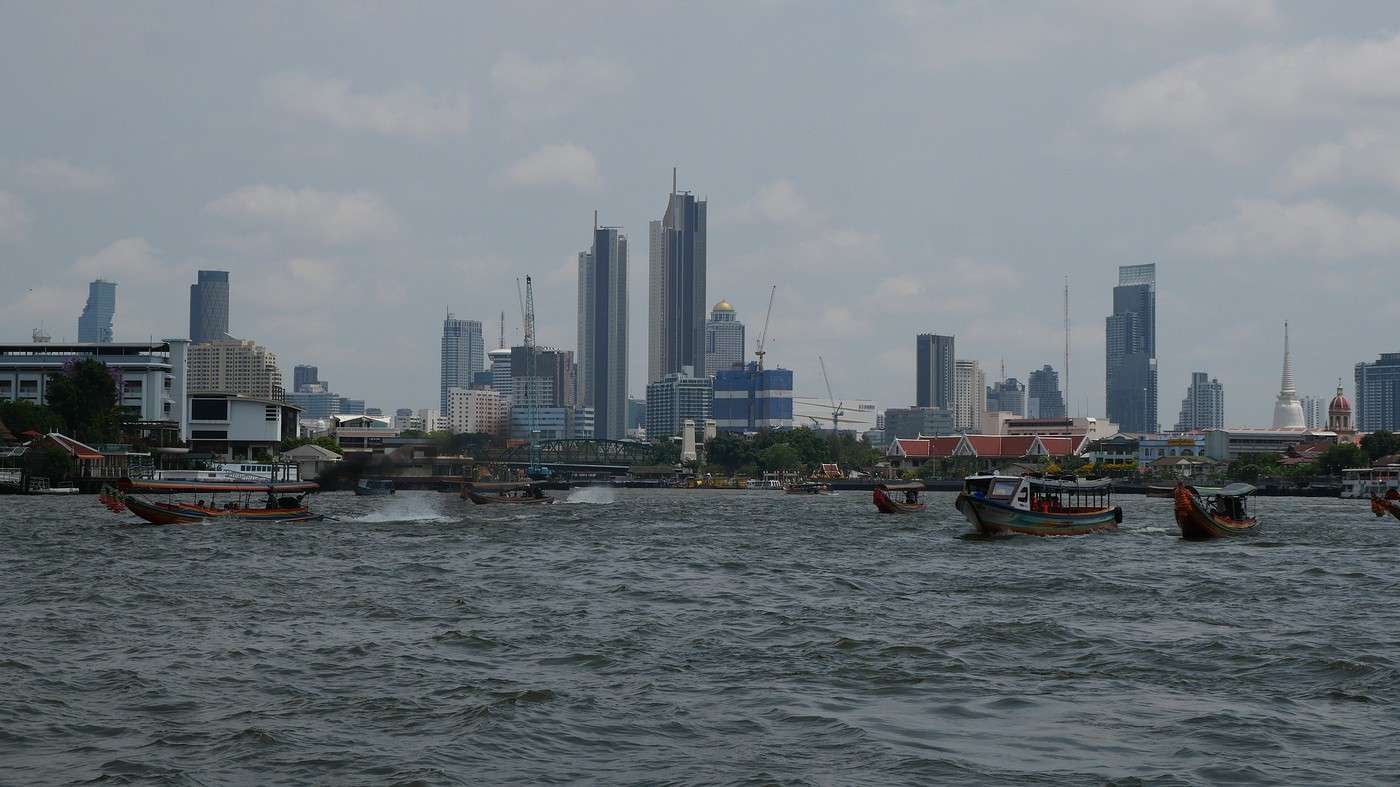
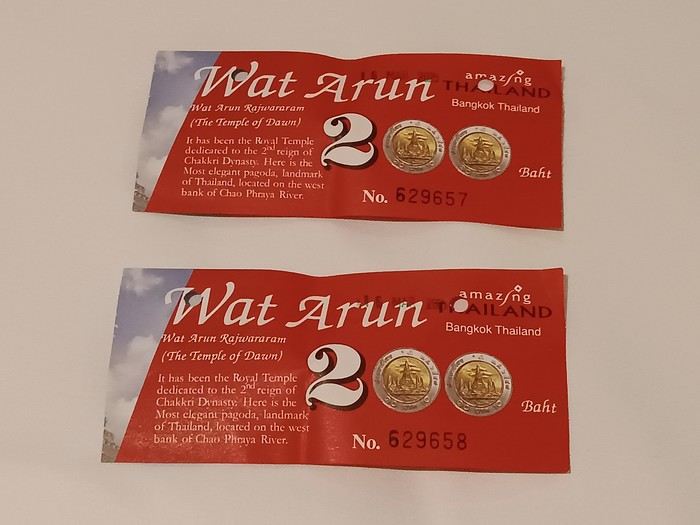
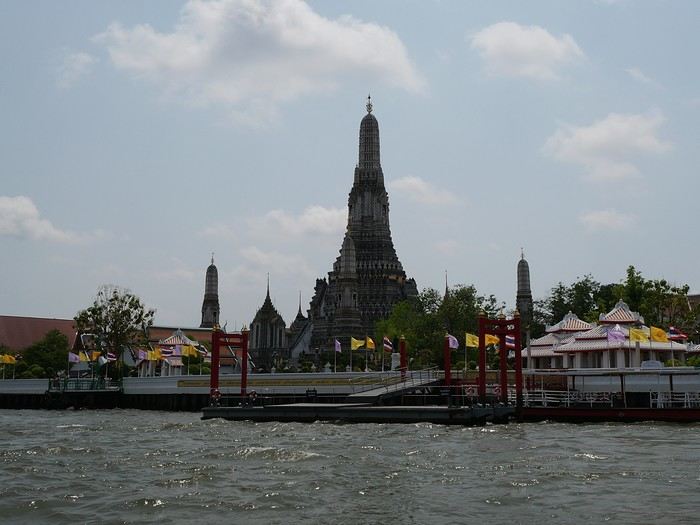
After changing clothes again, we walk under a scorching sun to the pier for Wat Arun, the temple on the other side of the river.
The ferry’s about to leave—let’s hurry!
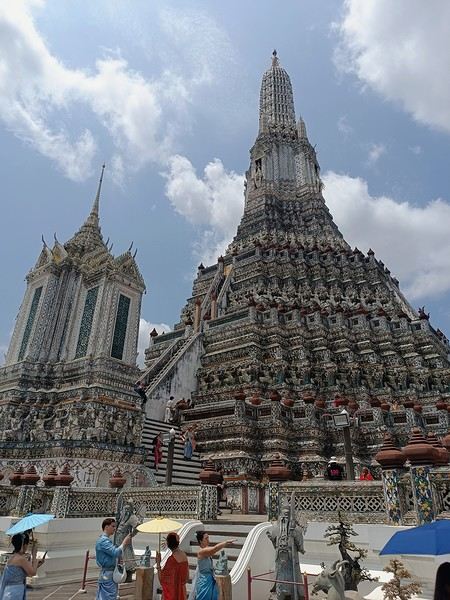
I hadn’t set foot here in over twenty years.
Back then, you could climb all the way to the top, but that’s no longer allowed today.
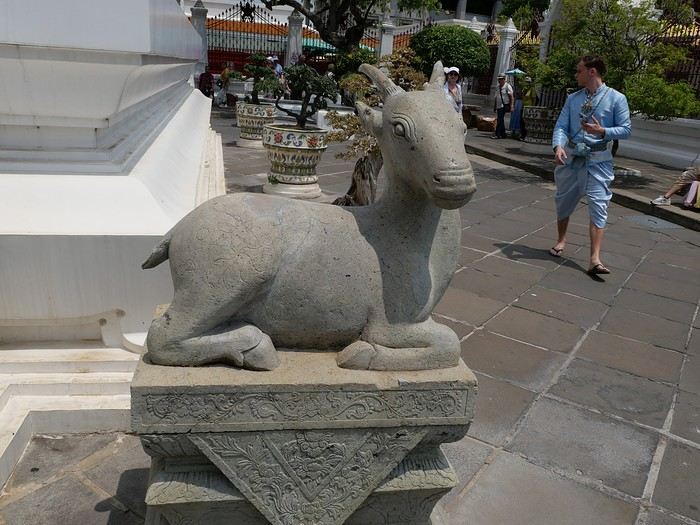
The other big change is the crowd of Thais dressed in traditional outfits posing for photos that’ll turn them into kings and queens for a day.
The costumes are rented, and professionals promise the perfect shot—for a fee.
It’s so much fun!

 Hunger and the need for a cool break are getting to us, so we take the ferry back to grab lunch.
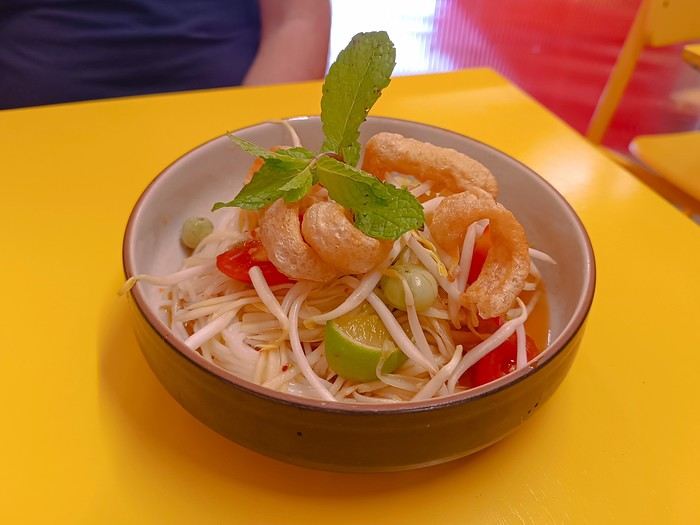
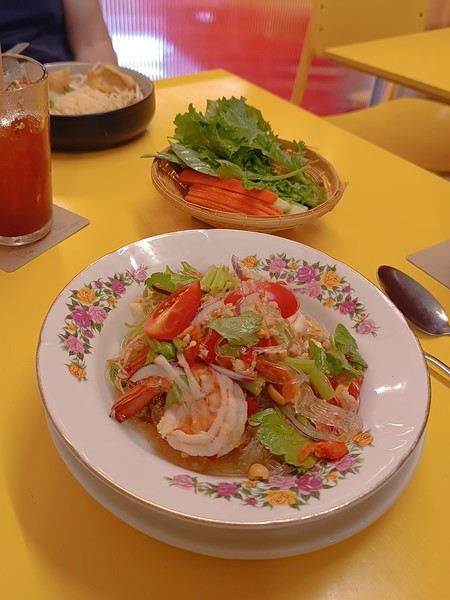
The first place is packed, but we have better luck with the second one.
It’s another restaurant more popular with tourists than locals, though the crowd is still mostly Asian.
 How do you spot a non-touristy restaurant, you ask?
If they speak English to you, ask “Spicy?”, warn you that what you’re ordering is raw or made with fermented fish sauce, or if the menu is bilingual—you’re in a place that’s a little, a lot, or completely overrun by non-Thais.
If no one asks you anything and you have to whip out your phone for a translation, you’ve found a spot where tourists are a rare sight...
The second option is pretty rare, though—we’re not exactly adventurous souls!
Besides, whether a place is touristy or not says nothing about its quality.
Despite the restaurant’s Michelin reputation, the bill was reasonable. And despite the “tourist trap” label, we didn’t find anything wrong with the place.
After changing clothes again, we walk under a scorching sun to the pier for Wat Arun, the temple on the other side of the river.
The ferry’s about to leave—let’s hurry!
I hadn’t set foot here in over twenty years.
Back then, you could climb all the way to the top, but that’s no longer allowed today.
The other big change is the crowd of Thais dressed in traditional outfits posing for photos that’ll turn them into kings and queens for a day.
The costumes are rented, and professionals promise the perfect shot—for a fee.
It’s so much fun!
The first place is packed, but we have better luck with the second one.
It’s another restaurant more popular with tourists than locals, though the crowd is still mostly Asian.
If they speak English to you, ask “Spicy?”, warn you that what you’re ordering is raw or made with fermented fish sauce, or if the menu is bilingual—you’re in a place that’s a little, a lot, or completely overrun by non-Thais.
If no one asks you anything and you have to whip out your phone for a translation, you’ve found a spot where tourists are a rare sight...
The second option is pretty rare, though—we’re not exactly adventurous souls!
Besides, whether a place is touristy or not says nothing about its quality.
Despite the restaurant’s Michelin reputation, the bill was reasonable. And despite the “tourist trap” label, we didn’t find anything wrong with the place.