


Re: Nisyros: the most beautiful island in Greece?...
After sleeping like a baby all night—no doubt thanks to all the effort climbing the caldera—I spend breakfast revising my plans, facing the craters.
I had such a great time on this island yesterday, especially in this volcano, that I decide to spend an extra day here: instead of heading back to Mandraki today as originally planned, I’ll spend the day exploring these craters. I’ve always loved volcanoes—they fascinate me—so I need to make the most of it. And tonight, I’ll spend another night all alone at the bottom of the caldera.
Once I’ve filled my belly, I head to the entrance booth, which is finally open this time.
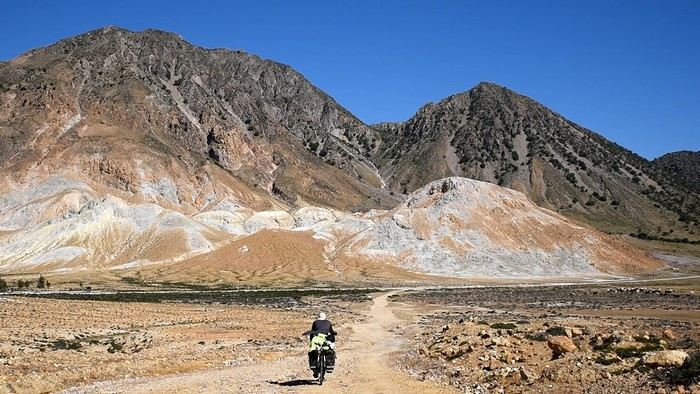
There, I learn that entry is free for cyclists (and those who come on foot, for that matter). A half-empty bus arrives and unloads its twenty or so passengers into the parking lot, who immediately head down to the bottom of the Stefanos crater. I take the opposite direction, toward the four last craters that almost no one takes the time to visit, or so the guy at the booth told me.
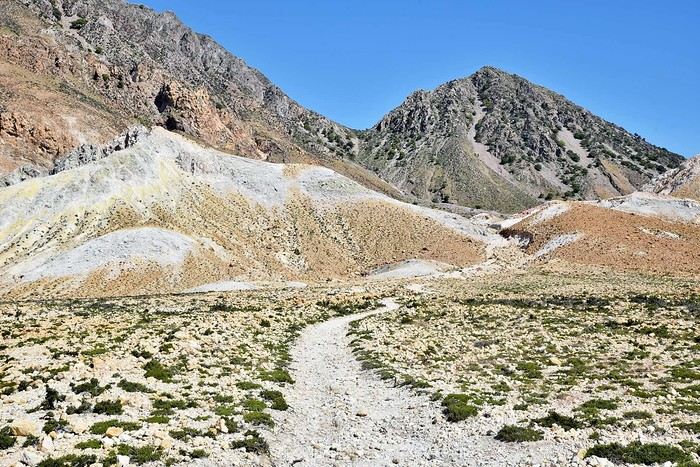
Even better—I’ll have a few volcanoes all to myself again today! Okay, I don’t want to come off as some kind of hermit for repeating how often I’ve been alone on this site since yesterday, but the place is so stunning that being here without anyone else around feels like an incredible stroke of luck. These days, tourist spots are usually packed with crowds, so for once there’s not a soul in sight—I’m savoring this rare opportunity to the fullest.
I leave my bike behind once again in the middle of nowhere, since I have to walk to reach the four remaining craters. After about ten minutes of hiking in the scorching sun, I arrive at the first two: the small Mikros Polyvotis and its magnificent neighbor, Megalos Polyvotis.
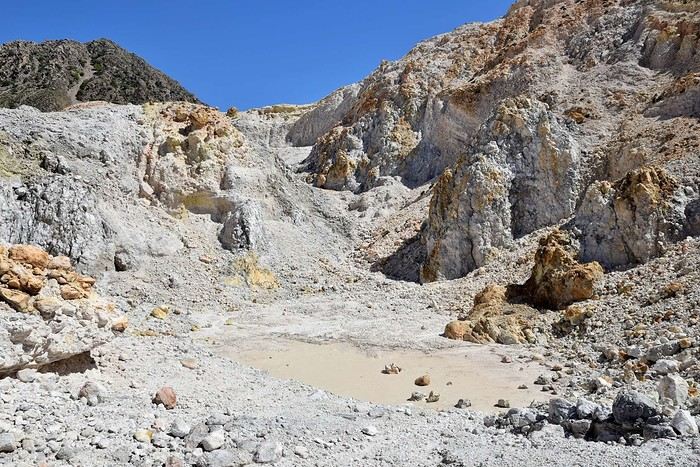 Mikros Polyvotis (above) and Megalos Polyvotis (below)
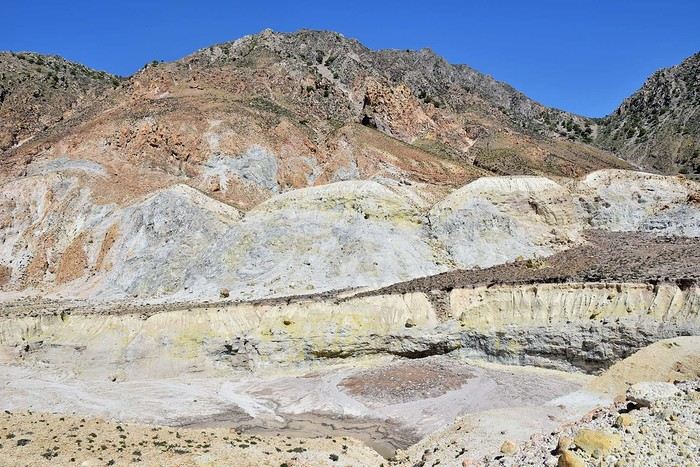
While the small one isn’t anything special except for a few fumaroles, the large one offers a landscape bursting with color: the crater walls are completely yellow, the caldera walls are ochre but dotted here and there with green bushes. The whole scene sits under a deep blue sky, with patches of white, gray, and brown completing the picture. I feel tiny in the face of this panorama.
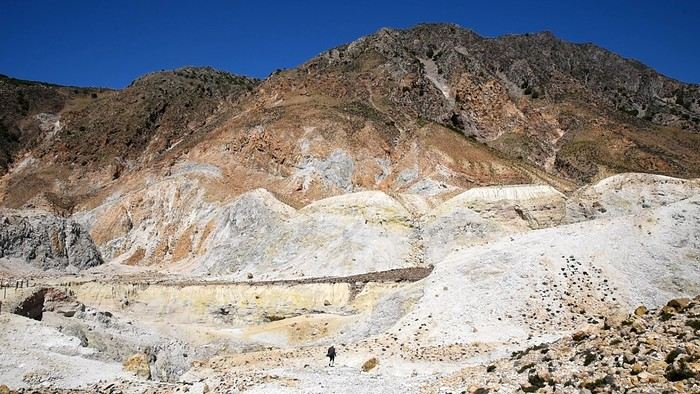
To reach the third crater of the day (the fifth in total, after the small and large Stefanos yesterday), which isn’t marked anywhere but seems visible nearby, I have to leave the path. So that’s what I do.
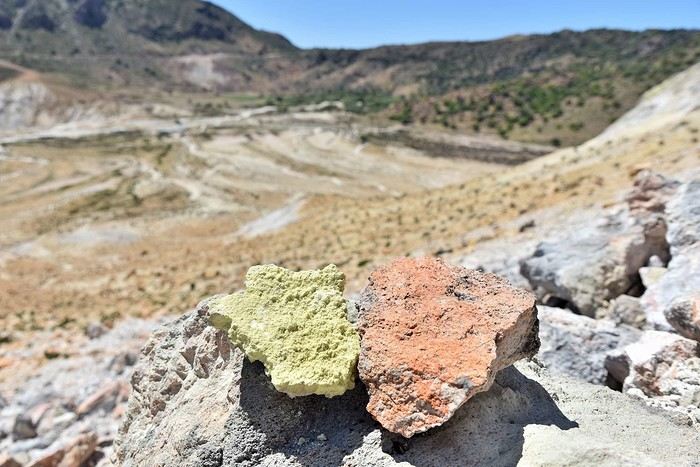
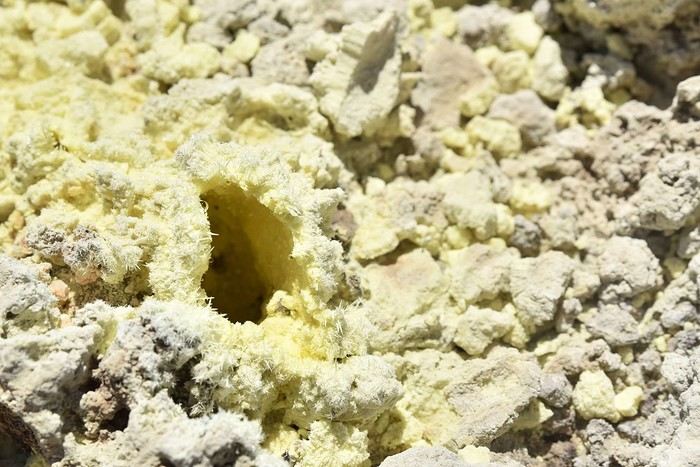
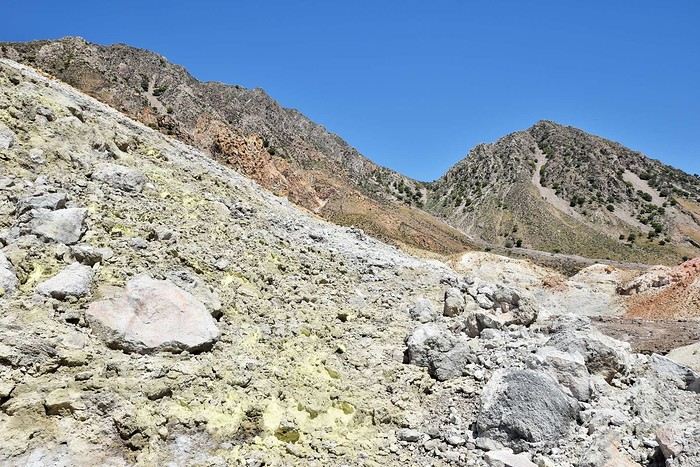
First, I cross a sulfur zone where countless little yellow vents spew steam.
The hike is tough because the ground is littered with large rocks that make walking uphill difficult.
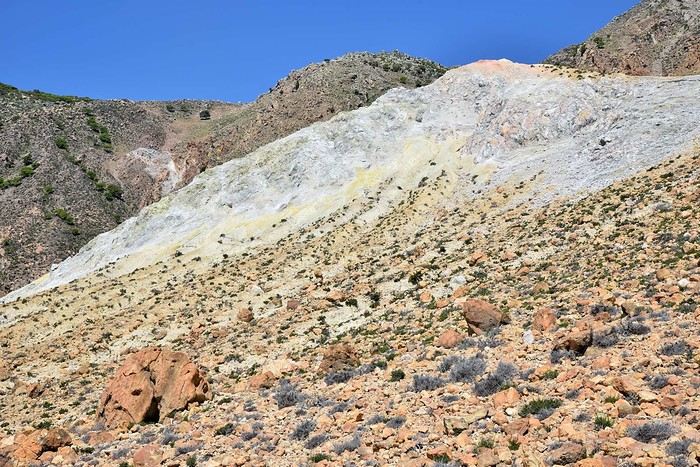
Once I cross this scree zone, I finally reach the bare wall of the crater. At first, I’m thrilled because it’s much easier to walk here. But my excitement fades quickly when I hear my footsteps echoing. I stomp the ground a little to check, and sure enough, not only does it echo loudly, but the ground vibrates. A few meters away, little sulfur vents release boiling gases, so I know the ground beneath me is burning. Not being Mike Horn, I immediately turn back.
I had such a great time on this island yesterday, especially in this volcano, that I decide to spend an extra day here: instead of heading back to Mandraki today as originally planned, I’ll spend the day exploring these craters. I’ve always loved volcanoes—they fascinate me—so I need to make the most of it. And tonight, I’ll spend another night all alone at the bottom of the caldera.
Once I’ve filled my belly, I head to the entrance booth, which is finally open this time.
There, I learn that entry is free for cyclists (and those who come on foot, for that matter). A half-empty bus arrives and unloads its twenty or so passengers into the parking lot, who immediately head down to the bottom of the Stefanos crater. I take the opposite direction, toward the four last craters that almost no one takes the time to visit, or so the guy at the booth told me.
Even better—I’ll have a few volcanoes all to myself again today! Okay, I don’t want to come off as some kind of hermit for repeating how often I’ve been alone on this site since yesterday, but the place is so stunning that being here without anyone else around feels like an incredible stroke of luck. These days, tourist spots are usually packed with crowds, so for once there’s not a soul in sight—I’m savoring this rare opportunity to the fullest.
I leave my bike behind once again in the middle of nowhere, since I have to walk to reach the four remaining craters. After about ten minutes of hiking in the scorching sun, I arrive at the first two: the small Mikros Polyvotis and its magnificent neighbor, Megalos Polyvotis.
Mikros Polyvotis (above) and Megalos Polyvotis (below)While the small one isn’t anything special except for a few fumaroles, the large one offers a landscape bursting with color: the crater walls are completely yellow, the caldera walls are ochre but dotted here and there with green bushes. The whole scene sits under a deep blue sky, with patches of white, gray, and brown completing the picture. I feel tiny in the face of this panorama.
To reach the third crater of the day (the fifth in total, after the small and large Stefanos yesterday), which isn’t marked anywhere but seems visible nearby, I have to leave the path. So that’s what I do.
First, I cross a sulfur zone where countless little yellow vents spew steam.
The hike is tough because the ground is littered with large rocks that make walking uphill difficult.
Once I cross this scree zone, I finally reach the bare wall of the crater. At first, I’m thrilled because it’s much easier to walk here. But my excitement fades quickly when I hear my footsteps echoing. I stomp the ground a little to check, and sure enough, not only does it echo loudly, but the ground vibrates. A few meters away, little sulfur vents release boiling gases, so I know the ground beneath me is burning. Not being Mike Horn, I immediately turn back.