

Re: Autumn road trip from Puglia to Naples via Basilicata...
Hello, Italy lovers... and everyone else!
I was planning to leave this afternoon, September 20th, for Martina Franca...
But first, here’s a bit of background on the creation of the Trulli—there are several legends about them!
Trulli are small dry-stone constructions with stacked conical roofs, built without mortar to hold the stones together. The most widely accepted origin of this type of dwelling, according to Lonely Planet, dates back to the 17th century (or the 15th century, depending on the source). A major landowner, the Count of Conversano, owned vast estates in the region. He forced peasants to stop using mortar in their house construction so they could easily dismantle them—by removing the keystone—before tax collectors arrived, then rebuild them afterward. This way, he avoided paying taxes on dwellings to the Kingdom of Naples! Hence the shape and materials...
We leave Alberobello for Martina Franca, and along the way, we’ll enjoy beautiful views of isolated Trulli in the countryside...
Martina Franca is a lively little town, where the adjective 'Franca' refers to Philip of Anjou, Prince of Taranto, in the 14th century. Its exceptional Baroque decor dates back to the 18th century. Follow the flow of visitors—fewer in late September—and you’ll arrive at Piazza Plebiscito, dominated by the Basilica San Martino.
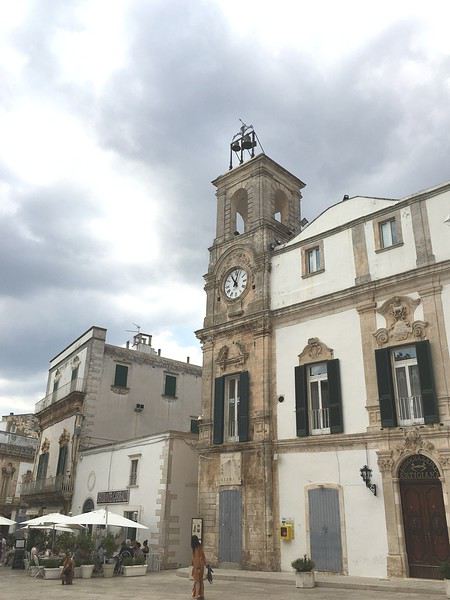
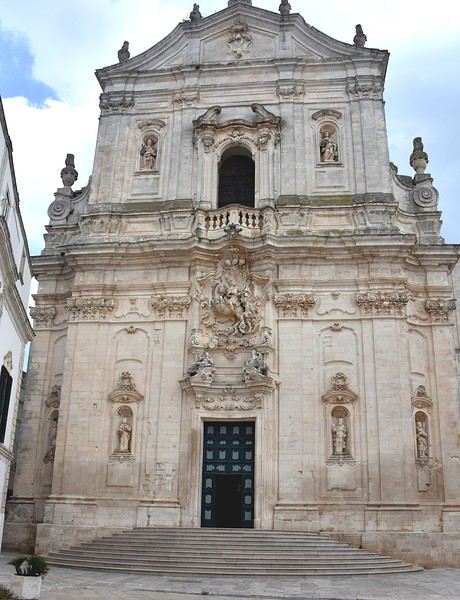
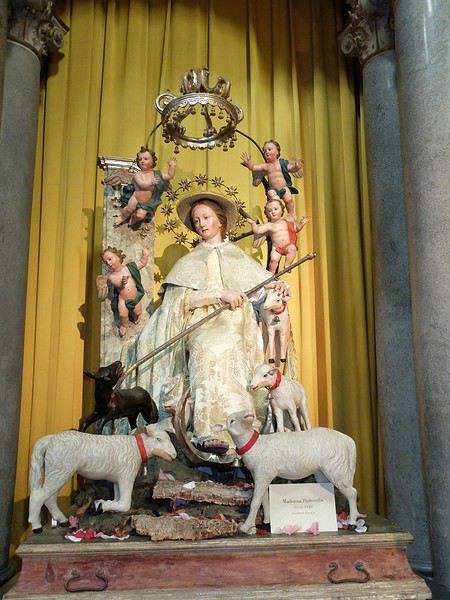 This was our first encounter with Puglia’s version of Baroque—the town felt surprisingly sophisticated! I’ll admit we’re not huge fans of this architectural style, preferring Romanesque art by far... but we were left speechless by the city of Lecce and its basilica with its exuberant Baroque decor!
After a quick meal on a terrace with a view of the basilica, we wandered through the town’s streets and alleys, which felt tiny... and managed to get lost in a maze of palaces with dazzling facades, complete with Baroque porches and balconies, of course!
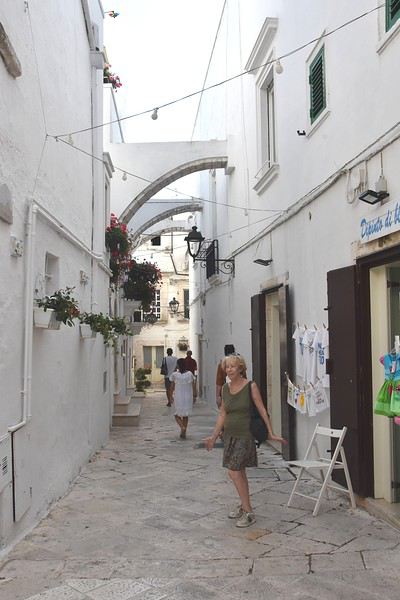
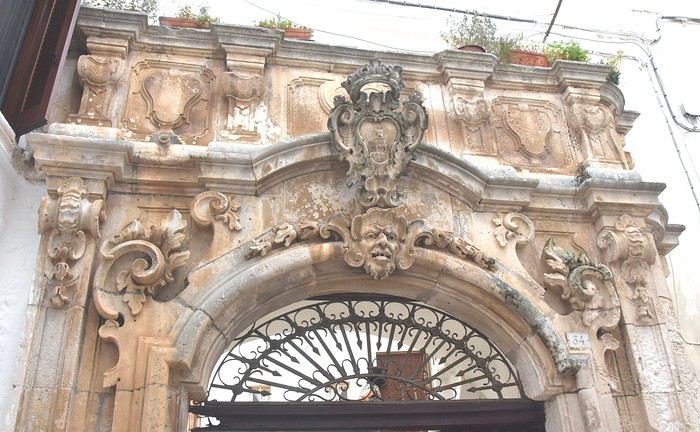
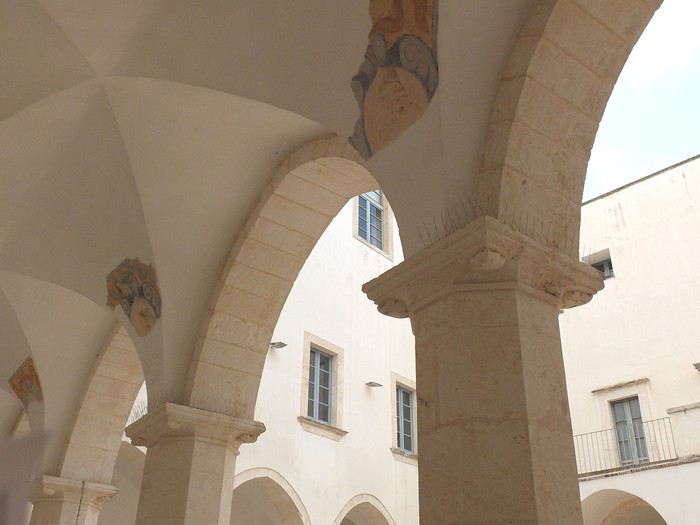
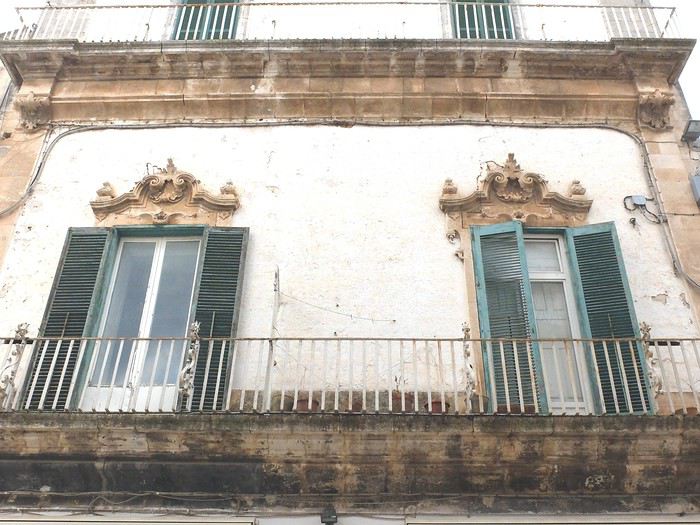 As we wandered, we stumbled upon the Chiesa di San Domenico, a remnant of a Gothic structure with a cloister that hints at what we’d see in Lecce: capitals adorned with acanthus leaves, cherubs, and scrollwork.
The walk took longer than expected, so we only passed through—what a shame—Locorotondo to admire the nearly 360° view of the plain from the Lungomare, a belvedere overlooking the valley!
To be continued...
I was planning to leave this afternoon, September 20th, for Martina Franca...
But first, here’s a bit of background on the creation of the Trulli—there are several legends about them!
Trulli are small dry-stone constructions with stacked conical roofs, built without mortar to hold the stones together. The most widely accepted origin of this type of dwelling, according to Lonely Planet, dates back to the 17th century (or the 15th century, depending on the source). A major landowner, the Count of Conversano, owned vast estates in the region. He forced peasants to stop using mortar in their house construction so they could easily dismantle them—by removing the keystone—before tax collectors arrived, then rebuild them afterward. This way, he avoided paying taxes on dwellings to the Kingdom of Naples! Hence the shape and materials...
We leave Alberobello for Martina Franca, and along the way, we’ll enjoy beautiful views of isolated Trulli in the countryside...
Martina Franca is a lively little town, where the adjective 'Franca' refers to Philip of Anjou, Prince of Taranto, in the 14th century. Its exceptional Baroque decor dates back to the 18th century. Follow the flow of visitors—fewer in late September—and you’ll arrive at Piazza Plebiscito, dominated by the Basilica San Martino.
The walk took longer than expected, so we only passed through—what a shame—Locorotondo to admire the nearly 360° view of the plain from the Lungomare, a belvedere overlooking the valley!
To be continued...