

Re: Tuscany: Arezzo province and Siena surroundings
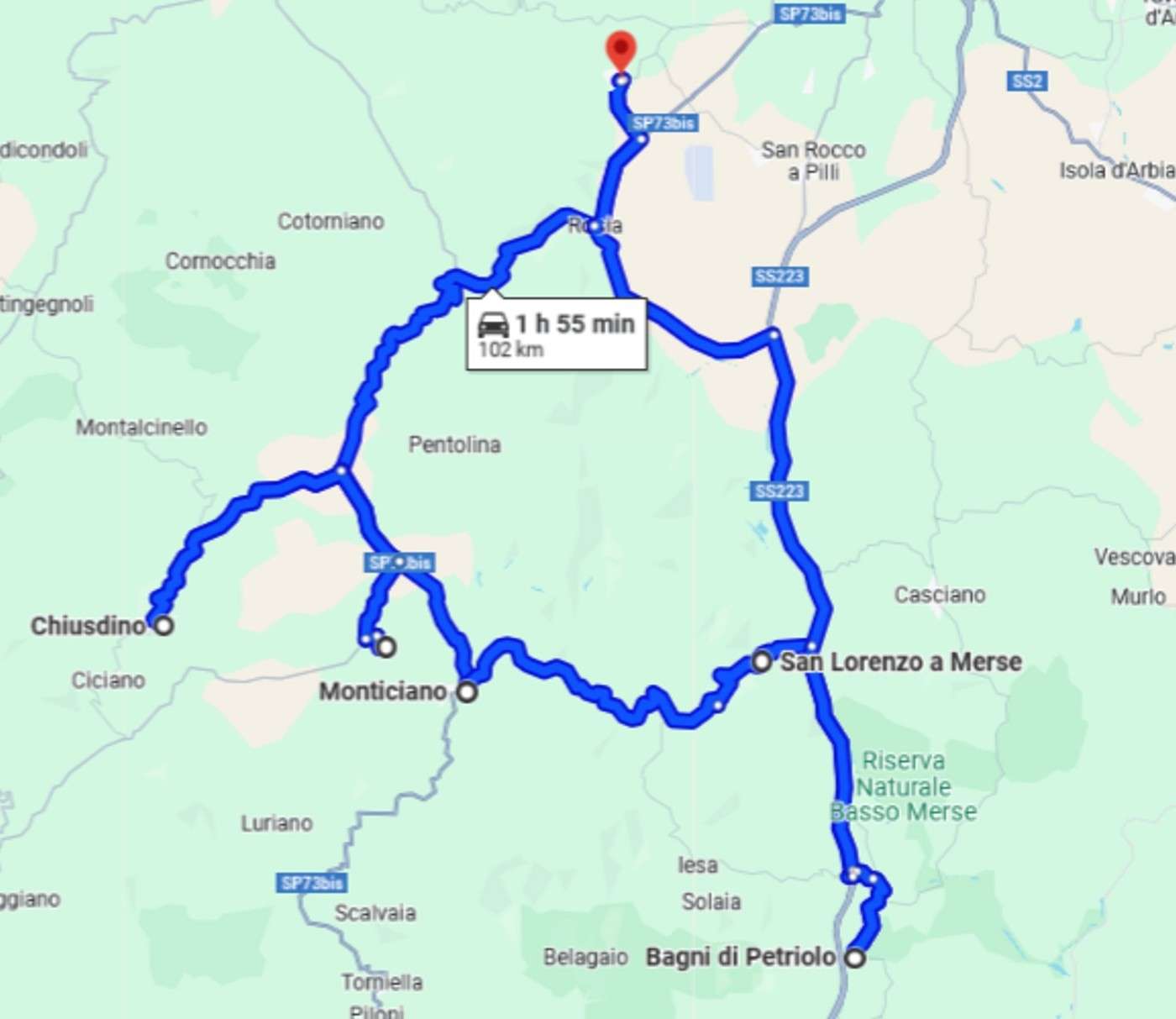
Today's map: there's a direct road between the Abbey of San Galgano (point west of Monticiano) and Chiusdino, which doesn't appear on the map.
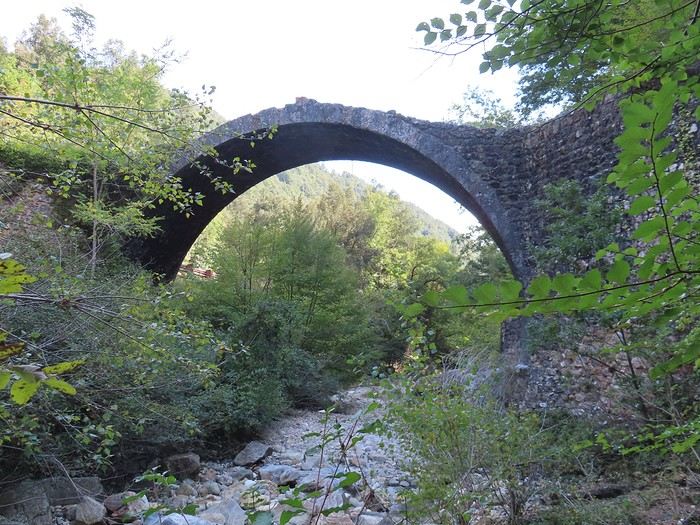
On the road leading to the Abbey of San Galgano (where I'm headed), following the "Torrente Rosia" upstream, you pass by the "Ponte della Pia". This bridge, originally Roman and rebuilt in the 13th century, spans the river with a single graceful arch. Despite the recent rains, I can descend into the stream bed. Today, the bridge has no parapet—I don’t know if it was built that way or if it’s the result of time.
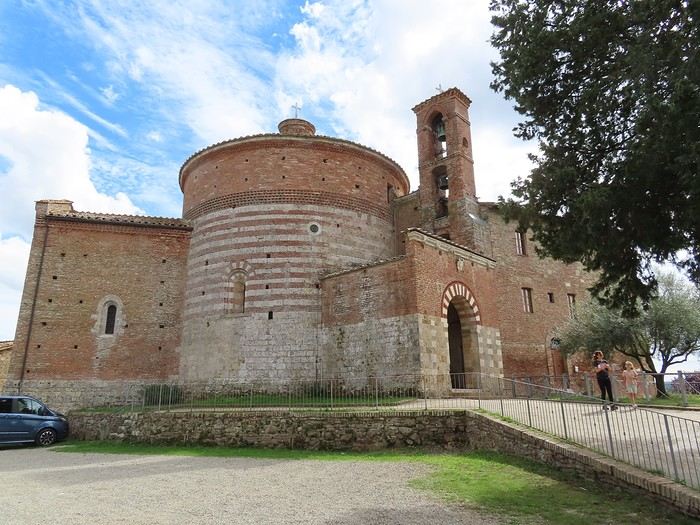
After arriving at the site made famous by San Galgano, I visit the abbey, then the hermitage. I’ll present the route in reverse to follow the chronological order. At the top of a hill (Monte Siepi) stands a structure called the rotunda. The interior features alternating bands of two colors.
At the center of the rotunda is the spot where it all began: a rock into which San Galgano, a wealthy young noble, plunged his sword as a sign of renouncing pleasures and military life. It’s been there since 1180... protected by a plexiglass dome—clearly needed to put an end to some very predictable attempts. After 1180, San Galgano lived as a hermit on this hill.
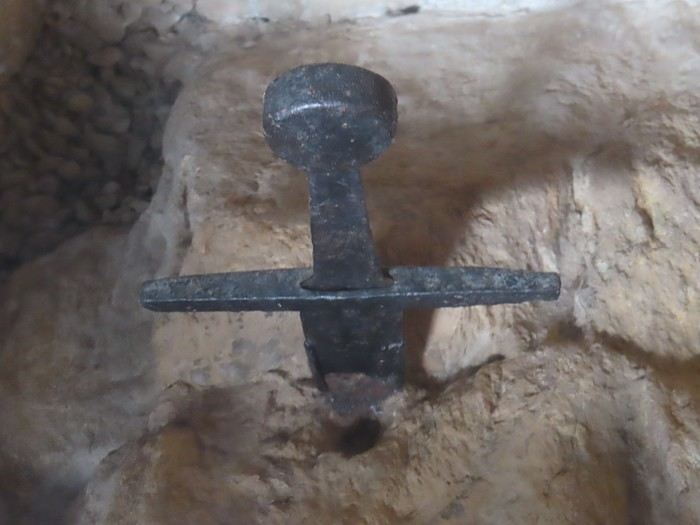
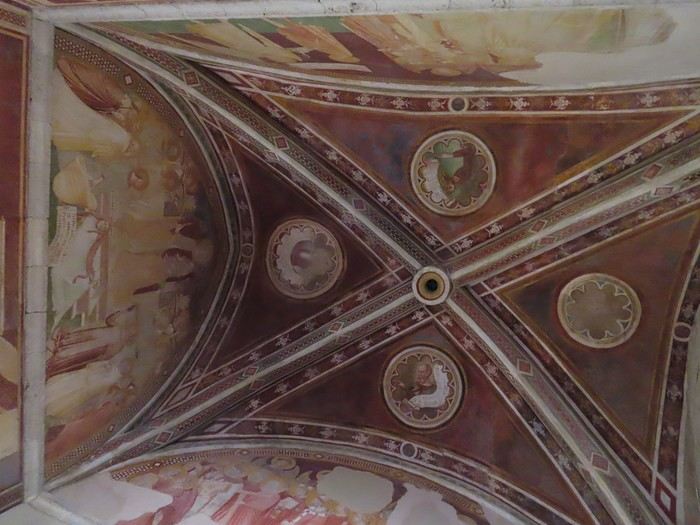
Things moved quickly after that: Galgano’s death (1181), canonization (1185), construction of an oratory and the rotunda... the site’s fame grew. Expansion in the Trecento and the choice of Ambrogio Lorenzetti to fresco the chapel (walls, lunette, vault).
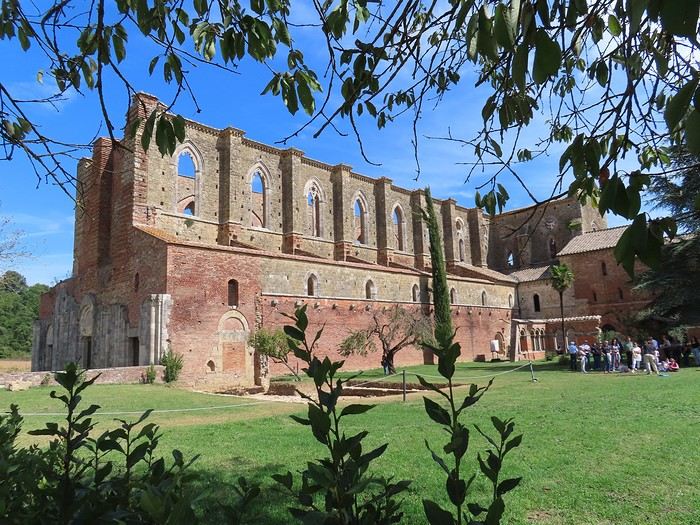
Meanwhile, in 1218, construction began on the grand Cistercian Abbey of San Galgano. They chose a flat spot at the foot of Montesiepi hill. The church is a large Gothic-style nave, roofless since the late 18th century.
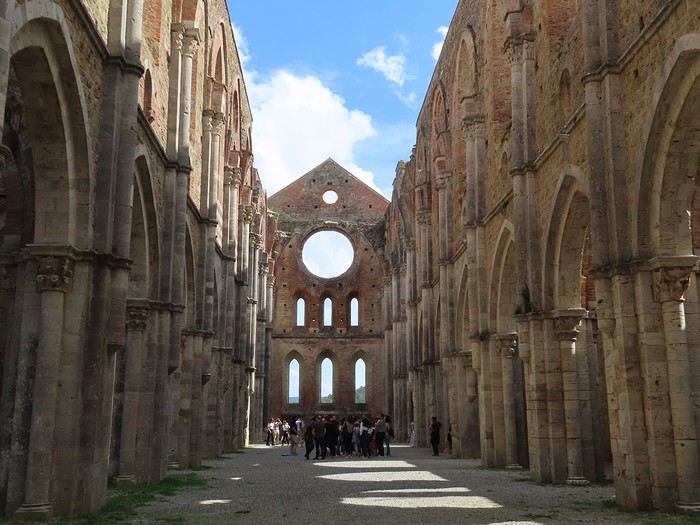
The central nave, viewed toward the choir.
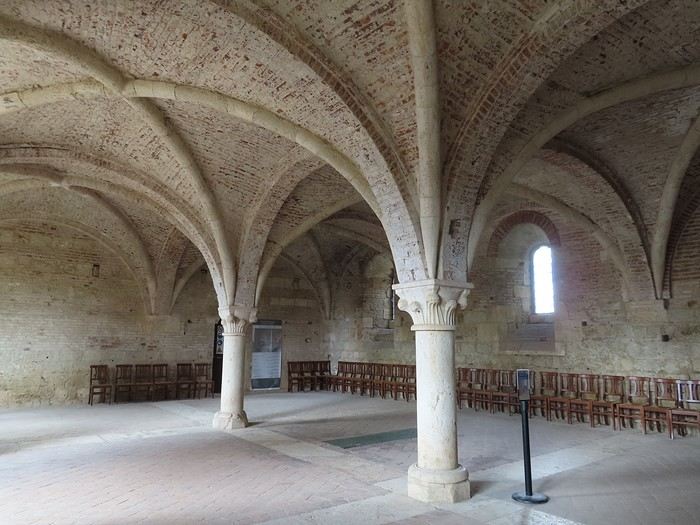
Among the conventual buildings (mostly gone), a beautiful chapter house.
More from the day in the next post.
On the road leading to the Abbey of San Galgano (where I'm headed), following the "Torrente Rosia" upstream, you pass by the "Ponte della Pia". This bridge, originally Roman and rebuilt in the 13th century, spans the river with a single graceful arch. Despite the recent rains, I can descend into the stream bed. Today, the bridge has no parapet—I don’t know if it was built that way or if it’s the result of time.
After arriving at the site made famous by San Galgano, I visit the abbey, then the hermitage. I’ll present the route in reverse to follow the chronological order. At the top of a hill (Monte Siepi) stands a structure called the rotunda. The interior features alternating bands of two colors.
At the center of the rotunda is the spot where it all began: a rock into which San Galgano, a wealthy young noble, plunged his sword as a sign of renouncing pleasures and military life. It’s been there since 1180... protected by a plexiglass dome—clearly needed to put an end to some very predictable attempts. After 1180, San Galgano lived as a hermit on this hill.
Things moved quickly after that: Galgano’s death (1181), canonization (1185), construction of an oratory and the rotunda... the site’s fame grew. Expansion in the Trecento and the choice of Ambrogio Lorenzetti to fresco the chapel (walls, lunette, vault).
Meanwhile, in 1218, construction began on the grand Cistercian Abbey of San Galgano. They chose a flat spot at the foot of Montesiepi hill. The church is a large Gothic-style nave, roofless since the late 18th century.
The central nave, viewed toward the choir.
Among the conventual buildings (mostly gone), a beautiful chapter house.
More from the day in the next post.