

Re: Tuscany: Arezzo province and Siena area
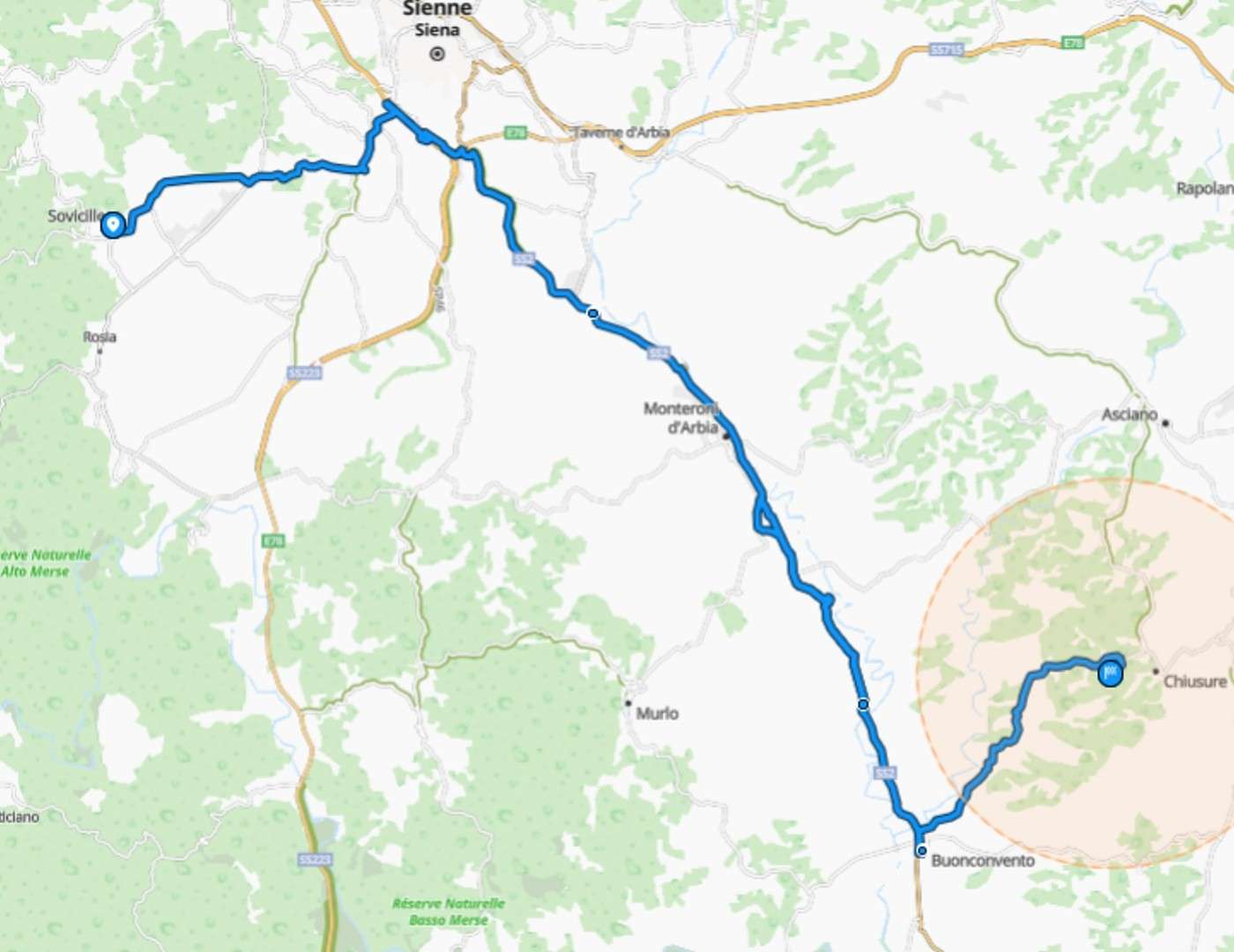
Another chilly, rainy day; I’ve planned an indoor activity for the afternoon, but I’d like to do a short stretch of the Via Francigena this morning. So I’m heading to Buonconvento and setting off on a loop that takes me from Ponte d’Arbia to Buonconvento along the Via Francigena. A sweatshirt is a must, and I finish the loop in a few raindrops.
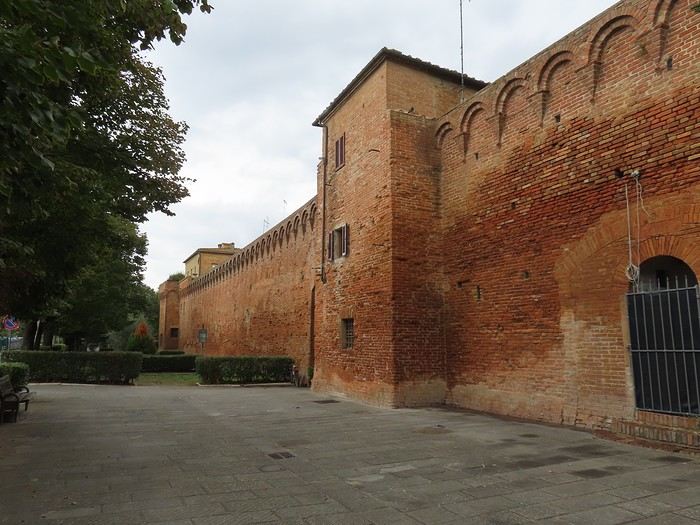
Buonconvento will be my endpoint for the Via Francigena on this trip. The rain doesn’t last all through midday, so I can take a stroll around town (a medieval town surrounded by walls). Below is the west side of the walls.
I’m visiting the abbey of "Monte Oliveto Maggiore," located in the municipality of Asciano but closer to Buonconvento. Although the abbey is in the "Crete Senesi," the landscape is different: forest and "calanchi" (ravines or badlands).
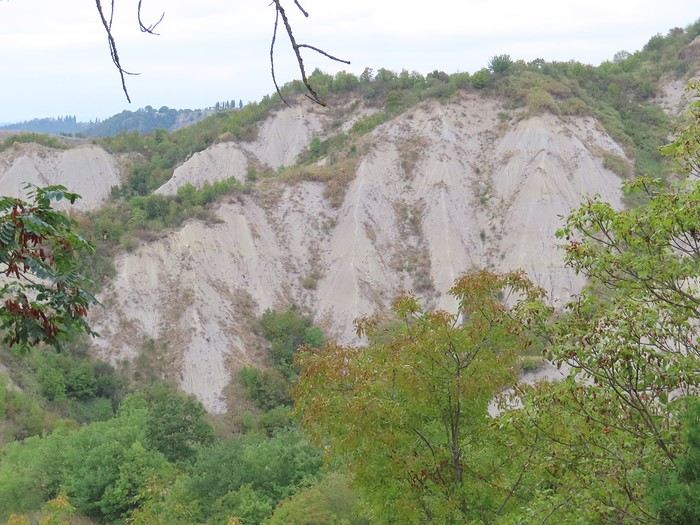
These ravines look a lot like the ones I saw in the Apennines at the start of the trip (same type of soil , same erosion phenomenon). The abbey is active, occupied by Olivetan monks (a Benedictine order); the main cloister, entirely frescoed, is the artistic marvel of the abbey. Luca Signorelli began decorating the cloister’s perimeter (1497–1498); Giovanni Antonio Bazzi (Il Sodoma) completed it (1505 and later; he was 28 in 1505). It’s one of his earliest documented works. These frescoes depict the life of Saint Benedict, a more or less legendary tale.
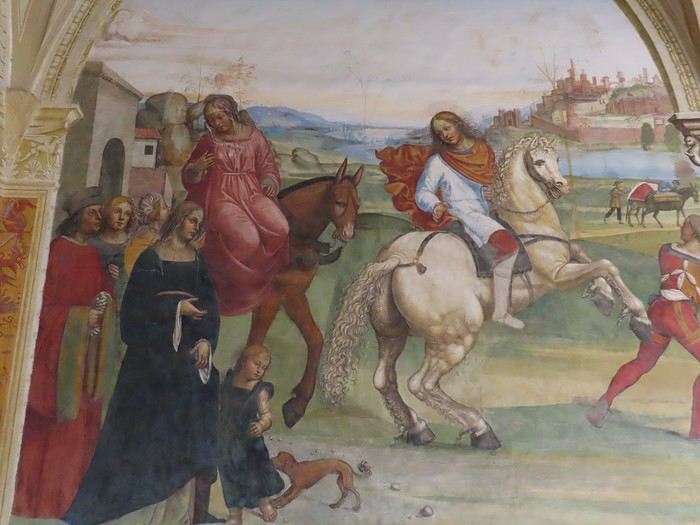
Benedict leaves his father’s house to study in Rome. He’s accompanied by his servant Cyrilla.
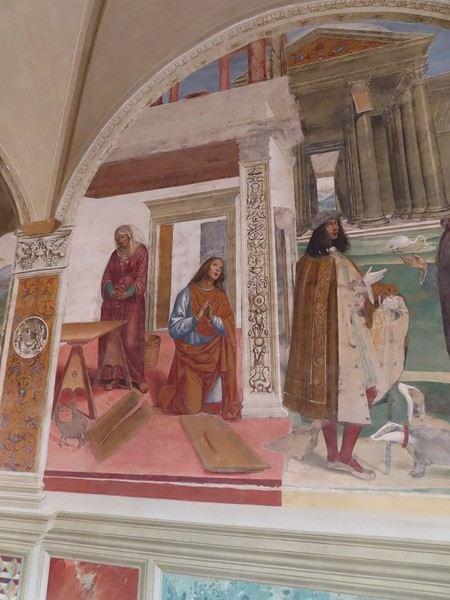
First miracle: he repairs a plate or sieve broken by his servant. You can see the servant and the broken plate, Saint Benedict, and the miraculously repaired plate—this is the left part of the fresco. On the right, Il Sodoma painted himself in a luxurious Renaissance court costume. The far-right part is out of frame.
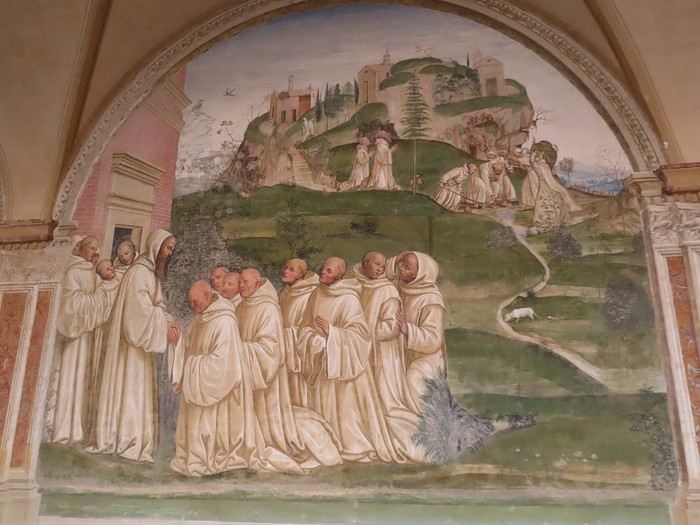
Benedict makes a spring gush from the mountaintop. He’s depicted twice in the fresco, which blends portrait and landscape.
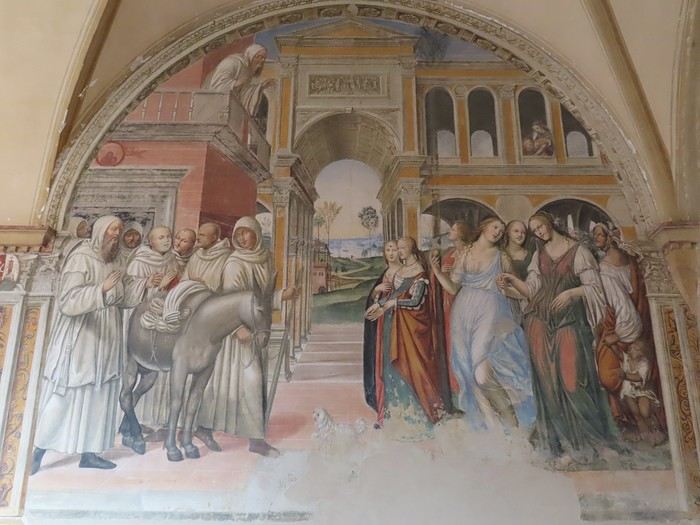
Florent, a priest jealous of Benedict, sends prostitutes to the monastery (to discredit Benedict). Group portraits, architecture, and a distant landscape.
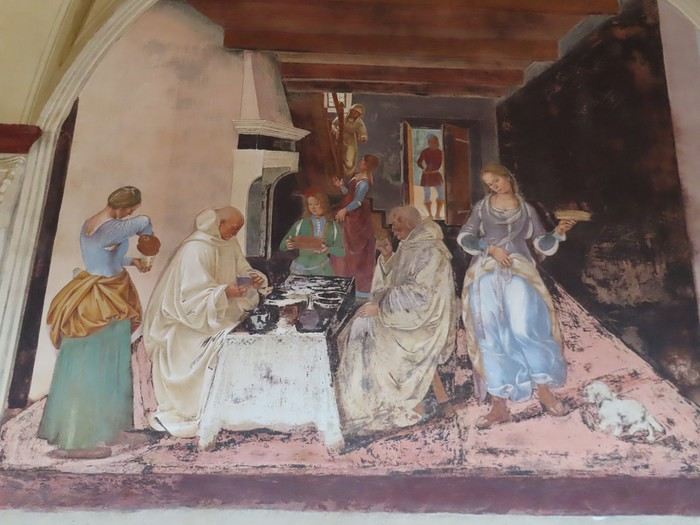
This fresco is by Luca Signorelli: Benedict tells the monks where and when they ate outside the monastery. In the photo, you only see the scene of the meal in an inn; pictorially, that’s the main part of the fresco. Benedict’s intervention is shown in a small space not visible in the photo, at the top right of what’s shown.
More to come in the next post.
Buonconvento will be my endpoint for the Via Francigena on this trip. The rain doesn’t last all through midday, so I can take a stroll around town (a medieval town surrounded by walls). Below is the west side of the walls.
I’m visiting the abbey of "Monte Oliveto Maggiore," located in the municipality of Asciano but closer to Buonconvento. Although the abbey is in the "Crete Senesi," the landscape is different: forest and "calanchi" (ravines or badlands).
These ravines look a lot like the ones I saw in the Apennines at the start of the trip (same type of soil , same erosion phenomenon). The abbey is active, occupied by Olivetan monks (a Benedictine order); the main cloister, entirely frescoed, is the artistic marvel of the abbey. Luca Signorelli began decorating the cloister’s perimeter (1497–1498); Giovanni Antonio Bazzi (Il Sodoma) completed it (1505 and later; he was 28 in 1505). It’s one of his earliest documented works. These frescoes depict the life of Saint Benedict, a more or less legendary tale.
Benedict leaves his father’s house to study in Rome. He’s accompanied by his servant Cyrilla.
First miracle: he repairs a plate or sieve broken by his servant. You can see the servant and the broken plate, Saint Benedict, and the miraculously repaired plate—this is the left part of the fresco. On the right, Il Sodoma painted himself in a luxurious Renaissance court costume. The far-right part is out of frame.
Benedict makes a spring gush from the mountaintop. He’s depicted twice in the fresco, which blends portrait and landscape.
Florent, a priest jealous of Benedict, sends prostitutes to the monastery (to discredit Benedict). Group portraits, architecture, and a distant landscape.
This fresco is by Luca Signorelli: Benedict tells the monks where and when they ate outside the monastery. In the photo, you only see the scene of the meal in an inn; pictorially, that’s the main part of the fresco. Benedict’s intervention is shown in a small space not visible in the photo, at the top right of what’s shown.
More to come in the next post.