

Re: From Southern Shikoku, Between Land and Sea, to the Blue Waters of Miyakojima and Finally the Megacity T
Let’s start by fueling up for another day of wandering.
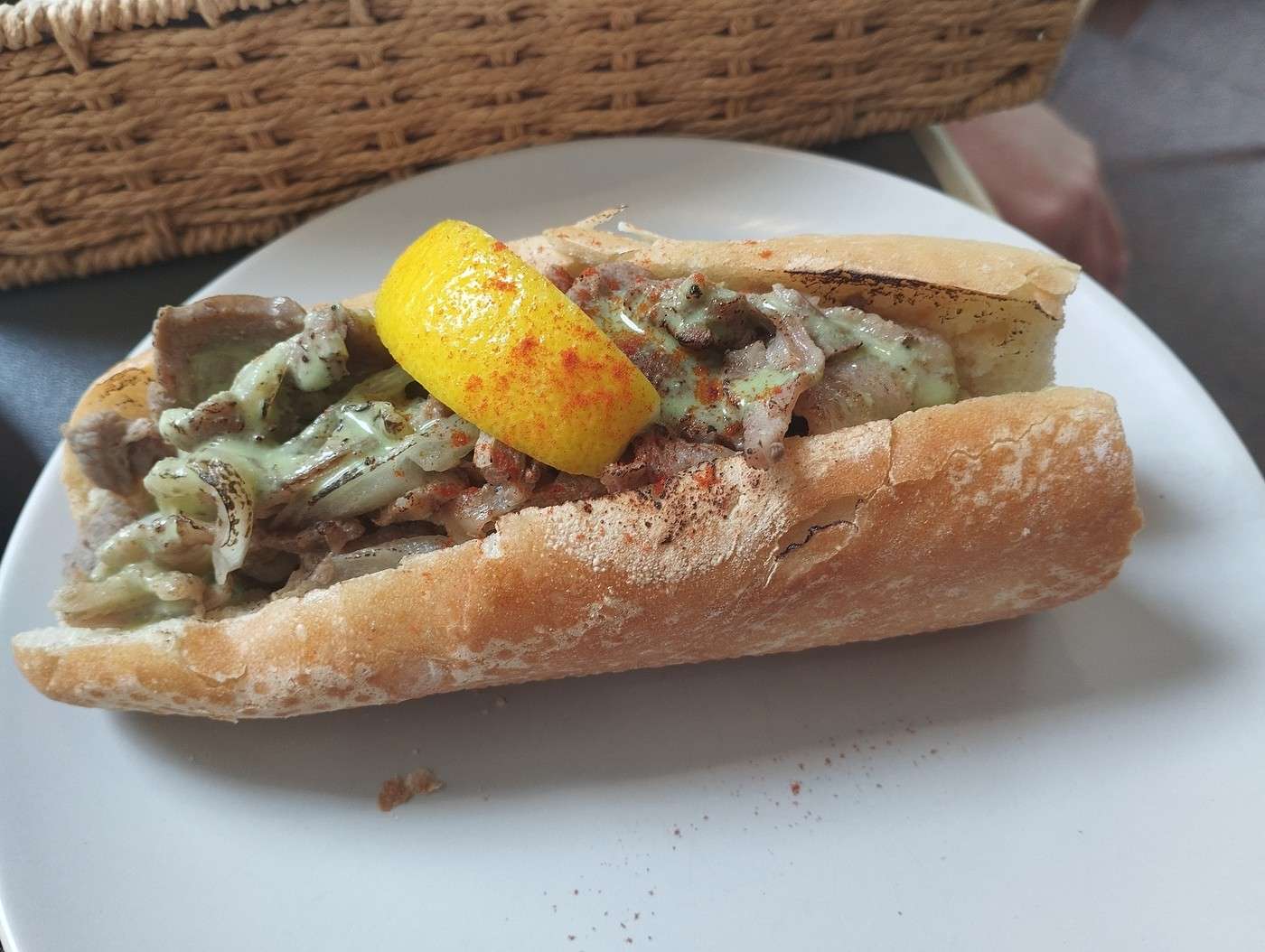
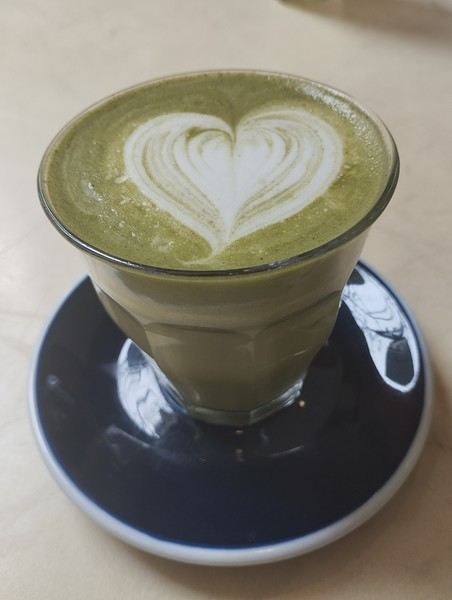
To switch things up from konbini and fried chicken, we opted for breakfast in our hotel’s neighborhood (Akasaka, just to remind you) with a menu that was half New Zealand, half Japanese. The result? A lamb and onion sandwich with a matcha latte topped with its decorative milk heart. It was pretty good, though not exceptional.
Rare in Japan, the café had a covered terrace facing the street—but not right on the sidewalk—so it was a nice way to kick off the day.
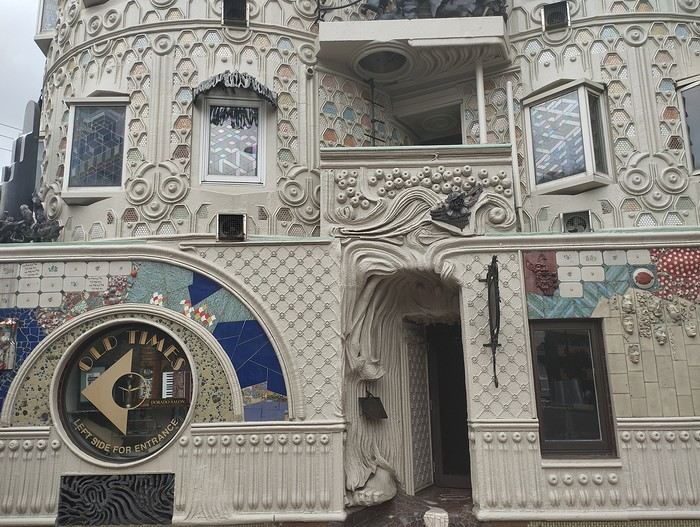
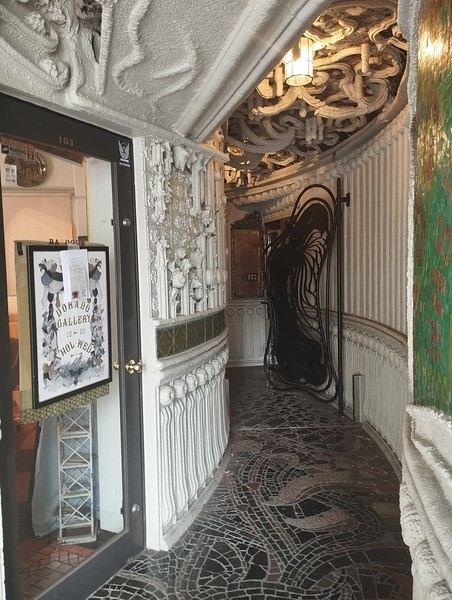
Despite the heat, a gray sky followed us. We took the subway to Bunkyo. I think we got off at Waseda station, but I’m not entirely sure. Either way, it’s a student-heavy area thanks to Waseda University being right nearby. You can tell without even seeing the campus—just look at all the young students filling the streets. On the way to the first garden, we passed a wildly unique and quirky building: Waseda El Dorado, designed by Japan’s Gaudí, Von Jour Caux. It’s a residential building and the only one in this style, totally unlike typical Japanese architecture.
 The garden is tucked away in a quiet neighborhood near the Kanda River. It’s called Higo Hosokawa Teien. We entered through its south gate.
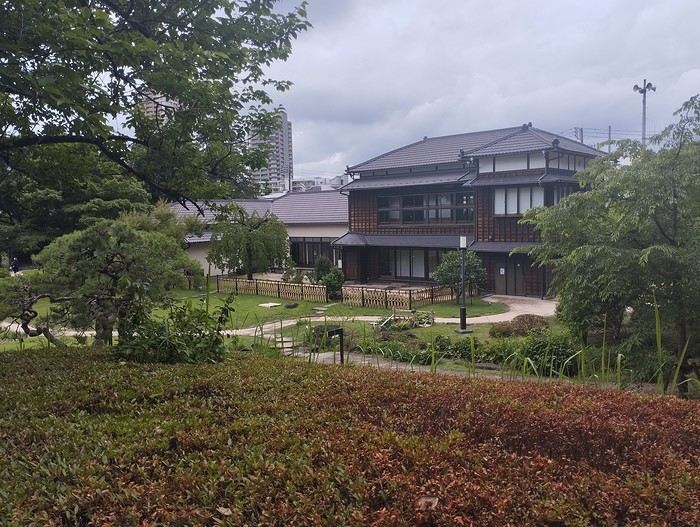
Since 1961, the garden has belonged to Bunkyo Ward, but historically, it was the secondary residence garden of the Hosokawa feudal lord family, who ruled part of what’s now Kumamoto Prefecture. It was founded during the Edo period (17th century).
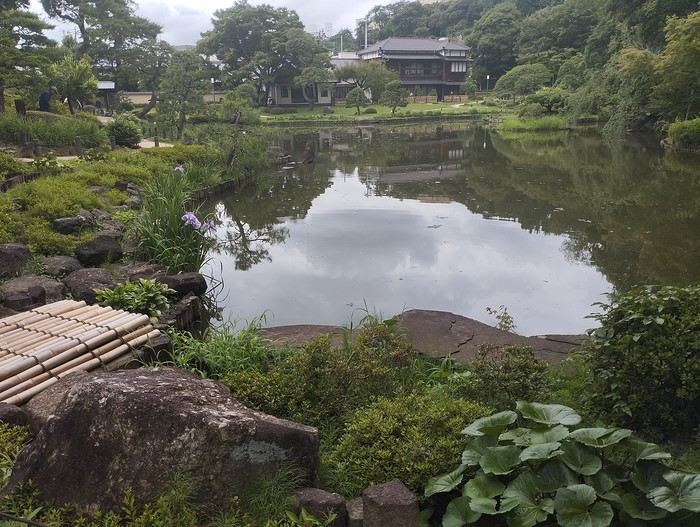
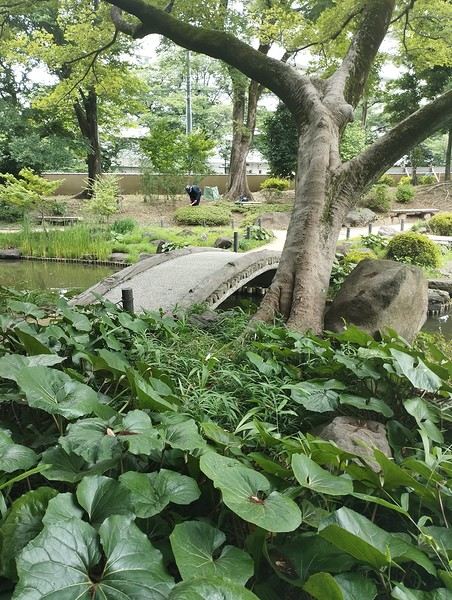
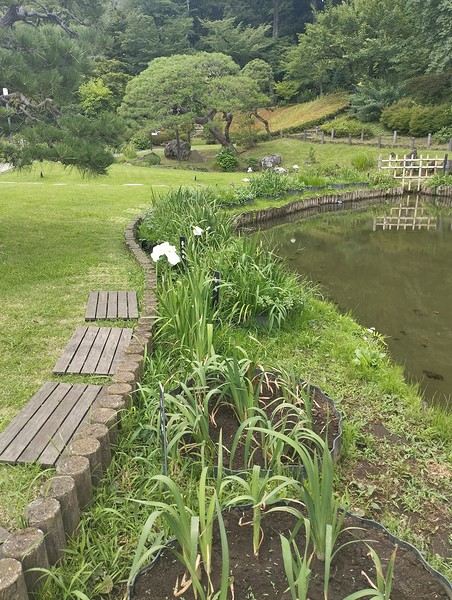
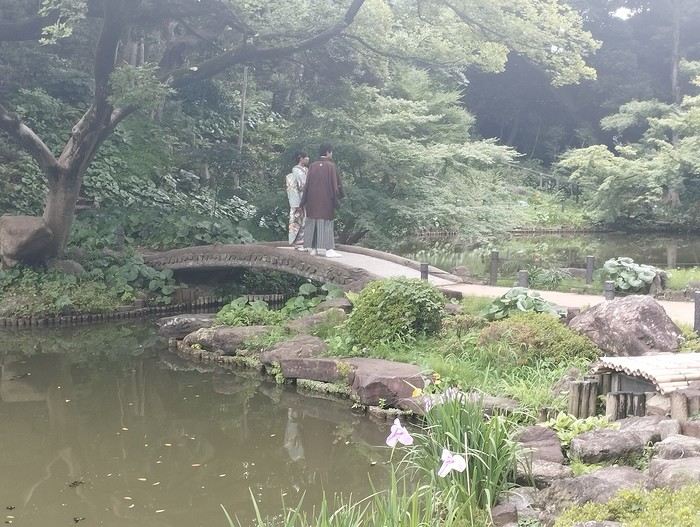
The garden follows classic Japanese garden design: a pond, a bridge, stepping stones, waterfalls, and various paths to explore, including some leading up a hill for a higher vantage point.
As expected, there were barely any visitors when we stopped by—just four Japanese people. The zen vibes were in full effect in this stunningly beautiful garden.
 Among those four Japanese visitors, we spotted a young couple in traditional attire taking their wedding photos. We didn’t photograph them head-on to let them enjoy their moment.
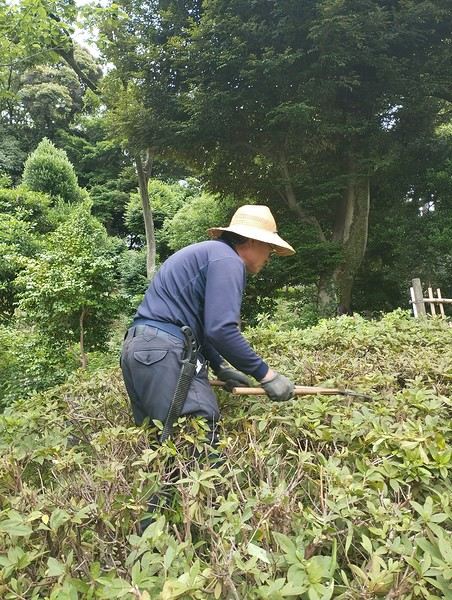
On the other hand, we did want to highlight the unsung heroes who keep these places so beautifully zen with their daily work: the gardeners. There were three of them tending to the garden while we were there. One agreed to be photographed after first thinking we wanted him to take our picture—then, once he realized we wanted him in the shot, he seemed puzzled about why we’d want that.
We wandered and soaked in the scenery, sometimes taking the winding paths through the garden, other times sitting on one of the scattered benches to enjoy the different views of this lush, relaxing green oasis.
Despite the heat, a gray sky followed us. We took the subway to Bunkyo. I think we got off at Waseda station, but I’m not entirely sure. Either way, it’s a student-heavy area thanks to Waseda University being right nearby. You can tell without even seeing the campus—just look at all the young students filling the streets. On the way to the first garden, we passed a wildly unique and quirky building: Waseda El Dorado, designed by Japan’s Gaudí, Von Jour Caux. It’s a residential building and the only one in this style, totally unlike typical Japanese architecture.
On the other hand, we did want to highlight the unsung heroes who keep these places so beautifully zen with their daily work: the gardeners. There were three of them tending to the garden while we were there. One agreed to be photographed after first thinking we wanted him to take our picture—then, once he realized we wanted him in the shot, he seemed puzzled about why we’d want that.
We wandered and soaked in the scenery, sometimes taking the winding paths through the garden, other times sitting on one of the scattered benches to enjoy the different views of this lush, relaxing green oasis.