

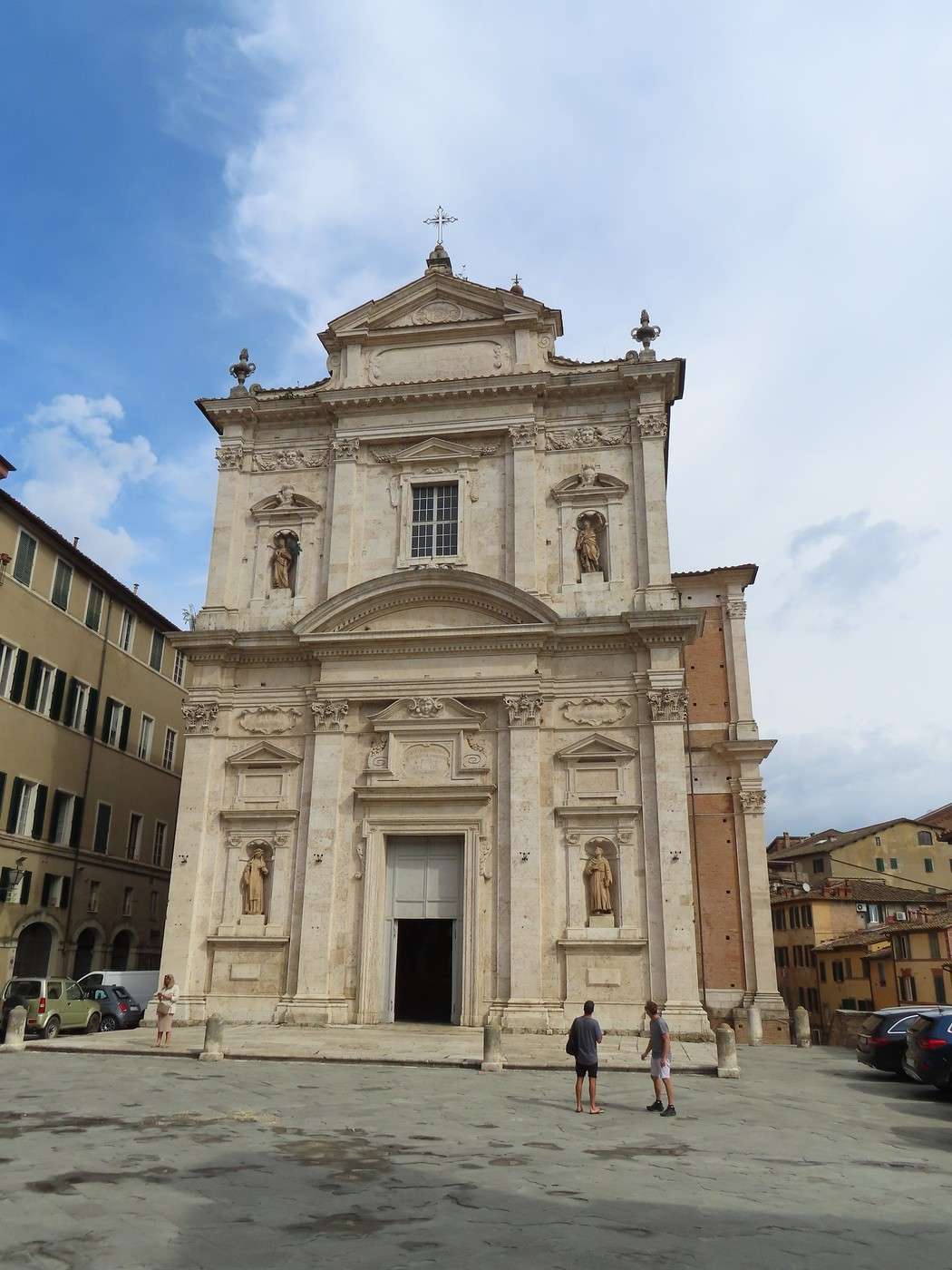
There will be a day in Siena during the trip; I won’t be visiting what the city is famous for (I’ve already done that on a previous trip). I’ll explore some more off-the-beaten-path spots and do some shopping. I’ll start with the "Collegiata di Santa Maria in Provenzano." Built around 1600, it features a beautiful travertine façade with a still-prominent Renaissance influence. The pilasters play a major role in the appearance of this façade.
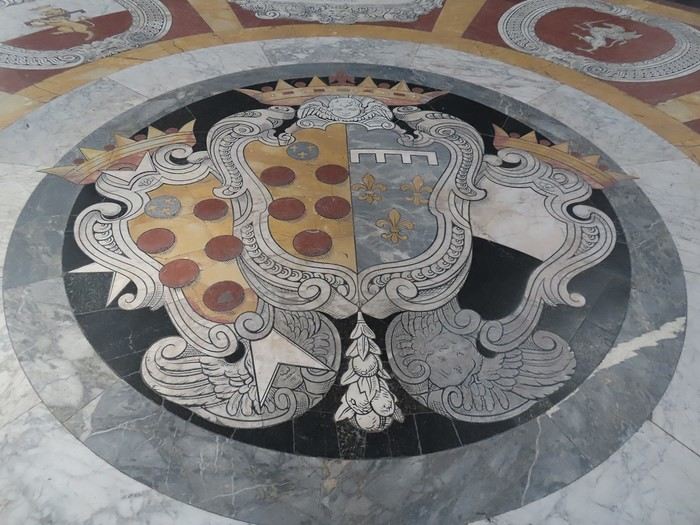
It was constructed to serve as a reliquary for a miraculous statue: the Madonna di Provenzano, which is housed in a tabernacle at the center of the high altar. In front of this altar, beneath the dome, are the coats of arms of the Grand Duke of Tuscany and his wife (in marble).
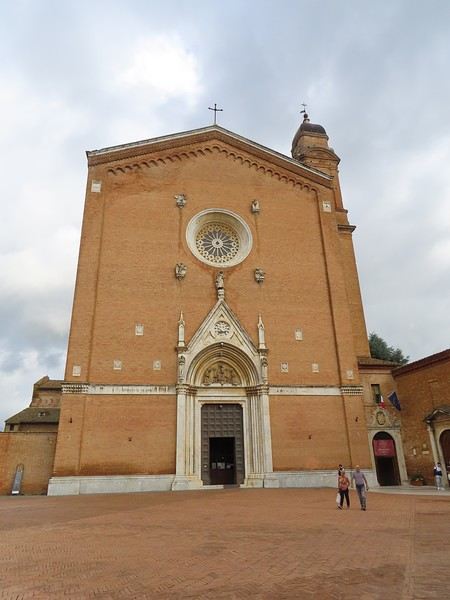
A very beautiful church with no crowds at all (I’m alone inside). Through small streets, I’ll head to "Piazza San Francesco," the heart of a student district. The façade of the Church of San Francesco is the result of a neo-Gothic restoration from the early 20th century.
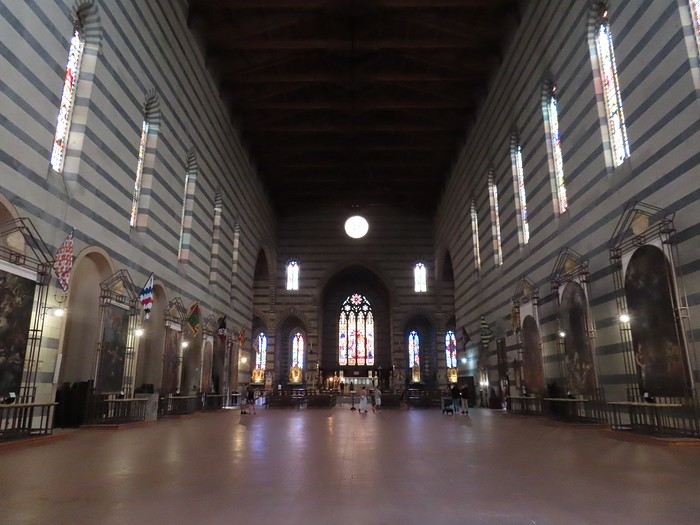
Behind the façade, the single nave has an impressive volume. Great height, wooden-beamed roof, flat apse: it seems simplicity and monumental character were often sought after in Franciscan churches. The effect is even more striking since there’s no one around.
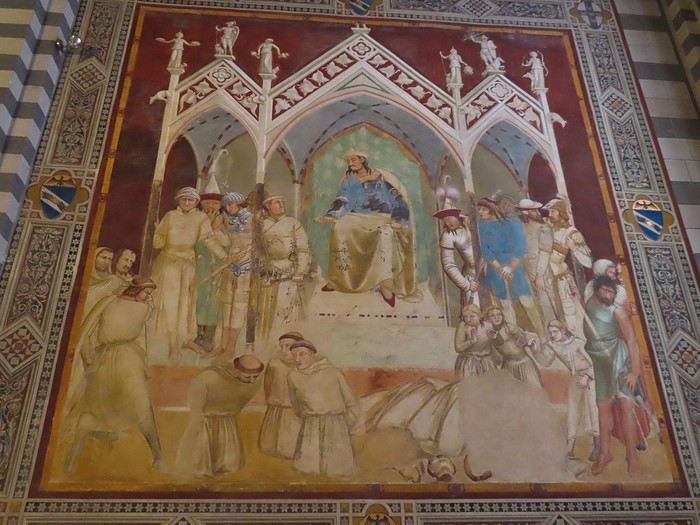
Among the works on display, I chose the "Martyrdom of the Franciscan Friars" by Ambrogio Lorenzetti (a detached fresco, around 1320). A century after the founding of the order, missions had gone to the East, and some had been massacred, though it’s unclear which event is depicted here. It’s a rather rare representation for that era. The pagoda (though it’s not actually a pagoda) has no specifically Eastern architectural elements; the scene is extremely violent and frightens some female onlookers, who recoil. The executioners are particularly hideous.
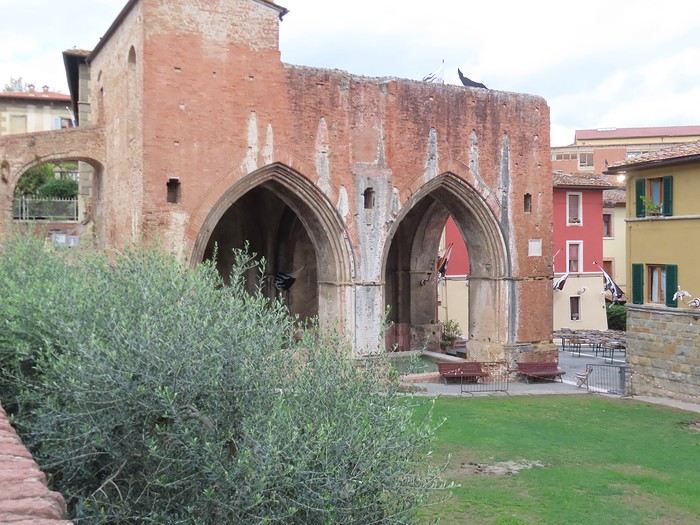
I continue my walk through the same neighborhood and arrive near Fonte Nuova, one of the fountains that supplied the city with water (built in the Trecento).
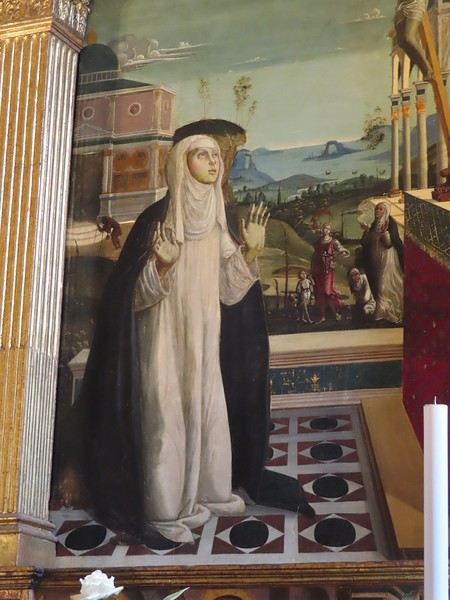
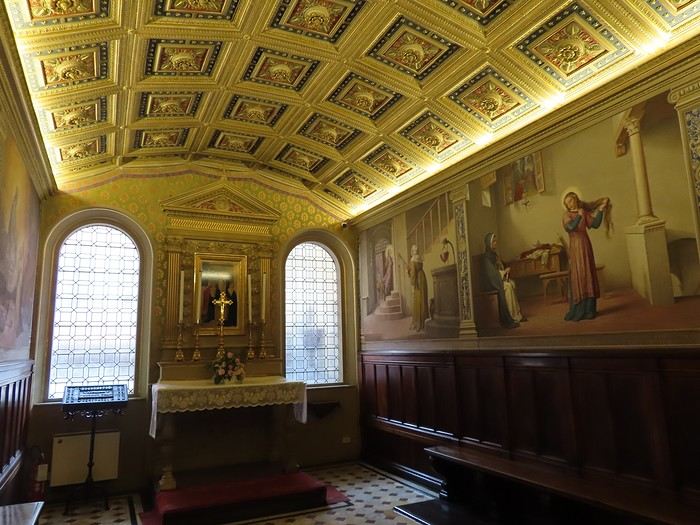
In the afternoon, I visit the Sanctuary of Saint Catherine of Siena, constructed over various periods (up to 1939) and incorporating the Benincasa house, where Catarina’s family lived—a family of 25 children. The oratory of the kitchen was arranged in the Cinquecento at the site of the family kitchen. The main altar depicts Santa Catarina receiving the stigmata (by Bernardino Fungai). The other walls are decorated with scenes from Santa Catarina’s life.
Lower down in the house (which is on a hillside), the oratory of the bedroom was restructured in the 19th century.
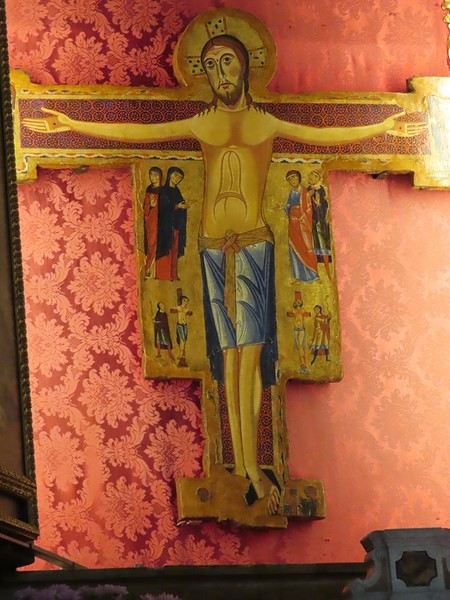
The sanctuary’s church preserves a miraculous crucifix (a painted cross) from the 12th century linked to Santa Catarina. It was in front of this crucifix that Catarina is said to have received the stigmata in Pisa in 1375.
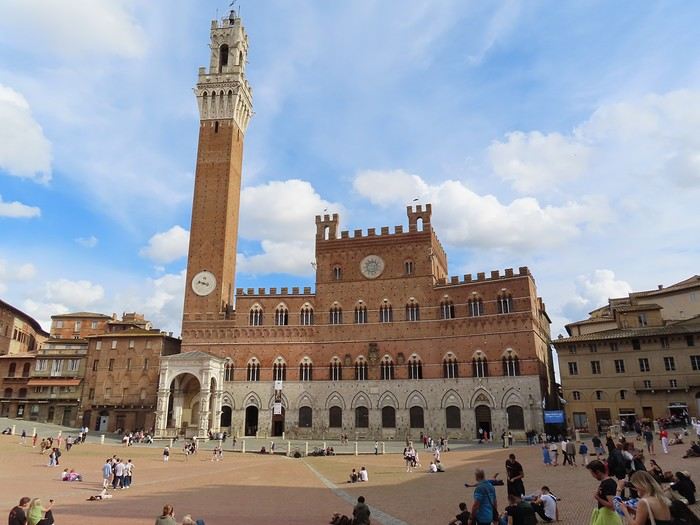
You can’t stroll through Siena’s streets overlooking the Campo without being reminded of this square: this will be my last photo of Siena.
Back to Sovicille.
It was constructed to serve as a reliquary for a miraculous statue: the Madonna di Provenzano, which is housed in a tabernacle at the center of the high altar. In front of this altar, beneath the dome, are the coats of arms of the Grand Duke of Tuscany and his wife (in marble).
A very beautiful church with no crowds at all (I’m alone inside). Through small streets, I’ll head to "Piazza San Francesco," the heart of a student district. The façade of the Church of San Francesco is the result of a neo-Gothic restoration from the early 20th century.
Behind the façade, the single nave has an impressive volume. Great height, wooden-beamed roof, flat apse: it seems simplicity and monumental character were often sought after in Franciscan churches. The effect is even more striking since there’s no one around.
Among the works on display, I chose the "Martyrdom of the Franciscan Friars" by Ambrogio Lorenzetti (a detached fresco, around 1320). A century after the founding of the order, missions had gone to the East, and some had been massacred, though it’s unclear which event is depicted here. It’s a rather rare representation for that era. The pagoda (though it’s not actually a pagoda) has no specifically Eastern architectural elements; the scene is extremely violent and frightens some female onlookers, who recoil. The executioners are particularly hideous.
I continue my walk through the same neighborhood and arrive near Fonte Nuova, one of the fountains that supplied the city with water (built in the Trecento).
In the afternoon, I visit the Sanctuary of Saint Catherine of Siena, constructed over various periods (up to 1939) and incorporating the Benincasa house, where Catarina’s family lived—a family of 25 children. The oratory of the kitchen was arranged in the Cinquecento at the site of the family kitchen. The main altar depicts Santa Catarina receiving the stigmata (by Bernardino Fungai). The other walls are decorated with scenes from Santa Catarina’s life.
Lower down in the house (which is on a hillside), the oratory of the bedroom was restructured in the 19th century.
The sanctuary’s church preserves a miraculous crucifix (a painted cross) from the 12th century linked to Santa Catarina. It was in front of this crucifix that Catarina is said to have received the stigmata in Pisa in 1375.
You can’t stroll through Siena’s streets overlooking the Campo without being reminded of this square: this will be my last photo of Siena.
Back to Sovicille.