
Re: Tuscany: Arezzo province and the area around Siena
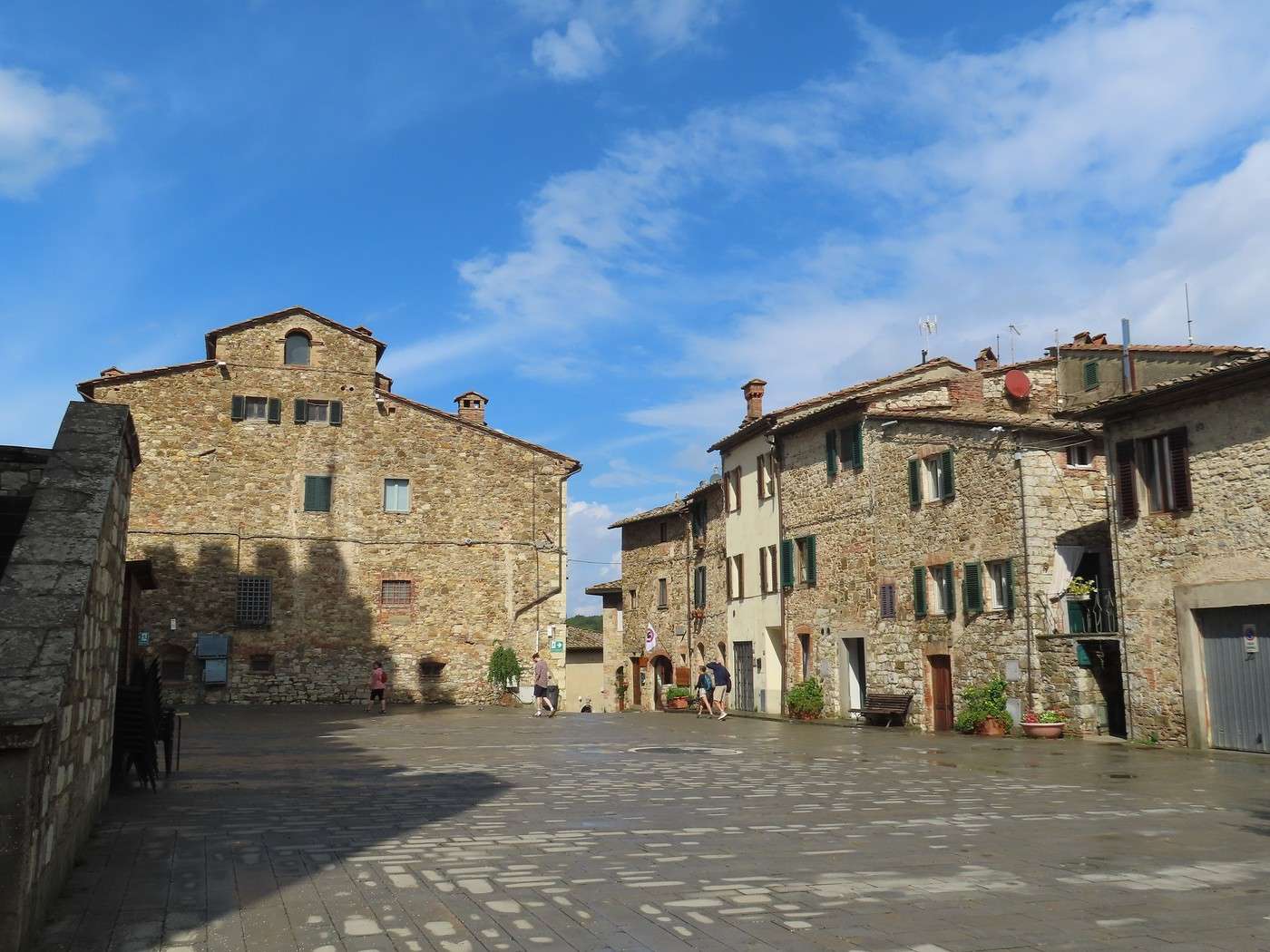
In the afternoon, I visit Castellina in Chianti. I arrive at the top of the village, at "Piazza del Comune."
In the photo above, on the left, you can see the staircase leading up to the Rocca (built by the Florentines), which houses the archaeological museum (Etruscan artifacts, panoramic terrace with a 360° view).
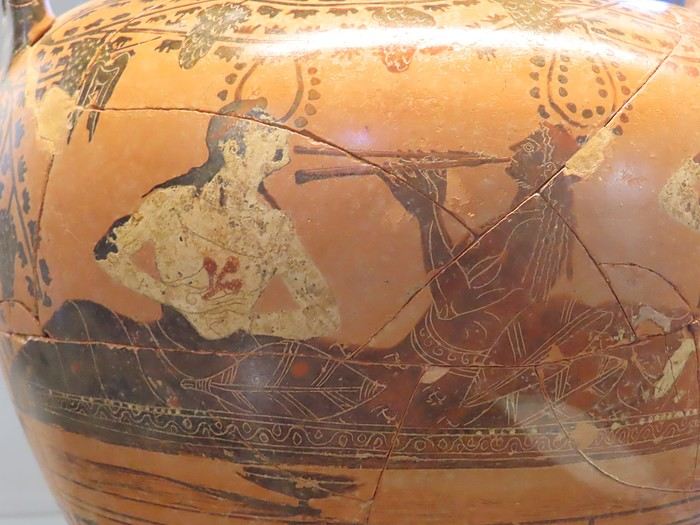
A large wine amphora of Attic origin (an imported luxury item) is decorated with banquet scenes, including one with music (6th century BCE).
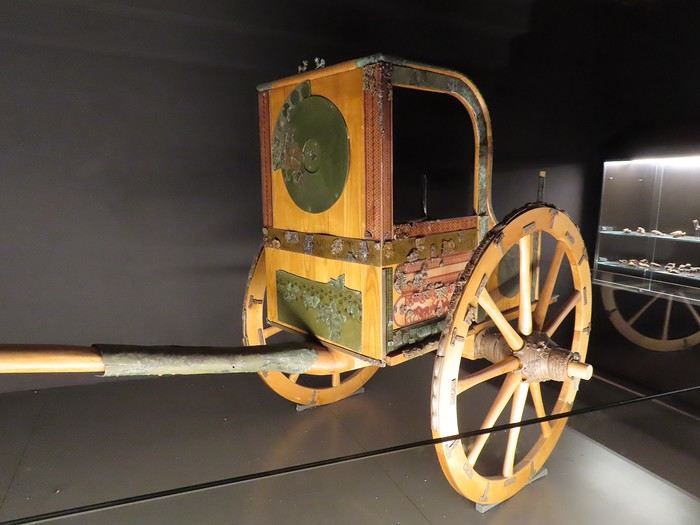
The most remarkable piece in the museum is an Etruscan chariot (late 7th, early 6th century BCE). It’s a two-wheeled chariot whose metal parts—bronze and iron—were discovered in the Mont Calvario tumulus in the early 20th century. Research led to its reconstruction about 10 years ago (metal parts in place, the rest in wood). It was used for parades and/or transport on the battlefield.
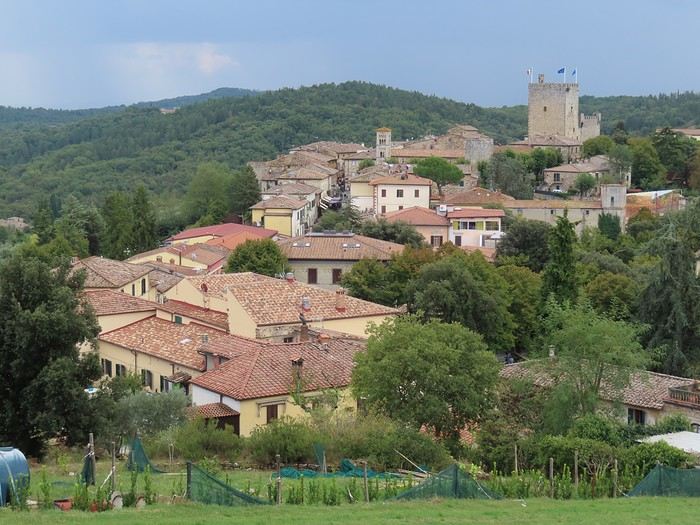
Next, I head up to the Mont Calvario tumulus, right next to the village, which contains four tombs oriented toward the cardinal points. From the mound where it’s located, you can see the village following the ridge of the hill.
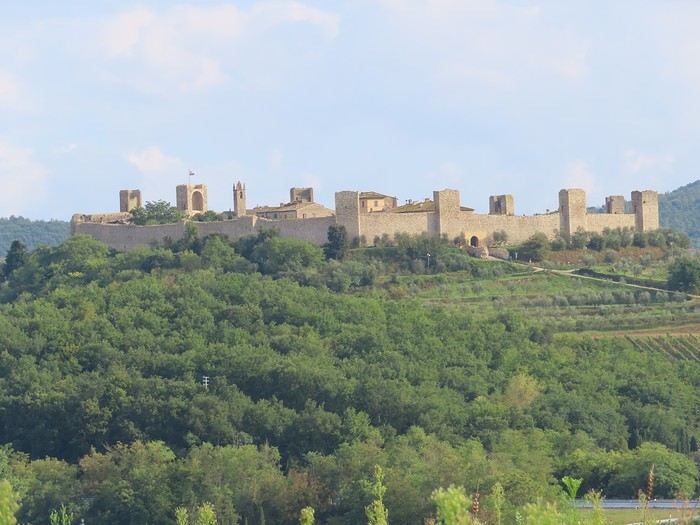
My return to Sovicille isn’t direct. I go to Castellina Scalo, a "frazione" of Monteriggioni but the most populated area in the municipality. Near the village, there’s a hill with a magnificent view of Monteriggioni: half of the walls and the northwest gate, opposite Siena, the one that faced the enemy during the Middle Ages and the Renaissance. I’d been here two years ago—the walls were scaffolded for restoration—and wanted to come back. This is the last photo of the trip. For the best light, you should be here in the late afternoon or evening.
Back to Sovicille.
In the photo above, on the left, you can see the staircase leading up to the Rocca (built by the Florentines), which houses the archaeological museum (Etruscan artifacts, panoramic terrace with a 360° view).
A large wine amphora of Attic origin (an imported luxury item) is decorated with banquet scenes, including one with music (6th century BCE).
The most remarkable piece in the museum is an Etruscan chariot (late 7th, early 6th century BCE). It’s a two-wheeled chariot whose metal parts—bronze and iron—were discovered in the Mont Calvario tumulus in the early 20th century. Research led to its reconstruction about 10 years ago (metal parts in place, the rest in wood). It was used for parades and/or transport on the battlefield.
Next, I head up to the Mont Calvario tumulus, right next to the village, which contains four tombs oriented toward the cardinal points. From the mound where it’s located, you can see the village following the ridge of the hill.
My return to Sovicille isn’t direct. I go to Castellina Scalo, a "frazione" of Monteriggioni but the most populated area in the municipality. Near the village, there’s a hill with a magnificent view of Monteriggioni: half of the walls and the northwest gate, opposite Siena, the one that faced the enemy during the Middle Ages and the Renaissance. I’d been here two years ago—the walls were scaffolded for restoration—and wanted to come back. This is the last photo of the trip. For the best light, you should be here in the late afternoon or evening.
Back to Sovicille.