

Sunrise at 6:00 AM. Temperature: 21°C. The sunrises are still just as breathtaking.
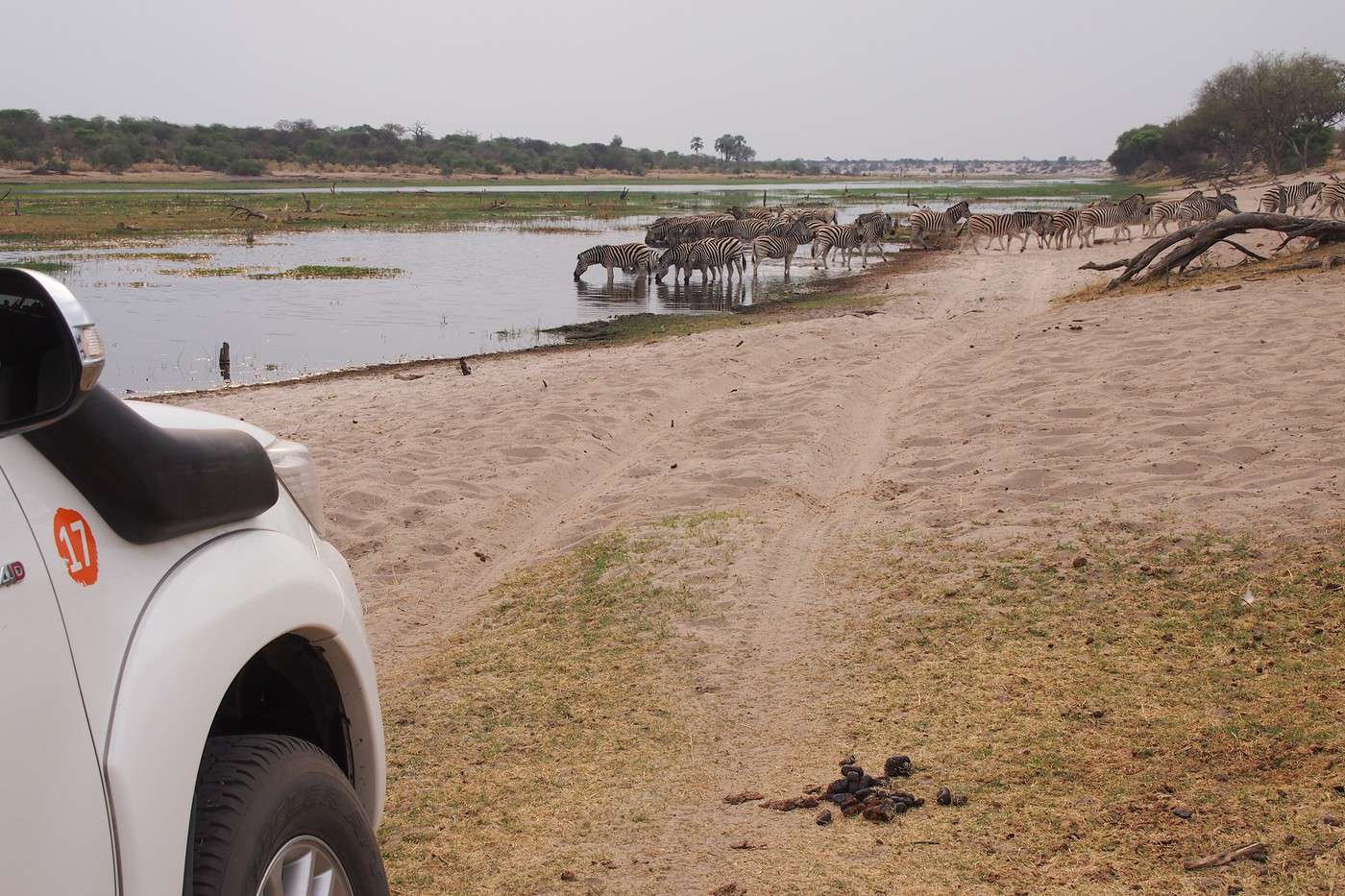
This morning, we take the track again that follows the Boteti River, which we took the day before.
Unfortunately, the animals didn’t show up, but we once again enjoy this track that runs alongside the river, offering magnificent views of the waterway.
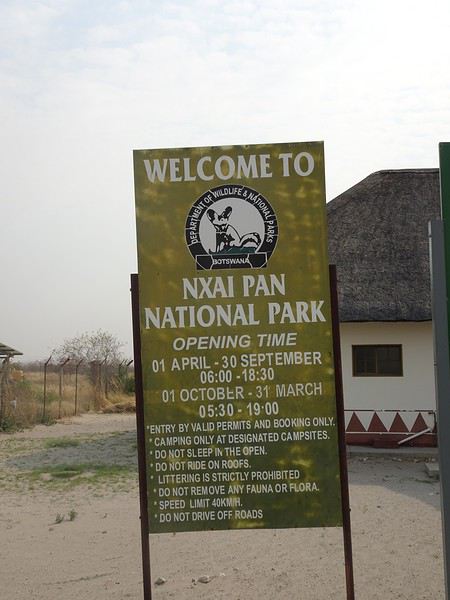
We continue north toward the entrance of Nxai Pan National Park. At the park entrance, we fill out the entry register, as we’ve done many times since our departure. While chatting with the rangers, they advise us to take the southern track leading to Baines Baobabs, saying it’s better than the northern one.
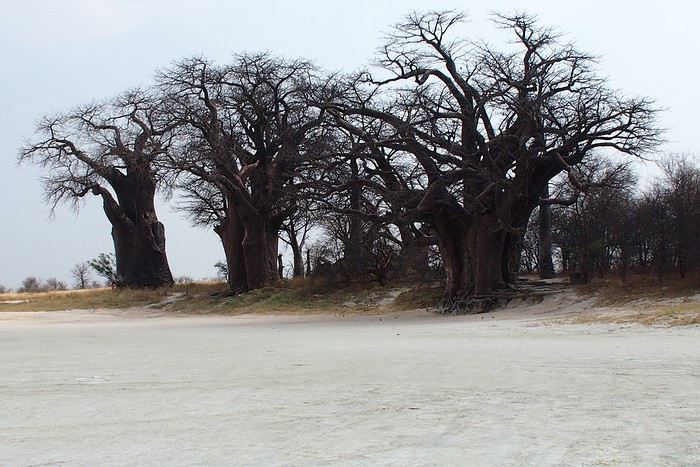
 We take the northern track and, after 17 km, turn right toward the east in the direction of Baines Baobabs, a cluster of baobabs by a salt lake.
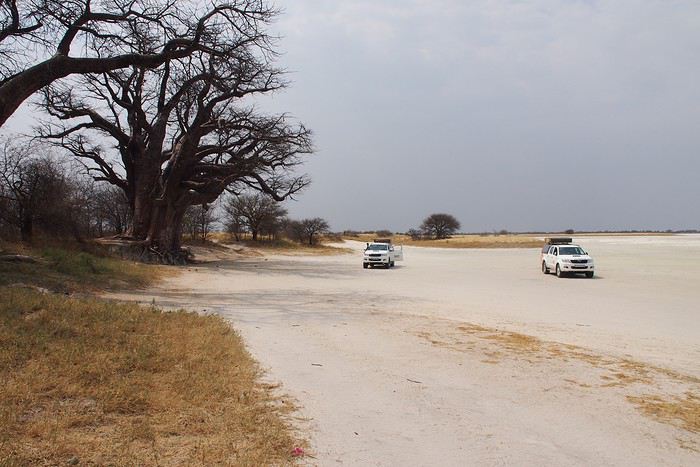

 We turn back and rejoin the northern track, which leads us to South Camp, where we’ll spend the night.
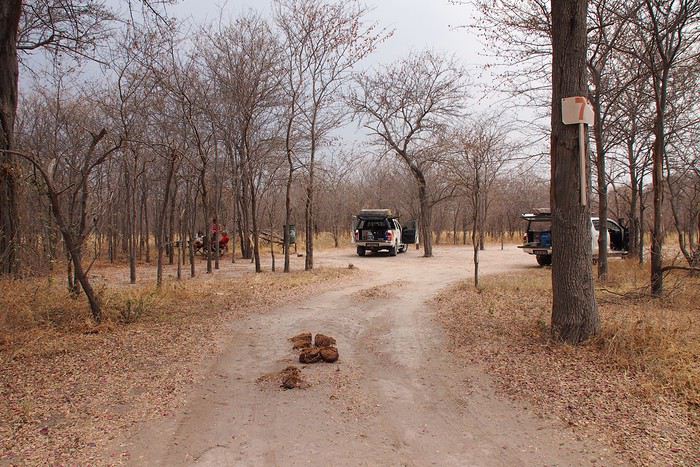
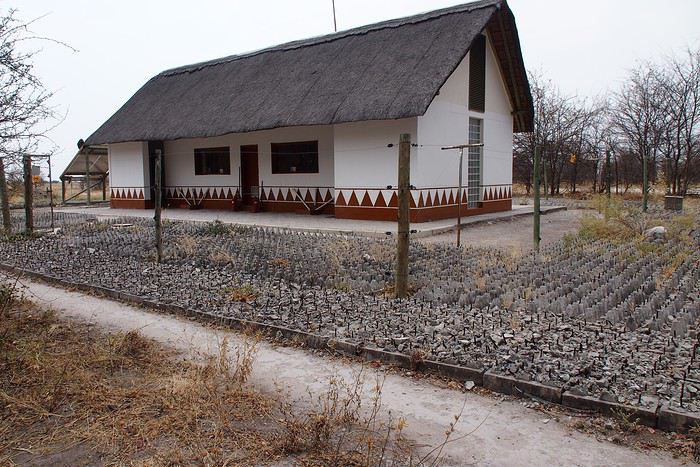 The camp’s toilets are surrounded by electric fences (which don’t work) and concrete blocks studded with iron spikes to keep elephants from approaching.
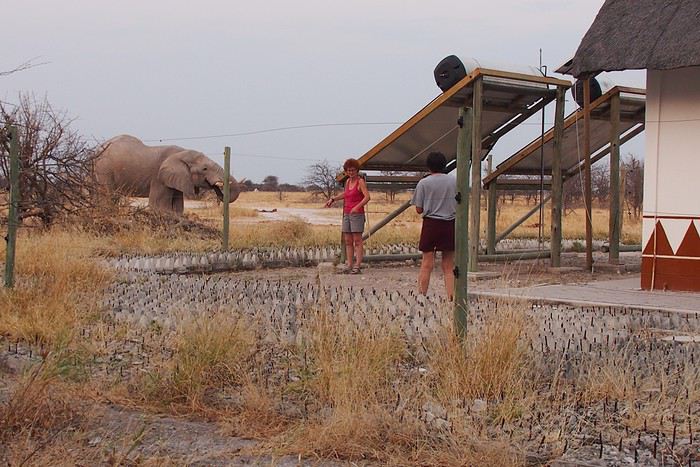
No matter—elephants still come to drink from the wastewater pit of the toilets. Sunday, September 30, 2018
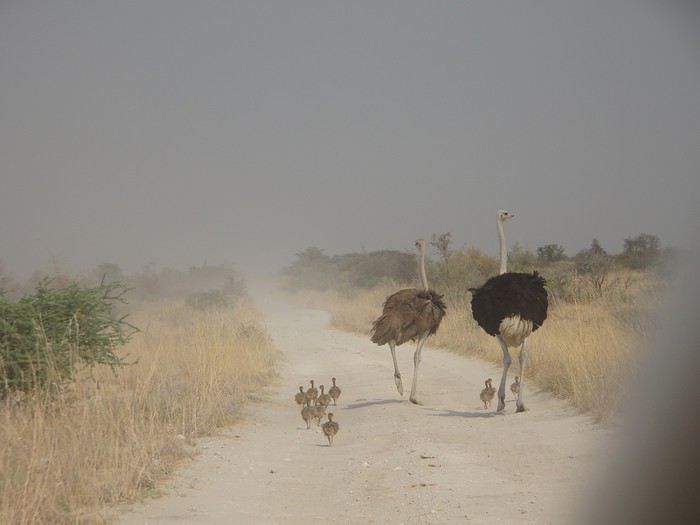
Sunrise at 6:00 AM. Temperature: 20°C. This morning, there’s already an elephant near the camp toilets. Before leaving, we make a detour to the permanent waterhole, where we spot some ostriches. Then we continue with the Baobab Loop in the northern part of Nxai Park.
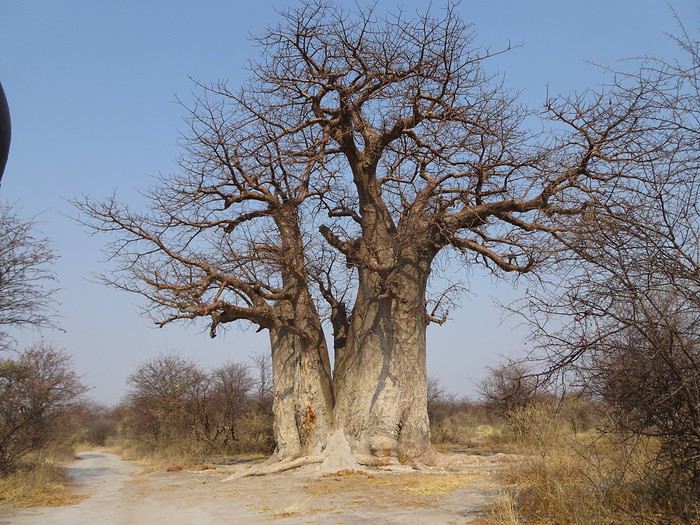
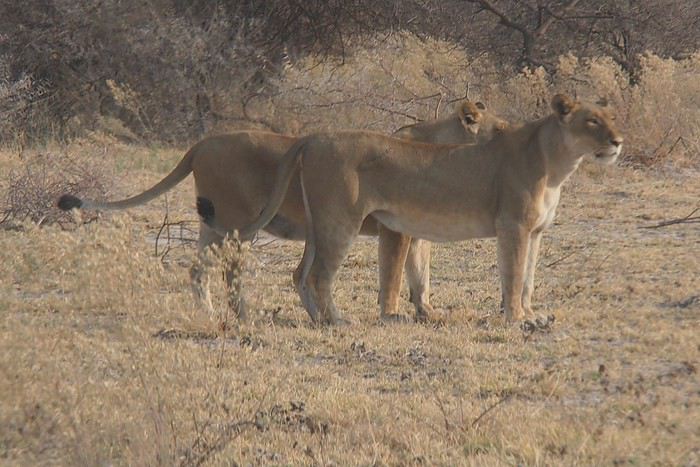
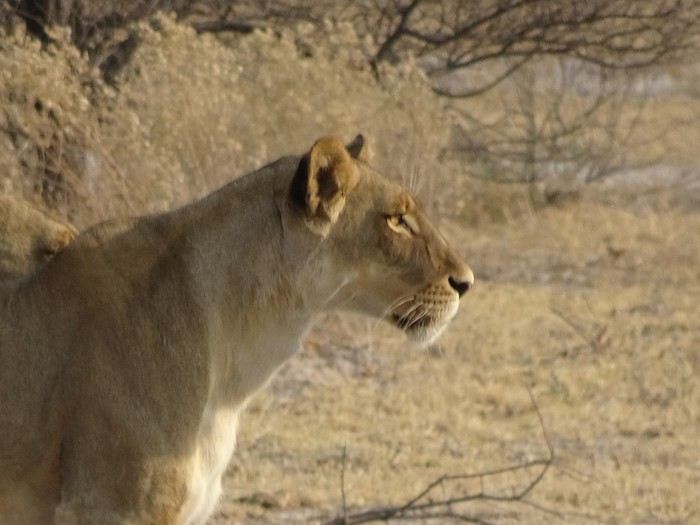
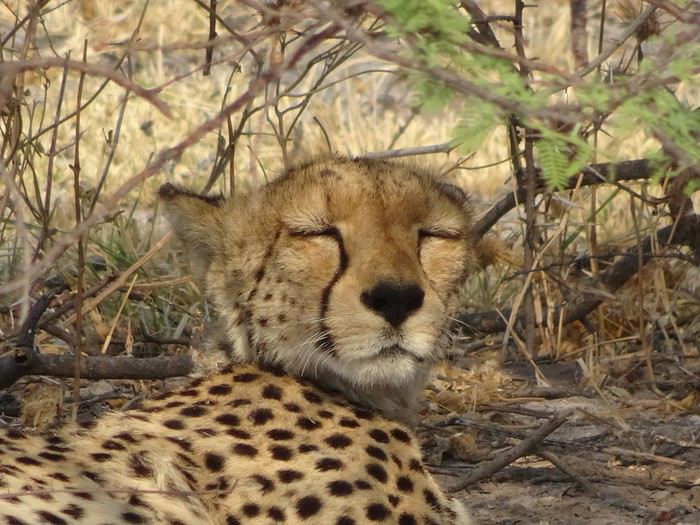
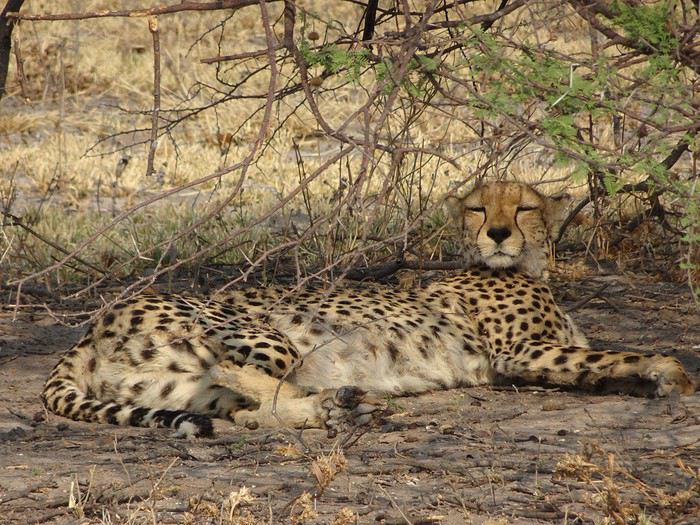
On this loop, we encounter two lionesses on the hunt and a cheetah.
 On our way back to the Nxai Park entrance, we’re stopped by a young English couple, Laura and Tom, who’ve walked 4 km because they’re stuck in the sand on the Baines Baobabs track. They tell us something that shocks us: before us, they’d stopped another couple of tourists to ask for help, who told them they’d help if they were still there when they came back. Let’s not forget—they were in the middle of the park, on foot, at the mercy of any wild animal (and there are plenty in this reserve).
So, we load them into our cars to go pull them out.
Our friends try to tow them with the recovery rope but end up getting stuck themselves.
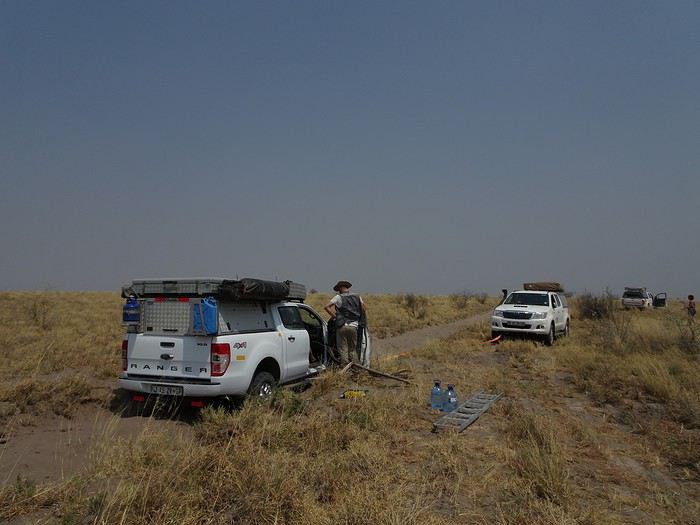
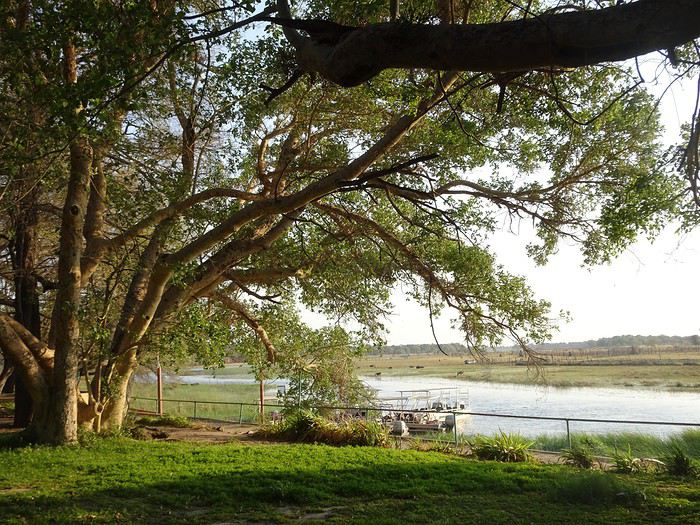
I can’t afford to make a mistake. I drive off the track and onto the harder shoulder, where I can pull out both stuck vehicles one after the other. We get back on the track together and head to the park exit, where we take time to inflate our tires. We take the E3 road toward Maun, where at times we have to weave between potholes. Note that the speed limit is 80 km/h until Maun—a limit we strictly respect, having heard that police often set up speed checks. It takes about 2.5 hours to cover the 136 km from the Nxai Pan exit to Maun. We head to Island Safari Lodge, where we’ll stay for two nights. At reception, we’re relieved to pick up the missing reservation vouchers for the Third Bridge and Kang campsites, allowing us to continue our trip with peace of mind. Island Safari Lodge is located away from Maun, in a large park by the river, where there’s a constant flow of motorboats and mokoros.
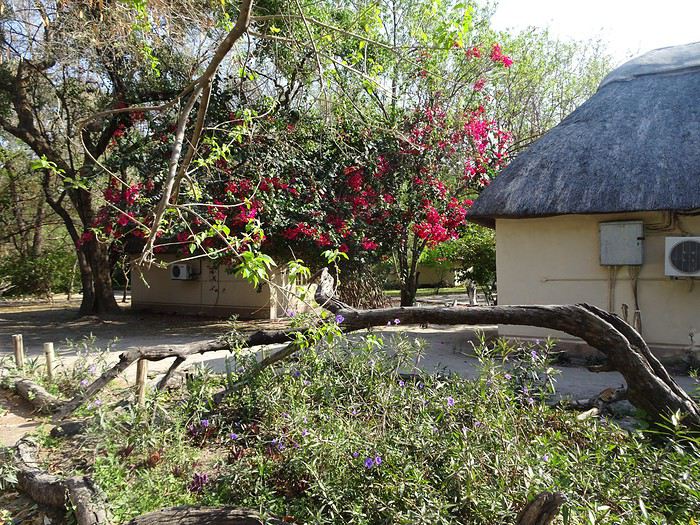 Cost of our room: $118, breakfast included.
We dine at the lodge. Cost: 850 Pulas for four (77 €).
The Wi-Fi works, and we can contact family.
Today, September 30, is Botswana’s Independence Day, and the next two days, October 1 and 2, are also public holidays. Good to know, as banks will be closed on those days.
We take advantage of the lodge’s laundry service to wash our clothes at a very low cost.
We continue north toward the entrance of Nxai Pan National Park. At the park entrance, we fill out the entry register, as we’ve done many times since our departure. While chatting with the rangers, they advise us to take the southern track leading to Baines Baobabs, saying it’s better than the northern one.
No matter—elephants still come to drink from the wastewater pit of the toilets. Sunday, September 30, 2018
Sunrise at 6:00 AM. Temperature: 20°C. This morning, there’s already an elephant near the camp toilets. Before leaving, we make a detour to the permanent waterhole, where we spot some ostriches. Then we continue with the Baobab Loop in the northern part of Nxai Park.
On this loop, we encounter two lionesses on the hunt and a cheetah.
I can’t afford to make a mistake. I drive off the track and onto the harder shoulder, where I can pull out both stuck vehicles one after the other. We get back on the track together and head to the park exit, where we take time to inflate our tires. We take the E3 road toward Maun, where at times we have to weave between potholes. Note that the speed limit is 80 km/h until Maun—a limit we strictly respect, having heard that police often set up speed checks. It takes about 2.5 hours to cover the 136 km from the Nxai Pan exit to Maun. We head to Island Safari Lodge, where we’ll stay for two nights. At reception, we’re relieved to pick up the missing reservation vouchers for the Third Bridge and Kang campsites, allowing us to continue our trip with peace of mind. Island Safari Lodge is located away from Maun, in a large park by the river, where there’s a constant flow of motorboats and mokoros.