Four weeks in Botswana
FR

Translated into English.

Original post
CA
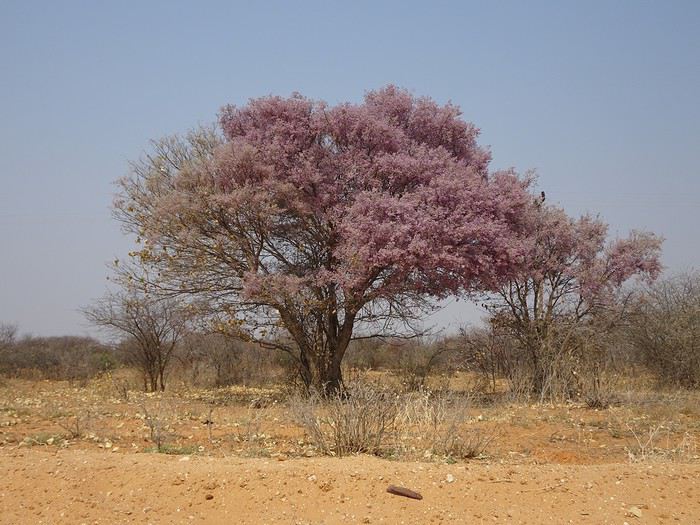
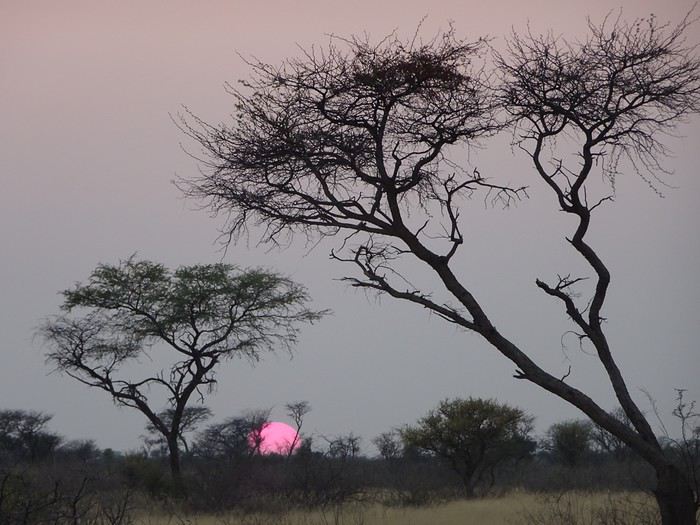
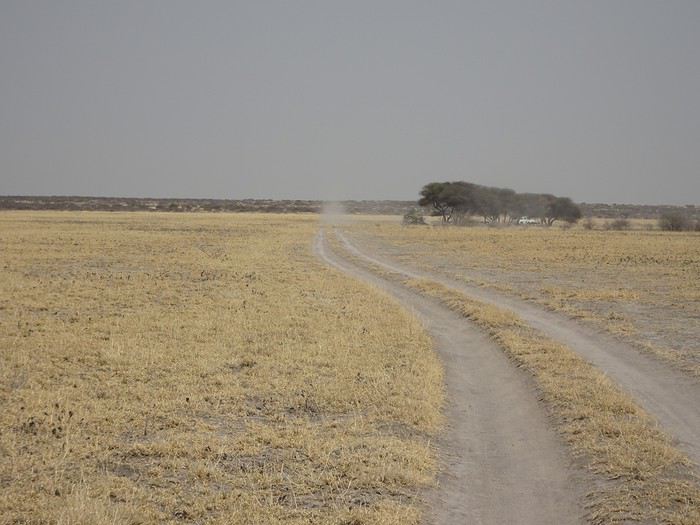
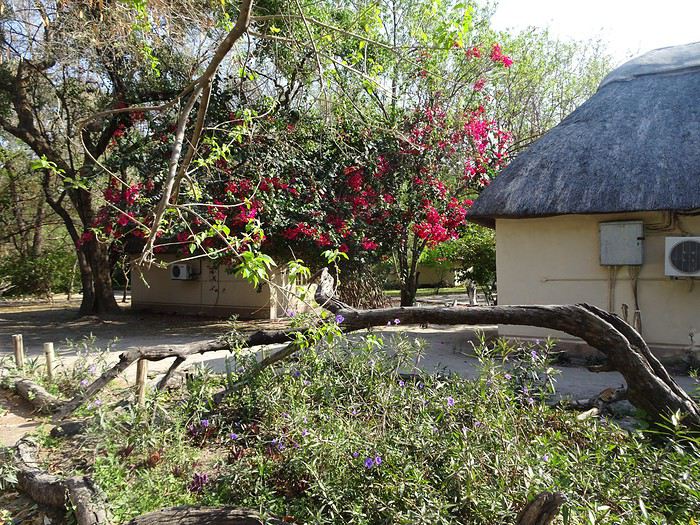
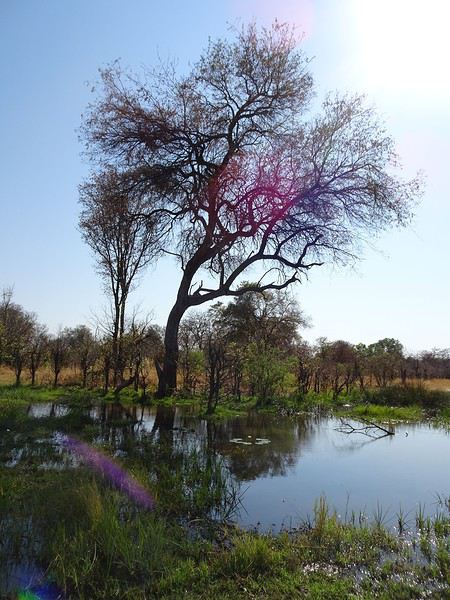
Saturday, September 22, 2018 This morning, we woke up at dawn at 6:00 AM. Headed to Letlhakeng, the last town where we could fill up on fuel before starting our crossing of the Kalahari. Our consumption since Johannesburg has been 11L/100 km. We took the direction of Khutse Game Reserve, whose entrance is about a hundred kilometers north of Letlhakeng. Access is via a gravel road along which we saw magnificent pink trees.


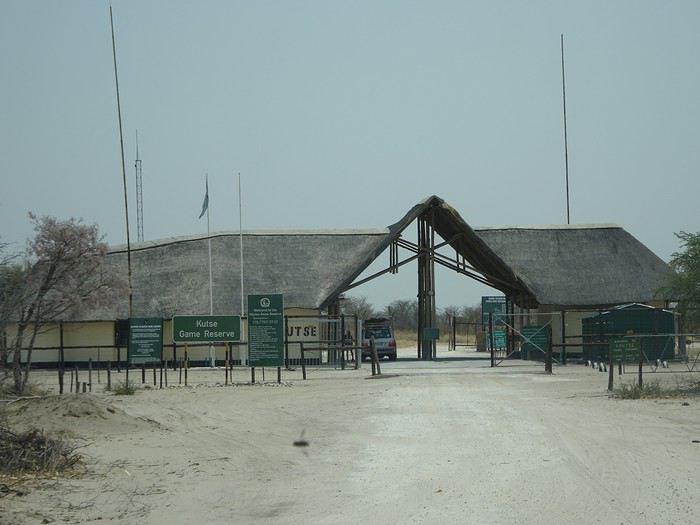
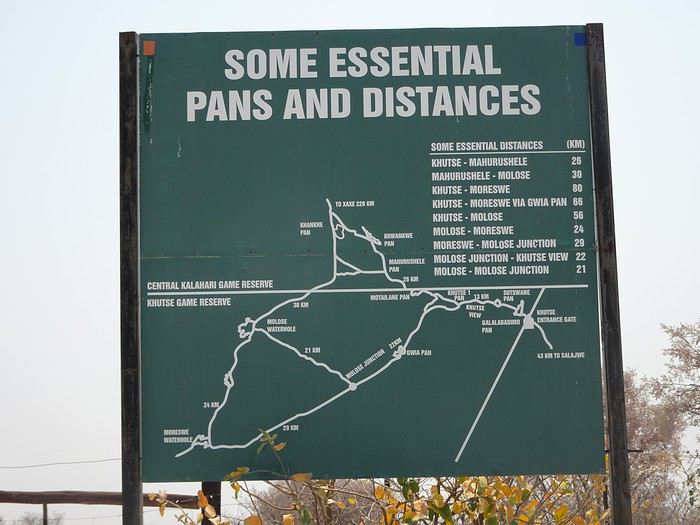
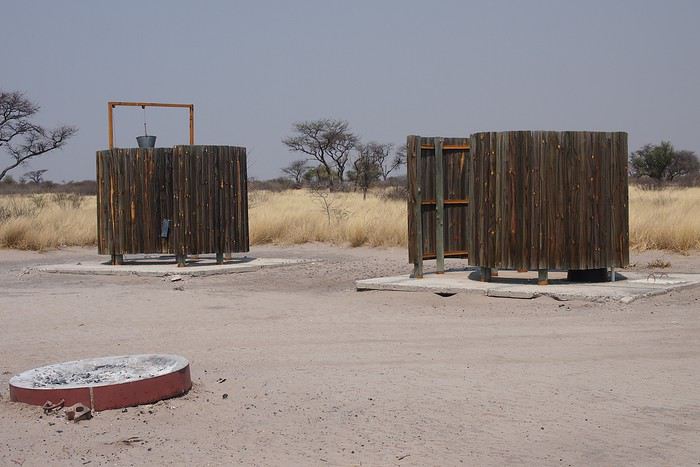
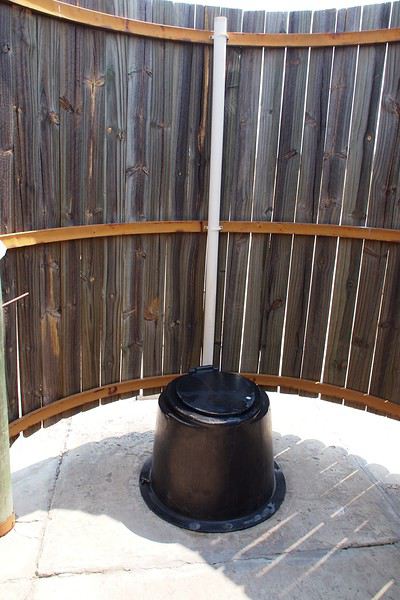
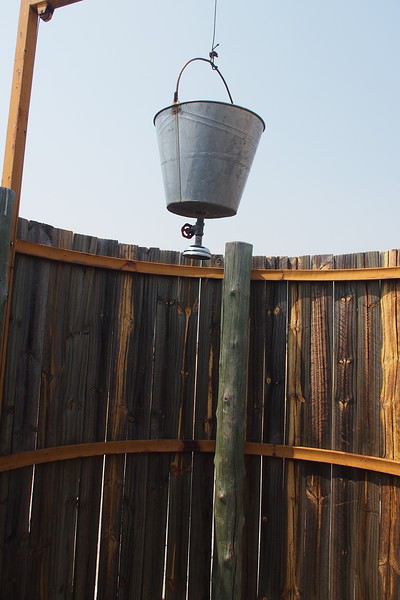
At Khutse Gate, we registered in the entry log and paid the access fees for 6 days: 120 Pulas/day/person and 50 Pulas/day/vehicle. Our stays at the Xaka and Deception Valley campsites had been reserved by our tour operator but not paid, contrary to what they’d told us. So we settled the 2 unpaid days of camping at 30 Pulas/day/person. The park rangers informed us that the southern triangle of Khutse Game Reserve, with its tip at Moreswe Pan, had burned. Note that these two campsites are government-run, which explains the low prices. Private campsites cost ten to fifteen times more. We headed to Khutse campsite, site 5. To enter the parks, you must have a reservation either at a lodge or a campsite. Since the number of spots in the campsites is limited, this means you have to book well in advance. We ate the salad we’d prepared the night before at our campsite. It was very hot—39°C. We made a round trip to Khankhe Pan. On the track, we encountered three South African cars, one of which was stuck in the sand and blocking the way. We helped push the car to get it unstuck. We saw very few animals at Khankhe Pan. We returned to the campsite, which has dry toilets and a shower you have to supply with your own water. We tried out the shower.


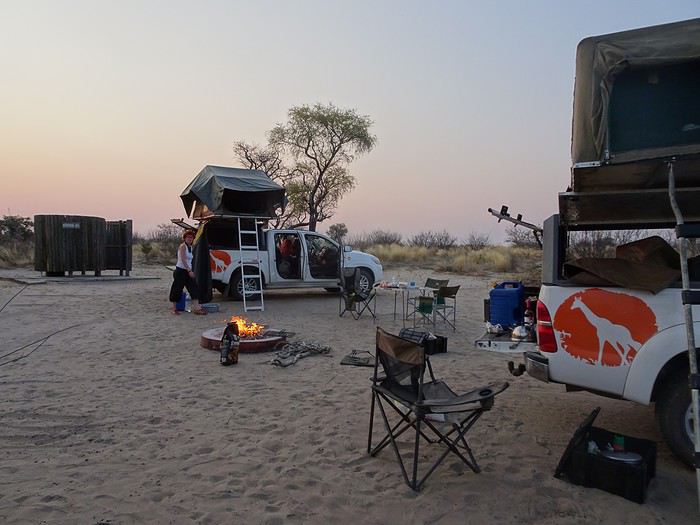
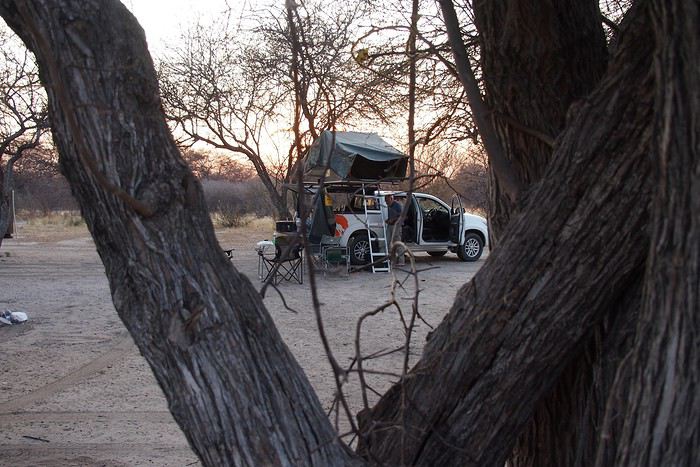
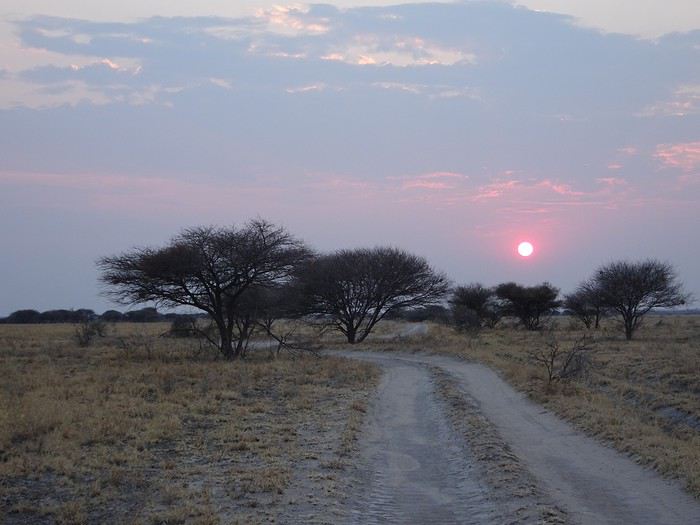
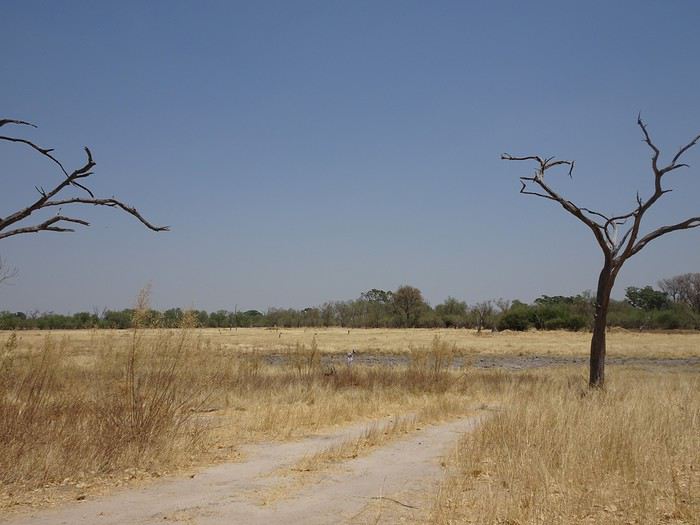
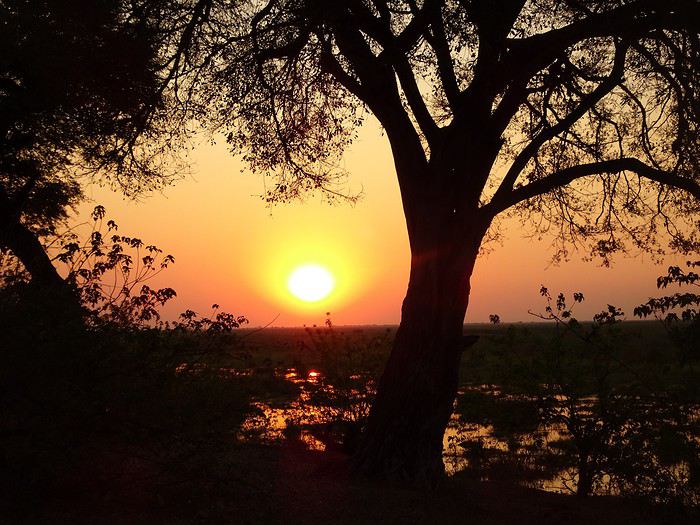
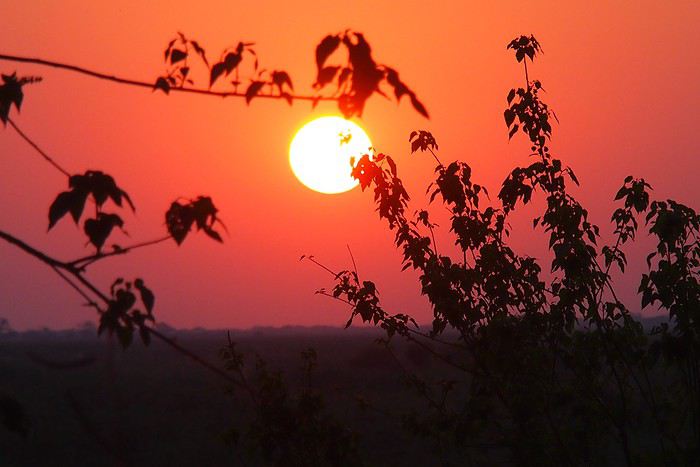
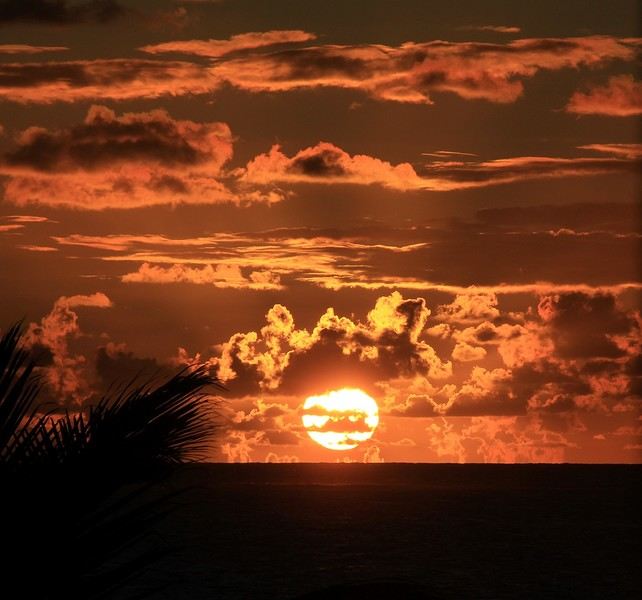
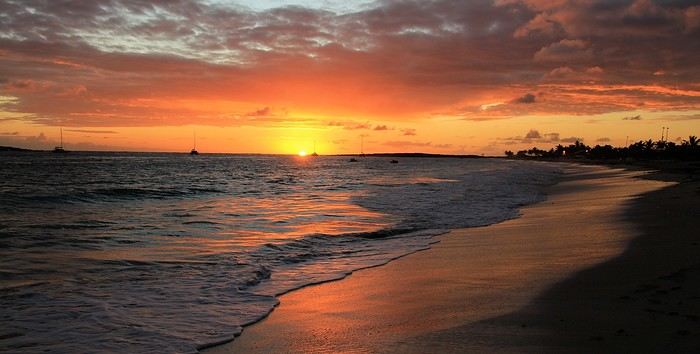
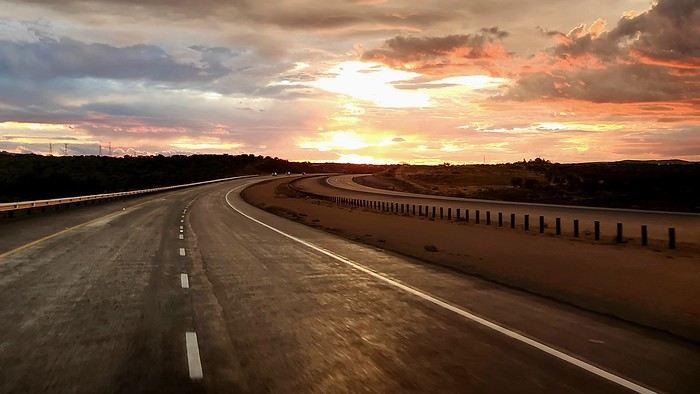
We witnessed our first Kalahari sunset. These sunsets are unmatched, and that didn’t change throughout the trip.


During the trip, we followed the solar rhythm—waking up at 6:00 AM, having dinner at sunset around 6:30 PM, and retiring to our tents by 8:30 PM.

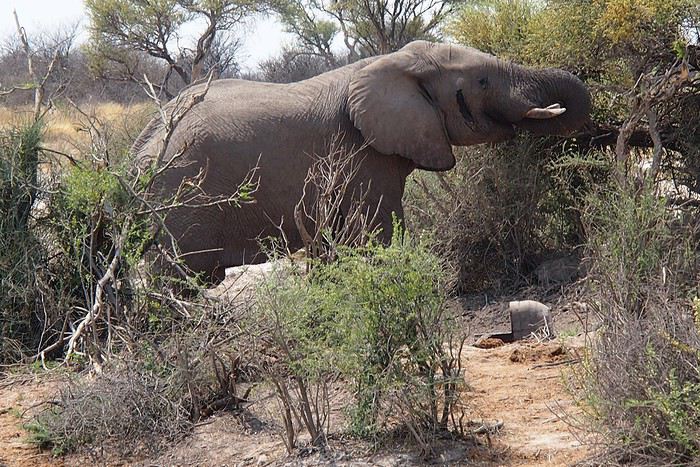
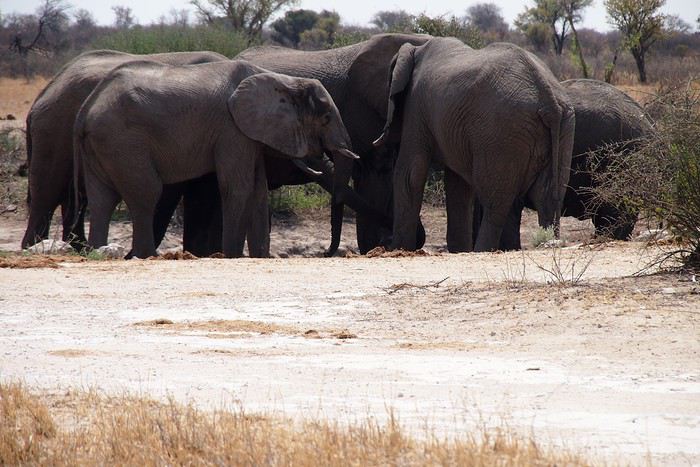
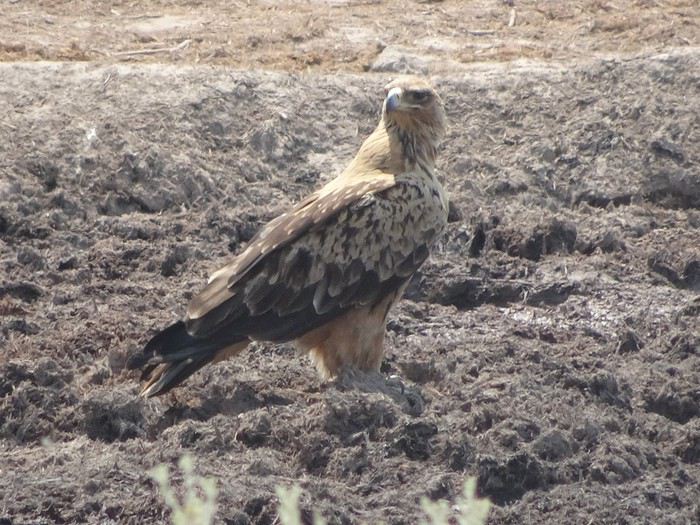
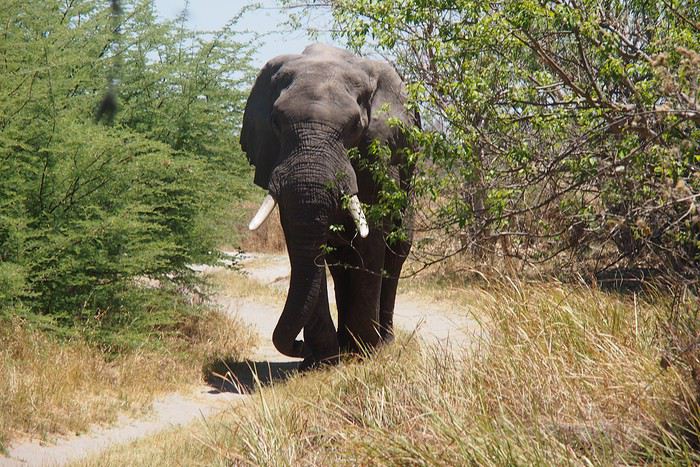
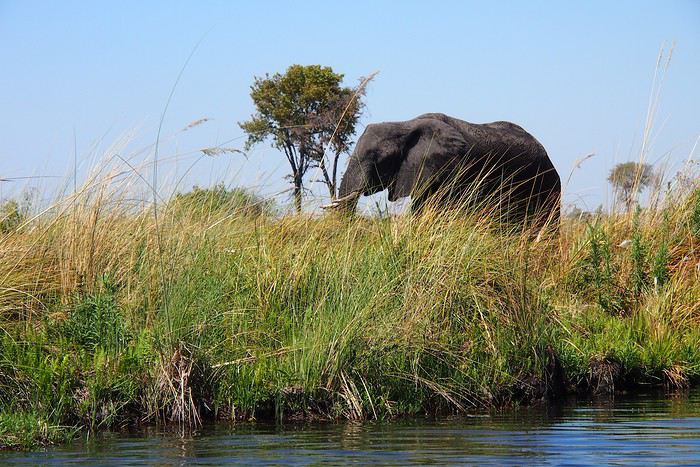
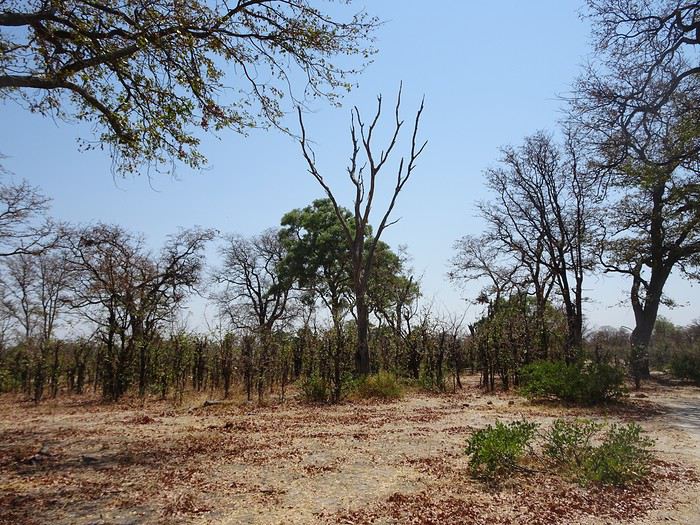
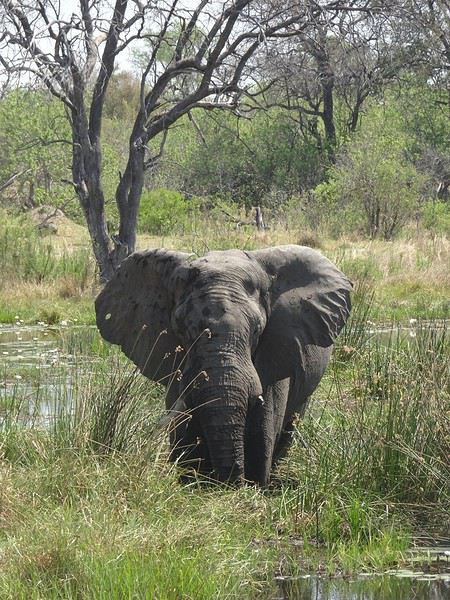
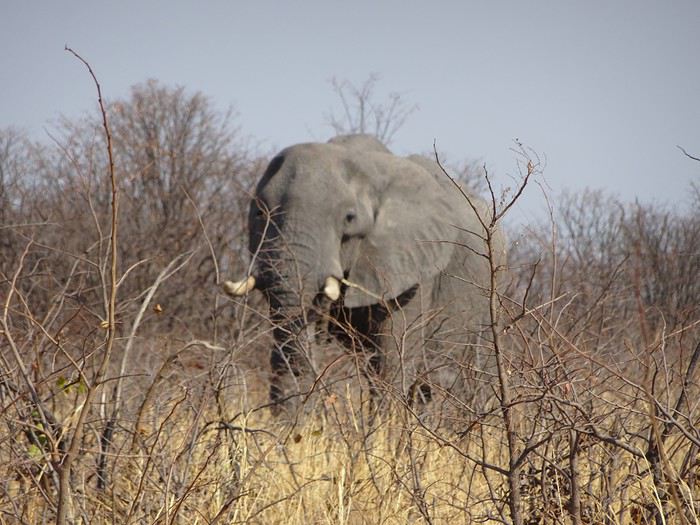
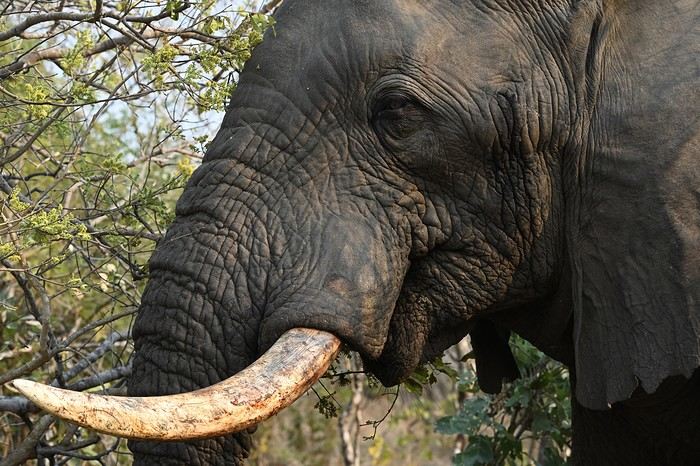
Sunday, September 23, 2018 Up at 6:00 AM. It was 15°C. We were cold last night. Tonight, we’ll use blankets in addition to our sleeping bags. We headed southwest and, past Gwian Pan, turned northwest toward the Molose waterhole, where we saw our first elephants and our first raptor. Indeed, on the track leading to the Molose waterhole, we could see the traces of the massive fire that had ravaged the southern part of Khutse, as the park rangers had warned us.


Our first braai at Khankhe campsite.

AT Atila Globetrotter ·
Why not continue this travel journal where it started? 🙂

https://voyageforum.com/discussion/quatre-semaines-botswana-d9232365/
CA Cagiva Regular ·
Hi there, I made a mistake. I don’t know how to continue my travel journal in the same post. Could you explain how to do it, please? Thanks in advance
RJ Rjulie95 Globetrotter ·
Just reply to your message and you can continue the travel journal. That's how everyone does it
"Je suis africain, non pas parce que je suis né en Afrique, mais parce que l'Afrique est née en moi." Kwame Nkrumah.

"J'ai appris que le courage n'est pas l'absence de peur, mais la capacité de la vaincre." Nelson Mandela

https://www.en-voyages.fr
CA Cagiva Regular ·
Thanks
CA Cagiva Regular ·
I'm picking up my travel journal again.

Monday, September 24, 2018

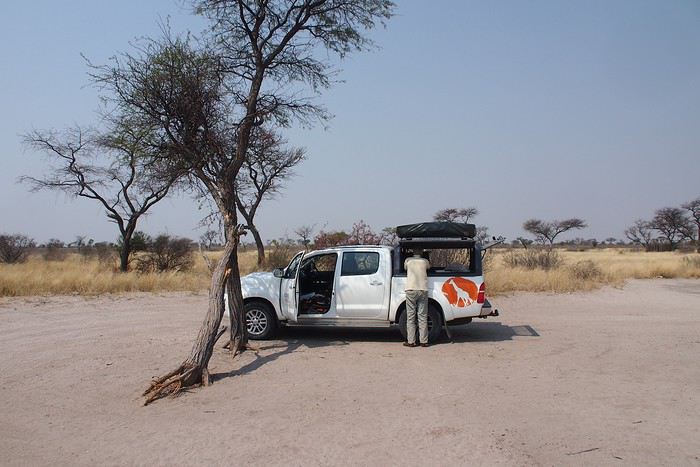
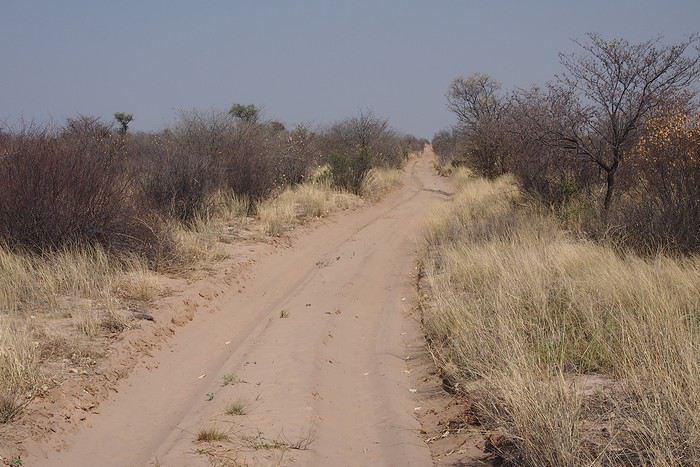
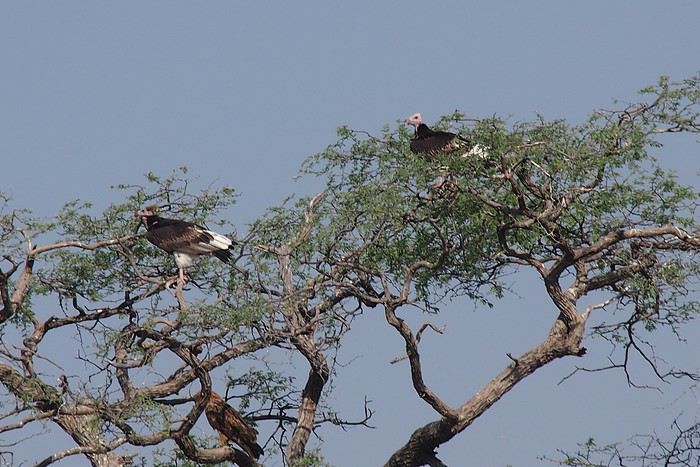
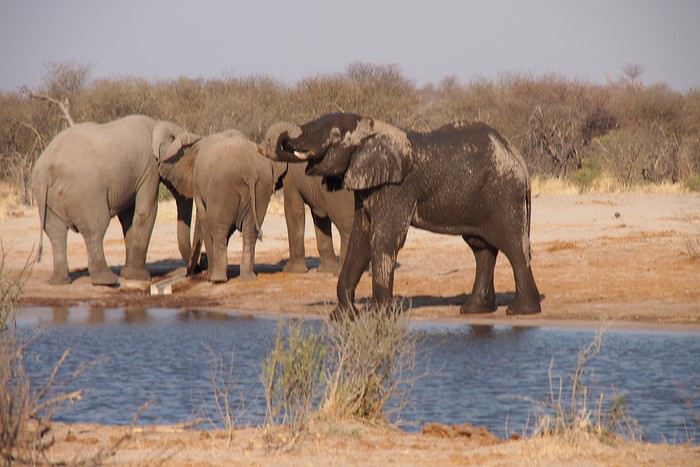
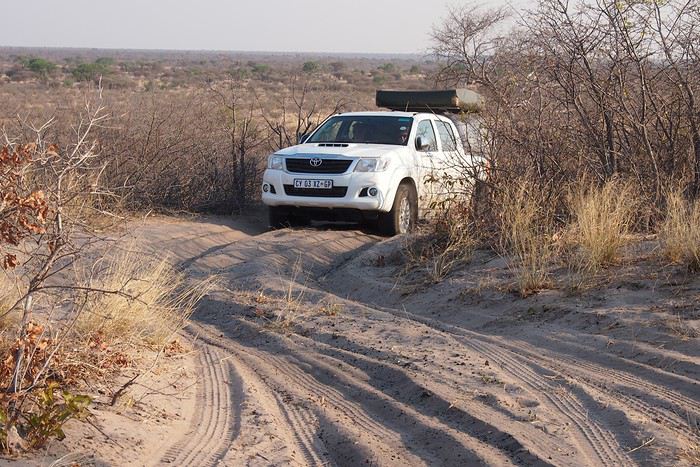
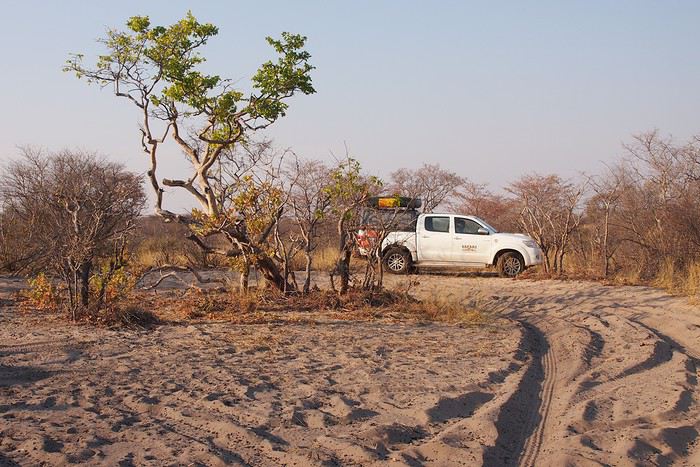
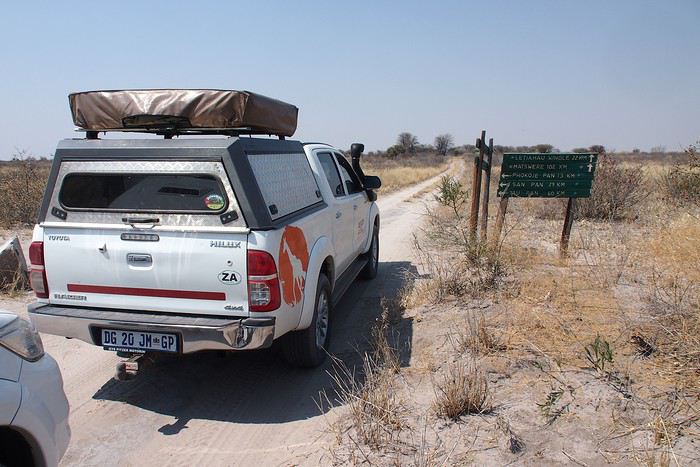
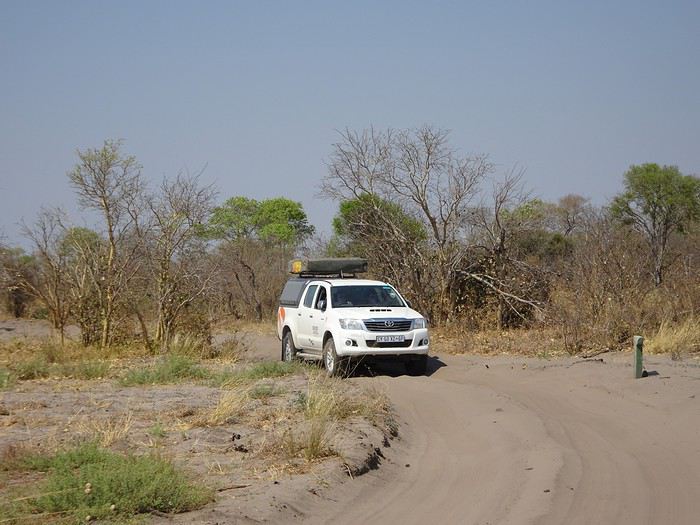
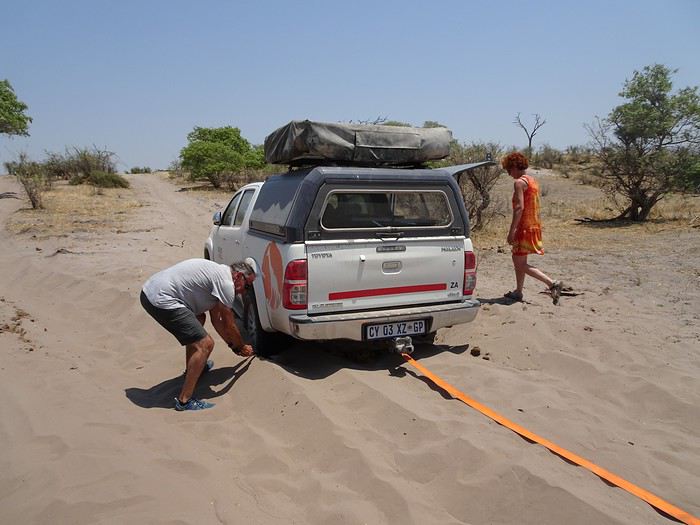
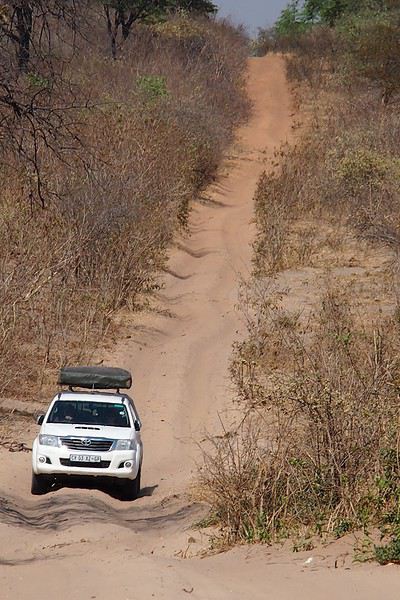
Woke up at 5:00 AM. It was chilly this morning, with a temperature of 13°C. We really appreciated the extra blankets last night. A long 180 km leg awaits us today to Xaxa. The night before, at the previous stop, we deflated the tires in preparation for the sandy tracks. One of the hinges on our friends' rooftop tent needs repairing. Despite this setback, we still manage to leave at 6:30 AM, which is the authorized opening time for the Khutse Reserve. The track is very sandy and bumpy, causing our friends' hard-top partition window to break and our hard-top tailgate to no longer close properly. After stopping, we find there’s a 3 cm gap between the hard-top and the bed of our Hilux due to the left rear hard-top attachment being broken. Luckily, I brought a strap from France that I use to replace the broken attachment. This track is rarely traveled. We only crossed paths with a park ranger’s car and a group of three cars with Batswana today. We arrive in Xaxa around 1:30 PM after 7 hours of grueling driving that required staying in low gear and maintaining a fairly high constant speed (around 40 km/h) to avoid getting stuck in the sand. The Xaxa campsite has only one spot (with no facilities) located on a small hill overlooking a plain below where we can see a few elephants heading to the Xaxa waterhole, about 1 km from the camp. It’s quite hot—37°C. Of our entire trip, Xaxa is where we feel the farthest from everything. That’s exactly what we were looking for. We’ve traveled 1,000 km since Johannesburg. We head to the Xaxa waterhole, where we spend time watching numerous birds (eagles, vultures) and elephants. Then we return to the campsite to set up the tents and prepare dinner. Tonight’s menu: barbecue sausages.


At the Xaxa waterhole


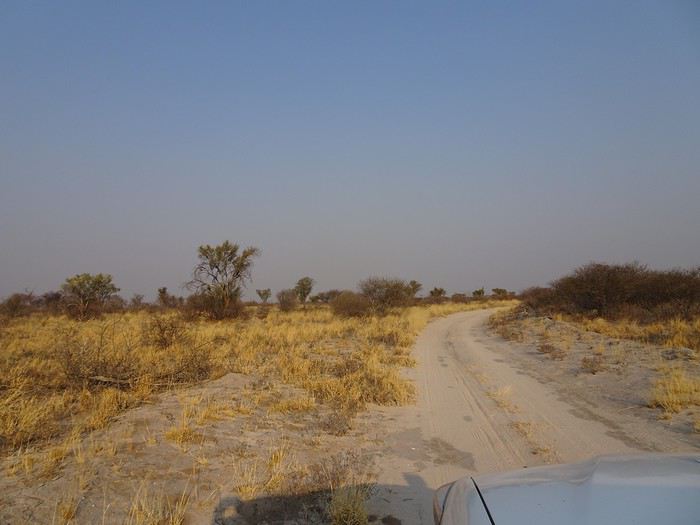
Access track to the Xaxa campsite


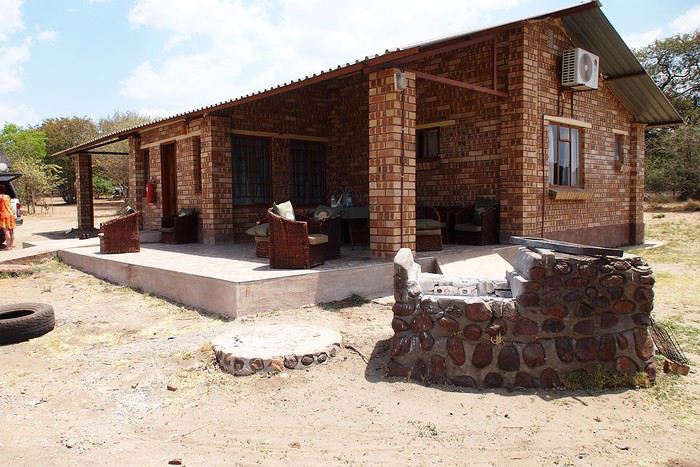
The Xaxa campsite spot.

Tuesday, September 25, 2018

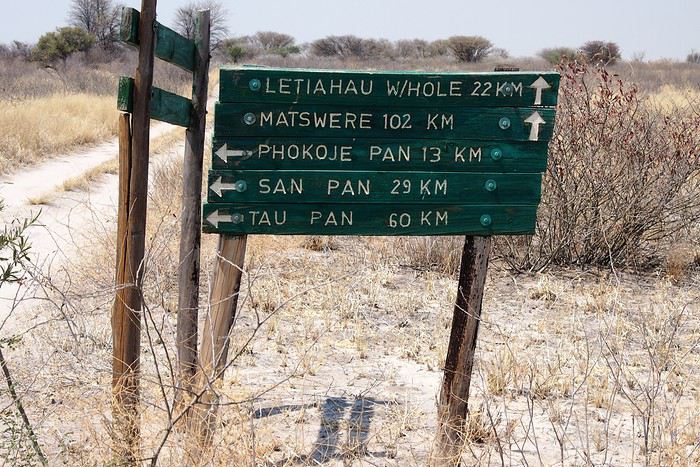
Up at 5:00 AM. The temperature has warmed up—19°C this morning. We leave the camp around 6:30 AM, heading toward Xade Gate. The track is once again very sandy and bumpy. At times, we have to floor the accelerator in low gear. We must be setting fuel consumption records. We arrive at Xade Gate around 9:00 AM to enter the Central Kalahari Game Reserve (CKGR). We sign the entry register, where we see that the last tourists passed through three days earlier. We dispose of our trash in a trailer designated for that purpose and top up our water jerrycans at the police post, where there’s also a chance to take a shower. We set off again toward Piper Pan, 70 km away. The track is better because the sand is less soft. There’s a waterhole at Piper Pan where you can observe many birds. Then we continue on the track toward Deception Valley, where we see numerous animals (oryx, jackals, giraffes, ostriches, antelopes). It’s a nice change from Khutse Game Reserve, where wildlife was scarce. I have a little thought for the Owens couple, who spent 7 years studying hyenas and lions in this valley. Having read their book *Cry of the Kalahari*, I can now picture their story. It’s still hot—38°C. We arrive at spot No. 5 at Deception Valley campsite. We fill the outdoor bathroom bucket with hot water from our jerrycans and take our shower.


RJ Rjulie95 Globetrotter ·
This isolated camp is nice 🙂
"Je suis africain, non pas parce que je suis né en Afrique, mais parce que l'Afrique est née en moi." Kwame Nkrumah.

"J'ai appris que le courage n'est pas l'absence de peur, mais la capacité de la vaincre." Nelson Mandela

https://www.en-voyages.fr
CA Cagiva Regular ·
Wednesday, September 26, 2018

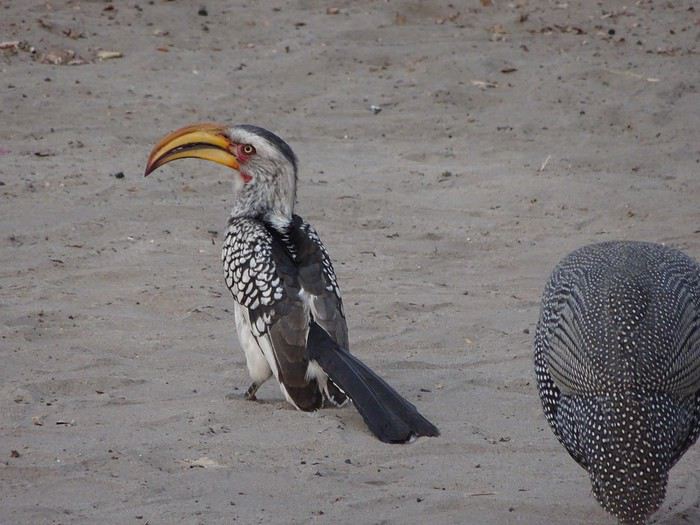
Last night, we heard lions roaring. We got up at 6:00 AM. It was 17°C. This morning, we had breakfast with hornbills picking up the crumbs from our meal.


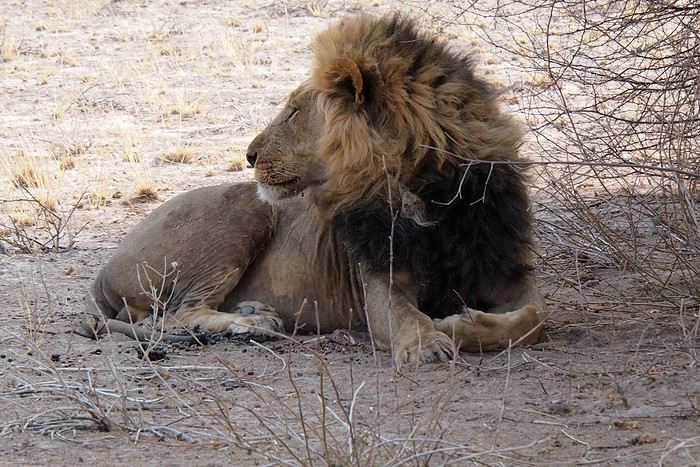
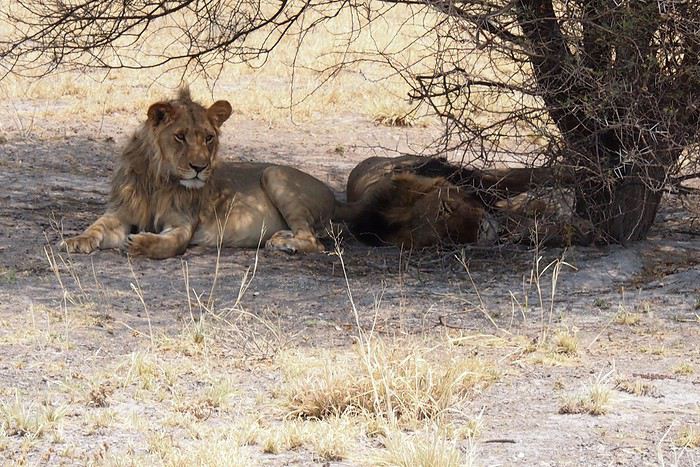
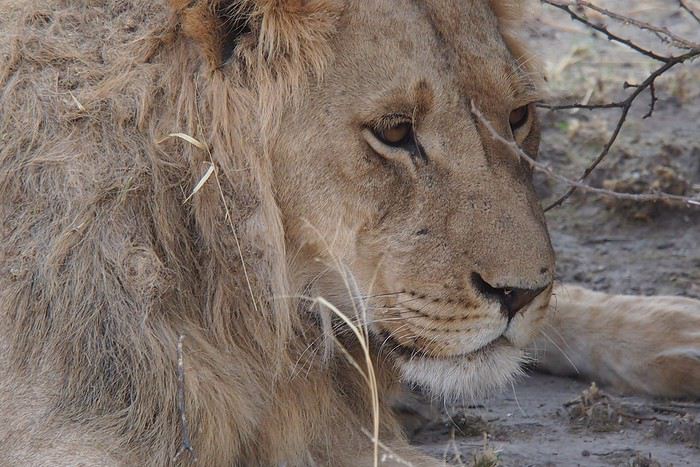
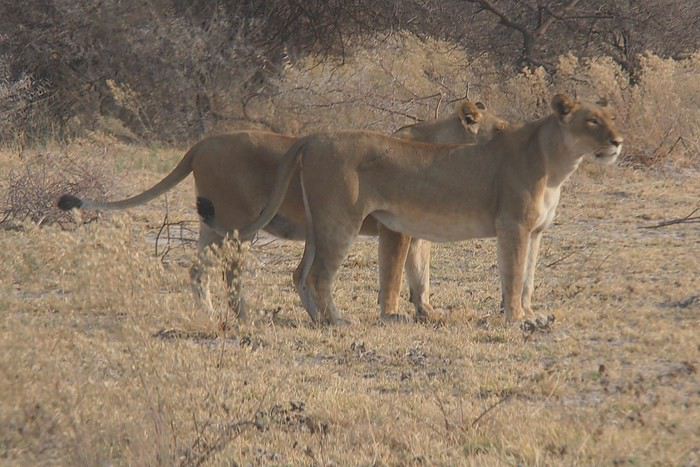
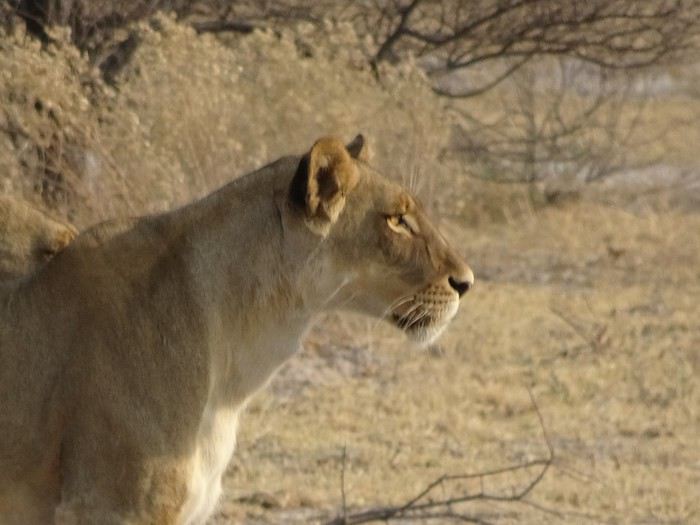
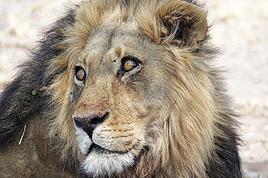
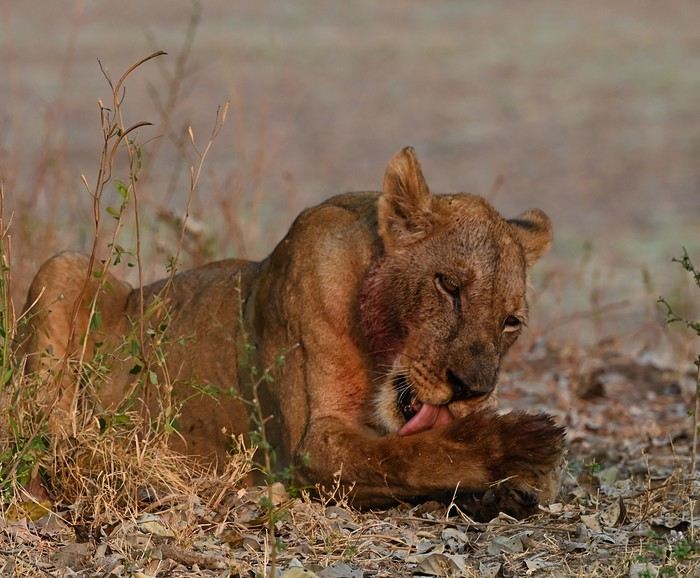
We broke camp around 8:00 AM. A South African told us he’d seen two lions 4 km from the campsite. Those were probably the ones we heard last night. We headed to the spot he mentioned. We were alone with the two lions lounging under a tree. That’s the beauty of Botswana—few tourists mean you can fully enjoy these encounters.


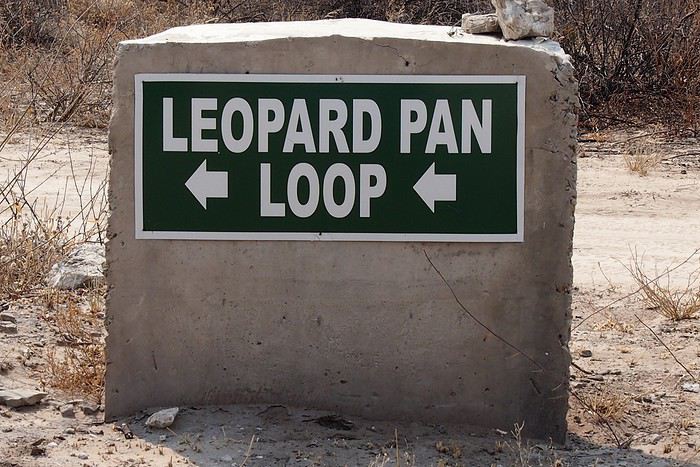
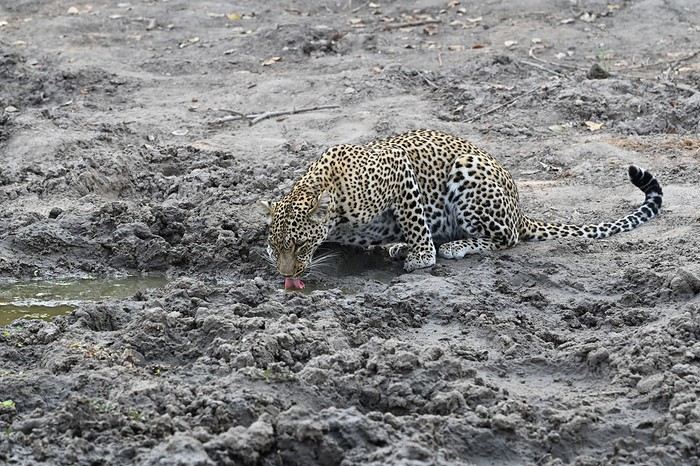
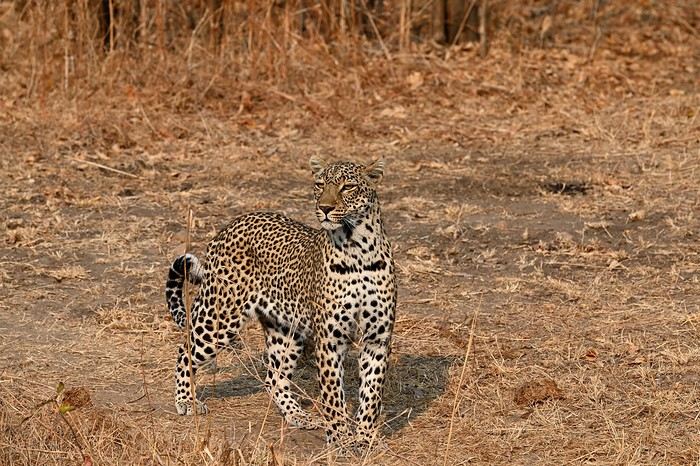
After a long observation session (you never get tired of it), we hit the road again for a small loop north of Deception Valley, passing through Leopard Loop—though, of course, there weren’t any leopards in sight.


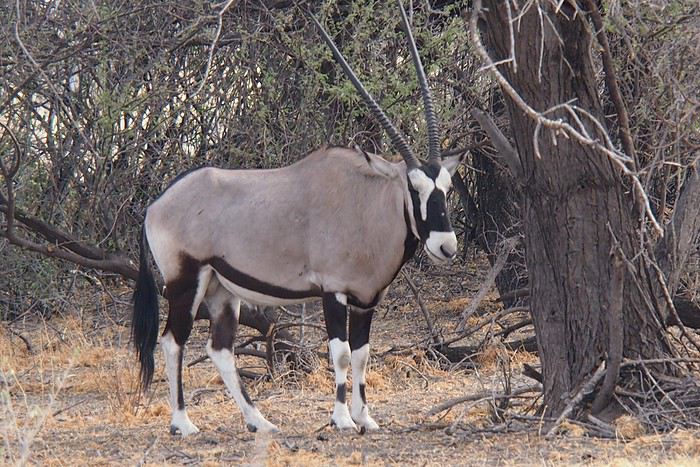
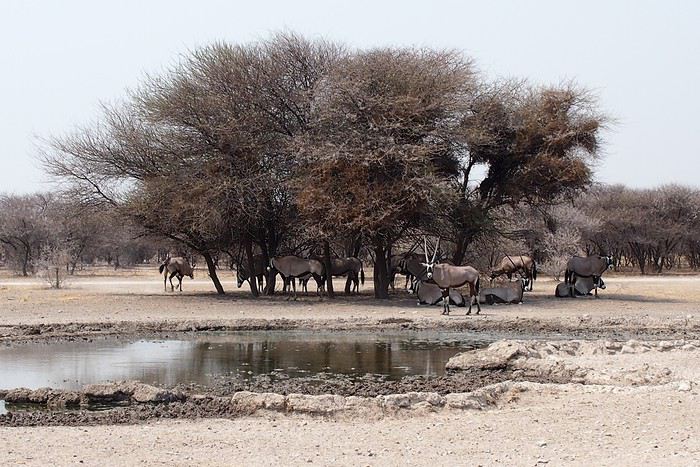
We continued to our campsite at Sunday Pan, where we took spot number 3. We visited the waterhole near the campsite twice—morning and afternoon—and saw oryx and antelopes.


Workers were installing solar panels, likely to power the borehole pump for the waterhole. Tonight, it’s still 34°C at 8:00 PM. We’ve covered 1,269 km since Johannesburg. Thursday, September 27, 2018 Last night, a heat storm brought violent wind gusts—so strong my wife ended up sleeping in the car. This morning, we left around 8:00 AM. We ran into the South African guide Brian Masters again, who told us there were lions near Letiahau. Before reaching Letiahau, we spotted a first group of three lions.


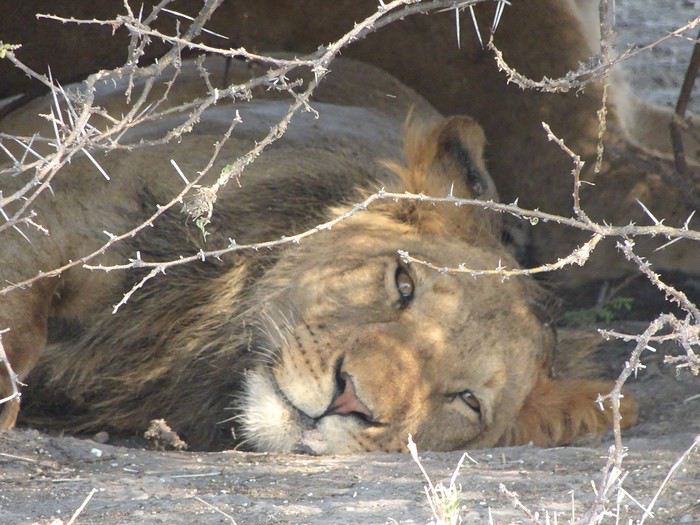
Once again, we were alone to watch them—just like the day before. Amazing!
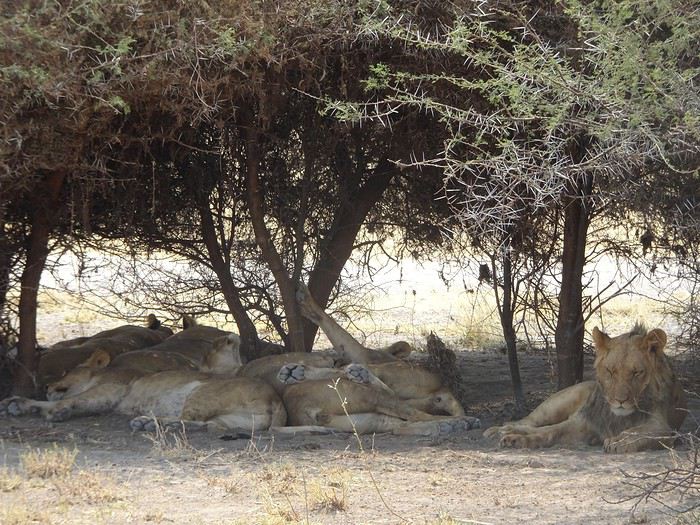
After observing them for a while, we got back on the road and, after a few kilometers, came across a group of seven lions and lionesses. I’d never seen so many up close.


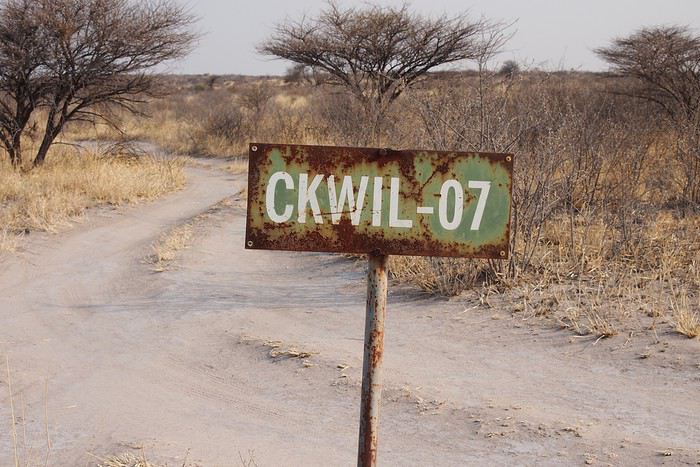
They were a family of huge cats, fascinating to watch. This morning’s outing was fruitful—what a stroke of luck to see two lion groups in such a small area. Today, it’s scorching, with temperatures stuck at 40°C. We returned to the Letiahau CKWIL campsite for lunch.


In the afternoon, we went to the Letiahau waterhole but struck out—no animals around. You can’t win every time. We’ve now traveled 1,377 km since Johannesburg.


CA Cagiva Regular ·
Friday, September 28, 2018

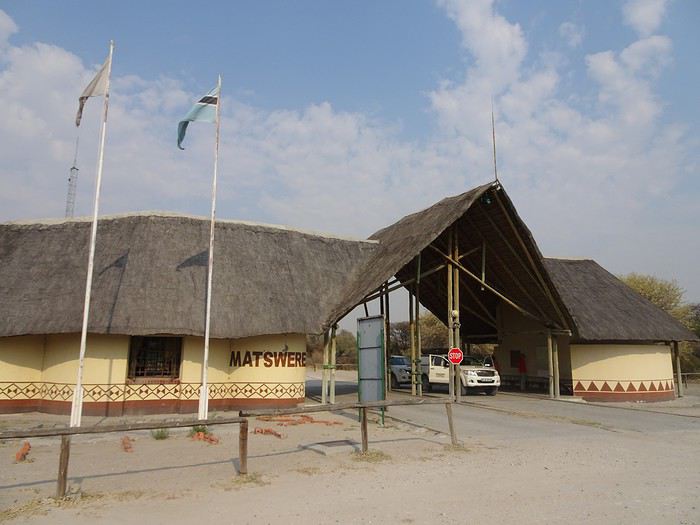
This morning, we got up at 5:00 AM. It was 21°C. We left CKGR via the Matswere Gate around 8:30 AM. We asked the park rangers if there was diesel in Rakops. Kindly, the rangers called the gas station in Rakops, which confirmed they were stocked. Good thing, that saved us a detour to Mopipi.


After 1.5 hours on an easy, well-maintained track, we reached the paved road in Rakops.


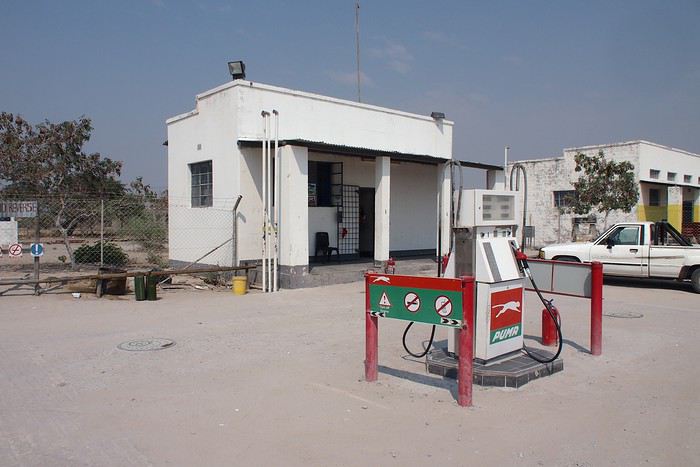
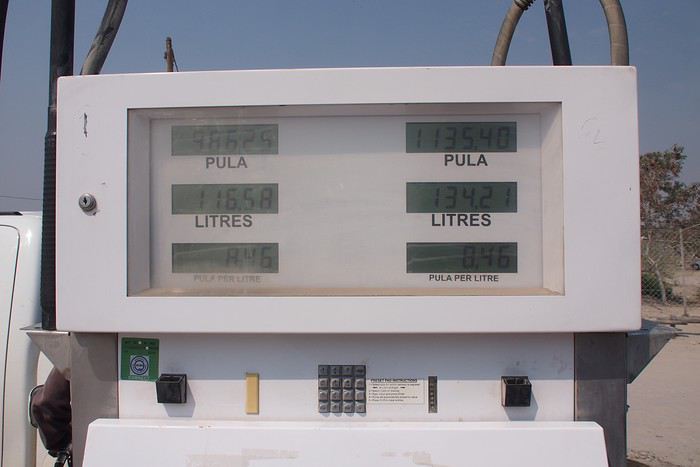
It took us 6 days to cross the Kalahari. We used 146 liters of diesel for 906 km, which is about 16 L/100 km. We filled up at the gas station in Rakops, where it was scorching hot—42°C.


Rakops is a small, spread-out town off the B300 road. There are a few grocery stores where you can stock up. Around the town, there are many herds of cattle.

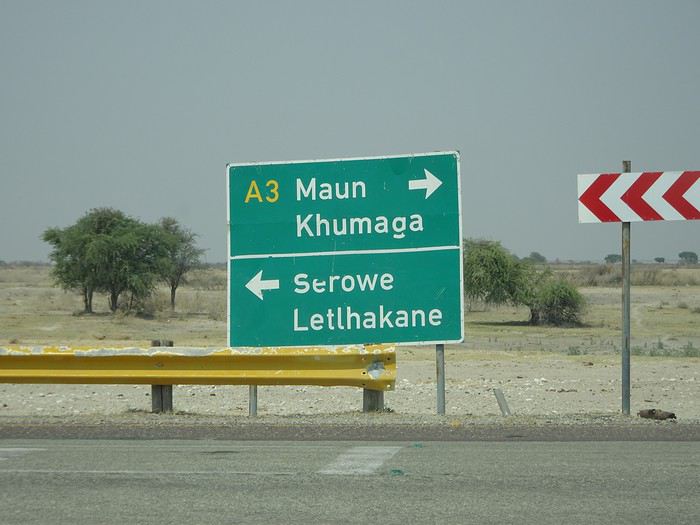
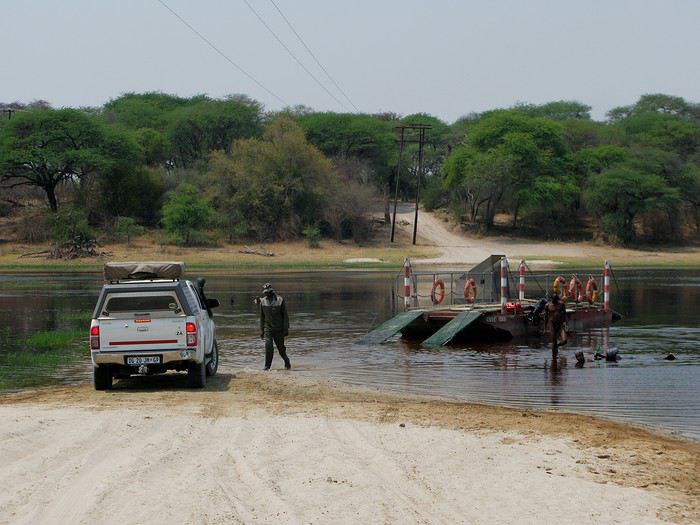
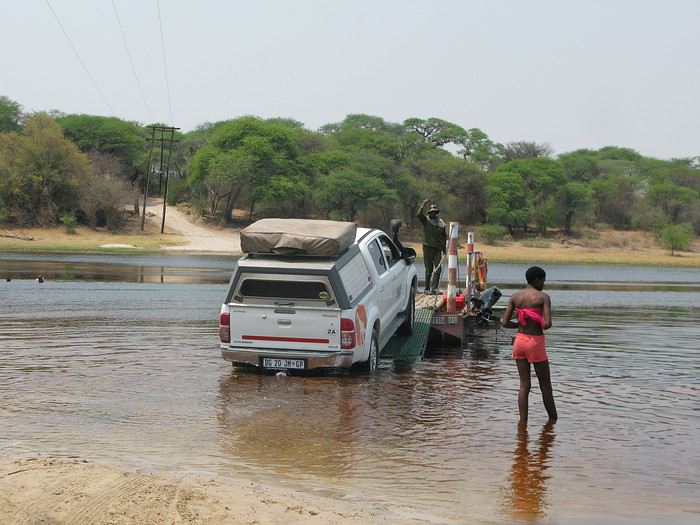
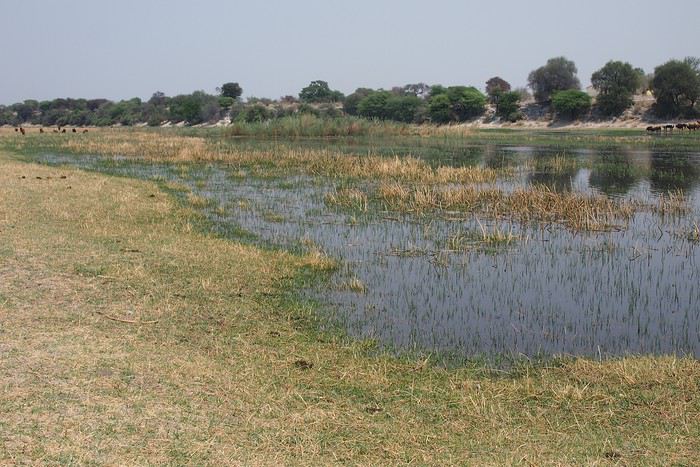
We took the B300 north toward Khumaga. When we arrived in Khumaga, we headed to the Boteti River, and to our surprise, there was water—I thought this river was dry based on photos I’d seen online. The landscape is stunning. We had to take the ferry, which only carries one car at a time. Crossing fee: 150 Pulas


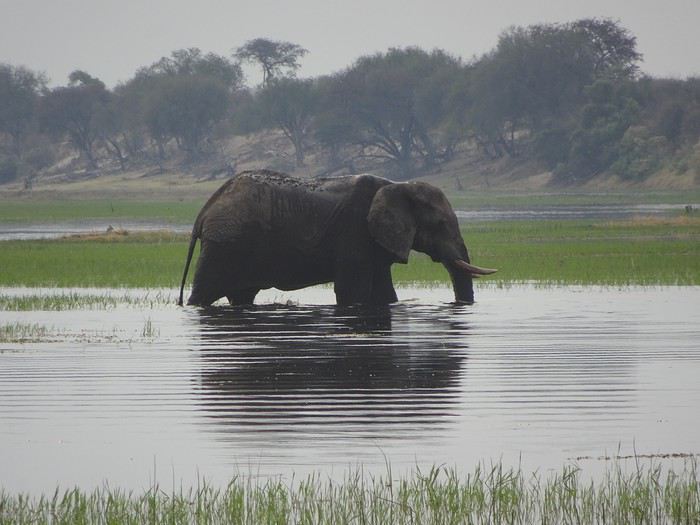
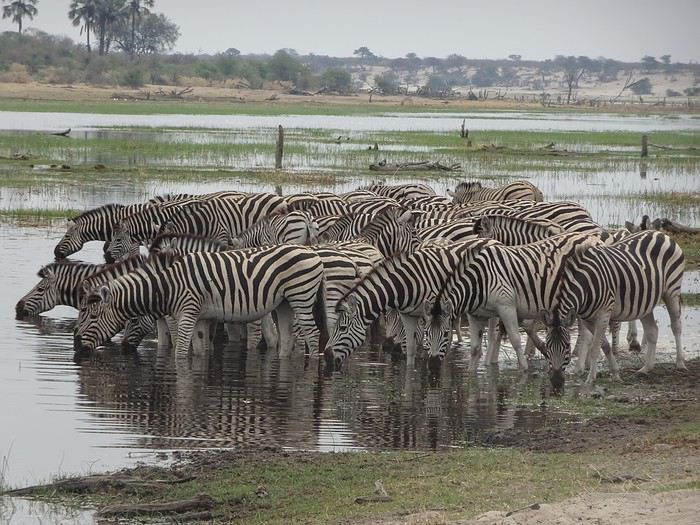
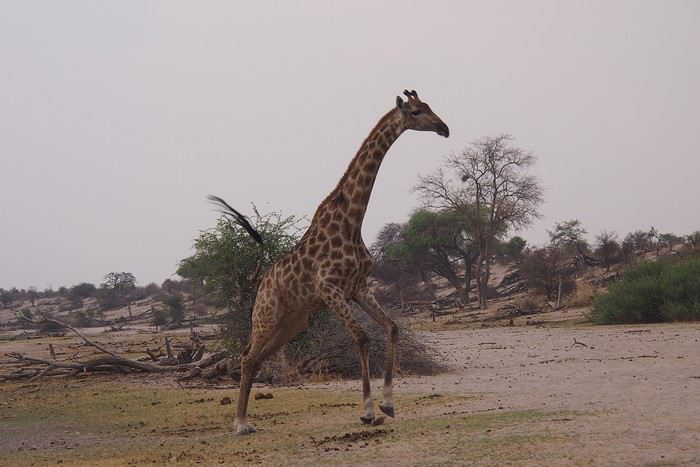
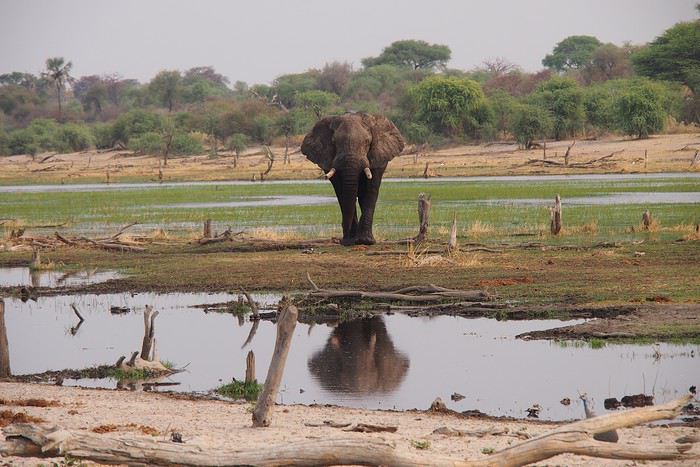
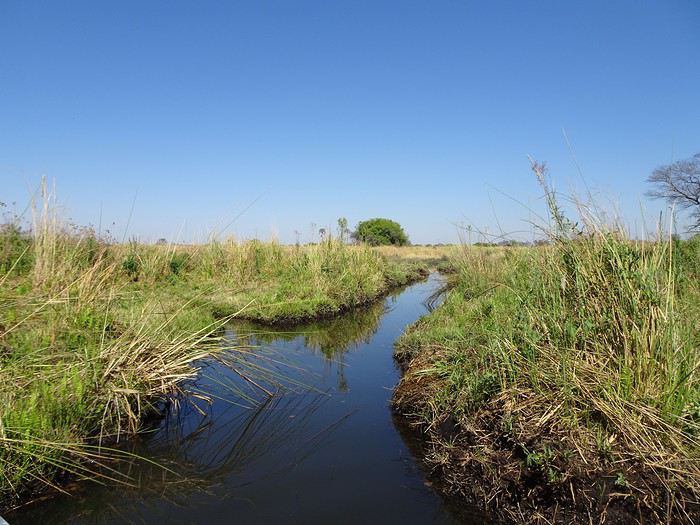
On the other side, we entered the Makgadikgadi Pans National Park via the Khumaga Gate. We headed to site KK10 at the Khumaga campsite. Since we arrived in the late afternoon, the light was perfect, and we set off on the track along the Boteti River toward the northwest. This place is magical. It’s exactly what you’d imagine as an animal paradise. A deep sense of peace reigns here. Animals come to drink or bathe in the Boteti River. Of our entire trip in Botswana, this is my favorite spot.


We were lucky—we were practically alone by the river, and there were lots of animals. It’s truly an enchanting place.
JE JeffSam Regular ·
Really helpful.

My wife and I are heading to Botswana next May—this travel journal comes at just the right time!
CA Cagiva Regular ·
Saturday, September 29, 2018

Sunrise at 6:00 AM. Temperature: 21°C. The sunrises are still just as breathtaking. This morning, we take the track again that follows the Boteti River, which we took the day before. Unfortunately, the animals didn’t show up, but we once again enjoy this track that runs alongside the river, offering magnificent views of the waterway.


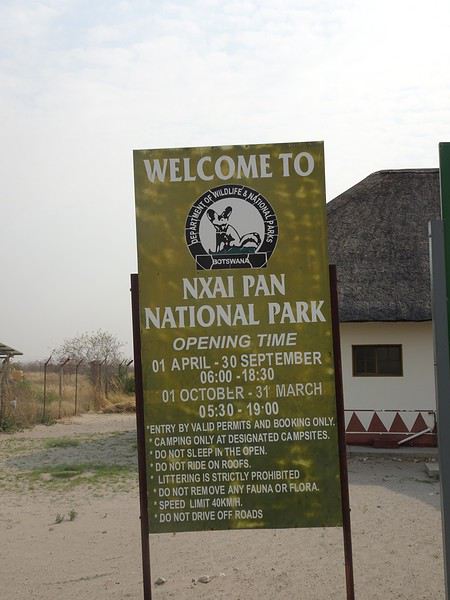
We continue north toward the entrance of Nxai Pan National Park. At the park entrance, we fill out the entry register, as we’ve done many times since our departure. While chatting with the rangers, they advise us to take the southern track leading to Baines Baobabs, saying it’s better than the northern one.


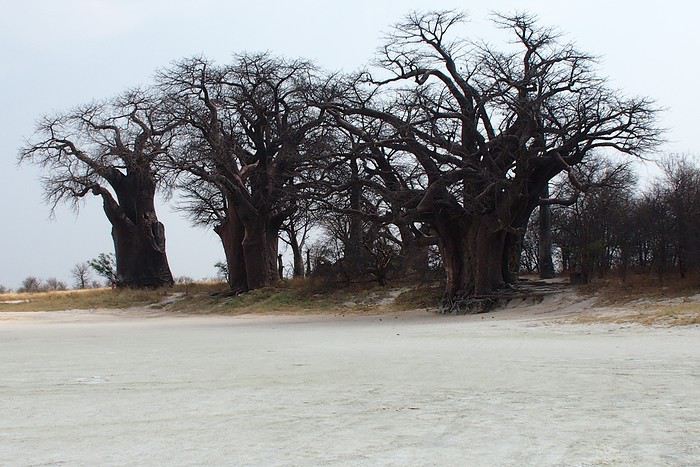
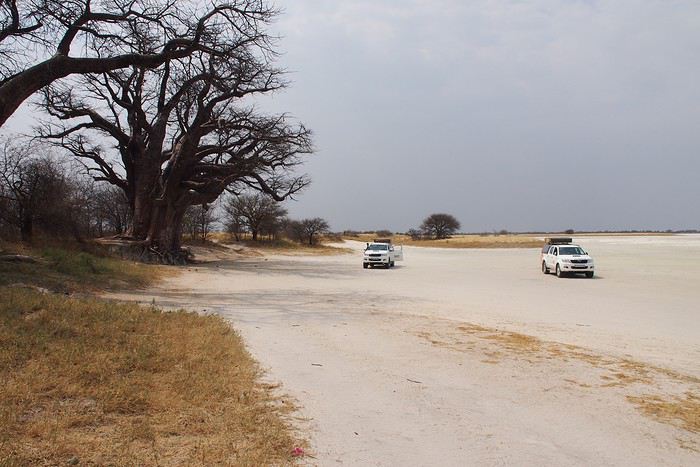
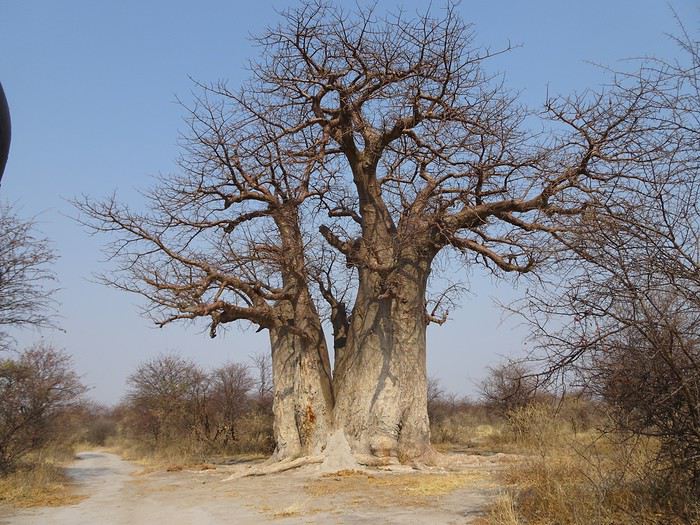
We take the northern track and, after 17 km, turn right toward the east in the direction of Baines Baobabs, a cluster of baobabs by a salt lake.


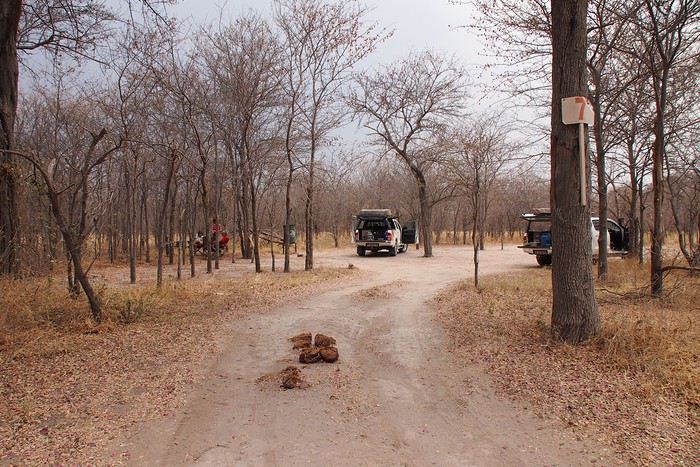
We turn back and rejoin the northern track, which leads us to South Camp, where we’ll spend the night.


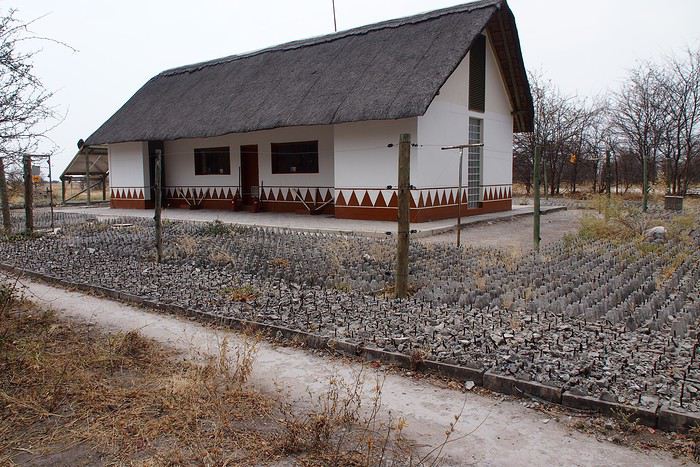
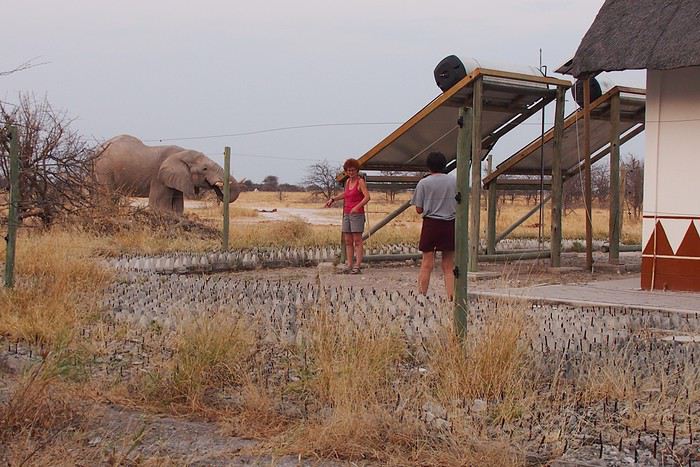
The camp’s toilets are surrounded by electric fences (which don’t work) and concrete blocks studded with iron spikes to keep elephants from approaching.


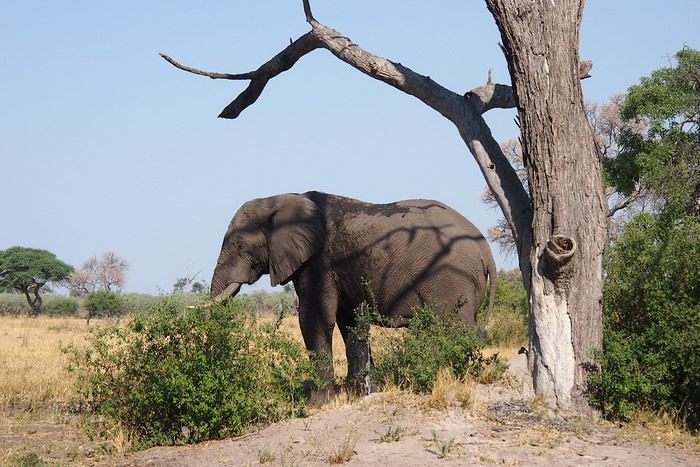
No matter—elephants still come to drink from the wastewater pit of the toilets. Sunday, September 30, 2018

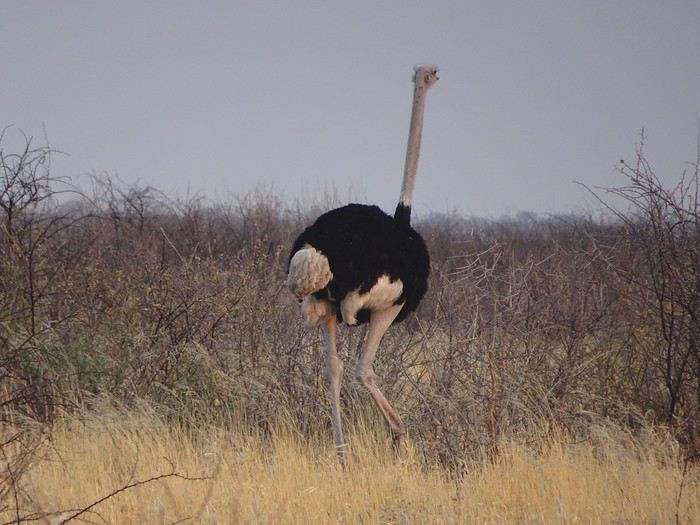
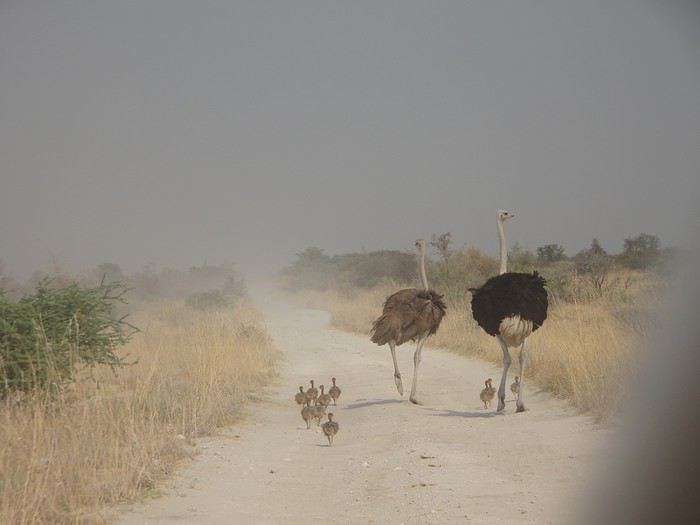
Sunrise at 6:00 AM. Temperature: 20°C. This morning, there’s already an elephant near the camp toilets. Before leaving, we make a detour to the permanent waterhole, where we spot some ostriches. Then we continue with the Baobab Loop in the northern part of Nxai Park.


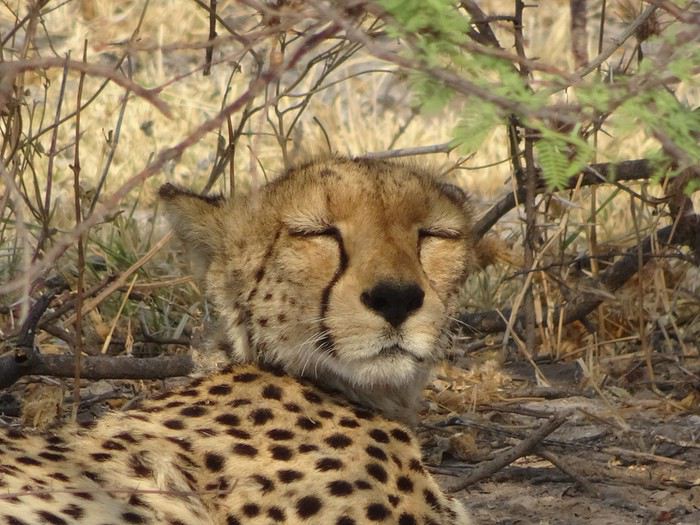
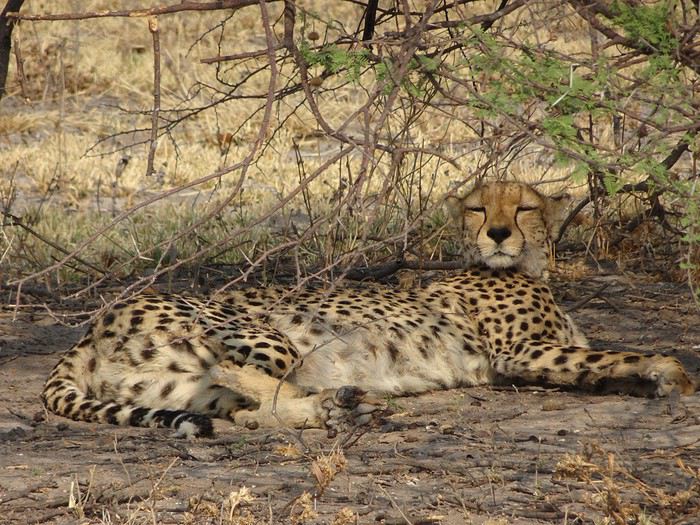
On this loop, we encounter two lionesses on the hunt and a cheetah.


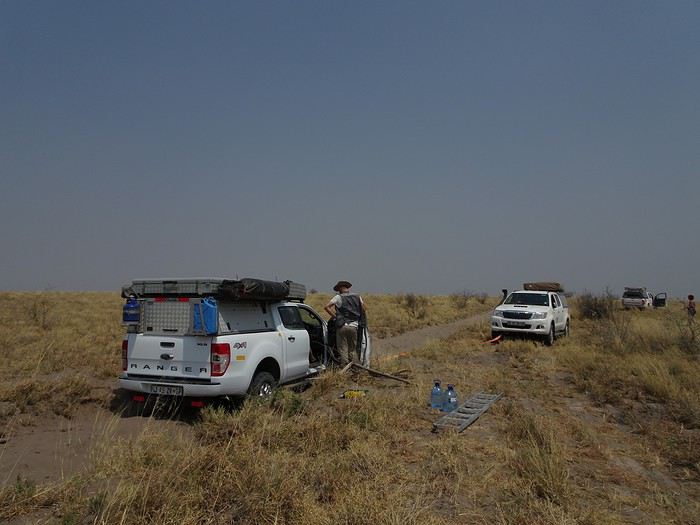
On our way back to the Nxai Park entrance, we’re stopped by a young English couple, Laura and Tom, who’ve walked 4 km because they’re stuck in the sand on the Baines Baobabs track. They tell us something that shocks us: before us, they’d stopped another couple of tourists to ask for help, who told them they’d help *if* they were still there when they came back. Let’s not forget—they were in the middle of the park, on foot, at the mercy of any wild animal (and there are plenty in this reserve). So, we load them into our cars to go pull them out. Our friends try to tow them with the recovery rope but end up getting stuck themselves.


I can’t afford to make a mistake. I drive off the track and onto the harder shoulder, where I can pull out both stuck vehicles one after the other. We get back on the track together and head to the park exit, where we take time to inflate our tires. We take the E3 road toward Maun, where at times we have to weave between potholes. Note that the speed limit is 80 km/h until Maun—a limit we strictly respect, having heard that police often set up speed checks. It takes about 2.5 hours to cover the 136 km from the Nxai Pan exit to Maun. We head to Island Safari Lodge, where we’ll stay for two nights. At reception, we’re relieved to pick up the missing reservation vouchers for the Third Bridge and Kang campsites, allowing us to continue our trip with peace of mind. Island Safari Lodge is located away from Maun, in a large park by the river, where there’s a constant flow of motorboats and mokoros.


Cost of our room: $118, breakfast included. We dine at the lodge. Cost: 850 Pulas for four (77 €). The Wi-Fi works, and we can contact family. Today, September 30, is Botswana’s Independence Day, and the next two days, October 1 and 2, are also public holidays. Good to know, as banks will be closed on those days. We take advantage of the lodge’s laundry service to wash our clothes at a very low cost.
CA Cagiva Regular ·
Monday, October 1, 2018

This morning, we head to downtown Maun to exchange some money.


Since the banks are closed for a national holiday, we turn to ATMs instead. We try the first one, but it doesn’t accept Visa withdrawals. We then head to a second ATM at ABC Bank, where we’re allowed to withdraw a maximum of 2,500 Pulas per transaction. Later, we find an open exchange bureau where we can exchange at a rate of 1 € = 11.78 Pulas. We fill up the 4x4s at 8.45 Pulas per liter. Since our last fill-up in Rakops on the way out of the Kalahari, our consumption has been 12L/100 km. We buy supplies and drinking water at the Spar supermarket. We head to the museum, but it’s closed. Then we stop at an open-air market where we buy a few souvenirs, including a wooden Land Defender for me.


In the evening, we return to the lodge for dinner. We’ve traveled 1,947 km since Johannesburg.

Tuesday, October 2, 2018

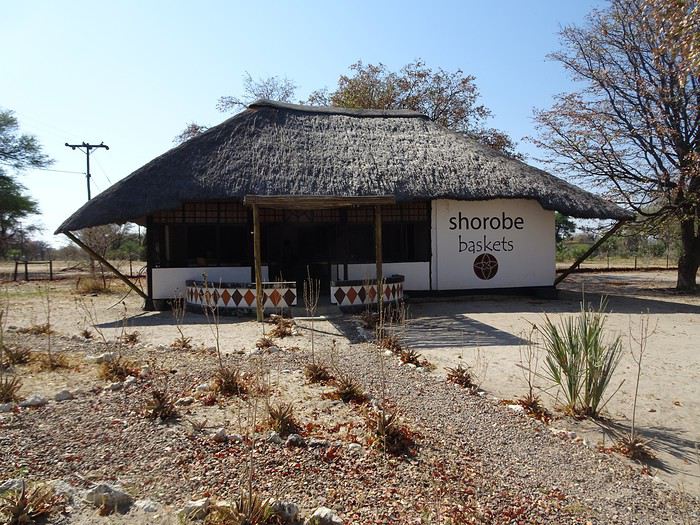
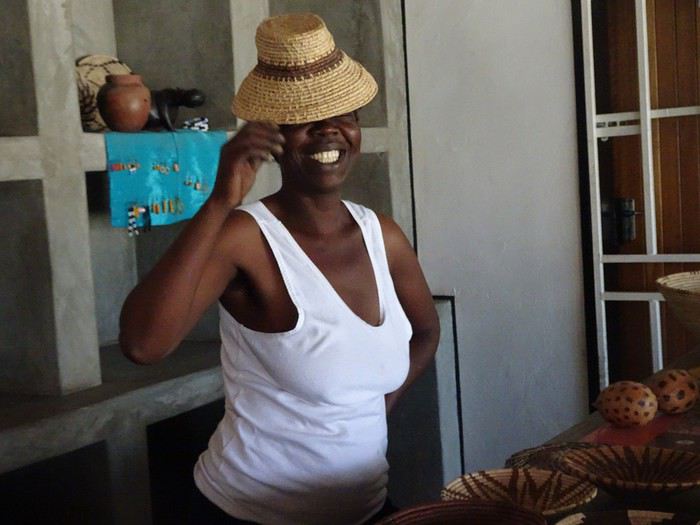
Up at 6:00 AM. Temperature: 18°C. This morning, we return to the Spar in Maun to buy fresh products (dairy, meat) for our next resupply, which is planned in 7 days in Kasane. We head toward the Moremi Game Reserve. Along the way, we stop at the Shorobe basket-weaving cooperative, 40 km northeast of Maun. The cooperative is closed, but we find a young boy who we take in the car, and he guides us to the woman who runs the cooperative. We take her along, and she opens the doors of her cooperative for us.


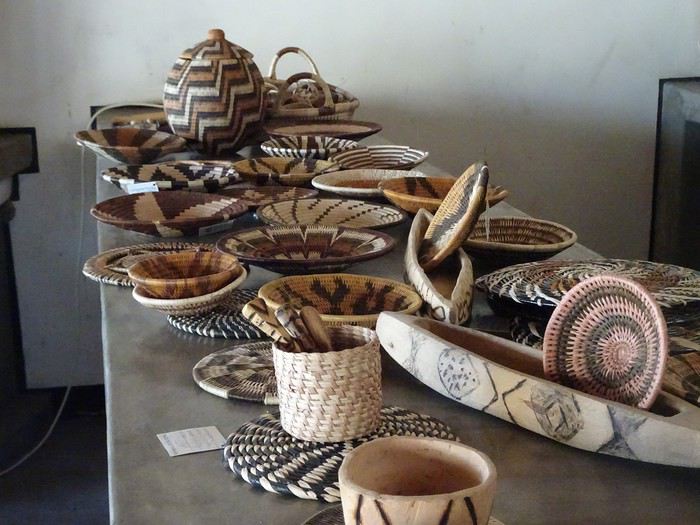
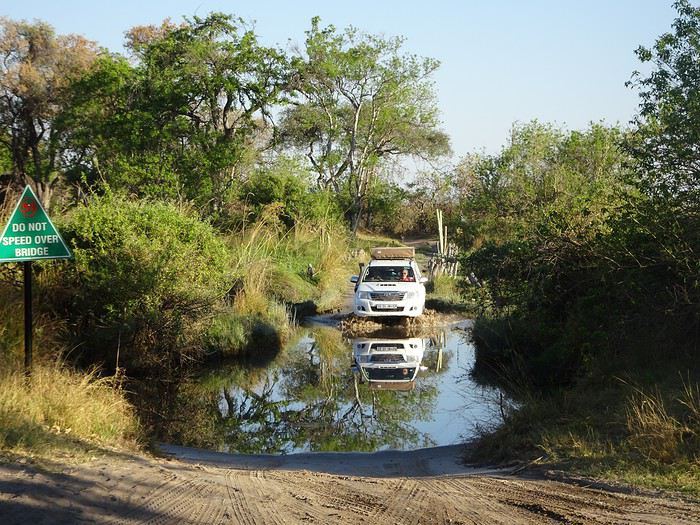
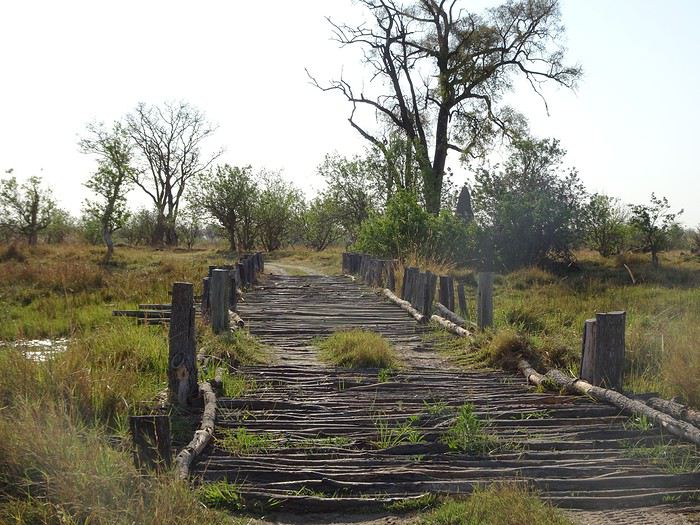
She shows us all the basket-weaving items, which are very well made. Even though the prices are high, we don’t hesitate to buy some because we know that 90% of the price goes to the woman who makes the baskets. We continue on the road to Moremi. The track between Shorobe and the South Gate entrance is easy. For entry into Moremi Park, we pay 480 Pulas for 2 days, one car, and 2 people. Tonight, we’re staying at the Third Bridge campsite. The track between the park entrance and the campsite is very sandy and bumpy.


Elephants wander through the middle of the campsite.


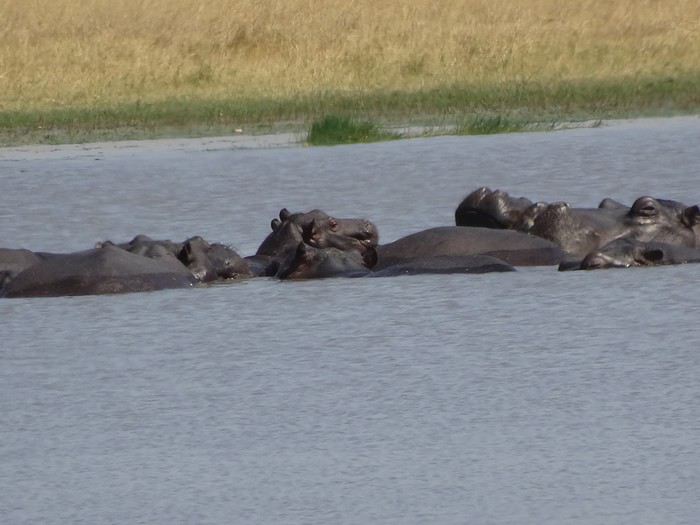
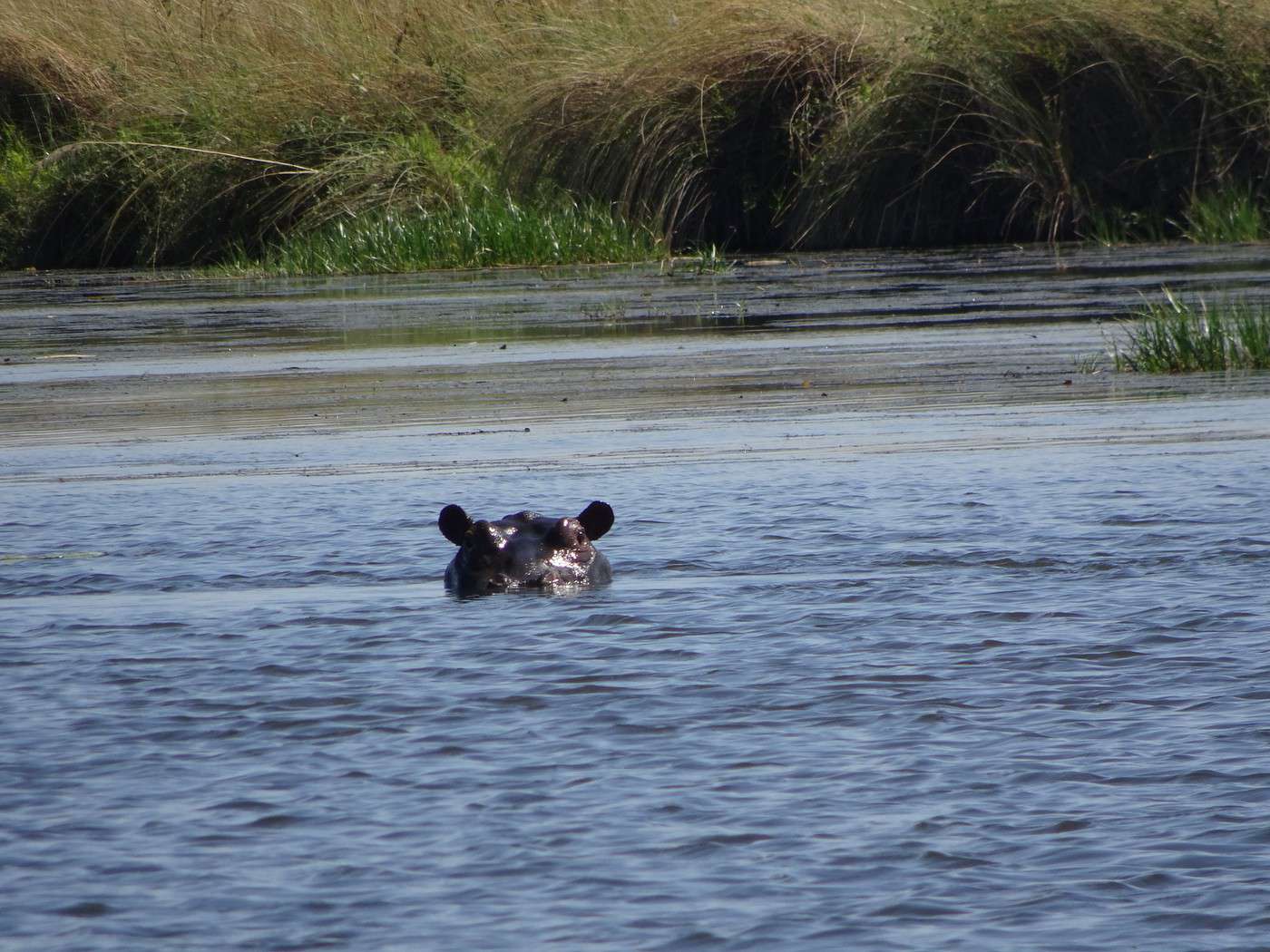
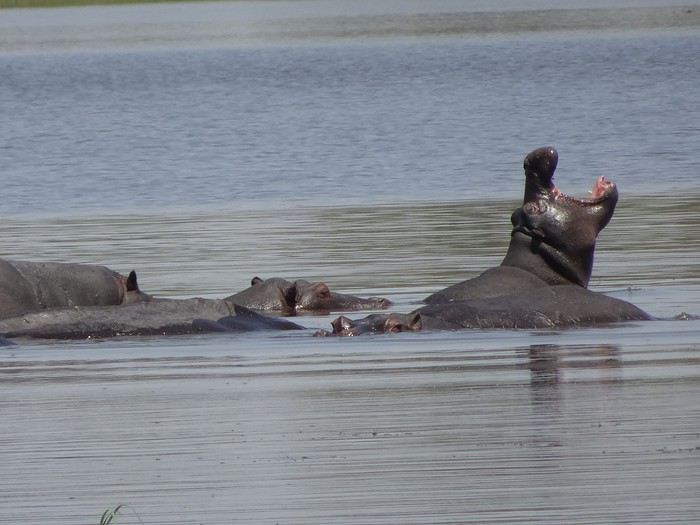
The hippo pool in front of the campsite entrance.

We book a boat cruise at the campsite reception for the next day from 8:30 to 10:30 AM. Cost: 600 Pulas/hour for a boat that seats 4 people
RJ Rjulie95 Globetrotter ·
Unbelievable, the sanding trick 😡
"Je suis africain, non pas parce que je suis né en Afrique, mais parce que l'Afrique est née en moi." Kwame Nkrumah.

"J'ai appris que le courage n'est pas l'absence de peur, mais la capacité de la vaincre." Nelson Mandela

https://www.en-voyages.fr
CA Cagiva Regular ·
Wednesday, October 3, 2018

Woke up at 6:00 AM. Temperature: 12°C. The night was particularly chilly and restless. Lots of animal noises throughout the night, especially hippos grunting around the tent. In situations like that, we’re glad to be sleeping up high on the car roof instead of on the ground. This morning, we’re repairing our friends’ roof tent for the umpteenth time—it’s not handling the rough roads well. On my way to the shower this morning, I ran into a female elephant with her calf, who mock-charged at me. Needless to say, I took a big detour to avoid getting too close.


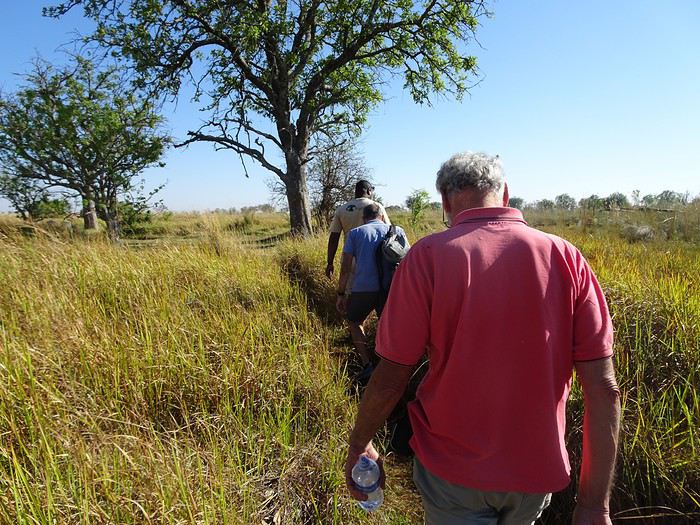
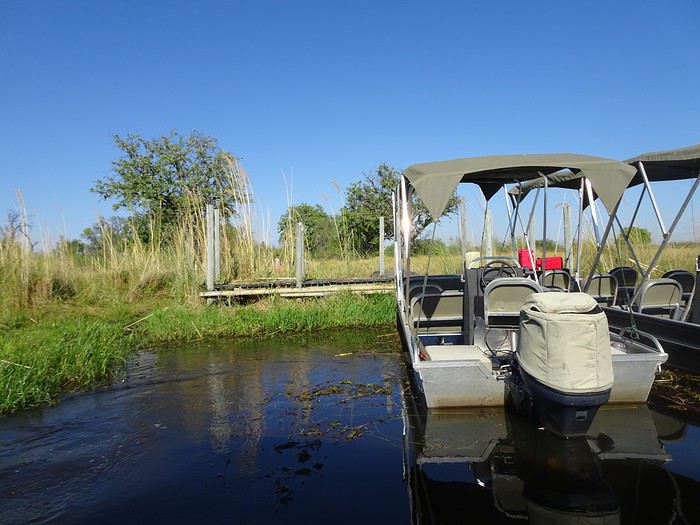
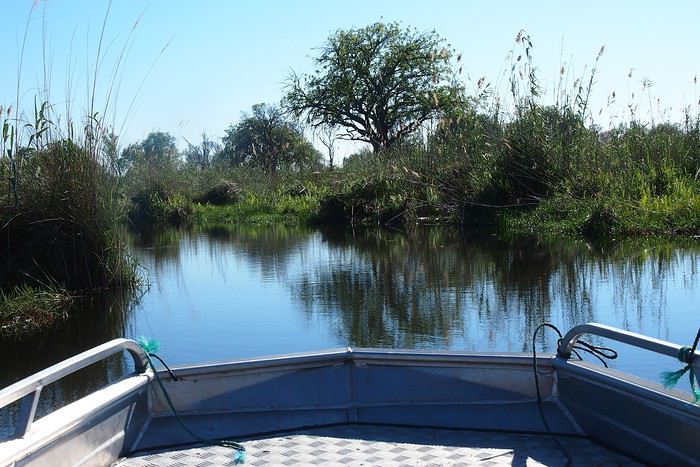
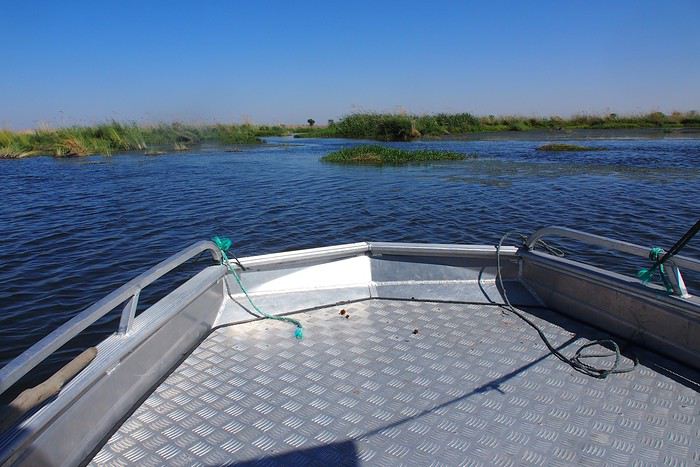
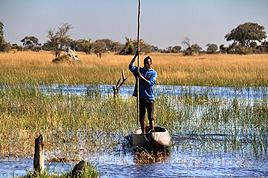
After breakfast, we meet the boatman at the campsite reception who’ll take us on a 2-hour cruise along the Orotébé River in the Okavango Delta. This place has been a dream of mine ever since I saw the stunning images on the *Ushuaia* show—I can hardly believe we’re actually here to see it for ourselves. The advantage of leaving from the campsite is that there are only two boats, so no risk of ending up on a river highway. The trip starts with a short walk through the tall grass to reach the jetty where the boats are moored.


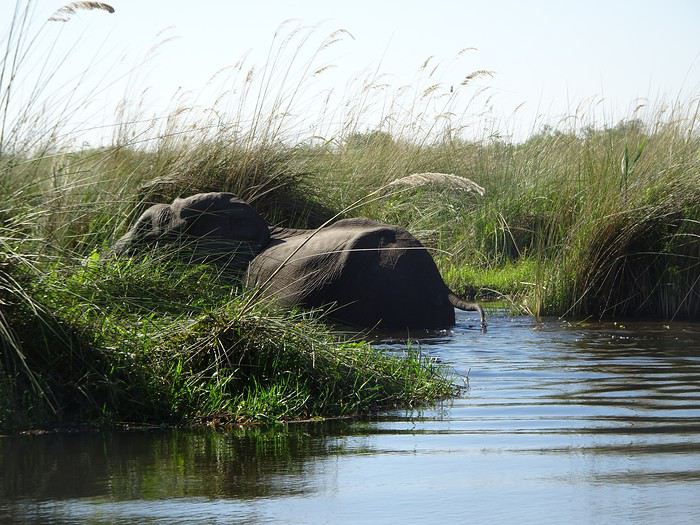
The boatman drives slowly, giving us plenty of time to photograph the animals along the riverbanks.


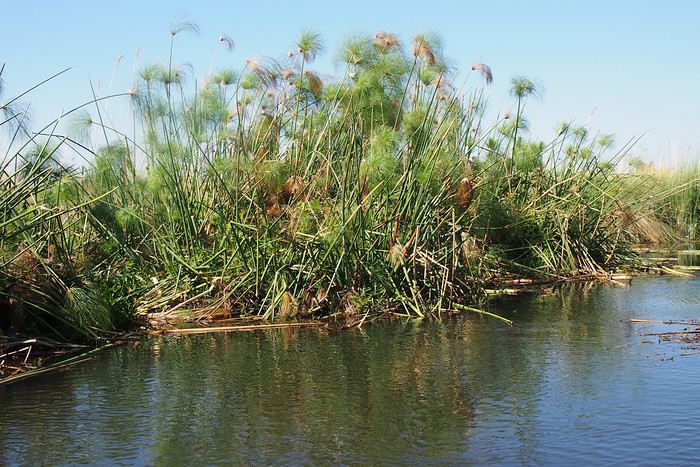
We navigate between walls of papyrus in some areas.


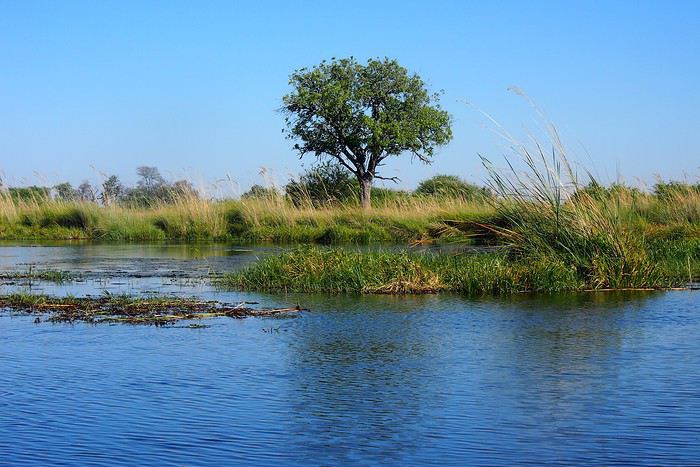
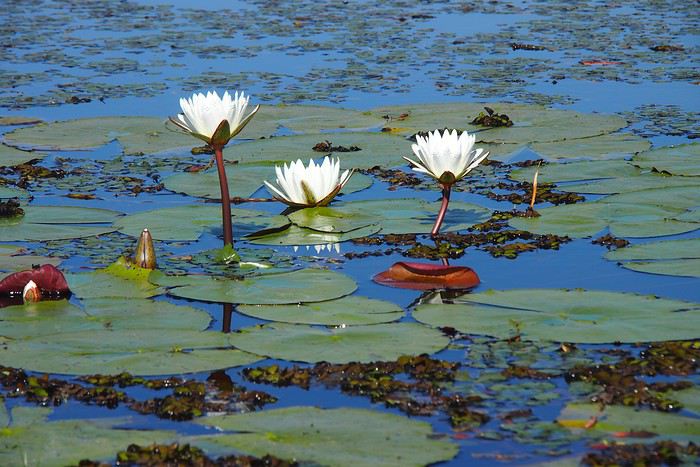
The river is winding with many branches. The vegetation is lush, creating a stark contrast with the dry, semi-desert landscapes we’ve seen so far.


We return the same way, with the boatman speeding through the river’s twists and turns so fast it feels like an amusement park ride. All in all, we had an amazing morning in the Okavango Delta—it’s truly a must-see.

In the afternoon, we’ll do the Mbola loop (30 km in 2.5 hours).


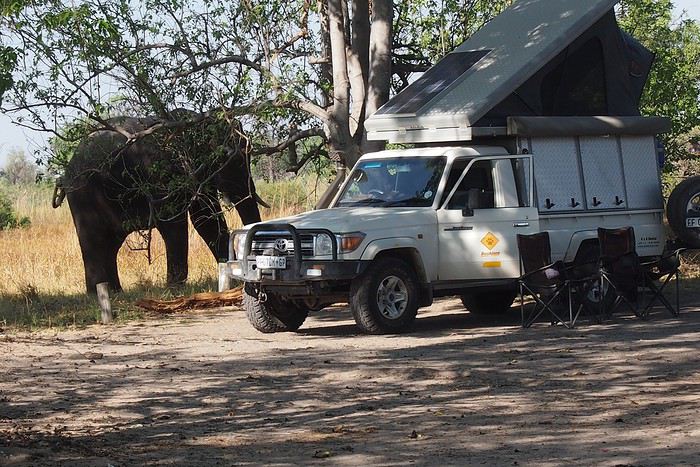
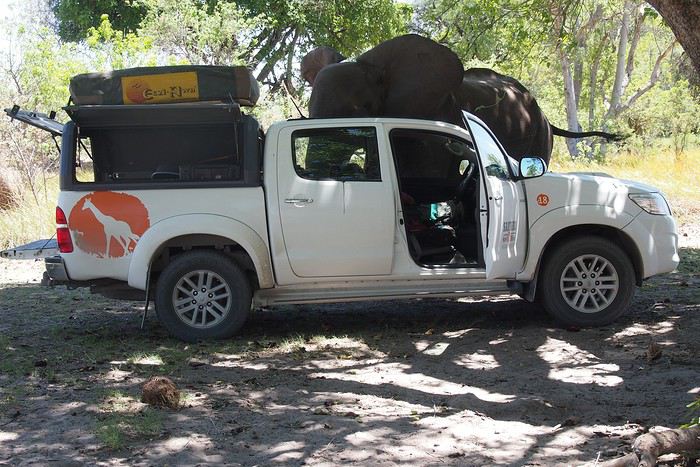
At Third Bridge campsite, elephants come right up to the cars.

We’ve covered 2,132 km since Johannesburg. Today’s temperature: 37°C.
CA Cagiva Regular ·
Thursday, October 4, 2018

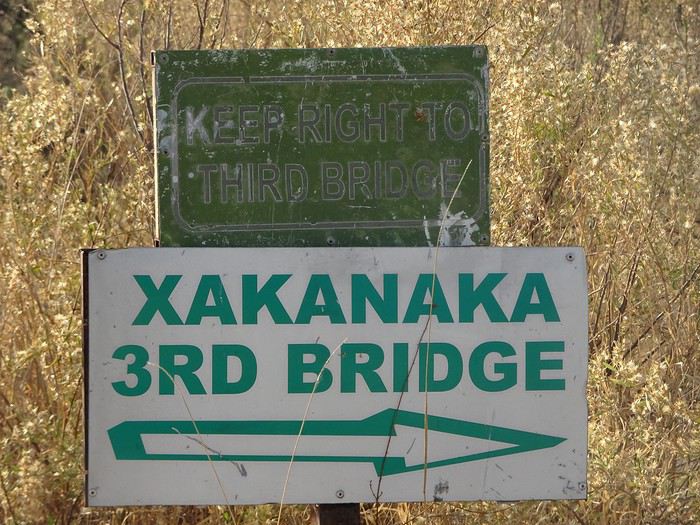
This morning, the temperature was 17°C. We left around 7:30 AM, taking the Third Bridge toward Xakanaka.


We passed by Paradise Pool and Hippo Pools.


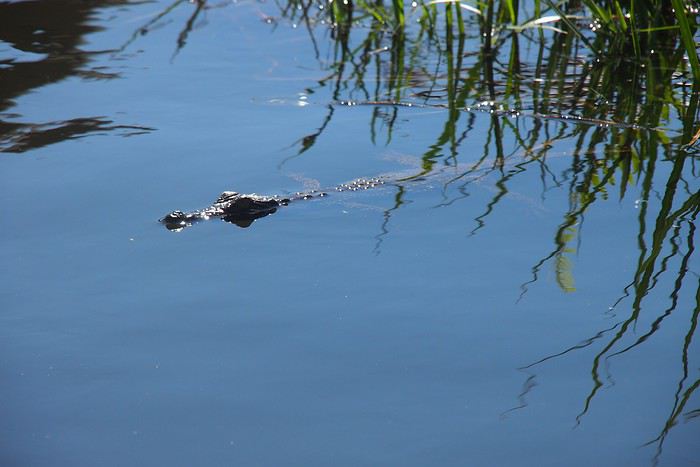
We exited the Moremi Game Reserve via the North Gate. We passed through Kwai and took the gravel road leading to our next stop, the Magotho campsite. From there, we followed the Kwai River, where we spotted elephants, hippos, a crocodile, and various antelopes. We’ve traveled 2,239 km since Johannesburg. Today’s temperature was 36°C.
CA Cagiva Regular ·
Friday, October 5, 2018

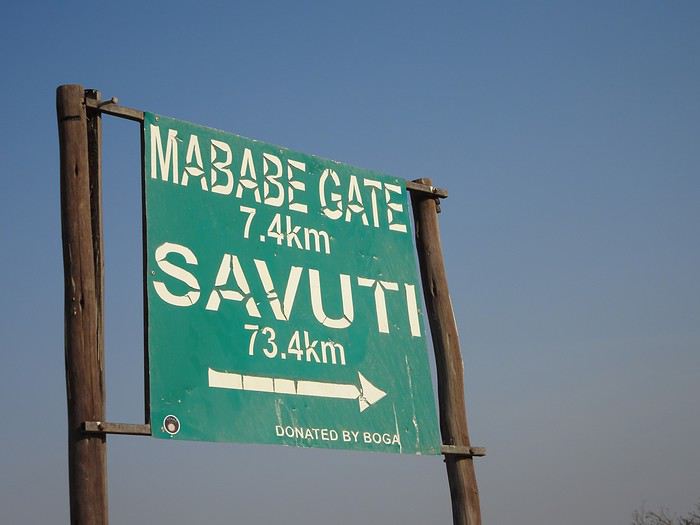
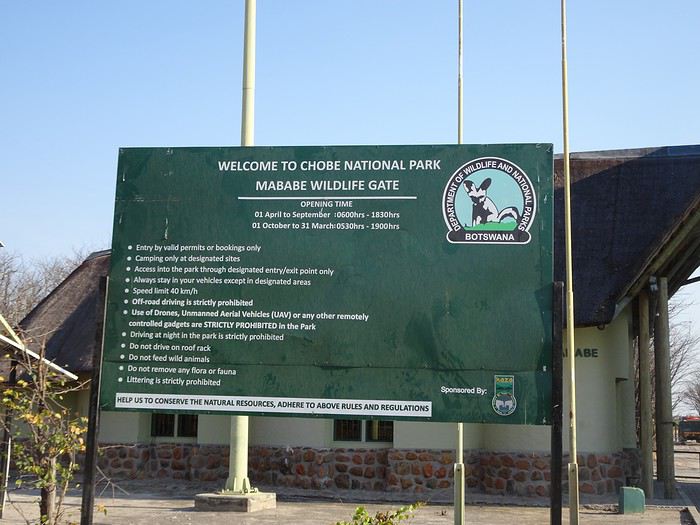
Sunrise at 6:00 AM. Temperature: 15°C. We left the Magotho campsite heading toward Mababe South Gate, the entrance to Chobe National Park. We took the track north toward Savuti.


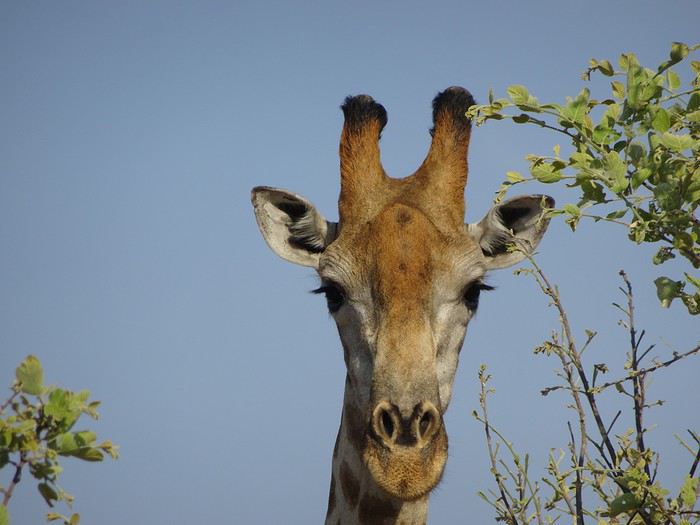
We passed at the foot of Leopard Rock and Gobabis Hills, where San rock engravings are located. We didn’t go see them because we thought it would be unwise to go for a walk on foot in the middle of a national park. We continued toward Linyanti, where we slept that night. We saw elephants and giraffes.


The track was very sandy, and we had to pull our friends out after they got stuck twice.


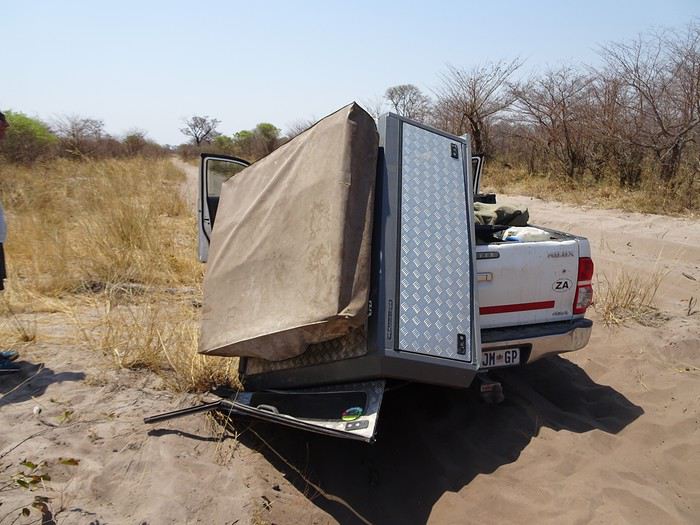
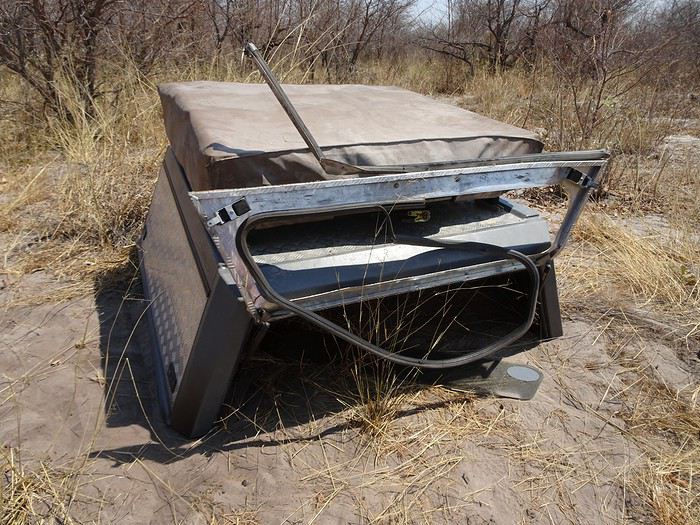
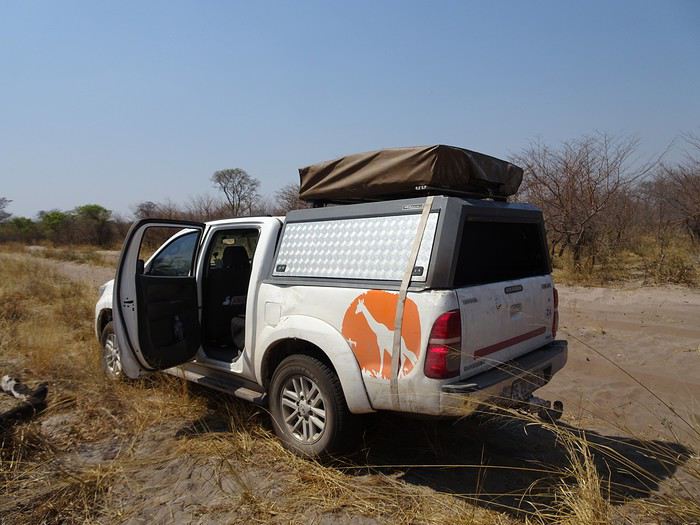
In a particularly sandy and bumpy section, our friends lost a spare tire, which we saw on the track but couldn’t stop to retrieve for fear of getting stuck ourselves. Suddenly, after several violent bumps, we noticed our hard top hanging off the left side of the pickup bed. After inspecting the damage, we saw that 3 out of 4 mounts had broken.


Without heavy-duty ratchet straps that could have secured the hard top to the chassis, we had no choice but to leave the hard top and roof tent by the side of the track.


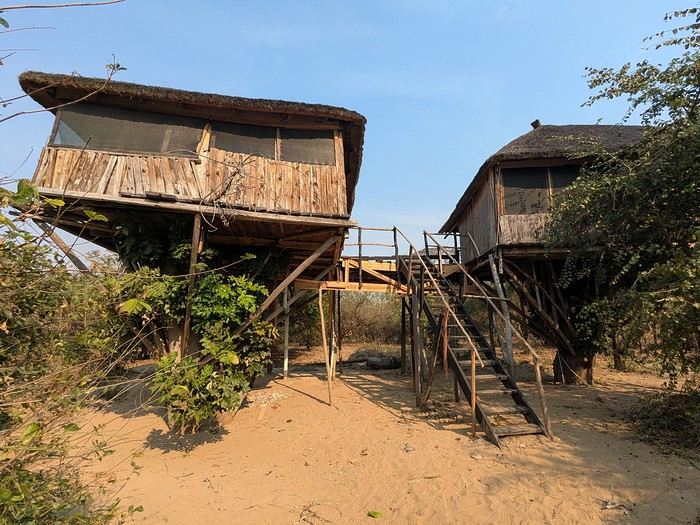
We recorded the GPS coordinates of the spot. We were 28 km south of Linyanti. With no way to contact our car rental company to report the incident where we were, we continued down the track, now without our hard top, which lightened the rear end and helped the Hilux handle the bumps much better. We arrived at the Linyanti campsite in the middle of the afternoon. We had a beautiful spot by the river and could hear the grunts of hippos.


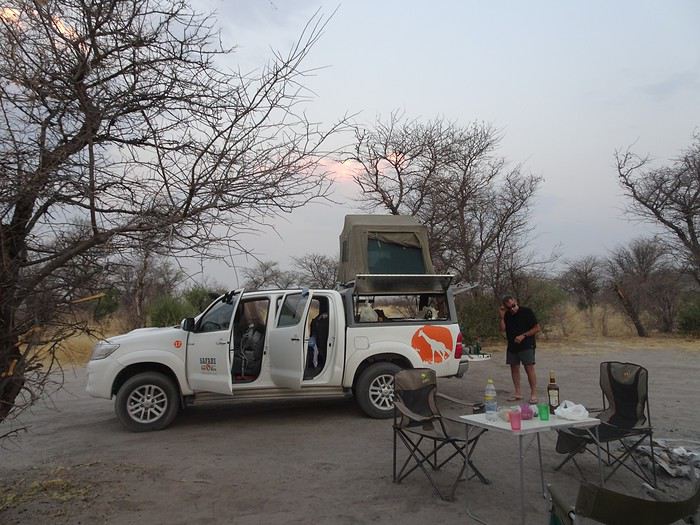
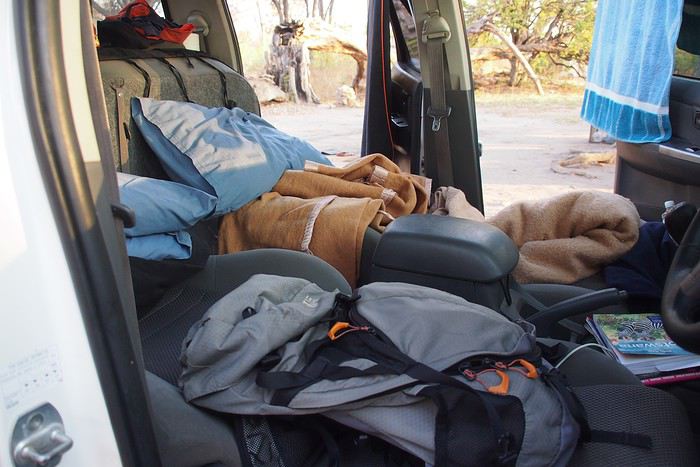
Since we no longer had the roof tent, we slept in the car that night.

Our room for the night.

Once again, we were treated to a stunning sunset.


RJ Rjulie95 Globetrotter ·
Oh man, losing the hard top is such a pain!
"Je suis africain, non pas parce que je suis né en Afrique, mais parce que l'Afrique est née en moi." Kwame Nkrumah.

"J'ai appris que le courage n'est pas l'absence de peur, mais la capacité de la vaincre." Nelson Mandela

https://www.en-voyages.fr
CA Cagiva Regular ·
Saturday, October 6, 2018

This morning, we leave Chobe National Park via the Lynianti Gate. At the park exit, we inform the rangers that we had to leave our damaged hard-top and roof tent by the track, 28 km to the south. At this gate, phone reception works, and we can notify our car rental company about what happened. They arrange with Big Sam’s company in Kasane, who will charge us 8,000 Pulas (730 €) for the recovery.

The track between Lynianti and Kachikau.
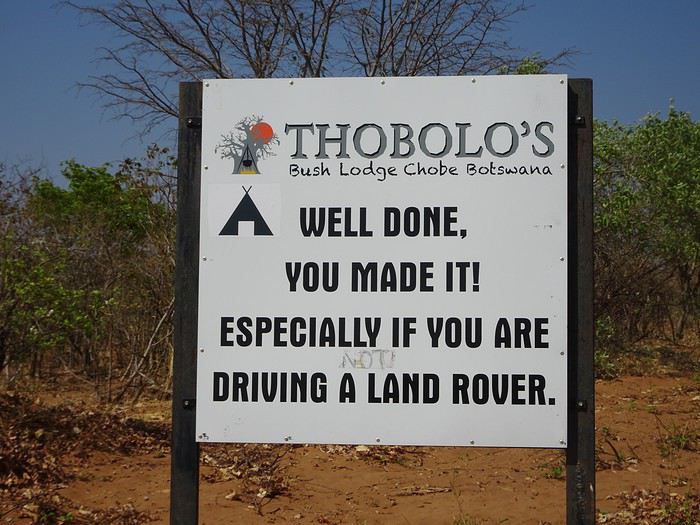
I appreciate the humor since I own a Land Rover Defender.
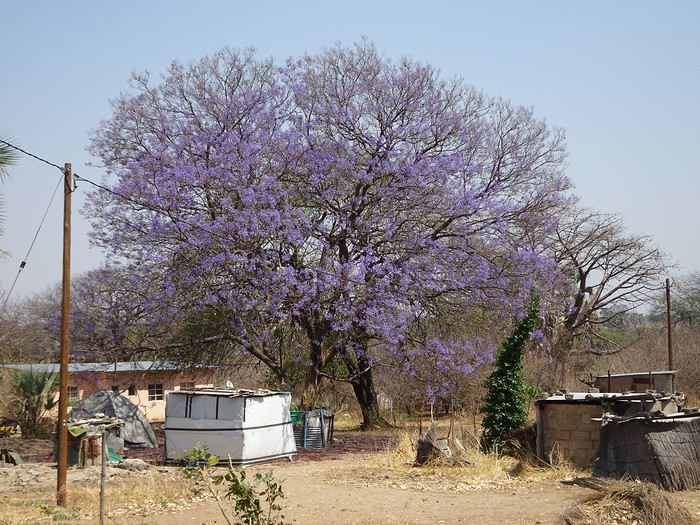
We continue along the track to Kachikau, where we join the tarred road leading to Kasane.

A blooming jacaranda.

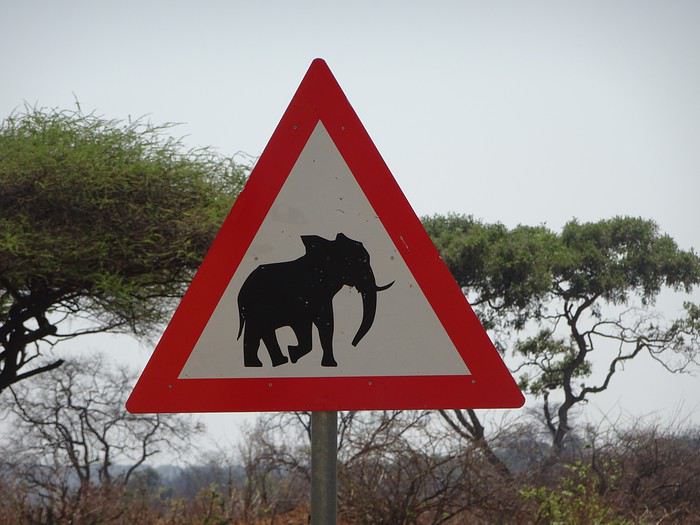
On the road between Kachikau and Kasane, there are elephant corridors to give them access to the Chobe River, which forms the border with Namibia.
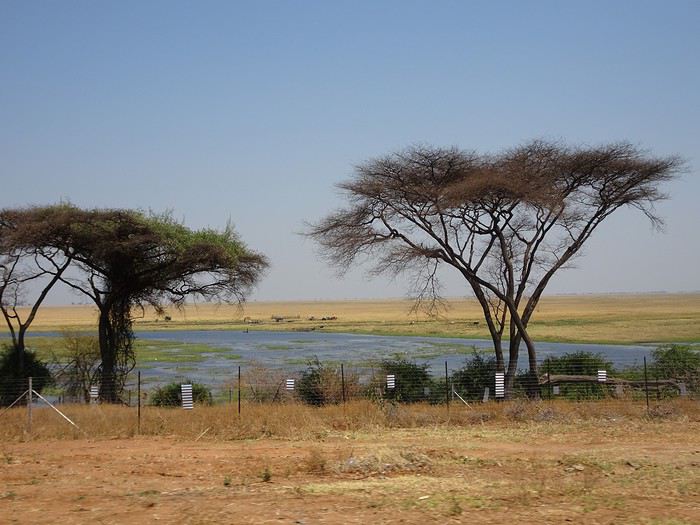
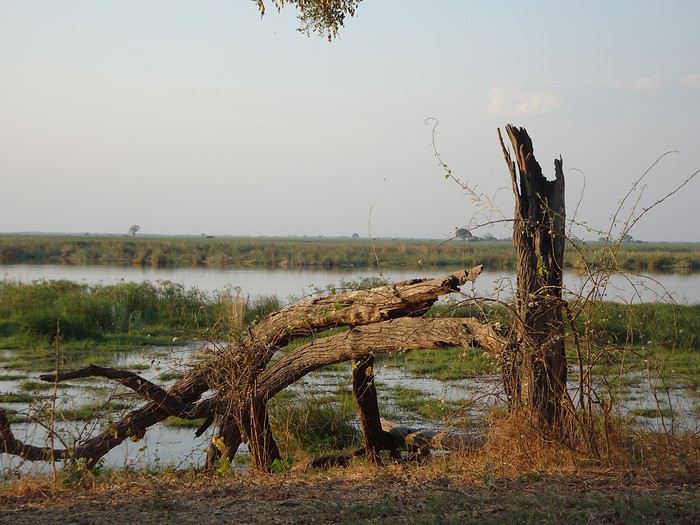
View of the Chobe River.

We arrive in Kasane without any issues and start looking for a bank or exchange bureau to pay the 8,000 Pulas in cash to the recovery team. After a first exchange bureau that didn’t have enough Pulas, I find a second one at 4 PM, closing time, where the teller agrees to take my euros. Since she only has small bills—50, 20, and 10 Pulas—I leave with a huge wad of cash. I’ve never held so many bills at once. Kasane is a lively town and a base for safaris for tourists who fly into Kasane. We head to Senyanti Safari Camp, where we’ve booked for three nights. This lodge is about 15 km from Kasane on the road to Nata. Access is via a very sandy track, 4x4 only. We see several tourists stuck in the sand with their 4x4s. Upon arriving at Senyanti Safari Camp, we get a nasty surprise. Our tour operator, Hamba Futhi Tours, only paid a 50% deposit—2,610 Pulas. We have to pay the remaining 2,610 Pulas. Second bad surprise: our tour operator overcharged us for this accommodation at 10,200 Pulas for four people, when the real cost is 5,220 Pulas. In total, we’ve paid 12,810 Pulas—about 2.5 times the actual cost of the accommodation.

The hotel manager, very friendly, upgrades us and gives us a large house instead of a bungalow.


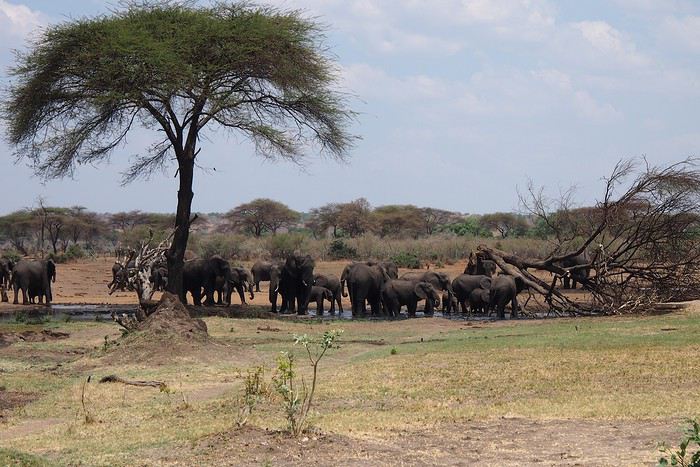
Our house is ideally located near a watering hole where dozens of elephants come to drink.

View of the watering hole from our terrace.
We book an excursion to Victoria Falls in Zimbabwe for the next day through the hotel for 450 Pulas (40-45 €) per person. We have a rough night worrying about how the recovery team will retrieve and repair our hard-top. My first phone call with them didn’t convince me they understood where our hard-top was, even though I gave them the GPS coordinates. After sleeping on it, my wife and I decide to take the mechanic with us in our own car.

Sunday, October 7, 2018

In the morning, I call the recovery team to tell them not to send a vehicle with two mechanics—we’ll go to the spot ourselves and bring the mechanics. We arrange to meet at 8 AM. We postpone our Victoria Falls excursion to the next day. When we arrive at the recovery team’s place, we pay the 8,000 Pulas and take one mechanic with a set of ratchet straps. A long day awaits us—200 km of track and 200 km of road round trip. I drive fast on the track because I don’t want to return after dark. When we arrive, we find the hard-top by the track, along with a German couple stuck in the sand for four hours who couldn’t free themselves. Needless to say, they’re happy to see us. We deflate their tires a bit more, clear the sand in front of the wheels, and push while Steve, our mechanic, takes the wheel. After a few back-and-forth maneuvers, Steve manages to get them out and leaves the vehicle at the end of the sandy stretch. Next, we tackle our hard-top. First, we remove the roof tent from the hard-top. Then we put the hard-top back on the Hilux’s bed and replace the broken metal fasteners with straps at all four corners. We struggle to reattach the roof tent to the hard-top because it’s very heavy and needs to be lifted above it. Finally, we secure it with a large truck ratchet strap connecting the hard-top to the chassis to prevent losing it again—the track is very bumpy in places.

Hard-top strapped down, we’re ready to head back to Kasane.
We return to Kasane before dark. The hard-top didn’t budge. We agree to bring the car to the recovery team the next morning at 7 AM for the hard-top repair.

Monday, October 8, 2018

At 7 AM, we’re at Big Sam’s, our recovery team, to leave our Hilux. Big Sam transfers us to the Kazungula border post between Botswana and Zimbabwe in what we call a "tourist taxi" (a 4x4 set up to transport tourists).


That’s when we realize traveling in this kind of vehicle on the road is very uncomfortable. With speed, it gets cold, and you take the wind and insects full in the face.

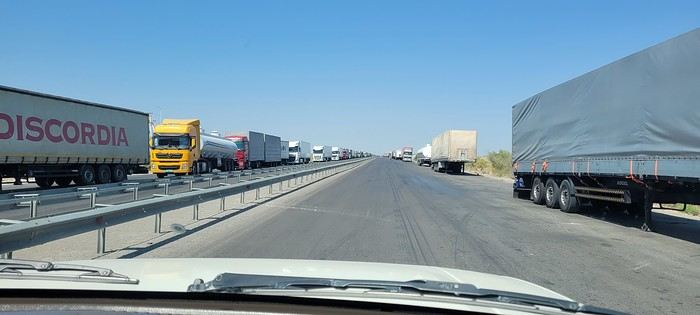
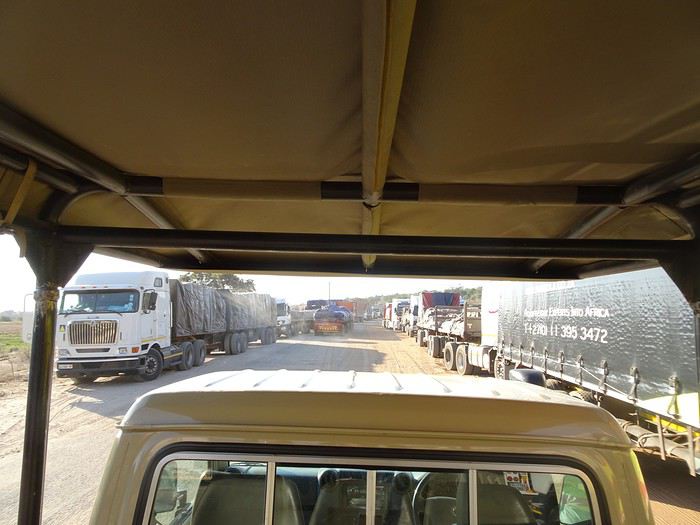
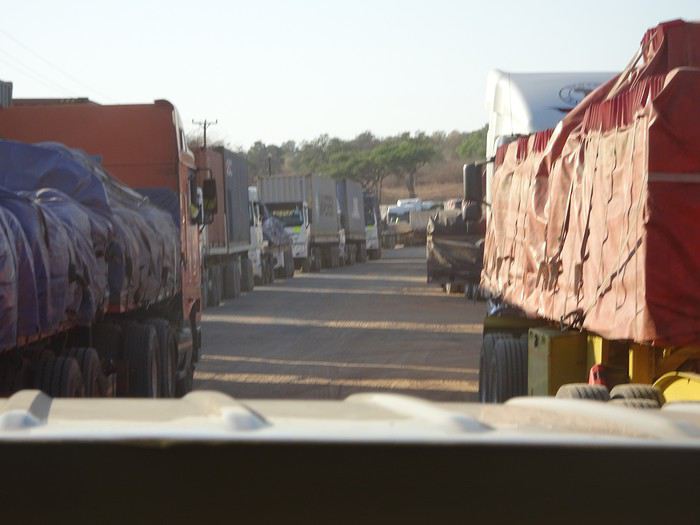
At the border, we meet the shuttle from our lodge, which will take us to Victoria Falls. At this border post, we pass an endless line of trucks waiting to cross the ferry on the Zambezi, which will take them directly to Zambia, avoiding transit through Zimbabwe. According to our shuttle driver, the wait can last up to a week!


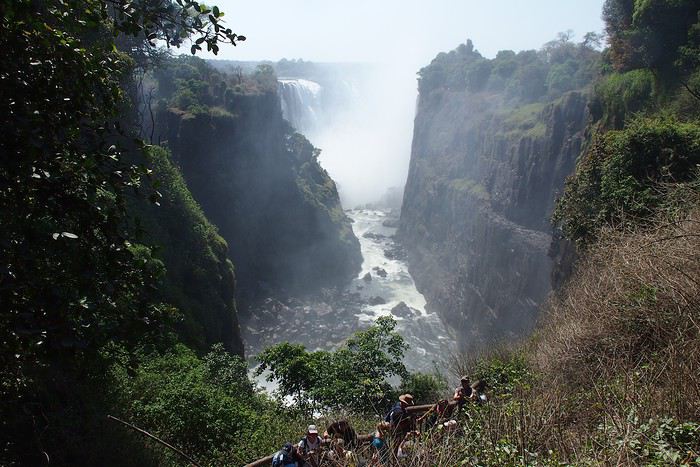
Note that a bridge is under construction on the Zambezi to avoid the ferry crossing. At the border, Botswana exit visa is very quick. We wait about half an hour to get the Zimbabwe entry visa ($30 per person). We have 70 km of road left to reach the falls. Victoria Falls Park entrance ($30 per person).


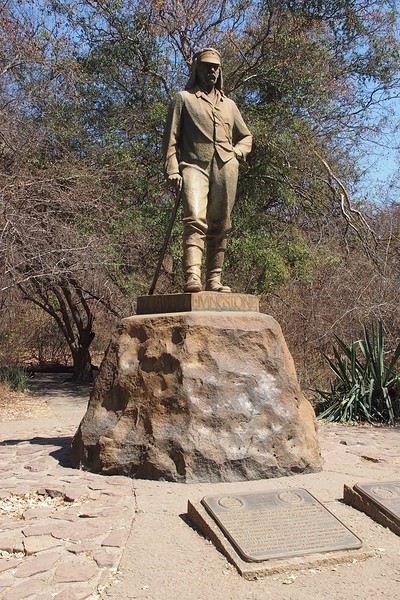
Statue of Dr. Livingstone


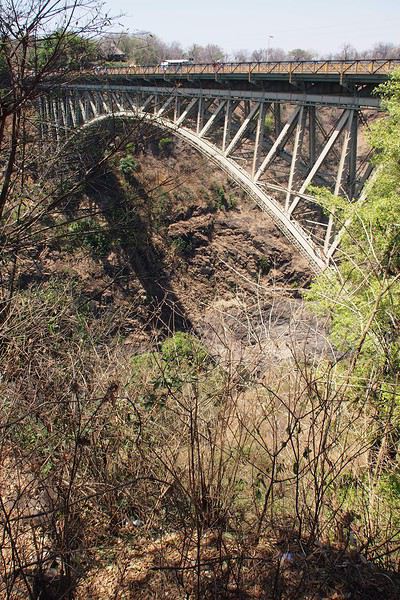
Bridge over the Zambezi forming the border between Zambia and Zimbabwe
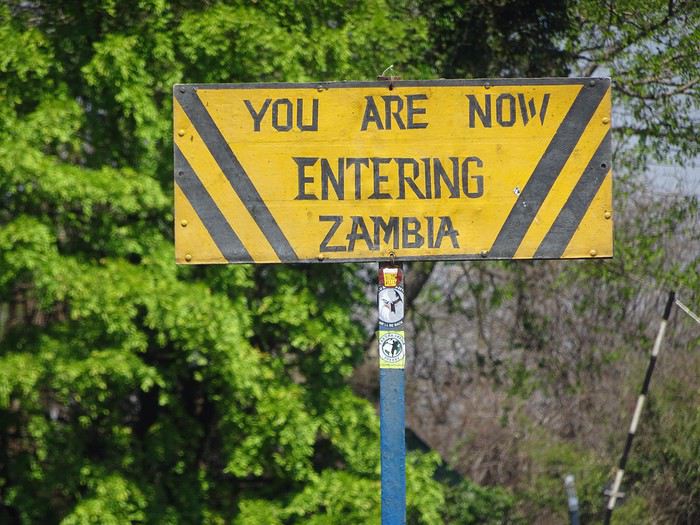
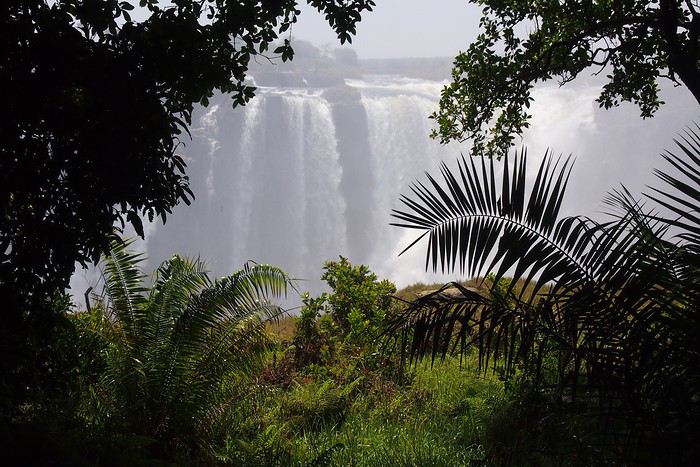


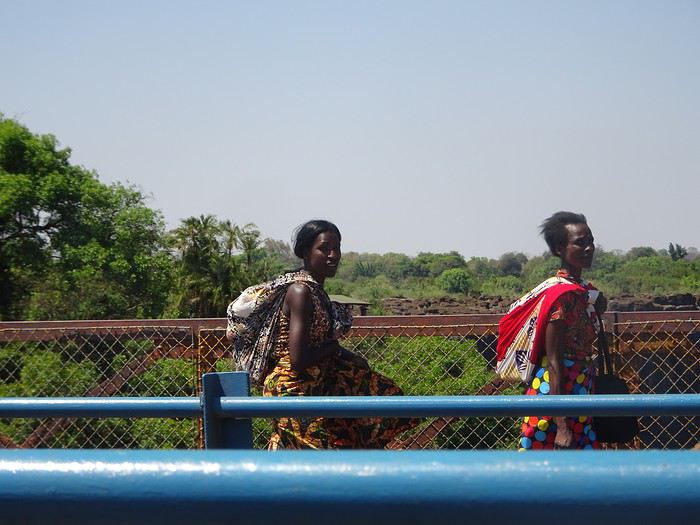
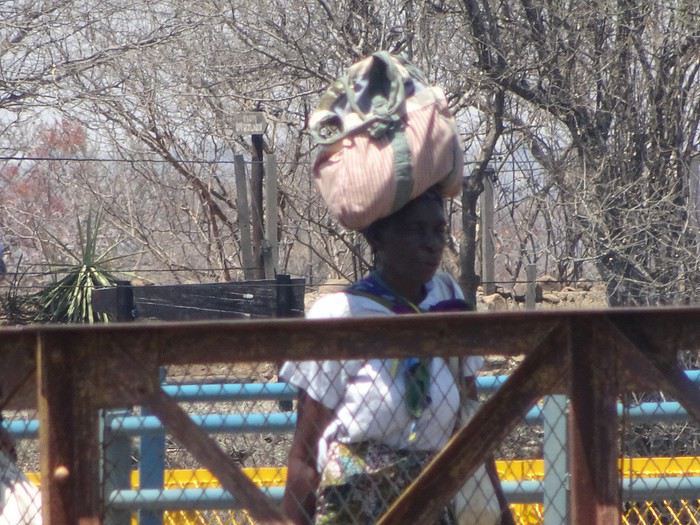
You can enter Zambia on foot by crossing the bridge with a temporary visa.


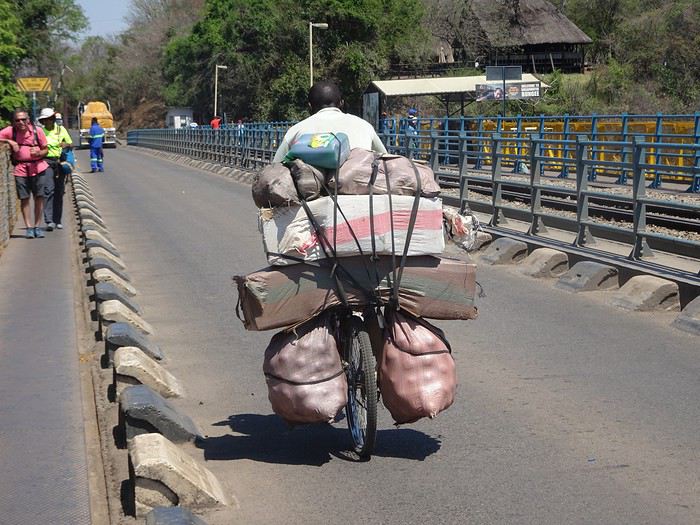
Transporting goods to Zambia.


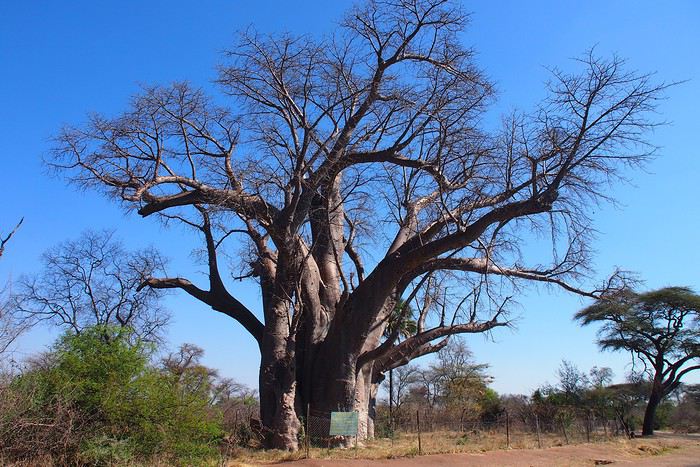
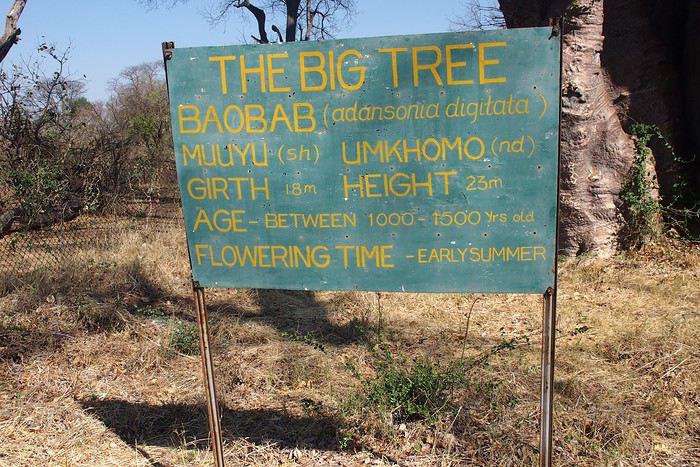
Largest baobab in Zimbabwe (estimated age between 1,000 and 1,500 years)
MU Muriel18 Globetrotter ·
What (mis)adventures! Well, the view from the terrace was still worth it (the cost)! ;) Muriel
Si tu diffères de moi, mon frère, loin de me léser, tu m'enrichis (Saint Exupéry)
CA Cagiva Regular ·
Our misadventures make for great memories.
CA Cagiva Regular ·
Tuesday, October 9, 2018

We picked up our Hilux yesterday evening with our repaired hard top. This morning, we reload our gear into the hard top. We leave Senyanti Safari Camp, which deserves nothing but praise. We set off early in the morning heading toward Chobe National Park. We enter through the Phedudu Gate. Cost: 290 Pulas for 2 people and one vehicle. We follow the sandy track along the Chobe River. We come across a huge number of 4x4s outfitted for tourist excursions. We’re not used to so much traffic anymore. It’s worth noting that in Kasane and along the Chobe River, there are many lodges, which explains the high visitor numbers in this easily accessible park.


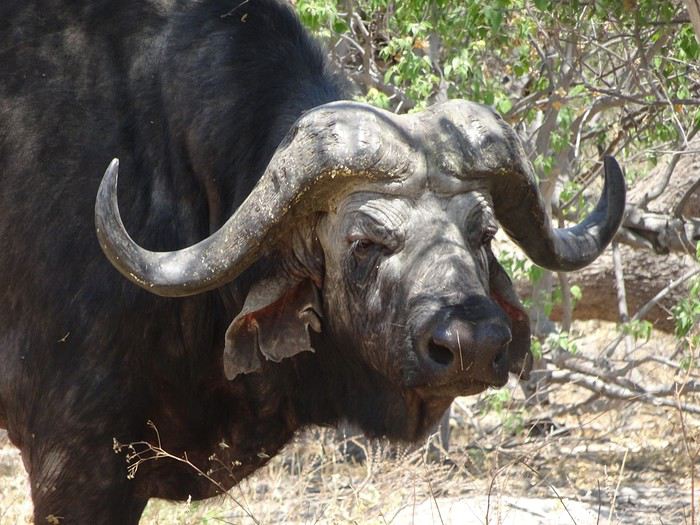
Gorgeous views of the Chobe River, which we sometimes follow very closely. The track is 60 km long. Plan for 4 to 5 hours to cover it. Along the way, we come face to face with a large herd of buffalo blocking the road. There’s no way around them. What to do? Knowing how dangerous these animals can be, I hesitate between waiting for them to move or slowly driving forward to encourage them to clear the track.


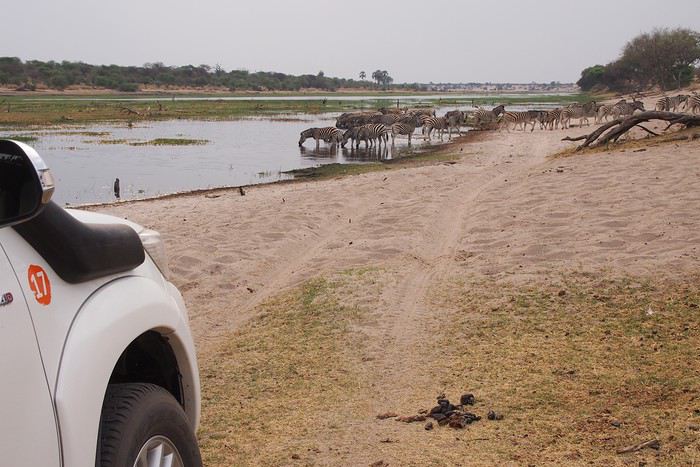
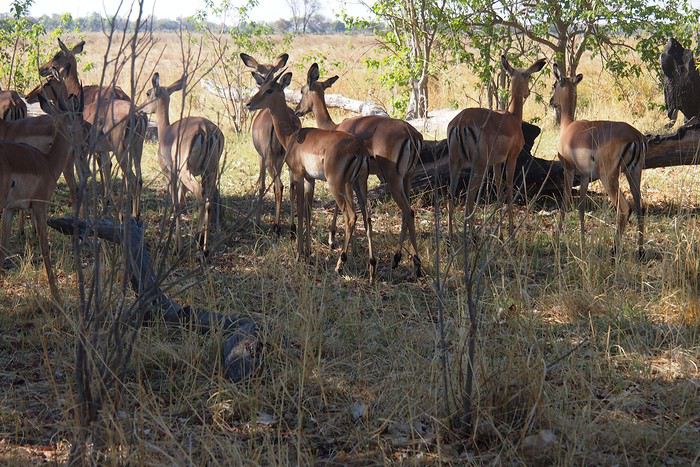
You feel a bit helpless when you don’t know how wild animals will react. I choose the first option, not wanting to risk a charge. After a short wait, we see a 4x4 carrying tourists approaching from the other side of the herd. It starts moving slowly toward the buffalo. The buffalo stand up to let the 4x4 pass, so we do the same and start driving gently, allowing us to cross the herd without any issues. We see elephants, antelopes, zebras, and birds, but fewer animals than we expected based on the various accounts we’d read.


We exit the park via a very sandy track leading to the N'Goma Gate. We leave Botswana through the N'Goma border post. Exit formalities are very quick. We enter Namibia at the end of the bridge over the Chobe River. Cost: 295 Namibian Dollars for the vehicle entry fee. A long 400 km drive awaits us to cross the Caprivi Strip.


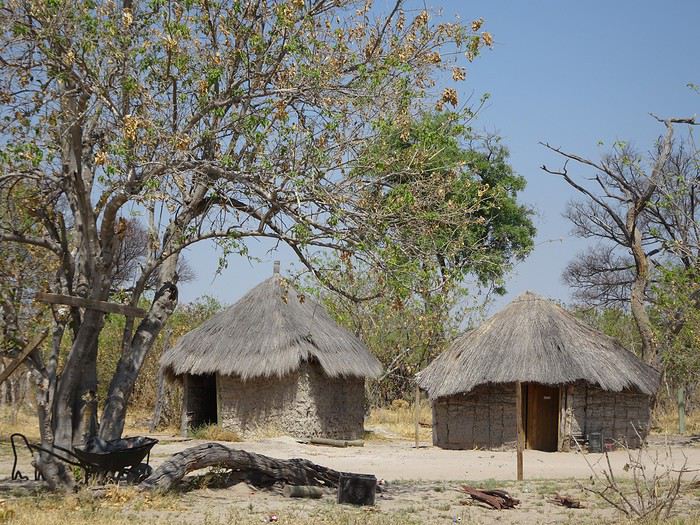
The Caprivi Strip is very populated. We pass through countless villages with huts that are extremely clean and neat. I don’t know how the residents manage to keep their villages completely free of litter. We arrive in the late afternoon at our campsite, N'Gemi Camp, located on the banks of the Okavango River. We have dinner at the campsite, where the meal is excellent (kudu steak, mushroom rice, spinach, butternut purée) for 210 N$ (around 12 €). After dinner, we get an unpleasant surprise when we unfold our tent. It’s twisted, the hinges are torn, and the access ladder is barely holding on by a thread. We didn’t think to check the tent after our hard-top issue, and it seems it also suffered damage. My wife, not trusting the tent’s stability, will sleep in the car, while I’ll sleep in the tent.
CA Cagiva Regular ·
Wednesday, October 10, 2018

Up at 6:00 AM. Temperature: 14°C. It's chilly. Campsite price: 150 N$ per person per night.


Our campsite by the Okavango.


We head to the nearest village, Divundu, where we find a tire repair shop that can fix our tent and the spare wheel attachment for our friends.


The repairman straightens out the tent with some heavy hammer blows and re-welds the tent hinges. Great job!


After the repairs, we head toward the Mohembo border post. Along the way, we enter a private park that provides access to Popa Falls. Toll: 20 N$ per person. Total rip-off.


The drop at Popa Falls is only 3 meters, and there’s not much to see. My advice? Skip it. We get back on the road and cross the Namibian Mahango Park. It’s free if you’re heading straight to Botswana. We cross the Namibian border quickly. On the Botswana side, since we already paid the entry visa three weeks earlier, we only pay 65 Pulas to re-enter the country. We arrive at Drotsky's Cabins campsite, 10 km south of Shakawe, in the early afternoon.

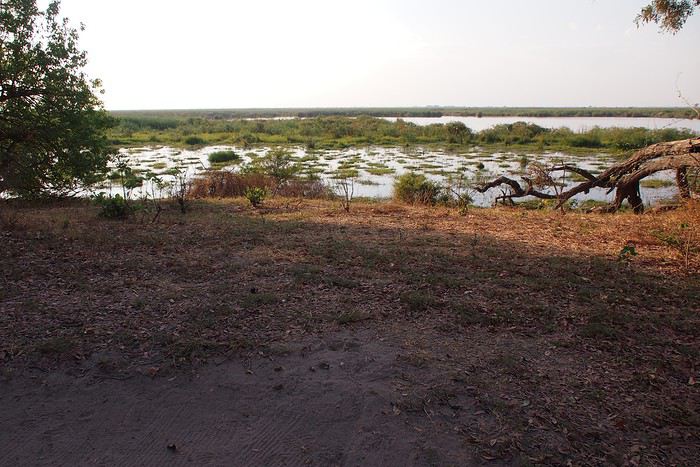
Campsite terrace on a branch of the Okavango

The campsite is part of a luxury lodge, and we visit its gardens with beautiful lawns.


When we arrive at the lodge reception, we ask about dinner times and prices. Without us asking anything else, the receptionist tells us we must be from the campsite. You’d think our look didn’t match the usual clientele. We’ve covered 3,600 km since Johannesburg. Temperature: 35°C.
OL OldPlatypus Regular ·
Hi there,

I’m planning a 4-week trip to Botswana in September/October 2019, so you can imagine I’ve been following your adventures—and your mishaps—very closely!

The LP guide says Chobe Riverfront is only accessible between 9 AM and 2:30 PM for independent travelers without on-site accommodation. Can you confirm this? What time did you enter and leave the park?

If other travelers can share their experiences, I’d really appreciate it too.
Mon voyage au Botswana : https://voyageforum.com/discussion/pays-tswanas-botswana-d9819920/
CA Cagiva Regular ·
Hi there, Glad our story can help future visitors to Botswana plan their trip.

I’d read that access to Chobe River Front was regulated, but on the day we visited—October 9, 2018—no one at the park entrance mentioned it to us.

That day, we entered at 8:00 AM and left around 12:30 PM. Worth noting: there was no time limit for visiting the park. We could’ve easily stayed until 5:00 PM.

Maybe during other times of the year, the park gets busier, and they need to limit access.

It’s also worth mentioning that during our visit, there were very few private cars but *tons* of tour operator vehicles shuttling tourists around, which felt a bit off compared to how quiet the other parks we visited were.

Wishing you a great trip in this stunning, still-wild country!
OL OldPlatypus Regular ·
Thanks for your reassuring reply. I won’t hesitate to reach out again if I have any questions. I really appreciate your detailed account—things like temperatures, prices, accommodation spots, and more are super helpful to me.
Mon voyage au Botswana : https://voyageforum.com/discussion/pays-tswanas-botswana-d9819920/
CA Cagiva Regular ·
Thursday, October 11, 2018

This morning, change of plans. Initially, we were supposed to go to Tsodilo Hills and later to Mabuasehube Section in the southern Kalahari, but my travel companions are tired of driving on dirt roads and are afraid of having more mechanical issues with the cars. So, we’ll head to South Africa by road. We take the direction of Ghanzi. It’s a long leg of 400 km on a monotonous road. Upon arriving in Ghanzi, we head to Thakadu Camp, 7 km to the south. It’s a very clean campsite but lacks shade at this time of year since the trees have lost their leaves.


We have visitors at the campsite.

We dine at the campsite restaurant for 800 Pulas for 4 people. For my part, I’ll have a delicious pepper sauce beef fillet. Temperature: 35°C We’ve covered 3,950 km since Johannesburg.

Friday, October 12, 2018

This morning, a pleasant temperature of 18°C. We head toward Kang via the Trans Kalahari Highway (a two-lane road), 250 km further south.


We arrive around 10:30 AM. We continue to Sekoma, where we don’t find any campsites.


We take the Trans Kalahari Highway again to Jwaneng, which has a diamond mine. It’s a wealthy town—you can tell by the beautiful houses along the streets. There’s even a golf course. All the hotels we stop at are fully booked, forcing us to continue toward Lobatse, not far from the South African border.


We stop at Stawo’s Palace Hotel, which we had spotted on Booking. The room costs 600 Pulas. The hotel owner is very kind and helpful. Today, we covered a long stretch of nearly 800 km, partly out of necessity since we couldn’t find accommodation between Ghanzi and Lobatse.
CA Cagiva Regular ·
Saturday, October 13, 2018

We’ve covered 4,730 km since Johannesburg. This morning, we leave Lobatse for the Pioneer Gate border post to return to South Africa. We exchange our last Pulas at a small office near customs.


The local food truck.


We head toward Pretoria. We stop in Magaliesburg, about sixty kilometers west of Pretoria, where we find a campsite priced at 250 ZAR for the four of us. We set up on a lush green lawn. The sky suddenly darkens, and we’re hit with a hailstorm of rare intensity. The hail is so violent that we park the cars under the trees for fear of damaging the bodywork. We don’t feel like sleeping in our roof tents in such a storm, as we’re not sure if they’re truly waterproof. Our friends head to the reception and manage to rent a roundavel for an extra 350 ZAR. It’s cold and damp, but at least we’ll be dry. The storm lasts all night.

Sunday, October 14, 2018

In the morning, the campsite ground is soaked, and the electricity is out, so no hot shower. It’s 13°C. We go online to look for a hotel and find Nullarbor Cottages in Magaliesburg.


The price for a cottage for two people is 1,200 ZAR (about 70 €) for two days, with all the comforts and wood-fire heating. Accommodations in South Africa are much more affordable than in Botswana. The rainy season is approaching, as the weather still isn’t great today.

Monday, October 15, 2018

Today, the weather is beautiful. We set off for a drive along the Magaliesberg Nature Reserve. We’re looking for a garage because a gas strut support tore on one of the side hatches of the hard-top. By sheer luck, we pass by a hard-top manufacturing plant.

Africa Canopies hard-top factory.

Cyclists training with their escort on a scooter.

I speak to the receptionist to ask if it’s possible to get my hard-top repaired. She calls the factory owner. Henry, the boss, calls one of his workers to carry out the repair. Meanwhile, Henry gives me a tour of his 35-person factory, which manufactures polyester hard-tops for pick-ups. The price of a hard-top is 600 €, whereas in France, it would cost three or even four times as much. Henry is very enterprising. To diversify his production, he’s built a prototype of a polyester coffin (half the price of a wooden one) and a prototype of an electric Willys Jeep, which he plans to start small-scale production of for South African farmers to use on their vast ranches. He absolutely refuses to let me pay for the repair, so I tip the worker who did the job. His hospitality is truly commendable—something unthinkable in France.

Tuesday, October 16, 2018

Today is the last day of our trip. Our flight leaves Johannesburg at 6:50 PM.

Sandwich board man.

We arrive in Pretoria mid-morning at our rental company, Safari 4x4 Hire, where a discussion begins in an attempt to get reimbursed for the repair costs of our hard-top in Kasane. In the end, we reach a compromise. The rental company won’t charge us for the bodywork damage caused by the hard-top tipping onto the left side of the Hilux, and they won’t withhold any money from our deposit. Phew! Given the practices of rental companies, this wasn’t a sure thing.

We’ve traveled 5,160 km since leaving Johannesburg.

A friend of our friends picks us up to have lunch at her place. After sharing our travel stories, she drives us to Johannesburg Airport, where we’ll catch an Air France flight to Paris.
RJ Rjulie95 Globetrotter ·
Thanks for sharing—great trip with a few detours! In the end, who paid for the hardtop repair?
"Je suis africain, non pas parce que je suis né en Afrique, mais parce que l'Afrique est née en moi." Kwame Nkrumah.

"J'ai appris que le courage n'est pas l'absence de peur, mais la capacité de la vaincre." Nelson Mandela

https://www.en-voyages.fr
CA Cagiva Regular ·
Hi there! Thanks for your encouragement. It was my first travel journal. I hope it’ll help other "forum members." For the hard top repair, I had an agreement with my Botswanan mechanic to reimburse me 30% of the costs, but I’m still waiting. I don’t think I’ll ever see that money again.
OL OldPlatypus Regular ·
Your original post starting from Johannesburg seems to have been deleted. Could you (just in a few lines) recap the beginning of your trip (stops, etc.)? Thanks in advance.
Mon voyage au Botswana : https://voyageforum.com/discussion/pays-tswanas-botswana-d9819920/
RJ Rjulie95 Globetrotter ·
It was my first travel journal. I hope it’ll help other "forum members".

For a first attempt, it went really well, and I’m sure it’ll come in handy later.
"Je suis africain, non pas parce que je suis né en Afrique, mais parce que l'Afrique est née en moi." Kwame Nkrumah.

"J'ai appris que le courage n'est pas l'absence de peur, mais la capacité de la vaincre." Nelson Mandela

https://www.en-voyages.fr
CA Cagiva Regular ·
Hi Ludo, Yeah, you're right—my original post disappeared. My bad. Since it was my first travel journal, I accidentally opened two posts with the same title. I’ll take your advice and finish my story.
PI Pir971 Veteran ·
Hi Michel, and thanks for this travel journal—it brings back so many memories.

I really like Christo, but I’m skeptical about the repair bill. It clearly seems like a wear-and-tear issue, not something you caused... On the contrary, I think you ended up dealing with the consequences of that wear during your trip, *and* you got stuck with the bill. Sure, you could say it’s all part of the journey, but in the end, *you’re* the one paying for it. At least he didn’t charge you for bodywork costs!!

Definitely adding heavy-duty straps to the gear list from now on! [;)
Alaska 2018 : https://voyageforum.com/v.f?post=9860356;#9860356 Afrique 2017 : https://voyageforum.com/v.f?post=8661002;#8661002 Islande 2017 : https://voyageforum.com/v.f?post=7818139;#7818139 Afrique 2015 : https://voyageforum.com/v.f?post=7337116;#7337116
CA Cagiva Regular ·
Hi Pierre, Thanks for your message. It’s always the same issue with rental companies. As customers, we’re not in a strong position to negotiate. On one hand, the rental company has your deposit, and on the other, when you return the rental car, you often have a flight to catch, which doesn’t leave much time for negotiation. In my case, Christo from Safari 4x4 Hire bailed on me. He was supposed to be there the day I returned the car, but on the day itself, he was nowhere to be found and left his assistant or partner, Rishard, to negotiate with me. On the car we rented, I suspect the hard-top fasteners were already in bad shape. The proof? On the first fastener that gave way, both sides of the tear were already rusted, when the steel should’ve been shiny. It’s frustrating, but it’s part of the ups and downs of travel—and it doesn’t take away from the great memories we brought back.
CA Cagiva Regular ·
Since my initial post about the start of our trip disappeared, I’ll complete my story.

Having already stayed twice in Southern Africa—South Africa in May 2016 and Namibia in May 2017—we decided to head to Botswana using the same setup as in Namibia: renting a 4x4 with a roof tent.

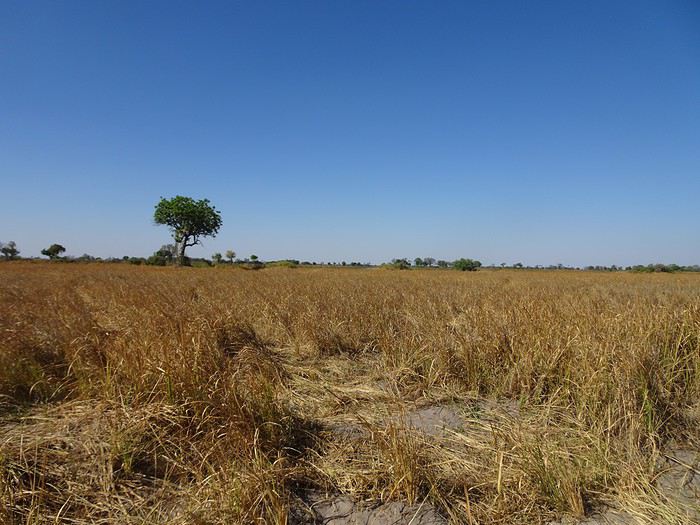
Why Botswana? First, the appeal of wildlife and adventure. Having crossed the Sahara several times in my youth (which isn’t possible anymore), I was tempted to traverse the Botswana side of the Kalahari Desert.

Considering it’s not safe to cross the Kalahari alone (900 km of tracks with no supplies), we asked a couple of friends who are used to off-roading to join us.

Botswana’s tracks are rarely traveled, and camping conditions are more like bivouacking than traditional camping. The campsites in the parks aren’t fenced (so nighttime animal visits around the tent are possible), unlike in South Africa and Namibia. The challenge in Botswana is booking accommodations. It’s practically mandatory to go through a tour operator. After talking to a South African guide specializing in Botswana, he confirmed that even he uses an agency to book campsites because, according to him, the campsites don’t respond to email requests. You should know that to access Botswana’s parks and reserves, you must prove you have a reservation at a campsite or lodge by presenting your vouchers at each entrance—so no improvising, and you need to plan your itinerary in advance.

In early June 2018, we bought our flight tickets for an Air France round-trip from Paris to Johannesburg for 1189 € for two. Departure on Tuesday, September 18, and return on Tuesday, October 16, 2018.

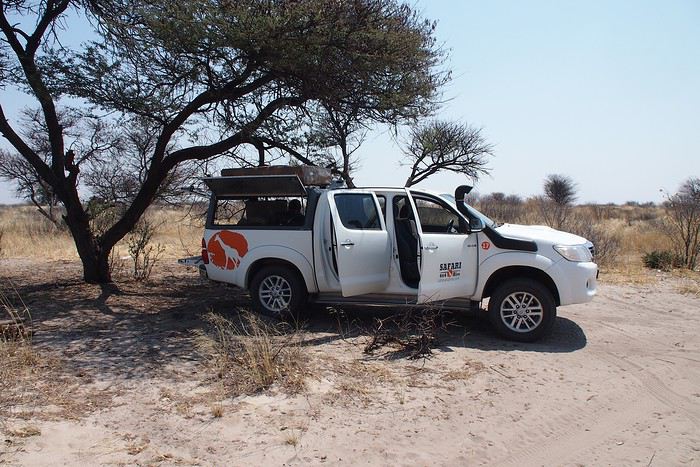
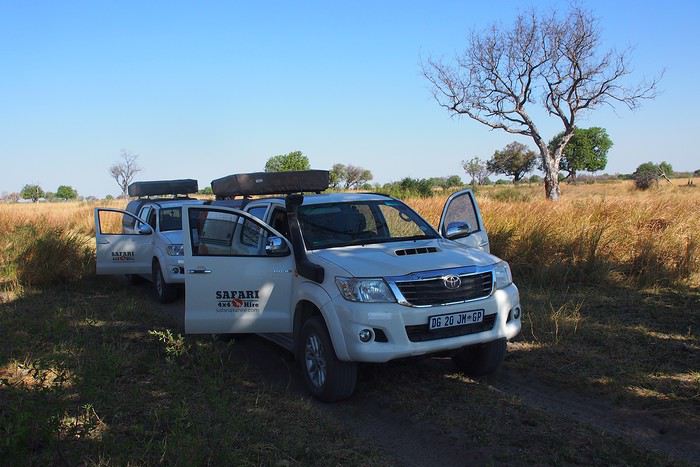
We booked two diesel double-cab Toyota Hilux 4x4s with roof tents from Safari 4x4 Hire in Pretoria for 50,000 ZAR (about 2940 €), plus 7830 ZAR (460 €) for excess waiver and additional insurance per vehicle for 27 days of rental.

The equipment we requested for the vehicles was as follows: - Inflatable jack (didn’t use it) - Sand tracks (didn’t use them) - Towing strap and shackles (came in handy—tip: bring an extra strap and shackles from France because sometimes you can’t get close to the stuck vehicle and need to connect multiple straps) - 140 L diesel tank - 2 extra 25 L diesel jerrycans - 3 extra 20 L water jerrycans - 2 spare tires (check the wear) - Electric air pump (used it) - Fridge - Toolkit (used it) - 12V/220V converter - GPS (barely used—we relied on our own with Ozi Explorer, which was more precise) - Walkie-talkies (very useful when traveling with two vehicles) - Bedding plus extra blankets (useful) - Cooking equipment - Table and 2 chairs - Plastic storage bins - Roof tent (tip: unfold it before leaving to check its condition) - Jump-start cables

For booking accommodations, we used the South African tour operator Hamba Futhi Tours, as recommended by our car rental company—a choice we bitterly regretted (overcharging for accommodations, missing reservation vouchers at the start of the trip, lack of responsiveness—definitely avoid them). For 25 days, we paid 35,370 ZAR (2080 €) for two people.

Wednesday, September 19, 2018

We landed at 9:40 AM at Tambo International Airport in Johannesburg. A friend of our friends was waiting for us and took us to her place. She lives in a beautiful house protected by electrified barbed wire in a gated community, like you see everywhere in South Africa and to a lesser extent in Namibia. We took a good shower, had lunch there, and headed to shopping centers to find a bank to exchange some Pula. Every bank gave us the same answer: we had to order Pula in advance to get any. Oh well, we’d exchange at the border. We visited the famous bronze statue of Nelson Mandela, which attracts a lot of people. That evening, we stayed at our friend’s place, giving us a chance to discuss the lives of French expats in South Africa. Personally, this lifestyle doesn’t appeal to me—sleeping in a house (even a beautiful one) surrounded by electrified barbed wire with an alarm system isn’t my idea of fun. According to these friends, there’s a lot of aggression and theft in Johannesburg.

Thursday, September 20, 2018

This morning, we left for Pretoria to pick up our Toyota Hiluxes from Safari 4x4 Hire. Ours was from 2016 with 172,000 km and seemed in good mechanical condition. A nice surprise: both Toyotas had 3-liter diesel engines instead of the 2.5-liter ones we’d requested. Even better—we’d have more torque and power for driving in the sand. Bad news: the satellite phone we were supposed to get was broken, so we’d have to do without it. In the afternoon, we visited the Apartheid Museum in Johannesburg—a visit we hadn’t been able to make during our first trip to South Africa due to lack of time. Many schoolchildren were there on a field trip.


The visit was fascinating—it really hit home how difficult the living conditions imposed by white people were for Black South Africans. Many films and period photos showed their daily lives. That evening, we bought supplies for the next ten days, including about forty liters of drinking water to add to the 60 liters in jerrycans. We slept again at our friends’ friend’s place in Johannesburg, who was very hospitable.

Friday, September 21, 2018

In the morning, we organized the loading at the back of the pickup and left Johannesburg at 9:45 AM for Gaborone. We arrived at the Botswana border at Tlokweng Gate around 3:15 PM. Exiting South Africa and entering Botswana went quickly, but we had to wait about an hour to pay the entry tax of 152 Pula (for one car and two passengers). The tax is payable only in Pula. That day, due to a power outage, we couldn’t withdraw money from the ATM. We went to a small currency exchange office away from customs, which offered a poor exchange rate: 1 € = 10 Pula. We continued to Gaborone, where we stopped to stock up on supplies and fill up our 140 L diesel tank and two 25 L jerrycans. We arrived after dark around 7 PM at Mokolodi Backpackers, which we had trouble finding. It’s a collection of small bungalows around a pond, located outside the city where you can hear a multitude of birds singing. The place has a shared kitchen. We had dinner outside by the light of our headlamps.

OL OldPlatypus Regular ·
Thanks for this addition—love the start of your trip!
Mon voyage au Botswana : https://voyageforum.com/discussion/pays-tswanas-botswana-d9819920/
MA Max68 Globetrotter ·
Thanks for this great travel journal. It was a pleasure following along. I was impressed by your "cool" in the face of "setbacks"—well done! 🙂

Yes, the Boteti River is truly a little paradise.😎 Like you, I love sunsets and sunrises.😛

Thanks again and well done! 🙂
https://apprentisvoyageurs.com
CA Cagiva Regular ·
Thanks Jean-François for your kind comments.
MA Marifb Veteran ·
Thanks for this super detailed travel journal. Do you have any idea of the total cost of your trip?
Marifb
CA Cagiva Regular ·
Hi Marie-Flore

Around 10,000 € for 4 weeks for two people, all included.
CH Chris97410 ·
Hi Michel, Last year we went to Namibia. This year we just booked our tickets for 3 weeks in Botswana (in July).

Could you give me 2-3 tips? Which agency did you rent your vehicle from? The price? Despite the trunk issue, were you happy with it? Did you book your campsites in advance? That’s what we did in Namibia (but we couldn’t change our itinerary or stay longer in the same place if we liked it. Too bad!) What were the minimum temperatures?

What was the cost of your trip for 2 people?

Did you enjoy Botswana?

Thanks for your replies. Christophe manuechris2@wanadoo.fr
CA Cagiva Regular ·
Hi Christophe,

Regarding the rental of 4x4s with roof tents, we went through the South African company Safari 4x4 Hire based in Pretoria. They’re friendly and responsive, but I’m a bit hesitant to recommend them. While the vehicles were in good mechanical condition, the accessories were in worse shape. We had broken hard-top attachments, a roof tent in poor condition, and the air conditioning was out of service for our friends. We had the chance to help a young English couple get unstuck from the sand on the track—they had a vehicle rented from Avis South Africa. Their vehicle seemed much better equipped than ours, and they hadn’t had any mechanical issues. As for the rental price in September/October (note that prices vary by season), we paid 50,000 ZAR (2,940 €) + 7,830 ZAR (460 €) for 26 days of rental.

When it comes to accommodations inside the reserves, it’s essential to book in advance. As I mentioned in my travel journal, without a camping reservation voucher at the park entrance, you won’t be allowed in. For the towns of Maun and Kasane, I think it should be possible to book directly yourselves. For camping reservations, you *must* go through a tour operator. I wouldn’t recommend the one I used—they were terrible (overpriced services, lack of responsiveness). Be careful: there are very few campsites, so for July, you might struggle to find availability (agencies usually recommend booking a year in advance). I really encourage you to start planning as soon as possible.

In July, nighttime temperatures will be much cooler than what we experienced in September/October (13°C in the Kalahari), and I think it can drop to 5°C. The cost of our trip for four weeks was around 10,000 € for two people. Botswana is an expensive destination that caters to luxury tourism.

When asked if we liked Botswana, the answer is a big yes. Compared to Namibia, Botswana is a flat country with no real elevation. The tracks are true off-road paths, not gravel roads like in Namibia, so a 4x4 is necessary. You feel much more connected to nature than in Namibia or South Africa, mainly because the campsites are small, in the heart of nature, and not fenced (animals might visit at night).

Finally, there’s no mass tourism in the parks (except for Chobe National Park), which means when we saw big cats, we were alone. There weren’t a dozen cars clustered around like you see in other wildlife destinations.

What’s your planned itinerary?

If you have any other questions, I’m happy to help.
CH Chris97410 ·
Hi Michel, Thanks so much for these answers. I’d love to hear about your agency to "avoid" ;) I haven’t planned my route yet… happy to use yours ;) to get a rough idea if that’s possible.

Thanks again, Christophe
CA Cagiva Regular ·
Hi Christophe, The tour operator we used is Hamba Futhi Tours, based in Johannesburg. I strongly advise against using them—plus, their website is currently suspended. I’ve heard about Tawana Self Drive, an agency based in Botswana. You might want to contact them.

Regarding the route, if you’re not an experienced 4x4 driver and you’re traveling with just one vehicle, I’d strongly advise against crossing the Kalahari from south to north. You can reach the Central Kalahari Game Reserve (CKGR) by road from Johannesburg, via Gaborone, Serowe, and Rakops. In Rakops, you can refuel and stock up on supplies.

At CKGR, you can spend 3 or 4 nights moving between campsites. There are about fifteen campsites in the park, but be aware—they have very few spots (5 to 10 max per site), so you’ll need to book well in advance.

After that, you can head to Khumaga, cross the Boteti River by ferry (one of my favorite spots in Botswana), and spend 2 nights at the Khumaga campsite in Makgadikgadi Pans National Park. There’s a track along the river where we saw lots of animals bathing at sunset—it was truly magical, just like the Africa of our dreams.

Then, take the track north toward Nxai Pan National Park, making a detour to Baines Baobabs. Spend 1 or 2 nights camping in the park.

After that, spend 1 or 2 nights in Maun to restock and relax. From Maun, you can take a boat to Chief’s Island in the heart of the Okavango Delta—about 8 hours round trip and 400 $ per person. We didn’t do this excursion because it was too long and too expensive. It’s also possible to fly there.

From Maun, you can continue to Moremi Game Reserve and camp at Third Bridge or Xakanaka for 3 or 4 nights. From these campsites, there are plenty of tracks to explore, and you can also take boat excursions in the Okavango Delta. Personally, we took a boat ride from Third Bridge. A big advantage over Maun—where there’s heavy boat traffic—is that Third Bridge only has two boats. Total peace and quiet.

Next, head east to Kwai (a beautiful walk along the Kwai River—plan for 1 night). Then continue north via Savuti and Linyanti (there’s a lovely campsite by the Linyanti River).

After that, follow the Linyanti River to Kasane.

In Kasane, plan for at least 3 nights if you want to visit Victoria Falls. Leave your vehicle at the hotel and book a day trip (you can reserve through any hotel or travel agency in Kasane). Visit Chobe River Front.

Then return by road via Nata, Francistown, and Gaborone (I didn’t take this route).

I think three weeks is plenty of time to complete this route—it’s just a suggestion.

Happy trip planning!
CA Cagiva Regular ·
Christophe In my opinion, if you want to enjoy Botswana and see wildlife, your itinerary has too many stops in the south of South Africa and southern Botswana, whereas the most beautiful reserves are in northern Botswana. By road, you can head north quickly and spend more time there.

You only have 2 nights planned in the CKGR—you could add one more. Don’t forget that the average speed on the tracks is around 20 km/h. Even if the distances on the map seem short, the average is low when you factor in all the stops to observe animals.

You’re not heading to Third Bridge or Xakanaka in the Moremi Game Reserve, where it’s easy and quick to navigate the Okavango Delta.

Since your plan isn’t detailed, I don’t know if you’re passing by the Boteti River. Double-check—it’d be a shame to miss that.

This is just my opinion, of course.
CH Chris97410 ·
Thanks again. It’s such a pain having to book everything in advance—ugh! In Namibia, we were told the same thing, and the campsites were completely empty... I took your comments into account, thanks. But I still think the price is pretty high? I’m waiting for other quotes, including from Tawanaselfdrive. To be continued. And thanks again for taking the time to help us! Christophe
HE Henrido ·
Hi Cagiva, Thanks for this detailed travel journal and all the practical tips you shared. It’s really strengthened my desire to visit Botswana. I’m planning my first trip to Southern Africa for early June. I was originally thinking of going to Botswana, but I realize the timing is a bit tight. So, I’ll head to South Africa or Namibia for this first experience instead. The logistics seem simpler and still doable for that period. One question: no issues with animals in open campgrounds? I’ve seen a few videos of elephants visiting campsites with other travelers (but no big cats, thankfully). I definitely plan to visit Botswana later, once I’ve had more time to prepare. I might reach out to you again for more tips!
CA Cagiva Regular ·
Hi Henrido No problem in open campgrounds. We had visits from very peaceful elephants that brushed against the car while it was still daylight, and hippos around the tent at night. Otherwise, it's true that in South Africa you can book all accommodations online, including for Kruger Park—it's much simpler. In 2016, we saw a lot of animals in Kruger Park after staying for 6 days. Happy trip planning!
CH Chris97410 ·
Hi Michel

I’ve finalized my itinerary. Can I send it to your personal inbox for feedback? Christophe
MA Max68 Globetrotter ·
Hi there,

The idea of a forum is more about starting a discussion, sharing your itinerary, asking questions, and so on... and gathering everyone's opinions to have an exchange 😉
https://apprentisvoyageurs.com

Similar discussions

You might also like