



In this small town of 2,000 people, hotels are concentrated along the malecón, so you’re spoiled for choice. If you’ve got a bit of time, you can walk from one hotel to another to compare prices and play the competition.
We stayed at Posada El Perico Marinero. The price was steep (123 euros per night for 4), and by far the most expensive accommodation of our entire 3-week trip, but for this stop, I wanted a pool for our sons. And it’s one of only two hotels in the whole town with a pool, which isn’t a luxury given the scorching heat there.
The hotel is slightly off-center, making it a quiet place to stay, and it’s just a 5-minute walk to the tiny downtown area.
The hotel has an on-site restaurant and another great one in the downtown area (a 5-minute walk), for which the hotel receptionists give discount vouchers: Perico Marinero. The food is excellent, the location on the malecón is perfect, prices are reasonable, and the staff is welcoming.
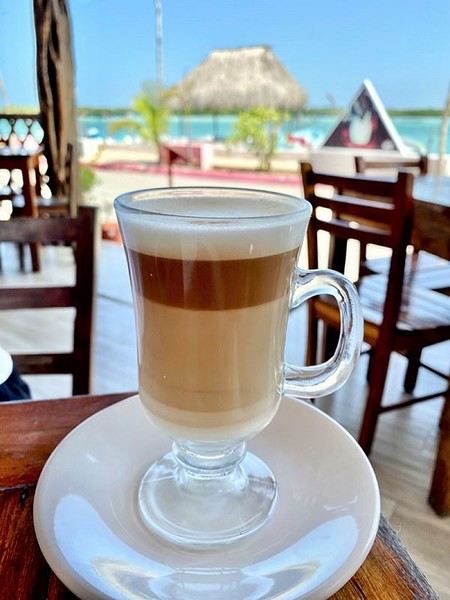
While sipping our aperitif on the terrace, we watched a raccoon calmly cross the street. No complaints—this town, which is also frequented by pelicans, is truly a nature town...
And finally, the guide. Finding one is super easy! You can ask for a guide at the hotel reception, which is what we did at Posada El Perico Marinero. You can also stroll around town, where you’ll quickly become a target for different guides offering their services. However, when you decline, they’re not pushy.
Watch out: there are official guides and others! Usually, the latter are fishermen who take tourists on their boats because it’s much more profitable for them than fishing. But they haven’t received any training for the job and don’t necessarily provide reliable information.
Our guide, Jose Ramos Gamboa, is an official guide known by everyone who offered us their services on the malecón, and they all said he was an excellent guide—even though he was their competitor! In hindsight, we felt the same way. That’s probably why several hotels work with him...
The price: 1,800 pesos (about 95 euros) for a 2-hour tour for 4 people. Instead of negotiating the price like most people, we preferred to negotiate the duration, and Jose agreed to give us a 3-hour tour for the same rate.
If you’re interested, feel free to contact him by phone or WhatsApp: (999) 910 57 83 – By email: contacto@riolagartosdiscovery.com (specify his name: Jose Ramos Gamboa) – His employer’s website: Rio Lagartos Discovery (they offer different types of tours, including nighttime ones).

3rd stop: Valladolid and its surroundings
We left Las Coloradas for Valladolid, heading due south. Along the way, we stopped at the Kikil cenote for a dip. In short, a cenote is a water-filled sinkhole (and it’s a cenote, not a! 😉). These geological features are usually located in the middle of nature, and swimming in them is often delightful.
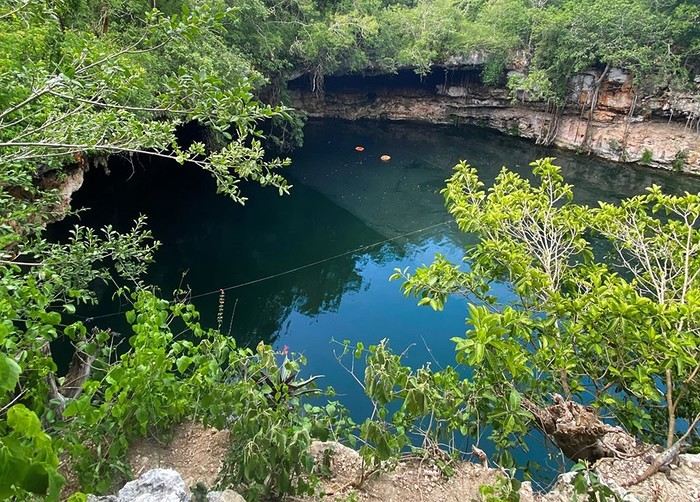
Kikil is frequented by a colorful bird found in large numbers, the turquoise-browed motmot. These pretty, multicolored feathered balls spend their time fluttering above swimmers’ heads to return to their nests, which they’ve built on the cenote’s walls.
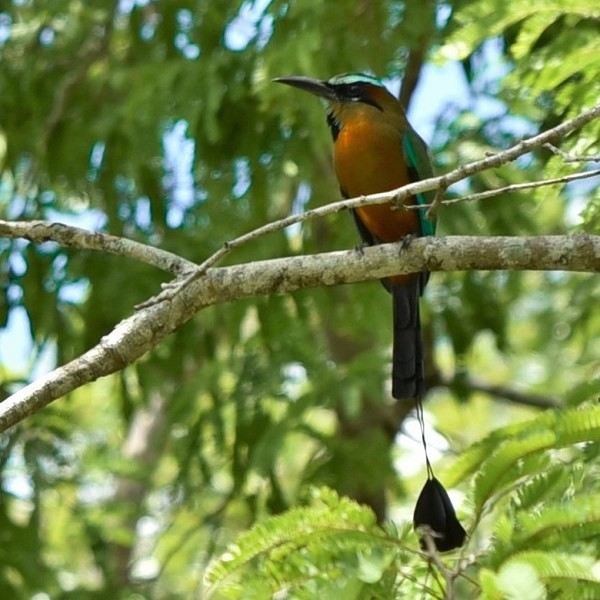
It’s a pretty, wild, and uncrowded cenote. The few people there when we arrived didn’t stay long, and we quickly found ourselves alone. Pure bliss.
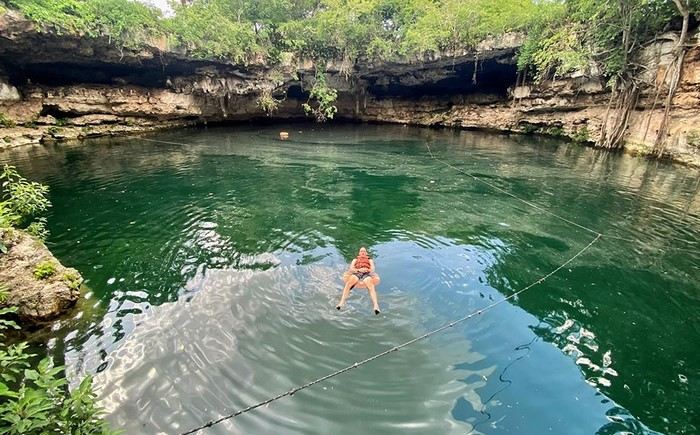 The only downside: the mandatory life jacket.
There are nearly 10,000 cenotes across the Yucatán Peninsula. Their refreshing waters are so appealing that you’ll likely swim in one (or several) almost every day.
I won’t detail every swim in these often-exceptional natural sites because, let’s be honest, no one’s that interested :smile:. I’ll just describe a few along the way in this travel journal. However, for those who might be curious, I’ve written a detailed article dedicated to these natural wonders: The Magic of Cenotes
The Kikil cenote is a perfect, refreshing stop between Rio Lagartos and Valladolid.
We chose this colonial city not only to visit it but also to explore the region. It’s ideally located for that: Mayan archaeological sites and cenotes are all around. There’s plenty to do.
Of the four colonial cities we visited, Valladolid was the one we liked the least. That said, it’s still pretty, and it’s a human-sized city (50,000 people), unlike Mérida, for example.
In our opinion, the advantage of touring the Yucatán counterclockwise is that you start with Valladolid and end with the stunning Campeche. But of course, everyone has their own preferences!
The square is dominated by the San Servacio church, the largest in the city.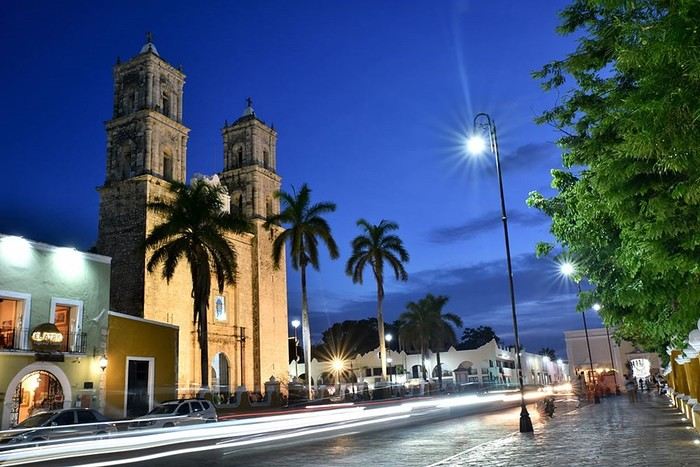
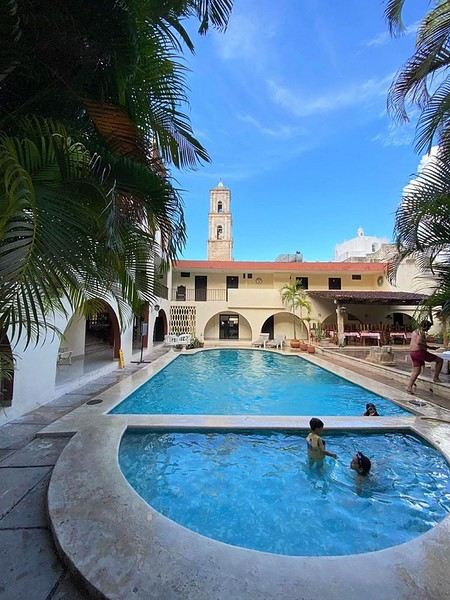
We stayed at Hotel San Clemente for its ideal location: right in the city center! Just cross the street, and you’re at the foot of the San Servacio church, facing the main square.
Its location is exceptional (the best of all the hotels we stayed at in the Yucatán’s colonial cities), and the breakfast terrace by the pool is very pleasant.
Price: 68 euros per night for a room for 4 (in the middle of July, no less).
We explored the area, and of all the cenotes nearby, I’ll mention two we really loved and where we often found ourselves completely alone. These are cave cenotes, not the usual open-air ones.
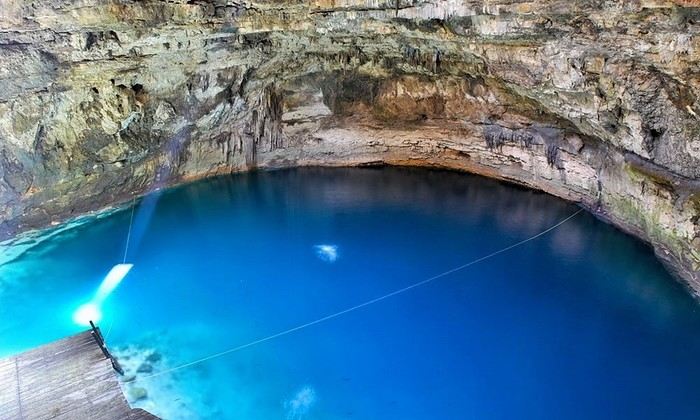
The X’ux Ha cenote:
And the Chihuan cenote:
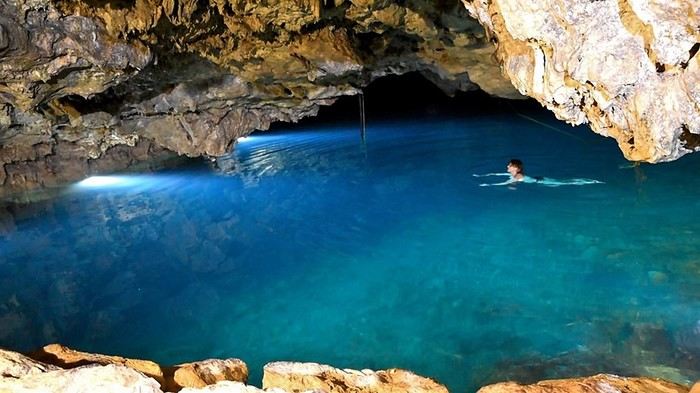
The atmosphere in cave cenotes is special: the air is very humid, sounds echo, the water is delicious, and you feel privileged to be there.
We stayed at Posada El Perico Marinero. The price was steep (123 euros per night for 4), and by far the most expensive accommodation of our entire 3-week trip, but for this stop, I wanted a pool for our sons. And it’s one of only two hotels in the whole town with a pool, which isn’t a luxury given the scorching heat there.
The hotel is slightly off-center, making it a quiet place to stay, and it’s just a 5-minute walk to the tiny downtown area.
The hotel has an on-site restaurant and another great one in the downtown area (a 5-minute walk), for which the hotel receptionists give discount vouchers: Perico Marinero. The food is excellent, the location on the malecón is perfect, prices are reasonable, and the staff is welcoming.
While sipping our aperitif on the terrace, we watched a raccoon calmly cross the street. No complaints—this town, which is also frequented by pelicans, is truly a nature town...
And finally, the guide. Finding one is super easy! You can ask for a guide at the hotel reception, which is what we did at Posada El Perico Marinero. You can also stroll around town, where you’ll quickly become a target for different guides offering their services. However, when you decline, they’re not pushy.
Watch out: there are official guides and others! Usually, the latter are fishermen who take tourists on their boats because it’s much more profitable for them than fishing. But they haven’t received any training for the job and don’t necessarily provide reliable information.
Our guide, Jose Ramos Gamboa, is an official guide known by everyone who offered us their services on the malecón, and they all said he was an excellent guide—even though he was their competitor! In hindsight, we felt the same way. That’s probably why several hotels work with him...
The price: 1,800 pesos (about 95 euros) for a 2-hour tour for 4 people. Instead of negotiating the price like most people, we preferred to negotiate the duration, and Jose agreed to give us a 3-hour tour for the same rate.
If you’re interested, feel free to contact him by phone or WhatsApp: (999) 910 57 83 – By email: contacto@riolagartosdiscovery.com (specify his name: Jose Ramos Gamboa) – His employer’s website: Rio Lagartos Discovery (they offer different types of tours, including nighttime ones).
3rd stop: Valladolid and its surroundings
We left Las Coloradas for Valladolid, heading due south. Along the way, we stopped at the Kikil cenote for a dip. In short, a cenote is a water-filled sinkhole (and it’s a cenote, not a! 😉). These geological features are usually located in the middle of nature, and swimming in them is often delightful.
Kikil is frequented by a colorful bird found in large numbers, the turquoise-browed motmot. These pretty, multicolored feathered balls spend their time fluttering above swimmers’ heads to return to their nests, which they’ve built on the cenote’s walls.
It’s a pretty, wild, and uncrowded cenote. The few people there when we arrived didn’t stay long, and we quickly found ourselves alone. Pure bliss.
The only downside: the mandatory life jacket.There are nearly 10,000 cenotes across the Yucatán Peninsula. Their refreshing waters are so appealing that you’ll likely swim in one (or several) almost every day.
I won’t detail every swim in these often-exceptional natural sites because, let’s be honest, no one’s that interested :smile:. I’ll just describe a few along the way in this travel journal. However, for those who might be curious, I’ve written a detailed article dedicated to these natural wonders: The Magic of Cenotes
The Kikil cenote is a perfect, refreshing stop between Rio Lagartos and Valladolid.
We chose this colonial city not only to visit it but also to explore the region. It’s ideally located for that: Mayan archaeological sites and cenotes are all around. There’s plenty to do.
Of the four colonial cities we visited, Valladolid was the one we liked the least. That said, it’s still pretty, and it’s a human-sized city (50,000 people), unlike Mérida, for example.
In our opinion, the advantage of touring the Yucatán counterclockwise is that you start with Valladolid and end with the stunning Campeche. But of course, everyone has their own preferences!
The square is dominated by the San Servacio church, the largest in the city.
We stayed at Hotel San Clemente for its ideal location: right in the city center! Just cross the street, and you’re at the foot of the San Servacio church, facing the main square.
Its location is exceptional (the best of all the hotels we stayed at in the Yucatán’s colonial cities), and the breakfast terrace by the pool is very pleasant.
Price: 68 euros per night for a room for 4 (in the middle of July, no less).
We explored the area, and of all the cenotes nearby, I’ll mention two we really loved and where we often found ourselves completely alone. These are cave cenotes, not the usual open-air ones.
The X’ux Ha cenote:
And the Chihuan cenote:
The atmosphere in cave cenotes is special: the air is very humid, sounds echo, the water is delicious, and you feel privileged to be there.