

Re: Tuscany: Arezzo province and the area around Siena
To switch things up from hiking, I’m visiting Sansepolcro in Tuscany’s Valtiberina (Tiber Valley). I have to descend about 10 km to reach the SS3bis (a dual carriageway), then drive around 20 km south. By the time I arrive, it’s already scorching, and the day will be as sweltering as the previous ones—being at 350 meters above sea level makes it feel much hotter compared to the mountains.
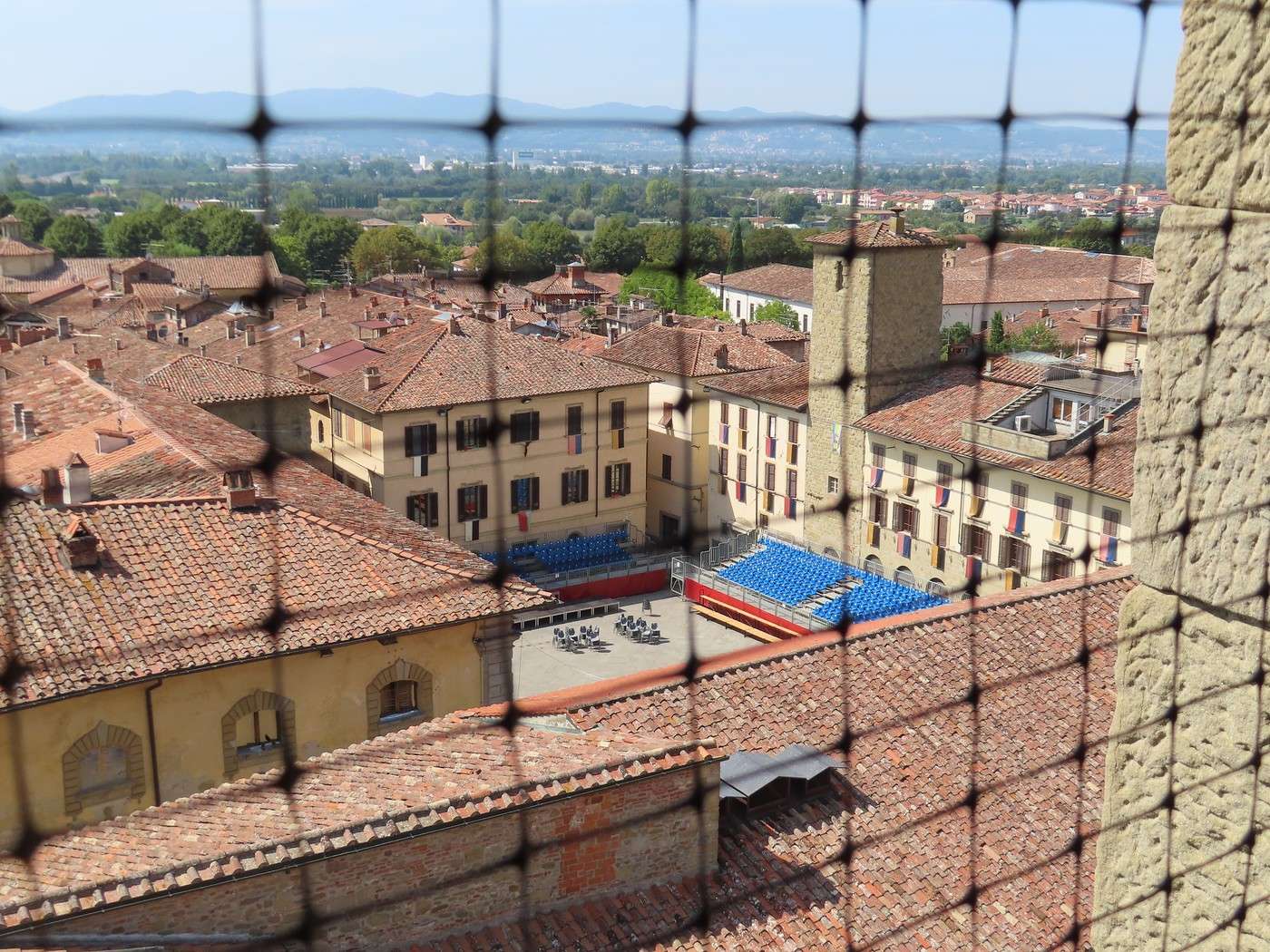
Today, unusually, the cathedral bell tower is open to visitors, which gives a great view showing just how small the town is. The main square (Piazza Torre di Berta) is already set up with bleachers for the "Palio della balestra," a historical reenactment featuring a crossbow competition taking place next Sunday.
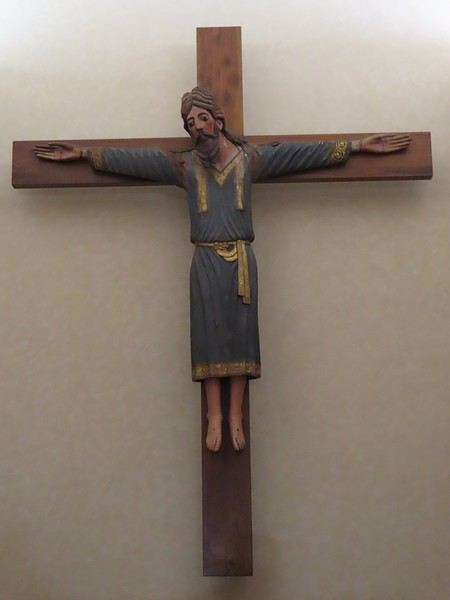
The duomo (cathedral) houses a rare crucifix, the "Volto Santo," dating back to the Carolingian era. In the 8th century, Christ is depicted wearing a tunic.
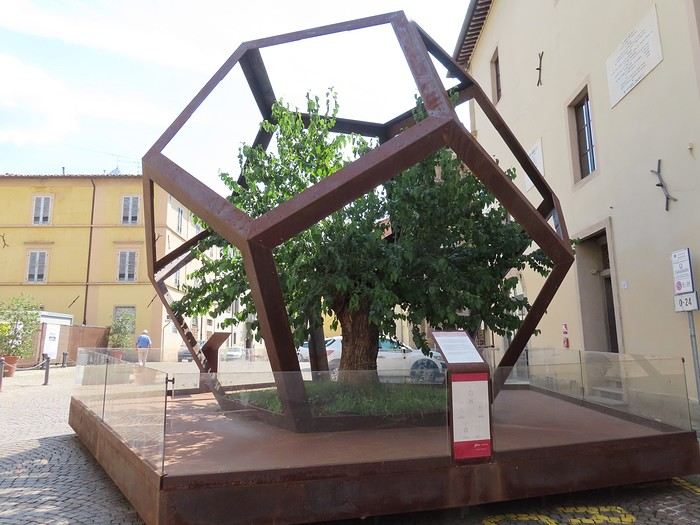
While wandering around, I come across the entrance to the ABOCA Museum, a museum themed around "plants and health." A tree has been placed inside a dodecahedron—is this an illustration of the relationship between nature and mathematics, or perhaps a tribute to the town’s famous son, whose birthplace is just a hundred meters away?
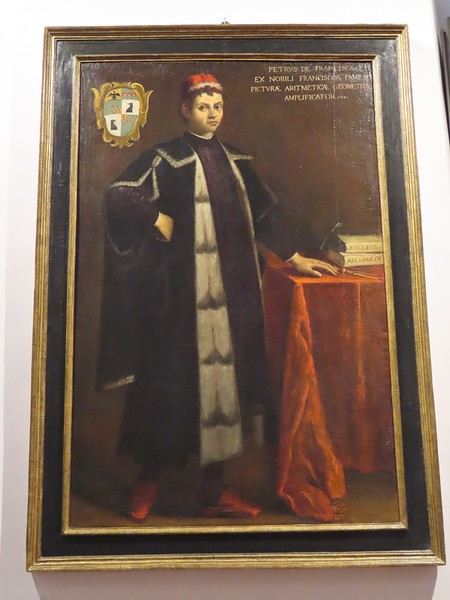
Piero della Francesca was born in the early Quattrocento (around 1410?) and died (in 1492) and is buried in Sansepolcro. He lived here when he wasn’t working elsewhere. His nearby birthplace reflects his family’s wealth. He was one of the greatest painters of the Italian Renaissance but also a mathematician, known as much for his scientific work as his art during his lifetime. He may have studied polyhedra, which could explain the tribute. His hometown dedicates a museum (Museo Civico) to him, housed in a historic building, the "Palazzo della Residenza." This museum holds major works by Piero della Francesca. We’ll start with his portrait, painted by Santi di Tito (a painter born in Sansepolcro) in the second half of the Cinquecento, long after Piero della Francesca’s death, so it’s based on other paintings, drawings, or engravings. Santi di Tito depicted the scholar and humanist more than the painter.
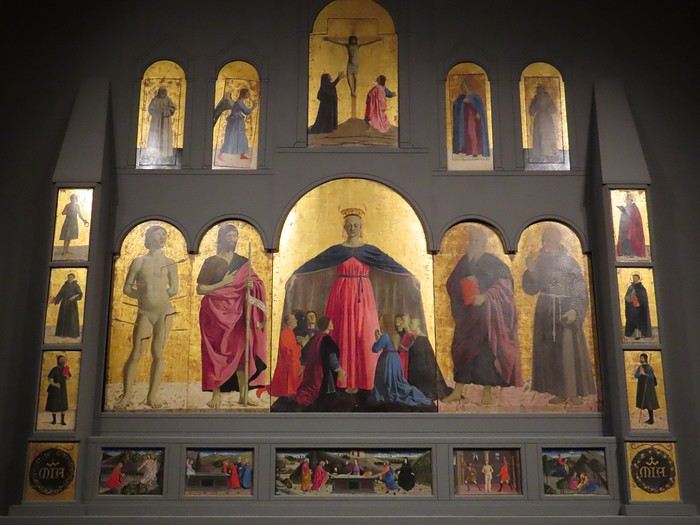
The first major work by Piero della Francesca in this museum is the Polyptych of the Misericordia. Its creation spanned about ten years, starting in 1445. Since the polyptych was dismantled, the panels have been arranged to reconstruct it.
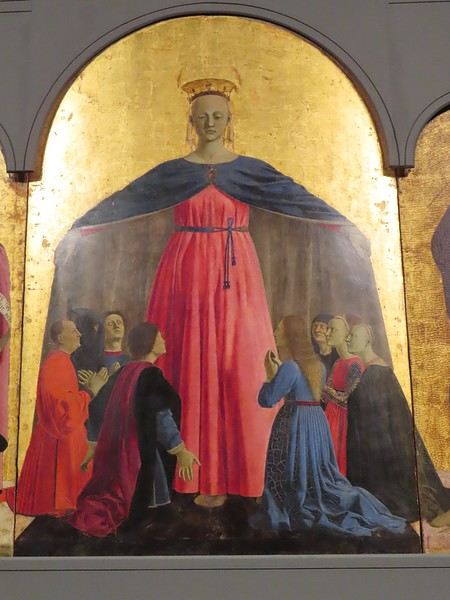
The central panel features the Virgin with her mantle open and arms outstretched (a symbol of protection).
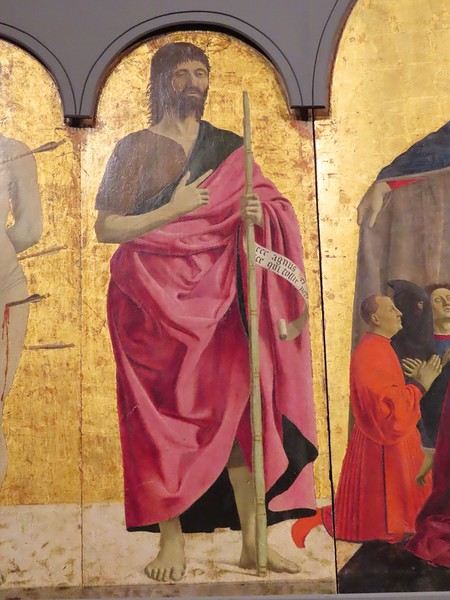
Finally, the panel just to the left of the central one, depicting Saint John the Baptist.
More to come later...
The duomo (cathedral) houses a rare crucifix, the "Volto Santo," dating back to the Carolingian era. In the 8th century, Christ is depicted wearing a tunic.
While wandering around, I come across the entrance to the ABOCA Museum, a museum themed around "plants and health." A tree has been placed inside a dodecahedron—is this an illustration of the relationship between nature and mathematics, or perhaps a tribute to the town’s famous son, whose birthplace is just a hundred meters away?
Piero della Francesca was born in the early Quattrocento (around 1410?) and died (in 1492) and is buried in Sansepolcro. He lived here when he wasn’t working elsewhere. His nearby birthplace reflects his family’s wealth. He was one of the greatest painters of the Italian Renaissance but also a mathematician, known as much for his scientific work as his art during his lifetime. He may have studied polyhedra, which could explain the tribute. His hometown dedicates a museum (Museo Civico) to him, housed in a historic building, the "Palazzo della Residenza." This museum holds major works by Piero della Francesca. We’ll start with his portrait, painted by Santi di Tito (a painter born in Sansepolcro) in the second half of the Cinquecento, long after Piero della Francesca’s death, so it’s based on other paintings, drawings, or engravings. Santi di Tito depicted the scholar and humanist more than the painter.
The first major work by Piero della Francesca in this museum is the Polyptych of the Misericordia. Its creation spanned about ten years, starting in 1445. Since the polyptych was dismantled, the panels have been arranged to reconstruct it.
The central panel features the Virgin with her mantle open and arms outstretched (a symbol of protection).
Finally, the panel just to the left of the central one, depicting Saint John the Baptist.
More to come later...