

Re: 16 days with the family in La Gomera (Canary Islands)
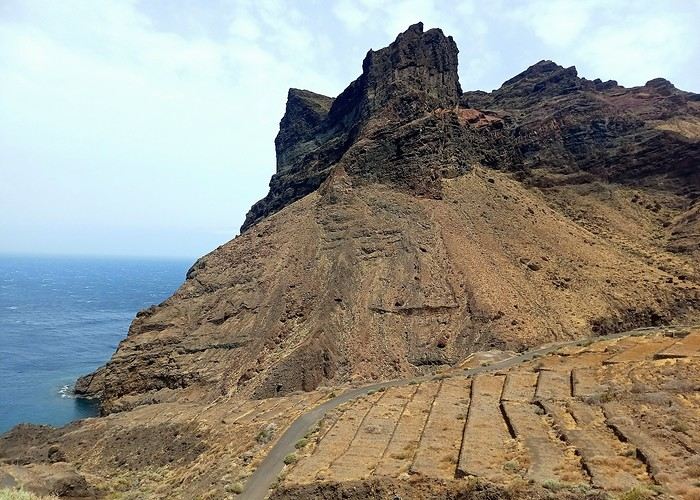
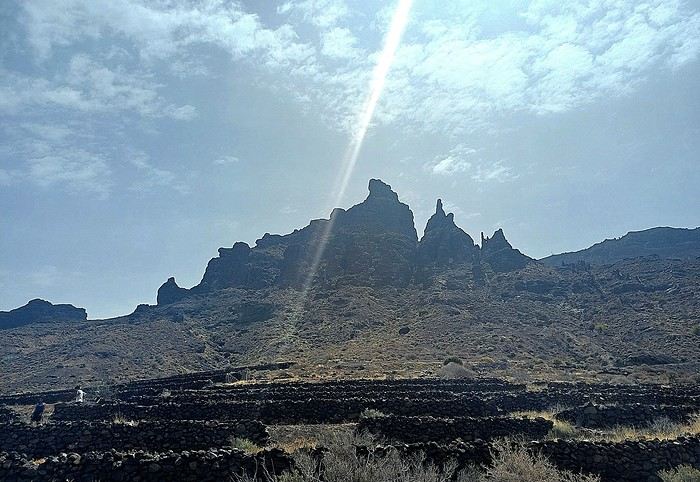
A forty-minute walk along the terraced fields leads us to a cliff above the end of the village and the coastline.
Below, the path takes us to a rockier, very Far West-like environment.
 Down there, we see hikers leaving the road and heading into a ravine… When we reach it, Magali is a bit skeptical that it’s possible to access the beach without being an experienced climber. But there’s indeed a tiny, slightly rugged but manageable path that zigzags between the rocks.
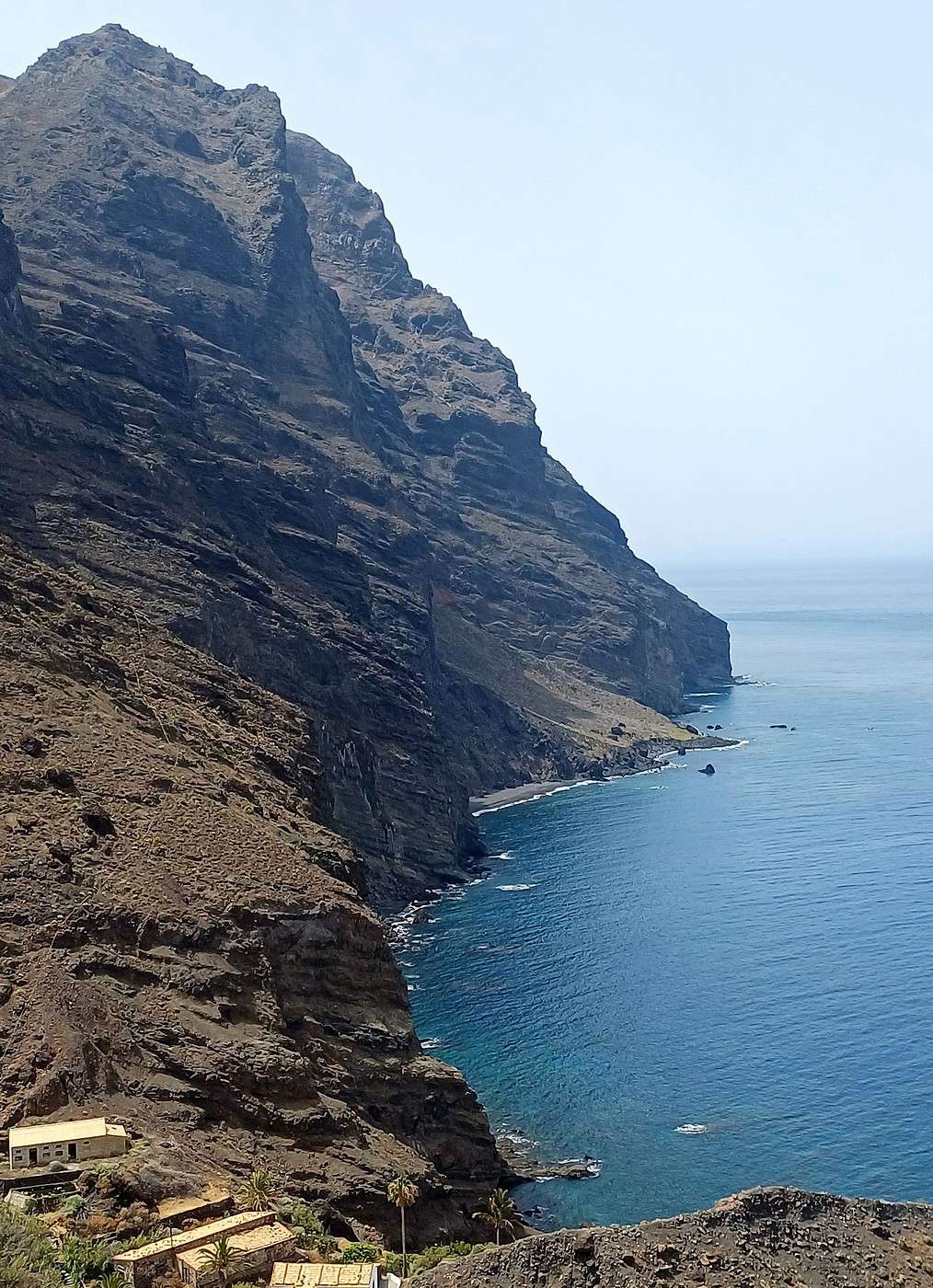
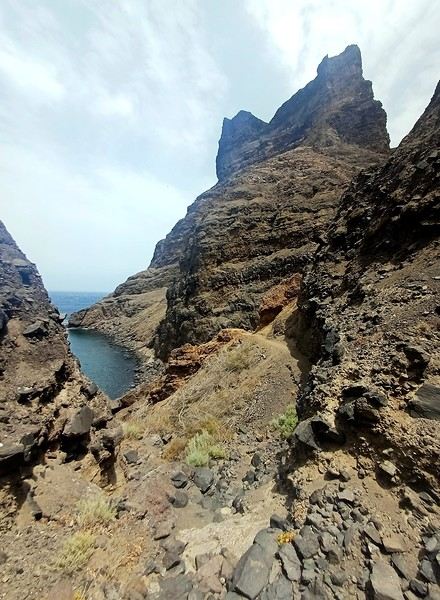 From there, we can see the beach shaped like a small Breton cove.
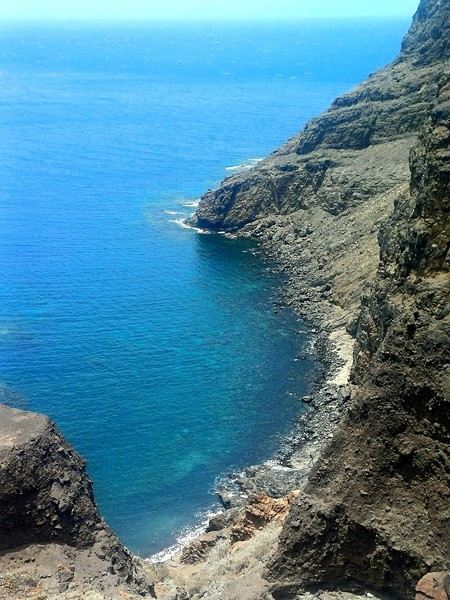 It takes us about twenty minutes between the rocks and impressive basalt formations to reach this beautiful little wild black-sand beach nestled between the cliffs. There’s a couple swimming; this stretch of ocean is calm and protected from currents here, so we follow their lead. Plus, the water is really nice, and we can admire from afar another small beach just like it—this one accessible only by boat—and a bit of the old pier’s remains, like those found in all the municipalities of northern La Gomera.
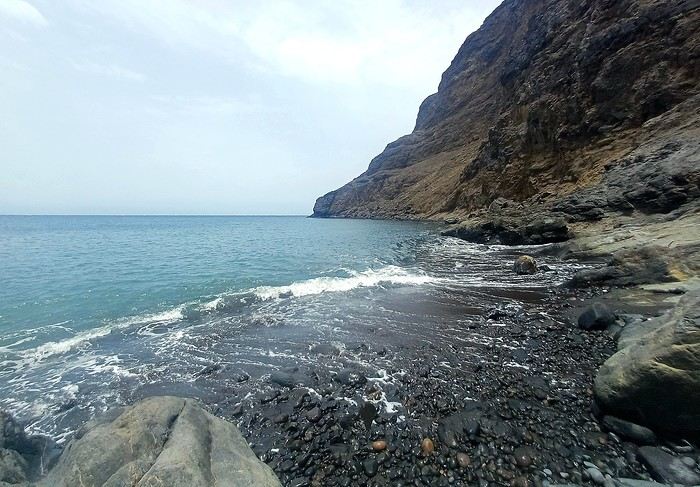
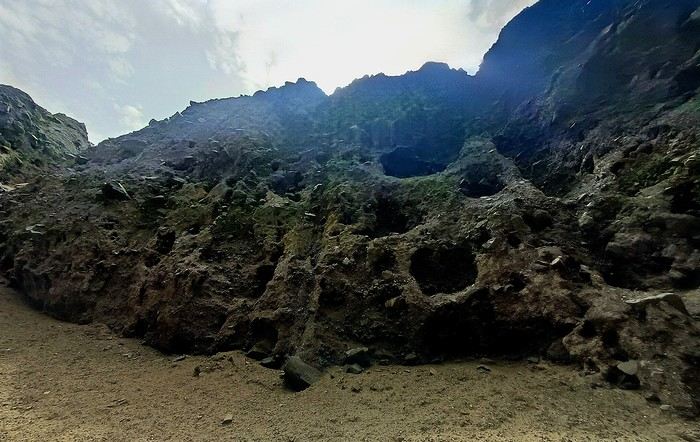
We enjoyed three-quarters of an hour on this end-of-the-world beach, and now we have to leave… We climb back up the path faster than we descended, through the frozen lava flows dotted with cryptic cavities that still give the impression of thick waves about to swallow us.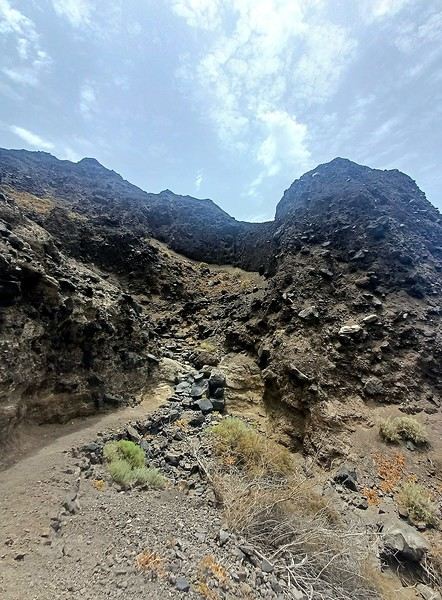
 The heat is something we haven’t experienced since our arrival. We’ve walked several kilometers to get here, climbed this steep path, and the idea of having to walk another good hour under the scorching sun to get back to Taguluche seems more than tough for Théo. The Spanish couple followed in our footsteps and, unlike us, parked at the start of the trail. We secretly hope they’ll offer us a ride, though without much hope… We keep walking with no motivation at all… and our wish comes true! The woman invites us into their van, telling us the road is long and it’s really too hot for the little one: 35°C. We can hardly believe it and thank them a thousand times, wishing them all the luck in the universe. They’re actually from Tenerife—she’s originally from El Hierro—and like many people from Tenerife, they’re on vacation in La Gomera. They drop us off near the now-closed restaurant. From there, it’s just a 10-minute walk to the car. The workers repainting the electrical cabin are still there, but just packing up their tools. They greet us in recognition and hand us a bottle of cold water "para los niños" from their truck, gesturing not to worry: « Nosotros tenemos mucho! ». We’re deeply touched to have experienced Canarian kindness and hospitality in just fifteen minutes.
Now, we’re heading to Alojera, about ten kilometers away, for a little half-hour stop, where we want to visit the Palm Honey Interpretation Center. But first, we’re off to one of the only two restaurants in Alojera because, believe it or not, it’s already 3 PM and we haven’t eaten yet. Restaurant Prisma is nestled among houses right by the sea in a slightly covered alley where its tables spill out widely. It’s almost full, and only one table is left inside. The kids from the neighboring vacation rentals—Spanish and French—are constantly running back and forth to stock up on ice cream. We order a seafood paella for two; it’s pretty good, but we regret it a bit when we see the incredible grilled fish platters going to other tables! Prices are significantly lower than in France for such generous portions. We’re so full we skip the tempting desserts. From the restaurant, there are just a few steps down to the pebble beach and the beautiful pier where kids are jumping into the sparkling ocean.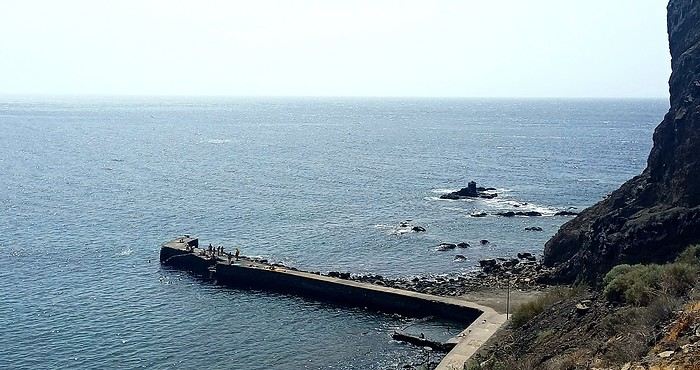
With heavy stomachs, we head to the Palm Honey Interpretation Center, an unmissable specialty of the Canary Islands, especially La Gomera, the only island where it’s still produced. Entry is free, and while the visit takes about fifteen minutes, we learn a lot about its ancient use by the Guanche aborigines, as the palm tree is an endemic species of the island. Despite its small size, La Gomera has the most specimens—118,000. Growers meticulously extract the liquid sap, called guarapo, from the tree’s crown. It’s cooked until it thickens: it takes 8 liters of sap to produce one liter of palm syrup, locally (and inaccurately) called honey. It’s used like maple syrup in almost all local desserts. The palm’s shoots are traditionally used like wicker to make bags. The center is well-stocked with explanations, mini-documentaries, and quizzes for kids, and of course, there’s a shop where you can buy local palm honey and palm-made items at "preferential prices." The same brands turn out to be the same price, if not slightly cheaper, at Spar. Still, it’s a very informative little visit.
Now it’s time to head back after this exhausting but rewarding day. Back to the winding roads and the mandatory stop, this time at the Mirador de la Curva del Queso, which rises 600 meters straight above Valle Gran Rey, and for which the phrase "breathtaking view" is no exaggeration.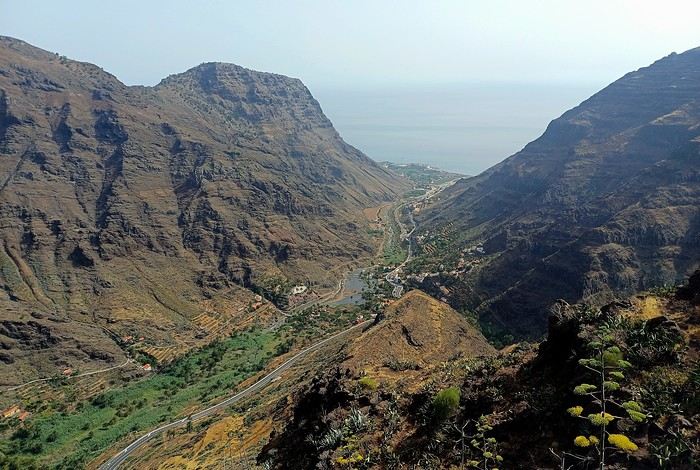
Tonight, needless to say, dinner is very light. A few minutes after nightfall, I settle onto the lounge chair on the balcony and scan the mountain facing us, trying to recall its name. It’s called Teguerguenche, rising to 1,020 meters, and its plateau can be reached by a difficult hike. I’m not surprised to learn it was a high place for ritual practices and sacrifices for the Guanche aborigines—I would’ve sworn it.
And then it happens… At 9:45 PM, the first cry rings out. Followed by several others right above me, before a thunderous concert of hallucinated shrieks shatters the valley plunged into darkness, the full moon’s light hidden by the twin summit of Teguerguenche, the Adivino ("The Seer," where legend says a Guanche shaman had a vision of the Spaniards’ arrival long before the island was taken). Magali comes out and can’t believe her ears, Kelyandre is uneasy, and Théo is literally terrified. There are hundreds of hallucinated pleas, amplified by the immense echo chamber of the valley enclosed by its two mountainous wings. Online sources describe this cry as perhaps the most piercing in the avian kingdom, comparing it to "hoarse wails," "guttural and mournful laments" resembling "human sobs," so much so that it has "fueled legends of ghosts or sirens." I couldn’t describe it better. What’s even more impressive is that these cries aren’t uniform but articulate distinct phrases, as if each one conveyed a human meaning, but in a monstrous way. Amid this chaos of high-pitched shrieks resembling moans, mockery, or malevolent taunts from little demonic beings under the influence of some hallucinogenic substance, you can sometimes hear atrociously deep regurgitations, like a sordid Mongolian throat-singing: those are the females. The kids beg us to close their sliding glass door completely despite the heat. For our part, we stay on the balcony for a while, fascinated, because we’ve never heard anything like it. It’s an unreal experience, especially on this full-moon night in such an intimidating natural and legendary setting. I start imagining the faces of the Spanish navigators hearing this infernal cacophony from their caravels: in their place, I would’ve abandoned exploring this cursed island and set sail as fast as possible. All because of a plain seabird with a ridiculous name: the Cory’s shearwater…
From there, we can see the beach shaped like a small Breton cove.
It takes us about twenty minutes between the rocks and impressive basalt formations to reach this beautiful little wild black-sand beach nestled between the cliffs. There’s a couple swimming; this stretch of ocean is calm and protected from currents here, so we follow their lead. Plus, the water is really nice, and we can admire from afar another small beach just like it—this one accessible only by boat—and a bit of the old pier’s remains, like those found in all the municipalities of northern La Gomera.
We enjoyed three-quarters of an hour on this end-of-the-world beach, and now we have to leave… We climb back up the path faster than we descended, through the frozen lava flows dotted with cryptic cavities that still give the impression of thick waves about to swallow us.
Now, we’re heading to Alojera, about ten kilometers away, for a little half-hour stop, where we want to visit the Palm Honey Interpretation Center. But first, we’re off to one of the only two restaurants in Alojera because, believe it or not, it’s already 3 PM and we haven’t eaten yet. Restaurant Prisma is nestled among houses right by the sea in a slightly covered alley where its tables spill out widely. It’s almost full, and only one table is left inside. The kids from the neighboring vacation rentals—Spanish and French—are constantly running back and forth to stock up on ice cream. We order a seafood paella for two; it’s pretty good, but we regret it a bit when we see the incredible grilled fish platters going to other tables! Prices are significantly lower than in France for such generous portions. We’re so full we skip the tempting desserts. From the restaurant, there are just a few steps down to the pebble beach and the beautiful pier where kids are jumping into the sparkling ocean.
With heavy stomachs, we head to the Palm Honey Interpretation Center, an unmissable specialty of the Canary Islands, especially La Gomera, the only island where it’s still produced. Entry is free, and while the visit takes about fifteen minutes, we learn a lot about its ancient use by the Guanche aborigines, as the palm tree is an endemic species of the island. Despite its small size, La Gomera has the most specimens—118,000. Growers meticulously extract the liquid sap, called guarapo, from the tree’s crown. It’s cooked until it thickens: it takes 8 liters of sap to produce one liter of palm syrup, locally (and inaccurately) called honey. It’s used like maple syrup in almost all local desserts. The palm’s shoots are traditionally used like wicker to make bags. The center is well-stocked with explanations, mini-documentaries, and quizzes for kids, and of course, there’s a shop where you can buy local palm honey and palm-made items at "preferential prices." The same brands turn out to be the same price, if not slightly cheaper, at Spar. Still, it’s a very informative little visit.
Now it’s time to head back after this exhausting but rewarding day. Back to the winding roads and the mandatory stop, this time at the Mirador de la Curva del Queso, which rises 600 meters straight above Valle Gran Rey, and for which the phrase "breathtaking view" is no exaggeration.
Tonight, needless to say, dinner is very light. A few minutes after nightfall, I settle onto the lounge chair on the balcony and scan the mountain facing us, trying to recall its name. It’s called Teguerguenche, rising to 1,020 meters, and its plateau can be reached by a difficult hike. I’m not surprised to learn it was a high place for ritual practices and sacrifices for the Guanche aborigines—I would’ve sworn it.
And then it happens… At 9:45 PM, the first cry rings out. Followed by several others right above me, before a thunderous concert of hallucinated shrieks shatters the valley plunged into darkness, the full moon’s light hidden by the twin summit of Teguerguenche, the Adivino ("The Seer," where legend says a Guanche shaman had a vision of the Spaniards’ arrival long before the island was taken). Magali comes out and can’t believe her ears, Kelyandre is uneasy, and Théo is literally terrified. There are hundreds of hallucinated pleas, amplified by the immense echo chamber of the valley enclosed by its two mountainous wings. Online sources describe this cry as perhaps the most piercing in the avian kingdom, comparing it to "hoarse wails," "guttural and mournful laments" resembling "human sobs," so much so that it has "fueled legends of ghosts or sirens." I couldn’t describe it better. What’s even more impressive is that these cries aren’t uniform but articulate distinct phrases, as if each one conveyed a human meaning, but in a monstrous way. Amid this chaos of high-pitched shrieks resembling moans, mockery, or malevolent taunts from little demonic beings under the influence of some hallucinogenic substance, you can sometimes hear atrociously deep regurgitations, like a sordid Mongolian throat-singing: those are the females. The kids beg us to close their sliding glass door completely despite the heat. For our part, we stay on the balcony for a while, fascinated, because we’ve never heard anything like it. It’s an unreal experience, especially on this full-moon night in such an intimidating natural and legendary setting. I start imagining the faces of the Spanish navigators hearing this infernal cacophony from their caravels: in their place, I would’ve abandoned exploring this cursed island and set sail as fast as possible. All because of a plain seabird with a ridiculous name: the Cory’s shearwater…