


Re: Mexico: The Magic of the Yucatan
Without further ado, after nature, let’s move on to ancient stones.
Between Valladolid and Mérida lies what is arguably the most iconic site in the entire Yucatan: Chichen Itza.
It’s an ancient and vast Mayan city that once housed up to 50,000 inhabitants. Today, its most famous structure, world-renowned, is the pyramid of Kukulcan, the feathered serpent god in whose honor it was built.
Alright, no need to play tourist guide for this ultra-famous and unmissable Yucatan site—just a few images will do, but this famous Mayan site is truly impressive to visit.
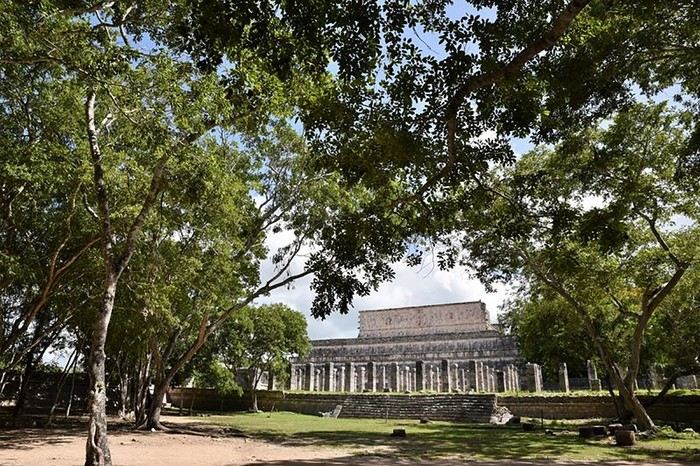 The Temple of the Warriors
The Tzompantli were sculpted wall sections depicting human skulls impaled on stakes! This violent Mayan practice actually existed.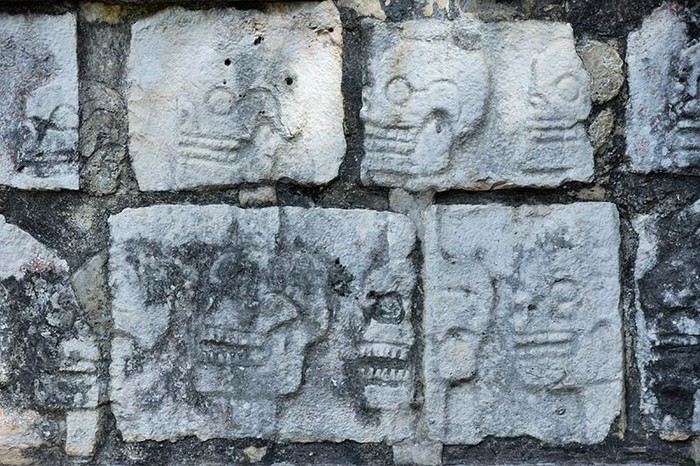
Iguanas are everywhere in Chichen Itza. Even on the skulls of the Tzompantli—no respect from these little creatures.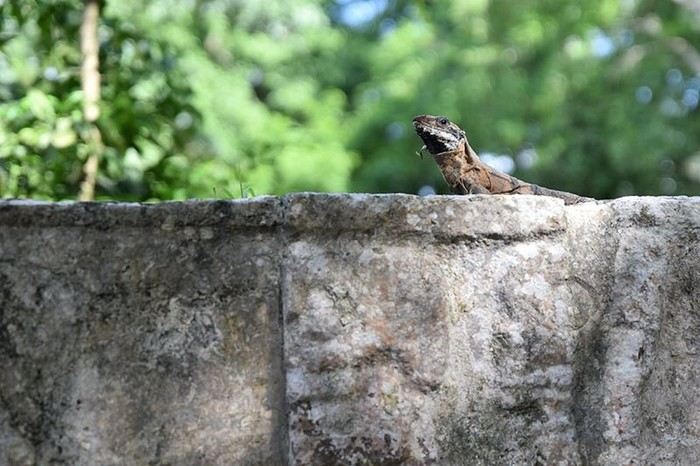
All Mayan cities were built near one or more cenotes, these sinkholes that were the region’s only water source.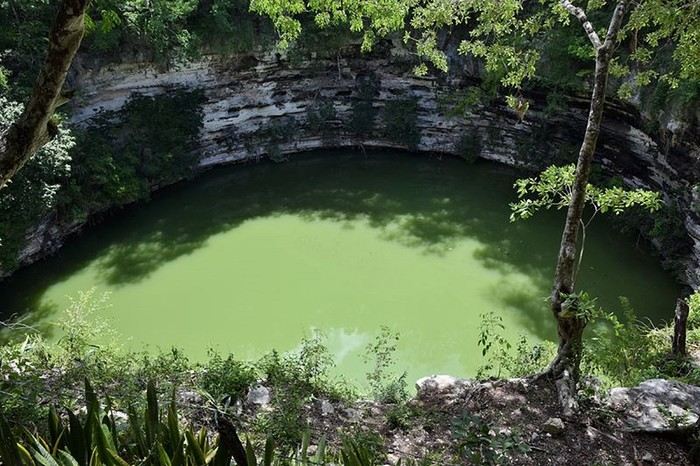 The Sacred Cenote at Chichen Itza
Without further ado, after the ancient Mayan stones, we move on to a nature activity that exists only in the Yucatan and nowhere else in the world: diving in cenotes.
We did two incredible ones with Scuba Tulum, a dive club that gave us an amazing day.
First, we headed to the Ponderosa cenote. Visually, this stunning cenote lives up to its nickname, the Garden of Eden! Nestled in lush vegetation, its inviting water spans nearly every shade of green and blue.
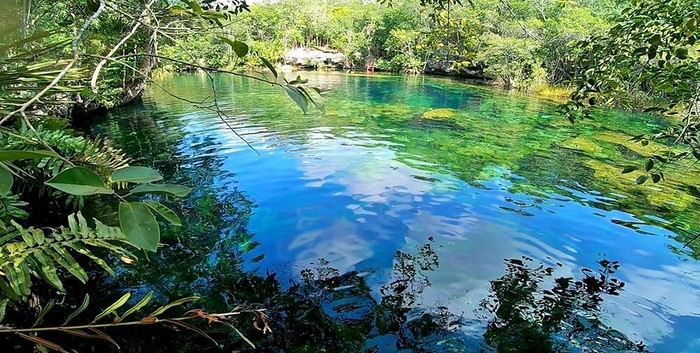
The downside? It’s pretty busy—swimmers, snorkelers, and divers all come to enjoy this gorgeous cenote. But you can still spend half a day or even a full day there—it’s that beautiful, pleasant, and perfectly set up.
After entering the water in the main pool (the one in the photo above), you dive into a network of underwater galleries and caves. Claustrophobes, beware.
Before the dive, we were warned to swim breaststroke with our fins instead of kicking like in freestyle. Why? In some narrow passages, it prevents damaging the floor and ceiling by hitting them with your fins.
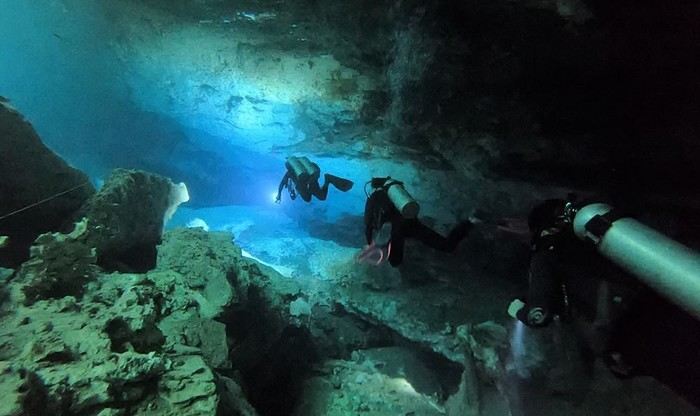
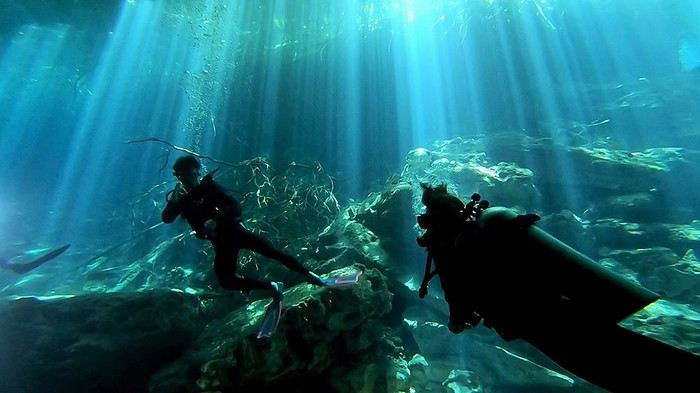
At the end of the tunnel is the highlight: impressive underwater light displays. Looking up, you can see the beautiful mangrove on the other side of the surface, located in a second cenote—this one inaccessible by foot.
Sunrays make their way through the tropical vegetation, then pierce the water’s surface down to the cenote’s depths. It looks like a movie set, but no—it’s just nature.
It’s hard to capture the grandeur and beauty of this dive spot with just a GoPro video still—I’ve got nothing better to show you! But it gives you an idea of what it looks like...
Back in the starting pool, a cute little freshwater turtle swims peacefully among us. A sublime dive.
After getting out of the water, Isella, our dive guide, gives us a choice for the second dive we’ll do in the afternoon: a cenote decorated with countless stalactites, or another in the mangrove where a wild crocodile lives. I’ll mention right away (but I’ll go into more detail later) that this croc is considered non-dangerous to humans by authorities and specialists who monitor it regularly.
Both dives sound amazing, but especially the second—an opportunity like this might never come again. Still, I don’t want to influence my sons, so I ask what they think. “The crocodile sounds cool,” I hear them say. Sold—it’s the croc for us.
I’ve almost reached my photo limit—see you in a bit...
Between Valladolid and Mérida lies what is arguably the most iconic site in the entire Yucatan: Chichen Itza.
It’s an ancient and vast Mayan city that once housed up to 50,000 inhabitants. Today, its most famous structure, world-renowned, is the pyramid of Kukulcan, the feathered serpent god in whose honor it was built.
Alright, no need to play tourist guide for this ultra-famous and unmissable Yucatan site—just a few images will do, but this famous Mayan site is truly impressive to visit.
The Temple of the WarriorsThe Tzompantli were sculpted wall sections depicting human skulls impaled on stakes! This violent Mayan practice actually existed.
Iguanas are everywhere in Chichen Itza. Even on the skulls of the Tzompantli—no respect from these little creatures.
All Mayan cities were built near one or more cenotes, these sinkholes that were the region’s only water source.
The Sacred Cenote at Chichen ItzaWithout further ado, after the ancient Mayan stones, we move on to a nature activity that exists only in the Yucatan and nowhere else in the world: diving in cenotes.
We did two incredible ones with Scuba Tulum, a dive club that gave us an amazing day.
First, we headed to the Ponderosa cenote. Visually, this stunning cenote lives up to its nickname, the Garden of Eden! Nestled in lush vegetation, its inviting water spans nearly every shade of green and blue.
The downside? It’s pretty busy—swimmers, snorkelers, and divers all come to enjoy this gorgeous cenote. But you can still spend half a day or even a full day there—it’s that beautiful, pleasant, and perfectly set up.
After entering the water in the main pool (the one in the photo above), you dive into a network of underwater galleries and caves. Claustrophobes, beware.
Before the dive, we were warned to swim breaststroke with our fins instead of kicking like in freestyle. Why? In some narrow passages, it prevents damaging the floor and ceiling by hitting them with your fins.
At the end of the tunnel is the highlight: impressive underwater light displays. Looking up, you can see the beautiful mangrove on the other side of the surface, located in a second cenote—this one inaccessible by foot.
Sunrays make their way through the tropical vegetation, then pierce the water’s surface down to the cenote’s depths. It looks like a movie set, but no—it’s just nature.
It’s hard to capture the grandeur and beauty of this dive spot with just a GoPro video still—I’ve got nothing better to show you! But it gives you an idea of what it looks like...
Back in the starting pool, a cute little freshwater turtle swims peacefully among us. A sublime dive.
After getting out of the water, Isella, our dive guide, gives us a choice for the second dive we’ll do in the afternoon: a cenote decorated with countless stalactites, or another in the mangrove where a wild crocodile lives. I’ll mention right away (but I’ll go into more detail later) that this croc is considered non-dangerous to humans by authorities and specialists who monitor it regularly.
Both dives sound amazing, but especially the second—an opportunity like this might never come again. Still, I don’t want to influence my sons, so I ask what they think. “The crocodile sounds cool,” I hear them say. Sold—it’s the croc for us.
I’ve almost reached my photo limit—see you in a bit...