


Re: Iceland, a week in April on the island of ice and fire
The glaciers were the main motivation for this trip to Iceland. We weren’t disappointed!
Our first encounter was with Sólheimajökull, a glacial tongue of Mýrdalsjökull, which covers several volcanoes. At its base, a lake formed by melting ice catches the icebergs breaking off from the front. A trail (3.5 km round trip) lets you walk along the lake and get up close to the glacier to feel its beauty and grandeur, even though it’s clearly retreating due to climate change. You can really see the color differences: white when the ice contains bubbles, blue when the ice is dense, and black where ash from past eruptions has settled. It was the first time we’d been so close to a glacier—the ones we saw in Canada were much farther away—and it’s both moving and impressive.
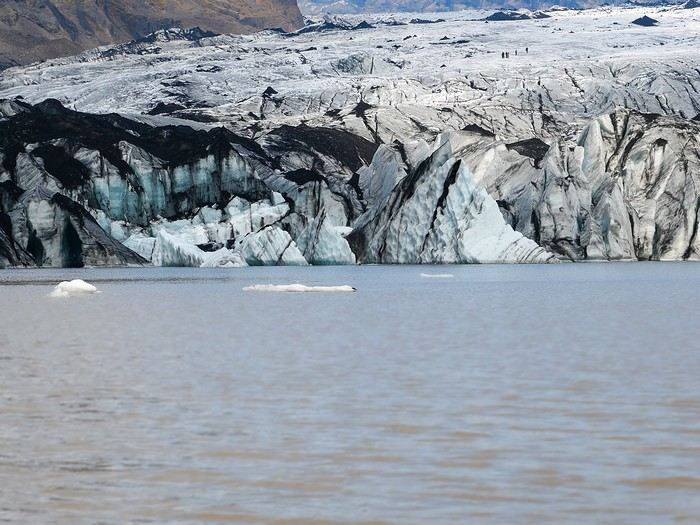
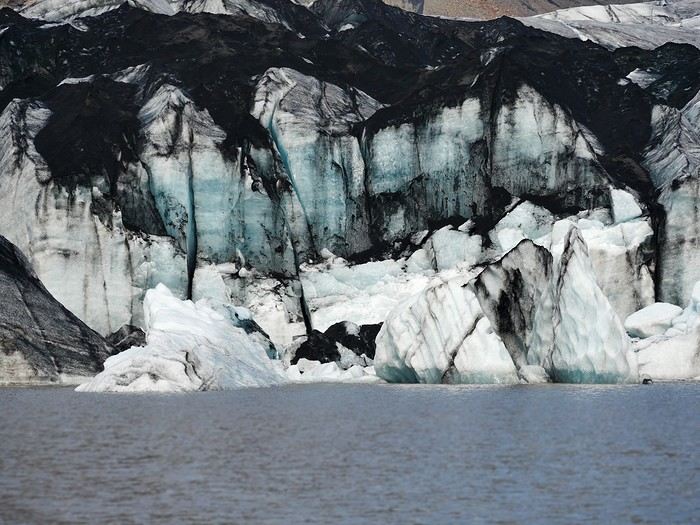
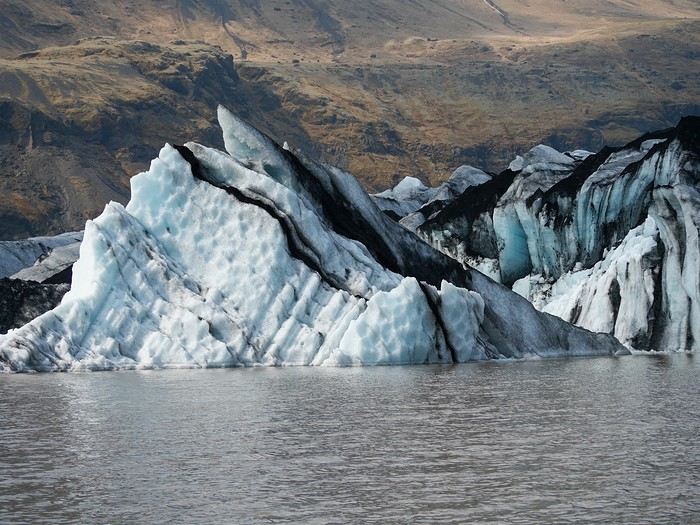
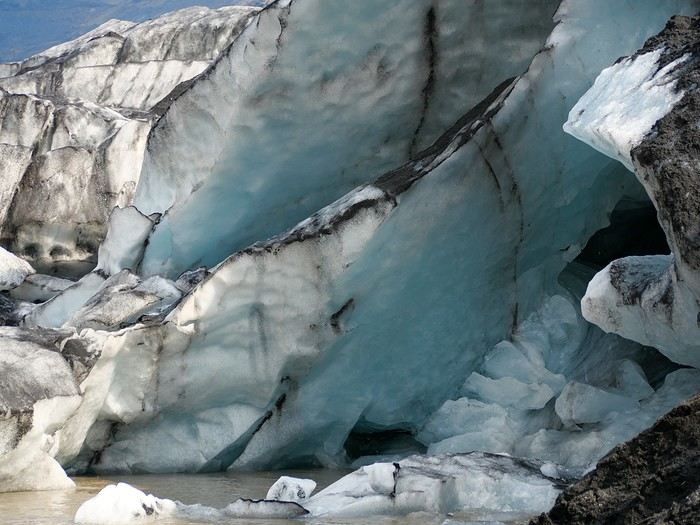 Vatnajökull is the second-largest glacier in Europe: it covers nearly 8% of Iceland’s surface, and the ice can reach 1,000 meters deep. It has shaped the landscape, creating canyons, lakes, waterfalls, and glacial tongues...
To see Skaftafellsjökull, one of the glacial tongues of the vast Vatnajökull, we set off on a 7.5 km loop hike that takes us past several waterfalls before reaching a breathtaking viewpoint.
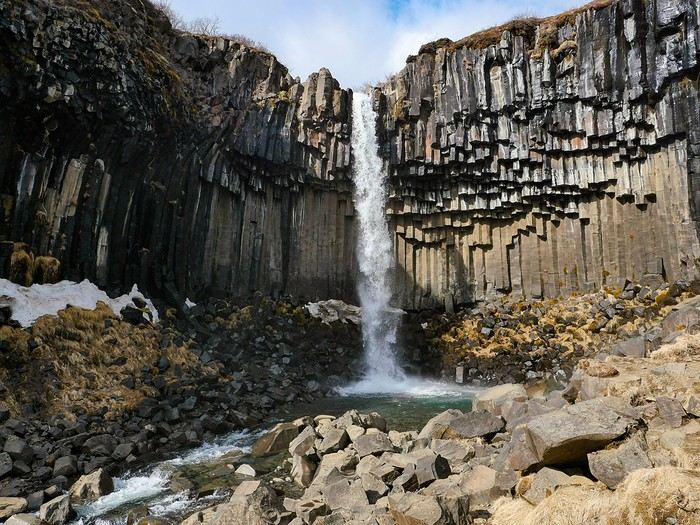
The hike starts at the Skaftafell campsite. We pass Hundafoss, then the famous Svartifoss, framed by its basalt columns. Most people turn back here.
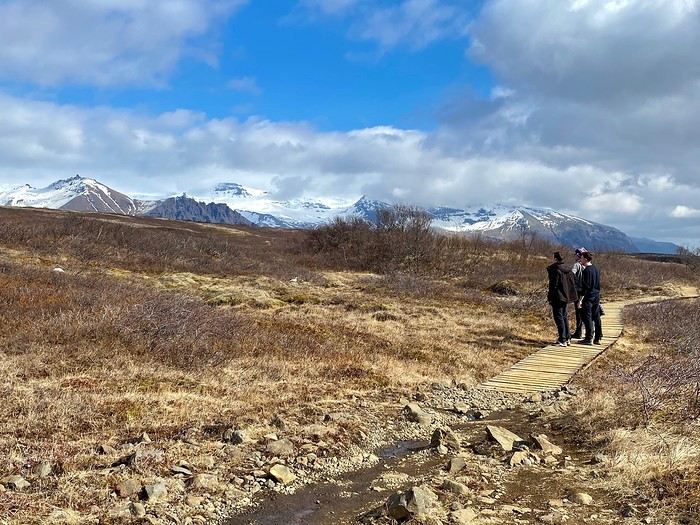
We continue on the S6 trail to Sjónarnípa, a viewpoint overlooking the lagoon and the Skaftafellsjökull glacier. The path can get muddy, but you can avoid it by walking a little higher on the grass, and some tricky sections have wooden boardwalks.
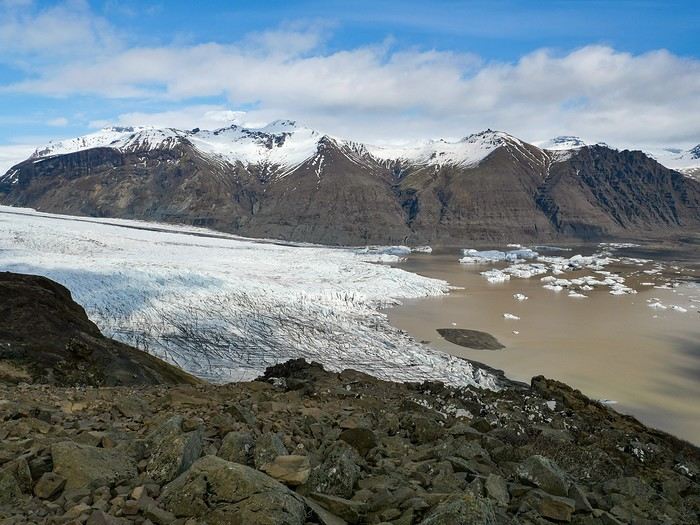
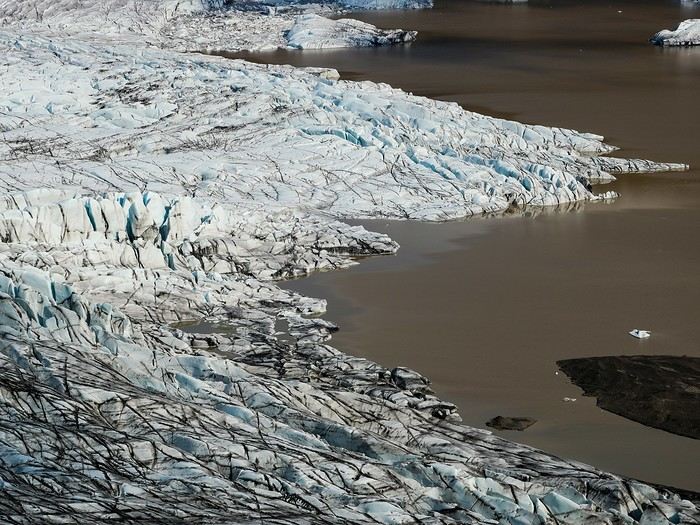
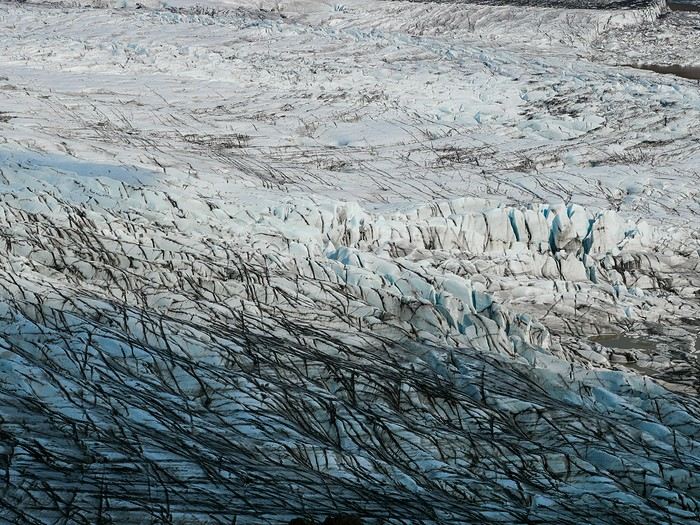
Arriving at Sjónarnípa is mind-blowing because you have to climb a small hill where the view of the glacier only reveals itself at the very top. It’s fascinating—you feel tiny in the face of the glacier’s power and vastness. From here, you can see the folds, crevasses, and color variations... We were literally hypnotized by the landscape.
 The return to the campsite is almost all downhill and really tests your knees. There are large wooden steps, some in rough shape and very tall, to descend. We felt bad for the people we passed who were hiking in the opposite direction—they looked like they were struggling to climb those uneven stairs!
We continue on the S6 trail to Sjónarnípa, a viewpoint overlooking the lagoon and the Skaftafellsjökull glacier. The path can get muddy, but you can avoid it by walking a little higher on the grass, and some tricky sections have wooden boardwalks.
Arriving at Sjónarnípa is mind-blowing because you have to climb a small hill where the view of the glacier only reveals itself at the very top. It’s fascinating—you feel tiny in the face of the glacier’s power and vastness. From here, you can see the folds, crevasses, and color variations... We were literally hypnotized by the landscape.