
Re: Southern Shikoku: Between Land and Sea, the Blue Waters of Miyakojima, and Ending in the Megacity
The day starts off great because it's 7:45 AM and outside, the sky is a brilliant blue with not a cloud in sight. Only the sun is lighting our way.
From the hotel, we walk to the car rental agency we spotted yesterday. It's located at the north exit of the station, just behind the retro bike parking lot.
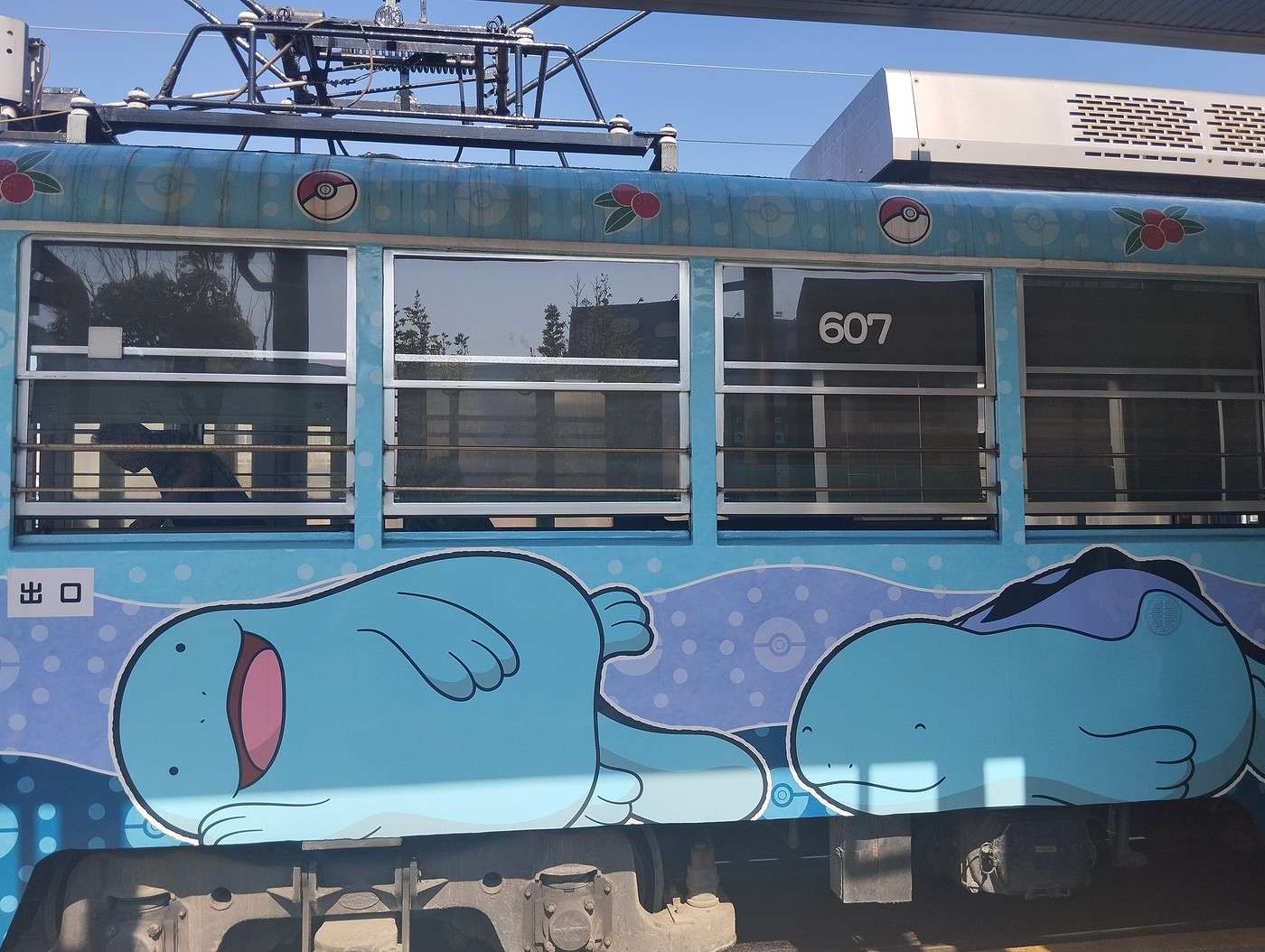
Just before that, at the south exit, we spotted a tram in shades of blue. I don’t know the name of the character depicted on it.
We’re greeted by a very pleasant Japanese woman and man. Despite a few moments of confusion trying to understand each other, there’s no impatience or annoyance. For some reason, the credit card isn’t working, even though I’ve used it for payments on previous trips. We’re forced to pay in cash. Given that we’re renting the car for a one-way road trip from point A to point B, the options were limited, and the price reflected that. Usually, car rentals cost us around 42-44 € on average, but this time it was more like 50 € per day.
The car is very comfortable. However, once again, the GPS doesn’t work with phone numbers. We improvise by roughly selecting locations on the map and using Maps.me, which works offline.
At 9:00 AM, I get back into the swing of driving on the left in an automatic car—it comes back pretty easily since the last time was only six months ago. We stop at a konbini, and a young Indian guy is at the register. We chat with him a bit. He’s here for his studies and says Kochi is a very small city, and it’s hard to make friends without speaking Japanese since very few people speak English.
Back on the road, we’re close to our morning destination. We see the signs and follow the GPS, but it tries to take us up a mountain path where a sign seems to indicate it’s off-limits, so I turn around. Even though we were only 200 meters from the spot, I took a mountain road that gave us a free detour through the mountains of Kochi Prefecture. That said, the landscapes we passed were lovely—forest on one side and the sea on the other. We even spotted a stone castle with French architectural style. We wanted to stop and check it out, intrigued by the building, but we couldn’t find the road leading to it.
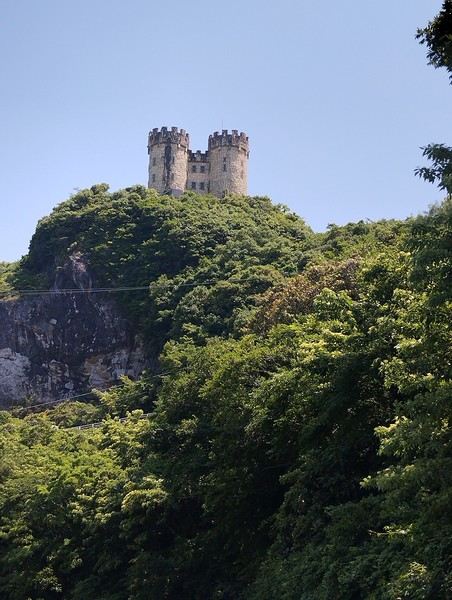
After a free detour, a stop at a very mineral cemetery, and an hour of driving, we end up right back where we started. This time, the entrance to the place jumps out at us—right in front of us, just a few meters away, and we turned right. Oh well, that’s part of the adventure.
We came to visit Ryugado Cave, which means "Dragon River Cave." It’s located in the city of Kami and is one of Japan’s three largest limestone caves. It’s 4 km long, but only 1 km is open to the public. It’s supposedly 175 million years old.
To reach the entrance, you have to walk through a shopping street. There are a few shops selling knives, precious stones, a tourist office with no staff, and one or two restaurants open. Despite it being late morning—after 11:00 AM—there aren’t many people around. We pass two Japanese people coming the other way. At the end of the street, there are the inevitable stairs, made of stone here, a steep climb, but if you turn around, you get a clear view of the peaceful Japanese countryside, not to mention the birdsong, lizards crawling on the ground, and the sound of mountain water flowing—it’s a lovely moment.
There is staff: a woman greeting you at the top of the stairs and another at the ticket office.
With our tickets in hand and encouraged by the gentle smile of the woman opening the gate for us, we step into the cave’s depths. The path is well-maintained, so no mining work needed, but there are quite a few very narrow and/or low passages. It requires some gymnastics or hula hoop moves to make progress. You can see stalactites and unique formations. There’s also a waterfall highlighted by lighting. Some sections go up, then down. In several spots, you can take a break if you’re tired or feeling unwell. There are phones to call for help if needed. The accessible 1 km ends with a sound and light show projected onto the cave’s cliffs. It’s quite nice.
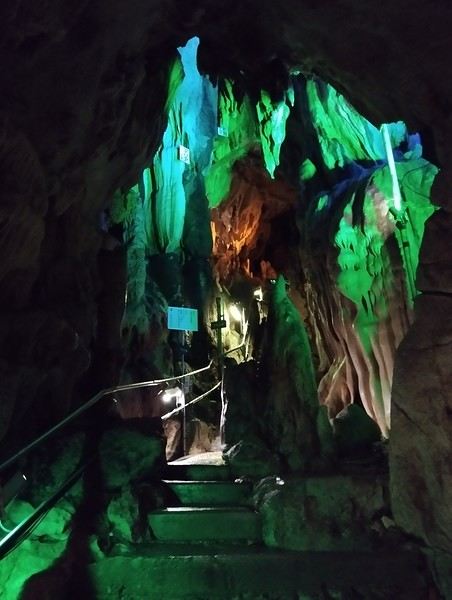
We exit higher up in the mountain. There’s a closed, glass-walled room with armchairs and sofas, free to use for anyone who wants to relax after the visit. The windows look out onto the surrounding forest. The visit itself isn’t very long—less than an hour if you take your time. So, we skip the break and keep going. The path at tree height, swaying in the wind, is very pleasant. The rustling of leaves and branches is refreshing.
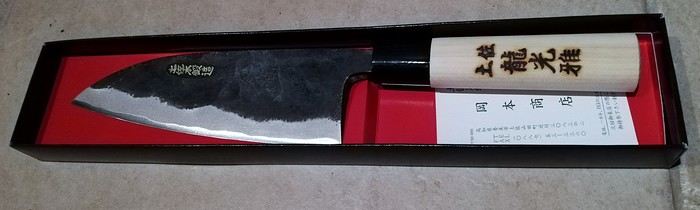
Then, to our right, we see a stand selling handmade knives. The region is known for knife-making. There’s an impressive selection, all beautifully crafted. I’ve been wanting to buy a real Japanese knife for a while, so I take a look. In Tokyo, I went into a small shop, but the price stopped me in my tracks. This summer in Brittany, at a handmade knife shop, the prices were much higher—between 600 and 1000 € on average. The 300 € in Tokyo now seems like a steal compared to the quality. The seller—and maker, since he only sells his own work—shows us a knife for cutting meat, among other things. The price is 9500 yen (about 60 €). For the first time in Japan, we try negotiating, not really expecting it to work, but the maker agrees to sell it to us for 1000 yen less—8500 yen. The discount isn’t huge, but I’m proud I managed it because it doesn’t seem like a common practice here, unlike in other Asian countries. And most importantly, I’m going home with a beautiful knife of guaranteed quality.
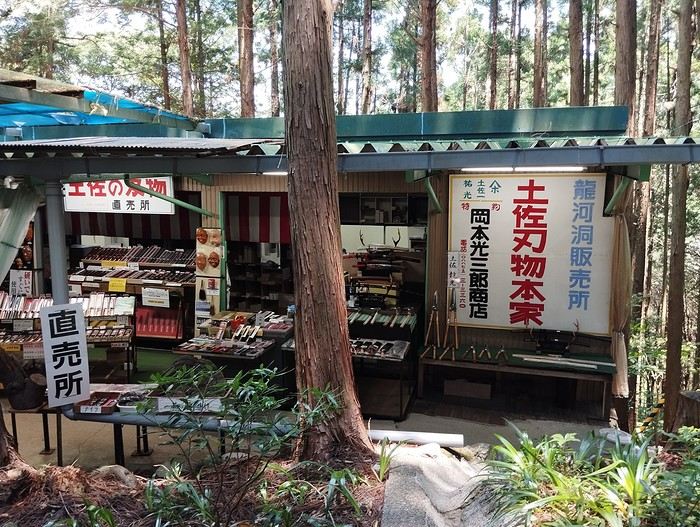
We continue downhill and arrive in front of the entrance to a free museum, open to the public with no staff. The museum is in a pretty building surrounded by greenery, bathed in sunlight.
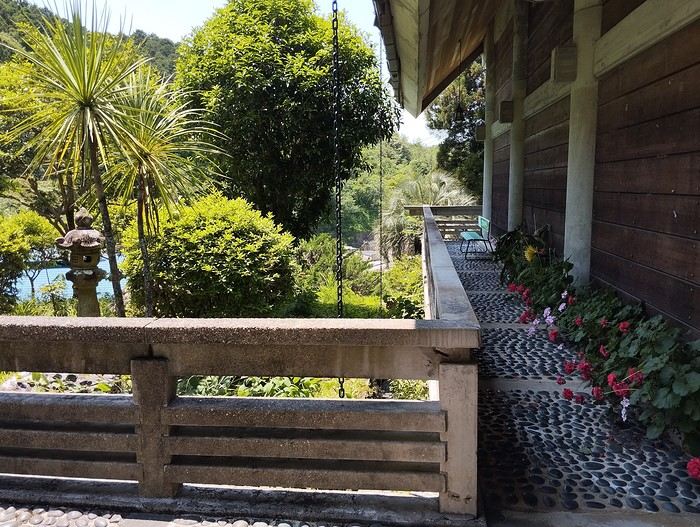
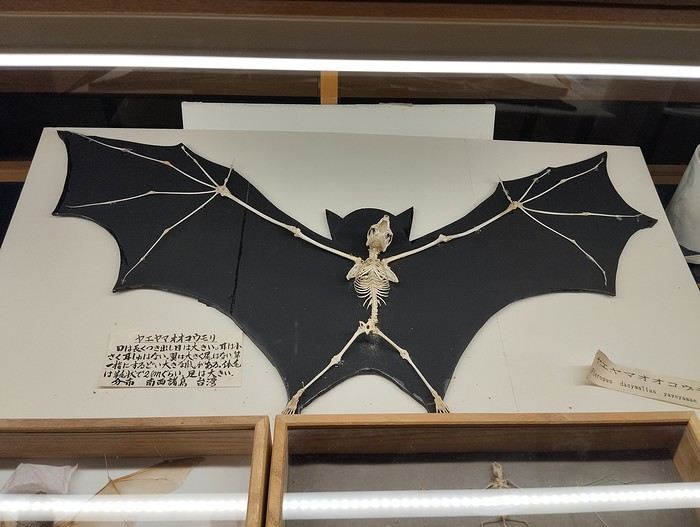
At the museum entrance, there’s another fun sound and light display. Inside, you’ll find bones, ancient objects, and bat skeletons, among other things.
After the visit, we head back to the car, descending the stone stairs and walking through the shopping street with its everyday art.
This morning’s detour cost us some time, so we change the original plan. We’re now driving toward the coastal town of Aki. There, we try artisanal ice cream flavors like sweet potato, ginger, and grilled eggplant. The ginger ice cream is really nice.
We stop at a supermarket to buy some food, where we ask a couple to help us identify the type of fish in the tray we’re holding. They help us kindly. We make a stop at the station, where a mascot is on display, and then at Aki’s tourist office. Three people work there, even though the town seems small and there’s hardly anyone around, including on the streets. For some of our questions, they don’t have the information in English, so they apologize.
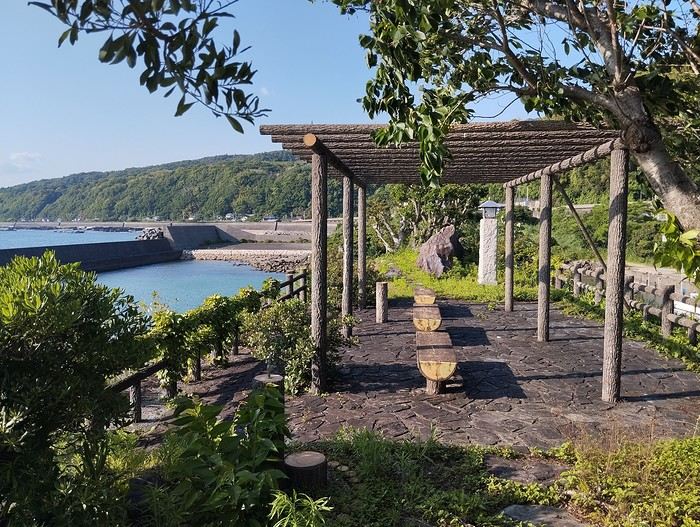
The sun’s heat is overwhelming, and time is passing. After a bit of wandering, we decide to eat by the sea at Cape Oyama. We have a picnic near a peaceful little port and a lovers’ sanctuary, which seems to be new. The setting is lovely. We’re lulled by the sound of small waves.
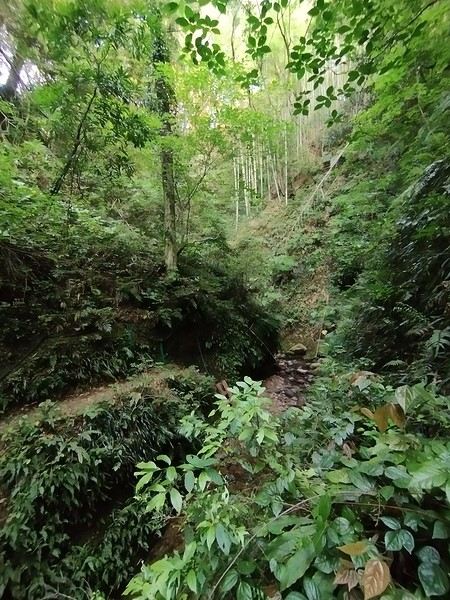
After that, we visit another kind of cave. Ioki Cave is a natural tunnel carved by waves millions of years ago. Inside, there are many different species of tropical ferns creating a green canopy—it feels like you’re in the middle of a forest, even though the road is just a few steps from the cave entrance. First, we cross the tunnel using our phone lights because it’s dark, then we reach the heart of the canyon, and the light returns. We cross several shallow river sections, walk on branches, use a small bridge, and climb slightly with the help of a thick rope provided to descend along the riverbed. We arrive at a small waterfall. It’s possible to do a loop by going further, but honestly, we don’t take the risk because it’s already late, night is falling, we don’t have a headlamp, and we can’t see how bright it really is inside the canyon. So, a bit reluctantly, we simply turn back. We didn’t see anyone except a Japanese family leaving the cave as we arrived, and we exchanged a few words with them.
We had planned to do more today, but sometimes there are unexpected things—like getting lost, chatting, and driving time. So, we drive calmly back to the hotel. We can’t find the hotel’s affiliated parking lots, so I park a bit randomly. We go to the reception, which helps us locate the different parking areas, and we go back to park properly. We’ll eat what’s left from our supermarket purchases earlier.
We’re greeted by a very pleasant Japanese woman and man. Despite a few moments of confusion trying to understand each other, there’s no impatience or annoyance. For some reason, the credit card isn’t working, even though I’ve used it for payments on previous trips. We’re forced to pay in cash. Given that we’re renting the car for a one-way road trip from point A to point B, the options were limited, and the price reflected that. Usually, car rentals cost us around 42-44 € on average, but this time it was more like 50 € per day.
The car is very comfortable. However, once again, the GPS doesn’t work with phone numbers. We improvise by roughly selecting locations on the map and using Maps.me, which works offline.
At 9:00 AM, I get back into the swing of driving on the left in an automatic car—it comes back pretty easily since the last time was only six months ago. We stop at a konbini, and a young Indian guy is at the register. We chat with him a bit. He’s here for his studies and says Kochi is a very small city, and it’s hard to make friends without speaking Japanese since very few people speak English.
Back on the road, we’re close to our morning destination. We see the signs and follow the GPS, but it tries to take us up a mountain path where a sign seems to indicate it’s off-limits, so I turn around. Even though we were only 200 meters from the spot, I took a mountain road that gave us a free detour through the mountains of Kochi Prefecture. That said, the landscapes we passed were lovely—forest on one side and the sea on the other. We even spotted a stone castle with French architectural style. We wanted to stop and check it out, intrigued by the building, but we couldn’t find the road leading to it.
After a free detour, a stop at a very mineral cemetery, and an hour of driving, we end up right back where we started. This time, the entrance to the place jumps out at us—right in front of us, just a few meters away, and we turned right. Oh well, that’s part of the adventure.
We came to visit Ryugado Cave, which means "Dragon River Cave." It’s located in the city of Kami and is one of Japan’s three largest limestone caves. It’s 4 km long, but only 1 km is open to the public. It’s supposedly 175 million years old.
To reach the entrance, you have to walk through a shopping street. There are a few shops selling knives, precious stones, a tourist office with no staff, and one or two restaurants open. Despite it being late morning—after 11:00 AM—there aren’t many people around. We pass two Japanese people coming the other way. At the end of the street, there are the inevitable stairs, made of stone here, a steep climb, but if you turn around, you get a clear view of the peaceful Japanese countryside, not to mention the birdsong, lizards crawling on the ground, and the sound of mountain water flowing—it’s a lovely moment.
There is staff: a woman greeting you at the top of the stairs and another at the ticket office.
With our tickets in hand and encouraged by the gentle smile of the woman opening the gate for us, we step into the cave’s depths. The path is well-maintained, so no mining work needed, but there are quite a few very narrow and/or low passages. It requires some gymnastics or hula hoop moves to make progress. You can see stalactites and unique formations. There’s also a waterfall highlighted by lighting. Some sections go up, then down. In several spots, you can take a break if you’re tired or feeling unwell. There are phones to call for help if needed. The accessible 1 km ends with a sound and light show projected onto the cave’s cliffs. It’s quite nice.
We exit higher up in the mountain. There’s a closed, glass-walled room with armchairs and sofas, free to use for anyone who wants to relax after the visit. The windows look out onto the surrounding forest. The visit itself isn’t very long—less than an hour if you take your time. So, we skip the break and keep going. The path at tree height, swaying in the wind, is very pleasant. The rustling of leaves and branches is refreshing.
Then, to our right, we see a stand selling handmade knives. The region is known for knife-making. There’s an impressive selection, all beautifully crafted. I’ve been wanting to buy a real Japanese knife for a while, so I take a look. In Tokyo, I went into a small shop, but the price stopped me in my tracks. This summer in Brittany, at a handmade knife shop, the prices were much higher—between 600 and 1000 € on average. The 300 € in Tokyo now seems like a steal compared to the quality. The seller—and maker, since he only sells his own work—shows us a knife for cutting meat, among other things. The price is 9500 yen (about 60 €). For the first time in Japan, we try negotiating, not really expecting it to work, but the maker agrees to sell it to us for 1000 yen less—8500 yen. The discount isn’t huge, but I’m proud I managed it because it doesn’t seem like a common practice here, unlike in other Asian countries. And most importantly, I’m going home with a beautiful knife of guaranteed quality.
We continue downhill and arrive in front of the entrance to a free museum, open to the public with no staff. The museum is in a pretty building surrounded by greenery, bathed in sunlight.
At the museum entrance, there’s another fun sound and light display. Inside, you’ll find bones, ancient objects, and bat skeletons, among other things.
After the visit, we head back to the car, descending the stone stairs and walking through the shopping street with its everyday art.
This morning’s detour cost us some time, so we change the original plan. We’re now driving toward the coastal town of Aki. There, we try artisanal ice cream flavors like sweet potato, ginger, and grilled eggplant. The ginger ice cream is really nice.
We stop at a supermarket to buy some food, where we ask a couple to help us identify the type of fish in the tray we’re holding. They help us kindly. We make a stop at the station, where a mascot is on display, and then at Aki’s tourist office. Three people work there, even though the town seems small and there’s hardly anyone around, including on the streets. For some of our questions, they don’t have the information in English, so they apologize.
The sun’s heat is overwhelming, and time is passing. After a bit of wandering, we decide to eat by the sea at Cape Oyama. We have a picnic near a peaceful little port and a lovers’ sanctuary, which seems to be new. The setting is lovely. We’re lulled by the sound of small waves.
After that, we visit another kind of cave. Ioki Cave is a natural tunnel carved by waves millions of years ago. Inside, there are many different species of tropical ferns creating a green canopy—it feels like you’re in the middle of a forest, even though the road is just a few steps from the cave entrance. First, we cross the tunnel using our phone lights because it’s dark, then we reach the heart of the canyon, and the light returns. We cross several shallow river sections, walk on branches, use a small bridge, and climb slightly with the help of a thick rope provided to descend along the riverbed. We arrive at a small waterfall. It’s possible to do a loop by going further, but honestly, we don’t take the risk because it’s already late, night is falling, we don’t have a headlamp, and we can’t see how bright it really is inside the canyon. So, a bit reluctantly, we simply turn back. We didn’t see anyone except a Japanese family leaving the cave as we arrived, and we exchanged a few words with them.
We had planned to do more today, but sometimes there are unexpected things—like getting lost, chatting, and driving time. So, we drive calmly back to the hotel. We can’t find the hotel’s affiliated parking lots, so I park a bit randomly. We go to the reception, which helps us locate the different parking areas, and we go back to park properly. We’ll eat what’s left from our supermarket purchases earlier.