The Kingdom of Lions...
Translated into English.
73 replies
Ngorongoro, or the valley of wonders...
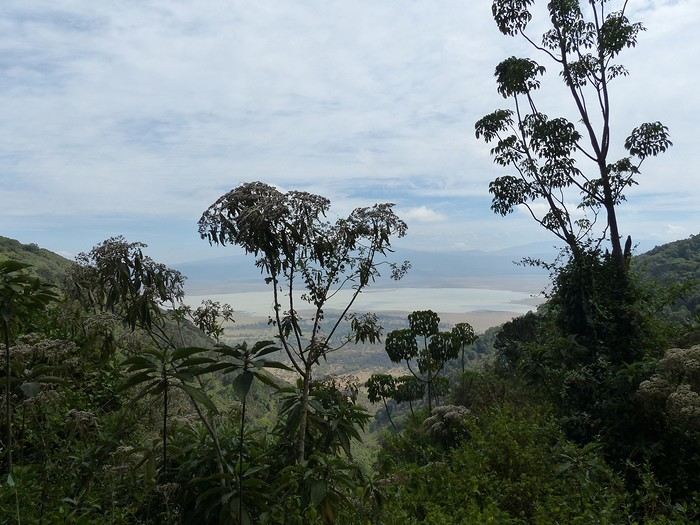 We left Tarangire very early to reach Ngorongoro by road (about a 2.5-hour drive).
Ngorongoro… Even three years later, just thinking about that day fills me with joy.
For those of you with kids aged 30 or older, you might remember that cartoon called *The Land Before Time*—the one where Littlefoot, separated from his family, goes in search of a preserved valley where dinosaurs were supposed to escape extinction. When he finally arrives, after countless adventures and scaling a mountain barrier, a huge valley opens up before his amazed eyes, with rivers, lakes, forests, and animals everywhere…
Well, that’s exactly how I felt when I discovered the "crater"!
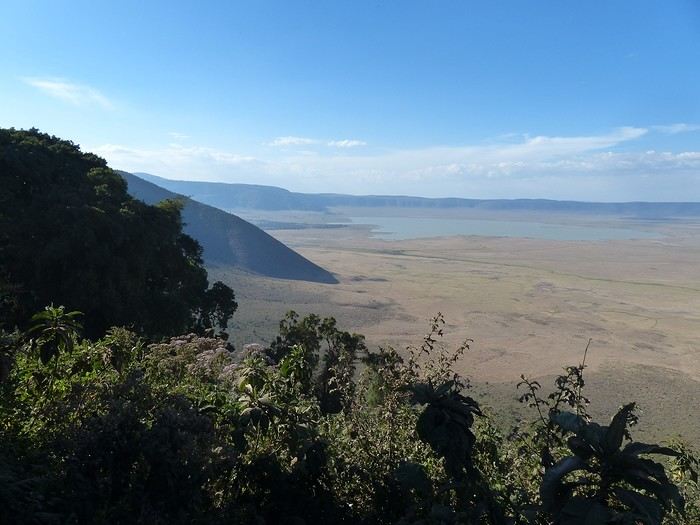
The road takes us up to over 2,000 meters in altitude, and suddenly, we’re faced with this gigantic caldera, 600 meters below (so at 1,500 meters in altitude), home to several different ecosystems—tropical forest, savanna, marshes, a salt lake, rivers… A whole world!
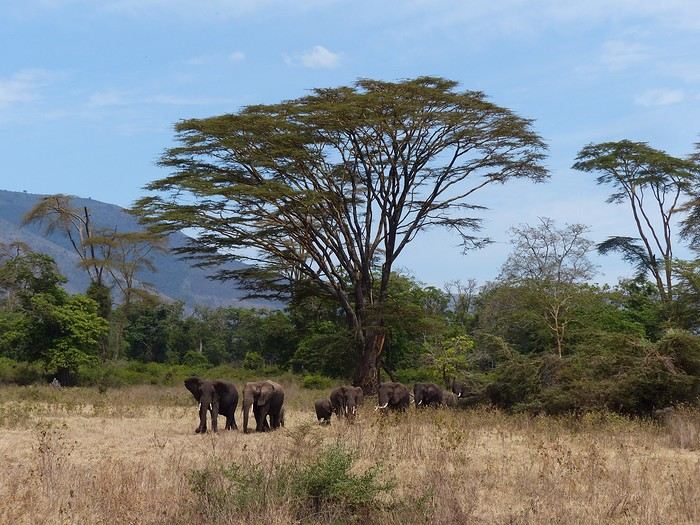
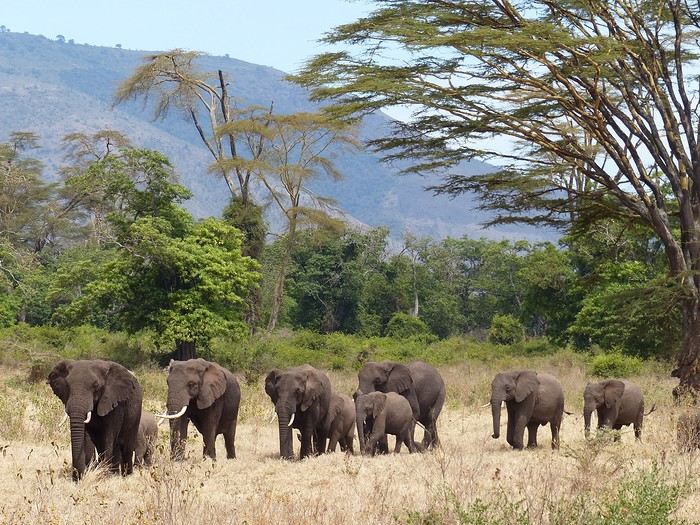
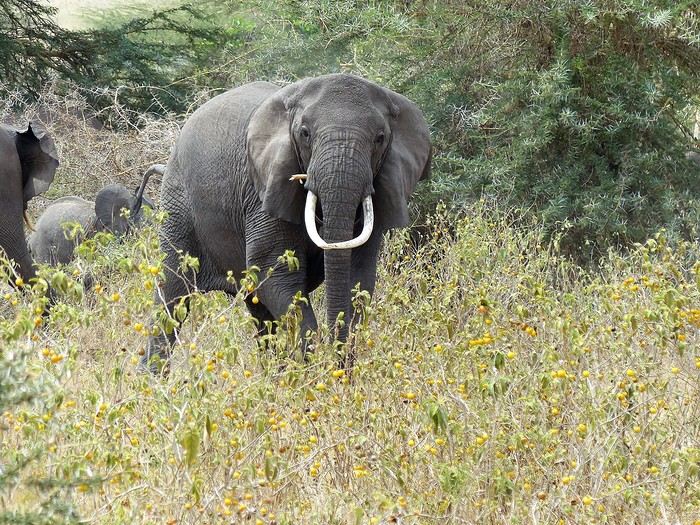
 We started in a wooded area, descending from the park entrance, with majestic acacias and their yellow bark. There, we came across a large elephant family heading toward a spot that must’ve been popular—another family was already there, and things got a little tense. We heard trumpeting and some rustling in the bushes. An old matriarch with long tusks seemed a bit annoyed.
Then we entered the savanna at the bottom of the crater. Some paths were muddy from the previous days’ storms. There was a high concentration of animals: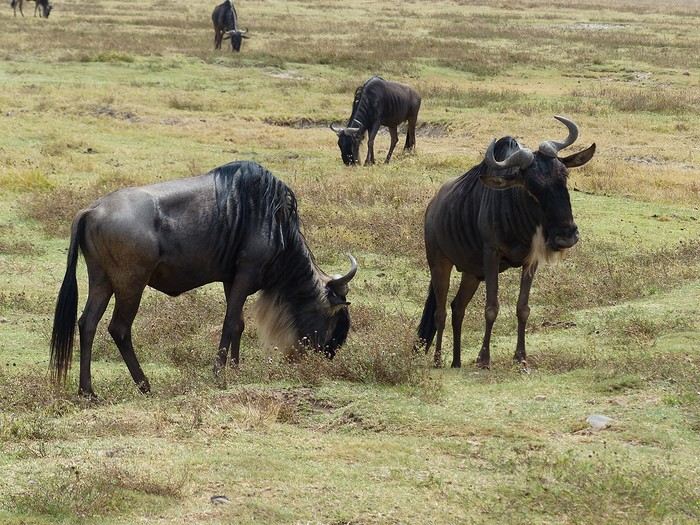
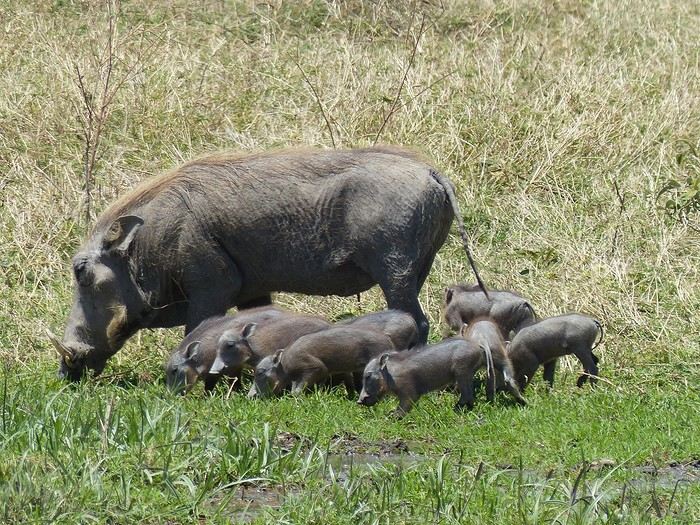
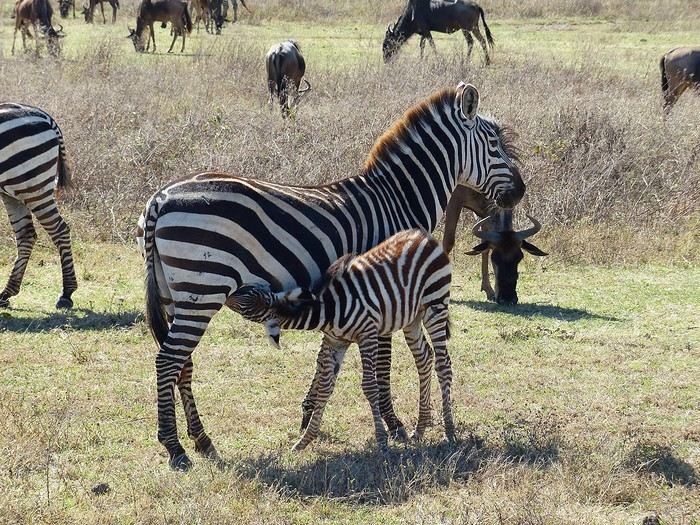
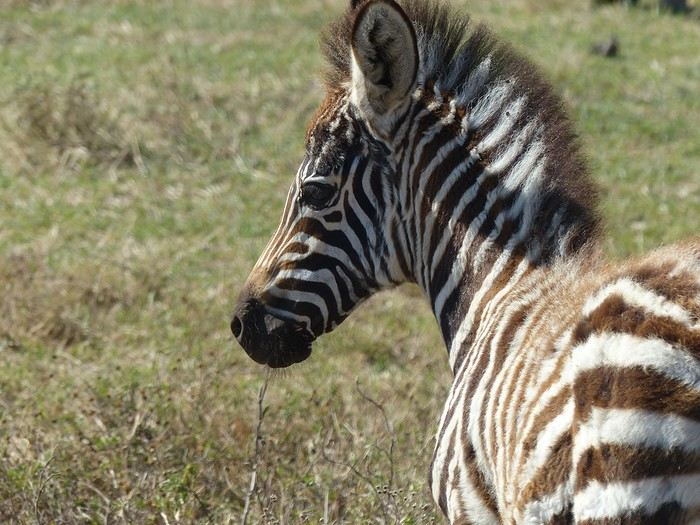
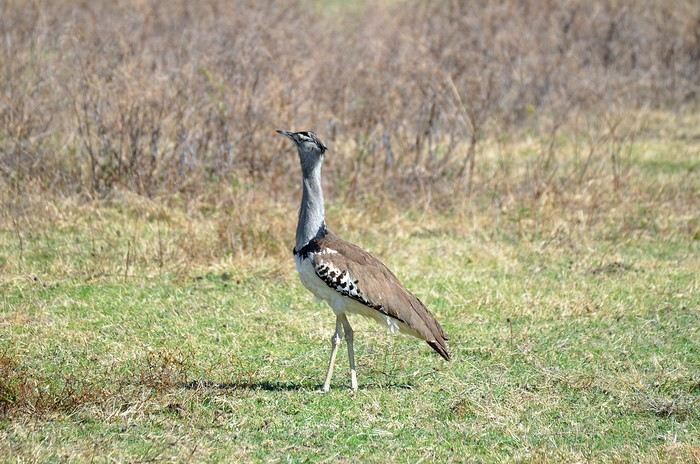
(Above: Kori bustard) And I’ve hit 10 photos, so the rest will be in the next post...
We left Tarangire very early to reach Ngorongoro by road (about a 2.5-hour drive).
Ngorongoro… Even three years later, just thinking about that day fills me with joy.
For those of you with kids aged 30 or older, you might remember that cartoon called *The Land Before Time*—the one where Littlefoot, separated from his family, goes in search of a preserved valley where dinosaurs were supposed to escape extinction. When he finally arrives, after countless adventures and scaling a mountain barrier, a huge valley opens up before his amazed eyes, with rivers, lakes, forests, and animals everywhere…
Well, that’s exactly how I felt when I discovered the "crater"!
The road takes us up to over 2,000 meters in altitude, and suddenly, we’re faced with this gigantic caldera, 600 meters below (so at 1,500 meters in altitude), home to several different ecosystems—tropical forest, savanna, marshes, a salt lake, rivers… A whole world!
We started in a wooded area, descending from the park entrance, with majestic acacias and their yellow bark. There, we came across a large elephant family heading toward a spot that must’ve been popular—another family was already there, and things got a little tense. We heard trumpeting and some rustling in the bushes. An old matriarch with long tusks seemed a bit annoyed.
Then we entered the savanna at the bottom of the crater. Some paths were muddy from the previous days’ storms. There was a high concentration of animals:
(Above: Kori bustard) And I’ve hit 10 photos, so the rest will be in the next post...
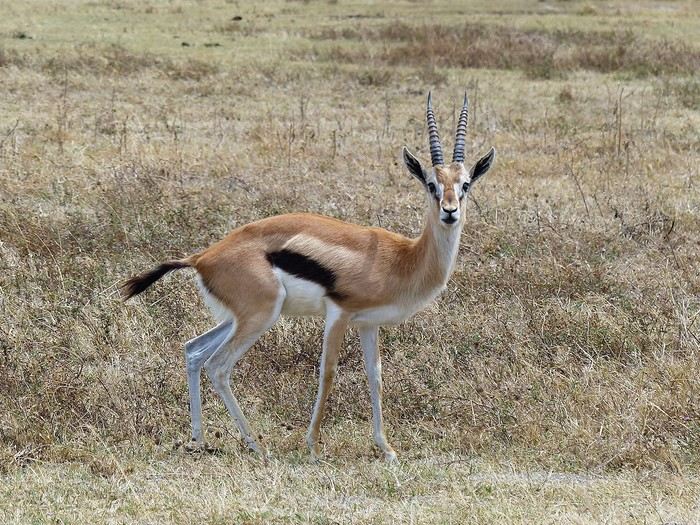
(continued) ...Grant’s gazelles and Thomson’s gazelles, as well as hyenas and many jackals. Over there, in the distance near a watering hole, a lioness is lying down, her head raised. But all the herbivores keep an eye on her, just like an Augur buzzard.
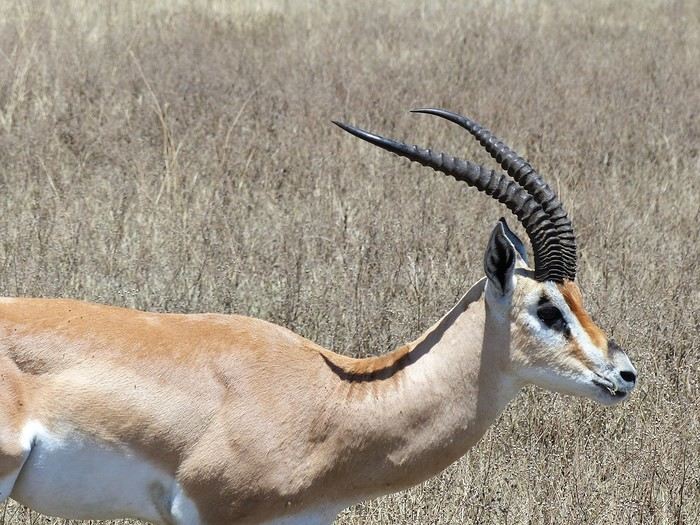
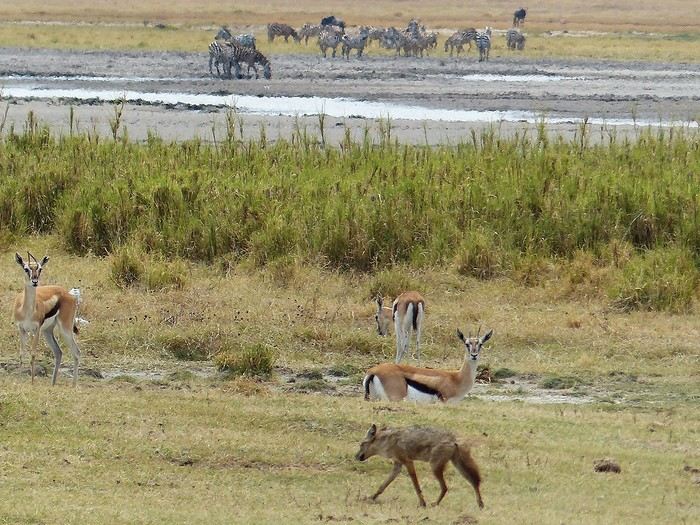
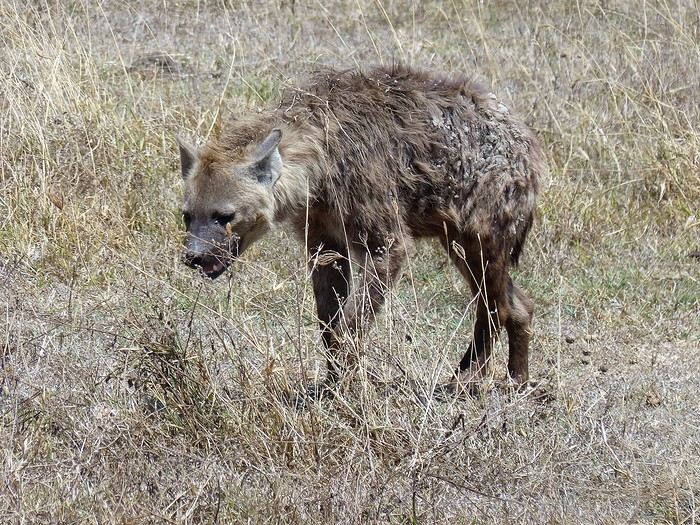
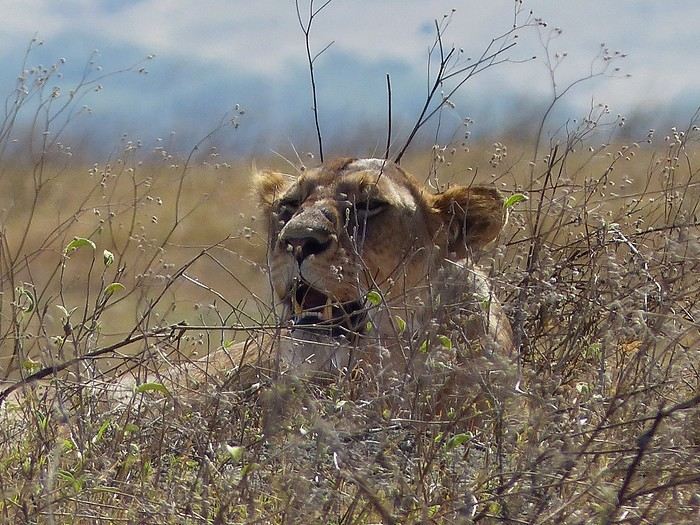
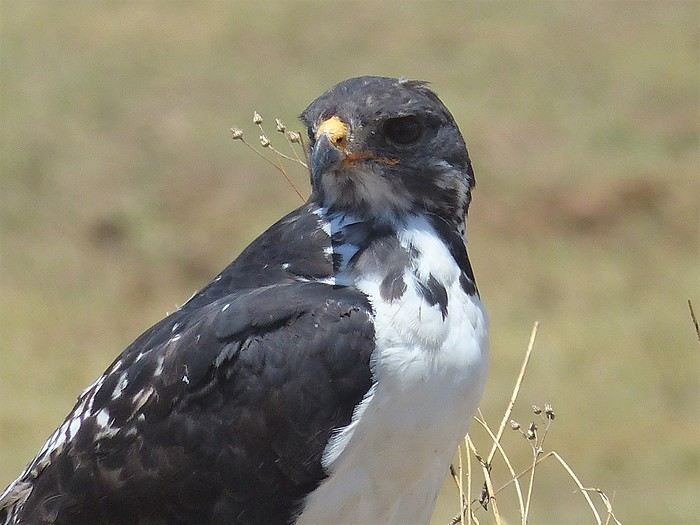
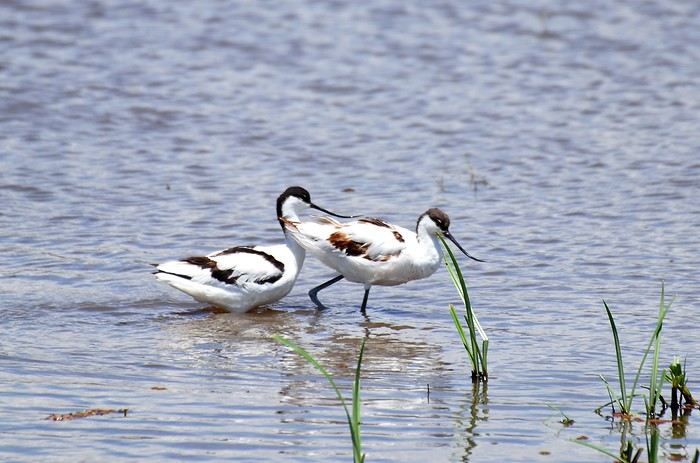
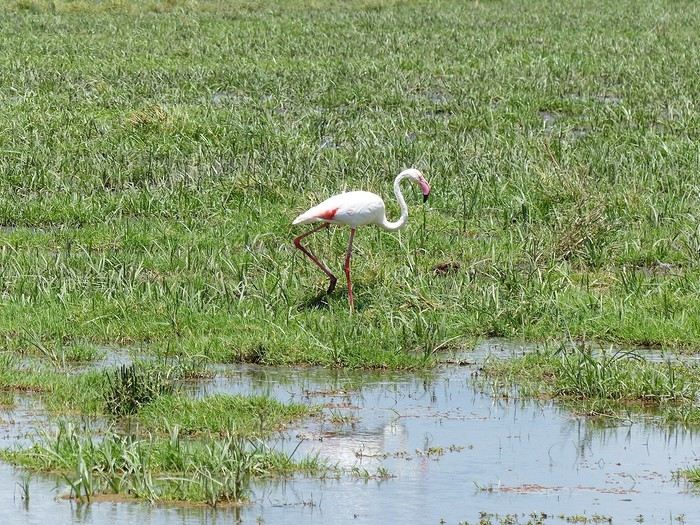
We continue our journey to the salt lake to get a closer look at the pink flamingos. Along the way, we see many herons and "elegant avocets" with their curious upward-curving, slender beaks.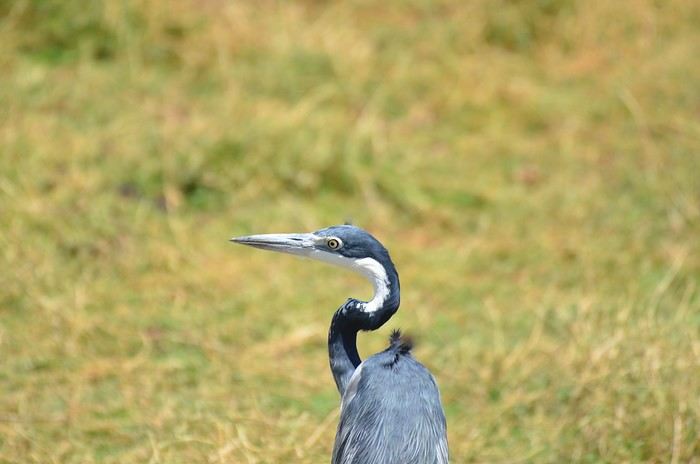
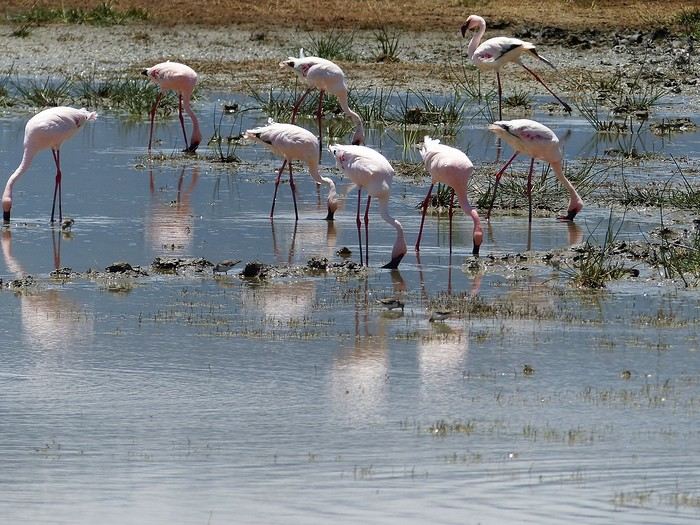
To be continued...
We continue our journey to the salt lake to get a closer look at the pink flamingos. Along the way, we see many herons and "elegant avocets" with their curious upward-curving, slender beaks.
To be continued...
(Ngorongoro, continued)
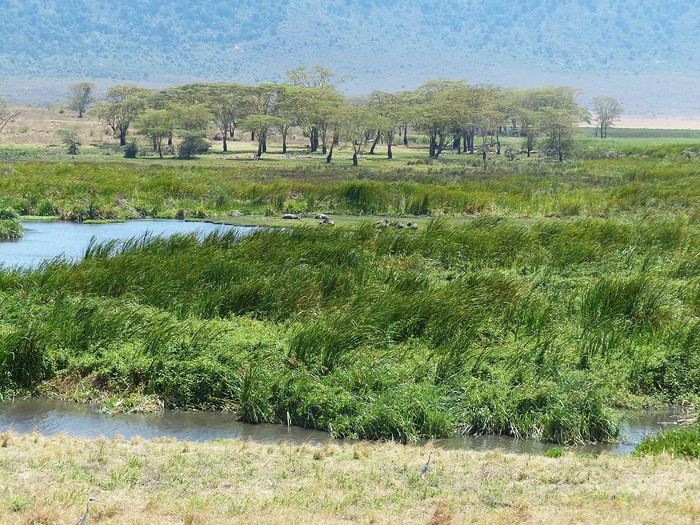
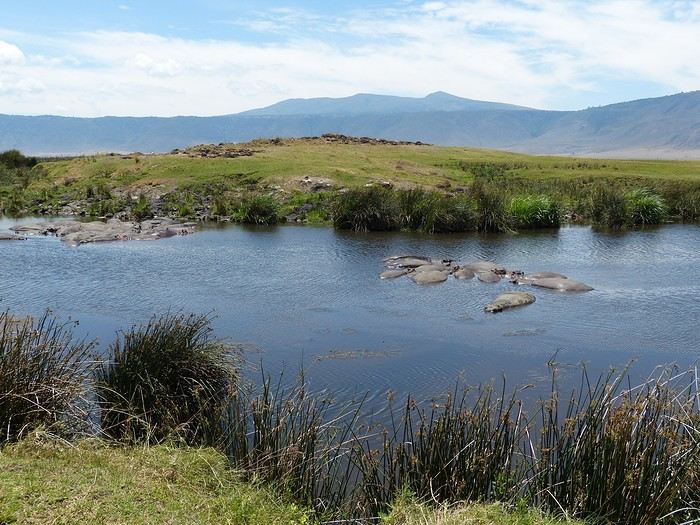
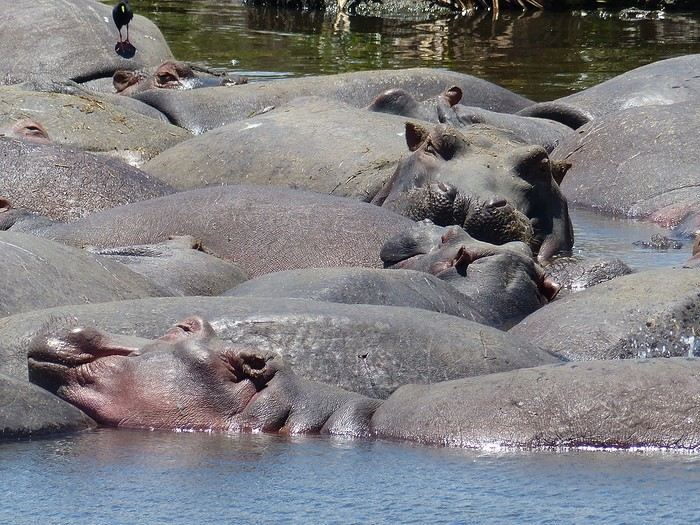
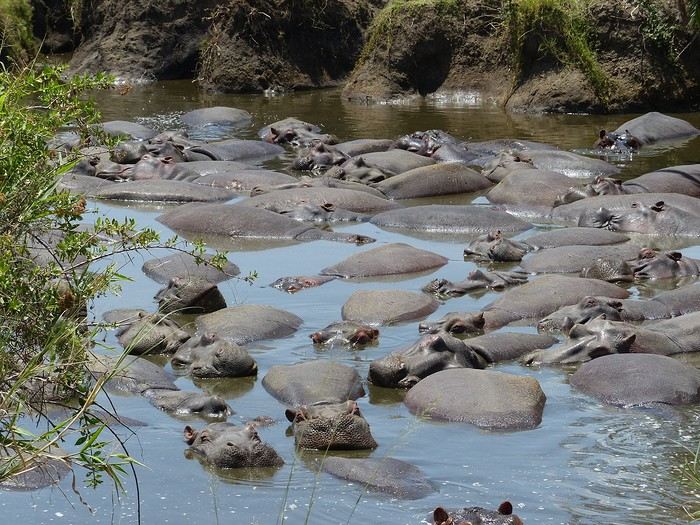
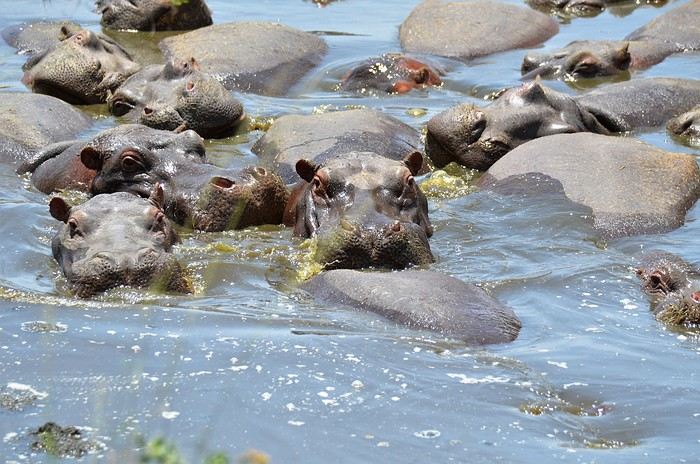
We pass through freshwater streams, surrounded by grass. We find hippos clustered together as usual. In the photos, the water looks blue, but you can imagine that around the hippos it was more of a muddy brown… and that the subtle fragrance so characteristic of these delicate mammals was wafting through the air.
For our picnic, we head to a lovely, lush area in the middle of a series of interconnected ponds.
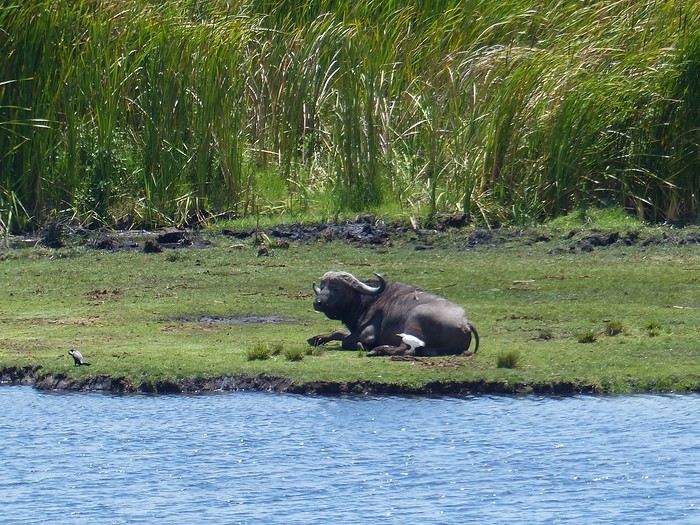
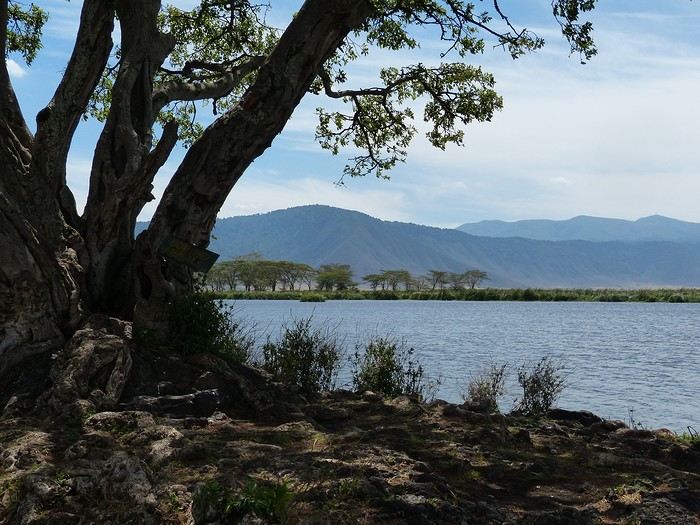
It’s a popular spot—there’s a great vibe! On weekends, Ngorongoro Park is a favorite excursion spot for families and young people. But there are also black kites flying very low and diving at visitors… watch your sandwiches! !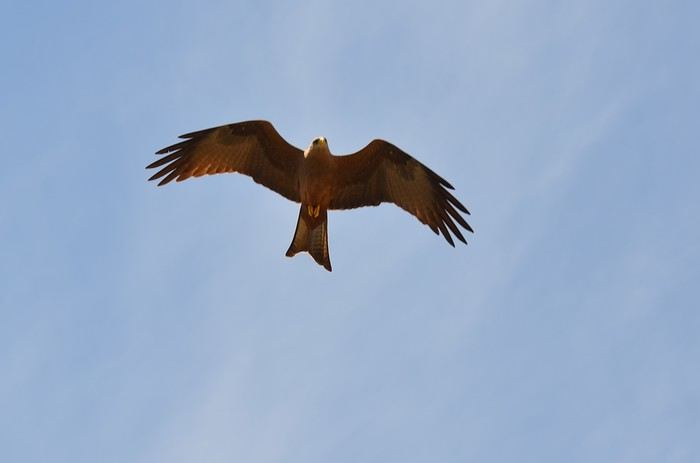 We continue exploring… a vast plain topped with a strange rocky outcrop, hundreds of buffalo…
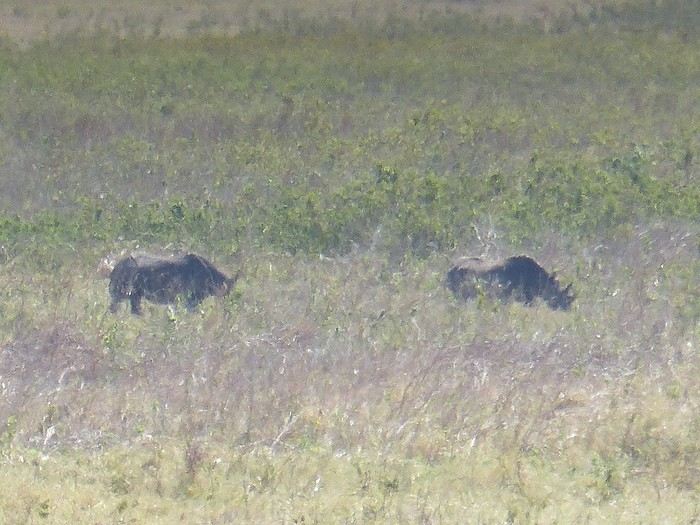
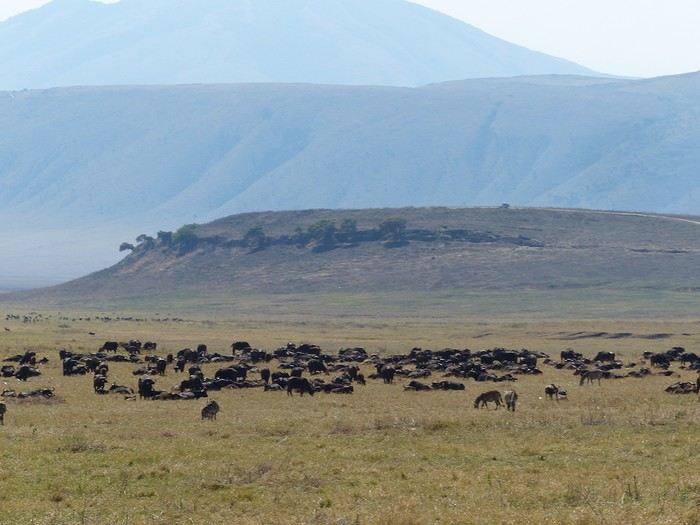 Suddenly, our guide tenses up: he’s spotted two massive shapes in the distance. They’re two black rhinos, likely a male and a female, Yumus tells us. We follow them for a long time, knowing they’re far away and we can only see them through binoculars, but that doesn’t dampen our excitement.
Below, a poor-quality photo.
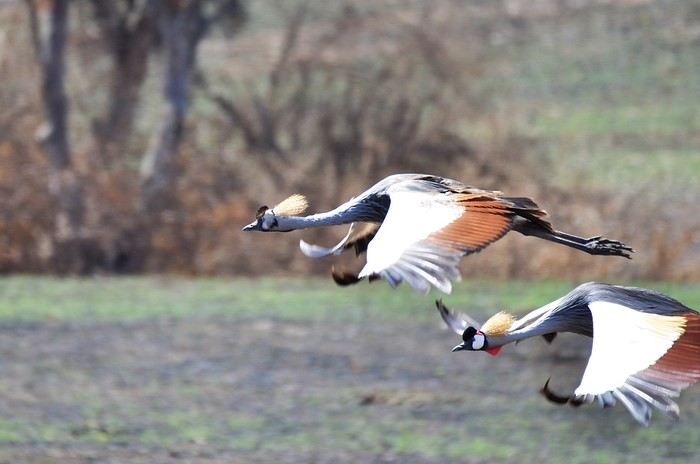
It’s almost time to leave. We need to reach Lake Manyara to spend the night (about a 2.5-hour drive) and catch our flight to the Serengeti the next day. Just enough time to admire some beautiful crowned cranes…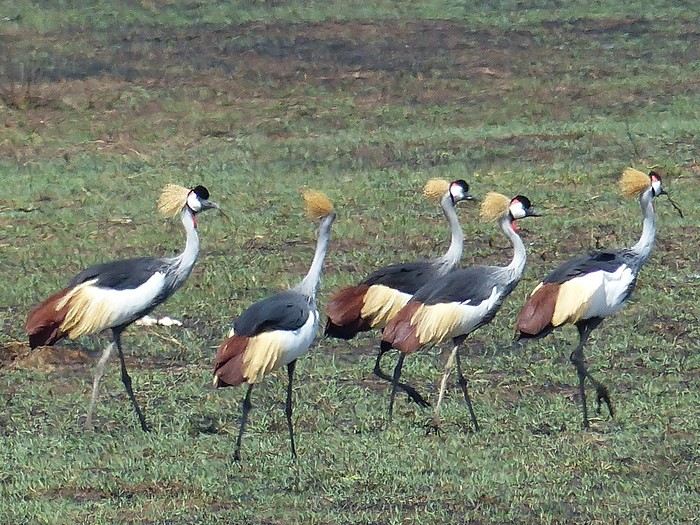
To be continued in the next posts: The Serengeti
We pass through freshwater streams, surrounded by grass. We find hippos clustered together as usual. In the photos, the water looks blue, but you can imagine that around the hippos it was more of a muddy brown… and that the subtle fragrance so characteristic of these delicate mammals was wafting through the air.
For our picnic, we head to a lovely, lush area in the middle of a series of interconnected ponds.
It’s a popular spot—there’s a great vibe! On weekends, Ngorongoro Park is a favorite excursion spot for families and young people. But there are also black kites flying very low and diving at visitors… watch your sandwiches! !
We continue exploring… a vast plain topped with a strange rocky outcrop, hundreds of buffalo…
Suddenly, our guide tenses up: he’s spotted two massive shapes in the distance. They’re two black rhinos, likely a male and a female, Yumus tells us. We follow them for a long time, knowing they’re far away and we can only see them through binoculars, but that doesn’t dampen our excitement.
Below, a poor-quality photo.
It’s almost time to leave. We need to reach Lake Manyara to spend the night (about a 2.5-hour drive) and catch our flight to the Serengeti the next day. Just enough time to admire some beautiful crowned cranes…
To be continued in the next posts: The Serengeti
Serengeti, "the endless plains"
For these 5 days in the Serengeti, we’ll be staying in the southeast of Seronera, on the migration route in November.
Serengeti—doesn’t that name just spark your imagination? When you’re getting ready to visit a place like this, almost etched into the collective imagination, you can find yourself torn between excitement and the fear of being disappointed. We’re well aware that wildlife documentaries, where the Serengeti is one of the star settings, condense weeks of filming into just one hour… So, in 5 days, what will we actually see?
I was waiting to find out. I told myself that even if the animals didn’t show up, I’d still get to enjoy the stunning landscapes—and it’s true that when it comes to scenery, we were in for a treat!
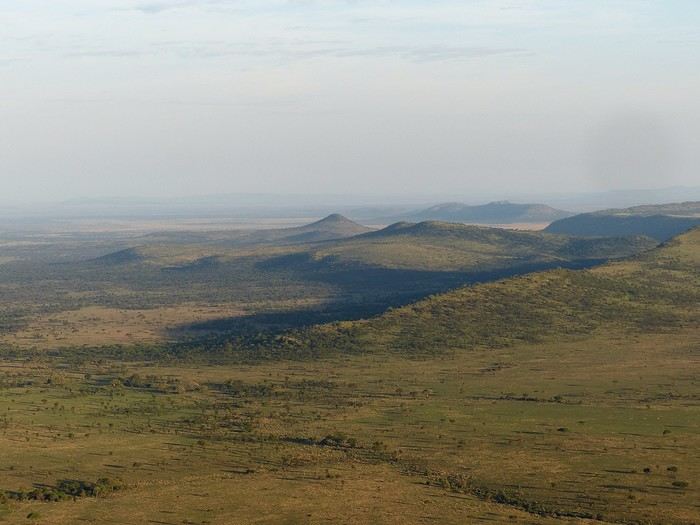 A plain that seems to stretch on forever, but as you travel through it, you come across rivers, small hills, and clusters of large rocks. You cross a dry, rocky savanna that seems endless, and suddenly, you’re surrounded by soft grass and little flowers (there was a huge rainstorm a few days ago).
But enough suspense—we found everything we’d dreamed of in the Serengeti, and so much more.
The easiest way to share it with you is to follow the thread of these 5 extraordinary days. Hop on board, there’s still room! Put on your hat, your sunglasses, and please, keep your voice down while trying to stifle those gasps of excitement!
For these 5 days, we were accompanied by Bacary, an experienced guide whose calm, tenacity, and dry humor we really appreciated. He welcomed us at Seronera Airport past noon and suggested we skip heading to the lodge before nightfall so we could take our first big drive.
Here’s our first glimpse of the Serengeti:
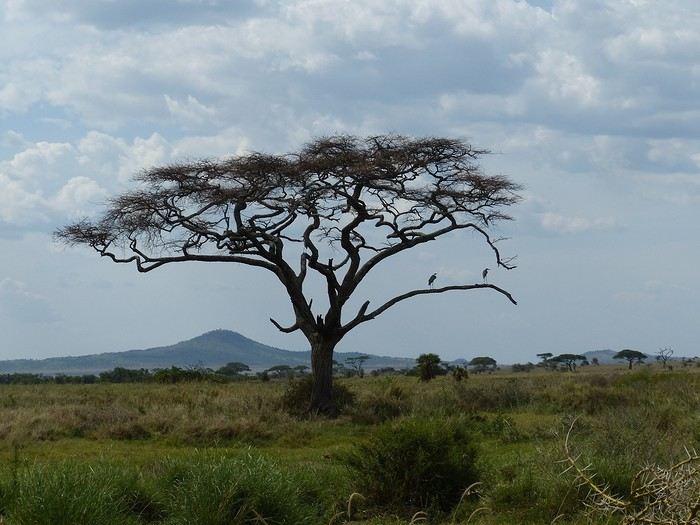
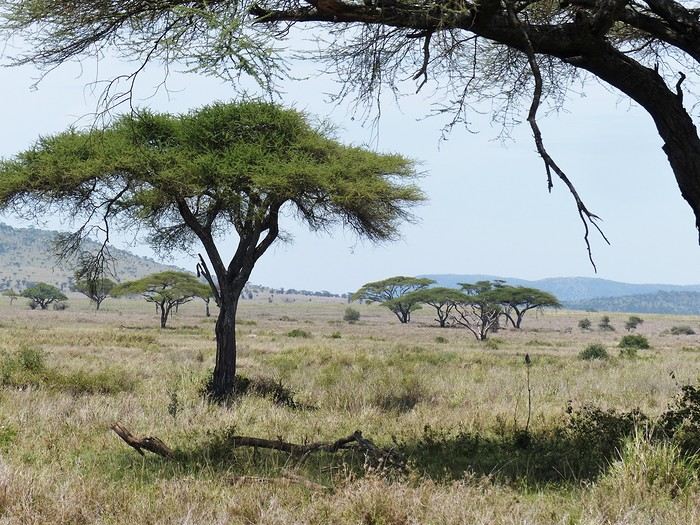
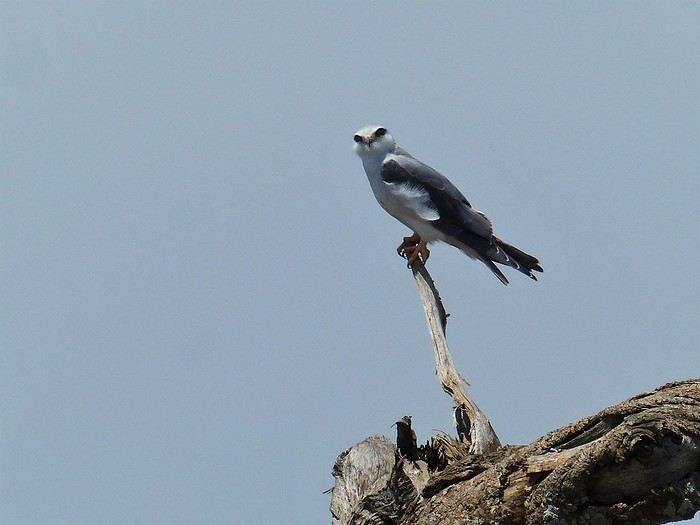
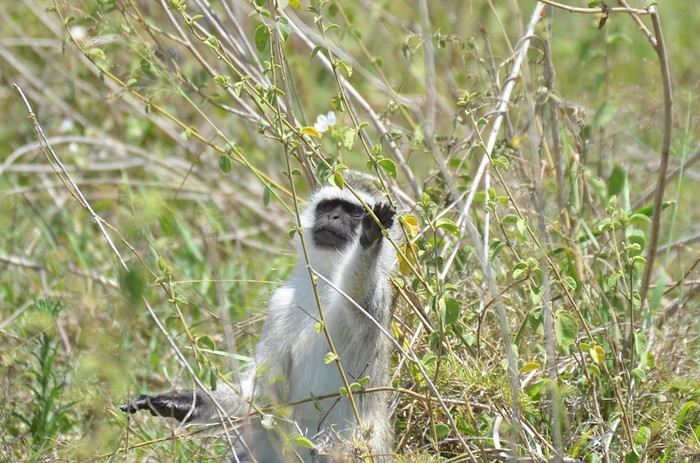
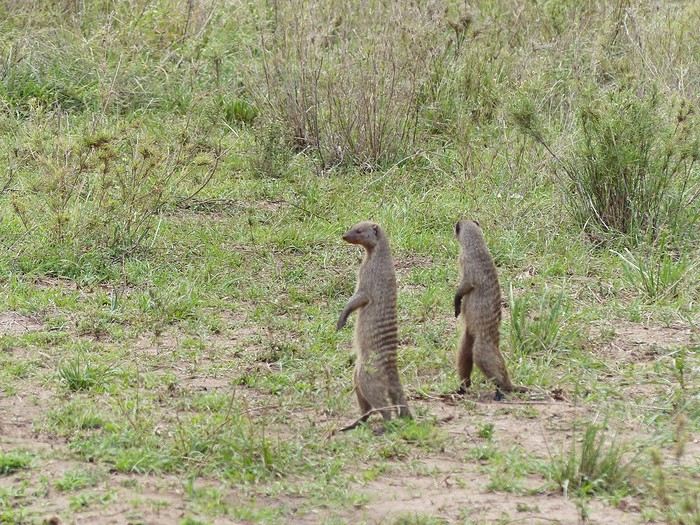
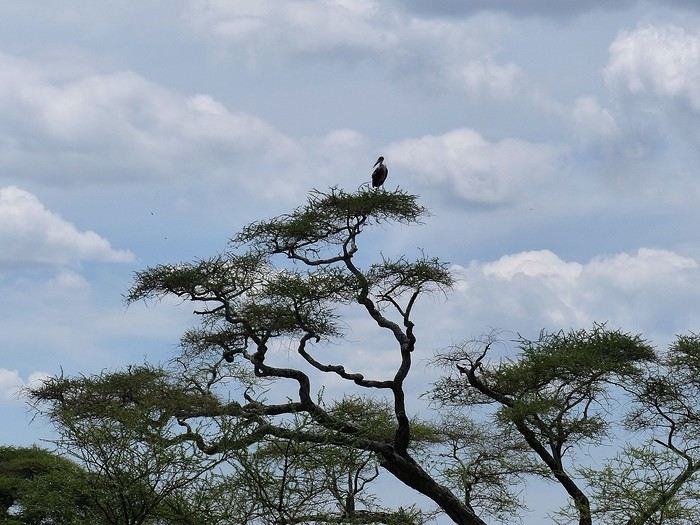 These are the hottest hours of the day, when animals disappear to find shade. But even when there’s "nothing"… there’s always *something*! First, the breathtaking landscapes, and then, if you look closely, a bird here (a white-tailed kite?), a vervet monkey there, oh, and a mongoose!
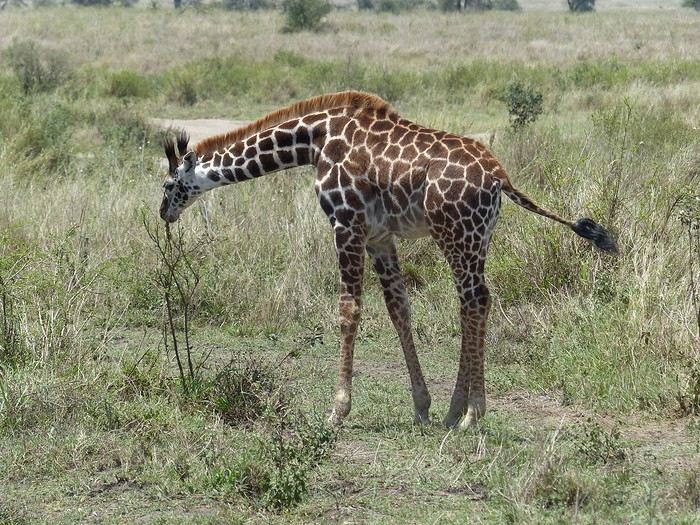
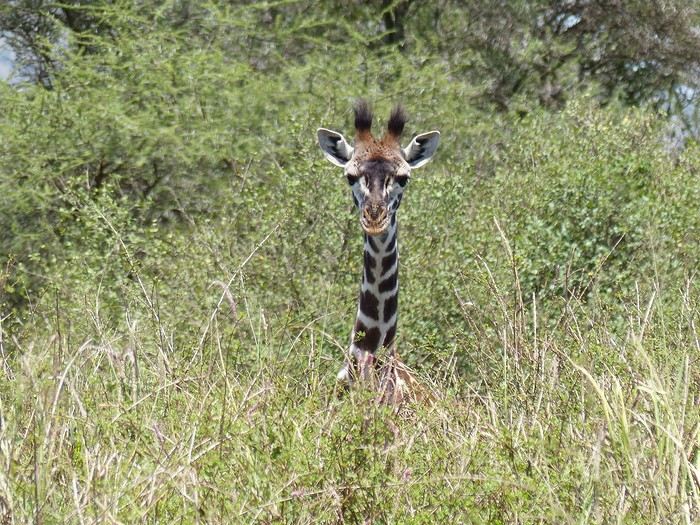
Then, a beautiful group of giraffes, about ten of them, including some young ones full of grace: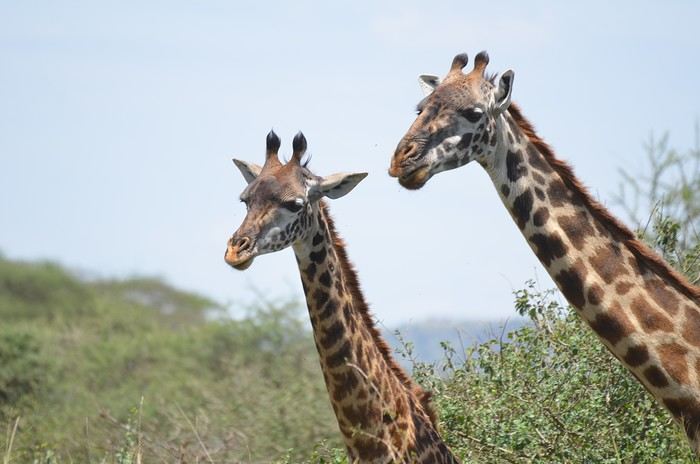
A plain that seems to stretch on forever, but as you travel through it, you come across rivers, small hills, and clusters of large rocks. You cross a dry, rocky savanna that seems endless, and suddenly, you’re surrounded by soft grass and little flowers (there was a huge rainstorm a few days ago).
But enough suspense—we found everything we’d dreamed of in the Serengeti, and so much more.
The easiest way to share it with you is to follow the thread of these 5 extraordinary days. Hop on board, there’s still room! Put on your hat, your sunglasses, and please, keep your voice down while trying to stifle those gasps of excitement!
For these 5 days, we were accompanied by Bacary, an experienced guide whose calm, tenacity, and dry humor we really appreciated. He welcomed us at Seronera Airport past noon and suggested we skip heading to the lodge before nightfall so we could take our first big drive.
Here’s our first glimpse of the Serengeti:
These are the hottest hours of the day, when animals disappear to find shade. But even when there’s "nothing"… there’s always *something*! First, the breathtaking landscapes, and then, if you look closely, a bird here (a white-tailed kite?), a vervet monkey there, oh, and a mongoose!
Then, a beautiful group of giraffes, about ten of them, including some young ones full of grace:
A little further on, it’s our noses that tell us we’re about to meet some hippos…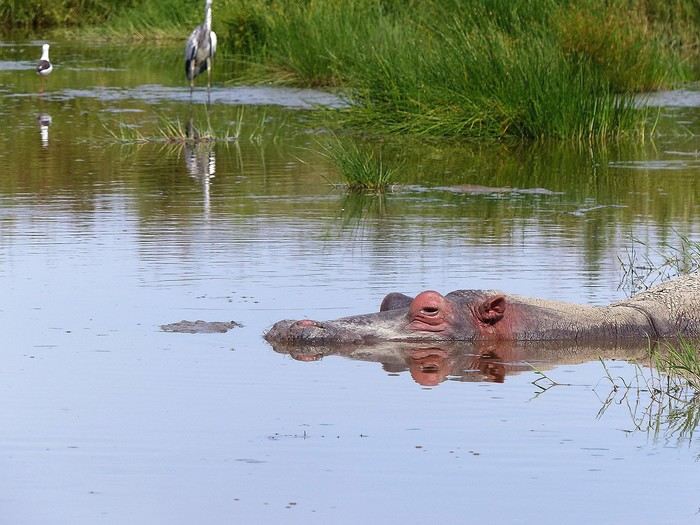
But here are our first lions of the Serengeti…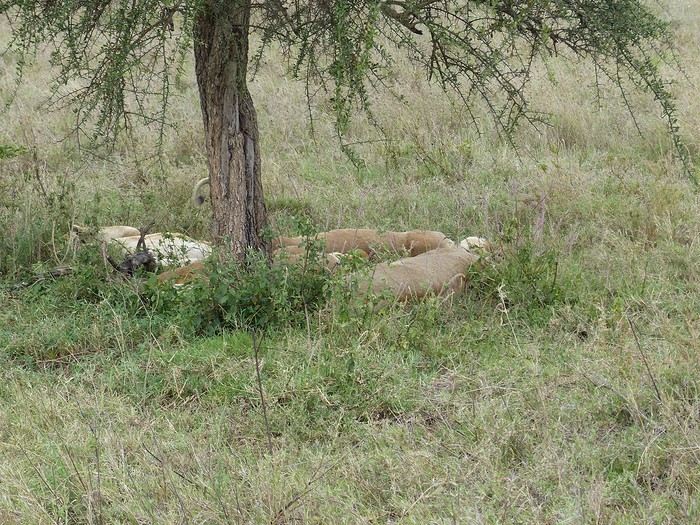 Four lionesses, in the shade of a tree. No point hoping they’ll make a single move for a long while… so we leave them to their slumber and continue on our way…
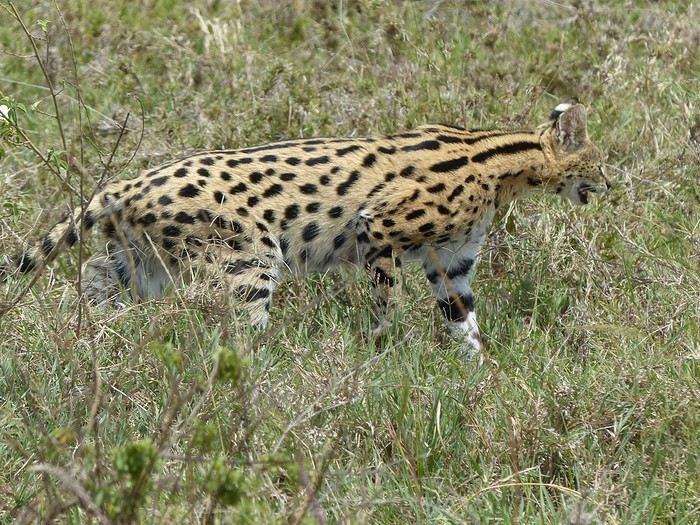
What a delight—we stumble upon a magnificent serval not far from there! We’re thrilled! Until now, we’d only seen them at night, fleetingly. This time, we have all the time in the world to admire it.
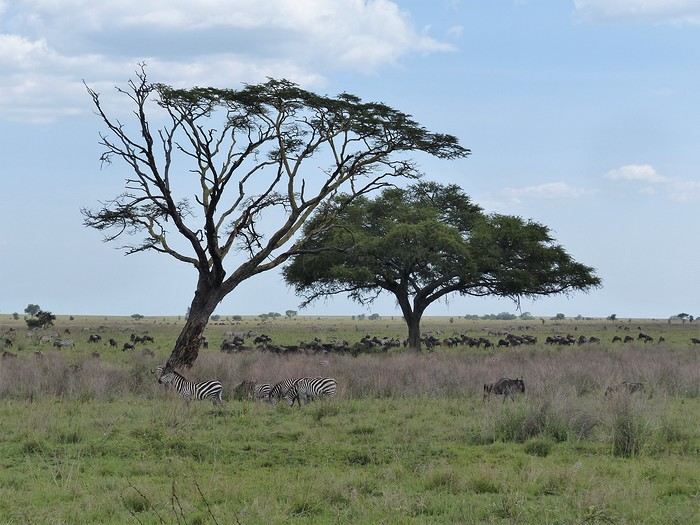
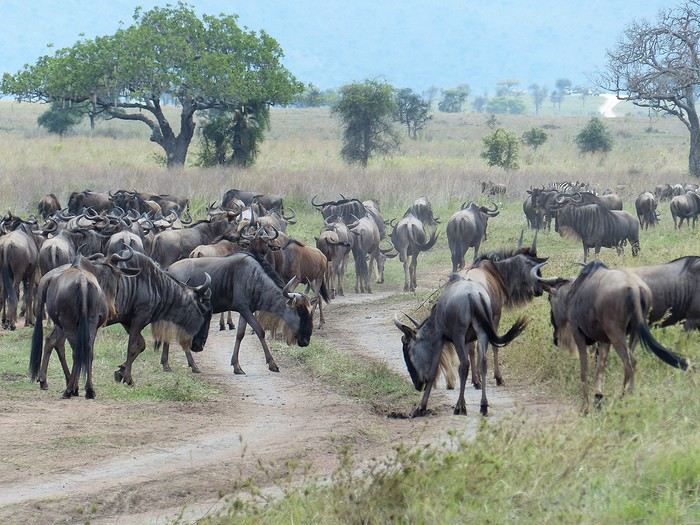
 We carry on with our wanderings… only to come across a packed plain! The Great Migration is starting to reach this area. It’s breathtaking!
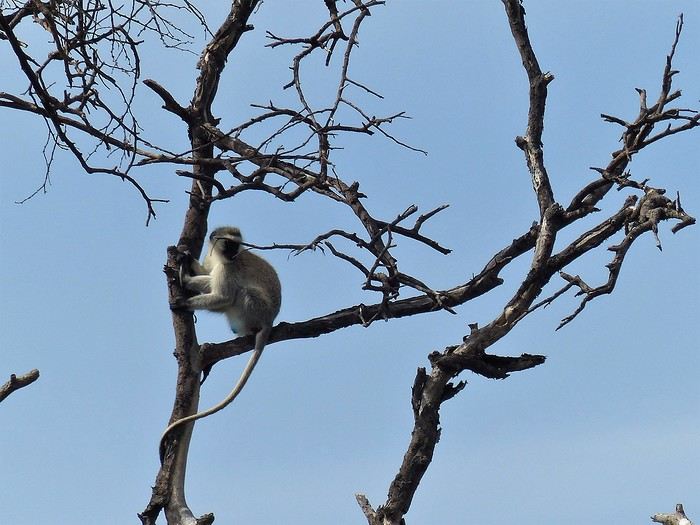
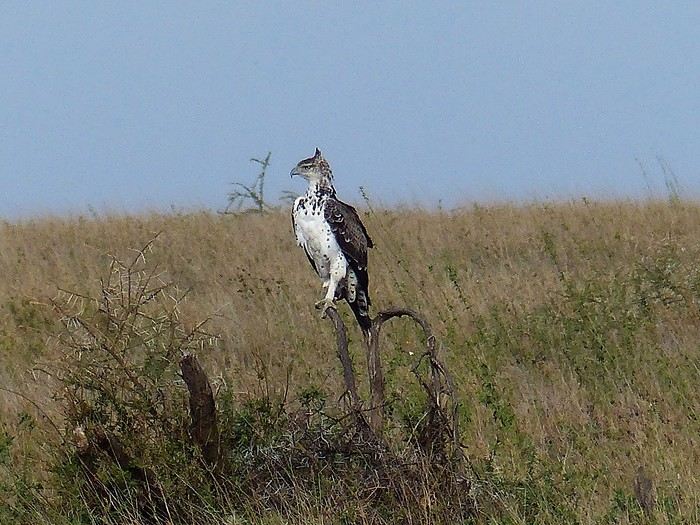
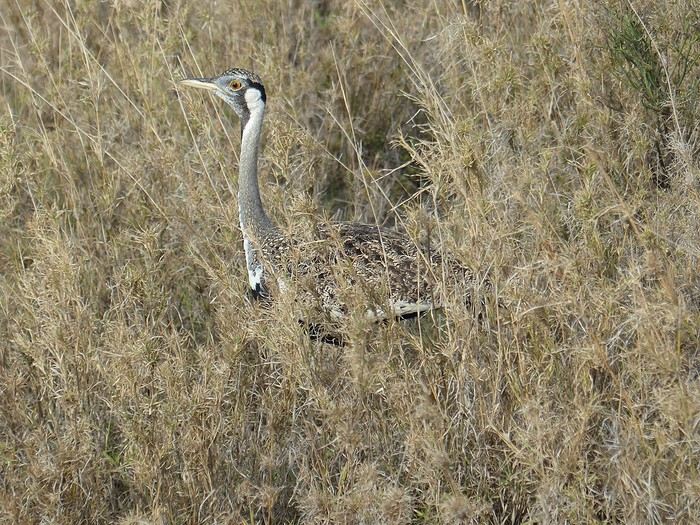
 Further on, the plain is deserted again… except for this little monkey… that raptor (a martial eagle?), and this bustard (Hartlaub’s?).
And that’s when we unexpectedly cross paths with our first handsome male lion—finally! More in the next post ;-)
But here are our first lions of the Serengeti…
Four lionesses, in the shade of a tree. No point hoping they’ll make a single move for a long while… so we leave them to their slumber and continue on our way…
What a delight—we stumble upon a magnificent serval not far from there! We’re thrilled! Until now, we’d only seen them at night, fleetingly. This time, we have all the time in the world to admire it.
We carry on with our wanderings… only to come across a packed plain! The Great Migration is starting to reach this area. It’s breathtaking!
Further on, the plain is deserted again… except for this little monkey… that raptor (a martial eagle?), and this bustard (Hartlaub’s?).
And that’s when we unexpectedly cross paths with our first handsome male lion—finally! More in the next post ;-)
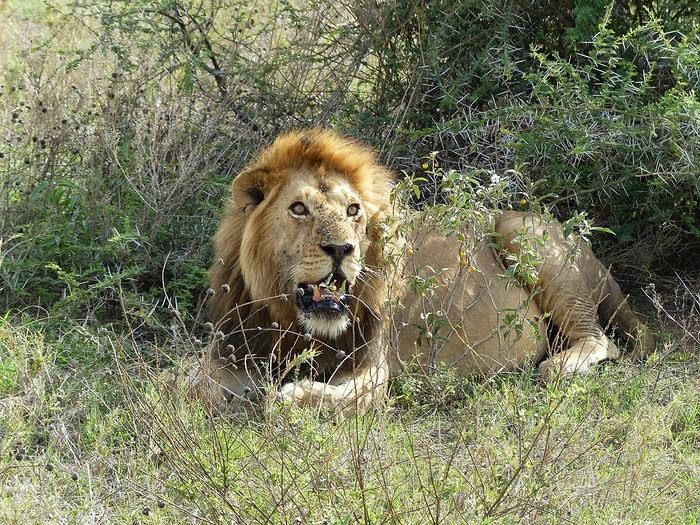
The previous post ended with the unexpected encounter of our first magnificent male lion...
He’s young, his big belly shows he’s well-fed, as does the myriad of flies attracted by blood residue.
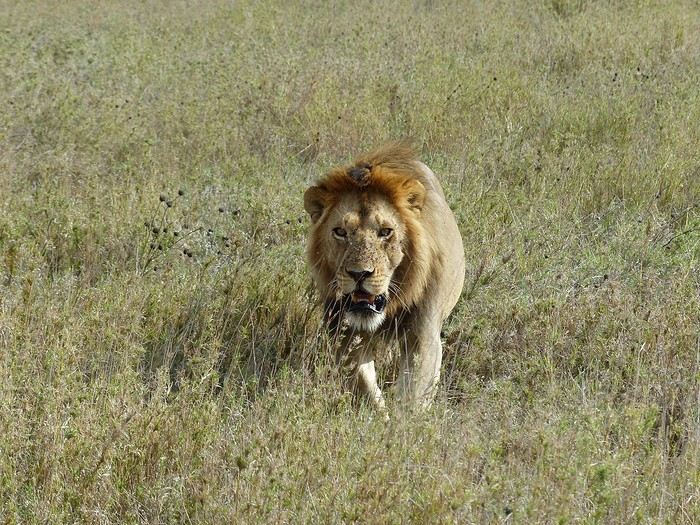
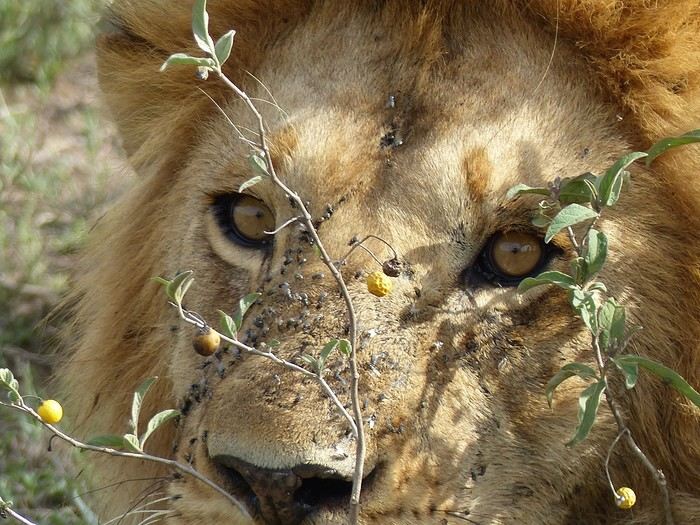 Suddenly, he stands up and starts moving away with a heavy gait. We position ourselves to get ahead of him, so we can admire him coming toward us.
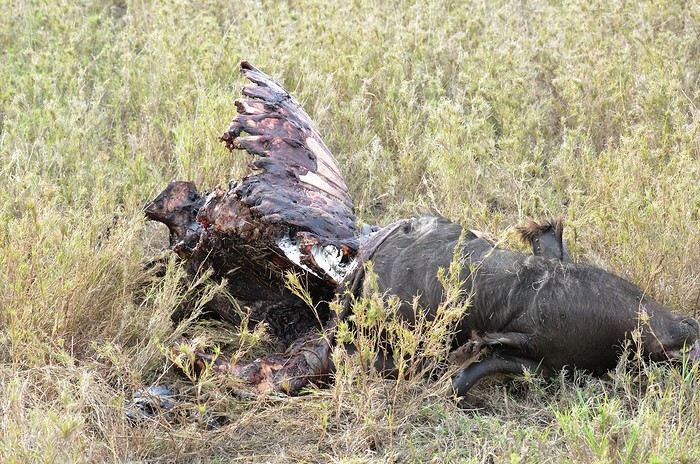
 We pass by the remains of a buffalo. Now we understand why he’s so full!
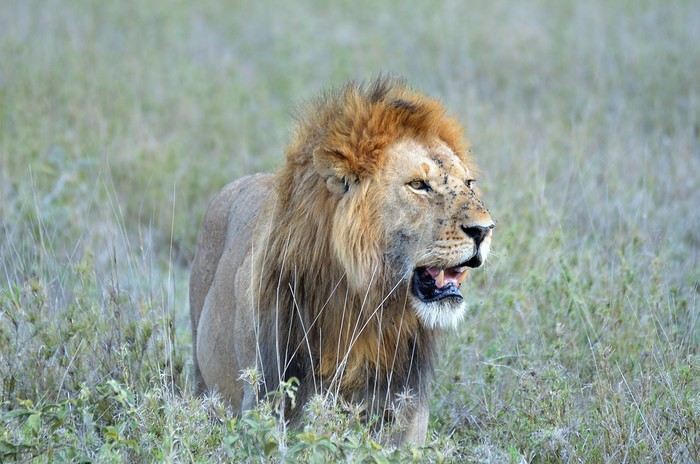 But it seems like the lion is looking for something... or someone. Bacary scans the surroundings, and over there, we spot a second lion lying in the grass.
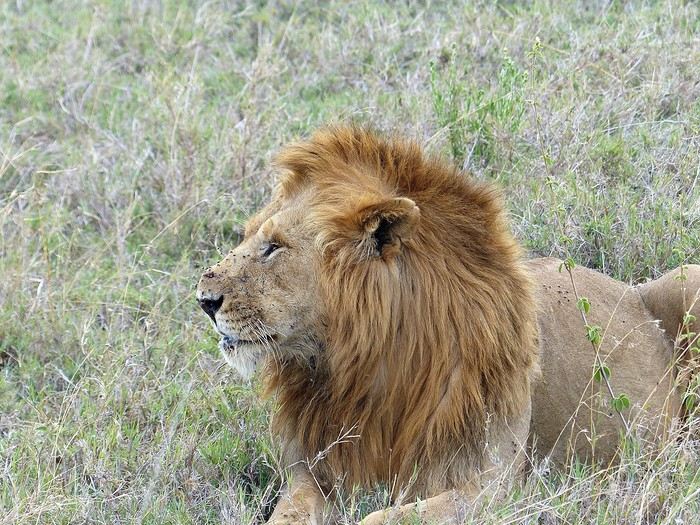
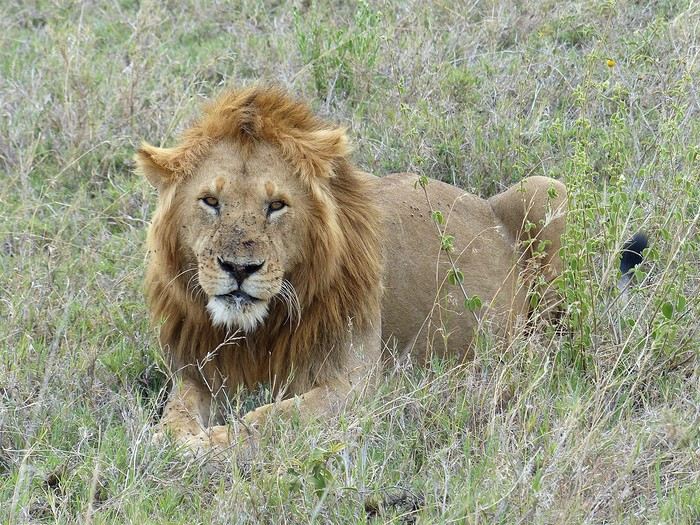 He also stands up and heads toward his brother. They meet, sniff each other...
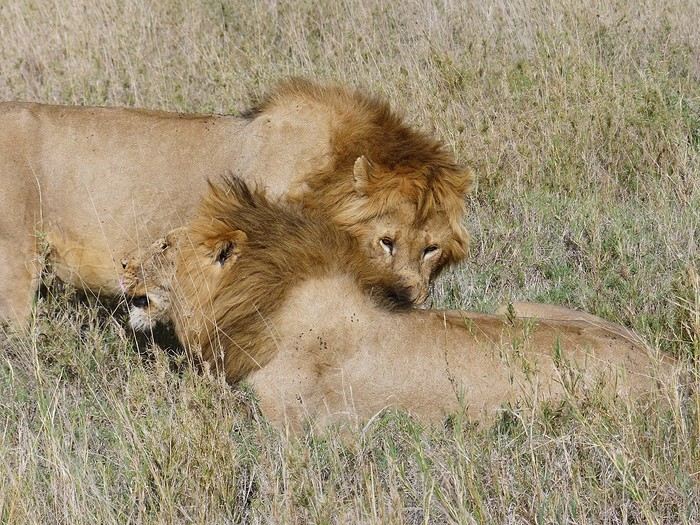
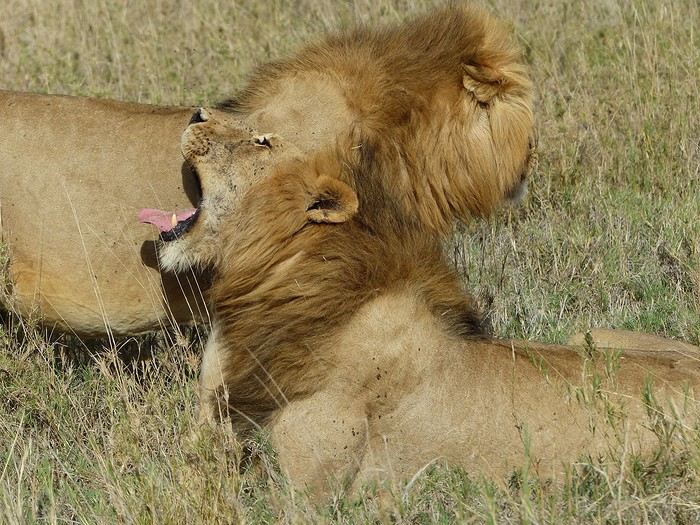 But the day is winding down, and we need to head back since we’re quite far from camp. We leave our two lions busy giving each other some affection.
And so, our first day in the Serengeti ends beautifully.
Suddenly, he stands up and starts moving away with a heavy gait. We position ourselves to get ahead of him, so we can admire him coming toward us.
We pass by the remains of a buffalo. Now we understand why he’s so full!
But it seems like the lion is looking for something... or someone. Bacary scans the surroundings, and over there, we spot a second lion lying in the grass.
He also stands up and heads toward his brother. They meet, sniff each other...
But the day is winding down, and we need to head back since we’re quite far from camp. We leave our two lions busy giving each other some affection.
And so, our first day in the Serengeti ends beautifully.
Show 10 more replies
Gorgeous photo report with explanations
What time of year did you go? I see a guide, so through a tour operator specializing in Tanzania? Can't wait for the rest!
Hi there, we went during the first half of November. The local organizer was a very efficient agency, Maasai Wanderings. The setup was mixed: for the two parks, Tarangire and Serengeti, we stayed in lodges inside the parks with an on-site guide, and for Ngorongoro, we had a guide from Maasai Wanderings.
Welcome to Attila and Fabregal!
Second day in the Serengeti, with a morning that starts at full throttle!
We set off before sunrise. We’re settled in one of those big open-top jeeps, which allow for ideal wildlife observations with nearly 360° visibility and always a perfect vantage point for photos. Of course, the cold air stings our cheeks, but otherwise we’re snug under our blankets, each with a hot water bottle tucked under our down jackets. Pure bliss. You know, it’s that fleeting moment in the early morning when the gray light suddenly turns pink, just before the golden flashes of sunrise.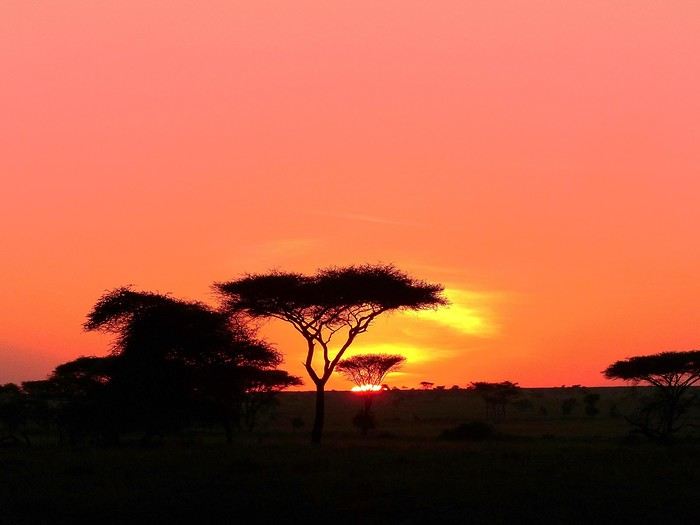
It feels so calm and peaceful… yet last night there were surely some kills, and there’ll be more this morning! Speaking of kills, we approach two cheetahs (a mother and her cub) who are feasting. The cub is enjoying the meal while the mother keeps watch.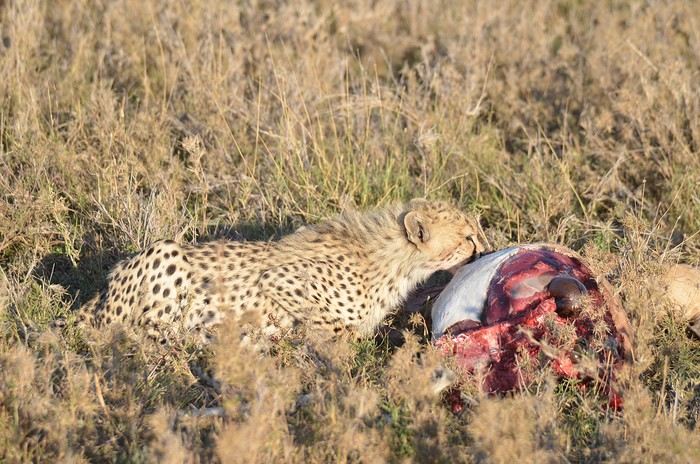
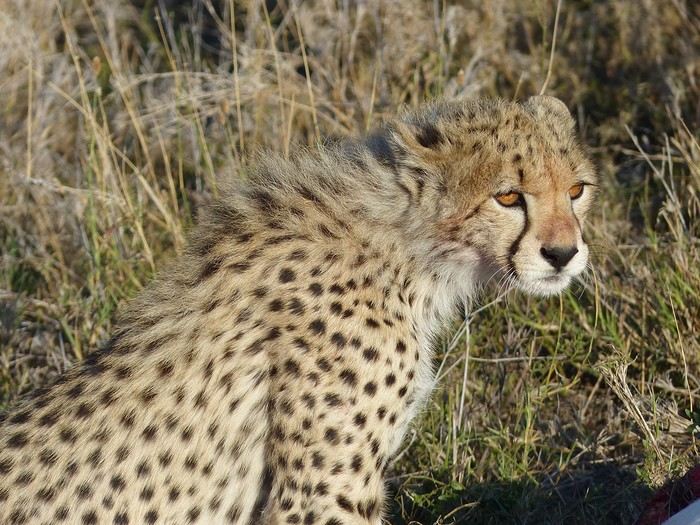
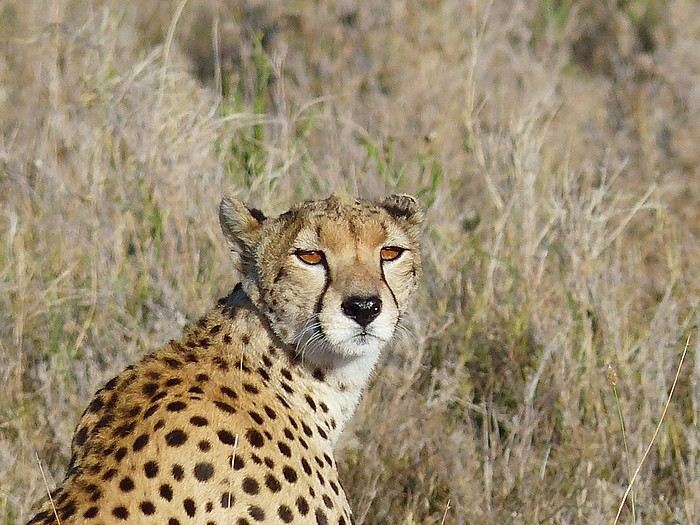
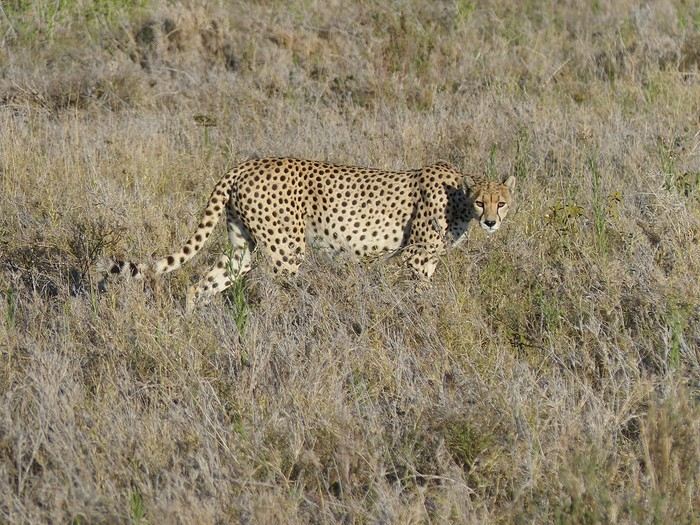 It’s the mother who decides to end our observation, moving away followed by her cub.
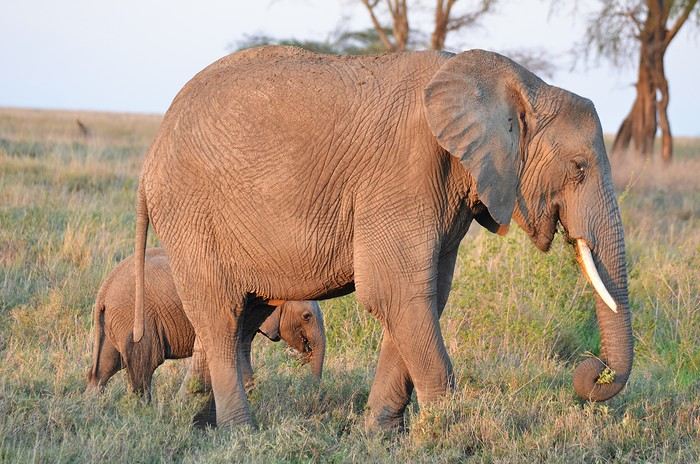
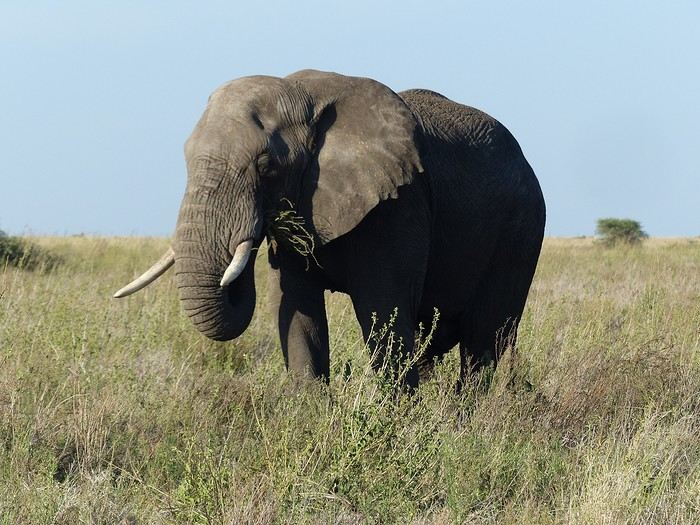
We continue on our way. Time to greet a magnificent solitary elephant, majestic… Let’s not forget that despite all the interest in big cats, it’s probably the elephant who’s the true king of these lands.
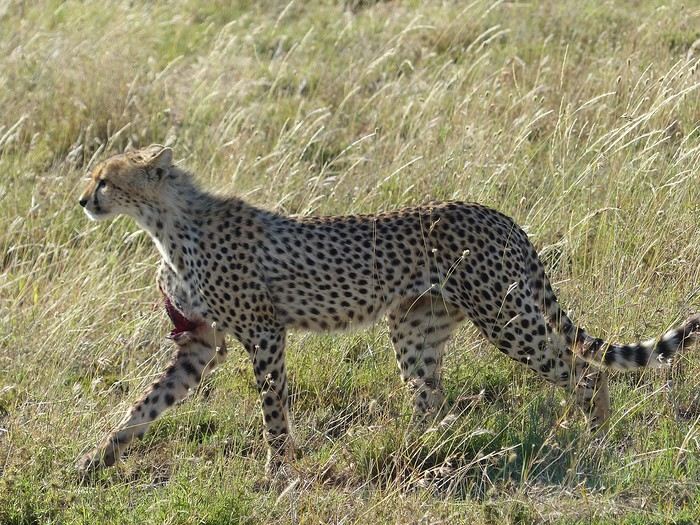
… and here we are again in sight of two cheetahs. They’re over there—one of them (the mother) is standing on a termite mound, scanning the savanna. We hope to witness a hunt.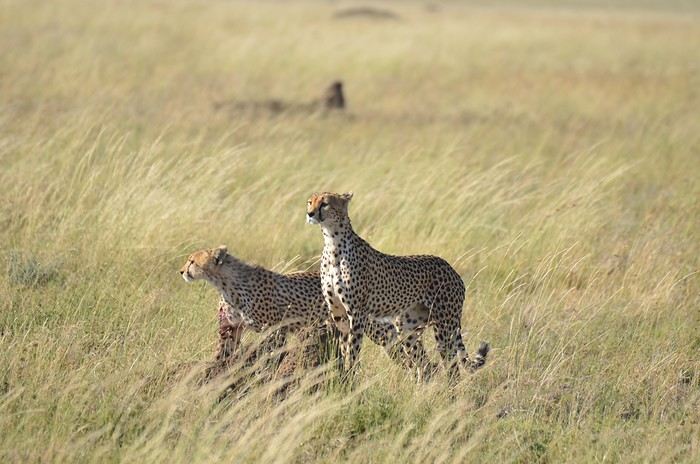 They come toward us. On the other side of the path, prey that hasn’t spotted them yet. The mother moves cautiously, almost gliding through the grass, crouched low. The second, a young adult, follows, but he doesn’t seem focused on the hunt. We notice he’s injured: on his front right paw, the skin has been torn from the muscle. It doesn’t seem to bother him while walking, but running must be another story. This could be fatal for him in the coming days.
 The mother is about to pounce… but suddenly a jeep arrives and scares off the prey. Philosophically, the mother walks a little further, then sits down to wait for her cub.
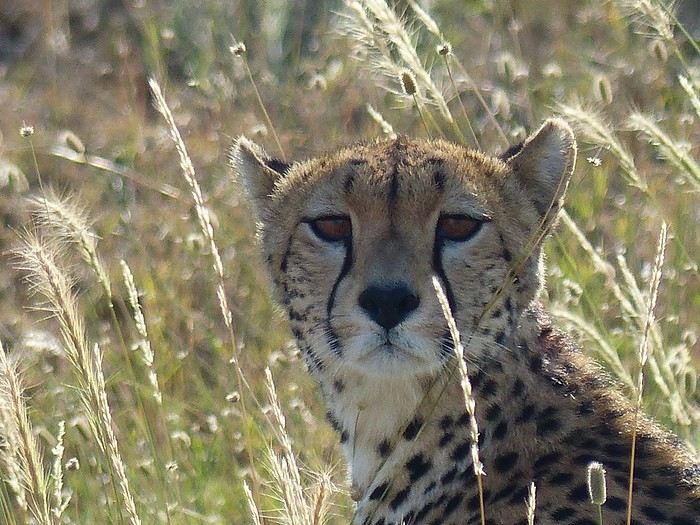
She’s stunning in the morning light, surrounded by tall grass whose seed heads glisten in the sun. I’ll let you admire her before moving on to the rest of our day in the next post.
Second day in the Serengeti, with a morning that starts at full throttle!
We set off before sunrise. We’re settled in one of those big open-top jeeps, which allow for ideal wildlife observations with nearly 360° visibility and always a perfect vantage point for photos. Of course, the cold air stings our cheeks, but otherwise we’re snug under our blankets, each with a hot water bottle tucked under our down jackets. Pure bliss. You know, it’s that fleeting moment in the early morning when the gray light suddenly turns pink, just before the golden flashes of sunrise.
It feels so calm and peaceful… yet last night there were surely some kills, and there’ll be more this morning! Speaking of kills, we approach two cheetahs (a mother and her cub) who are feasting. The cub is enjoying the meal while the mother keeps watch.
It’s the mother who decides to end our observation, moving away followed by her cub.
We continue on our way. Time to greet a magnificent solitary elephant, majestic… Let’s not forget that despite all the interest in big cats, it’s probably the elephant who’s the true king of these lands.
… and here we are again in sight of two cheetahs. They’re over there—one of them (the mother) is standing on a termite mound, scanning the savanna. We hope to witness a hunt.
They come toward us. On the other side of the path, prey that hasn’t spotted them yet. The mother moves cautiously, almost gliding through the grass, crouched low. The second, a young adult, follows, but he doesn’t seem focused on the hunt. We notice he’s injured: on his front right paw, the skin has been torn from the muscle. It doesn’t seem to bother him while walking, but running must be another story. This could be fatal for him in the coming days.
The mother is about to pounce… but suddenly a jeep arrives and scares off the prey. Philosophically, the mother walks a little further, then sits down to wait for her cub.
She’s stunning in the morning light, surrounded by tall grass whose seed heads glisten in the sun. I’ll let you admire her before moving on to the rest of our day in the next post.Part 2 / Second day in the Serengeti / morning
After our encounters with those magnificent cheetahs, we stop to have breakfast near these characteristic rock formations: the plain, as it eroded, revealed these large boulders, which are topped with trees and form shelters appreciated by quite a few animals.
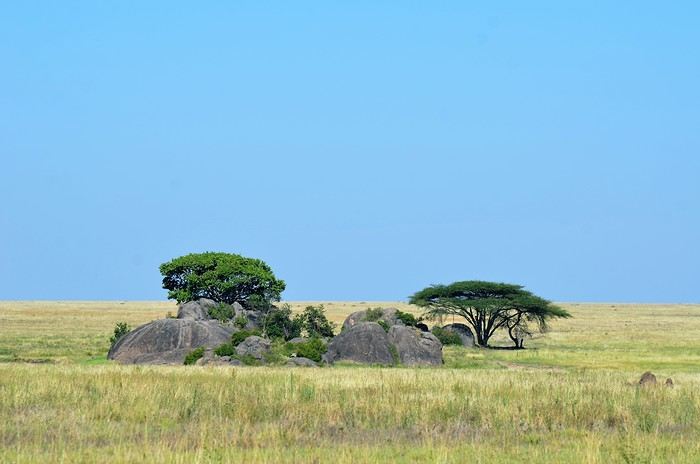 The jeep circles around—nothing dangerous in sight—we stop and spend a good moment chatting with Bacary and Marcus, a trainee finishing his guide school.
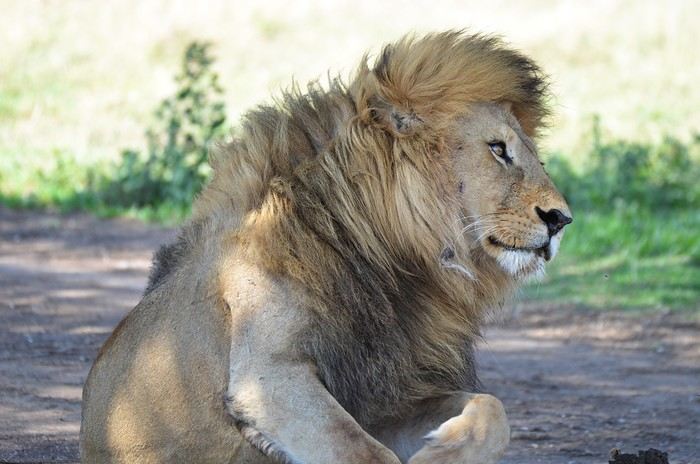
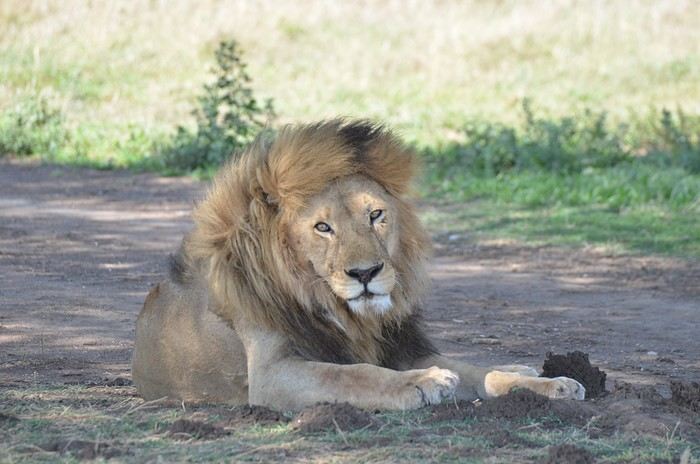
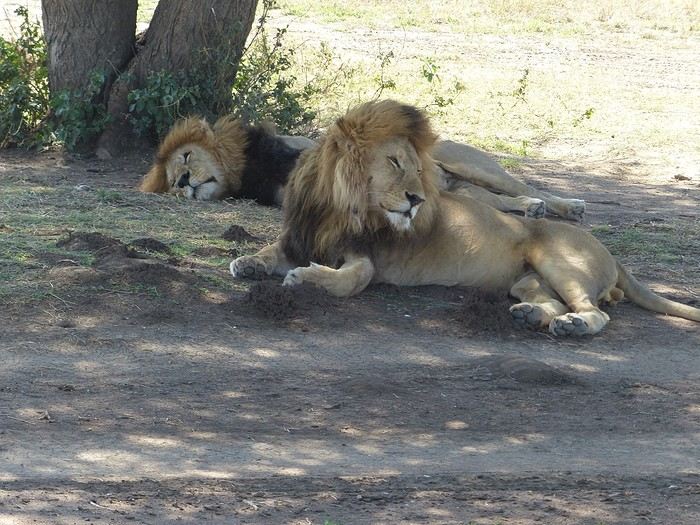
After hitting the road again, we have another impressive encounter; the jeep stops, and we let two magnificent male lions come to us. The darker one is the dominant one, with a superb mane. That tree over there is a usual spot for them... they’re returning from patrolling their territory, looking satisfied. They stop for a bit to pee here and there, just in case the territory isn’t marked enough yet!
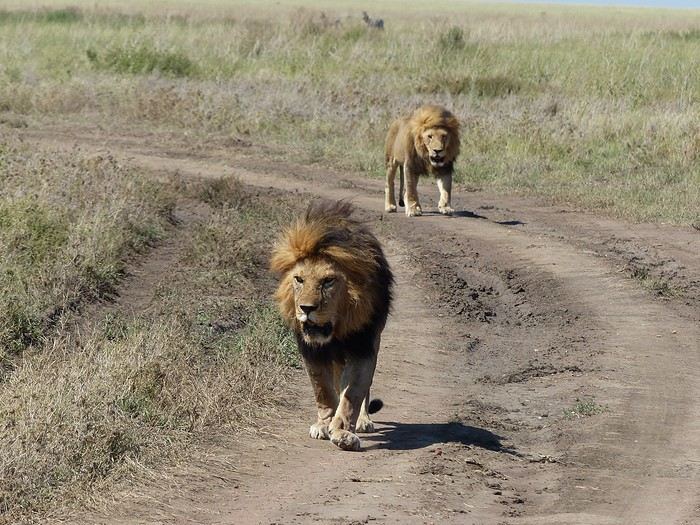
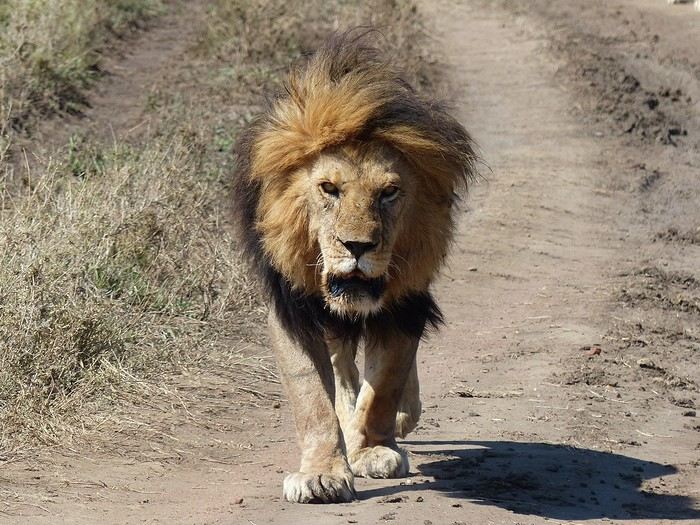
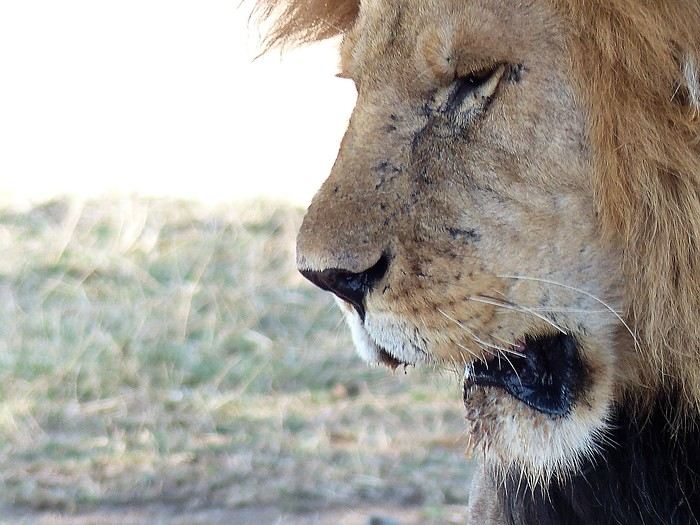
They settle there in the shade for the hot hours ahead.
Bacary suggests we patrol not too far away—he thinks we might find some lionesses. And sure enough, a little further on, we find a “cluster of lionesses.” Circling the group, even though they’re in a tight mass, we count at least 9 of them, of different ages. They’re finishing up a meal.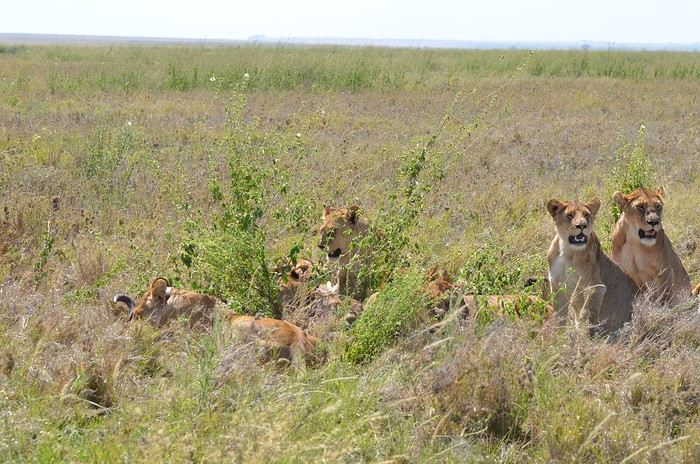
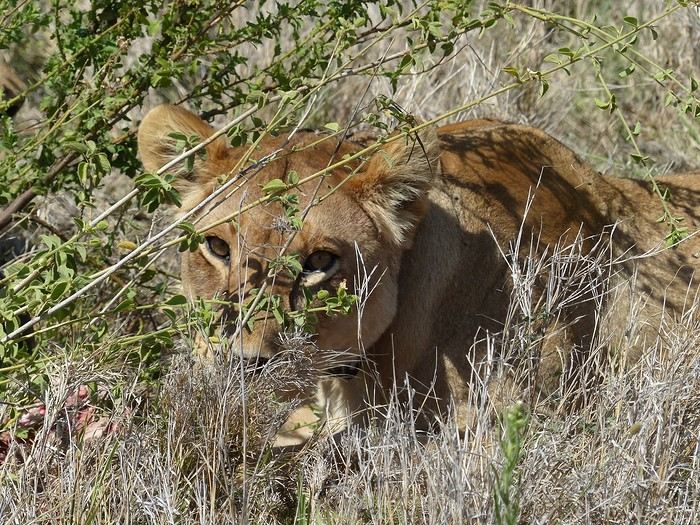
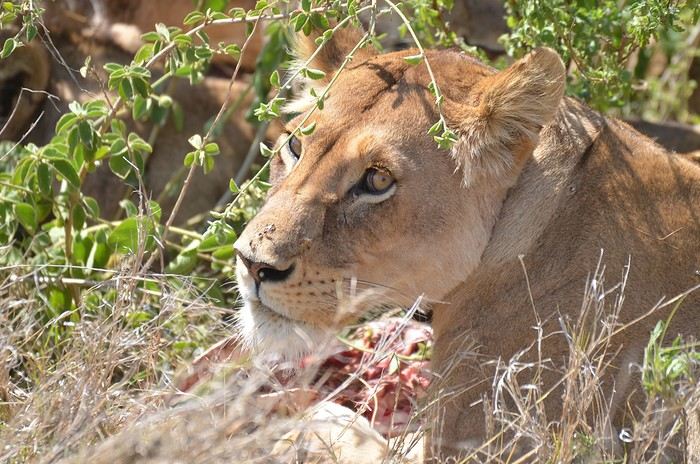
We leave them be. Bacary suggests we’ll come back this way in the late afternoon. For now, we head back toward camp, but it’s clear Bacary has a trick up his sleeve—he tells us with a slight smile that we’re going somewhere nearby, but he won’t say what (the guide’s caution). To be continued for this day, which hasn’t run out of surprises yet...
The jeep circles around—nothing dangerous in sight—we stop and spend a good moment chatting with Bacary and Marcus, a trainee finishing his guide school.
After hitting the road again, we have another impressive encounter; the jeep stops, and we let two magnificent male lions come to us. The darker one is the dominant one, with a superb mane. That tree over there is a usual spot for them... they’re returning from patrolling their territory, looking satisfied. They stop for a bit to pee here and there, just in case the territory isn’t marked enough yet!They settle there in the shade for the hot hours ahead.
Bacary suggests we patrol not too far away—he thinks we might find some lionesses. And sure enough, a little further on, we find a “cluster of lionesses.” Circling the group, even though they’re in a tight mass, we count at least 9 of them, of different ages. They’re finishing up a meal.
We leave them be. Bacary suggests we’ll come back this way in the late afternoon. For now, we head back toward camp, but it’s clear Bacary has a trick up his sleeve—he tells us with a slight smile that we’re going somewhere nearby, but he won’t say what (the guide’s caution). To be continued for this day, which hasn’t run out of surprises yet...
Continuation of the second day in the Serengeti.
We just parted ways with those resting lionesses and a surprise announced by our guide...
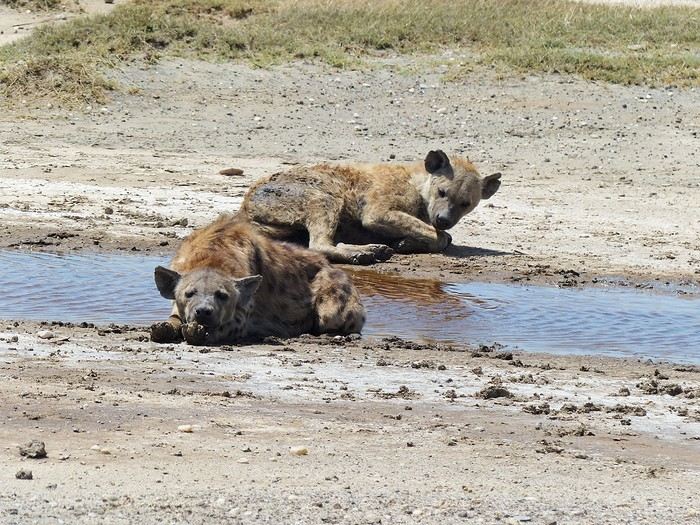
We come across hyenas taking a dust bath (Bacary’s smile widens).
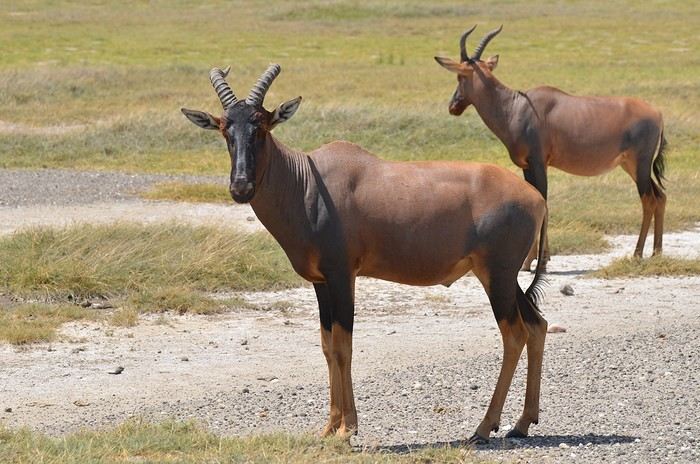
 Topis: hey, these ones aren’t perched on termite mounds (it’s true we’ve seen them often before, in the distance on the savanna, standing on termite mounds like lookouts).
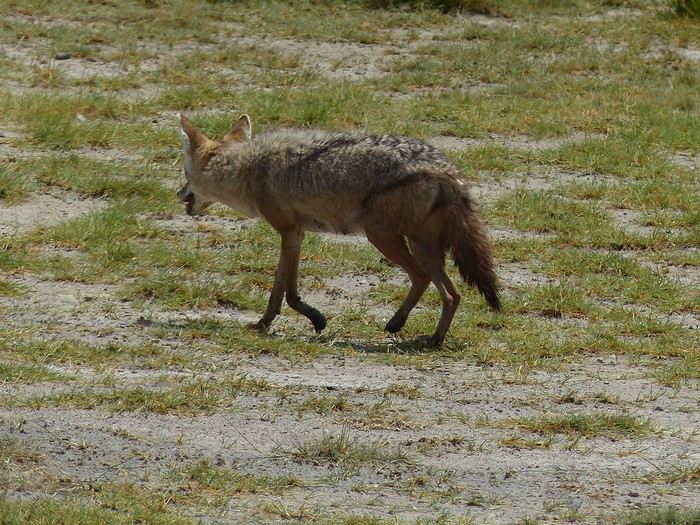
 Here are some jackals… (I’m unsure of the species because of their stripes).
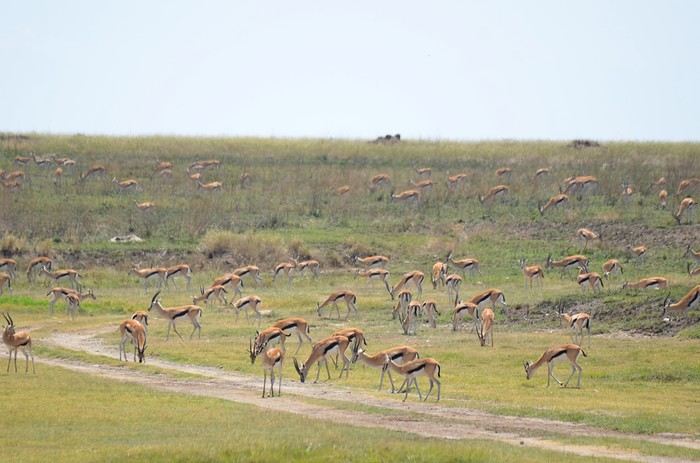
 A field of gazelles, like daisies in the grass…
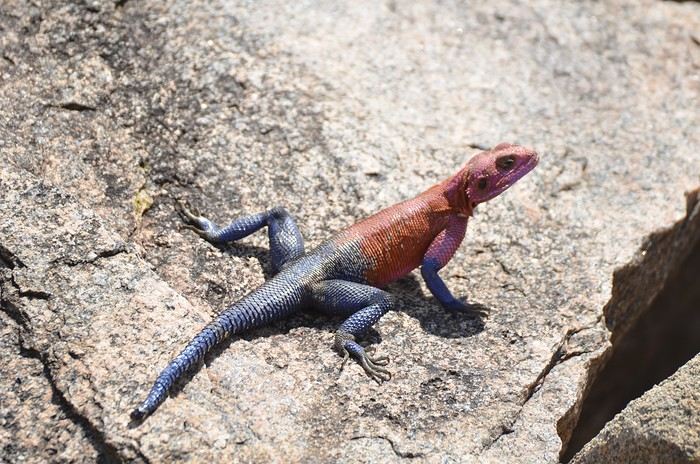
 One of those beautiful lizards… (Agama Mwanzae)
And here we arrive at Bacary’s “surprise”: it’s a kind of small sandy ravine, dug with large burrows… populated by hyenas!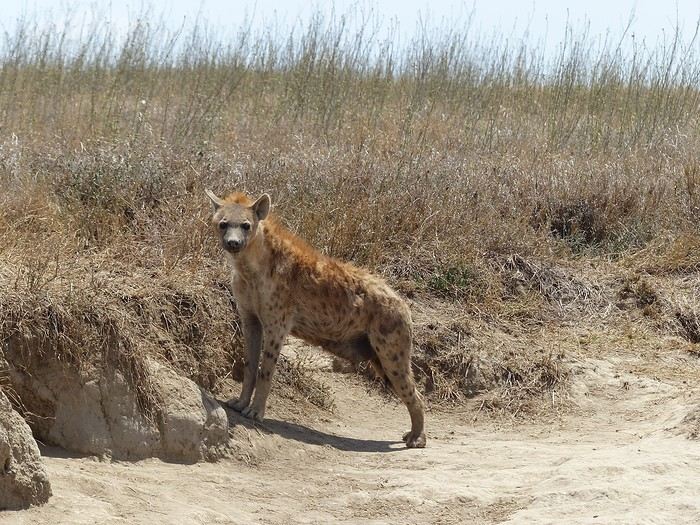
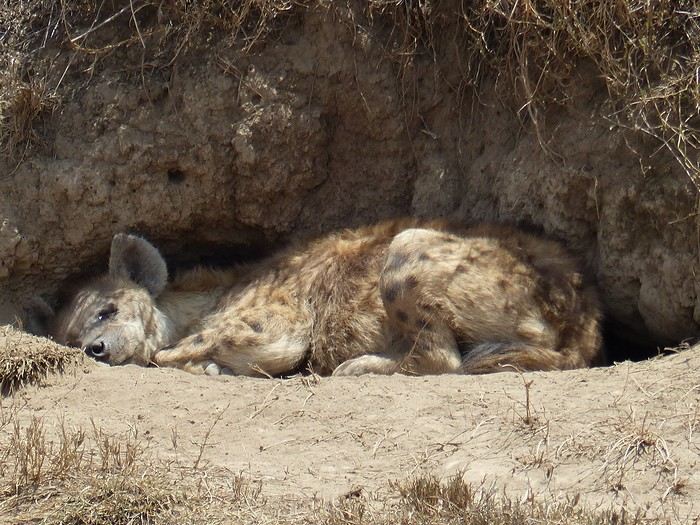
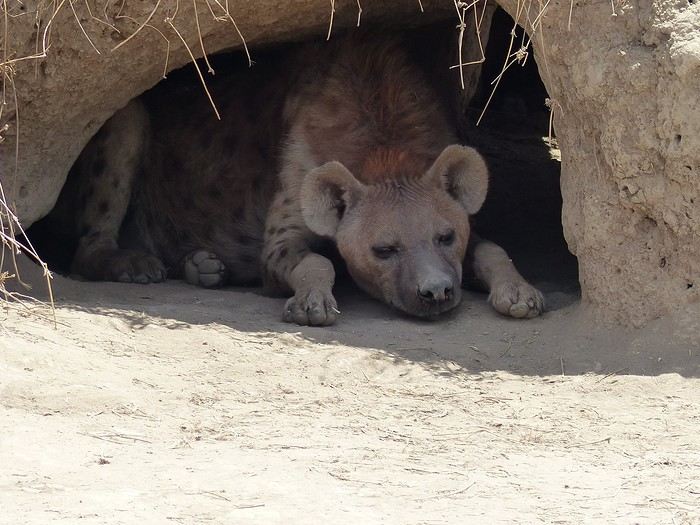
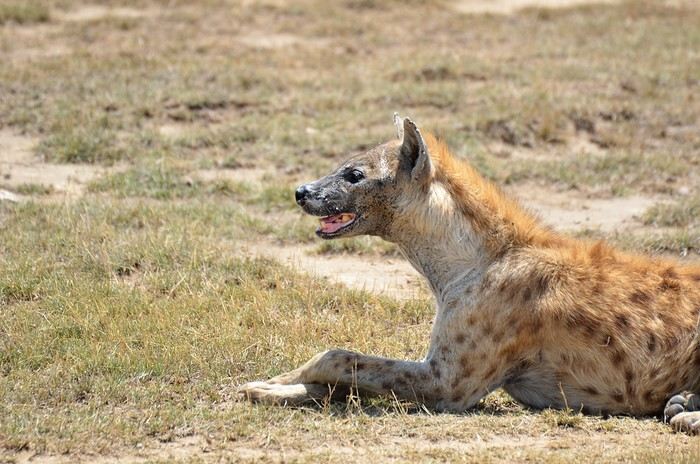 There are about fifteen visible, but we don’t know how many are hidden in the burrows—we just see some movement. Are they laughing at us or what?
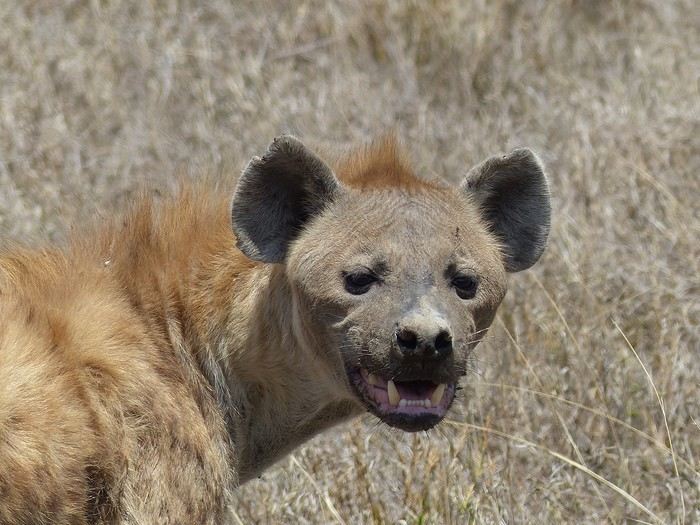
But this time, we really have to head back to camp. We’ll meet up again after our nap to go watch the “lion sunset”! 😊
We come across hyenas taking a dust bath (Bacary’s smile widens).
Topis: hey, these ones aren’t perched on termite mounds (it’s true we’ve seen them often before, in the distance on the savanna, standing on termite mounds like lookouts).
Here are some jackals… (I’m unsure of the species because of their stripes).
A field of gazelles, like daisies in the grass…
One of those beautiful lizards… (Agama Mwanzae)
And here we arrive at Bacary’s “surprise”: it’s a kind of small sandy ravine, dug with large burrows… populated by hyenas!
There are about fifteen visible, but we don’t know how many are hidden in the burrows—we just see some movement. Are they laughing at us or what?
But this time, we really have to head back to camp. We’ll meet up again after our nap to go watch the “lion sunset”! 😊
End of the second day in the Serengeti
"Sunset on lions"
Remember, we decided to go back and see if the lions from this morning had gathered.
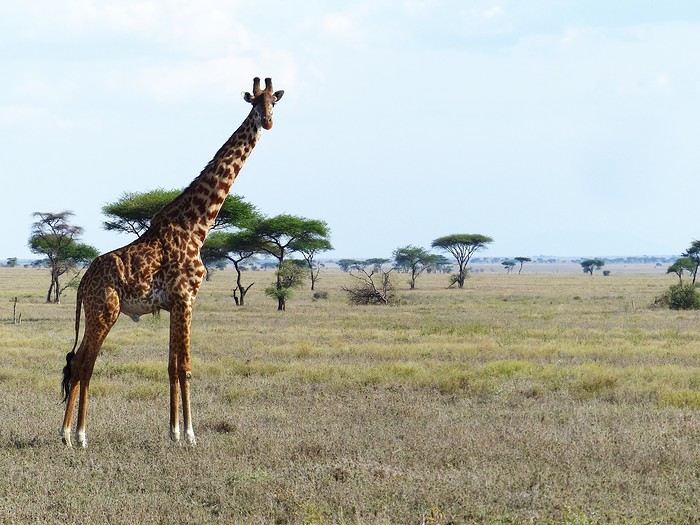
Off we go—hello, Mr. Giraffe, sorry, we’re in a hurry!
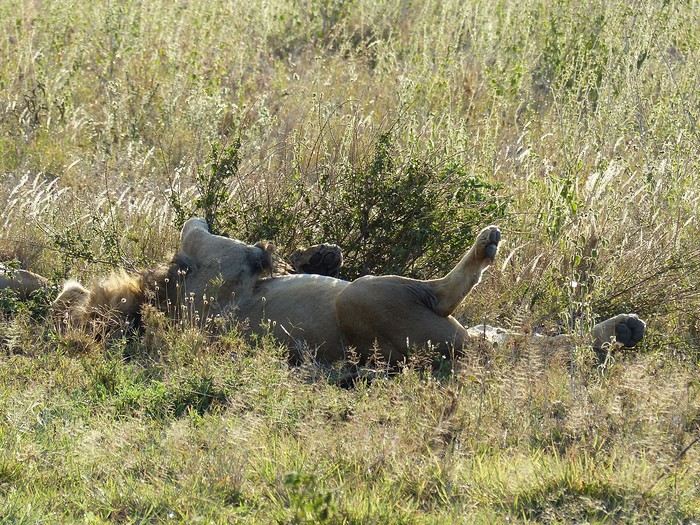
 They’re all there around the tree, sprawled out within a 10-meter radius. The two big males are lying in the grass, soaking up the late afternoon sun. One of them is stretched out on his back, paws in the air, looking like a big harmless cat...
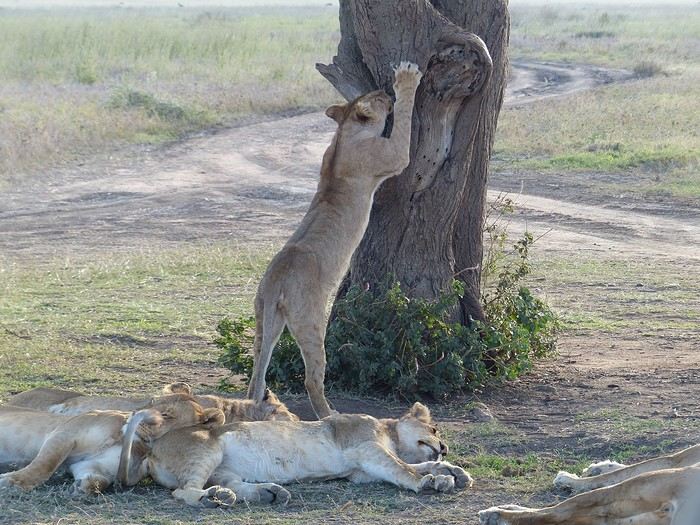 We count a total of 13 individuals: the 2 big males, likely the 9 lionesses from this morning, and 2 more, including a young male who must be the dominant male’s son and is still tolerated—for how much longer?
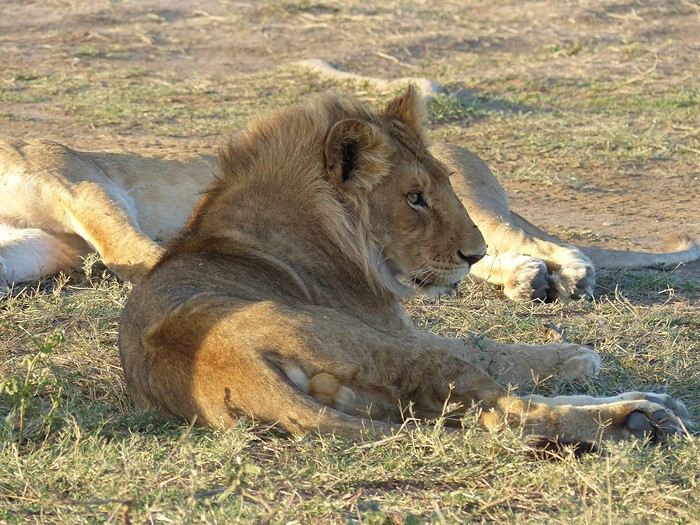
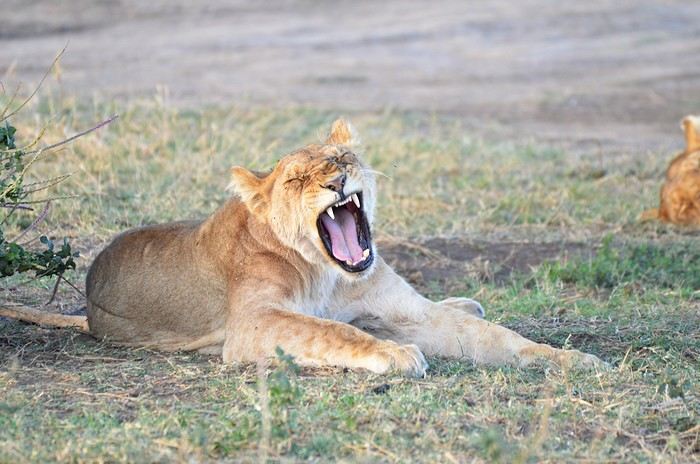 Things start to get a little restless. It’s thirsty work, this one young lioness seems to say.
One by one, several lionesses get up and walk a few meters away to drink from a deep rut (left over from a big storm three days ago). We move a bit to watch them drink, under the watchful eye of an eagle (a martial eagle, maybe?).
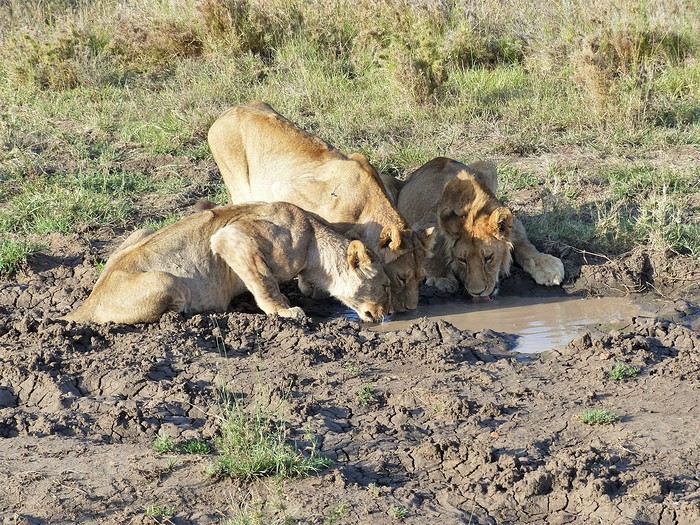
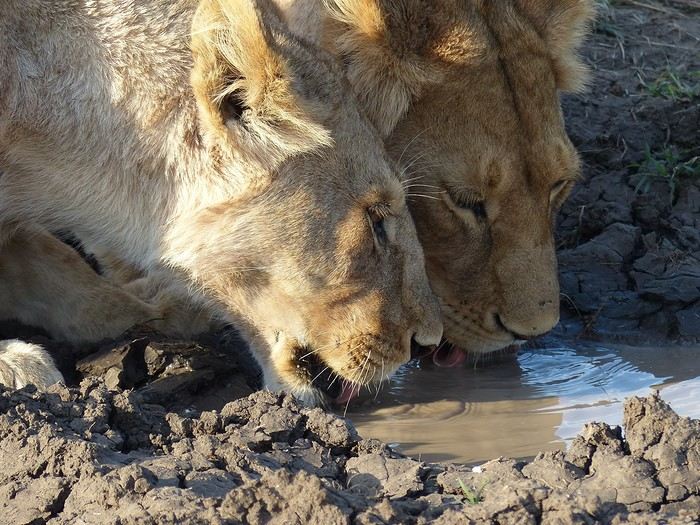
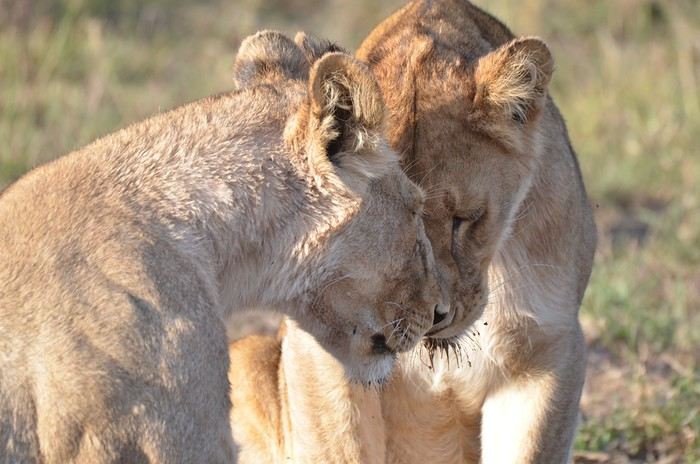
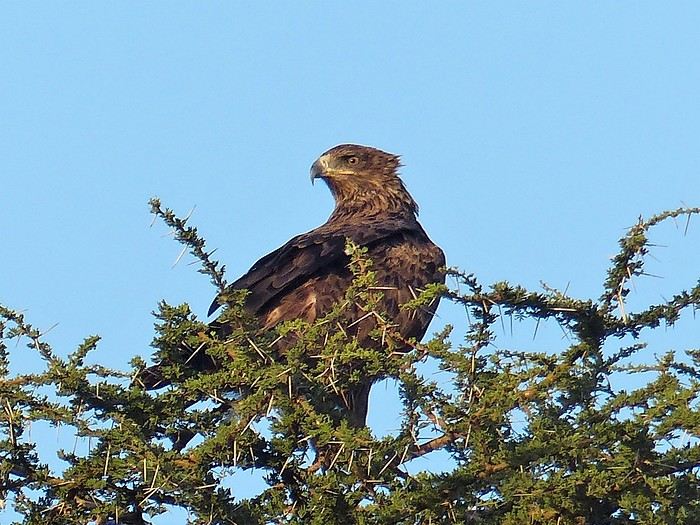
All this makes us thirsty too, needless to say... So we enjoy our sunset apéro right in the middle of this beautiful family. After the sun sets, we head back to camp, our heads still among the lions! What a wonderful day, don’t you think? But now we need to sleep—because tonight we’re getting up at 4 a.m.! Shh, my husband doesn’t know yet!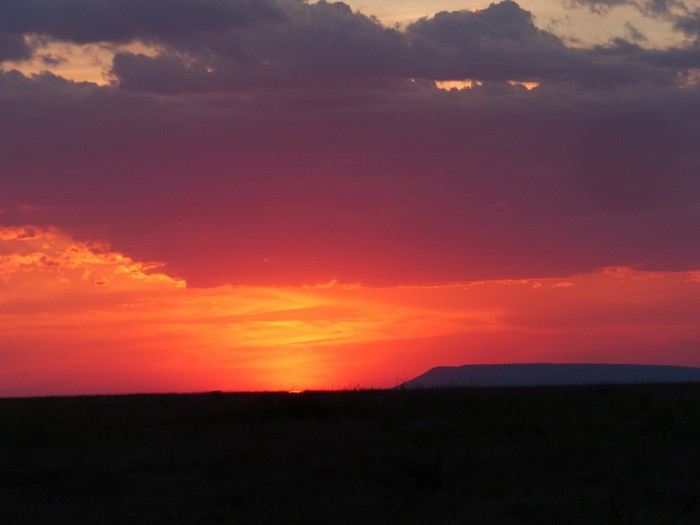
They’re all there around the tree, sprawled out within a 10-meter radius. The two big males are lying in the grass, soaking up the late afternoon sun. One of them is stretched out on his back, paws in the air, looking like a big harmless cat...
We count a total of 13 individuals: the 2 big males, likely the 9 lionesses from this morning, and 2 more, including a young male who must be the dominant male’s son and is still tolerated—for how much longer?
Things start to get a little restless. It’s thirsty work, this one young lioness seems to say.
One by one, several lionesses get up and walk a few meters away to drink from a deep rut (left over from a big storm three days ago). We move a bit to watch them drink, under the watchful eye of an eagle (a martial eagle, maybe?).
All this makes us thirsty too, needless to say... So we enjoy our sunset apéro right in the middle of this beautiful family. After the sun sets, we head back to camp, our heads still among the lions! What a wonderful day, don’t you think? But now we need to sleep—because tonight we’re getting up at 4 a.m.! Shh, my husband doesn’t know yet!
L
Thanks Fabhyène for this wonderful report—I went to Tanzania 15 years ago!! I loved Tarangire, and the road from Arusha to get there! The Maasai steppes! And Arusha National Park! Less well-known but amazing! Your photos are so beautiful—this country is exceptional. The lions remind me of the one in J. Kessel’s book! 🙂 Such a joy to follow your adventures, thanks, Lillie 🙂
Thanks Lillie for your kind words. Actually, it’s all very selfish on my part 😉 because it brings me so much joy to relive these moments. For me, feeling that sense of wonder is like a fountain of youth! I plan to wrap up this travel journal with Arusha Park, which we dedicated our last day to.
Blesl· 2 years ago
Good evening Fabienne, uh, Fabhyène (I love this username—finally a little respect for some much-undervalued goats!)
If only there were more self-proclaimed "egoists" like you on VF! A fantastic travel journal that’ll reignite joy for those who know the place and inspire others to discover it!
Asante sana!
BL
If only there were more self-proclaimed "egoists" like you on VF! A fantastic travel journal that’ll reignite joy for those who know the place and inspire others to discover it!
Asante sana!
BL
You might also like
 Tanzania Classics (Safari & Zanzibar)
Travel logs › Tanzania·170 photos
 In MIKUMI and SELOUS, Southern Tanzania (June 2024)
Travel logs › Tanzania·300 photos
 The Kingdom of Lions...
Travel logs › Tanzania·275 photos
 Tanzania 2019 - Polé Polé
Travel logs › Tanzania·120 photos
 Back to RUAHA and SELOUS (Southern Tanzania).
Travel logs › Tanzania·300 photos
 Polynesia: How to choose between the Society Islands, Tuamotu, and the Marquesas?
Features › French Polynesia·4 photos
 A Few Days in Turkmenistan from Uzbekistan
Travel logs › Turkmenistan·73 photos
 Slovak travel journal
Travel logs › Slovakia·101 photos