Thank you and well done, Marie, for this beautiful travel journal.
You’ve visited so many places I love—Tozeur, Souad’s little museum, the mountain oases where I adore hiking through the canyons, Douz, the Bourguiba palace/museum in Monastir, Mahdia and its vast seaside cemetery, Matmata, Toujane and Tamezret, Monji Bouras’s small Berber museum...
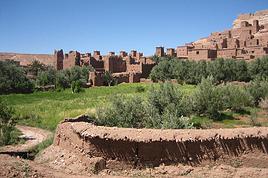
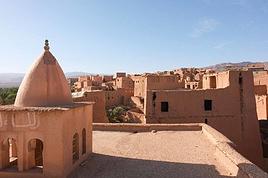
You still have some spots to explore: Cap Bon, Nabeul, Hammamet, Korbous and its hot springs, Bizerte, Tabarka, the storks of Ain Draham, the pottery made by the women of Sejnane, the wheat fields of Kroumirie, and in the south, you haven’t seen the Ksour yet.
Avoid July and August—they’re way too hot and crowded.
You’re brave to use public transport; I’ve always traveled with my own vehicle. I take the train sometimes, but I’m too scared of louages.
Just a little note: the dates are called *deglet nour* or "fingers of light."
Looking forward to your next adventures! !
La terre entière est ma patrie et la famille humaine est ma tribu.
Tozeur: the golf course was wanted by a son-in-law of Ben Ali,
Hi there,
On this forum, I read a 2007 travel journal where the author said the brickworks were going to be moved because the smoke bothered the golfers... 20 years later, the brickworks are still in the same place, and the golf course has disappeared.
But in Tozeur, I asked several times if there had really been grass there—I found it hard to believe—and online, I saw there was even a small lake in the middle of the grass.
About Ben Ali, it might seem surprising when you live in France, but everyone tells me it was better back then. Two days ago, I was talking about Tunisia with a young French woman of Tunisian origin—she’s 21—and she told me, "It was better before!" I asked her how she could remember that time since she was very young and lived in France, and she said she could play outside at her house in La Marsa; there was more security than today. Other Tunisians talk about rising prices, etc... Anyway, I was pretty surprised the first time someone told me it was better under Ben Ali.
" Celui qui voyage sans rencontrer l'autre ne voyage pas , il se déplace "
( Alexandra David-Néel )
" Ahora todos quieren ser latinos , no , ey , pero les falta sazon , bateria y reggaeton " ( Bad Bunny )
I experienced the Ben Ali era and the post-Ben Ali period... (I was there in 2011 when he fled)
Indeed, as long as you didn’t get involved in politics or were part of the RCD, you were left alone.
Of course, the so-called "secret" police constantly patrolled in unmarked Isuzu pickups—though everyone knew who they were. You’d give a *bakchich* to the officer at an intersection—especially at the end of the month when they stopped a lot of people—or on the road. They tried with me, circling the car, looking for an excuse, but I didn’t understand... ;-) Or at the Governorate or Municipality for a document—no luck, guys! But Tunisians were used to it and saw it as an unavoidable fate.
Yes, life was peaceful and easygoing, and it wasn’t expensive because basic food was subsidized to keep the peace.
Afterward, for many Tunisians, the word "democracy" meant "anything goes—I do what I want, and now it’s my turn to get rich and swindle my neighbor."
The golf course, overpriced as usual—all major projects were in the hands of "The Family"—wasn’t very green, even if it was *too* green for my taste. It dried up a beautiful nearby waterfall that kids used to swim in and killed thousands of palm trees.... Ras El Aïn is now a wasteland. The *oueds* that ran through nearby hamlets and served as washing spots are dry and filled with plastic "sachets" and waste!
And some hidden corners of the oasis are used as dumping grounds....
No one seems to realize it—it’s heartbreaking.
Even if you haven’t been to Tozeur before, you get a sense of desolation—today, many hotels are closed, the horse-drawn carriages don’t have many customers, and from the terrace of Café Berbère, you can see an abandoned hotel with very dry palm trees, etc.
I also noticed quite a bit of trash near the El Oued hotel, but in Tunisia, it’s everywhere.
Nefta is even worse—they call it the dead city. As for the mountain oases, they benefit little from tourism, which is mostly just passing through (day-trippers coming from Tozeur).
In the 2007 travel journal I mentioned earlier, the author paid more for a room at the Tamerza Palace hotel than I did in 2026 (and she specified she’d negotiated the price). Maybe that’s because there were more guests back then than there are today.
Otherwise, compared to the Ben Ali era, from what I’ve been told, today "anything goes"—but in the worst way. One day in a *louage*, the driver was smoking (window open) and even tossed a small bag out the window. A man next to me, who was telling me about Tunisia before, said that under Ben Ali, the driver wouldn’t have smoked or thrown anything out the window (he explained why). He also talked about black-market gasoline sold on the side of the road, etc. According to him, in Tunisia today, everyone does whatever they want and couldn’t care less...
Several people told me the Revolution didn’t change anything—people are pretty disillusioned. It’s sad.
" Celui qui voyage sans rencontrer l'autre ne voyage pas , il se déplace "
( Alexandra David-Néel )
" Ahora todos quieren ser latinos , no , ey , pero les falta sazon , bateria y reggaeton " ( Bad Bunny )
In Djerba there’s a gulf, yet there’s no fresh water on the island.
Spot the mistake.
We know tourism guzzles a lot of water (hotels, pools, golf courses), but sooner or later some countries—especially those around the Mediterranean—are gonna run smack into the reality of climate change (long droughts and heatwaves).
In some places, like Spain, they turn to seawater desalination, but that’s not without environmental consequences: the brine dumped back into the sea wrecks marine ecosystems, and desalination plants are massive energy hogs—they need oil to run, and we all know how fossil fuels drive CO₂ emissions.
" Celui qui voyage sans rencontrer l'autre ne voyage pas , il se déplace "
( Alexandra David-Néel )
" Ahora todos quieren ser latinos , no , ey , pero les falta sazon , bateria y reggaeton " ( Bad Bunny )
You still have places to see: Cap Bon, Nabeul, Hammamet, Korbous and its hot springs, Bizerte, Tabarka, the storks of Ain Draham, the pottery of the women of Sejnane, the wheat fields of Kroumirie, and in the south you haven't seen the Ksour yet.
Small detail: dates are called "deglet nour" or "fingers of light."
Good evening Michèle,
On MyAtlas, I corrected and added the full name of the dates. I knew that "nour" means "light," but I didn’t know the translation of "deglet." The name of these dates is lovely.
Yes, there are still so many places I haven’t seen. I definitely plan to return to Tunisia—maybe in December to visit Djerba and the ksour I missed this time. In 2025, the Douz Sahara Festival in December coincided with my vacation. If it aligns with my vacation again in 2026, I’d love to attend and also see the Thursday animal market.
On my list of places to visit are the Kerkennah Islands. I thought about them when I was in Sfax—I’m not sure if they’re worth it or what the best season is.
There are also the sites of Dougga, Bulla Regia, Sbeitla...
Anyway, if I need advice, I know yours is always good.
About louages: having taken dozens of chicken buses in mountainous regions of Guatemala and El Salvador, I find louages much less dangerous. Even though, on the way into Sfax, the louage hit a moped—luckily, no consequences for the two older gentlemen on it.
In Latin America, there’s even a risk of armed robbery (with knives or guns) inside buses or at bus stations.
" Celui qui voyage sans rencontrer l'autre ne voyage pas , il se déplace "
( Alexandra David-Néel )
" Ahora todos quieren ser latinos , no , ey , pero les falta sazon , bateria y reggaeton " ( Bad Bunny )