Converting a heavy-duty bus/coach/truck into a motorhome
FR

Translated into English.

KA Kaxero ·
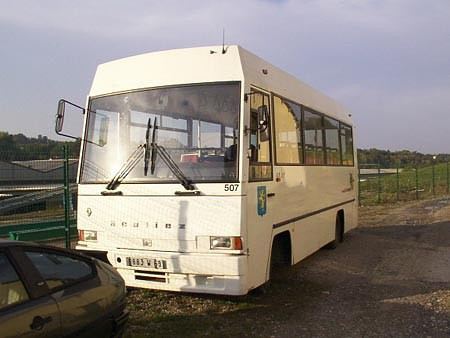
Hi everyone, I'm Spanish (excuse my French). I live in Hendaye (64). I want to sell my standard motorhome and buy a small bus (to get started) and convert it into a motorhome. I found this model (click on the link) from 1990, 220,000 km, €3,000. I'm looking for advice about buying this model, thanks everyone.

http://www.wistiti.fr/kaxero:tous
PA Patrick26 Veteran ·
hey,

at first glance, it's a good base.

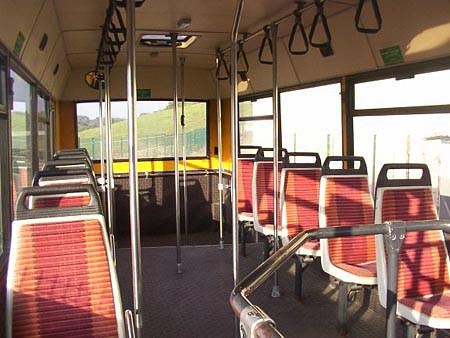
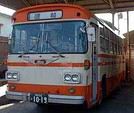
driver's door, lowered rear platform that converts to a cargo hold, decent ceiling height, Heuliez bodywork (so no problem requesting a bodywork conversion), flush windows that can be easily darkened...

unless I'm mistaken the chassis should be a Mercedes or an Iveco.

still need to check the mechanical condition, the brakes, the payload capacity, etc...

be careful about one particular point with this type of bus: the pillars can contribute to the chassis rigidity, and in that case might not be removable.

here's the info based on the photos.

PATRICK26
KA Kaxero ·
Hi,

"unless I'm mistaken, the chassis should be a Mercedes or an Iveco" WHY?

"the posts can contribute to the body's rigidity, and in that case may not be able to be removed" HOW TO KNOW THAT BEFORE BUYING

THANKS TO PATRICK26
TI Titecaro ·
I'd like to buy a Mercedes 307 bus but I only have a car license. I'd like to know how to reclassify it, if that's even possible, and who I should contact. For now I have a Mercedes 508 set up as a camper, but I need to get the brakes completely overhauled, and I'm thinking it might be better to buy the other one which is in excellent condition. Apparently the minibus would need to pass inspection, but do I need to make any modifications to the engine? To the interior? If someone could help shed some light on this? Thanks
SP Sputnick Regular ·
Hey, the best thing's to call them at DRIRE (mines) ciao
TI Titecaro ·
😉 thanks for the info. I didn't really know where to turn. Just discovered your forum. It's great to see people on the move. I'm in an apartment right now, but for travels nothing beats a customized truck. I drool 🙂 over the photos.
SP Sputnick Regular ·
http://www.drire.gouv.fr/
PA Patrick26 Veteran ·
Hi,

In response to your two questions:

For the chassis, it's just based on experience. Heuliez works a lot on these brands in small buses, and Mercedes and Iveco have chassis that match. Plus, it's typical for conversions with these brands to have the front axle very recessed into the body.

For the posts, contact Heuliez's homologation service directly by phone (search their website online and you'll find their contact details). Only they can reassure you on this point because DRIRE will send you back to them.

Good evening to all

PATRICK26
AN Ankor ·
Hey Kaxero,

I saw the photo of the bus you'd like to buy. Patrick already gave a really good answer.

I just want to tell you that you'd need to look into what this bus was actually designed for. I mean, there's a real difference between a coach and a bus—a bus is designed only for city routes (some are even speed-limited to 50km/h, and have automatic transmissions). Whereas a coach, which is designed to carry only seated passengers, is speed-limited to 100km/h and is built for real highway driving. Obviously, the speed limits I'm giving are for France, and it's very easy to remove the speed limiter anyway! But you really need to know what kind of use you want to make of it and how long you'd like it to last. You'd need to get the engine specs—power and at what RPM, engine torque (Nm), and of course displacement. It's also good to know if it has a decent turning radius, especially if it's long, plus a good wheelbase! But obviously, you can't have it all, and you'd need to win the lottery to get the "perfect bus that does everything"!

Let me give you an example with the small coach that Tibo and I will be getting very soon (Yeah! Here we are, it's ready (new tires and just passed technical inspection) it's just waiting for us at the garage's lot). Anyway! It's a Mercedes 613D, weighing 6.9T GVWR. It has a 6-cylinder engine with 130 hp, and it barely has 80,000 km on it. And engines like this easily last for very high mileage if you maintain them properly!

These days, a lot of small coaches are built on a van chassis with a van engine (Sprinter, Master, ...). They only have 4 or 5 cylinders and are much less "robust" than what they used to make 20 years ago! So will they last over 999,999 km like real heavy-duty engines? I don't think so.

In any case, I hope you find what you're looking for. We're thrilled about the idea of soon having the small bus at home. Actually, we were waiting for the mechanic selling it to pass the small bus through technical inspection, and we thought we'd have to wait at least 3 weeks, maybe even a month, to get an appointment. But he got an appointment through a cancellation—meaning as soon as someone cancels, the inspection office calls him to bring the bus in. He registered on Monday and Tuesday the inspection office was already calling him!!! How cool is that! For people who are in a hurry, that can be really useful.

There you go, good luck to you!

And hi to everyone, Mélaine and Tibo
Etre heureux avant d'être vieux!
TI Titecaro ·
So with this mini-bus, do you have to get it officially registered because you've fitted it out inside, or to reclassify it as a light vehicle so you can drive it with a standard license? You must have had to modify the engine. I heard it was difficult to do
SO Sonic5 ·
Hey, if you've got any photos, send them to me on my account.

For your campervan, the best is the place in Carros at the left end... good luck with them.
PA Patrick26 Veteran ·
Hi everyone,

I just posted an idea on the forum.

If you're planning a camper bus conversion, check out this discussion thread:

Collaborative construction of 3 converted buses (approval docs all set) ready by summer 2005 (in the RV/motorized travel section)

Rather than tackling it on your own, some folks who aren't natural DIYers or who might be intimidated by the paperwork could be really interested in this shared project.

PATRICK26
SP Sputnick Regular ·
ankor :

it's very easy to derestrict the vehicle!!

hi, watch out - on certain buses, the speed limit is partly due to the "short" rear axle, which gives more torque but costs you top speed. those need an axle swap to derestrict them! (fit a "long" axle)

better to find a coach from the start! otherwise, on a bus there are definitely some huge bargains to find if you're not put off by the idea of topping out at 60-70 km/h with the same fuel consumption while driving slower than a coach... ciao.
MÉ Mélobenji ·
Hi Patrick,

I just found your comment (see below) from April 2004 on another discussion.

I have a few questions: - Why did you jump from 15K€ to 40K€ for the budget 🏴‍☠️? - Why did you abandon the electrical generator solution and all that 220V equipment? - Do you confirm that a chassis is much better than a frame? (I'm asking because I think I understand that Saviem S45 or S53 are frames, and yet I see and hear lots of people using them to build motorhomes. Sputnik, do you have a different take on this versus Patrick's?)

In any case, thanks a lot guys for all this information you're sharing with everyone (and especially with me, since I can't stop thinking about it these days).

For the rest, see Patrick's old message below, which will surely interest you:

I'M BUILDING ONE. A FEW EXAMPLES OF CUSTOM BUILDS FOR FAMILY USE (MOST ARE SET UP MAINLY AS RECEPTION LOUNGES, SO VERY FEW SLEEPING AREAS)!

AFTER 8 MONTHS OF THINKING IT THROUGH, MY CHOICE FELL ON A 12.20M COACH WITH A CHASSIS (UNLIKE FRAMES) AND A SUSPENDED CENTRAL ENGINE, WHICH LETS ME OPEN A LARGE REAR DOOR FOR STORAGE OR TO CARRY A CAR.

CHOOSING A CHASSIS MAKES REGISTRATION EASIER; IN FACT, YOU CAN MORE EASILY ACCESS ATTACHMENT POINTS, AND SINCE THE BODY ISN'T NEEDED FOR STRUCTURAL RIGIDITY, IT CAN BE MODIFIED MORE FREELY (CLOSING OR DRILLING WINDOWS, POSITIONING SEATS, INSTALLING PARTITIONS, ETC).

FEW DECENT MODELS EXIST; YOU HAVE TO SKIP THE RENAULT PR, WHICH LOOKS LIKE NOTHING AND HAS THE COMFORT OF A LIVESTOCK TRUCK! VANHOOL AND DAF ARE THE MOST SERIOUS FOR THIS TYPE OF SETUP. THE ONE I FOUND HAS ONLY 300,000 KM (BARELY BROKEN IN), PNEUMATIC SUSPENSION, SEPARATE HEATING THAT CAN EASILY BE CONVERTED TO A BOILER, GEARED TRANSMISSION, TELMA, THE ABILITY TO BE TOWED, A CONTEMPORARY LOOK (IT DOESN'T LOOK LIKE KLEIN'S YELLOW BUS ON TV!), AND I'M PAYING LESS THAN €6,000 FOR IT!

AFTER THE CONVERSION, THE €15,000 BUDGET WON'T BE EXCEEDED. THE L-SHAPED LOUNGE AND SEATS COME FROM A KASSBOHER DOUBLE-DECKER BUS SITTING IN A SCRAPYARD (EASIER FOR SEATING REGISTRATION), THE REST OF THE COMPONENTS WILL BE CUSTOM-MADE. THE ELECTRICAL EQUIPMENT WILL BE POWERED BY A QUIET GENERATOR AND 24/220V CONVERTERS. THE INSTALLATION IS CHEAPER (ALL APPLIANCES WILL BE 220V) AND HAS NO RISK OF POWER LOSS.

FINALLY, KNOW THAT NOTHING IS DONE WITHOUT PRECISE TECHNICAL PLANS; VASP REGISTRATION (SPECIALLY FITTED VEHICLE) IS ESSENTIAL TO BE ABLE TO DRIVE ALL THE TIME, BE EXEMPT FROM AXLE TAXES AND DISPENSE WITH TACHOGRAPH REQUIREMENTS! THE INSPECTION IS REDUCED TO 1 YEAR INSTEAD OF 6 MONTHS, GIVES YOU THE RIGHT TO USE ACTUAL WEIGHT (INSTEAD OF MTOW) FOR TONNAGE LIMITS, AND DOESN'T RESTRICT PARKING TO BUS-ONLY LOTS!

MA Manu47 ·
Hey everyone,

I just read all 64 messages 🏴‍☠️ and wow, I'm exhausted, I didn't even notice it's 5am, my head's killing me but seriously thank you everyone for this invaluable info!!!!! I'm going to launch the bus conversion project too and I was feeling pretty alone and worried especially about the regulations... thanks again everyone, I think without finding this site I would have made some big mistakes... I found a bus listing and I'd like to submit it to you and hear what you think. I'm new to this 🙂

Renault S 23 (8+1 seats) plans already filed, plus manufacturer authorization for any future modifications,

Downgraded from commercial use, inspection OK, registration OK

Overall mechanical condition impeccable:

05/15/01 engine changed by previous operator at 490,000 km, current mileage 498,000

11/23/01 all air bottles changed (10-year validity)

03/29/02 rear drums + pads changed, front drums re-bored + pads changed

04/03 batteries changed (was 4x6V, I switched to 2x12V)

inspection 03/08/04 defects noted without need for re-inspection: tachograph inspection mandatory except for exemptions (applies for private use) rear axle braking minor seal defect (a valve loses a bit of air during braking but has no safety impact) rear reflective plates to install (I have them but haven't installed them yet) front turn signals wrong color (sun faded them but there are orange bulbs available to fix this) air tank purge missing (actually they exist - they're remote valves but the inspector didn't see them - no impact)

bodywork in very good condition overall, the wooden roof rack grill got too old but all the elements are still in place (deflectors, steel straps, etc.) to replace it

To do: change all four tires. I bought two (used but new-looking) tires, just need to have them mounted and I can get matching ones

asking price as-is €6,000 open for negotiation

I think it's a bit pricey... but if everything's in good shape??? What do you think??? In Australia and New Zealand I saw tons of buses towing a car with an iron bar attached to the front of the car (front axle, if you will) to steer the wheels through turns. That's awesome!!! Do you have them in France/Europe? Do you use this system?? Is it legal here???

Thanks again, see you soon

Manu
RA Raflou Regular ·
I'm currently converting a DAF / HEULIEZ MB205 bus.

Cheaper and more spacious than a regular vehicle, the procedures (in France) aren't insurmountable for certification.

I'm ready to help anyone who wants to get into this type of project. Those who know, help those who want to....

Hi Patrick, I'm working on converting an S53, and I'm currently on the authorization part. Do I need authorization from the manufacturer's representative to be able to cut into the bodywork to install the required ventilation? Thanks for your reply Raphael

PA Patrick26 Veteran ·
Hi everyone,

Just a quick reminder regarding the April 2004 post that melobenji cited...

Things have evolved since then.

The bus at €6,000 had significant mechanical problems, but it was white. The one I bought is orange and will need a paint job (€4,500 more to the budget!), and for the interior layout, the authorities ultimately refused the installation of the Kassbohrer stacked lounge, so the lounge will be custom-built (the cost overrun is substantial there too).

As for power, we actually modified the project because initially the bus was only supposed to be used for vacations, but it's now going to mainly serve my business professionally. Because of that, the all-220V system was abandoned in favor of a standard setup with slow-discharge gel batteries (250 A) and a 220V generator. Since the bus will be doing long-distance trips, this type of setup is better suited, but it's more expensive (roughly €3,000 more for the batteries and the regulator).

For gas, an LPG tank will be installed instead of the gas bottles originally planned (€1,200 cost overrun) because we'll often be in Nordic countries and gas bottles from Intermarché or TotalGaz won't be exchangeable on-site. So an LPG system with refills at gas stations.

A driver's door also had to be added (regulatory requirement). For that, the cost overrun is roughly €3,000.

Additional equipment will be installed compared to the original plan, for my employees' comfort (motorized satellite antenna, 17" flat screen, freezer and microwave for their meals at job sites, and so on).

That's why the project's budget has doubled. Between a vehicle for family vacations and a vehicle serving a work team that will live in it 60 to 80 days a year, there's quite a difference!

This bus could be built simply for €15,000 to €20,000. But I'm not sending my employees to the other side of Europe in a "cobbled-together" vehicle.

As for the S53 and PR, I stand by what I say. These aren't comfortable enough buses to turn into campervans, especially if people are sleeping in them while traveling. I also can't have a tarnished brand image for my business with 'old-fashioned' vehicles. Whoever, like me, used to travel 30 km a day in an S53 to get to school can back me up: always fogged windows, everyone on the bus knew it was a diesel, and the bumps were felt right up in our necks!

The only advantage of these models: the price and availability (though my bus cost me €3,500 after negotiating).

Regarding the difference between a body and a frame:

It all depends on what you want to do. If you don't touch the bodywork too much (just some trim), there's no problem with a body structure. You should know that on certain models (Ponticelli for example), the floor sheet serves as reinforcement for the body and is therefore considered part of the 'chassis.' Any drilling is prohibited, on the principle that the chassis cannot be modified without the manufacturer's approval.

For a bus on a frame, there's no problem because the body doesn't contribute to the overall rigidity. So you can drill doors wherever you want and even get the manufacturer's approval to cut or move a piece of the roll bar! If you want to make a garage at the rear for loading a car, that's no problem with a frame either. But with a body structure, it might bend.

There you have my thoughts on converting a bus into a campervan, but the nice thing around here is that everyone's entitled to their own vision.

In response to Raphael,

For ventilation panels, there are generally no problems. Just be careful not to cut a roll bar or any body reinforcement!

In response to Manu,

I think it's expensive too...

As for the towing system, I've seen it before, but unfortunately I don't have any info. However, if you find anything, please pass it along, because I'm interested too.

See you all, have a good evening

PATRICK26
KH KhaO ·
Hi everyone,

I'm still hesitant about buying my bus... about the Kassbohrer S 140, here's + engine specs:

Daimler Benz OM 407 H combustion engine 4-stroke / 6 cylinder 11,417 ? Compression 18 Max power 177 kW Max torque 80.9 MDAM Power adm 31 hp

What can you tell me about it, knowing that I'm planning to do road travel... Thanks for your advice
TRAVEL and TEKITIZY
JI Jiceel ·
Hi Patrick,

I disagree with almost everything you said. My job and knowledge—not to mention experience—show that it's actually quite easy to convert, get manufacturer approval, and so on, as long as you know 3 or 4 basics to start with.

1. Buy a bus with 3 doors—including the driver's door on the left—that's the one that causes issues, not the one on the right.

Don't plan to modify anything related to the brakes, original electrical system, or access points. For the interior, you can plan partition walls (not expensive, and it saves you from having to modify the exterior). For the windows, apply mirror film (not expensive and very effective if you use special office-grade film).

Water tanks can be bought from an accessory supplier (plenty of models that fit anywhere), including for example in the central aisle of the bus, which serves no purpose in a campervan.

Tell me about your projects and I'll help you. FREE ADVICE, but not a complete plan. But you'll save a lot of time and various costs.

Jean Claude
jiceel
JO Jom ·
I got a 1997 Unic 7012 29-seater bus certified under VASP caravan regulations. No driver's door — that wasn't a problem. They approved it at 7.5 tonnes MTOW with 9 seats. But the braking system on this type of vehicle isn't straightforward — it's not pneumatic-assisted braking but a vacuum pump, which isn't easy to balance. I'm throwing in the towel this year, honestly. I don't have any more trips planned. It took me to India and now it's just sitting idle. Anyway, if anyone's interested in 24V motorhome equipment... jomazo@hotmail.com
MA Manu47 ·
Hey everyone,

I definitely can't find a hitch system, and anyway with a C license (only) you can't tow more than 750 kg. So I'm interested in hearing from people who've set up a car garage inside a bus. Isn't that too heavy for the rear axle??? I know people do it though.
TH Thony ·
hey manu47

I'm the owner of a 1976 Berliet PR14 bus, fitted out and registered as a VASP caravan with a garage to fit a car inside. The bus has the engine at the rear, and there's a hatch where the rear window would be (like a car trunk, not a lifting tailgate). I've got 2 ramps and an 8-ton winch to load the car.

I've already loaded my car inside (a Golf 2) — it fits and doesn't take long. As for driving, you don't really feel the extra weight. Besides, I loaded the car the day I bought the bus and drove 900 km (a good test for someone who'd never driven one before!).

So there you go — if you want more details on this, just let me know.

cheers thony
PA Patrick26 Veteran ·
Hey everyone,

in response to JICEEL,

First of all, I'm glad a "professional" is joining us on this forum! But you must have missed some things: I never said the passenger door could be a problem! But the driver's door, that's a real problem if it's missing.

As for your info about not modifying the access, I confirm it's possible. In that case, you need the manufacturer's approval plus the mining authority's approval (procedures I've done and succeeded with). The modifications are still complex though: drilling a driver's door (with moving the electrical panel) drilling a 2.10 x 2.00 m door at the rear of the bus for garage access for a vehicle (with an assisted tilting ramp)

and for that, I strongly advise getting DRIRE approval on the plans before starting work.

as for double-glazing the windows, you can, it's true, apply a film to the windows! But look, I don't want to drive around in something ugly (and adhesive, I know about it, I've got 7,000 square meters in stock!). Applied on the outside, it has a limited lifespan, and risks shattering the window due to thermal bridging (temperature difference between the outer layer and the glass mass). Applied on the inside, I hope that over time (these films are guaranteed for 5 years) there won't be adhesion problems, because in that case we'd have to remove the lining to redo it. As for the price per square meter, I get it (with my professional rates) at 31.3 EUROS before tax per rolls of 1.5m x 10 ml!

good calculation, and without having done engineering studies, I prefer to be safe!

as for the water tanks, placing them in the central aisle looks nice, but when you know that most buses on chassis have a flat floor, and some have an aisle that's just high enough to move around standing up, where do you put them? I attach them to the chassis (with anti-freeze heaters), and that's why I use fuel tanks that I clean (plus, it costs almost nothing at the junkyard).

and your free advice is welcome, because for almost 6 months I've been doing nothing but this on this forum (people who've contacted me or even traveled to meet me will recognize themselves), there's not a day that goes by without me getting a call on my mobile or at my company for info. Not to mention the private messages I receive!

for info: I created this discussion topic which, by its nature, is about BUILDING a motorhome from a bus, so the objective is to end up with a vehicle that looks like a motorhome, both inside and outside.

to do it economically I also have solutions:

curtains on the windows with old blankets and hammocks stretched from one side to the other for sleeping! Butane gas stays, of course, optional, and for the shower, the example was given in the Tahiti Shower ad!

choose your destinations wisely!

as for furniture, I have it made to measure, because caravan furniture, wow, the cost (or the time for those who have it) to modify and hang it. Indeed, a caravan has flat sides, which is not the case with a bus. And apart from APOLLO 13, I've never seen anyone manage to fit a square thing in a round thing! (those who've seen the film will understand). And putting furniture in front of the windows, I'm not interested!

you've got to know what you want! For me, it's a motorhome, a real one! I don't want some DIY hack like a ramshackle conversion or livestock truck modification. I've seen cheap DIY motorhomes that I wouldn't sleep in for a night! (for info: 15,000 euros, that's almost 1,000 nights at a Formula 1 hotel. Your choice....)

in response to JOM,

since 1997, we've changed century, and regulations too, moving toward higher harmonization. The driver's door is a problem you wouldn't have encountered in 1997!

in response to MANU47,

we come back to the chassis vs. frame-based issue! With a bus on chassis, the only problem is weight on the rear axle; with a frame-based one, there's a serious risk of frame buckling!

the second problem is modifying the self-supporting body (Saviem just refused it for REMI—he'll recognize himself).

for a bus on chassis, any modification is possible.

good evening to everyone,

PATRICK26
SA Saviem ·
!!!!!!!!!!!!!!!!!!!!!!!!!!!!!!!!!"""Like gypsy-style or livestock trailer."""!!!!!!!!!!!!!!!!!!!!!!!!!! (Jicell)

Hi, I've been following this site for a few months now, and we find it really nice and very helpful. We bought a Saviem and all the site's information has been useful for our project. Right now we want to thank the creator and all the forum members. That said, it seems important to keep the site's friendly atmosphere by avoiding certain negative comments like this:

😠 """"You gotta know what you want! As for me, it's a real motorhome! I don't want some DIY thing like gypsy-style or livestock trailer. I've seen cheap DIY motorhomes I wouldn't sleep in for one night! (FYI: €15,000 is almost 1,000 nights at a Formula 1 hotel. Take your pick....)""""(jicell)

Everyone has their own possibilities, their projects, their ideals—and those need to be respected.

"""gypsy-style = livestock trailer"""(jiceel) ===> no!

People living in these gypsy-style conversions often do better than we do in their vehicles....

Have a good rest of the weekend, talk soon!

ps for jiceel: thanks anyway for your info
bibi
TH Thmou ·
Hey,

For a vehicle's towing system it's called a 'Tow Bar'. It's generally fixed to the front axle of the vehicle being towed. You also need to make sure the lights on the towed vehicle light up like the towing vehicle, or add a light plate at the back. The steering of the vehicle being towed must be unlocked (you have to leave the keys) so that it follows you and its wheels turn in the corners. On the other hand, it's impossible to reverse.
JI Jiceel ·
Hello,

I'm surprised by the reservations about my build.

First, regarding access: there are plenty of coaches—not buses—that have a driver-side door, which avoids drilling, modifications, etc., especially hassles with inspections. The simpler it is, the more easily it passes through.

For the finishing touches: according to everyone, my camper is rather luxurious (no pile of junk with plastic bits all over the outside). I had a professional install reinforced mirror film on the interior (the same as what my company uses)—guaranteed for ten years with no technical issues. Appearance-wise, I can send you photos; it looks pretty nice from the outside. Done in three hours and looks great. For headroom, I have 1.81m with the central aisle closed off, giving me a flat floor.

I think buses aren't suited for this—a coach designed for the road is better. Now, filling a diesel tank with water is both unhygienic and technically nonsensical because water quickly oxidizes the interior and becomes unusable. Besides, food-grade plastic tanks come in over 400 sizes and fit anywhere. I see several other downsides to putting tanks under the chassis. First, ground clearance. Then there's the spray of stones in traffic that'll quickly damage tanks. I installed 11 tanks of different sizes inside under the bed, then in the circulation corridor and storage compartments. In total, 800 liters of water without wasting space—cascading tanks with a single pump at the bottom to save energy. Water descends by gravity gradually into the pump tank. I have the greywater tanks in storage with direct drainage underneath through the floor.

For the interior: I bought everything from Narbonne Accessoires—a large 165L fridge, range hood, quality furniture, washing machine, oven, and more. If you give me a private email I'll send you exterior and interior photos. You'll see. 350 hours of work only, and €25,000 all-in, including inspections, purchase, and registration.

Usage-wise: I've been traveling with it for a week now and done about 2,500 km. Full water and electricity autonomy for the week. Water for about 3 more days. Electricity without limit with solar panels and an extra alternator dedicated to the system.

Comfort on board is fantastic. Large 1.6m bed, spacious wardrobe, desk, big bathroom, and separate toilet.

I set out to study how useful this kind of equipment is on African roads.

After just 3 days in Morocco I can say a bus isn't ideal. So I'm going to study another solution—equally viable economically, technically more complicated for an amateur. I'll talk about it once I've made enough progress on that study.

A coach has too much inertia, an oversized engine, which causes heavy costs without any upside for comfort or safety.

On the other hand, by keeping the coach profile, you can use reserved parking spaces (bonus) and you're less hassled, especially at traffic lights by kids.

But fuel consumption is significant, fatigue too, and equipment breakdowns (I won't even talk about that).

I'll contribute to this forum with my professional experience (26 years in mechanical engineering and expertise) and as a traveler—2 years in different vehicles on land and sea.

My point isn't meant to be controversial. I easily built a comfortable vehicle with just a drill, jigsaw, circular saw, and electric planers. It's doable by almost anyone in max 6 months.

The other vehicle I'm working on will have an insulated aluminum structure. I think it could be quite affordable but not technically within everyone's reach.

We'll see. For the one I'm using, I have photos available.

Cheers,

Jean-Claude
jiceel
PA Patrick26 Veteran ·
Hello Jean-Claude.

No misunderstanding, just different perspectives...

In our case, the most important points were the need for a chassis to pull heavy loads and a powerful engine. Few buses or vans meet this need. Our choice, dictated by these constraints, led us to get a vehicle licensed as a bus but that met our requirements.

As for the floor, I stand by what I said: if there's a sunken aisle, it's often to maintain the 1.85m of headroom needed for comfort. If we can fill it in while keeping that height, why not...

For the tank, a bit more explanation. It's wrong to say the tank will be damaged by water. Everyone knows that in all diesel tanks there's water at the bottom due to condensation in the tank (that's why there's a settling tank before the pump), so no risk of rust or corrosion—a tank is designed for that! So there's no risk of water oxidizing faster than in polyethylene. As for positioning, all buses and vans have fuel tanks under the chassis with no problems for ground clearance or damage from rocks! And for improper use for consumption, I've already explained that there are approved rinsing products to change the purpose of a diesel tank (supplier address earlier in the forum). The remaining issue is the cost compared to all your polyethylene tanks—I've got a mountain of used diesel tanks in a scrapyard!

As for the price of your bus, we agree! €25,000 to which you need to add 350 hours of work at an average cost of €35, and the total comes to around €40,000!

Me, I've got a business to run, employees I'm very busy with, so I count the labor!

For us, the motorhome is on a DAF chassis with 290 hp turbodiesel that equipped many trucks that traveled through the Middle East. Having a chassis ensures good rigidity on sunken tracks—the length remains an issue...

And as for the windows, it's above all a choice! Irisbus in sheet metal after coming off the assembly line at the coachbuilder where our windows will be sealed... okay, I'll give you the secret to get it perfect: you need to weld the panels under tension at three tons with a calibrated jack. I saw FR1s at the coachbuilder with sheet metal work in progress, and it's perfect!

And as for the paint, since our bus is orange, it turns out to be necessary.

There's my way of seeing things... but France remains a free country, and as Coluche's saying goes:

When you see what you see, when you hear what you hear, you're right to think what you think...

I'm coming back to the choice of a bus (mentioned by several people).

I've got nothing against the PR14 or S45, S53, and S65...

I'm just saying that just because they're everywhere doesn't mean they're a good base for a motorhome. There are plenty of other models that work much better—you need to take the time to make the right choice...

Have a good day, everyone

PATRICK26
JI Jiceel ·
Hi Patrick,

Yesterday I forgot to talk about gas. When it comes to setting up the motorhome, you first need to distinguish the planned destination and duration of use.

Your data obviously isn't the same as mine, which as a competent professional shouldn't be expected to make a business profitable.

So for the technical side only: gas. For Africa, it seems absurd to me to plan a GPL gas tank installation. Sure, it's bulkier and gives more range, but a standard 13kg gas bottle gives about 6 months of autonomy (with 2, you see). They cost almost nothing in Africa and you find them everywhere. To refill a tank, plus the expensive installation, you'll run into supply problems everywhere except Europe.

Also, it's much easier to build a 2-bottle gas box and install it yourself. Negligible cost and guaranteed result. For autonomy, I've been traveling for 2 years with various setups and I've seen it. A 13kg bottle costs around €1 everywhere in the world except France (€22).

Regarding recycled tanks, I completely disagree with your statements. I had many disputes where I intervened professionally for tanks that had water in them. To imagine that humidity moisture from a fuel tank and filling it with water permanently will have the same consequences is technically serious. Then a polyethylene tank costs on average €30. I don't think that justifies the risks. But you do what you want. Just be careful if it's for clients because there's a procedure called "mise en cause de la RC" (it was my main job for years) that can have serious consequences for your business.

As for the bus or coach model, hard to say. For my part, with a Setra 211, I had plenty of room to fit everything, including a generator, pressure washer, ladder, bikes, spare parts, and more, to live very comfortably inside. If you want photos, you can get an idea.

My conversion isn't perfect. It was simply designed by a professional with experience in travel and technical work, and designed while traveling. So every day in the field I noticed specific points that I noted or modified on my plans.

As for luxury features in Africa, and starting with Morocco, that's a serious mistake. We're in countries with low purchasing power, and every tourist is a sitting duck. Already at the border with customs you'll have problems. Just one example: at Ceuta 5 days ago I spent 5 hours negotiating the taxation of my living equipment (generator especially). The basic thinking was: you have a big motorhome so you're rich. I deliberately avoided repainting the outside to be as inconspicuous as possible. It's not ugly but goes almost unnoticed. Arriving with a super limousine in Africa exposes you to everything, starting with theft.

Plus, the tracks, roads, and so on are very hard on the equipment and it's likely you'll need to review the mounting of the partitions, which are flexible, and other equipment. Interior comfort is good, luxury is a gadget.

And then with the dollar exchange rate, for luxury, you just need to go to www.busforsale.com to find beautiful American motorhomes directly for $40,000 + $2,000 for transport - there are plenty available immediately. With the exchange rate, it's very advantageous.

If you're designing motorhomes for Africa, I think you need to seriously reconsider the subject, especially regarding the actual needs. I can help you. But don't send people, even for €40,000, to Africa alone with something like you're describing. They're the ones who'll suffer the consequences.

Cheers,

Jean-Claude

I'm attaching an external photo of the motorhome; others if you want
jiceel
LI Lilooou ·
Hey there! We're Magalie and Franck — we're new to this site and total beginners at truck conversions. We picked up a Mercedes 308D just a few days ago and it needs to be completely overhauled!!! We've got to insulate it, put in a bed, buy a small fridge, and set up a little kitchen (sink if possible, gas cooktop...). If you've got any tips on all that... We were told to check out junkyards to find insulation materials like polystyrene and other stuff. Do you know any good junkyards or scrap yards? Just so you know, we're based in Paris. And I haven't mentioned the main thing — we're leaving in March 2005 for 6 months: Spain, Portugal, North Africa (Morocco, Algeria, Tunisia, Libya), Greece, Turkey, and Eastern Europe. That's already quite a lot... and it's going to be quite the hassle converting this truck we'll be living in for 6 months!! Can you help us?...............Thanks so much in advance.
PA Patrick26 Veteran ·
HELLO JEAN CLAUDE,

you reference Africa a lot....

but many points become inaccurate for other regions of the globe!

for gas, for example, it's easier to refill with LPG on the American continent (north and south) than to find a gas bottle compatible with the regulators and burner components of European cooking appliances. same in Asia and Northern Europe. as for volume, it's not bulkier: the tank holds 26 kg of gas... and nothing prevents you from having a backup gas bottle when a trip is planned for Africa.

for the tanks you need to know the intended use of the water. if it's meant to be drunk, even a polyethylene tank is not recommended (the biggest motorhome brands disclaim responsibility for this use). if it's for toilet use, sanitation system supply, etc., there's no problem. and for the wastewater tank, we don't even mention it...

for equipment taxation, we won't have your problems. in fact, this problem only exists for non-fixed equipment, which may be subject to customs duty independent of the vehicle. we chose fixed equipment to avoid this concern (the generator, for example, is connected to the diesel tank and cannot operate detached from the vehicle, as it's designed for this use only).

for the cost of currency exchange with the dollar, I'm like everyone else aware of it. the problem isn't the cost, but the impossibility of homologating most of these vehicles. in fact, none of them carry the NF mark, or TÜV, or E2, or E4 for glazing and headlights, pneumatic braking systems on heavy vehicles often don't have separate secondary braking, video and radio equipment often isn't compatible in Europe, the electrical system is specific too, etc... all these points require individual homologation, after obtaining a whole bunch of exemptions.

most owners of this type of vehicle are forced to drive with "garage" plates (for those who are mechanics), for the others good luck. if it were so simple, there would be a WINNEBAGO, or ITASCA, etc. distributor in France!

and there isn't one!

I've had several American cars (Chevrolet Monza, Pontiac Firebird Spirit, ...) and I know all too well the homologation problems of US vehicles, to attempt the adventure with this type of solution.

it's not just about money...

the vehicle we're preparing is not specifically designed for Africa, and our reference points in terms of equipment are close to WINNEBAGO, CONCORDE, or NIESSMAN. these brands have proven themselves on all continents, and with our means, we want to strive towards them.

looking forward to communicating with you,

PATRICK26
JI Jiceel ·
Hi Patrick,

I mention Africa because most Europeans first head to Africa. And I especially designed my vehicle for that destination. If I had to go to North America and didn't have different regulations to deal with, I would have chosen an American campervan at the same price without hesitation. But it's true that getting approval in France is not straightforward. But not impossible.

As for gas, the other problem is cost. A 26-liter gas tank costs the price of 10 bottles plus deposits. I don't see the point. But that's a personal choice.

As for tanks, I think it's already difficult to find fairly clean water in many parts of the world. So dealing with the oxidation problem on top of that, especially on equipment you want to keep nice, doesn't make sense to me. I paid 25 to 60 euros each for my new tanks. That's not going to be the issue. Plus their shape makes them easier to fit than a diesel tank. They're rectangular, you drill the outlets wherever you want and so on.

Plus it's illegal to have water tanks of more than 100 liters (125 with an exemption), otherwise the tank must have separate internal compartments of less than 100 liters each. So you need to modify all the tanks unless you go with smaller ones.

But for me the main problem remains interior oxidation. For the fixed equipment, you're right, except I have a non-fixed generator and I wasn't going to change it for customs. The tax—we'll see.

Good luck with your work

Jean Claude
jiceel
AN Ankor ·
🙂 Hi Magalie and Franck!

Tibo and I (Mélaine) are happy to welcome you to this Forum that François did a great job creating!!!

We also bought a Mercedes 613D mini-coach two weeks ago, a great deal at 6T9 GVWR (I have a Class D license). It belonged to the town hall and was used for school routes. The fact is that since the town didn't have an in-house mechanic, all maintenance and repairs were done at Mercedes-Benz; we have all the maintenance records from the first technical inspection and first oil change right up to the last wiper blade changed!!! And the "little" bonus: 2 years ago Mercedes changed everything: engine, clutch, gearbox, steering, brakes, new rear tires; the town spent just under 100,000 francs on it!... In short, the chassis has 300,000 km and the engine 80,000 km! I'm a mechanics enthusiast and I never would have thought I'd find such an old coach (23 years old) in such good mechanical and bodywork condition. To give you an idea: it's 7 meters long by 2.45m wide, and it has a 6-cylinder 130 hp engine, with a very interesting payload: 4T4 and 6T9 GVWR.

So, with Tibo, we already have quite a few ideas and information to convert it into a campervan. Regarding the messages from Patrick and Jean-Claude above, we want to build a campervan that's "road-worthy", we prefer to take our time but have something that's well and properly done. We're private individuals and our own finances will dictate the pace of the conversion, but we hope to have done the bulk of the essential work over the next 6 months.

In any case, as far as you're concerned, I recommend (as everyone here will tell you) getting the "Campervan Conversion Guide" from AFNOR:

AFNOR 11, avenue Francis de Pressencé 93571 Saint Denis La Plaine Cedex Tel:01.41.62.80.00 Fax:01.49.17.90.00

Next, a nice thing that gives plenty of ideas when you really don't know anything about campervans is "The Solutions Guide" from Narbonne Accessories (#1 for campervan and caravan accessories in France). I came across it by chance at the Super U bookstore, just to say you'll find it easily, and you probably have a store nearby. The guide is basically a catalog of everything you need in a campervan from A to Z, covering everything from insulation to electrics to water...etc, and plus they explain roughly how to install all of this. But of course you can't do everything with just this catalog, and that's exactly why a forum like this is essential to our projects.

How's your 308D? What tonnage? The engine? What do you want to have inside?

It's been 2 weeks we've had our mini-coach and we've already started:

1st step: we removed 10 two-seater benches and kept only 4 benches (which makes 10 seats with the driver and escort seat so it stays in the car category, otherwise with fewer seats it would become a heavy vehicle and would require a Class C license). Then we started removing the trim—that is the carpet, the side panels in fine plywood and the fiberglass. We're going to go through the entire bodywork with a fine-tooth comb and if needed sand and apply rust inhibitor, and we'll definitely need to!

For now the big question is the windows: the coach is completely glazed, it has 3 coach windows on each side. At first we thought about replacing some with panels but given the messages above we won't be able to do it ourselves if it requires stretching the panel at 3 tons of pressure!!! So we'll probably film them and cover them from the inside.

What a pleasure we'll all have driving around with our vehicles finally ready, but all in good time! Best of luck to everyone!

Tibo and Mélaine
Etre heureux avant d'être vieux!
SP Sputnick Regular ·
Hey, don't take everything Patrick26 says at face value... on many points, his opinions are either exaggerated or inaccurate. For the metal sheets, nothing stops you from riveting them and sealing the joints with a caulking gun! Plus, welding the sheets directly to the frame creates the problem of metal on the other side of the weld that will rust... I'm reminding you that I converted my S53 to VASP without any issues in 2003 without a driver's door. (see previous posts)
PA Patrick26 Veteran ·
Hi everyone,

About that door, I need to be clear. If anyone thinks I'm exaggerating, go visit any vehicle registration office in France!

Seems like back in 1930 seatbelts weren't mandatory either... But regulations evolve, and between 2003 when SPUTNIK got his homologated and today, his bus wouldn't pass certification without a door!

You need to be aware of this.

Let Remy and the VanHool managers rejected in Grenoble, and the other disappointed folks, share on this forum the problems they've run into and the rejections at registration for their vehicles because of that blasted door! (Remy is selling his bus and looking for one with a door, and for the VanHool it's worse—the bus is done, and it's impossible to cut a door because of the power steering linkage, and VanHool refuses to give them the builder authorization to relocate it!)

Go ahead and try... and keep me posted. I'll buy a nice bottle of champagne for whoever manages to pass registration without a driver's door on a motorhome homologation on a heavy chassis, as of today.

As for sheet metal, double-sided tape could work too! Or Velcro...

As for welds that rust, you've gotta do things properly!

After the bodywork, the bus will be primed and repainted inside and out by the book—I don't see where the sheet metal would rust! I'm not going to drive around with bare metal!

And if you think my advice is over the top or inaccurate, don't follow it!

I haven't listed all the private messages, direct emails to my personal inbox, or phone calls from folks (maybe embarrassed to speak up on this forum!) who contacted me asking if I had solutions for this or that registration problem, how to work around builder authorizations because they couldn't get them, or who had their vehicles rejected! etc...

All the info I'm giving that references my file has ALL been validated by Heuliez's homologation department (who approved every modification I requested) and by the Lyon regional registration office (who knows my file perfectly and gave me a preliminary acceptance agreement—just like what manufacturers get, including for truck tanks, cargo ramps, etc...)

I created this discussion space to gather information. My project being complete and having spent more time answering questions than asking them, I'm leaving you all to it and going to focus on my bus!

Good evening to all, and for those who want to reach me, please do so directly by private message or at my contact info. patrick@geyserconcept.com

TUT...TUT....TUT....TUT....

PATRICK26
AL Albator115 ·
Hey everyone!!!

I just wanted to point out that I converted my S53 to VASP in Charente Maritime back in 2004 without a driver's cab, and my sheet metal panels are riveted and sealed with adhesive! And you won't believe it: It HOLDS!!!!

Just to say that not everyone has a 40,000 euro budget, but it's possible to create a beautiful home in your own style and within regulations for less than that!!!!

And let's hope it lasts!

Safe travels and long roads to everyone!!!

Xavier.
Y'a pas de pays pour les vauriens les poétes et les balladins
KH KhaO ·
Daimler Benz OM 407 H combustion engine 4-stroke / 6-cylinder 11,417 ? Compression 18 Max power 177 kW Max torque 80.9 MDAM Admitted power 31 hp

What can you tell me about it?

Apparently, you don't know much about it... 😉 Anyway, it doesn't have a driver's door, so... Thanks anyway... 🙂
TRAVEL and TEKITIZY
KH KhaO ·
Hey everyone

Does your minicar have a driver's door...? Have you looked into that? Apparently the regulations say different things from region to region... After seeing some people's setbacks, I'm trying to research as carefully as possible before buying my bus... but I can't find what I'm looking for... Maybe I should focus on smaller coaches instead—they usually have a driver's door... 😕 Best of luck to you all!
TRAVEL and TEKITIZY
TO Tolr ·
Hey everyone.

I'm going to get my heavy-duty vehicle license soon and I'd like some information before buying the vehicle I'll be using as my home: What are the minimum requirements to convert a heavy-duty vehicle into a motorhome (interior setup...)? How do I get a historic vehicle registration and under what conditions? What are the difficulties in getting a heavy-duty vehicle imported from Germany approved (whether it's already registered as a camper in Germany or as a heavy-duty vehicle)?

Thanks for the info! 😛
AN Ankor ·
Hi Khao,

Our mini-motorhome has a manual driver's door, an air-operated passenger door (like on buses), and double doors across the entire rear.

Our mini-motorhome is 7m long and 2.45m wide—that's already a respectable size for a motorhome.

Empty weight is 4.4T and 6.9T GVWR. We still have 2.5T of payload capacity. That's awesome.

The advice we can give you is to go to the Heavy Vehicles department of the DRIRE where you're planning to get it registered, and ask them for a vehicle modification file—specifying that it's for building a motorhome.

The issue of doors and emergency exits is well explained in their documentation.

See you soon,

Tibo and Mélaine
Etre heureux avant d'être vieux!
AG Agite12 ·
Hello,

I stumbled upon this forum by accident. I've always been interested in motorhomes, but last night coming back from a friend's place, while driving through a park (in Montreal) I spotted a small school bus parked in a cul-de-sac and it was clearly inhabited (smoke, lights). I mention I'm in Montreal because it was 30°C that night and that changes the perspective a bit.

So I thought to myself, if this guy lives in Parc Lafontaine (for those who don't know, it's pretty much the most central park) even in winter (I've already seen him around the same spot in summer) it must surely be possible for me to live in a motorhome too.

In Quebec, regulations prohibit transporting schoolchildren in vehicles older than 10 years, so as a result, you can buy a 10-year-old bus for $1,000 to $2,000.

So I'm thinking more and more seriously about converting a school bus to live in. First, to stop paying $7k/year in rent and also to be able to travel with it.

I'll add (miscellaneous notes) that an acquaintance of mine just converted his VW (a Golf) to run on used cooking oil. It's greener and above all it costs nothing.

So, I wanted to get reactions from people who live year-round in their vehicles, to know if it's really doable and what are the potential problems, joys, pitfalls, etc.

Also, I was reading about your problems getting your modified motorhomes accepted by the authorities. I'm also a sailor and since I read a lot of boating magazines and forums, I notice the same problem (in France): overly strict authorities, sometimes excessive regulations, very costly, etc. Let's say North American freedom philosophy saves me from several of these worries, but I wanted to mention that several boaters have gotten around the problem by registering their boats elsewhere (especially in Belgium). So I wanted to throw out the idea, I don't know if it's possible or not.

Regarding gas, I refer you to an excellent nautical website that discusses the gas supply problem when traveling and the different solutions. This site is intended for sailors, but I think it applies here.

(www.banik.org, practical information section, article on gas while traveling)

Etienne

Etienne.mignault@laposte.net
BE Benhurd ·
Hey everyone

So after a lot of thinking and research, I'm finally gonna buy my bus

it'll be an S53 like lots of people here

as for the driver's door - the DRIR officer told me that all you need is an emergency exit that meets the dimensions in the standards, so a safety hammer should be enough!!

I'm also planning to modify the engine later to run on rapeseed oil, like I'm doing with my car....

anyway, I don't have the exact conversion plan yet but I've already got lots of ideas on that!

I'm thinking of buying my bus in the next few days.

I'm also planning to keep the first row of seats so I can get it homologated for 5-6 passengers without any problems

there we go I'll give you updates as soon as I have any news!!
KH KhaO ·
Hey there,

I should also be getting mine in a few weeks—it's a Setra Kassbohrer 213 H coach with a driver's door... it has 980,000 km on the odometer... and it's in very good condition... it's got a center aisle, and I need to go back and check if the conversion I had planned is doable, because I can't redo the flooring—I'm too tall, otherwise it's all good... 😉

Regarding modifying the engine to run on rapeseed oil, can you tell me exactly what modifications are needed and what it costs??? for a petrol engine??? I'd like to start with a regular car and depending on how it goes, why not do the same on the coach... Thanks for your answer and best of luck
TRAVEL and TEKITIZY
BE Benhurd ·
for modifications to run on oil: 1 diesel only (petrol cannot run on oil) 2 if the vehicle has a Bosch pump you can use 50% max without modifications, 30% max for rotary pump and HDI 3 avoid running on oil when it's too cold (it gels in the cold) 4 to run with more oil, see the modifications on the site http://www.roulemafleur.free.fr/

ps I own a Fiat Croma 2.5L TD Bosch pump currently I haven't made any modifications yet and I'm running at 50% on Lidl oil (€0.80/L) I'm waiting for next year to get some at €0.6/L from a farmer, I'm also planning to soon modify my car for dual-fuel (see Roule Ma Fleur)

that's all the info on my current vehicle while I wait for my bus😉
RA Raflou Regular ·
Hello everyone, I'm looking for answers about my S53. I'd like to know about the driver's door—whether it's necessary or if it depends on the conversion. I heard that if there's a 48cm passage running the entire length of the vehicle, you don't need one. Is that true? Is it possible to cut out a driver's door opening on the S53s? Thank you in advance for your answers raflou
BE Benhurd ·
Hi raflou

On my side, the guy at the director's office told me that all you need is an emergency exit with the dimensions they specify, and an emergency hammer would be sufficient.

Plus, the door needs to be at least 45cm wide and a minimum of 2500cm², so a standard RV access hatch could do the trick!

That's the info I've got on my side!!!

😉
AL Albator115 ·
HI EVERYONE!!!!

SINCE EVERYONE SEEMS SUPER BUSY WITH THEIR BUS, I'M TAKING THE LIBERTY TO WISH YOU A DAMN GOOD YEAR 2005!!!!!

AND MAY IT LAST!!!!! NEVER STOP THE FIGHT!!!!!

Xavier.
Y'a pas de pays pour les vauriens les poétes et les balladins
BE Benhurd ·
We see people finishing up their buses and finding time to wish everyone a happy new year...

Well, happy new year to everyone since I've got the time!

By the way Albator, you told me you got your bus registered as a heavy vehicle before getting VASP!!

I wanted to know what procedures are involved and if it's complicated? Especially since I don't have a bus license.

I'm going to Saintes on January 20th and 21st to look at a bus, but if I could get the heavy vehicle status first, it'd be way easier to bring it back and move it around even if it's not VASP yet!!
AL Albator115 ·
Hi there!! Benhurd of Modern Times....

To reclassify your TCP as a heavy vehicle, you just need to remove the seats and get down to fewer than eight seats so it's no longer classified as public transport. Good luck

Oh the joy of chewing gum stuck under the seats and dust bunnies that proliferate in every corner......

Let's remember the bus drivers from our youth who used to yell because of said chewing gum....HHHHHaaaa....😄

Tell me Behurd, are you going to Saintes to check out the place I recommended to you?

See you! ciao...
Y'a pas de pays pour les vauriens les poétes et les balladins
YO Yolelion ·
I'd like to resell my S53M. How much should I sell it for?

It's a 1979 with 500,000 km, hasn't been decommissioned, and I've just done the wood interior fitout.
CE Ced70 ·
I just bought a 1993 Mercedes 208d truck and I'd like to replace the front seats (1 driver seat + 1 two-seat bench) with 2 more comfortable ones. Does anyone know if there's a vehicle (car or van) that would have compatible seats with the same rail size, and of course at a reasonable price, secondhand? Thanks, fellow traveler. ced

Similar discussions

You might also like