An 80-Day Tour of Southern Africa
Translated into English.
435 replies
Some delays are real blessings when you really don’t feel like getting to work on Monday morning ("Oh no, I can’t make it to the meeting, I’ve got my VoyageForum travel journal to read, sorry").
Who’s going to measure the damage VF inflicts on the French economy?
Why don’t the hyraxes of Mandavu have their own little story, huh? 😉
Little Tawana, come closer. That’s it, listen: "Once upon a time, there was a dashing hyrax lover..."
I don’t think I’m going to make it. And girls, you’d be sweet not to talk to me about hyraxes anymore—I don’t like them, and Mandavu’s story confirms they’re just squatters.
It's sweet of you to make us drool over paradise-like places, but clearly you don’t want to share them... keeping them all to yourself?
I didn’t mean to advertise; besides, paradise is something some people spend a lifetime earning (here, a few days will do, depending on the situation). And those people, sir, are incorruptible—no indulgence trade here! Paradise sits atop the dunes of the Indian Ocean, five hours north of Maputo (DM for the address if you're interested; the merely curious can sit this one out😏).
I only spent an afternoon there, visiting and chatting with Adam before heading off to camp further away. At the decadent coffee I was treated to, I can confirm that gluttony is indeed Eve’s sin.
Herikles· 14 years ago
Hey there, 🙂
You’ve got a great eye for things, and you describe them just as well. After reading this, I’d almost hesitate to go there for fear of being disappointed. That’s what happens when the book is better than the movie. 😉
Looking forward to the rest of this beautiful and warm journey. 🙂
You’ve got a great eye for things, and you describe them just as well. After reading this, I’d almost hesitate to go there for fear of being disappointed. That’s what happens when the book is better than the movie. 😉
Looking forward to the rest of this beautiful and warm journey. 🙂

Kola· 14 years ago
That’s what happens when the book is better than the movie. 😉... Looking forward to the rest of this beautiful and warm journey. 🙂
You say that as if... "Books had an influence on the climate or vice versa?"
As if fiery words could, stronger than distance and time (or the weather...), breathe a little of the warmth from where they come into these freezing days...
Hello Erik,
A photographer’s eye?
Tsk! Don’t look for excuses. You’ll find roads as straight as your avatar here, others as sandy as the one from the contest. Like the West, this region is made for road-trippers.
And then, a photographer’s eye captures different things—and differently.
You’re seeing things clearly,
A photographer’s eye?
After that, you’d almost hesitate to go there for fear of being disappointed.
Tsk! Don’t look for excuses. You’ll find roads as straight as your avatar here, others as sandy as the one from the contest. Like the West, this region is made for road-trippers.
And then, a photographer’s eye captures different things—and differently.
Show 10 more replies
Goodbye mangroves, miasmas, and mosquitoes; farewell sea, dunes, and lagoons. No more altimeter at zero—I’m climbing toward Lesotho.
I’ve decided to embrace solidarity: already at 1,500m in the Drakensberg, and even though it’s just the end of summer, people are bundled up. Today, I’m tackling the Sani Pass (2,850m), which leads to Lesotho.
To face what’s coming, I can’t do better than François, who bravely left the gilded life to brave the elements alongside his people, armed only with his little scarf. Trust his words, even if his path is more winding than the road to Sani Pass.
I’ve decided to embrace solidarity: already at 1,500m in the Drakensberg, and even though it’s just the end of summer, people are bundled up. Today, I’m tackling the Sani Pass (2,850m), which leads to Lesotho.
As if burning words could... breathe warmth into these freezing days
To face what’s coming, I can’t do better than François, who bravely left the gilded life to brave the elements alongside his people, armed only with his little scarf. Trust his words, even if his path is more winding than the road to Sani Pass.
Kola· 14 years ago
To combat what’s happening to you, I couldn’t do better than François, who bravely left the gilded halls to face the elements (...) Trust his words,
You wrote those lines very early... But François I wasn’t elected until the end of the day. 🤪
... 😇 "I rise toward Lesotho." 😇 ... This cryptic metaphor actually suggests that this ascent, through impenetrable paths, was your initiatory journey leading to the (very) highest heights? After enlightening you, it sent you back to mere mortals to dispel the cloud of (white) smoke... Which you did this morning at 7:41... a premonitory revelation, or perhaps premature.
Where there’s smoke, there’s fire...

AirOne· 14 years ago
Just two days ago, my brooding adventurer’s gaze—hollow-cheeked and weary—scanned the surroundings for some brave farmer on his tractor.
Nothing.
A blizzard, a backcountry road, icy gusts, and my car stuck on a snowdrift...
I grab the snow shovel from the trunk and start digging.
From then on, my thoughts wander.
Damn these hillbillies! Always in your way with their freaking tractors, but when it comes to giving *you* a tow? CRICKETS!
I yell out loud. The blizzard drowns out my rant.
...
Aren’t there wolves around here?
....
What if I put branches under the wheels?
....
Ugh—how I’d love to be in Voyajou’s shoes right now...
This travel journal is pure joy.
This travel journal is pure joy.
Francky4· 14 years ago
Alright, a bit of provocation... :
Yeah, because down there, public services are pretty much nonexistent. So when you get stuck in a mud pit or stranded in the middle of a dune, you’ve only got yourself to blame—cursing yourself for venturing into risky spots despite the warnings (T4A). All you can do is pray to François, but not the ordinary guy (the rep for Public Services with no real power), the other one, the Simple, representing a God who’ll remind you of his favorite saying: "God helps those who help themselves..."
Just kidding, Erwan—gotta laugh a little!
Having said that, I agree with you...
Cheers, Franck
How I’d love to be in Voyajou’s shoes.....
Yeah, because down there, public services are pretty much nonexistent. So when you get stuck in a mud pit or stranded in the middle of a dune, you’ve only got yourself to blame—cursing yourself for venturing into risky spots despite the warnings (T4A). All you can do is pray to François, but not the ordinary guy (the rep for Public Services with no real power), the other one, the Simple, representing a God who’ll remind you of his favorite saying: "God helps those who help themselves..."
Just kidding, Erwan—gotta laugh a little!
Having said that, I agree with you...
How I’d love to be in Voyajou’s shoes.....
Cheers, Franck
AirOne· 14 years ago
Yes, because down there, public services are practically nonexistent. So when you get stuck in a quagmire or in the middle of a dune, you can only blame yourself, curse yourself for venturing into risky places despite the warnings (T4A), and pray to François—but not the normal guy (representative of Public Services with no real authority), the other one, the Simple, representative of a God who will remind you of his favorite saying: "help yourself! heaven will help you..."
In all friendship, I think you’re being really unfair!
I’ve never prayed to see an orange truck arrive! Perched on top of my snowdrift, snow shovel in hand, facing the wind, I scanned the surroundings for the arrival of the local Norman who was slow to come to my aid... he never showed up at all, the jerk! From the top of my snowdrift, shovel in hand, I thought to myself that there probably weren’t many people as prepared as me, driving around with a snow shovel in the trunk in Normandy. From the top of my snowdrift, shoveling like a madman in the blizzard to dig myself out, I only counted on myself, even if I cowardly hoped for a tractor and even if I stupidly feared a wolf that hasn’t existed in these parts for ages. I never counted on François, whose existence I didn’t even know about at the time!
Let it be known! 😛
Francky4· 14 years ago
Yes, because down there, public services are practically nonexistent. So when you get stuck in a mud pit or in the middle of a dune, you can only blame yourself, curse yourself for venturing into risky places despite the warnings (T4A), and pray to François—but not the normal guy (the representative of Public Services with no real power), the other one, the Simple, representing a God who will remind you of his favorite saying: "help yourself! Heaven will help you..."
In all friendship, I think you’re being really unfair!
I’ve never prayed to see an orange truck arrive! Perched on top of my snowdrift, snow shovel in hand, facing the wind, I scanned the surroundings for the local Norman who was late to come to my aid... he never showed up at all, the jerk! From the top of my snowdrift, shovel in hand, I still thought that there couldn’t be that many people as cautious as me, driving around with a snow shovel in the trunk in Normandy. From the top of my snowdrift, shoveling like a madman in the blizzard to free myself, I only counted on myself, even if I cowardly hoped for a tractor and stupidly feared a wolf that hasn’t been around for ages in these parts. I never counted on François, whose existence I didn’t even know about at the time!
Let it be known!
risky places despite the warnings... !
And to insult the poor farmer like that just because he didn’t have the divine intuition to pass by... ! ! !
😛
Franck
AirOne· 14 years ago
Well, the little doc has to ignore the warnings, even if they come from the T4A or Météo France. 😇
As for the bumpkin who was watching me through the window, all cozy behind his curtains: I insist, I despise him. But if he didn’t actually see me, which is possible since there wasn’t a house around, well, François can forgive me....
As for the bumpkin who was watching me through the window, all cozy behind his curtains: I insist, I despise him. But if he didn’t actually see me, which is possible since there wasn’t a house around, well, François can forgive me....
Passing Through Zululand
The proud Zulu has traded his spear for a pickaxe handle, which he plants angrily into the roadside verge.
…/…
This Zulu, proudly insisting on giving me directions in his own language, to the point of missing his bus.
…/…
The small town of Mtubatuba, despite its insistence, will never be the world capital of snorkeling: it forgot to settle by the sea.
…/…
In KwaZulu-Natal, where everyone fought against everyone—English, Boers, Zulus—the battlefields have become sugarcane fields, leaving space here and there for a memorial.
…/…
For eShowe, the party is over. The cradle of the Zulu kings is now just a bustling hub of shops, and I lunch on fish & chips at The George Hotel pub.
…/…
But the Zulu nation has given the country a new leader, its current president, who, like the great King Shaka—a terror to the English—is polygamous and embraces it in the name of Zulu traditions. Fair enough, but isn’t he the president of the rainbow nation? And when he claims, in a country severely affected, that there’s no need to "cover up" and that a shower after a woman is enough to avoid HIV, what can you say?
…/…
In English, the same word means both "game" and "wildlife": game. For two months, the second meaning dominated, but from what I read in the magazines, Durban’s South Coast is restoring the first sense of the word.
DisUnited Colors of
I know I’m obsessed—please forgive me, and feel free to skip this paragraph.
In this historic pub in Mooi River, Blacks and Whites are mixed. Well, not entirely: Blacks are clustered on one side of the bar, Whites on the other, even though members of each group don’t necessarily know each other and are there in twos or threes. Across the room, near the fireplace, at the only mixed table, the White man has a messianic look—beard and long, loose hair.
The next day, the century-old Himeville Arms Hotel pub consists of a large room split in the middle by a wall with arches. This layout is due to architectural constraints, not policy, though less than twenty years ago, only Whites were allowed in the pub. At the center of a long circular bar spanning both rooms, servers—two Black, one White—flit about, while on one side of the wall, three groups of Black patrons drink beers, and on the other, a dozen Whites do the same.
I sit with the Black patrons: here I am, a progressive at little cost, and above all, a pathetic and ridiculous tourist.
Sani Pass, Gateway to Lesotho
To reach paradise, everyone knows you must cross the clouds. But if they thicken and darken as you climb, are you on the right path when you were told to expect celestial light?
And when a cold, insistent rain joins in, shouldn’t you turn back?
And at the summit, are all these Blacks in rags fallen angels? And are these tattered blankets what remains of their wings?
Sani Pass (Sani Top) pushes its luck, claiming to be the highest in Southern Africa, brushing against the tallest peak and hosting the continent’s highest pub (2,874m). In June 2012, it was -21°C, and in 2013, the first snow of the year fell in the middle of summer, on February 11. The decor isn’t trophies but skis. On the way up, I passed a police car with a wheel at a right angle—a nasty break—and another with a broken front-wheel drive.
To answer a recurring question about how many driven wheels are needed to cross it—and though I had four, lockable in all directions—I tried climbing in two-wheel drive. It worked, the challenge being to keep the first gear’s momentum without shifting to lower gears, but it was uncomfortable and jarring. That said, a sign at the base of the pass states that two-wheel drive is prohibited unless pre-approved by the police, who, indeed, check vehicle types a little further on.
Seated at the pub, I watch a bizarre, enormous ball of heather rolling down the mountain, wearing white boots (like those used in food processing). The ball stops abruptly on the slope, and a man emerges: they pull up the roots, bundle them, and carry them under their arms to the hearth. There are no—or no longer—trees in these mountains.
On the Road
Tiny sheep that, beneath their woolly disguise, look scrawny.
Horses grazing, saddled and harnessed, waiting for an invisible rider.
A Chinese man, bareheaded, assisted by Sothos wearing their traditional pointed hats, conducting topographic surveys—next thing you know, they’ll pave the track that peaks here at 3,230 meters.
Like a Mauritanian goat—here, even the sheep have nothing tasty to nibble on—a shepherd chews on a piece of plastic. Is it from a corn-based recyclable bag? I offer him bread; he floors me with a smile—I’m richly rewarded.
In the mountains, women sometimes stop you and show you they’re hungry. Even though no one here is overweight, I wonder if it’s not more about curiosity and craving for what might come out of this mobile grocery store that is a White person’s car.
They’re harvesting meager rye by hand, carrying it in sheaves to a rocky ledge that serves as a threshing floor. The straw is stored on-site in conical bundles, dotting the mountain with tiny hats, and the docile mules carry the grain to the mill, which never stops.
No slackers in the mountains—everyone, even the animals, works hard.
The new manager of the Ramabanta, a young local woman, is surprised I’m making a small fire on a summer evening. I respond with circular hand motions around my head. Inspired, and with a knowing look, she says, "Oh! It is for your mind."
Diamond Email
On the hairpin bends below, I see him running in plastic boots without feeling concerned. I climb, he keeps running. Am I the object of the chase? Does he want a ride? I’m not keen, wanting to go at my own pace. He keeps running and, when I glance out the window, waves at me. I’m caught. I stop and get out; he finishes at a walk, out of breath.
He carefully unwraps a tightly rolled piece of plastic, like a butterfly around a round shape. Is he offering me candy? No, he pulls out a stone, then others similarly wrapped, rough or polished, including a diamond—yes, sir.
Seeing my lack of interest, he laughs with a mouth that would depress toothpaste. I offer him a beer, which he saves for later.
Soup’s On!
At this Catholic school, it’s lunchtime. Three hundred students in blue uniforms scatter on the hill before forming a patient line that snakes to the canteen—a 10-square-meter cinder-block bunker—each with a plastic bowl.
Single menu, single dish, yesterday, today, and tomorrow: a pound of porridge, served by a cafeteria worker sitting on a stool, the huge pot between her legs, in two scoops, before they move to a second station where the porridge is sauced with a glass of milk (that’ll help!). Given the height of the service, the children bow (prostrate themselves?) to receive their meal.
The teachers offer to share, but unfortunately, I forgot my bowl.
Executive
Dusk, cold, and fatigue drive me to a guesthouse in Thaba Tseka, in the center of Lesotho, advertised ten kilometers earlier by an inviting MotherLand GH.
Built recently for local clients, government seminars, and NGO staff, it’s the antithesis of a charming address—everything is sanitized and scented. The decor is inspired by the Italian Renaissance filtered through a pizzeria, enriched by Xhosas who love pastels, and topped with American sauce.
They offer me a standard room for 500 maloti (about 45 €) or, with relish, an executive room for six hundred. I’ll take the executive—I’ve always had a weakness for them. Synthetic satin sheets, fleecy blanket, damask throw in an unidentified material, faux-leather black armchairs, a wooden sailboat and lighthouse on the wardrobe—like those sold on our coasts—this is today’s camp.
The female staff, from the receptionist to the bartender to the manager, all dressed executive, worry about my solitude. "And your wife?" She went back to France. "Ah! But are you still together?" All would have inspired Fernando Botero. "Yes, of course, we’re still together."
A Dazzling Smile
Warning: Reading this paragraph may cause palpitations or even surges of hatred in those with low tolerance for the very idea of a 4x4 in nature.
West of Thaba Tseka, a track, described as drivable, connects a string of high-altitude villages and should lead to Semonkong. The kind of shortcut that’s three times shorter but three times longer. The track becomes less and less drivable until it’s just a mule path, with only a single trace visible.
Since there’s a watershed, often the track, having narrowed to serve a last village, widens again at the next, marking the spheres of influence of the larger villages where supplies are stocked. But here, nothing.
I’ve passed the section classified as dangerous road by Tracks4Africa (and when they use that term, it’s not out of an abundance of caution). There’s a wide ford of rolling boulders, water up to the axle, and after Chief Village, the track heads straight into the opposite slope. In the village, no one speaks English, but they make it clear it’s passable if you fill in the gullies as you go.
Forgotten the horizontal position—now it’s all acrobatics and contortions, stone steps with steep cambers. Two kids follow me, and now we’re three road workers. The car struggles, I sweat and palpitate. I scout ahead on foot: every twenty meters, I’ll need to lay stones to avoid scraping or tipping. It’s almost five p.m. when I give up—I’ll sleep in the village and backtrack tomorrow.
My helpers walk back down, staying level with me and savoring the chocolate I give them. When they smile, you can’t see their teeth, and the car ends up on a tilt, the chassis resting on an edge, no wheel gripping enough. (You know full well a smile is dangerous, and a second of inattention can be fatal.)
Japanese technology is powerless. I lift the car and slide stones under the wheels, then ask the kids and two elderly women coming down from the mountain—who’ve been commenting forcefully—to push while lifting the back of the car. Fearing a kickback, they flatly refuse and leave, taking the kids with them.
I gently transfer power to the wheels; the stones shift, the car hasn’t moved except slightly around the pivot point. It would be a good idea if it turned into a flying saucer.
I lift higher, careful the car doesn’t take off without me down the slope, and place larger stones under the wheels, wedged together. It’s past six p.m.; if I have to spend the night on a 30° slope, it won’t be comfortable.
I hear voices coming up and decide to wait. Three men from the village come to help, alerted by the women. One, two, three! Gulp, it lurches! I stop after 50 cm, free. We still need to pave a few meters so the back isn’t left on the edge.
My rescuers escort me to the village, where one offers to let me sleep near his hut. Sign-language negotiations, beers, cakes, payment. An old woman arrives and suggests (orders?) I set up near the river, a hundred meters down, which suits me fine.
By six a.m., the first schoolgirl in uniform crosses the footbridge over the river—four more will follow, one by one. Where’s the school? My pack of biscuits won’t last.
This morning’s toll: a torn mudflap and a ripped freshwater hose. Nothing serious! But if a vital part fails here, it could take a while to get help. I vow, if I get out of this without further damage, to stop the nonsense for the week.
At times, there’s nothing but sky in front of the hood, and if the track weren’t marked by an intermittent line of stones, you’d lose it. It must be tough to pass here in the fog.
First hour: 3 kilometers; second: 5; third: 7; fourth: 12. It only takes half an hour to cover the last thirteen kilometers.
I’m no fortune-teller, and besides, do they even get along with the divine?
I was talking more literally about *Moi, quand je serais Président de la République*—I’d read that it was making the rounds in the provinces.
Didn’t the "winding route" clue give it away?
Happy Erwan (no double "n" in Breton, right?), glad I could bring you some joy. 🙂
Reading about your countryside adventures makes me think you don’t need to go to the other side of the world to tell captivating stories. I wonder if, after giving up Namibia for budget reasons in favor of South Africa (that’s you, isn’t it?), you shouldn’t just stay in Normandy and share your daily life with us. 😉
Reading about your countryside adventures makes me think you don’t need to go to the other side of the world to tell captivating stories. I wonder if, after giving up Namibia for budget reasons in favor of South Africa (that’s you, isn’t it?), you shouldn’t just stay in Normandy and share your daily life with us. 😉
You might also like
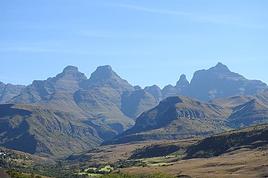 Trip to the Drakensberg in South Africa
Travel logs › South Africa·52 photos
 South Africa in Three Trips
Travel logs › South Africa·298 photos
 A Magnificent Loop in the Southern Rainbow Nation
Travel logs › South Africa·539 photos
 The Waterberg
Travel logs › South Africa·15 photos
 Mapungubwe
Travel logs › South Africa·28 photos
 Southern landscapes, northern wildlife: returning to South Africa
Travel logs › South Africa·259 photos
 St. Lucia and iSimangaliso: Stories from Different Trips
Travel logs › South Africa·56 photos
 Cape Town and Kruger: 12 days in February with teens
Travel logs › South Africa·228 photos