Hello,
Today is January 7th, Orthodox Christmas Day.
It’s the perfect occasion to share on VF a religious site that left a lasting impression on us.
For a long time, we’d admired photos of the Makaryevo Women’s Monastery on Russian websites.
They’re always taken from cruise hydrofoils that, in season, depart from Nizhny Novgorod.
This gave us the idea for a crazy challenge: to visit the monastery during a river cruise,
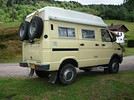
with our little plumber’s van that’s become the common thread of our travels!
This challenge seemed impossible to pull off.
The equation was indeed impossible to solve
1. Find a dock
2. Load the van onto a boat
3. Cross the Volga
4. Arrive at sunset
5. Sail past the monastery
6. All with no reliable information. NONE!
Incredibly, every obstacle fell into place one after another!
Gifting us unforgettable moments.
The photos follow our exact journey.
1. We arrive on the southern bank of the Volga, searching for a ferry to Makaryevo.
First attempt, first failure—we’re way too far east.
We find a second ferry, but it serves a different town on the northern bank.
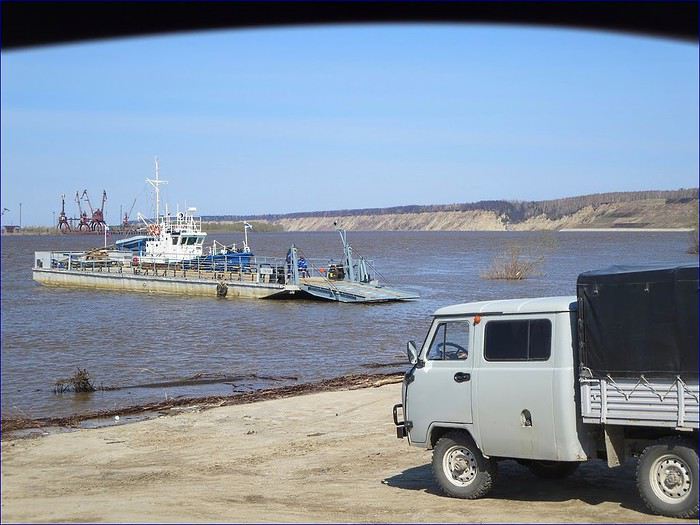
2. We keep going and meet some fishermen.
But even they don’t know where to board a vehicle for the monastery.
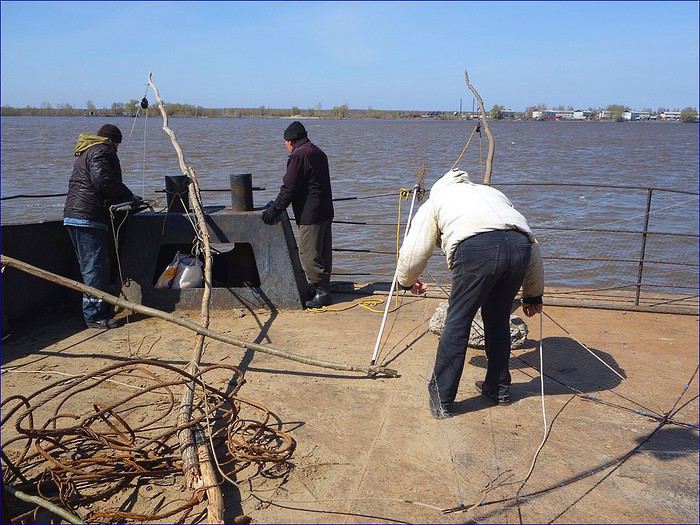
3. After several fruitless searches, a young man who speaks a few words of English
points us to a dock where, in summer, boats *might* serve the monastery.
Miraculously, at the end of a rough track, we find an old ferry moored.
But no one’s on board, and a chain blocks the entrance.
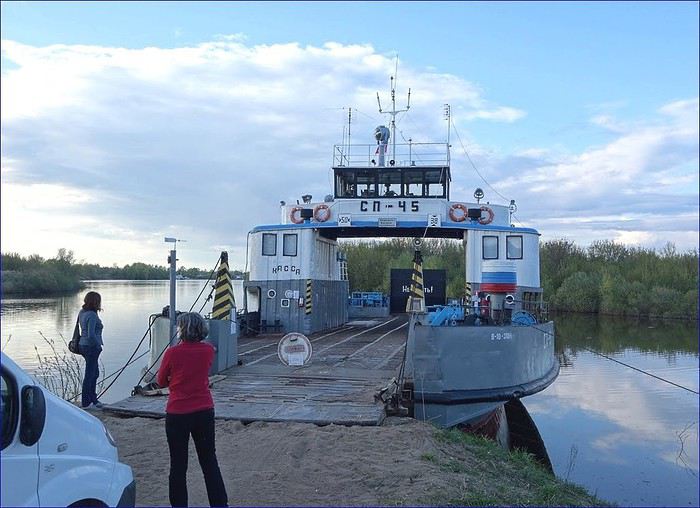
After an hour of waiting, a worker arrives and tells us they *will* cross the Volga tonight,
but the exit ramp at Makaryevo isn’t accessible for our vehicle.
The captain joins him, and seeing our disappointed faces, they confer, discuss,
and load some planks to raise the ramp!
Another miracle!
4. We board, with just one passenger accompanying us—
the Trafic is the only vehicle on board.

5. The crossing was magical.
And longer than expected, since the Volga here is several kilometers wide,
and we’re navigating between countless islands!
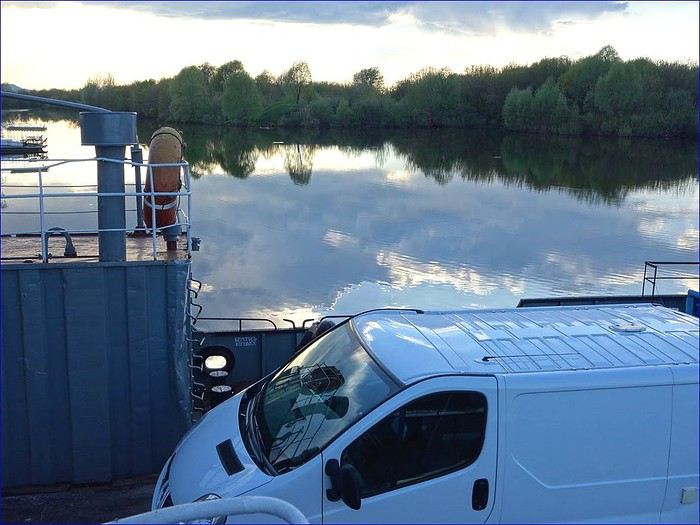
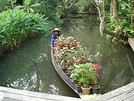
6. Under a sky that gradually clears, we discover there are homes on the river—
invisible from the banks—that form small communities
where people get around by boat!
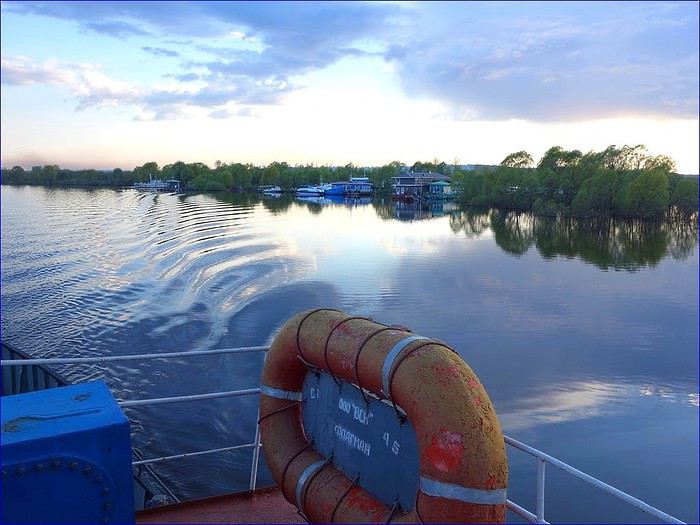
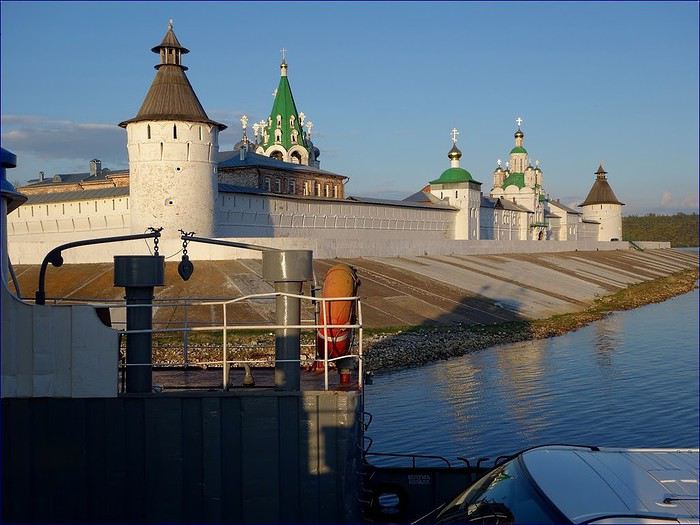
7. Then, suddenly, around a bend in the channel, the monastery appears in the distance on the northern bank.
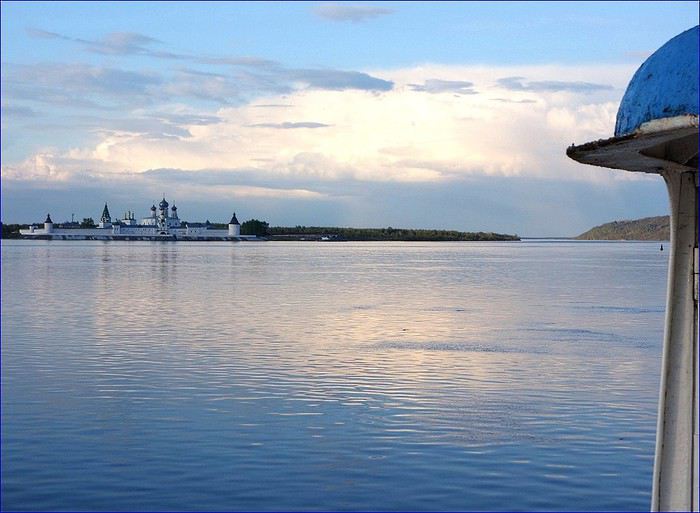
8. At the exact moment our boat rounds the buoy and nears the monastery,
the sun breaks through the clouds!
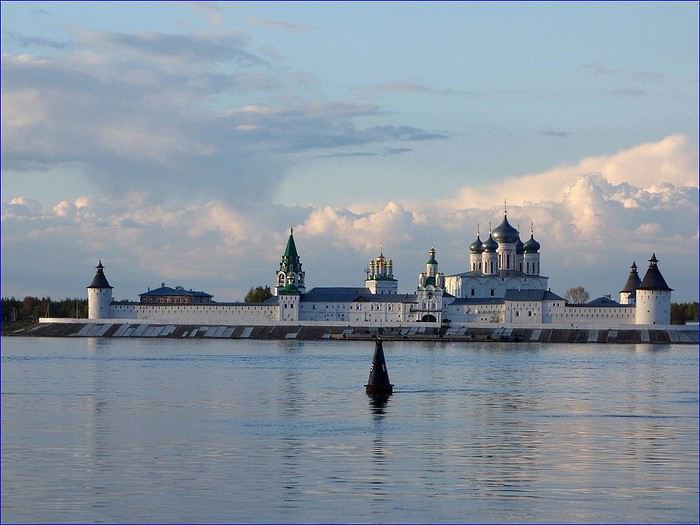
9. A breathtaking sight, with our boat gliding along the monastery walls in absolute silence.
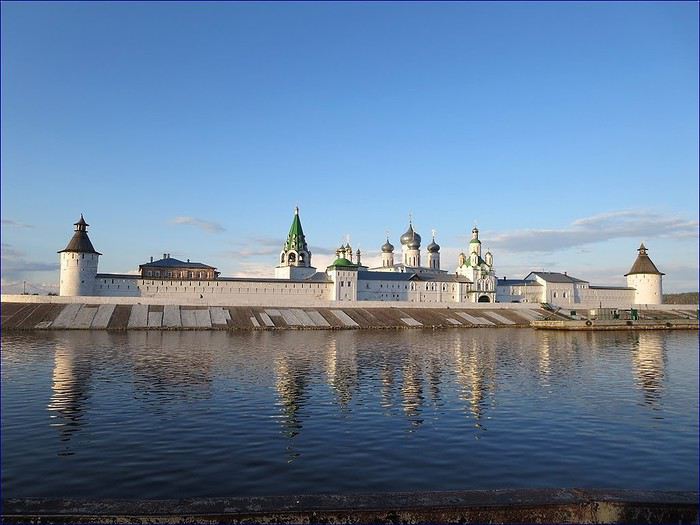
10. The sky, now a deep blue, makes the vibrant colors of the onion domes pop.
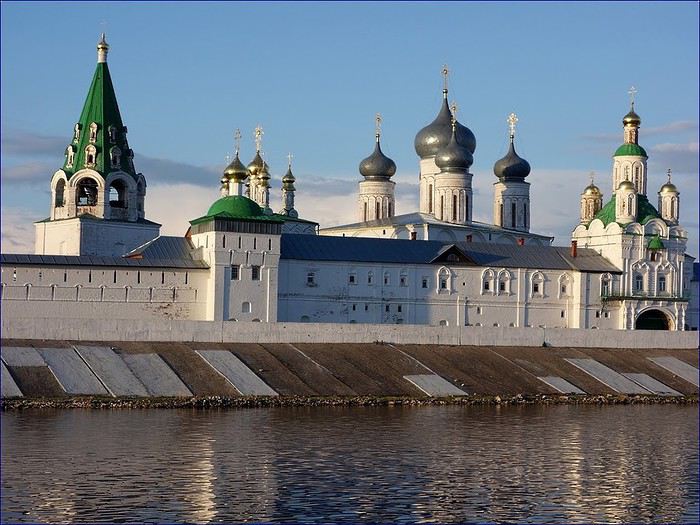
11. We sail slowly past the monastery under extraordinary light—
something our little compact camera can’t fully capture.
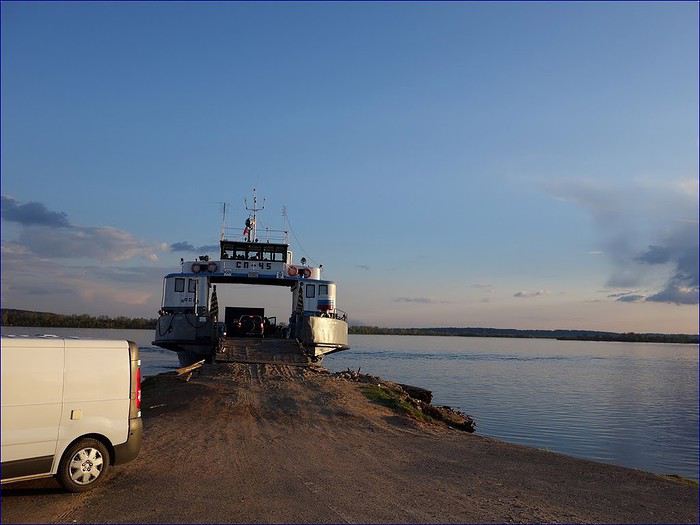
12. As promised, the captain and his crew adjust the exit ramp.
You can’t tell from the photo, but even with the planks, it was a close call—
the van’s chassis barely cleared the ramp.
We thanked them warmly.
13. By the end of the day, the monastery is, of course, closed.
But another miracle happens!
It turns out the passenger who crossed with us is the mayor’s wife.
When Sylvie told her we were from France, she called her husband, who immediately contacted the Mother Superior.
Like in a dream, the monastery opens just for us.
A nun and a guard come to meet us and take us through the chapels and gardens!
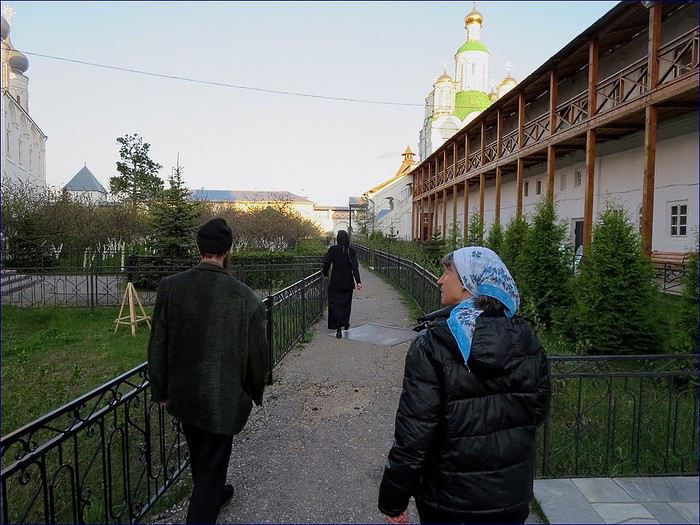
14. A visit all the more intimate since only the silent nuns,
deep in prayer, are present in these sacred spaces.
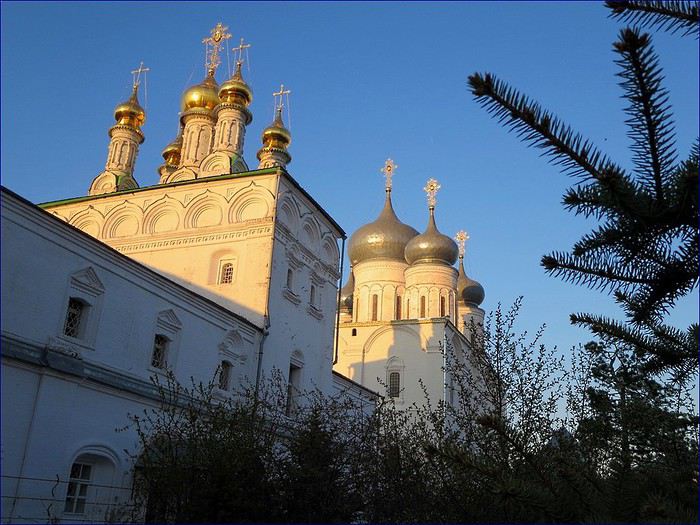
15. After dinner in our little van, we enjoy the exceptional light
illuminating the now-closed monastery.
We’re the only visitors, and the site feels like a massive ship anchored on the Volga.
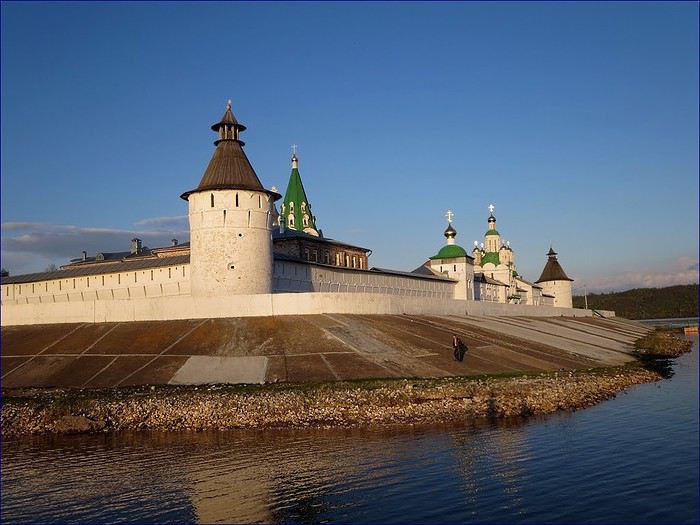
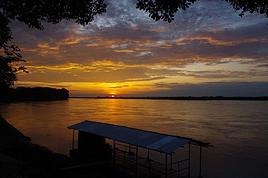
16. The setting sun now bathes the monastery walls in gorgeous pink hues!
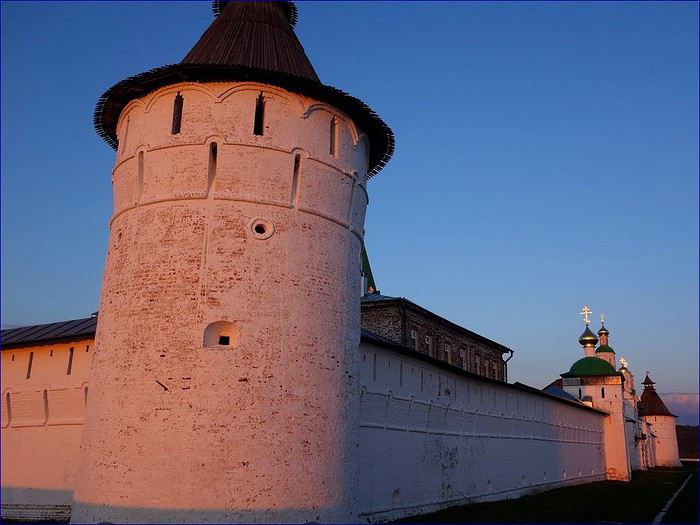
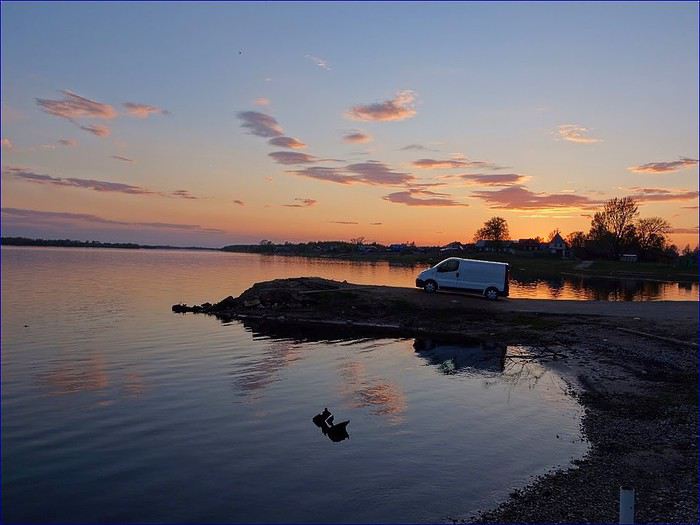
17. Gradually, the legendary Volga itself takes on magical colors!
For the night, I’ll just back the van up to level it.
It’ll take us a while to fall asleep after such intense moments.
18. Just as inexplicably, the magic continues the next morning!
Seeing I’m struggling with my knee, the guard lets us drive slowly along the monastery’s perimeter path.
So there we are at dawn, solitary wanderers between the Volga and the monastery walls.
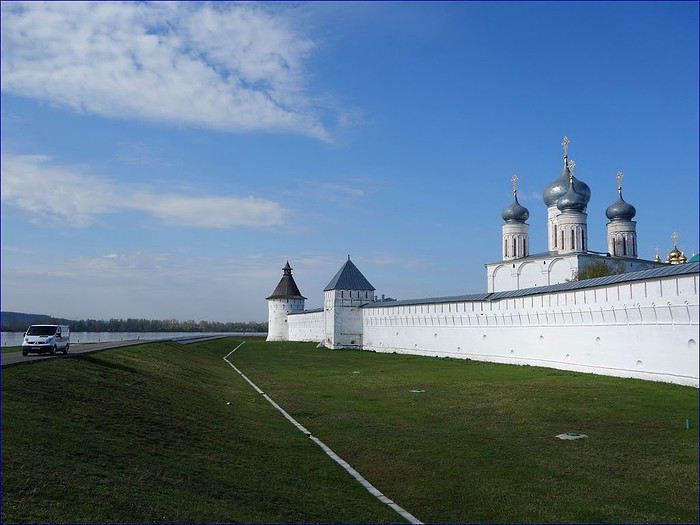
19. The morning light now illuminates the monastery’s eastern façade,
which we hadn’t admired yesterday.
An exceptional moment.
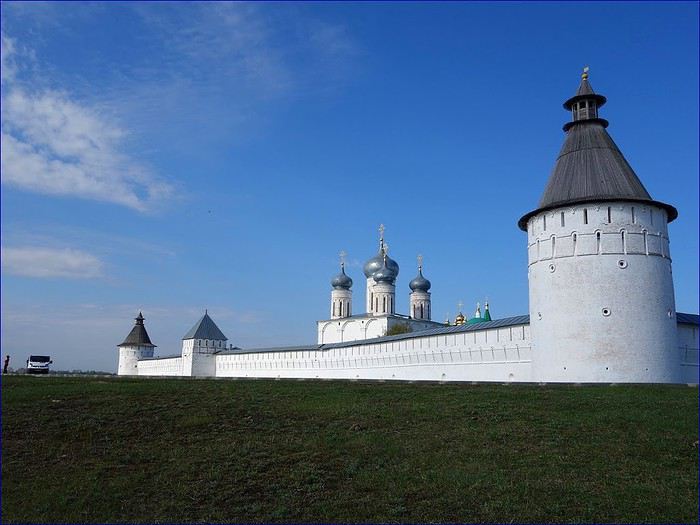
20. Even more impressive when we realize we’re on the nuns’ prayer path.
We cross paths with them—tall, silent, black-clad figures, fully covered.
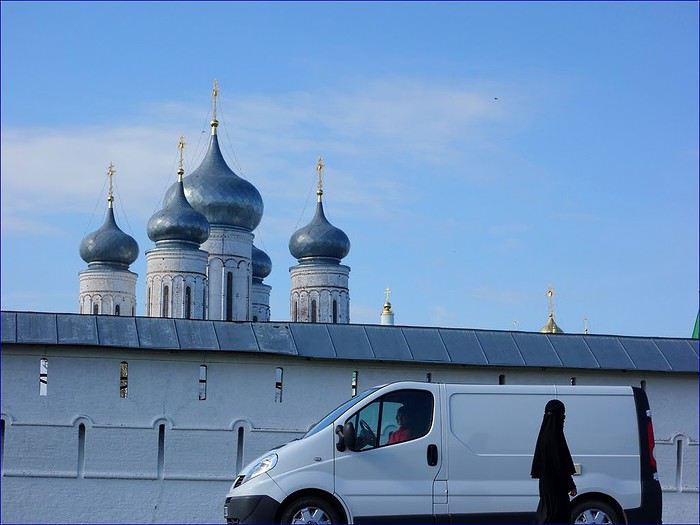
We leave Makaryevo with regret, following the Volga toward Kostroma on the Golden Ring.
That’s about all there is to add.
We’ve already taken three long trips through Russia in our little van.
The travel journals are shared in the link in our signature.
Best regards,
Sylvie & Bernard