An 80-Day Tour of Southern Africa
Translated into English.
435 replies

Thanks for playing! It’s the inside of a hippopotamus skull (Kennedy Camp in Hwange):
Oops! I had a doubt and checked my notes: according to the camp warden, it’s actually an elephant skull. Obviously, if I’d said it was a sparrow’s brain, you’d have reacted. 😇 I’m a bit obsessed with hippos at the moment.

Mong1· 14 years ago
Hey Voyajou,
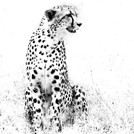
I was actually surprised by your reply, because it reminded me of this photo I took in a reserve in Sri Lanka... (And it *was* an elephant skull.)
But since you seemed to know your stuff and were more of an expert than me on African animals...
(Yep, some people are following along, even in silence... ;))
Kinousam· 14 years ago
Exactly!
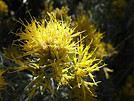
Couldn’t get back to the thread sooner... but I *had* actually seen a "weathered" elephant skull a long time ago, and that was in Sri Lanka, a *really* long time ago.
As far as I remember, the honeycomb structure serves the same purpose as in architecture: it’s strong while staying lightweight. Their brains don’t live in there at all... it’s just the bone structure that lets the skull stay sturdy enough to hold everything that belongs in/on a head, with joints that’ll hold up... but without having to carry all the weight it would if the cranial case were made of solid bone. I bet it has other perks too (buoyancy, thermal insulation??)... guess I should dig into the topic a bit!
Bird bones have honeycomb structures too, but for them, it’s just about being lighter, plain and simple.
Okay... break’s over, back to exotic adventures...
Okay... break’s over, back to exotic adventures...
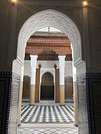
Thanks for stopping by, Catherine,
Out in the bush, being followed in silence isn’t exactly ideal—but your touch was kind!🙂 Those crossed bones in your photo—are they a warning like "when facing an elephant, watch your step"?
(Oh yeah, some folks do follow along, even in silence...😉)
Out in the bush, being followed in silence isn’t exactly ideal—but your touch was kind!🙂 Those crossed bones in your photo—are they a warning like "when facing an elephant, watch your step"?
Show 10 more replies
Kinousam· 14 years ago
Here are a few links to make bedtime a little smarter tonight... a quick break before diving back into exotic work...
http://www.elefantasia.org/spip.php?article55 A site in French + English + Laotian (I think) with some interesting illustrations. Apparently, the honeycomb-like structures in your photo are called "pneumatized cells" (air cells) (though I’m not sure if that’s the correct term?..)
http://www.asianelephantresearch.com/about-elephant-anatomy-and-biology-p1.php The most clear, in my opinion. Check the "Skull" section. The skull needs to be massive to support all the organs, muscles, and other attachments. That’s why the spongy structure helps lighten the load.
http://fr.wikipedia.org/wiki/%C3%89l%C3%A9phant The go-to Wikipedia page. An elephant’s brain weighs about 5-6 kg on average, making it the mammal with the smallest brain relative to body size.
http://www.u-bordeaux1.fr/collections_biologie/Fiches_mammiferes/Elephant-afrique.html This one mentions that the bone cavities are filled with spongy bone, not marrow. Is that why the honeycomb-like structures exist??
http://elephant.elehost.com/About_Elephants/Anatomy/The_Skeleton/the_skeleton.html http://elephant.elehost.com/About_Elephants/Anatomy/The_Brain/the_brain.html So, it’s explained that the forehead is made of solid spongy bone. Then there’s a whole network of sinuses... and the brain sits at the back of the skull.
(Don’t confuse this with spongiform encephalopathy... the brain’s fine—it’s the bone that looks like a giant sponge.)
See you later, christine
Mythology
Two French couples built a lodge in the heart of nature on the coast of the Indian Ocean (here called the Indico) with their own two hands, their sharp minds, and hearts as big as all outdoors.
It took them four years from the initial idea to opening. Early on, they trained thirty Mozambicans in construction trades and then hired sixty more laborers—mostly porters—modern-day Sisyphuses who endlessly hauled materials from the base of the dune, where the track ends, to its summit.
Today, it’s an Eden (I even had the pleasure of a magnificent green snake playfully slithering down the thatch to my feet during the tour). Or at least, it’s as close to paradise as one can imagine. And in their great wisdom, they didn’t plant an apple tree—so the paradise will last forever.
One observation, though: on the platforms where the toilets stand, the designers forgot (or perhaps it was mischief) to include doors. So if you lose yourself in the view of the ocean while the sun rises and catches you, you’ll turn as red as it does.
Game of (Not) Fools
The imposing policewoman blocking the road, hand raised, leaves me no choice but to comply. I was driving too fast in this uninhabited but still 60 km/h zone. I could’ve sworn we were stopped at the same spot two years ago. She asks for my driver’s license and invites me to check the speed on the radar screen myself: 81 km/h, a 2000 MZN fine (60 €).
I gesture, and she pulls out her fine chart: between 60 and 80 km/h, it’s 1000 MZN; over 80, it’s 2000 MZN.
Behind the three police officers sit three women in khaki, machine guns resting on their knees, calm.
When they present me with the promptly written fine, I refuse to pay and ask to verify the radar’s functionality, hinting it might not work. Obligingly, the chief fiddles with it, and numbers scroll by—1, 2, 3... 49, 50—the machine can count. Suddenly, he points to a truck appearing on the horizon. I look, and when I turn back, the screen shows 72, and the officer wears a triumphant look. But he doesn’t know I saw him freeze the display out of the corner of my eye.
I tell him you can’t flash a vehicle from that far away and that their trick is exposed—even in France, we know their radars always show 81. Annoyed, he stops the truck and pretends to fine it (probably to mess with the tourist). Faced with his act, I put on my own show: grabbing my phone, I ostentatiously call the consul (I narrate the situation to myself, pausing dramatically).
We’re back under the plum tree (these trees are perfect—shade and discretion) and the imposing officer hands me the receipt again. I ask her to write her name and her chief’s on the back. At a signal from the latter, she returns my license and swallows her pride.
The chief motions for me to leave, tilting his head slightly, offering the smile of a child caught with their hand in the cookie jar.
Stiff as justice, I take my leave.
Maputo Elephant Reserve
I’d long wanted to see elephants on the beach bordering this small park tucked into a sliver of the country between the sea, South Africa, and Eswatini.
I arrive at the entrance at 5:30 PM; the park closes at 6:00 PM, and it gets dark by 6:30 PM. The campsite is on the beach, a one-and-a-half-hour drive along a sandy track. The guards tell me it’s too late, that driving at night in the park is forbidden, and offer to let me share their camp for free. They’re probably thinking I’ll buy them beers in the morning. Seeing my disappointed look, the ticket officer, who seems to have authority, says that after all, the gate is still open, and if I want to go, I can—at my own risk. She’s probably thinking she has nothing to gain by keeping me here.
I arrive in pitch darkness, relieved that a mischievous elephant didn’t knock over a tree where the narrow track cuts through dense foliage. The Toyota had to use all its resources to climb the dunes, as there was no room to build up speed.
A beautiful night ahead. To sum up: in front of me, a foaming sea—with the possibility of a mermaid; behind me, a few hundred elephants; and above, a thunderstorm with megawatt lightning bolts.
At dawn, stepping onto the beach as the sun rises, I feel my hand move to my face, and I hear myself whisper, “Oh! My God.”
The camp guard tells me elephants never come to the beach—but that’s to keep it a secret. I know they do when humpback whales pass through the bay, and then they hold meetings in honor of their common goddess: a mermaid with the body of a whale and the bust of an elephant.
On the way back, I only see elephant tracks, but there were so many hippos in Mundi Lagoa that they were spilling out.
Glimpses of Mozambique
As I leave Vilanculos Airport after dropping off my co-pilot, who’s ending the trip, and drive slowly through town, a teenager slowly drags his finger across his throat while staring at me. I look at him, puzzled, and he does it again, faster. Just as I get out of the car to ask for an explanation, he bolts.
For every one who dares, how many think it?
…/…
At Fatima’s Backpacker in Tofo, there are no tire tracks in the sand of the campsite where I arrive after dark.
In the morning, the maintenance crew arrives at the kitchen assigned to campers. I’d already suspected from their pace and the contents of their pots that it had become the staff kitchen. They settle in for breakfast and shoot me sideways glances when I go to the trash to throw away my morning waste: a tea bag! What a waste—something that could still be used!
The camp is littered with trash—bottles, cans, buckets, bags, shoes. It’s six in the morning, and at the bar, the server is fast asleep on his notebooks.
…/…
Some women carrying various loads on their heads are now equipped with mobile phones, which they use while walking. They strike the pose of a painter sizing up an object with their finger on the brush handle, bringing the screen into their field of vision and typing while watching where they step and keeping their load balanced.
This clash of civilizations makes me fear new occupational hazards: tendonitis, scoliosis, etc.
…/…
Tofo, in the name of tourism, has set up a waste collection service. On a trailer without sides hitched to an old tractor, a man in rubber boots acts as the press while three others hand him the trash bins.
Here and there, open platforms have been built two meters off the ground, accessible by stairs, where people deposit more or less bagged garbage. When the trailer passes, all they have to do is push it.
The crew manages to scatter some of what the residents had carefully gathered into the street.
…/…
At one point on the beach, where a bottleneck concentrates the backwash, seven fishermen are hard at work. You can’t see the fishing lines—one winds them into a spool, another around a small board. A third casts his weighted hook like a woman throwing a pétanque ball, while a fourth gives the line brief jerks with his forearm.
It looks like a mime show or a conversation between deaf-mutes.
…/…
The main deities of the bush, judging by the signs and banners: Coca-Cola, Frelimo (the ruling party, ex-revolutionary), Vodafone, and the Adventist Church.
…/…
In this small roadside restaurant, he sits across from me—a mauve polo shirt with a knockoff logo, wide open to reveal a gold chain, a heavy bracelet on his wrist, and fingers weighed down by rings. He talks loudly into his phone as if calling the next village with his bare voice. From what I gather, he’s a car dealer.
The other diners don’t seem bothered. I don’t dare tell him that in France, people leave the room to take a call—though!

Rjulie95· 14 years ago
Your story is always so beautiful, and your words are always so well-chosen! A pleasure to read.
It's sweet of you to make us drool over paradise-like places, but clearly, you don’t want to share them... you want to keep them all to yourself? By the way, have you turned as red as the sun? 😇
Wow, I take my hat off to you! How much did they have to pay without complaining too much?
Wait, you abandoned your co-pilot? So now you’re navigating alone. Work, you’ve got us hooked. The rest of that sentence isn’t very reassuring.
Keep going, and I look forward to reading more!
Two French couples built with their own two hands, their sharp minds, and hearts as big as this, a lodge in the middle of nature on the coast of the Indian Ocean (here we call it Indico).
It's sweet of you to make us drool over paradise-like places, but clearly, you don’t want to share them... you want to keep them all to yourself? By the way, have you turned as red as the sun? 😇
The chef signals for me to leave and, tilting his head slightly, gives me the smile of a child caught with their fingers in the jam.
Wow, I take my hat off to you! How much did they have to pay without complaining too much?
After leaving Vilanculos airport, where I dropped off my co-pilot who had to end the trip, I’m driving slowly when a teenager slowly drags his finger across his throat while staring at me. I look at him, confused, and he does it again, faster. Just as I get out of the car to ask for an explanation, he bolts.
For every one who dares, how many are thinking it?
Wait, you abandoned your co-pilot? So now you’re navigating alone. Work, you’ve got us hooked. The rest of that sentence isn’t very reassuring.
Keep going, and I look forward to reading more!
S
Sitaelle· 14 years ago
Some delays are real blessings when you really don’t feel like getting to work on Monday morning ("Oh no, I can’t make it to the meeting—I’ve got my Voyajou travel journal to read, sorry!").
A bit all over the place:
I think Mademoiselle Himba is really pretty,
I’m glad I got to revisit Kennedy (how are the lions?) and take the Binga road again… where our little angels never once paid a dollar to the police. Still, be happy—thanks to you, the state coffers were at $217 last February 😉,
I love the green version of the baobab in the middle of the track leading to Mana Pools. Plus, Mana is absolutely stunning this time of year… makes me really want to go back (clever, isn’t it?),
Why don’t the hyraxes of Mandavu have their own little story, huh? 😉
Thanks for this African morning—I really needed it!
J
Jemaflor· 14 years ago
Interesting text, a lovely style, pleasant to read. I enjoyed all these lived moments and anecdotes—you don’t fall into the tourist-guide type of narrative with exhaustive descriptions, prices, and addresses...
Without photos, your story leaves plenty of room for the writing, which is ultimately the essence of a travel tale.
Keep up the good work.
Mimi48· 14 years ago
Some delays are real blessings when you really don’t feel like getting to work on Monday morning ("Oh no, I can’t make it to the meeting—I’ve got my travel journal to read for Voyajou, sorry!").
A bit all over the place:
I think Mademoiselle Himba is really pretty,
I’m glad I got to swing by Kennedy again (how are the lions?) and took the Binga road once more… where our little angels never once paid a dollar to the police… Be happy anyway—thanks to you, the state coffers were at $217 last February 😉.
I love the green version of the baobab in the middle of the track leading to Mana Pools. Plus, Mana is absolutely stunning this time of year… Makes me want to go back so badly (clever, right?).
Why don’t the hyraxes of Mandavu have their own little story, huh? 😉
Thanks for this African morning—I really needed it!
Are you looking at photos??? How do you do that??? I can’t see anything—just text, which is actually really nice to read and interesting… but I’d love to see the photos!!!
You might also like
 Southern landscapes, northern wildlife: returning to South Africa
Travel logs › South Africa·259 photos
 St. Lucia and iSimangaliso: Stories from Different Trips
Travel logs › South Africa·56 photos
 Quick feedback on Marakele NP
Travel logs › South Africa·26 photos
 South Africa in safari mode: February/March 2026
Travel logs › South Africa / Eswatini·217 photos
 Cape Town and Kruger: 12 days in February with teens
Travel logs › South Africa·228 photos
 A Magnificent Loop in the Southern Rainbow Nation
Travel logs › South Africa·539 photos
 The Waterberg
Travel logs › South Africa·15 photos
 South Africa in Three Trips
Travel logs › South Africa·298 photos