Coloured
Abandoned in the high plateaus of the Great Karoo, surrounded by mesas, Carnarvon is to the *coloured* community—keeping things in perspective—what Soweto is to Black South Africans: a symbol of their struggles.
At the start of apartheid, an obscure mixed-race civil servant passed off hundreds of Black South Africans—Black as the mines that employed them—as "proper" coloured, falsifying their papers to spare them from being sent back to their homelands, those infamous *homelands*.
Later, when white authorities voted to build a township outside the city (which had never had one before), the coloured community resisted. Through strikes and boycotts, they managed to get the measure overturned, with whites settling for the main street as a symbolic border, just as before.
Early this morning, around a hundred men in work overalls waited in clusters at intersections, hoping for a ride to a farm or construction site. I didn’t see any fewer two hours later.
Time seems to stand still here. While Autohaus Göbel garage fixed the damage from Lesotho on my car, I was served the most disgusting *scones* in the country at a lime-green coffee shop where everything was written in Afrikaans. But last night, the municipal campsite was the cheapest of the trip (1.8 €).
Carnarvon remains remarkable, then.
Karoo Express
If you only have two days to capture the essence of the Karoo, I’d recommend heading to Prince Albert via the backroads of the Swartberg massif, through villages and farms, crossing the Swartberg Pass, and ideally pushing on to Die Hel (Hell).
This year, I didn’t make it all the way to Hell—just a few kilometers, to Purgatory—but I remember the effect it had two years ago:
In the semi-desert Karoo, a forty-kilometer track clings to the mountainside one moment, then winds through canyons the next, leading to a paradise valley called Hell’s Valley. The hell was getting there, and those on the outside gave it that name. Those inside weren’t fooled: a narrow valley, five or six hundred meters wide and a few kilometers long, where water is abundant and trees provide shade from the sun. The only way to reach the outside world was a single footpath.
In 1900, during the Anglo-Boer War, a Boer general discovered around a hundred people in this valley—white and dressed in animal skins. They had been there for generations with no contact with the outside world. They were descendants of Huguenots (our people, then—Marais, Cordier, and other Jouberts).
The road wasn’t built until 1960, and after that, the valley slowly emptied. The last resident left in 1991. The dozen or so houses these lost—or wise—pioneers had occupied were falling into ruin one by one. They’re now being restored by a foundation.
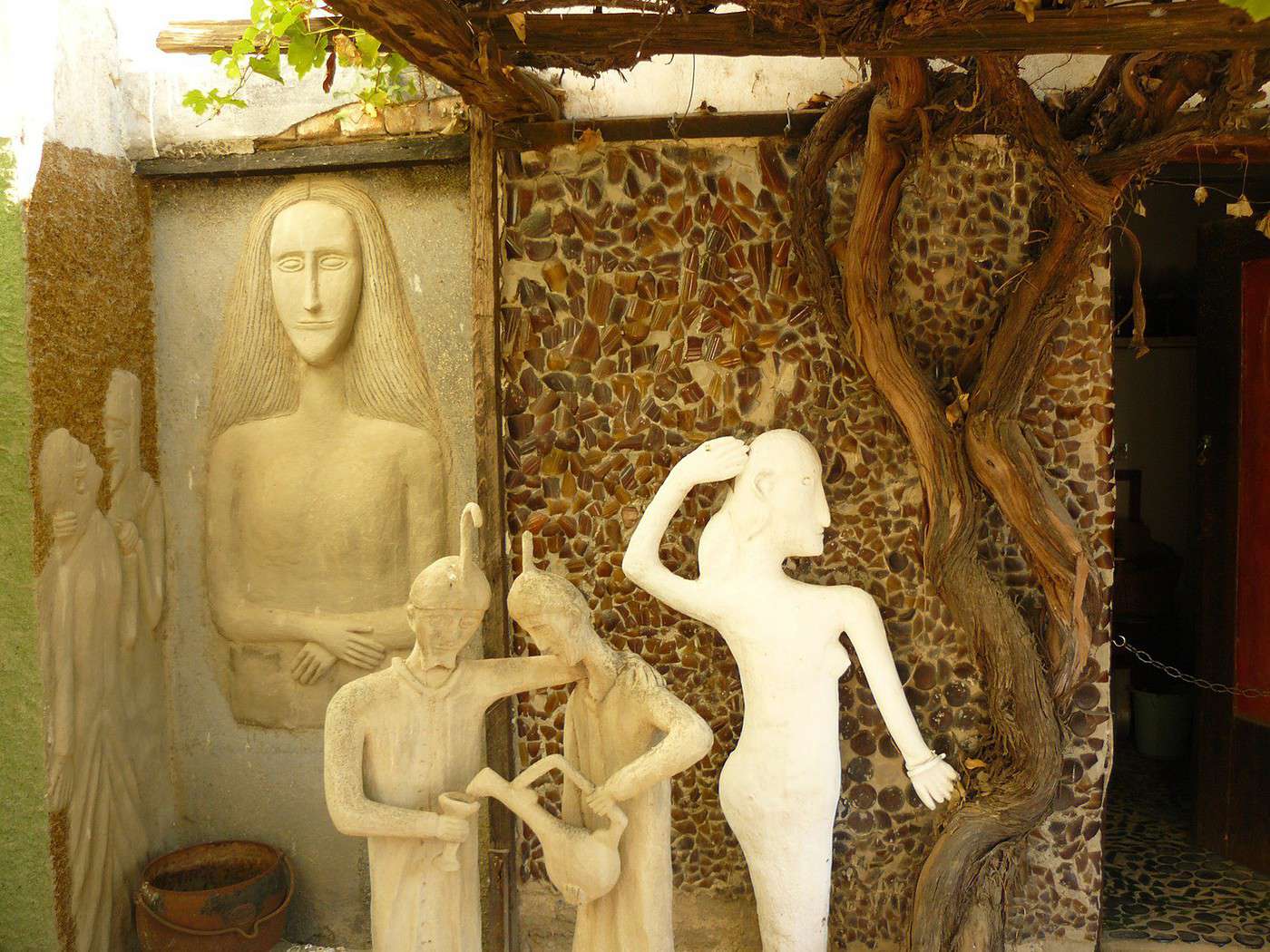
Cubic in shape with flat roofs, perfectly blending into the surrounding rock they’re made from, they resemble the adobe houses of New Mexico.
We camped by the stream, alone, deeply moved.
If you accept the theory that this part of the world is the cradle of humanity—that from here, our common ancestors set out along the Rift to colonize the world—it’s unsettling that just as the species reaches a kind of white apogee, we discover representatives of that race in the land of the "savages," dressed in animal skins.
Admittedly, Prince Albert is now frequented by Cape Town’s *upper class*, and it has everything from the *Historic Hotel* to a polished museum and plenty of restaurants, some even serving *gay-friendly* dishes. But it’s all so good and beautiful, and we all have our weaknesses.
Red-Eye Flight
(Upcoming) BA 042 Cape Town-London, March 30th at 10:10 PM. At that hour, there’ll be nothing to see—just questions.
Why come to Southern Africa? Why, above all, keep coming back relentlessly?
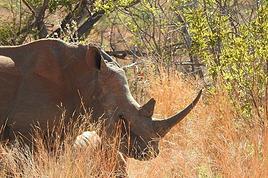
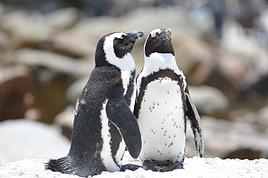
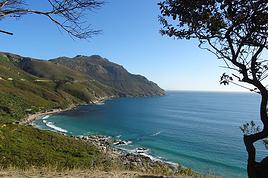
For its vast deserts, its escarpments, and its canyons? For its coasts, which—from one ocean to the other—give the word "wild" its full meaning? For its herds of antelope, dozens of species strong, from the tiny dik-dik to the majestic Cape eland? For the *Cape Dutch* architecture or that of the huts, for the cultures? For the company of Africans? For the "exotic" populations—the San, the Himba, the Basotho? For summer in winter? For the sense, especially in South Africa, of being in the midst of history unfolding?
Even if all that—or even just some of it—justifies the trip, other countries offer the same.
So why? What’s unique about Southern (and Eastern) Africa?
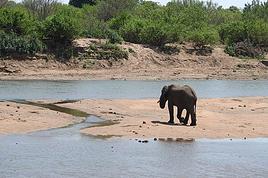
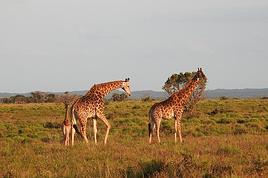
There’s the possibility of a day that starts with breakfast shared with graceful giraffes, midday disrupted by hippopotamuses’ grunts, dusk spent watching elephant herds at the watering hole, and nights filled with roars.
And isn’t that kid-like wonder what brings us here, after all?