A Bestiary in Kruger
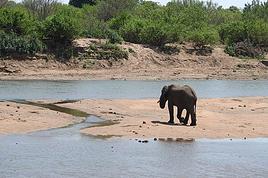
The elephant’s march, majestic, defying time, like that of African women weighed down by age and abundance.
The hyenas’ tight, slightly stiff, constrained little gallop.
The chaos of hippos in the water, trembling rocks.
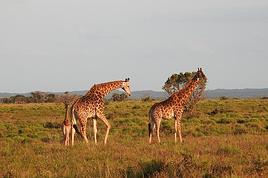
The bewildered air of giraffes with their ingenuous gaze, their gallop like a metronome.
The lion’s quiet arrogance, making you want to remind him he has a predator—man.
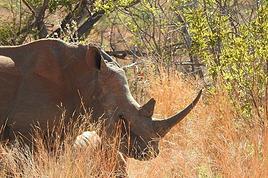
The discreet rhinoceros, motionless in the veld.
Herds of antelopes—the impala like a spring, the elusive kudu, the solitary dik-dik, the placid buffaloes—and the wonder of my guest.
A Paradise in the Kingdom of Heaven We leave Lesotho through a fertile valley in the northeast, behind Golden Gate NP, which I had missed. The Caledon River, lined with wild roses and willows, offers its alluvium to farmers who don’t let the opportunity slip by. Old tractors replace oxen in front of the plow, sheep give way to cows. The houses are better maintained, and a few small agricultural sheds have been built, while the women appear more elegant and cheerful than in the mountains. When we reach Monontso Pass, marking the border, there’s no office, police, or customs from Lesotho—only South Africa is represented, so officially, we haven’t left Lesotho.
Soweto The street where Desmond Tutu and Nelson Mandela once lived—perhaps the only one in the world that can claim two Nobel Peace Prize winners—this street, a symbol of struggles, has become where the new Black elite flaunt their wealth. A line of luxury cars, led by Porsche Cayennes, is double-parked, reducing traffic to a single lane, while on the terrace of a private establishment, elegant women giggle on the arms of men in white suits wearing panama hats and dark glasses. Just a few streets away, sewage flows in the open, the ground is littered with trash, but the houses are made of brick. We don’t visit the real township—the one with shacks made of plastic, sheet metal, and wood, the one of drugs and prostitution.
Life and Death In the cemetery of the Cradock township stands a monument and the graves of those known as The Cradock Four, the four Black activists kidnapped, tortured, and shot by special forces in 1985. The epitaph says their blood will nourish the trees and freedom. The pigs roaming among the graves—most of which are just cairns—and the sheep grazing the sparse grass between the stones couldn’t care less. The trash glitters in the morning light: you get the headstones you can afford.
Addo Elephant Park Here, the most common species are small metal beetles, parading along the tracks. Of course, there are also plenty of elephants—placid, so unafraid, so used to the beetles that they let you approach within five meters without flinching (neither do I). You hear the whistle of ore trains, whose tracks run alongside the park, more often than the trumpeting of anger. The moon, in its first quarter, sinks gently into the bush: at one point, it looks like a luminous rhinoceros horn.
Snippets Vervets on the ground: agile, fast, organized, experienced, funny, cheeky—this is how vervets go after my breakfast. .../... “This country’s got serious swagger,” my young guest blurts out in Lesotho. .../... After Mandela’s passing, we attend, two nights in a row in the small towns we pass through, a concert to celebrate… the switching on of Christmas lights. Many participants still wear the same T-shirt, printed with “We love you Madiba.” .../... South Africa, between fascination and revulsion, between love at first sight and disgust.
We Are All Mandela’s Children That’s what this crowd in colorful, mixed attire seems to say—just like the mix of skin colors—in St. George’s Cathedral in Cape Town, where an ecumenical celebration in honor of Nelson Mandela is taking place this morning. From the choir, a moving chorus lifts the congregation while five officiants, representing as many faiths, compete in brotherhood. Will the gods take offense at such fervor for one man? In the transept, people wait, overjoyed, to leave a message in the books of condolences. Nelson, you are the honor of humanity.